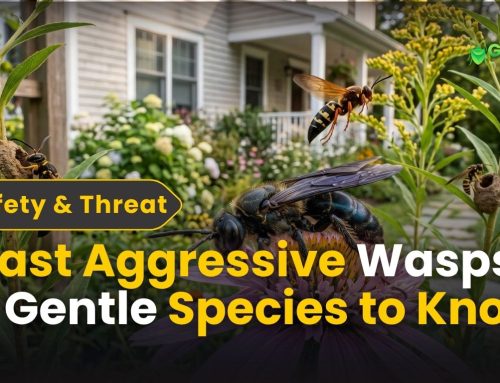
Wasps vs Hornets: 7 Key Differences You Need to Know
That Striped Insect Near Your Eave Wasp or Hornet?
You notice something building a nest under your porch overhang in Westport. Or maybe something large and fast keeps circling your head near the back garden in New Canaan. Your first instinct is probably to back away slowly which is sensible but your second instinct should be to figure out exactly what you’re dealing with.
Wasps vs. hornets is one of the most commonly searched pest questions in Connecticut, and it’s genuinely important to get right. These two groups of stinging insects look similar enough to confuse even observant homeowners, but they behave differently, nest differently, and pose different levels of risk. Treating one like the other is how homeowners end up with failed DIY treatments, unexpected stings, or colonies that come back bigger than before.
This guide covers seven real, practical differences the ones that actually help you make smarter decisions about your property and your family’s safety.
Wasps vs. Hornets: The Quick Answer
Here’s the foundational fact: all hornets are technically wasps, but most wasps are not hornets. Hornets (Vespa genus and related species) are the largest members of the broader wasp family (Vespidae). When people say “wasp,” they usually mean social wasps like paper wasps or yellow jackets. When they say “hornet,” they typically mean species like the European hornet or bald-faced hornet both of which are present throughout Fairfield County, Connecticut.
The confusion is understandable. Both groups are social, both build nests from chewed plant fiber, both can sting repeatedly, and both show up uninvited on Connecticut properties from spring through fall. But the seven differences below show just how distinct these insects really are and why those distinctions matter.
For a Connecticut-specific breakdown with species-level detail, the wasps vs. hornets CT differences and dangers guide is an excellent companion resource to this article.
Difference 1: Size The Fastest Field Indicator
If you can observe the insect long enough to estimate its size, you’re already most of the way to an identification.
Common wasps in Connecticut paper wasps and yellow jackets — typically range from about ⅜ inch to ¾ inch in length. They’re noticeably slender, especially paper wasps, which have that elongated, thread-waisted appearance.
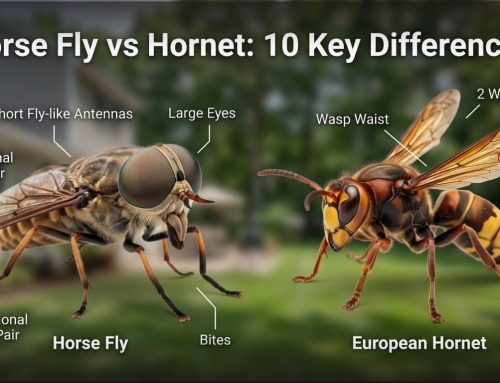
Hornets are larger. The European hornet (Vespa crabro), which is well established throughout Fairfield County, can reach up to 1.5 inches making it the largest social wasp in North America. Even the bald-faced hornet (Dolichovespula maculata), which technically classifies as a yellow jacket but behaves like a hornet in every practical sense, reaches up to an inch in length.
Size Reference at a Glance:
| Species | Length |
| Yellow jacket | ⅜ – ⅝ inch |
| Paper wasp | ½ – ¾ inch |
| Bald-faced hornet | ¾ – 1 inch |
| European hornet | 1 – 1.5 inches |
If the insect you’re watching is noticeably larger than a standard yellow jacket — especially if it looks almost as big as a small moth in flight — you’re very likely dealing with a hornet. Pair this observation with the other differences below to be more confident.
To understand what hornets look like specifically, the what does a hornet look like guide provides detailed visual descriptions across species.
Difference 2: Color and Markings
Color alone won’t close the identification, but it narrows the field quickly.
Paper wasps often display a mix of yellow, reddish-brown, and black. Some species have orange or reddish patches on the thorax. Their coloring is slightly less vivid than yellow jackets.
Yellow jackets have the classic, sharply contrasted bright yellow and black banding that most people associate with the word “wasp.” The pattern is clean, bold, and consistent across workers.
European hornets look quite different their thorax is dark brown or black, their abdomen has yellow and brown banding (not the sharp yellow-black of yellow jackets), and their face is predominantly yellow. Under low light or at a distance, European hornets can look almost brownish, which sometimes leads people to mistake them for large flies or even beetles in flight.
Bald-faced hornets have a very distinctive black and white coloration almost no yellow at all. The white facial markings and white banding on the abdomen make them one of the easier species to identify once you know what to look for. The black and white wasp identification guide covers this species in more detail.
For a broader look at how wasp and hornet coloring varies across Connecticut species, the what color are wasps guide and the yellow and black striped wasp identification guide are both useful references.
Difference 3: Body Shape and Build
Beyond color, how an insect is built tells you a lot about what it is.
Paper wasps are the most dramatically slender of the group. Their waist the narrow connection between thorax and abdomen called the petiole is exaggeratedly thin, giving them a fragile, almost architectural look. Their long legs dangle visibly in flight, which is a reliable identification cue at a distance.
Yellow jackets are more compact and stocky than paper wasps, with a rounder abdomen and less pronounced waist. They look sturdy and slightly aggressive even at rest.
Hornets particularly European hornets have a more robust, barrel-like build overall. They’re heavier through the abdomen, and while the waist is still visible, the overall impression is of a substantially more solid insect. In flight, hornets look powerful rather than delicate.
This body shape difference becomes particularly useful when you’re trying to distinguish a European hornet from a large paper wasp, which can share some color similarities. The body parts of a wasp anatomy guide explains the structural differences in more detail if you want to get specific about what you’re observing.
Difference 4: Nesting Habits and Locations
Nest type and location are among the most reliable identifiers and critically, they determine your risk level and treatment approach.
Paper Wasp Nests
Paper wasps build open, upward-facing comb nests that look like a small gray paper umbrella. The hexagonal cells are fully visible there’s no outer covering. These nests are typically small (a few dozen to around 100 individuals) and are found under eaves, on porch ceilings, inside outdoor light fixtures, under deck railings, and around window frames.
Paper wasp nests are common throughout residential neighborhoods in Stamford, Norwalk, and Fairfield basically anywhere with structural overhangs that provide shelter from rain.
Yellow Jacket Nests
Yellow jackets are the chameleons of the wasp world when it comes to nesting. They build enclosed, multi-layered paper nests that can be aerial (inside shrubs, attic voids, or wall cavities) or completely underground. Ground nests are a hallmark yellow jacket situation and a common surprise for Fairfield County homeowners mowing lawns or digging in garden beds.
Underground yellow jacket colonies can contain thousands of workers by late summer, which is part of why ground nest disturbances tend to result in serious sting incidents. For help identifying what’s in your yard, the wasp nest in the ground identification guide and ground wasp nest pictures and ID guide cover the key visual cues.
Bald-Faced Hornet Nests
Bald-faced hornets build the classic football-shaped enclosed paper nest that most people associate with the word “hornet.” These gray, papery structures are suspended from tree branches, shrubs, or the sides of structures. They grow steadily through summer and can reach the size of a basketball or larger by September.
European Hornet Nests
European hornets prefer enclosed cavities hollow trees, wall voids, attics, and unused barns. Their nests have a similar enclosed paper structure to bald-faced hornets but are hidden inside structures rather than suspended openly. This is why European hornets often show up indoors, entering through gaps around utility conduits or window frames.
The hornet nest vs. wasp nest key differences guide and the difference between wasp and hornet nest guide both provide detailed visual and structural comparisons that are genuinely helpful for field identification.
Difference 5: Aggression and Territorial Behavior
This is the difference that matters most from a safety standpoint and it’s where the wasps vs. hornets distinction has the most real-world consequence.
Paper wasps are the most tolerant of common Connecticut stinging insects. They’ll defend their nest if you directly disturb it, but they’re not territorial in the way hornets are. Many homeowners in Greenwich and Darien live alongside small paper wasp colonies under eaves for entire seasons with no incident.
Yellow jackets are meaningfully more aggressive, particularly in late summer and fall when their colonies peak and food competition intensifies. They’re the species most likely to sting at outdoor gatherings they’re attracted to food and sugary drinks and become defensive quickly when they feel their food source or colony is threatened.
Bald-faced hornets take aggression to another level. They maintain an active defensive perimeter that extends well beyond the nest itself sometimes 10 feet or more. When one worker is disturbed, it releases an alarm pheromone that recruits others to join the defense rapidly. This mass recruitment behavior is what makes bald-faced hornet encounters potentially dangerous even for people without venom allergies.
European hornets are somewhat less hair-trigger than bald-faced hornets but are still vigorous nest defenders. Their nocturnal activity is also a distinguishing behavioral trait European hornets are strongly attracted to light at night and are often found buzzing around porch lights and indoor fixtures in communities like Greenwich, Wilton, and New Canaan during summer evenings.
For a detailed behavioral comparison, the are hornets more aggressive than wasps guide and the are hornets territorial and what triggers them guide are well worth reading before you decide how to approach a nest situation on your property.
Difference 6: Diet and Foraging Behavior
What these insects eat explains a lot about where you encounter them and how they behave around humans.
Paper wasps are primarily insect predators. They hunt caterpillars, flies, beetle larvae, and other soft-bodied invertebrates to feed their growing larvae. Adult paper wasps also drink nectar. Because their diet is protein-focused and garden-based, they’re rarely drawn to human food and are genuinely beneficial as pest controllers in vegetable gardens and ornamental plantings.
Yellow jackets eat both protein (insects, carrion, meat) and sugar (nectar, fruit, human food). This dietary flexibility is the reason yellow jackets become such a nuisance at picnics, outdoor restaurants, and backyard barbecues across Connecticut. By late summer when natural protein and sugar sources become more competitive yellow jackets become increasingly bold about investigating human food.
Hornets are active insect hunters. European hornets capture flies, grasshoppers, and other large insects, and they’re also known to hunt honeybees near hive entrances which concerns beekeepers in Fairfield County’s rural areas. They also feed on tree sap and ripe or overripe fruit. Notably, European hornets are much less attracted to human food than yellow jackets, which is one reason they can be overlooked until a nest is well established.
The do hornets eat wasps predator behavior guide explores hornet hunting behavior in more detail including some genuinely surprising predatory activity that affects how hornets interact with other stinging insect populations on your property.
Difference 7: Sting Characteristics and Medical Risk
Both wasps and hornets can sting multiple times they don’t lose their stinger the way honeybees do. But the sting experience and risk profile are not the same across species.
Paper wasp stings are painful but generally considered less severe than hornet stings. Most healthy adults recover from a paper wasp sting with standard first aid within a few hours.
Yellow jacket stings are sharp and intensely painful. Because yellow jackets readily sting multiple times and can do so as part of a colony defense response, encounters near nests can result in numerous stings quickly elevating risk even for people who are not allergic.
Hornet stings are generally the most painful. The larger body size of hornets particularly European hornets means more venom per sting. Bald-faced hornet stings are particularly well documented for causing intense, burning pain that radiates beyond the immediate sting site. Some reports describe the sensation as significantly more severe than a typical yellow jacket sting.
For anyone with a known insect venom allergy (hymenoptera venom allergy), any stinging insect represents a serious medical risk. But even for the general population, hornet colonies deserve a higher level of caution than most wasp colonies due to the combination of larger venom dose, more aggressive recruitment behavior, and larger overall colony size.
If you or a family member is stung, the treatment of hornet sting guide and the hornet sting vs. wasp sting differences guide cover appropriate first aid and when to seek medical attention.
Complete Wasps vs. Hornets Comparison Table
| Feature | Paper Wasp | Yellow Jacket | Bald-Faced Hornet | European Hornet |
| Size | ½ – ¾ inch | ⅜ – ⅝ inch | ¾ – 1 inch | 1 – 1.5 inches |
| Color | Yellow/brown/reddish | Bright yellow & black | Black & white | Brown & yellow |
| Build | Very slender | Compact | Robust | Large, robust |
| Nest type | Open comb | Enclosed, aerial or ground | Enclosed, aerial | Enclosed, in cavities |
| Aggression | Low–Moderate | High | Very High | High |
| Nocturnal | No | No | Rarely | Yes (light-attracted) |
| Diet | Insects, nectar | Insects, sugars, human food | Insects, sap, fruit | Insects, sap, fruit |
| Sting severity | Moderate | Sharp, painful | Very painful | Very painful |
Seasonal Patterns in Connecticut: When Each Species Peaks
Connecticut’s pest season follows a predictable arc that every Fairfield County homeowner benefits from understanding:
Spring (April–May): Mated queens emerge from overwintering sites under bark, in soil, or inside structures and begin building founding colonies alone. Nests are tiny and minimally defended at this stage. This is the safest window for early intervention if you spot a nest being established.
Early Summer (June–July): Worker populations grow steadily. Nests expand. You’ll begin noticing consistent flight patterns as workers forage and return. Both wasp and hornet colonies are growing but haven’t yet reached peak aggression.
Peak Season (August–September): This is the most active and most dangerous window for stinging insect encounters across Greenwich, Stamford, Westport, Darien, and all of Fairfield County. Yellow jacket colonies can number in the thousands. Bald-faced hornet nests reach maximum size. Aggression is at its highest across all species.
Late Fall (October–November): Colonies begin collapsing as temperatures drop. Workers become erratic and defensive as the colony nears its end. New queens mate and disperse to find overwintering sites. This transitional period produces many of the worst sting incidents of the year late-season workers are more aggressive and less predictable.
Winter: All workers die. Only mated queens survive by overwintering in protected sites. Abandoned nests become inactive but can harbor secondary pests or be recolonized the following year if not removed.
Understanding this seasonal cycle helps you time both prevention efforts and treatment decisions. The when are wasps least active guide and the best time to treat a hornet nest guide offer specific timing advice for treatment planning.
Common Mistakes Connecticut Homeowners Make
Based on field experience across Fairfield County properties, these are the most frequent missteps that lead to failed treatments and unnecessary sting incidents:
Treating hornets like paper wasps. The aggression difference is not trivial. Approaching a bald-faced hornet nest the way you’d approach a small paper wasp nest under an eave is genuinely dangerous.
Treating at the wrong time of day. Afternoon treatment, when foragers are active and returning to the nest, maximizes the number of workers present and alert. Nighttime or pre-dawn treatment is consistently safer because workers are inside and less active.
Sealing a nest entrance without treating the colony. If you foam or caulk an active nest entrance, you may redirect workers into the interior of your home through secondary gaps. Treatment always precedes sealing.
Misidentifying yellow jackets as bees. Yellow jacket ground nests are sometimes mistaken for bee hives, which leads to hesitation about treatment out of concern for protecting pollinators. Yellow jackets are not bees and are not protected in the same way. The bee hive vs. wasp nest how to tell apart guide helps clarify this distinction.
Waiting too long to act. A small nest in May is a very different problem than the same colony in August. Early season identification and intervention consistently produce better outcomes than late season emergency response.
DIY vs. Professional Treatment: Making the Right Call
Not every stinging insect situation requires a professional but the line is clearer than most homeowners realize.
When DIY Can Work
- A small, accessible paper wasp nest with fewer than 10 workers visible, located away from high-traffic areas
- Early spring founding nests where the colony is minimal and still establishing
- Situations where you have proper protective clothing and a clear, safe treatment plan
When Professional Help Is the Right Choice
- Any hornet nest bald-faced or European regardless of size
- Nests inside wall voids, attics, or enclosed structural spaces
- Ground yellow jacket nests in lawn or garden areas
- Nests within 10 feet of entryways, children’s play areas, pools, or outdoor dining spaces
- Properties where any resident has a known venom allergy
- Any situation where previous DIY treatment has failed or the nest has returned
The hornet nest removal DIY vs. professional comparison and the hornets pest control DIY vs. professional guide walk through these decision factors in detail.
Green Pest Management CT provides professional hornet exterminator services and comprehensive stinging insect treatment throughout Greenwich, Stamford, Darien, Westport, Fairfield, Wilton, New Canaan, Norwalk, and surrounding Fairfield County communities. Their approach is grounded in Integrated Pest Management (IPM) principles as outlined by the EPA’s IPM guidelines which prioritize targeted, effective treatment with minimal environmental impact.
If you’re not sure what’s on your property or how serious the situation is, a professional inspection is the lowest-risk way to find out. The professional service lead hub explains what a professional assessment involves and what to expect from the process.
Prevention: Reducing Wasp and Hornet Activity on Your Property
Once you’ve dealt with an active nest, prevention reduces how often new colonies establish on your property.
Seal structural entry points in early spring. Gaps around utility conduits, roof soffits, vents, and deteriorating window frames are common access points for European hornets seeking cavity nesting sites. Sealing these before queens emerge in April significantly reduces interior nest risk.
Manage food and waste sources. Tight-fitting lids on outdoor garbage cans, cleaning up fallen fruit promptly, and wiping down outdoor dining furniture and grills after use all reduce yellow jacket attraction to your outdoor living areas.
Maintain painted and sealed wood surfaces. Weathered, untreated wood attracts some wasp species as a construction material. Keeping wood surfaces painted, stained, or sealed reduces this appeal.
Do a property walkthrough in April. A quick inspection of eaves, shrubs, outdoor furniture, and any structural gaps in early spring lets you catch founding nests when they’re small, manageable, and minimally defended.
Remove old nests in winter. Abandoned nests can be reused by other species or sometimes recolonized by the same species in subsequent years if conditions remain favorable. Safe removal in winter eliminates that possibility.
The hornet control guide with 15 expert tips and the how to deter hornets from nesting guide provide comprehensive prevention strategies for Connecticut properties.
Connecticut-Specific Pest Pressures: Where Wasps and Hornets Hit Hardest
The geographic and ecological diversity of Fairfield County means different communities face different wasp and hornet pressures:
Greenwich and Darien: with large properties, mature deciduous trees, and substantial wooded buffers are particularly prone to European hornet activity in tree cavities and older home structures. The combination of hollow mature oaks and colonial-era home construction creates abundant nesting opportunities.
Stamford and Norwalk: denser, more urban environments — see higher yellow jacket activity, particularly around commercial food waste and in maintained lawn areas near mixed-use developments.
Westport and Fairfield: coastal communities with native plantings, rain gardens, and water features support robust pollinator populations that require careful identification before any treatment decisions are made. Not every large flying insect near a garden bed is a threat.
Wilton and New Canaan: heavily wooded with significant undeveloped land adjacent to residential properties — experience higher concentrations of bald-faced hornets and ground-nesting yellow jackets. The wooded character of these communities creates the kind of habitat where late-summer nest encounters during yard work are genuinely common.
The CT wasp vs. hornet comparison hub and the wasp and hornet ID encyclopedia for Connecticut both provide location-relevant identification resources for Fairfield County homeowners.
Frequently Asked Questions
What is the main difference between wasps and hornets?
Hornets are a subset of wasps all hornets are wasps, but most wasps are not hornets. The practical differences that matter most to homeowners are size (hornets are larger), aggression (hornets defend more aggressively), and nest structure (hornets build fully enclosed nests, while most wasps build open-celled or partially enclosed nests).
Are hornets more dangerous than wasps?
Generally, yes. Hornets especially bald-faced hornets are more aggressive defenders and can recruit more nestmates to sting quickly. Their larger size also means more venom per sting. Yellow jackets cause more total sting incidents in Connecticut due to their abundance, but hornet encounters typically carry higher per-incident risk.
Can wasps and hornets both sting multiple times?
Yes. Unlike honeybees, both wasps and hornets have smooth stingers that don’t detach after use, allowing them to sting repeatedly. This is one reason stinging insect encounters near nests can result in multiple stings quickly.
How do I tell a wasp nest from a hornet nest?
Wasp nests (particularly paper wasp nests) are open-celled combs with no outer covering you can see the individual cells clearly. Hornet nests are fully enclosed in a papery outer shell. Yellow jacket nests can be either enclosed aerial structures or underground. Detailed visual comparisons are available in the types of wasp nests guide.
Why do I see yellow jackets around my food but rarely hornets?
Yellow jackets have a broader diet that includes sugars and human food, which makes them regular attendees at outdoor dining events. European hornets and bald-faced hornets are primarily insect predators and are less drawn to human food, though they will investigate sweet liquids and overripe fruit.
When should I call a professional for wasps or hornets?
Call a professional for any hornet nest, any nest inside a wall void or attic, ground yellow jacket nests in active lawn areas, nests near entryways or children’s play areas, or any situation where a household member has a known venom allergy. When in doubt, a professional inspection is always the lower-risk choice.
Do wasps and hornets come back to the same location each year?
Individual colonies do not survive winter (only mated queens do). However, queens often select nesting sites similar to the previous year’s colony, and favorable locations like a sheltered eave, an attic void, or a hollow tree — may be recolonized by new queens in subsequent springs. Removing old nests in winter reduces this likelihood.
Is a bald-faced hornet actually a hornet?
Taxonomically, bald-faced hornets (Dolichovespula maculata) are classified as yellow jackets, not true hornets. But their large size, enclosed nest, and aggressive behavior are much more similar to hornets than typical yellow jacket behavior — which is why the common name has persisted. In practical terms, treat them as hornets from a safety standpoint.
What attracts hornets and wasps to my property?
Different species are attracted by different factors: available nesting sites (wall voids, tree cavities, shrubs, ground cavities), food sources (insects for predatory species, sugars and human food for yellow jackets), and water availability. Reducing available nest sites and food sources through preventive measures significantly reduces seasonal pressure.
Are wasps and hornets beneficial insects?
Both serve ecological roles wasps and hornets are significant insect predators that help control caterpillar, fly, and beetle populations. Some wasp species also contribute to pollination. This doesn’t mean nests in high-risk locations should be tolerated, but it does mean that colonies in low-traffic, low-risk areas may not always require immediate removal.
Conclusion: Know the Difference Before You Act
The wasps vs. hornets question isn’t just semantic it’s the foundation of every safe and effective decision you’ll make when you find an active nest on your Fairfield County property.
These seven differences size, color, body shape, nesting habits, aggression, diet, and sting characteristics give you a framework for accurate identification before you take any action. Get the identification right, and everything else follows: the appropriate urgency, the right treatment approach, and the honest assessment of whether you can handle it yourself or need professional support.
For Connecticut homeowners in Greenwich, Stamford, Darien, Westport, Fairfield, Wilton, New Canaan, and Norwalk, the stinging insect season runs roughly from April through October with peak risk from August through early fall. Starting each season with a property inspection and knowing what to look for is genuinely the most effective prevention strategy available.
If you’ve spotted a nest and aren’t confident in your identification, or if you’ve confirmed hornets on your property, Green Pest Management CT provides expert assessment and professional treatment across all of Fairfield County. Their team handles both identification and elimination safely — so you don’t have to guess.
You can also explore the full pest identification and comparison content hub for additional side-by-side guides covering bee vs. hornet, fruit fly vs. drain fly, and other Connecticut pest identification questions that homeowners deal with regularly.
Don’t let uncertainty push you toward the wrong response. Know what’s on your property and respond accordingly.
For further reading, explore the wasp hornet behavior hub, the hornet exterminator services page, and the CT wasp and hornet ID guide for Connecticut-specific professional resources.