Hornet Control Guide: 15 Expert Tips for CT Homes
You Found the Nest. Now what?
It was supposed to be a quick Saturday morning job. Trim the hedges, clear the flower beds, and maybe pressure wash the patio. Instead, you’re inside holding a bag of frozen peas against your forearm, your heart still racing, wondering exactly how many times you just got stung and where that nest actually was.
Welcome to peak hornet season in Connecticut — where homeowners in Greenwich, Stamford, Darien, New Canaan, Wilton, and Westport discover active nests the hard way every single summer.
Here’s the thing nobody tells you when you Google “how to get rid of a hornet’s nest”: most of the advice out there is incomplete, outdated, or outright dangerous. Spray foam into the entrance at midnight? Not if it’s a ground hornet colony with 3,000 workers. Knock it down with a broom? That’s how you end up in urgent care.
This is your complete Hornet Control Guide Authority Hub — 15 actionable expert tips built specifically for Connecticut homeowners, covering everything from early detection and DIY vs professional treatment decisions to ground hornet elimination, bald-faced hornet nest removal, the best time to kill a hornets nest, and what actually works versus what YouTube makes look easier than it is.
By the time you finish this guide, you’ll know exactly what to do and, more importantly, exactly what NOT to do when you find a hornet nest on your property.
Let’s get into it.
Understanding What You’re Dealing With First
Before any effective hornet control begins, you need to know what species you’re facing. Treatment approaches, timing, and risk levels differ significantly between species. Misidentifying your target is one of the most common reasons DIY treatment fails.
The Main Hornet Species in Connecticut
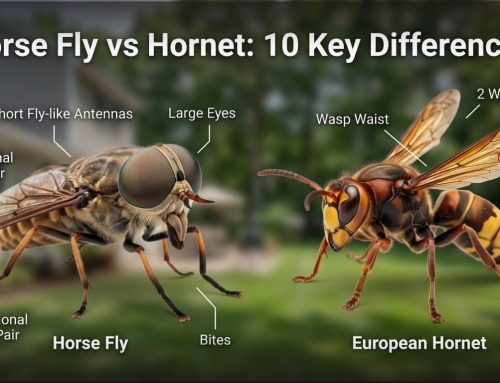
European Hornet (Vespa crabro)
- Size: 1–1.5 inches the largest social wasp in North America
- Color: Brown with yellow/orange markings
- Nest location: Tree hollows, wall voids, attic spaces, ground cavities
- Unique behavior: Nocturnal activity flies and forages after dark
- Aggression: Moderate-high; less reactive than yellow jackets unless nest is disturbed
Bald-Faced Hornet (Dolichovespula maculata)
- Size: 0.75–1 inch
- Color: Black and white/cream markings
- Nest location: Trees, shrubs, building eaves, overhangs
- Unique behavior: Builds large, enclosed paper nests highly visible by late summer
- Aggression: Extremely high one of the most defensively aggressive stinging insects in CT
Yellow Jacket (Ground Hornet) (Vespula species)
- Size: 0.5–0.75 inch
- Color: Bright yellow and black
- Nest location: Ground nests in abandoned burrows, wall voids, under decking
- Unique behavior: Responds explosively to vibration near ground nests
- Aggression: Very high — ground colonies can contain 5,000+ workers
For complete visual identification guides, our wasp and hornet ID encyclopedia for Connecticut has detailed species profiles with photos, behavior notes, and nest identification for every species you’ll encounter in our region.
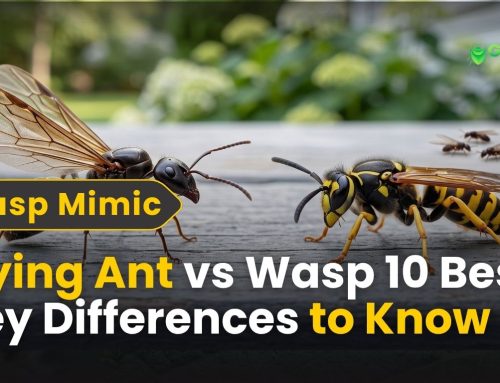
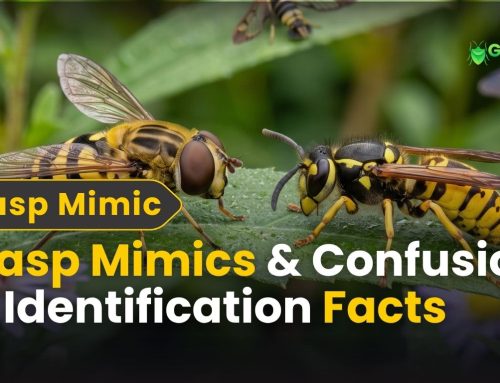
Not sure if what you’re looking at is actually a hornet or something else? Our flying insects that look like wasps guide helps you rule out lookalikes before you treat them.
Tip 1: Identify the Nest Type Before You Do Anything Else
This is the foundational rule of effective hornet control and the one most homeowners skip.
Three primary nest types in Connecticut:
Aerial Paper Nests
These are the football or basketball-sized gray nests you see hanging from tree branches, eaves, and overhangs. Built by bald-faced hornets and some yellow jacket species. Layers of chewed wood pulp create an enclosed, insulated structure with a single entrance hole at the bottom.
Cavity Nests (Wall/Structure Voids)
European hornets and yellow jackets frequently nest inside existing cavity wall voids, attic spaces, tree hollows, and under porch flooring. These nests are invisible from the outside. You’ll identify them by worker flight patterns converging on a single entry point.
Ground Nests
Yellow jackets are the primary ground hornet in Connecticut. They establish colonies in abandoned rodent burrows, soil crevices, under concrete slabs, and beneath decking. These are the most dangerous nest type for casual discovery, invisible until you’re on top of them, and explosive in response to vibration.
Why nest type matters for treatment:
- Aerial nests require targeted spray application at the entrance
- Cavity nests require professional-grade dust or foam penetration
- Ground nests require deep treatment of the underground tunnel system
Mismatching your treatment approach to your nest type is the single most common reason DIY hornet control fails. For a detailed breakdown of nest structures and differences, read our guide on the difference between wasp and hornet nests.
Tip 2: Understand the Colony Lifecycle Before You Choose Your Timing
Effective hornet control isn’t just about what you do — it’s critically about when you do it. And timing is entirely driven by understanding the colony lifecycle.
Here’s your seasonal calendar for Connecticut hornet colonies:
Spring (March–May): The Golden Window
A queen emerges from hibernation and begins building the founding nest entirely alone. Colony size: 1–15 workers by late May. Nest size: golf ball to tennis ball.
This is your easiest, lowest-risk intervention window. A founding queen can be eliminated with a targeted spray to a tiny nest structure. No coordinated colony defense, no mass attack response. Eliminating the queen at this stage prevents the entire season’s colony from developing.
Action point: Inspect your property every two weeks starting in April. Look for single wasps repeatedly visiting the same wall crack, eave junction, or shrub. That’s your founding queen.
Early Summer (June–July): Still Manageable
Colony size grows to 50–300 workers. The nest is visible but not yet at maximum defensive capacity. Worker aggression is moderate and predictable. Treatment at this stage is significantly more involved than spring intervention but remains more manageable than late summer.
Action point: Address any discovered nests immediately with professional treatment. Don’t “wait and see” — every week adds dozens of workers.
Late Summer (August–September): Maximum Danger
The colony reaches peak size. Yellow jacket ground hornet colonies may contain 5,000+ workers. Bald-faced hornet colonies reach 400–700 workers. All species are at maximum aggression due to food scarcity and colony defense instincts.
Action point: Do NOT attempt DIY treatment of any established nest. This is professional territory — full stop.
Fall (October–November): Dying but Dangerous
Workers are dying off. New queens and males emerge for mating. Foraging workers are desperate, food-scarce, and extremely reactive.
Action point: New queens are seeking overwintering sites. Seal your home’s exterior to prevent queens from overwintering inside your structure.
For everything you need to know about how colony lifecycle drives behavior, visit our comprehensive wasp and hornet behavior hub.
Tip 3: Know the Best Time to Treat a Hornets Nest (Hour by Hour)
The best time to kill a hornets nest is not when you discover it — it’s when conditions give you the maximum advantage in terms of worker activity levels and treatment penetration.
The Professional Treatment Window
Our pest management technicians consistently achieve the best results treating hornet nests during the following conditions:
Optimal treatment timing:
- After dark (10 PM – 5 AM) for most aerial and cavity nests
- Before sunrise on a cool morning as a secondary option
- Temperature below 55°F — significantly reduces worker activity and flight capability
- During or after rain — workers sheltered inside the nest, treatment penetrates more deeply
Why nighttime works best:
At night, the vast majority of worker hornets are inside the nest. This means:
- Treatment reaches the maximum number of workers simultaneously
- The queen is inside the nest and will be exposed to treatment
- Fewer active guard workers to intercept your approach
- Workers that survive initial treatment have difficulty mounting an organized response in darkness
Critical exception: European hornets are nocturnal and remain active after dark. For European hornet nests, approach timing requires extra caution even at night.
What Timing Will NOT Help
- Midday on a warm, sunny day — workers are at peak activity, most are outside the nest, treatment will miss the majority of the colony and you’ll face maximum defensive response
- Any time when the nest has been recently disturbed — elevated alert state persists for 24–48+ hours
- When alcohol or sweet fragrances are present on your person — increases aggression regardless of time
For our complete guide on timing and activity windows, see when wereps are least active and the best time to act essential reading before any treatment attempt.
Tip 4: The Ground Hornet Situation Why It’s Different From Everything Else
Ground hornets deserve their own dedicated section in any serious Hornet Control Authority Hub because ground nest situations are categorically more dangerous than aerial nests and require a completely different approach.
Why Ground Hornet Nests Are So Dangerous
Invisibility: The nest entrance may be a hole the size of a quarter in your lawn, under a rock, or beneath a wooden deck. You can have a colony of 3,000+ workers six inches below where you’re walking.
Vibration trigger: Ground nests are extraordinarily sensitive to vibration. The underground tunnel system acts as an amplifier. A lawnmower passing 15 feet away can trigger a full defensive response. So can a child running across the lawn. So can heavy footsteps.
Explosive exit response: Unlike aerial nests where workers must navigate their way off a nest structure, ground colony workers can exit the entrance hole in a dense, rapid stream surrounding you before you’ve had time to move.
Underground tunnel complexity: The nest structure extends well below the surface through a network of tunnels connected to nest chambers. Surface spraying at the entrance barely penetrates this system.
What Kills Ground Hornets Effectively?
For ground yellow jacket treatment, professional pest technicians use:
Insecticidal dust The most effective treatment for ground nests. Dust is applied directly into the nest entrance, where it coats workers passing through and spreads throughout the tunnel system. Workers carry it into the nest, where it reaches the queen and larvae.
Professional-grade injection foam Used in conjunction with dust for deep penetration into complex tunnel systems.
Pyrethroid liquid treatment Applied at the entrance and surrounding soil in some situations.
What doesn’t work for ground nests:
- Consumer spray cans — insufficient penetration, triggers mass exit response
- Boiling water — ineffective, dangerous, triggers attack
- Gasoline or flammable liquids — illegal, extremely dangerous, do not do this
- Sealing the entrance — forces workers to find alternative exits, potentially into your home
If you have a ground hornet nest on your Connecticut property, please visit our dedicated guide to ground hornet treatment in CT before attempting any intervention. And honestly for ground nests of any significant size this is a situation that requires professional treatment.
Our team handles eliminating ground hornets throughout Connecticut safely and effectively, including the complex underground nest systems that make DIY treatment so consistently ineffective.
Tip 5: How to Destroy a Bald-Faced Hornet Nest The Right Way
Bald-faced hornets are the species most likely to produce the large, football-to-basketball-sized paper nests Connecticut homeowners encounter on trees, shrubs, and building eaves. They’re also one of the most aggressively territorial stinging insects in our region.
If you’re asking how to destroy a hornet nest built by bald-faced hornets, here’s what you need to know.
Understanding Bald-Faced Hornet Aggression
Before any treatment discussion, understand this: bald-faced hornets will pursue you. Unlike most wasp species that defend a zone around the nest entrance, bald-faced hornets will actively chase perceived threats for significant distances — sometimes 50+ feet.
According to Wikipedia’s profile of Dolichovespula maculata, this species is known for its highly aggressive defensive behavior and the ability to both sting repeatedly and spray venom toward the eyes of perceived threats.
Yes, they can spray venom at your eyes. This is not a species to handle casually.
The Treatment Approach for Bald-Faced Hornet Nests
Step 1 — Confirm species and nest location
Observe from a safe distance (at minimum 20 feet) to confirm the species, nest entrance location, and worker flight patterns. Binoculars help significantly.
Step 2 — Determine accessibility and height
Is the nest accessible without a ladder? Is it adjacent to foot traffic areas? Is it overhanging a doorway or children’s play area? These factors determine the urgency and approach.
Step 3 — Choose your timing
Late night, cool temperature, after activity has visibly ceased (keeping European hornet exception in mind).
Step 4 — Apply treatment directly at the entrance
Professional-grade pyrethroid aerosol applied directly and continuously into the nest entrance for 10–15 seconds. The spray must penetrate the entrance and reach workers inside.
Step 5 — Retreat immediately and remain clear for 24 hours
Step 6 — Remove the physical nest structure (ONLY after full colony death)
Dead, confirmed inactive nests should be physically removed to prevent re-use by new queens in subsequent seasons and to eliminate pest harborage.
The honest recommendation: For bald-faced hornet nests larger than a softball — which is most of the nests Connecticut homeowners encounter — professional treatment is strongly advisable. The pursuit behavior of this species makes even a “successful” spray treatment dangerous without full protective equipment.
Our team provides professional bald-faced hornet nest removal throughout Connecticut as part of our comprehensive hornet control services.
Tip 6: DIY vs. Professional Hornet Control An Honest Comparison
This is the section most pest control companies don’t write honestly. We’re going to.
Not every hornet situation requires professional intervention. A small founding nest with a few workers, treated properly at the right time, can be handled by an informed homeowner. But most hornet situations in Connecticut particularly by the time homeowners discover them have passed the point where DIY treatment is safe or effective.
Here’s the honest comparison:
Complete DIY vs. Professional Hornet Control Comparison
| Factor | DIY Treatment | Professional Treatment |
| Species ID accuracy | Often incorrect | Always accurate |
| Correct product selection | Hit or miss | Species and situation specific |
| Nest penetration depth | Superficial | Complete |
| Queen elimination | Rarely achieved | Targeted primary goal |
| Protective equipment | Inadequate | Full professional-grade PPE |
| Treatment timing expertise | Based on general advice | Based on species-specific knowledge |
| Alarm pheromone management | Uncontrolled | Minimized through approach strategy |
| Post-treatment monitoring | None | Included |
| Physical nest removal | Dangerous without PPE | Safe, complete |
| Prevention guidance | Not provided | Included |
| Re-treatment if needed | Additional product purchase | Covered under service |
| Risk of making it worse | High | Very low |
| Long-term effectiveness | Inconsistent | Highly reliable |
When DIY Is Potentially Appropriate
- Founding nest only A single queen building a nest smaller than a golf ball, in an easily accessible location, with no workers yet present
- Solitary wasp species Mud daubers and other non-social species don’t defend nests and can be removed with minimal risk
- Empty nest, confirmed dead A nest with no activity, confirmed for 2+ weeks, can be physically removed
When You Absolutely Need a Professional
- Any nest with visible workers call a professional
- Any ground hornet nest call a professional
- Any nest inside a wall, attic, or structural void call a professional
- Any nest larger than a golf ball call a professional
- Any nest near a high-traffic area (doorway, playground, walkway) call a professional
- Any nest with a previously disturbed colony call a professional
- Anyone in the household with known sting allergies call a professional
According to the CDC’s guidance on stinging insects, approximately 90–100 Americans die annually from bee, wasp, and hornet stings the majority from anaphylaxis. This risk exists for people who have never had a previous allergic reaction.
Don’t let pride about a can of spray lead to an emergency room visit. Contact our professional hornet control team in Connecticut for a fast, safe assessment.
Tip 7: What Actually Kills Hornets? Product Guide by Situation
Understanding which products work for which situations is critical. Consumer-grade products are significantly less effective than professional formulations, but knowing their appropriate applications can inform your decision-making.
Aerosol Wasp and Hornet Sprays
How they work: Pyrethroids (cypermethrin, bifenthrin, deltamethrin) disrupt insect nervous systems, causing rapid knockdown on contact.
Best for: Aerial nests in accessible locations, at correct timing
Limitations: Jet sprays reach 15–20 feet maximum. Penetration into enclosed nests is limited. Does not eliminate the queen if she retreats to the nest center.
Consumer brand examples: Raid Wasp & Hornet Killer, Spectracide Wasp and Hornet Killer
Professional advantage: Professional pyrethroid formulations are significantly more concentrated and include residual activity that consumer products lack.
Insecticidal Dust
How it works: Dry dust formulations (silica dust, pyrethrin dust, diatomaceous earth) coat workers passing through the nest entrance and are tracked into the nest interior.
Best for: Ground hornet nests, cavity nests in wall voids, any situation where liquid spray cannot penetrate effectively
Limitations: Requires precise application at the entrance; not appropriate for aerial paper nests
Professional advantage: Professional dust formulations (Delta Dust, Drione) are dramatically more effective than consumer products and are properly applied with specialized injection equipment
Foam Injection
How it works: Expanding foam formulations deliver insecticide throughout a cavity and physically block exit routes simultaneously.
Best for: Wall voids, hollow tree cavities, ground nest tunnel systems
Limitations: Requires proper equipment; consumer products are significantly less effective
Professional advantage: Professional foam with correct formulation expands to reach all corners of a cavity nest
Residual Liquid Treatments
How it works: Liquid insecticide applied to nest surfaces and surrounding area remains active for weeks, killing workers that make contact.
Best for: Perimeter prevention, surface treatment of abandoned nest sites to prevent re-use
Limitations: Not a primary nest elimination tool; should follow targeted nest treatment
Natural and Home Remedies: The Honest Assessment
Peppermint oil, dish soap solutions, and essential oil sprays are occasionally promoted as hornet control methods. Our honest assessment: they do not eliminate colonies. They may deter individual scouts and provide temporary repellent effects, but applied to an active colony they do nothing meaningful and approaching close enough to apply them creates significant sting risk.
Use evidence-based products and methods. Your safety depends on it.
Tip 8: How to Find a Hidden Hornet Nest
You know there’s a nest somewhere. Workers keep appearing in your yard, but you can’t locate the source. Here’s how to find it safely.
The Flight Pattern Method
Stand in a central, open location in your yard safely away from structures and watch wasp flight patterns for 5–10 minutes.
Foraging workers returning to the nest follow relatively consistent flight paths. By tracking which direction workers are consistently flying from multiple observation points, you can triangulate the likely nest location.
Signs you’re getting close:
- Workers consistently disappearing into a specific shrub, tree, or structure
- A “stream” of workers converging on one point
- Workers entering and exiting a specific gap or hole in rapid succession
Tracking Ground Hornets
Ground nest location is particularly challenging. Watch for:
- A small, quarter-to-golf ball-sized hole in the lawn with workers entering and exiting
- Disturbed soil around a ground entry point
- Workers converging on a specific area of lawn, mulch, or under decking
Never stand directly over a ground nest entrance while tracking. Observe from at least 10–15 feet away.
Tracking Cavity Nests
For nests inside walls or structures:
- Listen for sustained buzzing from walls, particularly in warm weather
- Watch for consistent entry and exit at a specific gap in siding, soffit, or eave
- Look for wood staining or moisture damage near suspected nest locations
- Note where European hornets consistently appear near interior light sources at night (indicates nest inside wall)
Once you’ve located the nest, mark the area with visible tape or a flag and do not approach further. The location information is what matters — the treatment is a professional’s job.
Tip 9: Protecting Yourself Before, During, and After Any Treatment Attempt
If you’ve decided to proceed with a DIY treatment specifically for a small, accessible founding nest here is the minimum safety protocol.
Before Treatment: Preparation Checklist
- Confirm the nest is small (golf ball or smaller) and has minimal worker activity
- Identify a clear, unobstructed retreat path away from the nest
- Plan your treatment for nighttime or pre-dawn, below 55°F
- Inform someone in your household of what you’re doing and when
- Remove all pets and people from the area
- Have car keys accessible — your car is your emergency enclosed retreat
- Do NOT consume alcohol before treatment (impairs judgment and reaction time)
- Check for personal sting allergy history — any known allergy = call a professional
Protective Clothing (Minimum Standard)
- Long-sleeved shirt, tucked into gloves
- Long pants, tucked into socks
- Closed-toe shoes — no sandals
- Gloves (thick, preferably leather)
- Eye protection (safety glasses minimum; goggles preferred for bald-faced hornets)
- Hat with brim
- Light-colored clothing — avoid dark colors near hornet nests
Note: This clothing provides partial protection only. A single determined hornet can sting through thin fabric. It is not equivalent to professional bee suit protection.
During Treatment
- Move slowly and deliberately until you’re in position
- Apply spray directly and continuously at the nest entrance
- Do not stop partway through — commit to the full application or retreat
- If workers begin exiting before you’ve completed treatment, retreat immediately
- Treat from the maximum effective distance the product allows
After Treatment
- Retreat immediately after application — do not stand and watch
- Remain clear of the area for at least 24 hours
- Confirm complete cessation of activity before approaching the nest
- Physical removal of the dead nest should wait 48–72 hours minimum
For complete information about sting treatment if your protection fails, our hornet sting treatment guide covers immediate response steps and emergency indicators.
Tip 10: How to Destroy a Hornet Nest Safely Step-by-Step
For the situations where DIY treatment is appropriate (small founding nests only), here is the complete step-by-step guide to how to destroy a hornet nest safely.
This guide is for small founding nests ONLY — smaller than a golf ball, minimal worker activity. For any established colony, use professional hornet control.
Step 1: Confirm Appropriateness (15 minutes before treatment)
From a safe distance (10+ feet), observe the nest for 10 minutes during daylight. Count the number of visible workers. If you see more than 5–10 workers, this is beyond the scope of safe DIY treatment. Call a professional.
Step 2: Prepare Your Equipment
- Appropriate pyrethroid aerosol spray (20-foot jet minimum)
- Flashlight with red filter (red light is less visible to insects than white)
- Full protective clothing as described in Tip #9
- Clear retreat path confirmed
Step 3: Wait for Your Treatment Window
Treat after 10 PM on a night when the temperature is below 60°F. Cloudy and calm conditions are preferable.
Step 4: Approach Slowly
Move deliberately, not quickly. Rapid movement is a wasp aggression trigger. Approach from downwind if possible — strong odors from spray products can alert workers.
Step 5: Apply Treatment at the Entrance
Position yourself at the maximum effective distance for your spray product. Apply a continuous 5–10 second burst directly at and into the nest entrance. Do not aim at the sides of the nest — target the entrance hole.
Step 6: Retreat Immediately
Do not wait to observe results. Retreat immediately along your planned path to your enclosed safe space.
Step 7: Monitor for 48 Hours
After 48 hours, observe the nest from a safe distance. Zero activity = treatment effective. Any activity = additional professional treatment needed.
Step 8: Physical Removal
After confirming complete cessation of activity for 48+ hours, the physical nest structure can be removed. Wear protective clothing. Place a sealed trash bag over the nest, seal the bag, and dispose.
Tip 11: Professional Hornet Nest Removal What to Expect
If you’ve decided correctly to hire a professional and for most Connecticut hornet situations, that’s absolutely the right call here’s what the professional hornet nest removal process looks like so you know exactly what you’re getting.
The Professional Process
Step 1 — Site inspection and species identification
A trained technician inspects the property, confirms the species, locates all active nests (including ones you may not have found), and assesses structural entry points.
Step 2 — Treatment strategy selection
Based on species, nest type, location, and colony size, the technician selects the appropriate professional-grade treatment formulation and approach.
Step 3 — Protective equipment
Full professional bee suit, gloves, sealed eyewear, and respirator if required. The equipment homeowners have is fundamentally different from what professionals use.
Step 4 — Treatment application
Professional-grade pyrethroid dust, foam, or liquid — applied with commercial-grade equipment that delivers product deep into nest structures, wall voids, and ground tunnel systems. Treatment reaches the queen and larvae — not just surface workers.
Step 5 — Physical nest removal (same visit or follow-up)
For aerial nests, complete physical removal of the nest structure after confirmed worker death. For ground nests, entrance sealing after confirmed colony elimination.
Step 6 — Entry point sealing
Identification and sealing of structural entry points that allowed the colony to establish, preventing re-infestation.
Step 7 — Prevention recommendations
Site-specific advice for preventing future nesting at the same or adjacent locations.
For immediate professional hornet control throughout Connecticut, our hornet exterminator services cover all of Fairfield County with fast response and professional-grade treatment.
Tip 12: The 5 Biggest Mistakes Connecticut Homeowners Make With Hornet Control
Learning from others’ mistakes is significantly less painful than making them yourself.
Mistake 1: Waiting to See If It Gets Better on Its Own
It never does. A hornet colony grows exponentially from spring through late summer. Every week you wait adds workers, adds aggression, and reduces your safe management options. A nest you could have addressed easily in May becomes a genuine emergency in August. Act as soon as you find it.
Mistake 2: Sealing the Nest Entrance Without Treating First
This is one of the most dangerous mistakes in the DIY hornet control category — especially for cavity nests. When you seal the exterior entrance of an active nest, you trap potentially thousands of workers inside with no exit. They will find another exit — and it may be directly into your living space through the wall.
Never seal an active nest entrance without treating the colony first.
Mistake 3: Using the Wrong Product for the Nest Type
Aerosol spray on a ground nest? Ineffective and dangerous. Consumer wasp killer on a wall void nest? It won’t penetrate. Matching product to situation is critical — and it’s knowledge most homeowners don’t have before they’re standing in front of an active colony.
Mistake 4: Treating at the Wrong Time of Day
Treating at noon when 70% of workers are outside foraging accomplishes very little. You kill the workers that happen to be inside, but the queen may still be alive and the majority of the colony is out and will return. Treatment effectiveness at midday is a fraction of what it is at midnight.
Mistake 5: One Treatment and Walking Away
Consumer products often produce incomplete results. Workers that were outside during treatment return to find the nest compromised, but with some colony members still alive. Treating once and assuming the job is done is how you end up with a wounded, hyper-aggressive partial colony that’s now more dangerous than before you treated it.
Our wasps vs. hornets dangers and differences guide for CT covers many of the behavioral factors that make incomplete treatment so problematic.
Tip 13: Preventing Hornets From Nesting The Season-by-Season Strategy
The most effective hornet control is the hornet colony that never establishes in the first place. Here’s your complete prevention calendar for Connecticut homeowners.
Fall (October–November): The Most Important Prevention Window
This is when newly mated queens are seeking overwintering sites. What you do this fall determines how many founding queens establish inside your home next spring.
Fall prevention checklist:
- Seal all gaps in soffits, fascia, and eave junctions with paintable caulk
- Install fine mesh screening over all attic and crawlspace vents
- Seal around all utility penetrations (electrical, plumbing, HVAC) entering the home
- Caulk around window frames, door frames, and garage door weatherstripping
- Seal gaps where decking attaches to the home structure
- Remove or relocate wood piles away from the house exterior
- Fill abandoned rodent burrows in your lawn (prime ground nest sites)
Winter (December–March): Inspection and Preparation
- Inspect attic and crawlspace for signs of overwintering queens (look for single insects in torpor near insulation)
- Remove old abandoned nest structures (prevent re-use as harborage)
- Note locations where nests were found in previous years for early spring monitoring
Early Spring (April–May): Early Detection is Everything
- Begin weekly property inspections starting in April
- Focus on historically active nest sites and potential new nest locations
- Apply preventive residual spray to historically active eave areas and overhangs (professional application recommended)
- Inspect all outbuildings, sheds, and garages
- Watch for founding queens investigating potential nest sites (single wasps repeatedly visiting one location)
Summer (June–September): Active Management
- Continue bi-weekly property inspections
- Remove fallen fruit from around fruit trees promptly — strong fermenting attractant
- Keep all outdoor trash cans sealed with locking lids
- Rinse recycling containers weekly to eliminate sweet residue
- Cover outdoor food during cookouts and outdoor dining
- Never leave open beverages unattended outdoors
For our most comprehensive prevention strategy guide, see how to deter hornets from nesting on your property in 2025.
Tip 14: Understanding Hornet Diet and What Attracts Them to Your Property
Effective hornet control includes removing the environmental factors that make your property attractive in the first place. Diet drives a significant portion of hornet foraging behavior and understanding what they’re looking for tells you exactly what to remove.
What Attracts Hornets to Your Yard
Protein sources (spring and early summer):
- Aphid infestations on garden plants
- Caterpillars and moth larvae in your garden
- Open compost with organic material
- Uncovered outdoor pet food
- Dead insects near exterior lights
Hornets are actually beneficial in spring they’re hunting garden pests. But this beneficial predation brings them onto your property and establishes foraging routes that persist when their dietary needs shift.
Sugar sources (late summer and fall):
- Overripe and fallen fruit (apple, pear, plum trees are major attractants)
- Unsealed trash and recycling containers
- Outdoor beverages open soda cans, beer, juice
- Hummingbird feeders
- Sweet desserts and condiments at outdoor dining
- Fermenting organic matter in gardens and compost
Nesting material sources:
- Weathered or bare wood on fences, decks, and wood piles (chewed for nest construction)
- Dead or decaying tree stumps and branches
- Corrugated cardboard (similar fiber to wood pulp)
Eliminating these attractants particularly the sugar sources in late summer — can significantly reduce hornet foraging activity on your property. It won’t eliminate an established colony, but it makes your property substantially less attractive to founding queens in spring.
Do hornets eat wasps? Yes — and understanding this predatory dynamic is another piece of the behavior puzzle. Read more in our comprehensive guide on do hornets eat wasps and hornet predator behavior.
Tip 15: When to Call a Professional The Non-Negotiable List
We’ve given you 14 tips of comprehensive, actionable information. Tip #15 is possibly the most important one, and it’s simple:
Know when the situation has exceeded what you should handle alone.
Call a Professional Immediately If:
Colony size:
- Any nest larger than a tennis ball with visible workers
- Any ground nest with confirmed worker activity
- Any cavity nest inside your home’s walls, attic, or structural voids
Species involved:
- Bald-faced hornets — their pursuit behavior makes amateur treatment exceptionally dangerous
- European hornets nesting inside structures — wall void nests require professional dust treatment
- Yellow jacket ground nests — underground tunnel systems cannot be adequately treated with consumer products
Location:
- Nest within 10 feet of an entry door, window, or high-traffic area
- Nest adjacent to children’s play areas
- Nest inside or on the home structure (not in a tree or distant shrub)
- Multiple nests found on the same property
Personal factors:
- Anyone in your household has a known allergy to bee or wasp stings
- Previous anaphylactic reaction to any stinging insect sting
- Previous nest disturbance that has already triggered a sting event
Situation:
- A nest has been previously disturbed by any means
- Workers have entered your home’s interior
- You cannot identify the species or nest location accurately
- Your first treatment attempt was ineffective
Our team provides immediate hornet control across all of Connecticut — with fast response times specifically designed for the time-sensitive nature of active hornet colonies. We serve all of Greenwich, Stamford, Darien, New Canaan, Wilton, Westport, and throughout Fairfield County.
Connecticut-Specific Hornet Control: What Makes Our Region Unique
Homeowners in Connecticut face some specific hornet control challenges that distinguish our region from other parts of the country:
European Hornet Prevalence
Connecticut has a well-established European hornet population. Their nocturnal behavior, large size, and tendency to nest inside structural voids make them particularly challenging for homeowners. According to the Connecticut Agricultural Experiment Station, European hornets are established throughout the state and are frequently encountered in residential settings.
Wooded Suburban Landscape
The heavily wooded, landscape-rich suburban communities of Fairfield County — Greenwich, Darien, New Canaan, Wilton, Westport — provide ideal nesting conditions. Dense ornamental shrubs, mature trees, and the mix of open lawn and wooded areas creates perfect habitat for all three primary hornet species.
Expanding Bear Population
Connecticut’s growing black bear population — documented by Connecticut DEEP to be spreading across Fairfield County — occasionally disturbs hornet nests while foraging. A bear-damaged nest site with scattered workers is a particularly hazardous situation — disoriented, homeless workers are highly aggressive.
Late-Season Extension
Connecticut’s climate allows hornet colonies to remain active well into October and sometimes early November — longer than more northern states. This extends the high-risk period and means late-season yard work remains dangerous until the first hard frost.
For our complete Connecticut-specific species identification and regional behavioral analysis, our wasp vs. hornet comparison hub for Connecticut is the definitive regional resource.
Real Stories: Connecticut Hornet Control Lessons
Greenwich, CT — The Early Spring Win
“Our pest technician spotted a founding queen building a tiny nest behind our shutter during an April inspection. It was the size of a bottle cap. Treated immediately, queen eliminated, colony never developed. He told us that the same nest in August would have been a major project. We now book a spring inspection every April without fail. Best we never spent on an August emergency.”
— Katherine D., Greenwich CT
Stamford, CT — The Ground Nest Disaster
“My husband tried to treat a ground yellow jacket nest with a consumer spray can. He’d read that you should do it at night. He went out at 11 PM and sprayed the entrance. Got stung twice running away and ended up at urgent care — not from an allergic reaction, just from the sheer number of stings he received before he got inside. The next day, Green Pest Management came out, used professional dust treatment, and it was done. He said the professional was inside and out in twenty minutes. We’d waited three weeks trying DIY approaches. Never again.”
— Robert T., Stamford CT
Wilton, CT — The Wall Void Discovery
“We kept hearing buzzing in our guest room wall in July. Ignored it for two weeks thinking it was something with the HVAC. By the time we called Green Pest Management, there was a European hornet colony inside our wall with an entrance gap in the exterior siding. The technician used professional dust injected directly into the wall void. Colony was dead within 48 hours. He then sealed the entry point and showed us four other gaps on our exterior that were potential entry points for next season. Complete service — we couldn’t have done any part of that ourselves.”
Maria C., Wilton CT
The Hornet Control Authority Hub Summary: Your Complete Action Plan
Here’s your complete action plan distilled from all 15 tips:
Immediate Actions (Right Now)
- Identify whether you have a hornet nest on your property
- If yes — identify the species and nest type from a safe distance
- Determine whether the situation is appropriate for DIY or requires professional intervention (when in doubt — professional)
- If DIY: confirm correct timing, product, and safety protocol before proceeding
- If professional: contact a Connecticut hornet control specialist immediately
Short-Term Actions (This Week)
- Conduct a full property inspection for additional nests
- Remove or secure food attractants from your yard
- Ensure all trash and recycling is properly sealed
- Alert family members to the nest location and keep everyone clear
Seasonal Actions (This Month)
- Address all discovered nests with appropriate treatment
- Identify and begin sealing structural entry points
- Remove old, abandoned nest structures
Long-Term Prevention (Next 3 Months)
- Complete full exterior sealing before fall queen-seeking period
- Book a professional spring inspection for April
- Implement year-round attractant reduction strategies
FAQ: Hornet Control Authority Hub Your Questions Answered
Q1: What is the best time to spray a hornets nest?
A: The best time to spray a hornets nest is after 10 PM on a cool night (below 55–60°F), when the maximum number of workers are inside the nest and activity is at its lowest. Pre-dawn is the second-best window. Avoid midday and early afternoon when most workers are actively foraging outside the nest and treatment will miss the majority of the colony.
Q2: What kills ground hornets most effectively?
A: Professional insecticidal dust (such as Delta Dust or Drione) applied directly into the ground nest entrance is the most effective treatment for ground hornets. The dust coats workers as they pass through the entrance, is carried into the nest interior, and reaches the queen. Consumer aerosol sprays cannot adequately penetrate underground tunnel systems and typically trigger a mass defensive response before sufficient product is delivered.
Q3: How do I know if I have a ground hornet nest?
A: Signs of a ground hornet nest include: a quarter-to-golf ball-sized hole in the lawn, soil, or under mulch with worker wasps (yellow jackets) consistently entering and exiting; disturbed soil around the entrance; a stream of workers converging on a ground-level point; or explosive exit of workers in response to nearby mowing or vibration. Observe from at least 10–15 feet away.
Q4: Can I remove a bald-faced hornet nest myself?
A: For small founding nests with minimal workers, careful nighttime treatment by an informed, properly protected homeowner is possible. However, for any established bald-faced hornet nest (larger than a golf ball with visible workers), professional removal is strongly recommended. Bald-faced hornets actively pursue threats for significant distances, can spray venom toward the eyes, and respond to disturbance with coordinated, aggressive attacks that make amateur treatment genuinely dangerous.
Q5: Will a hornet nest go away on its own in winter?
A: Worker hornets die off naturally in late fall in Connecticut. The active colony does not survive winter. However, the nest does not “go away” on its own — the physical structure remains. More importantly, new queens may use the same site the following spring, establishing a new colony in a location that’s already proven suitable. Physical nest removal after colony death, combined with entry point sealing, prevents this recurrence.
Q6: How quickly can a hornet colony grow?
A: Extremely quickly. A founding queen in May with 10 workers can grow to 200 workers by early July and 1,000+ workers (yellow jackets) by August. This exponential growth is why early intervention is so critical — and why the “wait and see” approach consistently results in homeowners facing maximum-size, maximum-aggression colonies that require significantly more intensive professional treatment.
Q7: How much area should I clear when treating a hornet nest?
A: When treating an aerial paper nest, clear all people and pets from at least a 50-foot radius before beginning treatment. For ground hornet nests, clear a minimum 30-foot radius. These distances account for the defensive pursuit behavior of both species and the alarm pheromone recruitment range that can mobilize workers from inside the nest to join the defensive response. For bald-faced hornet nests, extend the clearance to 75+ feet given their documented pursuit behavior.
Final Word: Your Home. Your Safety. Take Control Now.
The Hornet Control Authority Hub exists for one reason: to make sure you never have to deal with a hornet emergency that was preventable. Every year across Greenwich, Stamford, Darien, New Canaan, Wilton, and Westport, homeowners go through exactly the same experience — they find the nest, they underestimate it, they try to handle it themselves, and they end up in the emergency room or with a situation dramatically more dangerous than when they started.
You don’t have to be that story.
The 15 expert tips in this guide give you everything you need to identify your situation correctly, choose the right approach, understand your timing, and — most importantly — know when to step back and let a professional handle it.
And if there’s a hornet nest on your property right now, here’s the most important thing we can tell you: every week you wait makes it harder, larger, and more dangerous. The colony growing in your hedge or under your deck is not getting smaller. It’s not going to move on. It’s going to keep growing until the first frost — and by then, it will have already sent out new queens to overwinter inside your home and start the whole cycle again next spring.
Take control now, before it controls your summer.
Contact Green Pest Management today for fast, professional hornet control throughout Connecticut. We serve all of Fairfield County — including Greenwich, Stamford, Darien, New Canaan, Wilton, and Westport — with professional-grade treatment that eliminates colonies completely, removes nests safely, and gives you back your yard, your patio, and your peace of mind.
Don’t wait. Act today.
Complete Resource Library: Hornet Control Authority Hub
Behavior & Identification:
- Complete Wasp & Hornet Behavior Hub — 2026 Guide
- Wasp & Hornet ID Encyclopedia for Connecticut
- Wasp vs. Hornet in CT — Full Comparison Hub
- Wasp Lifespan & Lifecycle: Queen, Worker & Colony
- Are Hornets Territorial? What Triggers an Attack
Treatment & Control:
- Hornet Exterminator Services — CT
- Hornet Nest Removal in CT
- Ground Hornet Treatment in CT
- Immediate Hornet Control in CT
- Eliminate Ground Hornets — CT Guide
Safety & Stings:
Prevention: