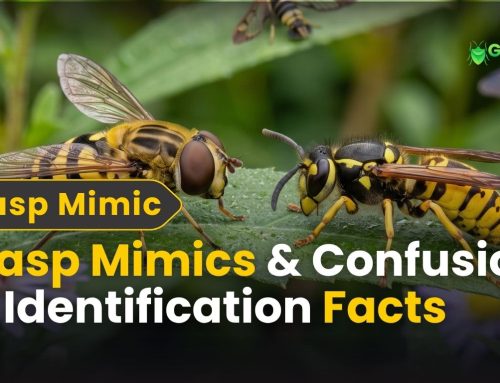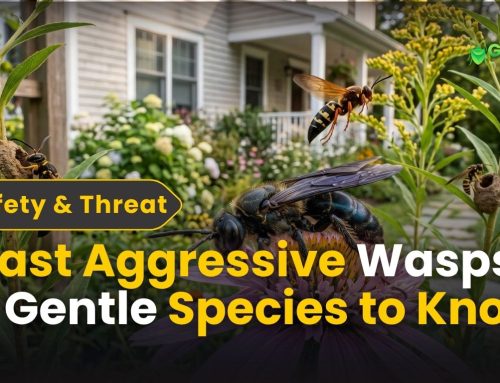
What Does a Parasitic Wasp Look Like? 7 Key Features
Introduction: That Strange Wasp in Your Yard What Is It?
You’re out in your garden in Westport or walking your property line in Wilton when you notice an insect that looks like a wasp but something about it seems off. It’s too slender, moving strangely, or has what looks like an impossibly long tail. Your first instinct might be to back away slowly and google what you just saw.
If that sounds familiar, you’re not alone. Parasitic wasps are one of the most commonly misidentified insects in Connecticut, largely because they look unusual compared to the yellow jackets and hornets most people are used to seeing.
So what does a parasitic wasp look like? The honest answer is that it depends on the species, because there are thousands of them. But there are consistent, identifiable features that help you recognize them. This article breaks down 7 key physical traits, walks through the most common species you’ll encounter in Fairfield County, and explains how to distinguish a harmless parasitic wasp from something that actually warrants concern.
What Is a Parasitic Wasp? A Quick Primer Before We Get to Looks
Before diving into appearance, it helps to understand what you’re actually looking at. A parasitic wasp — technically called a parasitoid wasp — is a type of wasp that completes part of its life cycle inside or on another insect. The female lays her eggs in or on a host insect, and the larvae develop by consuming that host.
There are over 17,000 described species of parasitic wasps worldwide, and entomologists believe far more remain undiscovered. In Connecticut’s Fairfield County with its mix of suburban gardens, wooded lots, and ornamental landscapes — you’re actually surrounded by them throughout the warmer months, whether you know it or not.
For a full breakdown of what these insects are and how they behave, our dedicated guide on what is a parasitic wasp covers the biological essentials in plain language. And if you’re already wondering about their behavior around people, our article on whether parasitic wasps are dangerous to humans addresses that directly.
Now, let’s talk about what they actually look like.
What Does a Parasitic Wasp Look Like? 7 Key Identifying Features
Feature 1: An Extremely Narrow, Thread-Like Waist
The most consistent visual feature across nearly all parasitic wasp species is a dramatically narrow waist sometimes called a petiole. This is the constricted segment connecting the thorax (middle body section) to the abdomen.
In social wasps like yellow jackets, the waist is already fairly slim. In many parasitic wasps, it’s even more pronounced almost thread-like in some species. This gives the body a segmented, pinched appearance that looks distinctly different from bees, flies, or most other insects people encounter.
When homeowners in Greenwich or New Canaan describe an insect as “wasp-like but weirder looking,” this extreme waist shape is usually part of what makes them say that.
Feature 2: A Long, Needle-Like Ovipositor (Often Mistaken for a Stinger)
This is the feature that generates the most alarm and the most misidentification.
Many female parasitic wasps have a long ovipositor projecting from the tip of their abdomen. This is an egg-laying organ, not a stinger. In some species, it’s barely visible. In others particularly the giant ichneumon wasp (Megarhyssa macrurus) it can extend several inches beyond the body, sometimes longer than the wasp itself.
When people in Fairfield County spot an insect with what appears to be an enormous stinger, they’re usually looking at a giant ichneumon wasp laying eggs into a dead or dying tree. The ovipositor is drilling through bark to reach wood-boring beetle larvae inside.
This looks alarming. It is completely harmless to humans.
Understanding wasp body parts and anatomy helps put this feature in proper context — and goes a long way toward reducing unnecessary panic.
Feature 3: Slender, Elongated Body Shape
Unlike the robust, thicker bodies of bumble bees or even carpenter bees, parasitic wasps tend to have long, slender bodies. The abdomen is often cylindrical or slightly flattened, and the overall silhouette is trim and streamlined.
This slenderness is partly functional a compact body allows many species to access small spaces, drilled holes in wood, or hidden locations where their host insects live.
Size varies enormously. Some braconid wasps measure less than a quarter inch. The giant ichneumon wasp can reach two to three inches in body length alone (not counting the ovipositor). Trichogramma wasps used commercially in agriculture to control caterpillar pest populations are so small they’re essentially invisible to the naked eye.
Feature 4: Coloration More Variable Than You’d Expect
When most people picture a wasp, they think yellow and black. While that pattern does appear in some parasitic species, parasitic wasps are far more color-diverse than their social cousins.
Common colorations include:
- Black or dark brown — the most common across ichneumon and braconid wasps
- Reddish-brown or orange — seen in some braconid species and spider wasps
- Metallic green or blue — characteristic of chalcid wasps and some eulophid species
- Yellow and black banding — present in some species, causing confusion with yellow jackets
- Multi-colored patterns — many ichneumons display orange, black, and white in varying combinations
The metallic green varieties are particularly distinctive and are sometimes described by homeowners as looking like “tiny jeweled flies.” If you’ve ever spotted a small, brilliant green insect hovering near aphid-infested plants, there’s a good chance you were looking at a parasitic wasp.
Our Connecticut wasp and hornet ID encyclopedia includes visual descriptions of many species found throughout the state — a useful reference when you’re trying to match what you’ve seen in your yard.
Feature 5: Wings Two Pairs, Held Differently Than Social Wasps
Parasitic wasps, like all wasps, have two pairs of wings — a larger forewing and a smaller hindwing. The two wings on each side are linked together during flight, functioning as a single unit.
What distinguishes many parasitic wasps visually is how they hold their wings at rest. Social wasps like yellow jackets fold their wings lengthwise against their body. Many parasitic wasps, particularly ichneumons and braconids, hold their wings partially spread or flat, giving them a different resting silhouette.
Wing venation the pattern of veins within the wing membrane — is one of the primary tools entomologists use to classify parasitic wasp species, though this level of detail requires close observation or magnification.
Feature 6: Long, Constantly Moving Antennae
Parasitic wasps tend to have long, filiform (thread-like) antennae that are almost always in motion. Watch a parasitic wasp for even a few seconds and you’ll notice the antennae tapping, sweeping, and probing surfaces constantly.
This behavior is purposeful. The antennae are packed with sensory organs that detect chemical cues specifically, the scent trails left by host insects. A female braconid wasp searching for aphids or a caterpillar to parasitize is essentially following an olfactory map with those antennae.
The antennal length relative to body size is typically greater in parasitic wasps than in social wasps, making this one of the cleaner visual distinctions when you’re trying to identify what you’re looking at.
Feature 7: Legs Often Tucked or Dangling in Flight
In flight, many parasitic wasps carry their legs dangling or partially extended beneath their body, rather than tucked tight. This gives them a somewhat ungainly appearance compared to the streamlined flight posture of yellow jackets or paper wasps.
Combined with their slower, more deliberate flight patterns hovering near plant stems, probing leaf surfaces, circling trees this makes parasitic wasps look noticeably different in the air from the fast, direct flight of social wasps headed to and from a nest.
If you see an insect moving slowly and methodically near your garden plants, pausing frequently, it’s likely searching for hosts. That behavior is very characteristic of foraging parasitic wasps.
Visual Guide: Common Parasitic Wasp Species in Connecticut
Here’s a practical reference for the species most likely to be encountered by homeowners across Fairfield County:
| Species | Size | Color | Distinctive Feature | Found Near |
| Giant Ichneumon Wasp | 2–3″ body + ovipositor | Black with yellow markings | Extremely long ovipositor | Dying or dead trees |
| Braconid Wasp | 1/16″–5/8″ | Brown to black, sometimes banded | Compact, often found on infested plants | Gardens, vegetable beds |
| Chalcid Wasp | < 1/8″ | Metallic green or black | Tiny, jewel-like appearance | Near aphid colonies |
| Trichogramma Wasp | Microscopic | Pale yellow-brown | Barely visible to naked eye | Eggs on plant leaves |
| Spider Wasp | 3/4″–1.5″ | Black or dark blue with orange | Fast, jerky movement; drags spiders | Ground level, sandy areas |
| Pteromalid Wasp | Tiny | Black or metallic | Found near pupating hosts | Near soil, plant debris |
For a broader identification comparison across wasp and hornet species in our region, the Connecticut wasp and hornet identification guide is a comprehensive resource. You might also find the flying insects that look like wasps guide helpful when something doesn’t quite fit any category.
How to Tell a Parasitic Wasp Apart from Dangerous Wasp Species
This is the practical question most homeowners actually need answered. Here’s a direct comparison:
Parasitic Wasp vs. Yellow Jacket
Yellow jackets are stockier, with bold yellow and black banding and a faster, more aggressive flight. They build large underground or aerial colonies and are highly defensive. Parasitic wasps with similar coloring are slimmer, move more slowly, and don’t hover aggressively around food or people.
For a detailed comparison, see our yellow jacket deep dive.
Parasitic Wasp vs. Paper Wasp
Paper wasps are larger than most parasitic wasps, with longer legs that dangle conspicuously in flight. They build open, umbrella-shaped nests under eaves. Parasitic wasps don’t build visible nests and are typically found near plants rather than structures.
Parasitic Wasp vs. Bald-Faced Hornet
The bald-faced hornet is one of the most aggressive stinging insects in Connecticut. It’s large, black with white facial markings, and builds football-shaped aerial nests. Anything that matches that description warrants distance — not curiosity. Our guide on bald-faced hornet identification and removal goes into the detail you need.
Quick Identification Checklist
You’re likely looking at a parasitic wasp if:
- The insect is moving slowly and deliberately near plants
- It has an extremely narrow waist
- There’s a long needle-like projection from the abdomen (ovipositor)
- It’s not hovering near food, garbage, or people
- It’s not flying rapidly in and out of a visible nest
- It appears to be probing plant stems or tree bark
You may be dealing with a problematic species if:
- There are many insects flying rapidly in and out of one location
- A visible nest is attached to your home, deck, or tree
- The insects are drawn to food, beverages, or garbage
- You’ve already been stung or threatened
If any of those second-category signs are present, it’s worth consulting a professional. The team at Green Pest Management CT can help you distinguish between species quickly and accurately.
Parasitic Wasp Appearance by Life Stage
Understanding what parasitic wasps look like at different stages of development can help explain some of the unusual things homeowners sometimes discover — particularly in gardens.
Eggs
Parasitic wasp eggs are microscopic and entirely invisible without magnification. They’re deposited inside or on the surface of a host insect.
Larvae
Larvae look like small, pale grubs. If you’ve ever cut open a caterpillar or aphid and found white, maggot-like structures inside, you may have been looking at parasitic wasp larvae. This stage is internal and not something most homeowners encounter directly.
Pupae
Some parasitic wasps spin small silk cocoons on or near their host. Braconid wasp cocoons are particularly notable small, white, rice-like structures that sometimes appear in clusters on the outside of a parasitized caterpillar or hornworm. This is a sign of beneficial biological control activity in your garden.
Adults
Adult parasitic wasps are what most people see. The physical characteristics described in the 7 features above apply to the adult stage.
For a complete breakdown of development and timing, our parasitic wasp life cycle article covers each stage in detail.
Where in Connecticut Are You Most Likely to See Them?
Parasitic wasps aren’t randomly distributed. They follow their hosts which means they show up wherever pest insects are present. In Fairfield County’s mix of residential gardens, wooded properties, and ornamental landscapes, that covers a lot of ground.
Common locations where parasitic wasps are observed:
- Vegetable gardens — particularly near tomatoes, brassicas, and beans where caterpillars and aphids are common hosts
- Ornamental plantings — where scale insects, whiteflies, and aphid colonies attract parasitoid activity
- Mature trees — especially dying or recently dead trees where wood-boring beetle larvae provide hosts for ichneumon wasps
- Hedgerows and woodland edges — a rich interface zone with abundant insect diversity
- Garden soil near plant debris — where some species seek pupating hosts
Across communities from Darien and New Canaan to Stamford and Norwalk, this essentially means any reasonably planted residential property. Connecticut’s temperate climate and diverse vegetation make it excellent habitat for a wide range of parasitic wasp species throughout the spring, summer, and early fall months.
Seasonal Visibility: When Will You See Parasitic Wasps in Connecticut?
Spring (March – May): Overwintering adults begin emerging as soil temperatures rise. Early-season parasitic wasps target the first generation of aphids and overwintering caterpillar eggs. This is when you might spot early braconids and chalcid wasps in garden beds.
Early Summer (June – July): Activity accelerates. Populations align with host insect peaks. This is prime time for ichneumon wasp activity around trees and braconid wasps in vegetable gardens.
Late Summer (August – September): Peak abundance for many species. Gardens buzzing with parasitic wasp activity are often gardens with healthy, biologically balanced pest pressure. This is also when spider wasps become more visible.
Fall (October – November): Activity decreases sharply as temperatures drop. Most adults die off, and the next generation overwinters in various life stages.
Winter (December – February): Adult parasitic wasps are absent. Different species overwinter as eggs, larvae, pupae, or — rarely — mated adults in protected locations.
This seasonal rhythm is quite different from social wasps, which tend to peak in late summer and become noticeably more aggressive in fall. For context on that distinction, our article on when wasps are least active is worth reviewing.
Should You Be Worried If You See a Parasitic Wasp?
No and that’s not a casual dismissal. It’s the professional consensus.
Parasitic wasps are non-aggressive, solitary insects with no colony to defend and no territorial behavior toward humans. The vast majority cannot sting humans at all, and the few that can only do so if physically restrained. Our detailed guide on do parasitic wasps sting addresses this question thoroughly.
From a pest management perspective, seeing parasitic wasps in your yard is genuinely good news. These insects are active partners in Integrated Pest Management (IPM) — the approach endorsed by the EPA and practiced by professional pest managers. They reduce caterpillar damage, aphid populations, and wood-boring beetle activity without any intervention on your part.
That said, visual identification matters. If what you’re seeing doesn’t match the features described in this article, or if you’re noticing aggressive behavior, nest construction, or large numbers of stinging insects near your home, those are different concerns entirely.
For anything related to social wasps or hornets including paper wasp nests, ground hornet treatment, or emergency hornet removal Green Pest Management CT provides professional services across Greenwich, Stamford, Fairfield, Westport, and all of Fairfield County.
You can also explore the full parasitic and parasitoid wasp resource hub for everything covered in this article and more.
DIY Identification vs. Professional Assessment
| Situation | Self-Identification Appropriate? | Professional Needed? |
| Single slender wasp near garden plants | Yes — likely parasitic | No |
| Insect with very long ovipositor near tree | Yes — likely giant ichneumon | No |
| Metallic green insects on aphid-covered shrub | Yes — likely chalcid wasp | No |
| Unsure if insect is parasitic or social wasp | Photograph and compare | Recommended |
| Nest visible on structure or in ground | Do not attempt identification up close | Yes |
| Stinging incident has occurred | Treat symptomatically | Yes, if reaction is severe |
| Large numbers of wasps entering/exiting one point | Do not approach | Yes — immediately |
When there’s genuine uncertainty, a professional assessment is always the smarter call. Misidentifying a yellow jacket colony as something harmless is the kind of mistake that leads to painful consequences.
If you’re in Fairfield County and need a professional eye on what’s happening in your yard, the team at Green Pest Management CT provides thorough inspections and honest guidance without pushing unnecessary treatments. Explore our professional pest inspection services to learn more about how we approach identification and management.
Frequently Asked Questions
What does a parasitic wasp look like?
Parasitic wasps are typically slender insects with a very narrow waist, long antennae, and two pairs of wings. Many females have a long ovipositor (egg-laying tube) that projects from the abdomen, which is often mistaken for a stinger. Size and color vary greatly by species from microscopic to several inches long, and from black or brown to metallic green.
How is a parasitic wasp different from a regular wasp?
Parasitic wasps are solitary, non-colony-forming insects that complete their life cycle by parasitizing other insects. They typically have more slender bodies, longer ovipositors, and more deliberate movement than social wasps like yellow jackets, hornets, or paper wasps.
What is the long needle on a parasitic wasp’s abdomen?
That long needle-like structure is called an ovipositor — an egg-laying organ, not a stinger. Female parasitic wasps use it to deposit eggs inside or on host insects. It cannot inject venom and poses no danger to humans.
Are all parasitic wasps the same color?
No. Parasitic wasps show enormous color variation. Common colors include black, dark brown, reddish-orange, metallic green, metallic blue, and combinations of yellow and black. Color alone is not a reliable identifier body shape, behavior, and the presence of an ovipositor are more useful.
How big can parasitic wasps get?
Size varies dramatically. Trichogramma wasps are virtually invisible to the naked eye. Braconid wasps range from tiny to about half an inch. The giant ichneumon wasp (Megarhyssa macrurus) can reach two to three inches in body length, with an ovipositor that adds several more inches.
Can I identify a parasitic wasp by its behavior?
Yes behavior is one of the most useful clues. Parasitic wasps move slowly and deliberately near plants, trees, and soil. They probe surfaces with their antennae and ovipositor. They don’t hover around food or people, don’t fly rapidly in and out of a nest, and don’t exhibit defensive behavior unless physically handled.
Are the metallic green wasps I see in my garden parasitic wasps?
Quite possibly. Metallic green or blue-green insects hovering near plants infested with aphids or scale insects are commonly chalcid wasps or related parasitoid species. They’re harmless, beneficial, and worth leaving alone.
Do parasitic wasps build nests I might find around my home?
No. Parasitic wasps do not build the kind of paper or mud nests associated with hornets, yellow jackets, or paper wasps. If you’ve found a visible nest on your home, eave, deck, or in the ground, it belongs to a social wasp species — not a parasitic wasp.
What should I do if I find white cocoons on a caterpillar in my garden?
Leave them alone. Those white, rice-like structures are braconid wasp cocoons — a sign that a parasitic wasp has already done the work of controlling a pest caterpillar. The caterpillar has been parasitized and the larvae inside those cocoons are beneficial insects completing their development.
When should I call a pest professional about wasps in my Connecticut yard?
Contact a professional if you find an active nest on or near your home, if you’ve experienced a sting or aggressive behavior from wasps, or if you’re unsure whether what you’re seeing is a harmless parasitic wasp or a social species. Green Pest Management CT serves homeowners throughout Greenwich, Stamford, Darien, Westport, Fairfield, Wilton, New Canaan, Norwalk, and surrounding Fairfield County communities.
Conclusion: Knowing What You’re Looking At Changes Everything
When a homeowner in Darien spots something with a four-inch “stinger” drilling into a tree, panic is the natural first reaction. When someone in Fairfield notices tiny metallic insects hovering near their rose bushes, swatting them away seems instinctive. But in both cases, what they’re seeing is almost certainly a parasitic wasp a beneficial, harmless insect doing exactly what it evolved to do.
Understanding what a parasitic wasp looks like the narrow waist, the ovipositor, the deliberate movement, the color variation turns an unsettling mystery into something you can actually recognize and appreciate. These are insects that work in your garden’s favor, and identifying them correctly means you won’t accidentally disrupt a natural pest control system that’s operating free of charge.
That said, not every flying insect with a narrow waist is a harmless parasitoid. Connecticut’s spring, summer, and fall seasons bring a full cast of wasp and hornet species, and some of them like the bald-faced hornet or yellow jacket absolutely do warrant professional attention.
If you’re ever unsure what you’re dealing with, don’t guess. The team at Green Pest Management CT has worked with homeowners throughout Fairfield County for years, providing accurate identification and practical pest management that respects both your safety and the beneficial insects in your yard.
Schedule a professional inspection and get a confident answer from people who know Connecticut insects inside and out.