Ants in the Yard: Complete Outdoor Elimination Guide
Ants in the yard elimination should not mean killing every ant across your property. Ants are normal parts of Connecticut landscapes, and many colonies cause no meaningful problem. The better goal is targeted control when ants invade your home, disrupt heavily used areas, affect plants indirectly, or establish troublesome colonies around patios, foundations and lawns.
Start by identifying the insect and mapping its trails. Find out whether workers remain outdoors or travel toward the house. Check plants for aphids and other honeydew-producing insects, inspect pavement and foundation edges, and determine whether the “ant nest” is actually an ant colony rather than a ground-nesting bee or wasp.
This distinction is especially important across Greenwich, Stamford, Darien, Westport, Fairfield, Wilton, New Canaan and Norwalk. Fairfield County includes everything from compact suburban lawns to heavily wooded properties with extensive landscaping. An insect-free yard is neither realistic nor desirable.
This guide explains when outdoor ants need control, how to locate a colony, which methods make sense, what to avoid, and when Green Pest Management CT recommends professional inspection.
Quick Answer: How Do You Get Rid of Ants in a Yard?
For effective ants in yard elimination, first identify the colony and determine whether treatment is necessary. Follow active ant trails, locate likely nest openings and inspect the route between lawns, gardens, patios and your house.
Then:
- Confirm the insects are ants.
- Determine what problem the colony is creating.
- Inspect active trails and likely nest sites.
- Remove food and water sources created by people where practical.
- Check plants for aphids and honeydew.
- Correct unnecessary moisture and irrigation leaks.
- Keep mulch and landscaping appropriately managed around structures.
- Use targeted ant bait or another pesticide only when its label permits the intended outdoor use.
- Avoid treating an entire property when the problem is localized.
- Monitor after treatment.
- Request professional pest control when colonies repeatedly invade your house, identification is uncertain or DIY methods continually fail.
The U.S. Environmental Protection Agency’s Integrated Pest Management guidance provides a useful framework: understand the pest first, reduce favorable conditions and use targeted intervention where necessary.
What Are Yard Ants?
“Yard ants” is not the name of one particular species.
Numerous ants can live in soil, beneath stones, in landscape materials, within decaying wood and around pavement. Species differ in size, nesting behavior, food preference and colony organization.
Ants are social insects. Workers leave the colony to collect resources and may establish highly visible trails.
A line of ants between a garden bed and a tree does not automatically indicate a pest problem.
The same trail heading through a foundation opening into your kitchen has greater practical importance.
That is why Green Pest Management CT uses a location-based approach. The Connecticut ant control hub explains how management changes when the activity shifts from a lawn into kitchens, bathrooms, bedrooms, gardens or vehicles.
Should You Eliminate Ants From Your Entire Yard?
No.
A blanket goal of eliminating every ant is unnecessary, difficult to achieve and inconsistent with responsible Integrated Pest Management.
Ants have ecological functions. Their tunneling can move soil, different species consume organic material or prey on other organisms, and ants themselves are food for wildlife.
Outdoor pest management should therefore begin with a threshold question:
Is this colony actually causing a problem?
Treatment may make sense when ants repeatedly invade the house, create persistent issues in a heavily used patio or play area, interfere with sensitive landscape features or contribute to a plant-pest problem.
A distant colony doing nothing more than existing in a lawn is usually a different situation.
Targeted management protects the property without turning the entire yard into a treatment zone.
How to Identify an Ant Problem in Your Lawn
Before deciding on treatment, inspect during a period when activity is obvious.
Look for workers traveling in organized trails, soil displaced around openings, activity beneath pavement edges and ants moving between plants and nest areas.
One opening does not necessarily represent the entire colony.
Follow Workers Instead of Disturbing the Mound
A visible mound tells you where ants have moved soil. Worker traffic provides additional information.
Follow the trail in both directions.
Does it reach a shrub? A garbage area? A patio? The home’s foundation?
This is often the most useful five minutes a homeowner can spend before attempting control.
Identify the Insect
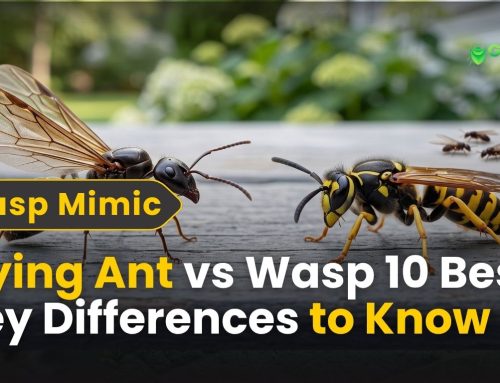
Ants have elbowed antennae and a narrow waist. Reproductive ants may develop wings during mating periods, making identification more difficult.
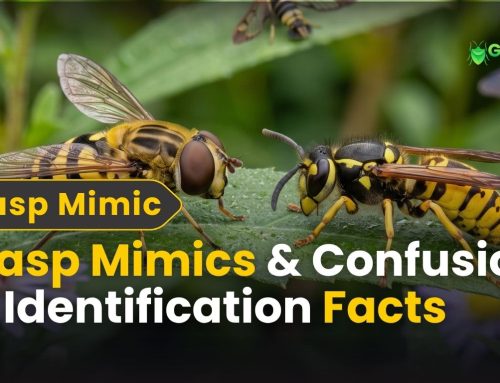
If winged insects appear over the lawn or around your house, Green Pest Management CT’s flying ant versus wasp identification guide explains useful visual differences.
When identification remains uncertain, photograph or collect a specimen rather than guessing.
Make Sure the “Ant Nest” Is Not a Wasp Nest
This is an important outdoor safety issue.
A hole in the lawn does not tell you which insect lives inside it.
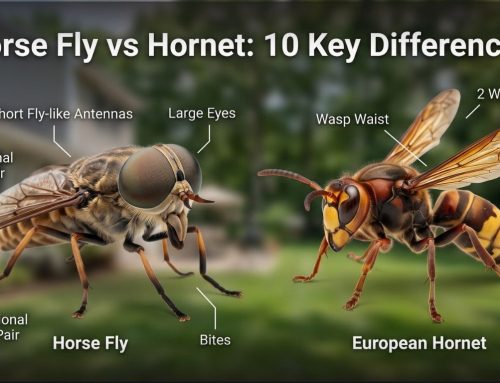
If numerous insects are rapidly flying into and out of a ground opening, particularly if they look yellow-and-black or wasp-like, don’t disturb the site until you know what they are.
Connecticut yards can contain ground-nesting wasps and bees.
Our ground-nesting wasp identification guide explains the important distinction.
For detailed visual and behavioral clues, consult the guide to ground-nesting bees and wasps.
Yellow jackets require particular caution because some species establish underground colonies that can be vigorously defended. The yellow jacket behavior guide explains why approaching a suspected nest without identification can create unnecessary risk.
Ants and social wasps require very different safety plans.
Why Do You Have So Many Ants in the Yard?
A healthy outdoor environment naturally contains ants, so seeing numerous workers is not automatically evidence that something is wrong.
However, several conditions can concentrate activity.
Suitable Soil and Nesting Sites
Ant colonies choose nesting areas according to species-specific requirements.
Open soil, lawn edges, pavement gaps, protected landscape areas and decaying wood can all provide potential habitat for different ants.
Food
Ants feed on a wide variety of resources.
Outdoor dining, garbage, drink spills, fallen food and pet food can increase activity close to a house.
Natural food is abundant too.
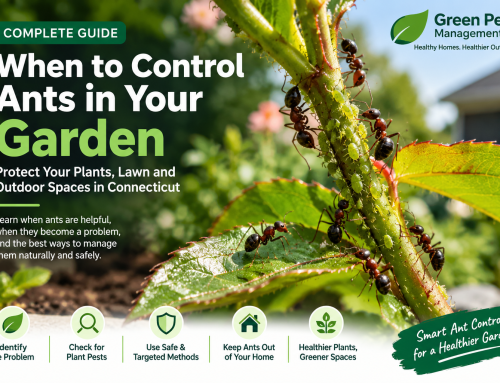
Aphids and Honeydew
One particularly important relationship occurs between ants and sap-feeding insects.
Aphids and certain other insects produce honeydew, a sugary waste product that ants can consume. Some ants protect these insects from predators.
If workers repeatedly travel up the same plant, inspect its new growth, stems and leaf undersides before treating the ants.
Our dedicated guide to ants in garden control explains the plant side of this relationship in detail.
Moisture
Ants need water, but that does not mean normal watering creates an infestation.
Look instead for avoidable conditions such as leaking irrigation equipment or persistent wet areas near a structure.
Improving drainage and repairing leaks can help both pest management and property maintenance.
When Lawn Ants Become a Home Ant Problem
One of the most important reasons to monitor yard colonies is structural invasion.
An ant nest can remain completely outdoors while workers forage into a house.
Typical access routes include construction gaps around foundations, doors, windows, utility penetrations and siding transitions.
If an outdoor trail visibly approaches the foundation, follow it.
Do not assume the nest must be treated immediately, but determine whether the workers are entering.
Kitchen Activity
If outdoor ants reach food inside, the strategy shifts toward sanitation, trail tracing and colony control. Follow Green Pest Management CT’s guide to getting rid of kitchen ants for those situations.
Bathroom Activity
Indoor ants may also search for water. When activity appears around plumbing, sinks or damp areas, use the more specific bathroom ant removal guide.
Bedroom Activity
Finding ants in the bedroom at night can point to an exterior-wall route, nearby moisture or structural travel rather than food.
Mapping outdoor and indoor trails together often reveals more than treating each room independently.
Ants in Yard Elimination: Step-by-Step Process
When a colony genuinely needs control, use a methodical process.
Step 1: Define the Problem
Write down what the ants are actually doing.
Are they entering the house? Interfering with a patio? Repeatedly invading a vehicle? Concentrating around aphid-infested plants?
A defined problem produces a more precise treatment plan.
Step 2: Identify the Ant
Species matters because nesting and feeding behavior varies.
You do not necessarily need to identify every specimen to species yourself, but you should at least confirm that it is an ant rather than a stinging insect.
Large ants near wood may also warrant evaluation for carpenter ants.
Step 3: Map Active Trails
Follow the workers.
Identify nest openings where possible and note all major routes.
Look at foundation edges, driveway cracks, patios, landscape beds and tree bases.
Take photographs before disturbing anything.
Step 4: Remove Human Food Sources
Clean patios and outdoor dining areas.
Secure garbage containers and clean significant sugary residues.
Avoid leaving pet food outdoors unnecessarily.
This will not destroy a colony, but it reduces resources and makes other control measures easier to evaluate.
Step 5: Check Plants
If a trail leads toward vegetation, inspect for aphids, scales, mealybugs and sticky honeydew.
Addressing the underlying plant pest can reduce a strong food source.
Use plant-specific advice because not every treatment is appropriate for every ornamental or edible species.
The UConn Home & Garden Education Center is a useful Connecticut source for science-based garden and insect information.
Step 6: Correct Unnecessary Moisture
Repair irrigation leaks and dripping outdoor faucets.
Avoid persistent overwatering where it is inappropriate for the landscape.
Also investigate water accumulating near the foundation, since moisture management has broader implications for the building.
Step 7: Select Targeted Control If Necessary
When treatment is justified, use an ant-control product labeled for the intended outdoor site and target pest.
Baits can be useful in some situations because foraging workers may transport food toward other colony members.
Their effectiveness depends on ant feeding preferences, product formulation and placement.
Residual treatments can play a different role.
Do not apply products simply because they are labeled “outdoor.” The exact use site and directions matter.
The EPA’s pesticide label guidance explains why label directions establish where and how a pesticide may be used.
Step 8: Don’t Combine Treatments Randomly
Applying a repellent directly around bait can reduce ant interaction with that bait.
More pesticide is not necessarily more effective.
Choose a strategy based on the infestation rather than applying every product in the garage simultaneously.
Step 9: Monitor
Check activity after intervention.
Are worker numbers declining? Has the indoor route stopped? Is the mound simply reappearing beside the original site?
The answer determines the next step.
Step 10: Address Entry Points
When outdoor ants have been entering the structure, correct practical access points after the active route has been understood.
Maintain door sweeps and weather stripping. Repair suitable cracks and building joints. Manage vegetation that provides unnecessary direct contact with the house.
Don’t block intentional drainage or ventilation openings.
Outdoor Ant-Control Methods Compared
| Method | Best role | Main limitation |
| Observation | Determines whether control is necessary | Does not remove ants |
| Sanitation | Removes human food resources | Natural food remains outdoors |
| Moisture correction | Removes avoidable water conditions | Doesn’t directly eliminate a colony |
| Plant-pest management | Reduces honeydew sources | Only useful where such pests are present |
| Ant bait | Can exploit colony foraging | Requires correct placement and acceptance |
| Targeted residual treatment | Selected outdoor routes/sites | Label and non-target exposure matter |
| Exclusion | Helps stop indoor entry | Does not eliminate an outdoor nest |
| Professional IPM | Complex or recurring infestations | Requires site-specific assessment |
The objective is not to pick the “strongest” method. It is to choose one appropriate to the biological problem.
Does Boiling Water Eliminate an Ant Nest?
Pouring boiling water into outdoor nests is commonly recommended online, but it has important limitations.
It creates a burn hazard, can damage turf and plant roots, and may not reach all parts of a colony.
Near pavement, structures, utility areas or plantings, it can be particularly inappropriate.
The same caution applies to improvised mixtures involving household chemicals.
A method being homemade does not make it harmless.
If a colony requires treatment, use a control technique designed and labeled for the purpose rather than improvising hazardous methods.
Does Vinegar Kill Ants in the Yard?
Vinegar may affect ants contacted directly and can be useful as a cleaner in some appropriate settings, but it should not be treated as a reliable colony-elimination strategy.
Concentrated acidic products can also damage vegetation.
Pouring vinegar around lawns and garden plants can therefore create a new problem without eliminating the entire colony.
Homeowners interested in nontraditional approaches can review Green Pest Management CT’s DIY and natural pest remedies guide.
“Natural” should describe an origin—not be treated as a guarantee of effectiveness or safety.
How to Eliminate Ants Without Damaging the Lawn
Begin with targeted treatment.
If a colony affects one lawn area, there is little justification for automatically treating every square foot of the property.
Follow label directions precisely to avoid damaging turf or exposing non-target organisms unnecessarily.
Do not exceed application rates in the belief that extra product will work faster.
Also consider whether the grass problem attributed to ants has another cause.
Brown or weak turf can result from disease, drought, compaction, poor soil, insects and multiple environmental stresses.
Visible ants near damaged grass do not prove causation.
For persistent turf problems, accurate lawn diagnosis is just as important as pest identification.
Protecting Pollinators and Beneficial Insects
Broad outdoor pesticide use can affect organisms you did not intend to target.
Connecticut yards can support bees, predatory insects, parasitoid wasps and other beneficial species.
This is another reason to minimize unnecessary treatments.
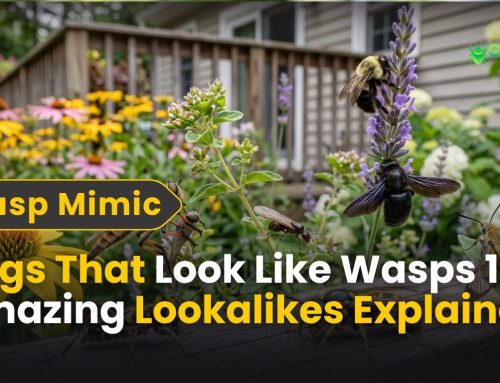
Many wasps are not aggressive social pests. Parasitic wasps, for example, play important roles in regulating other insect populations. Green Pest Management CT’s parasitic and parasitoid wasp guide explains how these beneficial insects differ from defensive nest-building wasps.
Where stinging insects are involved, identification remains important. The Connecticut wasp and hornet identification guide can help homeowners avoid treating the wrong insect.
Targeting ant colonies instead of blanketing the yard helps protect that broader ecosystem.
Preventing Yard Ants From Moving Indoors
You cannot prevent ants from existing outside, but you can make the house harder to exploit.
Use this practical property checklist:
- Clean food and beverage spills from patios.
- Keep garbage appropriately secured.
- Avoid leaving pet food outside unnecessarily.
- Repair outdoor faucet and irrigation leaks.
- Inspect foundation edges for active trails.
- Maintain suitable exterior seals.
- Check doors and weather stripping.
- Address moisture-damaged exterior wood.
- Keep mulch from being unnecessarily piled against siding or structural wood.
- Manage tree branches or vegetation that make direct structural contact where appropriate.
- Inspect plants for aphids and honeydew.
- Monitor indoor ant sightings early.
- Use pesticide products only where their labels permit.
Preventive maintenance often has benefits far beyond ant control.
Ants in Cars Can Start in the Yard
If your vehicle repeatedly gets ants after parking at home, inspect the ground before assuming the colony lives in the dashboard.
An outdoor nest beside a driveway or landscape border can send workers into a car if they discover food.
Cleaning the vehicle and temporarily parking it elsewhere can test that theory.
Our complete ants in car removal guide explains how to manage the vehicle without indiscriminately spraying the passenger compartment.
When a single outdoor colony is sending workers toward both the garage and vehicle, source control on the property may provide a more logical solution.
DIY vs Professional Ants in Yard Elimination
DIY control can be reasonable when the colony is clearly identified, localized and not associated with complicated structural activity.
Professional inspection becomes more useful when multiple colonies appear to be involved, workers repeatedly invade the house, carpenter ants may be involved, treatment repeatedly fails or the insects cannot be confidently identified.
Professional help is especially important if the suspected ant mound might actually contain defensive ground-nesting wasps.
Green Pest Management CT’s professional pest-control service guide explains why inspection and identification are central to effective treatment.
A professional should be able to explain which colony needs management and why—not simply recommend treating every visible insect.
What Professional Outdoor Ant Control Should Include
A professional ant service normally begins with inspection.
Property Assessment
The technician can examine active trails, landscape edges, foundations, driveways and areas where ants enter the building.
Homeowners should point out exactly where activity has been observed rather than simply saying, “They’re everywhere.”
Identification
Knowing the ant helps narrow likely nest locations, feeding behavior and treatment methods.
Integrated Pest Management Plan
Depending on the findings, an IPM plan may use targeted baiting, appropriately labeled residual treatment, sanitation recommendations, moisture management and structural exclusion.
The objective is to control troublesome colonies while avoiding unnecessary property-wide application.
Follow-Up Monitoring
Outdoor environments change.
The treated area should be monitored to verify whether trails decline and indoor pressure improves.
If activity returns, the location can indicate whether another colony or route is involved.
Connecticut Ant Season: When Yard Activity Peaks
Outdoor ant behavior changes throughout Connecticut’s seasons.
Spring
Rising soil and air temperatures bring increasing insect activity.
Spring rain can affect soil moisture and shift visible foraging routes.
This is a useful season for walking the property and identifying foundation trails before summer vegetation becomes dense.
Summer
Warm temperatures support extensive outdoor activity.
Patios, outdoor dining and children’s play can also increase human food sources in the yard.
During hot or dry weather, water availability may influence where ants forage.
Fall
Ants remain active while temperatures allow.
Fall is an excellent time to correct building gaps, exterior moisture issues and other conditions that could contribute to indoor pest activity.
Winter
Outdoor surface activity declines dramatically during Connecticut’s coldest conditions.
If ants remain consistently active inside a heated house during winter, investigate the indoor or structural situation separately instead of relying on frozen-season yard treatment.
Yard Ant Control in Fairfield County
Fairfield County properties vary considerably, so outdoor pest management needs to reflect the individual site.
Greenwich and New Canaan
Large properties, mature trees, stonework and extensive landscaping naturally support diverse insect populations.
Focus on colonies affecting the home or important use areas rather than trying to eliminate ants across acres of landscape.
Stamford and Norwalk
Dense residential neighborhoods can have smaller yards where foundations, patios, garbage storage and landscaping are close together.
A short ant trail can therefore connect an outdoor colony with a kitchen surprisingly quickly.
Darien, Westport and Fairfield
Landscaped coastal and near-coastal properties can experience humid conditions, while patios and outdoor dining areas create seasonal pest resources.
Pay attention to drainage and foundation-adjacent activity.
Wilton
Wooded properties provide abundant natural insect habitat.
An ant colony well away from the house often presents no reason for treatment. Structural entry should remain the main concern.
Green Pest Management CT serves Greenwich, Stamford, Darien, Westport, Fairfield, Wilton, New Canaan, Norwalk and surrounding Fairfield County communities.
Pesticide Safety for Outdoor Ant Control
A product intended to kill ants is still a pesticide and must be used responsibly.
Read the complete label before application.
Pay attention to restrictions involving lawns, edible gardens, pets, children, water, pollinators and application conditions.
Do not assume that “outdoor use” means a product belongs everywhere outside.
Keep products in their original containers and follow storage instructions.
Never transfer pesticide into an unlabeled bottle, food container or watering can.
The EPA provides additional guidance for safe pesticide use around homes.
If the property contains vegetable or ornamental gardens, product selection becomes even more site-specific.
When You Should Call Green Pest Management CT
An occasional colony in a distant part of a lawn generally does not call for professional service.
Consider an inspection when ants repeatedly travel toward and into the structure, several indoor rooms become affected, outdoor control repeatedly fails, large ants suggest possible carpenter-ant activity near the house, or the species cannot be confidently identified.
Professional help is also appropriate whenever a ground nest could contain stinging insects.
Green Pest Management CT provides pest management throughout Fairfield County with an inspection-led approach focused on actual pest pressure.
If yard ants repeatedly turn into house ants, contact the team to schedule an inspection and identify the colony, routes and property conditions involved.
Frequently Asked Questions
What is the best method for ants in yard elimination?
Start by identifying the ant, locating active trails and deciding whether treatment is necessary. For troublesome colonies, targeted baiting or another appropriately labeled control method combined with sanitation and exclusion is preferable to automatically treating the whole yard.
Should I kill every ant colony in my lawn?
No. Ants are normal components of Connecticut ecosystems. Control colonies that create a defined problem rather than attempting complete property-wide eradication.
Why are there suddenly so many ants in my yard?
Warm weather, soil conditions, food availability, moisture and seasonal colony activity can make workers more visible. A sudden increase does not automatically mean the lawn is unhealthy.
How do I find an ant nest outside?
Follow active workers in both directions. Trails can lead toward soil openings, pavement edges, decaying wood or other nesting locations.
Can ants damage a lawn?
Some colonies can disturb soil and create visible mounds, but ants should not automatically be blamed for unhealthy grass. Turf can decline for many unrelated reasons.
Does boiling water eliminate outdoor ants?
It may kill ants it contacts, but it can cause burns and damage turf or plant roots and may fail to reach the entire colony. Targeted labeled methods are generally more controllable.
Does vinegar get rid of yard ants?
It is not a reliable whole-colony treatment and concentrated vinegar can damage grass and plants. Avoid treating a lawn with improvised mixtures.
Why are ants moving from my yard into my house?
Workers may have discovered food, moisture or shelter indoors and are using gaps around foundations, doors, windows or utilities to reach it.
Are holes in my lawn always ant nests?
No. Many insects and other organisms use soil. Flying wasp-like insects repeatedly entering one opening may indicate a ground-nesting wasp rather than ants.
When should I contact pest control for yard ants?
Contact a professional when colonies repeatedly invade the house, DIY treatment fails, carpenter ants are suspected, several problem areas exist or the insects cannot be identified safely.
Conclusion
Effective ants in yard elimination is not about creating an insect-free lawn. It is about controlling the colonies that create real problems while leaving harmless outdoor activity alone.
Start with identification.
Confirm that the insects are ants rather than ground-nesting wasps or bees. Follow their trails to find where they nest and where they forage. Check plants for aphids and honeydew, eliminate unnecessary food and moisture, and determine whether workers are moving toward your home.
When treatment becomes necessary, target the source instead of automatically applying pesticide across the whole property. Follow every product label, protect non-target organisms and monitor the results.
Connecticut’s seasonal climate also matters. Yard ant activity becomes more visible as weather warms and generally falls sharply during winter. Fairfield County’s combination of wooded properties, landscaped yards, patios and closely spaced suburban homes means every infestation has its own route and conditions.
Green Pest Management CT serves Greenwich, Stamford, Darien, Westport, Fairfield, Wilton, New Canaan, Norwalk and surrounding communities. If outdoor colonies repeatedly turn into indoor infestations, cannot be identified confidently or persist despite appropriate DIY efforts, schedule a professional inspection so the actual source can be managed rather than treating the entire yard unnecessarily.