Rat Droppings: What They Look Like & What to Do
Introduction: The Smallest Clue Often Tells the Biggest Story
Rat droppings identification is one of the most useful skills a homeowner can have. A few dark pellets near the pantry can mean a passing house mouse, a roof rat that has moved into the attic, or a Norway rat colony living under the deck. Getting the read right tells you how urgent the problem is, where to look for entry points and how to clean up without putting your family at risk.
Quick answer: Rat droppings are small, dark pellets. Norway rat droppings are about 3/4 inch long with blunt ends. Roof rat droppings are closer to 1/2 inch and taper to points at both ends. House mouse droppings are about 1/4 inch, rod-shaped and pointed. Fresh droppings are dark and moist, while older ones turn grey and crumble. Never sweep them up dry. Dampen them, disinfect the area, bag the waste and wash your hands.
In this guide, you’ll learn how to measure droppings, tell fresh from old, compare them with mouse droppings, read the other clues rats leave behind, and clean up safely. Green Pest Management CT works with homeowners across Fairfield County, and the patterns below are the ones we explain most often when we walk a property with a client.
What Are Rat Droppings?
Rat droppings are the solid waste rats leave as they eat and move. Scientists call them feces, and most people call them droppings, pellets or simply rat poop. Rats defecate constantly while they travel and feed, so droppings are among the most dependable signs that rodents are present.
Droppings are useful for two reasons. First, they show where rats travel and feed, which helps you find their routes. Second, they show how recently rats were there. Size and shape point to the species, and color and texture point to age.
Why Droppings Are Better Evidence Than Sightings
Rats are nocturnal and wary, so most homeowners go months without seeing one. Droppings collect along runways, beside food sources and near nesting spots, which means they reveal patterns of activity. A single dropping raises a question. A line of droppings along the back of a cabinet answers it.
Rat Droppings Identification: Size, Shape and Freshness
Three features do most of the work: size, shape and freshness. A US penny is about 3/4 inch across, which makes a handy reference when you’re checking a pellet in a dim basement. Keep in mind that sizes vary with diet and the individual animal, so treat the figures below as typical ranges rather than exact measurements.
Norway Rat Droppings
Norway rat droppings are about 3/4 inch long and roughly as wide as a penny. They have a capsule or spindle shape with blunt, rounded ends. Norway rats live mostly at ground level, so their droppings tend to appear in basements, along foundation walls, under sinks, behind appliances and in garage corners.
Roof Rat Droppings
Roof rat droppings are slimmer, about 1/2 inch long, and taper to points at both ends. Roof rats climb, so the droppings often show up in attics, on rafters, above ceilings and on high storage shelves. If you only search the floor, you may miss the evidence entirely.
House Mouse Droppings
House mouse droppings are about 1/4 inch long, small and rod-shaped with pointed ends. Mice explore widely, so their droppings are often scattered across a larger area, such as the inside of cabinets, drawers and pantry shelves.
Fresh vs Old Droppings
Freshness matters as much as size, because it tells you whether the animal is still around.
How to Recognize Fresh Droppings
Fresh droppings are dark brown to black and look moist or glossy. They’re soft rather than hard and crumbly. A cluster of fresh droppings in one spot means rats were there recently, possibly within the last day or two.
What Older Droppings Look Like
Old droppings are grey or pale, dry and cracked, and they may be dusted with dirt or debris. They show past activity, not current activity. Finding only old droppings doesn’t mean the rats have left. It may simply mean they’ve moved to a different route for a while.
Never press or pick at droppings to test freshness. Look at color, moisture and texture from a short distance, and use a tool like a stick or a scoop if you need to move anything.
| Feature | Norway rat | Roof rat | House mouse |
| Typical length | About 3/4 inch | About 1/2 inch | About 1/4 inch |
| Shape | Spindle or capsule | Slender, tapered | Small rod |
| Ends | Blunt | Pointed | Pointed |
| Where you’ll find them | Floors, basements, lower shelves | Attics, rafters, upper shelves | Cabinets, drawers, pantry |
| Fresh appearance | Dark, moist, glossy | Dark, moist | Dark, moist |
| Old appearance | Grey, dry, crumbly | Grey, dry | Grey, dry |
Signs and Identification: Where to Look for Droppings
Knowing where droppings collect saves time and helps you spot the route rats are using.
Along Walls and Runways
Rats generally travel close to walls, pipes and edges. Check the base of walls, the tops of beams, and the rim of floor joists in basements and crawlspaces. A line of droppings running parallel to a wall is a runway.
Under Sinks, Behind Appliances and in Pantries
Kitchens and laundry areas offer food, water and shelter, so they’re common hot spots. Look under the sink, behind the dishwasher and the refrigerator, along the back of the dryer, and on the shelves of the pantry or cabinet where food is stored.
Attics, Crawlspaces and Garages
Attics and crawlspaces are where droppings often go unnoticed. Check insulation edges, the tops of ductwork, stored boxes and wall plates. Garages combine stored food, pet bags, firewood and cluttered corners, so they’re worth a careful look with a flashlight.
Outside: Sheds, Decks and Compost Bins
Droppings also collect around sheds, under decks, near woodpiles and beside compost bins. Outdoor droppings are often weathered faster, so they may look older than they are, and rain can wash them away.
Use a Flashlight and an Ultraviolet Light
In a darkened room, a handheld ultraviolet flashlight can make old rodent urine trails glow. Those trails often lead directly to droppings and nesting areas. This method is a search aid, not a diagnosis, but it helps you find routes you might otherwise miss.
What a Rat Hole Looks Like Next to the Droppings
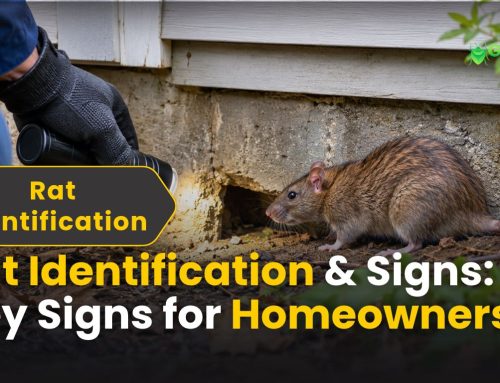
Droppings and burrows usually show up together, so they’re worth checking side by side. Burrow openings are one of the clearest outdoor signs of rats.
What an Active Rat Hole Looks Like
An active Norway rat hole is usually about two inches across or larger. The rim is packed smooth, often with a dark, greasy ring from repeated contact with fur. Fresh soil may fan out in front of the opening, and the entrance is clean rather than overgrown. Burrows often sit along foundations, under concrete slabs, beneath decks and sheds, and near woodpiles or dense ivy. If droppings sit near a burrow entrance, the connection is strong.
Holes That Are Not From Rats
Other animals create openings that people confuse with rat holes. Chipmunks dig neat, round entrances with a small mound of soil and no greasy rim. Moles leave raised ridges and tunnels in lawns. Voles make small holes connected to narrow surface runways through grass. If the opening is round, clean and free of grease, compare it with these animals before assuming rats.
Rat vs Mouse Differences: Droppings and Beyond
Droppings are the fastest way to separate rats from mice, but they aren’t the only test. Rats are larger and need an opening about half an inch wide to enter a building. Mice can slip through gaps about a quarter inch wide. That difference changes where you should seal and where you should place traps.
Behavior also differs. Mice explore new objects quickly, while Norway rats are cautious and may ignore an unfamiliar item for days. Look at the gnaw marks too. Rats leave larger, rougher marks on wood and wiring, while mice make finer nibbles.
Occasionally, both animals are present in the same home. If your droppings include more than one size, don’t assume one species alone. Our side-by-side pest identification comparisons show how to separate look-alike cases, and a professional inspection can confirm mixed activity.
Causes: Why Droppings Keep Showing Up
Droppings return when rats keep coming back. The usual reasons are food, water, shelter and access.
- Food: Pet food left out overnight, open garbage, bird seed, compost and fallen fruit.
- Water: Leaking faucets, condensation lines, pooled water and clogged gutters.
- Shelter: Stacked firewood, cluttered garages, overgrown shrubs and stored cardboard.
- Access: Gaps around pipes and cables, damaged vent screens, worn door sweeps and cracks in the foundation.
Drains are an overlooked route. Rats can use sewer and drain connections to reach a building, and a damaged drain can also attract other pests. Our drain pest control guidance explains how to spot drain problems early.
Risks and Problems: What Rat Droppings Can Carry
Droppings are more than an eyesore. They can carry germs, and the risk grows when they’re disturbed.
Health Concerns
Rat droppings and urine can carry Salmonella, and contaminated surfaces and food can spread it to people. Rat urine can also carry leptospirosis, a bacterial infection that people can catch through contact with contaminated water, soil or surfaces. Dried droppings can break apart and become airborne dust, which is a particular concern for children, older adults and anyone with asthma or allergies.
Hantavirus is a rodent-associated virus that gets a lot of attention. In the United States, the main concern is deer mice, which are more common in rural and wooded areas. The safest approach is the same for any rodent droppings, and the Centers for Disease Control and Prevention provides official cleanup guidance.
Property Damage
Droppings are often a marker of a larger problem. Rats that leave droppings are also gnawing wiring, insulation and packaging, and they may be building nests in the same spots. Droppings and urine can stain surfaces and soak into insulation, which makes the odor harder to remove over time.
Prevention Tips: Keep Droppings From Coming Back
Prevention centers on removing food, water and shelter, then closing off access. This matches the approach behind Integrated Pest Management (IPM), which uses inspection and sanitation before relying on control tools.
- Store pet food and bird seed in sealed containers indoors.
- Keep garbage in lidded bins and move bins away from the house.
- Pick up fallen fruit and clean spilled seed daily.
- Seal gaps about half an inch wide with steel wool or metal mesh, then finish with caulk or metal flashing. Foam alone is easy for rats to chew through.
- Cover vents and crawlspace openings with 1/4-inch hardware cloth.
- Fix leaks, clear gutters and keep woodpiles off the ground and away from the foundation.
- Keep kitchen surfaces, drains and storage areas clean. The kitchen sanitation habits that deny pests food that work for other household pests also reduce rodent attraction.
- Check the basement, garage and attic once a month for new droppings.
What to Do When You Find Droppings
Finding droppings doesn’t mean you need to panic, but it does mean you should act carefully. The cleanup itself can expose you to germs if you do it the wrong way.
Safe Cleanup Steps
- Ventilate first. Open windows and doors and leave the area for at least 30 minutes before you start.
- Protect yourself. Wear rubber or disposable gloves and a mask.
- Wet the droppings. Spray them and the surrounding area with a disinfectant. The CDC describes a bleach solution of one cup of household bleach in one gallon of water, applied until the droppings are soaked, then left for at least five minutes. Follow the product label.
- Wipe and bag. Use paper towels to pick up the wet material, place it in a sealed plastic bag, and disinfect the surface beneath it.
- Clean the area. Wipe nearby surfaces and mop hard floors with disinfectant.
- Clean up and wash. Dispose of gloves and paper towels in the sealed bag, then wash your hands thoroughly.
What Not to Do
- Don’t sweep, vacuum or use a leaf blower on droppings, because these methods send particles into the air.
- Don’t handle droppings with bare hands.
- Don’t let children or pets play in the area until it has been cleaned.
- Don’t clean up a large area, an attic, or a space with dead animals without professional help.
DIY vs Professional Solution
Some tasks are reasonable for homeowners, and others call for trained help. The table below shows where most homes draw the line.
| Task | DIY reasonable? | Why |
| Identifying droppings by size and shape | Yes | Use the comparison above and a reference object |
| Cleaning a few droppings in an accessible area | Yes | Follow the safe cleanup steps |
| Removing food, clutter and water sources | Yes | Takes away the reasons rats stay |
| Sealing small, visible gaps | Yes | Steel wool, mesh and caulk work well on accessible openings |
| Cleaning attics, crawlspaces or wall voids | Professional | Access is difficult and exposure risk is higher |
| Confirming species and mapping entry points | Professional | Requires a full inspection |
| Using rodenticides or bait stations | Limited | Carries risks to pets, children and wildlife, and label directions must be followed |
| Repairing chewed wiring | Electrician | Electrical safety comes first |
Pesticide use should always follow the label. The U.S. Environmental Protection Agency’s safer pest control guidance explains why targeted, label-directed methods matter. In Connecticut, commercial pesticide applicators are regulated by the Connecticut Department of Energy and Environmental Protection, so check that any company you hire is properly licensed.
Professional Treatment Process
A reliable rodent service follows a clear sequence. If a company skips the inspection and goes straight to placing bait, ask why.
- Initial call and history. The technician asks when you first saw droppings, where they appeared and whether pets or children spend time in those areas.
- Inspection. A professional inspection covers the basement, attic, crawlspace, garage, kitchen, exterior foundation and yard.
- Species and activity check. The technician identifies the species, and may use droppings, tracks, gnaw marks and burrows to judge how active the animals are.
- Written plan. You receive a plan that explains the recommended methods, the expected timeline and the changes you’ll need to make at home.
- Control measures. Traps and tamper-resistant bait stations are placed along the routes the animals actually use. This follows the IPM approach of targeted control.
- Exclusion and sealing. Entry points are sealed after the animals are removed. Sealing too soon can trap rats inside walls.
- Sanitation and cleanup guidance. The technician explains safe cleanup for droppings and nesting areas.
- Follow-up. A return visit confirms activity has stopped and that no new openings have appeared.
Seasonal Information: When Droppings Appear in Connecticut
Rat activity follows the weather, and Connecticut’s seasons create a predictable rhythm.
Fall: The Critical Window
From late September through November, rats start looking for warm shelter as nights get colder. Falling leaves, cleared gardens and stored firewood give them cover, and heated homes become attractive. This is when many homeowners first find droppings in basements and garages.
Winter: Indoor Activity Increases
Snow hides outdoor burrows, but indoors the animals are busy. Heated basements, attics and wall voids become the main living space. Droppings often collect in these spots, and they can be harder to find under insulation.
Spring: Thaw and Breeding
As the ground thaws, burrows and foundation damage become visible. Activity increases as temperatures rise and rats begin breeding, so spring is a good time to check any winter damage.
Summer: Outdoor Food and Water
Gardens, compost, pet bowls and fallen fruit can keep rats well fed in warmer months. Droppings often appear around sheds, grills and outdoor storage.
Local Information: Connecticut Homes and Fairfield County
Rat pressure varies from one town to the next, and so do the places droppings turn up.
Greenwich and New Canaan
Larger lots with mature trees, stone walls and garden structures give rats shelter near the house. Older homes may have stone or fieldstone foundations with gaps that open up over time. Droppings in crawlspaces and along garden sheds are common concerns here.
Stamford and Norwalk
These towns mix older neighborhoods, denser housing and busy commercial corridors. Shared trash areas and connected drainage can let rats move between properties, so droppings may show up in garages and along fences that border neighboring lots.
Darien, Westport, Fairfield and Wilton
Shoreline areas, marsh edges, drainage corridors and wooded lots offer cover close to homes. Properties near water and storm drains may see more activity during wet seasons, and older homes in Wilton and nearby rural areas often have attics and outbuildings where droppings collect unnoticed.
For more on how pest pressure changes across the state, our Connecticut pest guides organized by location show how local conditions shape pest activity. The UConn Extension also publishes homeowner resources on rodent management that are useful for Connecticut residents.
Common Mistakes to Avoid
- Sweeping or vacuuming droppings, which spreads contaminated dust.
- Cleaning without ventilating, which leaves airborne particles in the room.
- Assuming old droppings mean the rats are gone.
- Using foam as the only seal where rats can reach it.
- Relying on one or two traps placed away from the animals’ routes.
- Mixing up rats and mice, which leads to the wrong sealing and trap placement.
- Ignoring droppings in attics and crawlspaces, where most of the activity is often hidden.
Frequently Asked Questions
How can I tell fresh rat droppings from old ones?
Fresh droppings are dark, moist and soft, and they often sit in a cluster. Old droppings are grey or pale, dry and crumbly, and they may be dusty. Fresh droppings suggest current activity, while old ones show where rats have been.
What is the difference between rat and mouse droppings?
Rat droppings are much larger. Norway rat droppings are about 3/4 inch long with blunt ends, roof rat droppings are about 1/2 inch with pointed ends, and house mouse droppings are about 1/4 inch and rod-shaped. Size is the quickest test, but a professional can confirm the species.
Can rat droppings make people sick?
They can. Droppings and urine can carry Salmonella and other germs, and dried droppings can become airborne dust. Use gloves, a mask and proper disinfection when you clean them, and keep children and pets away until the area is cleaned.
Should I sweep or vacuum rat droppings?
No. Sweeping and vacuuming stir up particles that can be breathed in. Wet the droppings with disinfectant, let them soak, then wipe them up with paper towels and seal them in a bag.
How do I clean up rat droppings safely?
Ventilate the room, wear gloves and a mask, spray the droppings with a disinfectant or bleach solution, let it soak for at least five minutes, wipe up the material, bag it and disinfect the surface. Wash your hands afterward. Larger or hard-to-reach areas are better handled by a professional.
Do rat droppings always mean a large infestation?
Not always. A few droppings can come from a single animal passing through. Droppings in several rooms, along repeated routes, or alongside gnaw marks and rub trails usually point to an established group.
Where do rats usually leave droppings in a house?
Norway rats often leave droppings along basement walls, under sinks, behind appliances and in garages. Roof rats favor attics and upper shelves. House mice leave them inside cabinets, drawers and pantry shelves.
Can I identify rat droppings from a photo?
A clear photo helps. Place a coin or ruler next to the droppings so the size is visible. A technician can often narrow down the species from a good photo, but a photo does not replace an inspection that finds where the animals are getting in.
How much does professional rodent cleanup cost?
The cost depends on how many areas are affected, how difficult they are to reach, whether attic or crawlspace work is needed, and whether sealing or sanitation is part of the job. The most accurate answer comes from a professional inspection, since the scope of the work drives the plan.
When should I call a professional about rat droppings?
Call a professional if you find droppings in more than one room, in attics or wall voids, or near food storage. Also call if cleaning hasn’t stopped new droppings from appearing, if you see chewed wiring, or if you’re unsure whether the droppings are from rats, mice or a mix of both.
Conclusion: Read the Droppings, Then Act
Rat droppings are small, but they say a lot. Size and shape tell you the species, freshness tells you whether the animals are still around, and location shows you the route they’re using. Pair those clues with the burrows, gnaw marks and noises you find around the home, and you have a clear picture of what’s happening.
Clean up carefully, close the openings you can safely reach, and remove the food and shelter rats depend on. If droppings keep appearing or you can’t tell where they’re coming from, schedule an inspection with Green Pest Management CT. We’ll identify the species, find the entry points and explain the plan in plain terms. Homeowners across Fairfield County can also review our professional pest control services across Connecticut to see how we handle rodent problems from inspection through follow-up.