Pest Comparison Hub: 7 Guides to Identify Bugs Fast
Introduction: Stop Guessing Start Identifying
If you’ve ever stood in your backyard squinting at a flying insect and wondered, “Is that a hornet or a wasp? Should I run?” — you’re not alone. Or maybe you’ve noticed tiny flies swarming near your kitchen drain and spent twenty minutes Googling the difference between a fruit fly and a drain fly, only to end up more confused than when you started.
Here’s the truth: insect misidentification is one of the most common reasons homeowners in Connecticut waste money on the wrong treatments, use ineffective products, or accidentally provoke a dangerous nest. In places like Greenwich, Stamford, Darien, and Westport — where mature trees, lush landscaping, and wooded property lines are the norm — pest encounters are practically a seasonal tradition.
This Comparison Content Hub was built to fix that. In one place, you’ll find seven detailed, side-by-side comparison guides covering the most frequently confused pest pairs. From hornets vs. wasps to fruit flies vs. drain flies, these guides are built on real field experience and are designed to give Connecticut homeowners practical, actionable answers — not generic information copied from a label.
Let’s get into it.
Why Correct Pest Identification Matters More Than You Think
Before diving into the comparisons, it’s worth taking a moment to explain why this matters so much. Pest identification isn’t just an academic exercise — it directly affects:
- The treatment approach you use. A drain fly infestation requires addressing organic buildup inside pipes. A fruit fly infestation requires eliminating fermenting food sources. Using the same trap for both won’t solve either problem effectively.
- The safety risk you’re dealing with. Hornets are significantly more aggressive than paper wasps. Treating a bald-faced hornet nest the same way you’d handle a paper wasp nest is a fast way to end up at urgent care.
- Whether you need a professional at all. Some situations — like a small gnat problem near a houseplant — are easy DIY fixes. Others, like a European hornet colony inside a wall void, absolutely require professional intervention.
- The timeline of your response. Some species reproduce rapidly and establish themselves quickly. Waiting two weeks because you misidentified the pest can turn a manageable problem into a major infestation.
In Fairfield County, Connecticut, the combination of humid summers, dense vegetation, and proximity to both coastal and wooded habitats creates ideal conditions for a wide variety of stinging insects, flies, and other nuisance pests. The team at Green Pest Management CT handles these situations daily — and correct identification is always step one.
Now, let’s look at each comparison in detail.
Guide 1: Hornet vs. Wasp The Differences That Actually Matter
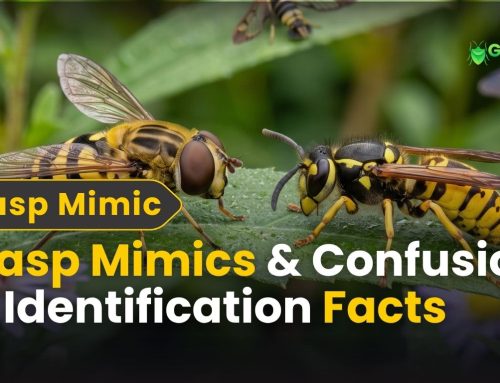
This is probably the most searched pest comparison in Connecticut, and for good reason. People use the words “hornet” and “wasp” interchangeably all the time, but they’re not the same thing — and the distinctions have real practical consequences.
What Is a Wasp?
“Wasp” is a broad term that covers thousands of species within the order Hymenoptera. When most people say “wasp,” they’re typically referring to social wasps like yellow jackets, paper wasps, and hornets. But technically, hornets are a subset of wasps — specifically, they’re the largest members of the Vespidae family.
What Is a Hornet?
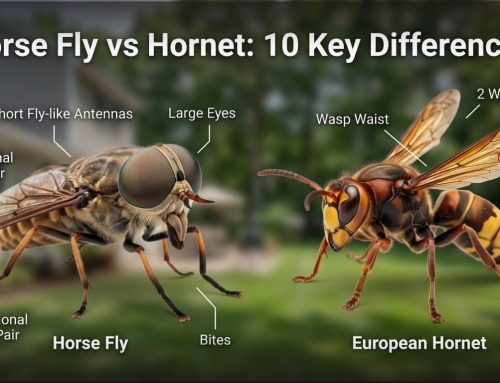
True hornets belong to the genus Vespa. In Connecticut, the two most commonly encountered hornets are the European hornet (Vespa crabro) and the bald-faced hornet (Dolichovespula maculata). Technically speaking, bald-faced hornets are actually a species of yellow jacket, but colloquially, they’re called hornets — and they behave like hornets in terms of aggression and nest defense.
Hornet vs. Wasp: Side-by-Side Comparison
| Feature | Wasp (General) | Hornet |
| Size | Typically ½ to ¾ inch | Usually ¾ to 1.5 inches |
| Color | Yellow and black, or brown | Brown/black with yellow, orange, or white markings |
| Body shape | Slender, pinched waist | Larger, more robust abdomen |
| Nest location | Eaves, shrubs, underground | Tree branches, wall voids, underground |
| Aggression level | Moderate to high | High, especially when disturbed |
| Sting | Single sting, can sting multiple times | Painful, can sting multiple times |
| Diet | Insects and sugars | Primarily insects and tree sap |
Key Identification Tips
Look at size first. If the insect you’re seeing is larger than a typical yellow jacket — roughly the size of a paperclip or bigger — you’re probably looking at a hornet. European hornets, which are common throughout Stamford, New Canaan, and Wilton, can reach nearly an inch and a half in length.
Check the nest. Wasp nests are typically open-celled, paper-like structures you can see exposed under eaves or on fences. Hornet nests are usually enclosed in a papery shell — the familiar football-shaped gray structure you’ll spot in shrubs or hanging from tree branches. You can find a detailed breakdown in this hornet nest vs. wasp nest comparison guide.
Consider the location. European hornets often nest inside wall voids, tree cavities, and attic spaces. Bald-faced hornets prefer aerial nests in shrubs and trees. Yellow jackets (which people often call wasps) frequently build ground nests — a common problem in Fairfield County lawns during late summer.
Behavior matters. If an insect is actively dive-bombing you from a significant distance away from its nest, you’re almost certainly dealing with a hornet. Paper wasps are far less likely to pursue threats aggressively unless you’re directly interfering with the nest.
For a comprehensive breakdown with visual identification help, visit the wasp vs. hornet CT comparison hub and the wasps vs. hornets CT differences guide.
When to Call a Professional for Hornets or Wasps
If you’ve confirmed you’re dealing with a hornet nest of any significant size, particularly if it’s near an entryway, playground, or high-traffic area of your property, professional removal is the smart choice. The team at Green Pest Management CT provides hornet exterminator services across Greenwich, Darien, Westport, and surrounding Fairfield County communities — using targeted treatments that eliminate the colony while minimizing environmental impact.
Guide 2: Wasps vs. Hornets Behavior, Aggression, and Risk
This comparison goes deeper into behavior, because knowing how these insects act is just as important as knowing what they look like — especially if you’re trying to decide how quickly you need to act.
Aggression Levels: Not All Stinging Insects Are Equal
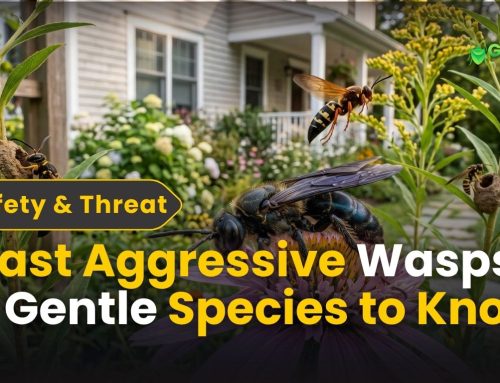
One of the most dangerous misconceptions homeowners carry is that all stinging insects pose the same level of threat. They don’t.
Paper wasps (Polistes species) are genuinely the most docile of the commonly encountered social wasps in Connecticut. They’ll defend their nest if threatened, but they’re not inclined to pursue. You’ll often find their open, upward-facing comb nests under eaves, deck railings, and window frames across homes in Norwalk, Westport, and Fairfield.
Yellow jackets are significantly more aggressive, especially in late summer and fall when their colonies have reached peak population and food sources are becoming scarce. They’re notorious for nesting in the ground, inside wall voids, and in old compost piles — all common in Fairfield County residential properties.
Hornets — particularly bald-faced hornets — maintain an aggressive perimeter around their nests that can extend 10 feet or more. They release an alarm pheromone when disturbed that recruits other colony members to sting. This is not the insect to approach without proper protection.
For a deeper look at aggression patterns and what triggers defensive behavior, the are hornets more aggressive than wasps guide offers some genuinely useful behavioral context.
Seasonal Behavior in Connecticut
Connecticut’s pest season follows a predictable cycle that every homeowner in Greenwich, Stamford, and Darien should understand:
- Spring (April–May): Mated queens emerge from overwintering sites and begin founding new colonies. Nests are small and less defended — but don’t let that fool you into thinking DIY removal is always safe.
- Summer (June–August): Colonies grow rapidly. Worker populations increase, nests expand, and territorial behavior intensifies. This is when most sting incidents occur in Fairfield County.
- Late Summer/Fall (September–October): Colonies reach peak size. Workers become more aggressive as the colony prepares for winter. Yellow jackets are particularly problematic during outdoor events like backyard barbecues and fall harvests.
- Winter (November–March): Most colonies die off. Only mated queens survive to overwinter. Nest activity ceases, though abandoned nests can still harbor secondary pests.
Understanding this cycle helps you time your response. You can find additional seasonal insights in the wasp hornet behavior hub.
Guide 3: Bee vs. Hornet How to Tell Them Apart at a Glance
This is one of the most important identification comparisons because the management approach couldn’t be more different. Bees are protected pollinators — and in Connecticut, unnecessarily destroying a bee colony is both ecologically harmful and often legally questionable. Hornets are not protected in the same way.
Quick Visual Comparison: Bee vs. Hornet
| Feature | Bee | Hornet |
| Body texture | Fuzzy/hairy | Smooth, shiny |
| Color | Golden yellow, amber, brown | Brown/black with yellow, orange, white |
| Waist | Less pronounced | Distinct narrow waist |
| Legs | Pollen baskets visible | No pollen baskets |
| Behavior | Calm, foraging on flowers | Predatory, hunting insects |
| Nest material | Wax comb (honeybee) or soil | Paper-like material |
The Fuzz Test
This is the fastest way to tell a bee from a hornet in the field: look at the body. Bees — including honeybees, bumblebees, and mason bees — are noticeably fuzzy. Their hair helps them collect and carry pollen. Hornets and wasps have smooth, shiny exoskeletons. If the insect buzzing around your garden looks like it’s wearing a fur coat, it’s almost certainly a bee. If it looks sleek and angular, it’s likely a wasp or hornet.
Bumblebee vs. Hornet: The Most Common Mix-Up
Bumblebees (Bombus species) are large, robust, and somewhat intimidating-looking — which is why homeowners frequently mistake them for hornets. Here’s how to differentiate them:
Bumblebees are rounder, covered in dense black and yellow hair, and have a distinctly plump appearance. They’re gentle pollinators and rarely sting unless directly handled or squeezed. You’ll see them foraging on flowering plants throughout Connecticut gardens from spring through fall.
Hornets are larger and more elongated, with a defined waist, smooth coloring, and fast, direct flight patterns. Bumblebees tend to drift between flowers in a slow, meandering pattern.
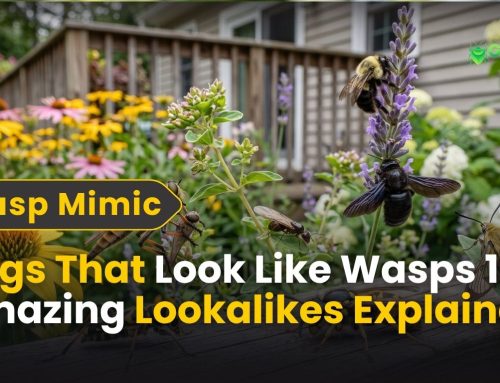
Carpenter bees are another common source of confusion. They look similar to bumblebees but have a shiny, hairless black abdomen. Carpenter bees are wood-borers that drill into untreated wood — decks, railings, fascia boards — which is a completely different problem requiring a completely different response.
Why This Identification Matters
If you’ve got a bumblebee nest under your back deck, you have options — including simply leaving it alone until the colony dies naturally in fall. If you’ve got a hornet nest in the same location, that’s a safety concern that deserves prompt attention. You can review the bee vs. wasp identification guide for additional visual cues and behavioral context.
If you’re seeing hornets regularly around your property and aren’t sure where they’re nesting, the hornet control guide with 15 expert tips is a good place to start before deciding whether to call a professional.
Guide 4: Hornet vs. Carpenter Bee Two Very Different Problems
What Is a Carpenter Bee?
Carpenter bees (Xylocopa species) are solitary bees that bore perfectly circular holes into untreated wood to create nesting galleries. They’re commonly found on Connecticut properties boring into:
- Deck railings and fascia boards
- Wooden fence posts
- Eaves and overhangs
- Unpainted or untreated barn siding
The male carpenter bee is the one you usually notice — he hovers aggressively at eye level, darting at anything that approaches. Despite this intimidating behavior, male carpenter bees cannot sting. Females can sting but almost never do unless handled.
Hornet vs. Carpenter Bee: Key Differences
| Feature | Carpenter Bee | Hornet |
| Body | Shiny black abdomen | Brown/black with markings |
| Behavior | Hovering, boring into wood | Predatory, nest defense |
| Sting risk | Very low (males can’t sting) | High |
| Damage | Structural wood damage | No structural damage |
| Nest | Drilled wood galleries | Paper nests |
| Treatment | Wood treatment, sealing holes | Professional nest removal |
Why the Confusion Happens
Both insects can appear large and threatening. Carpenter bees hover with a confidence that suggests aggression — but it’s posturing from males who literally have no stinger. Hornets, on the other hand, mean business.
The key diagnostic question: Is the insect flying near flowers or boring into wood? Carpenter bee. Is it patrolling near a nest structure or hunting other insects? Hornet.
For properties in Wilton, New Canaan, and Darien — where mature wooden structures, pergolas, and extensive decking are common — carpenter bee damage can accumulate quietly over several seasons without being noticed until it becomes significant. A professional inspection can assess both the structural damage and whether a stinging insect like a hornet is also present on the property.
Guide 5: Fruit Fly vs. Drain Fly vs. Gnat The Tiny Fly Problem, Sorted
This comparison gets more wrong answers from homeowners than almost any other pest identification question. These three insects — fruit flies, drain flies, and fungus gnats — look superficially similar but breed in different locations, respond to different treatments, and require completely different elimination strategies.
Quick Side-by-Side: Fruit Fly vs. Drain Fly vs. Gnat
| Feature | Fruit Fly | Drain Fly | Fungus Gnat |
| Size | 1/8 inch | 1/8 inch | 1/16 to 1/8 inch |
| Color | Tan/yellow with red eyes | Gray/brown, moth-like | Dark, with long legs |
| Wings | Clear | Fuzzy, leaf-shaped | Clear, held flat |
| Breeding site | Fermenting fruit, sugars | Drain biofilm, standing water | Overwatered soil, potted plants |
| Where found | Kitchen, dining areas | Bathrooms, kitchen drains | Around houseplants |
| Reproduction speed | Rapid — 25+ eggs at a time | Moderate | Moderate |
Fruit Fly Identification
Fruit flies (Drosophila melanogaster) are perhaps the most universally annoying kitchen pest. They’re attracted to:
- Overripe or damaged fruit left on counters
- Fermenting liquids (open wine, beer, vinegar)
- Recycling bins with residue
- Garbage cans with food residue
- The surface of sugary spills that haven’t been fully cleaned
They have distinctive brick-red eyes that you can see under good lighting or with a magnifying glass. Their tan and brown bodies are small but not microscopic — you can see them clearly with the naked eye.
Fruit fly populations can explode rapidly in Connecticut’s humid summer months, particularly in kitchens in Westport, Stamford, and Norwalk. A single female can lay hundreds of eggs over her lifetime, and the entire lifecycle from egg to adult can complete in about a week under warm conditions.
For product recommendations and elimination strategies, the fruit fly killer indoor products guide provides detailed options, and the fruit fly authority hub covers the full picture from identification to long-term prevention.
Drain Fly Identification
Drain flies (Psychodidae family) look like tiny moths. Their wings have a fuzzy, leaf-like texture that distinguishes them clearly from fruit flies if you look closely. They rest with wings held flat over their bodies like a tent — which is characteristic of moth-related species.
They breed inside the gelatinous biofilm that accumulates inside slow or infrequently used drains — particularly:
- Bathroom sink and shower drains
- Floor drains in basements and utility areas
- Kitchen drains, especially near grease buildup
The treatment approach is completely different from fruit flies. You need to physically remove the organic material inside the drain using a pipe brush, enzyme-based drain cleaner, or in stubborn cases, professional drain treatment. Simply spraying near the drain or setting out vinegar traps won’t solve a drain fly problem because the breeding source is inside the pipe.
For guidance on identifying and treating drain issues, the fruit flies in drain identification guide explains how to locate the source and address it effectively.
Fungus Gnat Identification
Fungus gnats (Sciaridae family) are the ones most commonly confused with drain flies indoors. The key distinguishing feature is where you see them: if tiny flies are consistently circling your houseplants or emerging from soil, they’re almost certainly fungus gnats, not drain flies or fruit flies.
Fungus gnats breed in the moist top layer of potting soil, particularly when plants are overwatered. The larvae feed on fungal material and sometimes plant roots — which can damage seedlings and young plants. In Connecticut homes during winter, when houseplants are clustered near windows and the soil stays damp for longer, fungus gnat populations can grow quickly.
The Drain Fly, Gnat, and Fruit Fly Combination
In some Connecticut kitchens — particularly in older homes in Norwalk and Stamford all three can be present simultaneously. A sticky trap placed near the sink can help you capture specimens and compare them against the size and wing shape descriptions above. The combination of a vinegar trap for fruit flies, an enzyme drain cleaner for drain flies, and allowing soil to dry between waterings for gnats will usually address all three simultaneously.
If infestations persist despite these measures, a fly exterminator consultation can help identify any additional breeding sources that aren’t immediately visible.
Guide 6: Stable Fly vs. House Fly Which Fly Is Biting You?
Most people assume house flies are the biters. They’re not. House flies (Musca domestica) don’t have the mouthparts to bite — they feed by regurgitating digestive fluids onto surfaces and lapping up the liquefied material. Unpleasant, certainly, but not a biter.
Stable flies (Stomoxys calcitrans) are the culprits behind those sharp, painful bites you feel at outdoor gatherings, near stables, or in coastal areas during certain seasons. In Connecticut, stable flies are particularly active in coastal communities like Westport, Darien, and Greenwich during late summer.
Stable Fly vs. House Fly Comparison
| Feature | House Fly | Stable Fly |
| Size | About ¼ inch | Similar to house fly |
| Color | Gray with dark stripes | Gray with darker checkered pattern |
| Mouthparts | Sponging (non-biting) | Piercing, needle-like proboscis |
| Biting | Does not bite | Bites aggressively, usually on ankles/legs |
| Resting position | Flat | Wings slightly spread at rest |
| Breeding site | Rotting organic matter, garbage | Wet decaying vegetation, manure, seaweed |
How to Tell Them Apart
The most reliable field test is simple: did it bite you? If yes, it’s not a house fly. Stable flies tend to bite on exposed skin near the ankle and lower leg — they approach from below and land before biting, which is why people often don’t notice them until the bite happens.
Body shape at rest is another clue. House flies hold their wings flat against their body. Stable flies hold their wings slightly angled outward, giving them a subtle but noticeable silhouette difference when they’re sitting still.
In coastal areas of Fairfield County, stable fly activity often correlates with algae and seaweed accumulations on beaches during late summer. They breed in decomposing organic material and can emerge in large numbers following storms that deposit debris along the shoreline.
For persistent fly problems around your property — whether from stable flies, house flies, or other species — the flying insect control services guide explains when professional intervention makes sense and what treatment options are available.
Guide 7: Yellow Fly vs. Deer Fly — The Biting Flies of Connecticut
Both of these are true biting flies that make outdoor activities miserable in Connecticut’s warmer months. They’re particularly problematic in wooded areas, near water, and in shaded sections of yards — which describes a significant portion of Fairfield County properties in Wilton, New Canaan, and Darien.
What Is a Deer Fly?
Deer flies (Chrysops species) are medium-sized biting flies about ¼ to ½ inch long, with distinctive patterned wings that have dark bands or blotches. They have large, colorful compound eyes — often with iridescent green or gold coloring — which makes them genuinely striking when seen up close. They’re aggressive biters that circle the head and upper body and are attracted to movement, dark colors, and carbon dioxide.
Female deer flies cut the skin with blade-like mouthparts and lap up the blood — a genuinely painful experience that can cause localized swelling and, in rare cases, transmit pathogens.
What Is a Yellow Fly?
Yellow flies (Diachlorus ferrugatus) are close relatives of deer flies and are similarly aggressive biters. They’re more commonly associated with the southeastern United States but do appear in Connecticut during particularly warm summers, particularly near marshy and coastal areas.
Yellow flies are slightly smaller than deer flies, with a yellowish-orange abdomen and dark-patterned wings. They tend to bite in shaded areas during daytime hours and are attracted to shaded edges of woodlines — exactly the kind of habitat found throughout Fairfield County properties.
Deer Fly vs. Yellow Fly Comparison
| Feature | Deer Fly | Yellow Fly |
| Size | ¼ to ½ inch | Slightly smaller |
| Wing pattern | Dark bands on wings | Dark V-pattern on wings |
| Body color | Gray/brown | Yellowish-orange abdomen |
| Eyes | Large, iridescent (often green) | Similar compound eyes |
| Activity peak | Morning and afternoon | Daytime, especially shaded areas |
| Habitat | Near water, woodlands | Shaded forest edges, coastal areas |
Managing Deer Flies and Yellow Flies
Unlike hornets or fruit flies, deer flies and yellow flies don’t breed on your property in a way that’s easily controlled. They breed in moist soil and organic debris in wooded or wetland areas, often beyond the boundaries of residential properties. Control strategies therefore focus on personal protection and reducing attractants:
- Wear light-colored clothing — dark colors attract deer flies
- Avoid wooded edges during peak activity (early morning and late afternoon)
- Install permethrin-treated clothing for tick and biting fly protection during outdoor work
- Use appropriate insect repellents with DEET or picaridin
If biting flies are making portions of your yard unusable during Connecticut’s outdoor season, a professional assessment can identify nearby breeding habitats and recommend perimeter treatments or habitat modifications that reduce pressure.
Comparison Chart: All 7 Pest Pairs at a Glance
For quick reference, here’s a summary comparison of all seven pest pairs covered in this hub. This is especially useful if you’re trying to make a rapid field identification.
| Pest Pair | Key Distinguishing Feature | Main Concern | DIY or Pro? |
| Hornet vs. Wasp | Size and nest shape | Aggressive stinging | Often Pro |
| Wasps vs. Hornets (behavior) | Aggression level and territory | Sting risk | Situation-dependent |
| Bee vs. Hornet | Fuzzy vs. smooth body | Protecting pollinators | Pro for hornets |
| Hornet vs. Carpenter Bee | Wood boring vs. nest building | Wood damage vs. sting risk | Pro assessment |
| Fruit Fly vs. Drain Fly vs. Gnat | Breeding location | Source elimination | DIY first, Pro if persistent |
| Stable Fly vs. House Fly | Biting vs. non-biting | Painful bites | Habitat management |
| Yellow Fly vs. Deer Fly | Wing color, abdomen color | Painful bites, activity areas | Habitat management |
Why Connecticut Homeowners Face These Pest Identification Challenges More Than Most
Fairfield County’s geography creates a genuinely complex pest environment. Consider what’s happening ecologically:
Coastal proximity. Communities like Westport, Darien, and Greenwich sit along Long Island Sound. The waterfront habitat supports larger populations of biting flies — stable flies, deer flies, and yellow flies — than inland areas experience. Coastal humidity also accelerates fruit fly and drain fly reproduction indoors.
Dense woodland cover. Wilton, New Canaan, and portions of Stamford have heavily wooded residential neighborhoods where hornets and yellow jackets build colonies in tree cavities, shrubs, and root systems. Forested yards with abundant fallen logs and decaying wood create ideal habitat for carpenter bees and ground-nesting wasps.
Mature housing stock. Much of Fairfield County’s residential architecture is older, with wooden structures, unsealed attic voids, and gap-prone foundations that provide entry points for nesting hornets and overwintering queens. Wall voids are a particularly common hornet nesting site in the region’s colonial and Victorian homes.
Warm, humid summers. Connecticut’s June through August period creates near-ideal conditions for rapid insect reproduction. Fruit flies in particular can cycle through multiple generations during a single summer, with populations capable of growing from a few adults to hundreds within weeks in a warm kitchen.
Active outdoor lifestyle. Fairfield County homeowners invest significantly in their outdoor spaces — pools, gardens, vegetable beds, outdoor dining areas. These spaces increase contact with stinging insects and biting flies during the peak summer season.
All of these factors combine to make pest identification a genuinely practical skill for Connecticut homeowners — not just an interesting hobby.
DIY vs. Professional Pest Control: How to Decide
After using these guides to identify your pest, the next question is always: can I handle this myself, or do I need a professional?
Here’s a straightforward decision framework:
DIY Is Reasonable When:
- You’re dealing with a small fruit fly or gnat problem where the source is clearly visible and accessible
- You have a single paper wasp nest in a low-traffic area with fewer than 10 wasps visible
- Carpenter bee activity is limited to one or two entry holes and the insects are not near high-traffic areas
- Drain flies are present in a single drain that you can access and treat with enzyme cleaner
Call a Professional When:
- You’re dealing with any hornet nest, regardless of size
- A wasp or yellow jacket nest is inside a wall void, underground, or in an attic
- Fly infestations persist despite eliminating apparent sources
- The nest location is near entryways, children’s play areas, or pools
- A household member has a known allergy to bee or wasp stings
- You’ve attempted DIY treatment and the problem has returned
For properties in Greenwich, Stamford, Darien, Westport, Fairfield, Wilton, New Canaan, and Norwalk, Green Pest Management CT provides professional assessments that take Connecticut’s specific pest environment into account. Their approach follows Integrated Pest Management (IPM) principles — which the EPA defines as using a combination of pest biology, environmental information, and available control methods to prevent unacceptable levels of pest damage with the least possible hazard to people, property, and the environment.
The professional service lead hub provides a good overview of what professional pest management services look like and when they’re the right choice.
How to Use This Comparison Content Hub Effectively
This hub is designed to be a living resource you return to throughout Connecticut’s pest season. Here’s how to get the most from it:
Start with the comparison table. If you’re unsure what you’re dealing with, the quick-reference chart above gives you a starting point based on the features you can observe.
Follow the internal links. Each comparison section links to deeper guides with photos, more detailed identification criteria, and treatment information. Don’t stop at the summary — if you’re dealing with an active problem, the detailed guides are where you’ll find the specific information you need.
Check the seasonal context. Pest behavior in Connecticut changes significantly through the year. A problem that’s manageable in May can become dangerous by August. Use the seasonal information in each guide to assess urgency.
Consult a professional when in doubt. The cost of a misidentified pest can be significantly higher than the cost of a professional inspection. If you’re uncertain, an expert assessment from a local pest control professional protects your property and your family.
For the most comprehensive information on stinging insects specifically, the wasp and hornet ID encyclopedia for Connecticut and the wasp hornet ID guide for CT provide extensive species-by-species breakdowns that go well beyond what any single comparison article can cover.
Local Pest Patterns in Fairfield County, CT
A few location-specific notes worth adding for Connecticut homeowners:
Greenwich and Darien properties — particularly those with mature oak and maple trees — frequently host European hornet colonies in hollow tree sections and wall voids. These hornets are attracted to porch lighting at night and can be alarming when they appear indoors through gaps around windows and doors.
Stamford and Norwalk — with their mix of urban and suburban environments — tend to see higher fruit fly and drain fly activity in commercial-adjacent residential areas where restaurant waste and organic debris concentrate.
Westport and Fairfield — coastal communities with significant landscaping and water features — see elevated biting fly activity, particularly stable flies during late summer months following beach debris accumulations.
Wilton and New Canaan — with their heavily wooded character and significant undeveloped wooded land adjacent to residential properties — experience higher densities of ground-nesting yellow jackets and bald-faced hornets than more developed communities.
Understanding these local patterns helps you prioritize your pest awareness through the season. The yellow jacket deep dive guide is particularly relevant for wooded Fairfield County communities where ground nest encounters are common.
Frequently Asked Questions
What is the easiest way to tell a hornet from a wasp?
Size is the fastest field indicator. Hornets are generally larger than common wasps — a true hornet like a European hornet or bald-faced hornet will be noticeably bigger than a paper wasp or yellow jacket. If the insect is more than ¾ inch long, you’re likely looking at a hornet. Nest shape is the second most reliable indicator: hornet nests have an enclosed papery shell, while most wasp nests have open, visible cells.
Are hornets more dangerous than bees?
In terms of sting risk to most people, yes — hornets are more aggressive defenders of their nest than most bee species. However, bees (especially honeybees) can sting as well, and anyone with a venom allergy faces serious risk from any stinging insect. The practical difference is that hornets will pursue a threat further from the nest than most bees will, and their venom delivers a more painful sting due to their size.
How do I know if I have fruit flies or drain flies?
Look at where the flies congregate. If they’re near fruit bowls, garbage cans, or wine bottles, they’re almost certainly fruit flies. If they’re hovering around sinks, shower drains, or floor drains, and especially if they appear in bathrooms with no food sources, they’re drain flies. Under magnification, drain flies have distinctly fuzzy, leaf-shaped wings while fruit flies have clear wings and visible red eyes.
Can I remove a hornet nest myself?
Small, early-season paper wasp nests in accessible, low-traffic locations can sometimes be handled with appropriate protective clothing and commercial wasp spray applied at night. However, hornet nests — particularly bald-faced hornet nests or European hornet colonies inside wall voids — should always be handled by a professional. The risk of multiple stings is significant, and improper treatment can agitate the colony without eliminating it. Green Pest Management CT provides hornet nest removal throughout Fairfield County.
What’s biting me in my yard if it’s not mosquitoes?
In Connecticut, the most likely culprits are stable flies (which bite around the ankles), deer flies (which circle the head and bite the scalp or back of neck), or occasionally yellow jacket workers when colony populations are high in late summer. Each requires a different prevention approach. Stable flies and deer flies are tied to breeding habitats outside your property, while yellow jacket encounters near outdoor dining areas often indicate a nest nearby.
Are gnats the same as fruit flies?
Not exactly. “Gnat” is a catch-all term used for several small fly species, including fungus gnats, buffalo gnats, and others. Fruit flies (Drosophila species) are a specific genus. In most home pest contexts, “gnat” usually refers to fungus gnats — the tiny flies that come out of houseplant soil — while fruit flies breed in fermenting food and liquids. They look similar but require different elimination strategies.
Why do I keep getting fruit flies even after cleaning my kitchen?
Persistent fruit fly problems usually indicate a breeding source that hasn’t been addressed — often a place that’s easy to miss, like: inside the drain (where a thin biofilm can sustain a small population), under the rubber seal of a refrigerator, behind appliances where drips have dried, inside the recycling bin, or in a mop head or cleaning sponge. The where do fruit flies come from guide covers these hidden sources comprehensively.
How do I tell a bumblebee from a hornet?
The body surface is the fastest tell: bumblebees are densely furry with black and yellow hair, giving them a plump, soft appearance. Hornets have smooth, shiny exoskeletons and a more elongated, defined body shape with a visible waist. Bumblebees also fly with a slow, drifting pattern between flowers, while hornets fly with direct, purposeful speed. Bumblebees almost never sting unless handled directly.
What time of year are hornets most aggressive in Connecticut?
Late summer — typically August through early October — is when hornet and yellow jacket colonies in Connecticut reach their maximum population and aggression levels. By late August, a mature colony may contain several hundred to over a thousand individuals. Food competition also increases as the season turns, making workers more defensive and more likely to investigate odors from outdoor dining and garbage areas.
Should I be worried about parasitic wasps in my garden?
No parasitic wasps are beneficial insects, not threats to people or pets. They lay their eggs in or on other insects (including garden pests like caterpillars and aphids), effectively controlling pest populations naturally. The vast majority of parasitic wasp species are extremely small and either cannot sting humans at all or are so docile that stings essentially never occur. The are parasitic wasps dangerous to humans guide addresses this question in detail.
Conclusion: Better Identification Leads to Better Outcomes
Here’s the takeaway from this entire Comparison Content Hub: the pest management decisions you make are only as good as the identification they’re based on.
A Connecticut homeowner who knows the difference between a drain fly and a fruit fly can solve the problem quickly and permanently. One who confuses them ends up buying the wrong products, treating the wrong locations, and watching the infestation persist. The same principle applies at a higher stakes level to hornets, bees, and wasps — where misidentification doesn’t just cost money, it can cost safety.
These seven comparison guides were built to give you a real foundation — the kind of practical identification knowledge that a pest management professional uses in the field. Whether you’re in Greenwich dealing with a suspected European hornet nest, in Norwalk with a kitchen fruit fly situation that won’t quit, or in Wilton watching something large and striped patrol your back deck, the information in this hub gives you a starting point for making smart decisions.
Use these guides. Follow the links to deeper resources on specific species. And when the situation calls for it — trust a professional who knows Connecticut’s specific pest environment.
If you’re ready to get a professional perspective on what’s happening on your property, the team at Green Pest Management CT serves Greenwich, Stamford, Darien, Westport, Fairfield, Wilton, New Canaan, Norwalk, and surrounding Fairfield County communities. They bring both the identification expertise and the treatment solutions that Connecticut homeowners need — especially during peak pest season.
Don’t let uncertainty lead to the wrong decision. Start with the right identification, and the right solution becomes much clearer.