Professional Service Lead Hub: Find Trusted Local Experts in CT (2026)
Introduction: Why Finding the Right Local Expert Matters More Than Ever
Here’s a situation most Connecticut homeowners know all too well. You walk outside on a summer evening, spot something that looks like a football-sized nest hanging from your eave, and suddenly you’re standing there wondering: Who do I call? How fast can they get here? And what is this going to cost me?
Finding a trustworthy, qualified local professional whether it’s for pest control, emergency hornet removal, or flying insect problems shouldn’t feel like a guessing game. But for many homeowners across Greenwich, Stamford, Darien, Westport, Fairfield, Wilton, New Canaan, and Norwalk, that’s exactly what it becomes. A quick Google search returns dozens of options with little context to help you distinguish a certified, experienced exterminator from someone who’s just trying to make a quick sale.
That’s exactly why this Professional Service Lead Hub exists.
This guide is built specifically for Fairfield County residents who want clear, honest, actionable information about finding the right pest control professionals particularly for stinging insects, flying pests, and urgent infestations that can’t wait until Monday morning. You’ll learn what questions to ask, what fair pricing looks like, when to call a professional versus attempting a DIY fix, and why local expertise matters so much when Connecticut’s pest season kicks into full swing.
Let’s cut through the noise and help you make a confident, informed decision.
What Is a Professional Service Lead Hub?
A Professional Service Lead Hub is a centralized, trustworthy resource that connects homeowners and property managers with vetted, qualified local service providers. In the context of pest control, it functions as your go-to reference point for understanding:
- What specific pest problems require professional intervention
- Which services are available in your area
- What the typical costs look like
- How to identify legitimate, experienced exterminators
- What to expect from the service process
Think of it as the bridge between your pest problem and the right solution. Instead of spending hours reading reviews, comparing quotes, and trying to decode industry jargon, a well-structured service hub puts everything in one place.
For Connecticut homeowners, this is especially valuable. Fairfield County has a unique combination of dense tree cover, older residential construction, proximity to water, and humid summers that creates near-perfect conditions for a wide range of pest activity from yellow jackets nesting in your walls to fruit fly infestations in your kitchen. The pest pressures here are real, they’re seasonal, and they often escalate quickly if not handled properly.
Understanding Connecticut’s Pest Landscape: What Homeowners Are Actually Dealing With
Before you can find the right professional, it helps to understand what you’re up against. Connecticut’s pest activity isn’t random. It follows predictable seasonal patterns shaped by the state’s climate, geography, and housing stock.
Spring: The Awakening Phase
By April and May, overwintering insects begin their activity cycles. Queen wasps and hornets emerge from hibernation and start scouting for nest locations. This is when you’re most likely to notice early nest construction — small, golf-ball-sized paper nests forming under deck railings, inside shutters, or along rooflines.
Homeowners in areas like Wilton and New Canaan, with their heavily wooded lots, often see bald-faced hornets beginning nest construction high in oak and maple canopies. At this stage, nests are small and populations are minimal, making early intervention far more manageable than waiting until midsummer.
Summer: Peak Activity and Emergency Season
June through September is when pest pressure peaks. Wasp and hornet colonies can swell to thousands of individuals. Yellow jacket populations reach their most aggressive phase. Fruit fly infestations explode in kitchens, particularly in Fairfield and Norwalk where the humid shoreline climate accelerates fermentation.
This is also when the calls for emergency hornet removal spike dramatically. A nest that was manageable in May becomes a genuine safety hazard by August. If you or someone in your household has a known allergy to stings, summer pest activity isn’t just an inconvenience it’s a medical risk.
Greenwich and Darien homeowners frequently deal with European hornets nesting in hollow trees adjacent to landscaped properties. Stamford properties with older construction often find yellow jacket colonies inside wall voids a situation that almost always requires professional treatment rather than any over-the-counter product.
Fall: The Desperate and Dangerous Phase
September through October is arguably the most dangerous time for stinging insect encounters. As temperatures drop and food sources diminish, yellow jackets and hornets become significantly more aggressive. Workers forage frantically, and the slightest disturbance near a nest can trigger a defensive response.
If you’ve ever noticed wasps acting erratically or aggressively near garbage cans or outdoor dining areas in October, that’s exactly what’s happening. They’re stressed, their colony is declining, and they’re not in the mood to be patient.
Winter: Dormancy and Inspection Opportunity
Most wasp and hornet colonies die off in winter. Only newly mated queens survive by hibernating in protected spots inside wall cavities, attic spaces, or beneath bark and debris. However, fruit flies and other indoor pests can remain active year-round in heated Connecticut homes.
Winter is actually an excellent time to schedule a professional inspection, assess structural vulnerabilities, and implement prevention strategies before the spring cycle begins again.
Flying Insect Control Services: What’s Actually Available to Connecticut Homeowners
When people search for “flying insect control services” in Fairfield County, they often aren’t sure exactly what category their problem falls into. Here’s a practical breakdown of what professional services actually cover.
Hornet Exterminator Services
Professional hornet extermination involves far more than spraying a can of product at a nest. A qualified hornet exterminator will:
- Accurately identify the species (bald-faced hornet, European hornet, or yellow jacket all commonly misidentified)
- Assess the nest size, location, and level of activity
- Determine the safest treatment approach based on nest placement
- Apply EPA-registered treatments in the appropriate concentrations
- Return for follow-up inspection when necessary
- Advise on structural repairs or deterrent measures to prevent re-nesting
For hornets nesting in elevated locations — and in Connecticut, it’s extremely common to find bald-faced hornet nests 20 to 40 feet up in trees — professional equipment and training aren’t optional. They’re essential.
Green Pest Management CT’s hornet exterminator services cover the full range of scenarios facing Fairfield County homeowners, from ground-level nests to high canopy situations requiring specialized access.
Emergency Hornet Removal
Some situations simply cannot wait for a scheduled appointment. Emergency hornet removal becomes necessary when:
- A nest is discovered in a high-traffic area of your property
- Children, elderly family members, or pets have been stung
- A nest has been accidentally disturbed and the colony is actively defensive
- You’ve discovered a colony inside a living space (wall void, attic, or crawl space)
- A family member with a known sting allergy is at immediate risk
Reputable local exterminators in the Fairfield County area offer same-day service for genuine emergencies. When evaluating providers, always ask directly whether they offer same-day or emergency appointments, and clarify any emergency service fees upfront.
Fly Exterminator and Fruit Fly Control
Fruit flies and other flying insects are a separate category of pest problem that often gets lumped together incorrectly. A true fly exterminator understands that effective treatment requires identifying the breeding source, not just killing adult flies.
This is where a lot of DIY attempts fail. Homeowners buy traps or sprays, knock down the adult population temporarily, and then wonder why the flies are back in three days. The answer is almost always that the breeding site typically a drain, a piece of overlooked rotting produce, or fermentation happening inside a wall hasn’t been addressed.
Understanding where fruit flies actually come from is the first step toward a real solution. Professional fly control service includes source identification, sanitation recommendations, treatment of breeding areas, and follow-up to confirm the infestation has been resolved.
For restaurant and commercial property operators in Norwalk and Stamford, professional fruit fly control isn’t a luxury it’s a health code requirement.
How to Identify What You’re Actually Dealing With: A Practical Field Guide
One of the most common mistakes homeowners make is misidentifying the pest they’re dealing with. This matters because the treatment approach, safety considerations, and urgency level vary significantly between species.
Bald-Faced Hornets
These are large (about ¾ inch), black-and-white insects that build the classic football-shaped paper nests you often see hanging from trees or under eaves. They’re highly aggressive defenders of their nests and can sting repeatedly.
If you find a gray, papery nest that looks like it’s made from a paper mache project gone wrong, you’re most likely looking at bald-faced hornets. Learn the full details of bald-faced hornet identification and removal before approaching the nest.
European Hornets
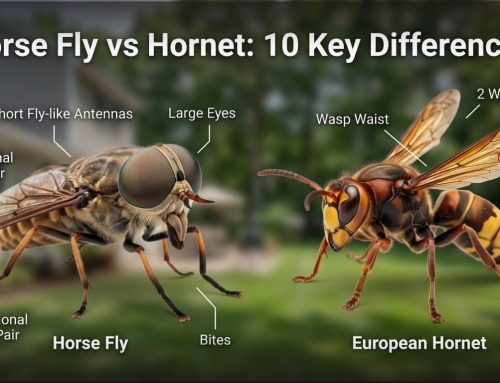
Larger than yellow jackets but often confused with them, European hornets are brownish-yellow with reddish-brown markings. They’re actually among the less aggressive stinging insects when it comes to unprovoked encounters, but they will defend their nests vigorously. They tend to nest in hollow trees, wall cavities, and attic spaces common situations in the older homes found throughout Greenwich and Darien.
Yellow Jackets
These are the insects responsible for most of the sting incidents at late-summer outdoor events. They’re small, aggressively territorial, and notorious for nesting in the ground or in wall voids. If you’ve been stung while mowing the lawn or found a hole in the ground with heavy insect traffic, yellow jackets are the likely culprit.
For a thorough breakdown of yellow jacket biology and behavior, it’s worth understanding exactly what makes them so difficult to eliminate without professional help.
Paper Wasps
Slender, elongated insects with long hanging legs in flight, paper wasps build small, open-celled nests that look like an upside-down umbrella. These are generally less aggressive than hornets or yellow jackets but will sting if the nest is disturbed. They’re extremely common under deck overhangs and porch ceilings throughout Westport and Fairfield.
Understanding what a paper wasp nest actually looks like helps homeowners avoid accidentally disturbing one during yard work or home maintenance.
Fruit Flies
These are tiny (about 1/8 inch), reddish-brown flies with distinctive red eyes. If you’re seeing small flies hovering around your kitchen sink, fruit bowl, or garbage can, they’re almost certainly fruit flies. The fastest way to confirm: check your produce and any drains in the kitchen or bathroom. That’s where the breeding is happening.
The Real Risks of Waiting: Why Pest Problems Escalate Faster Than You Think
There’s a tendency among homeowners to adopt a “wait and see” approach to pest problems. The logic seems reasonable maybe the wasps will move on, maybe the fruit flies will die off when you clean up the kitchen. In reality, most pest infestations follow an exponential growth curve.
A bald-faced hornet queen that starts a nest in May with zero workers will have hundreds of workers by July and potentially 400 to 700 individuals by August. A fruit fly population can double every 12 days under ideal conditions. What was a minor nuisance in June becomes a full-blown infestation requiring significantly more intensive (and expensive) treatment by August.
There are also legitimate safety considerations beyond discomfort:
Sting Allergies: According to the American College of Allergy, Asthma & Immunology, approximately 5% of Americans experience anaphylaxis to insect stings at some point in their lifetime. In households with known allergies, a large hornet or yellow jacket nest on the property is a genuine medical emergency waiting to happen.
Structural Damage: Yellow jacket colonies that establish themselves inside wall voids can cause significant damage to insulation, wiring, and structural materials. They can also chew through drywall if the colony grows large enough. Understanding how harmful hornets can be extends beyond just sting risk.
Health Code Violations: For any food service establishment in Connecticut, a fruit fly or flying insect infestation triggers state and local health code violations. The cost of a failed inspection typically far exceeds the cost of professional treatment.
DIY vs. Professional Treatment: Making the Honest Comparison
Let’s be straightforward here. Not every pest situation requires professional intervention. And any honest pest control professional will tell you the same thing.
When DIY Approaches Are Reasonable
- A single paper wasp nest smaller than a baseball, located in an accessible area away from high foot traffic
- Early-season fruit fly activity that clears with thorough sanitation and DIY traps
- Prevention measures like sealing entry points, eliminating standing water, and removing food sources
For fruit fly prevention specifically, products like indoor fruit fly killer sprays and traps can be effective when the infestation is caught early and the breeding source has been eliminated. Homemade solutions like apple cider vinegar traps can knock down adult populations in mild infestations.
When Professional Treatment Is Non-Negotiable
- Any active hornet or yellow jacket nest larger than a softball
- Nests located inside wall voids, attic spaces, or crawl spaces
- Ground-nesting yellow jacket or ground hornet colonies
- Nests in elevated or difficult-to-access locations
- Any situation involving a family member with a known sting allergy
- Persistent fruit fly infestations that have returned despite DIY treatment
- Any stinging insect nest within 20 feet of a regularly used entry or exit point
The detailed breakdown of hornet nest removal DIY versus professional is worth reading before you decide. The risk-reward calculation almost always tilts toward professional service once a colony reaches maturity.
What the Professional Treatment Process Actually Looks Like
Understanding what happens during a professional pest control visit removes a lot of the anxiety around scheduling service. Here’s what to expect when you call a qualified local exterminator.
Step 1: Initial Consultation and Assessment
A reputable company will ask you detailed questions before dispatching a technician: What species do you think you’re dealing with? Where is the nest located? How large does it appear? Has anyone been stung? This isn’t gatekeeping it’s triage. The answers help determine urgency, required equipment, and appropriate treatment.
Step 2: On-Site Inspection
The technician will inspect the nest, confirm the species identification, assess the colony size and activity level, and evaluate any secondary factors (proximity to entry points, structural vulnerabilities, access challenges).
Step 3: Treatment Selection and Application
Using Integrated Pest Management (IPM) principles which prioritize targeted, minimally invasive treatments the technician will select the most appropriate approach. This might involve:
- Targeted application of EPA-registered dust or foam insecticide directly into the nest
- Treatment of nest entry points for wall void colonies
- Perimeter treatments for ground-nesting species
- Monitoring and bait applications for fly infestations
IPM isn’t just about effectiveness it’s about using the right tool for the specific job, minimizing environmental impact, and protecting non-target species like bees and beneficial insects.
Step 4: Nest Removal (When Appropriate)
After treatment, nest removal may be recommended depending on the location and species. For ground nests, this often isn’t necessary. For aerial nests near high-traffic areas, removal reduces the risk of secondary pest activity (certain beetle species are attracted to abandoned nests).
Step 5: Follow-Up and Prevention
Professional service doesn’t end with the treatment. A follow-up inspection confirms the colony has been eliminated and assesses whether structural repairs or exclusion measures are needed to prevent re-infestation. This is where the real long-term value of professional service shows up.
Pest Control Costs in Connecticut: What’s Actually Fair to Pay
Pricing transparency is one of the most common frustrations homeowners report when shopping for pest control services. Here’s a realistic overview of what professional pest control costs in the Fairfield County area.
Hornet and Wasp Nest Removal Costs
| Service Type | |
| Basic wasp/paper wasp nest removal | |
| Large hornet nest removal (accessible) | |
| Elevated or difficult-access nest removal | |
| Wall void yellow jacket treatment | |
| Ground hornet colony treatment | |
| Emergency/same-day service premium |
These ranges reflect realistic Connecticut market pricing as of 2026. Costs vary based on nest size, location accessibility, colony activity level, and whether follow-up visits are required.
Fly Control and Fruit Fly Extermination Costs
| Service Type | |
| Residential fruit fly inspection and treatment | |
| Drain treatment and source elimination | |
| Commercial fly control (per visit) | |
| Monthly commercial fly control contracts |
What Affects Your Total Cost
Several factors will push your cost toward the higher end of these ranges:
- Nest location complexity: A nest at roofline height requiring ladder access costs more than one at eye level under a deck.
- Colony size: Larger colonies require more product and time.
- Number of nests: Multiple active nests on one property are often treated at a package rate.
- Emergency scheduling: Legitimate emergency and same-day service carries a premium, typically disclosed upfront.
- Follow-up visits: Some treatment methods require confirmation visits, particularly for wall void treatments.
What you should never do: Choose a provider based solely on price. The lowest bid is frequently associated with cut corners, inadequate treatment, and no follow-up service. A slightly higher investment in a qualified, insured, experienced local exterminator almost always saves money over having to call a second company after the first one fails.
Red Flags When Hiring a Local Exterminator: How to Protect Yourself
The pest control industry, like any service industry, has its share of providers who prioritize volume over quality. Here’s how to screen out the ones you don’t want treating your property.
Warning Signs to Watch For
No license or insurance: In Connecticut, pest control operators must be licensed through the Connecticut Department of Energy and Environmental Protection (DEEP). Ask for license numbers and verify them. Never hire an unlicensed operator — if something goes wrong, you have no recourse.
Vague or verbal-only quotes: Any reputable company will provide a written estimate before beginning work. If a technician is reluctant to put numbers on paper, walk away.
Pressure tactics: Phrases like “we need to treat this today or it will be much worse by tomorrow” — when the situation clearly doesn’t warrant emergency treatment — are a manipulation tactic. Legitimate professionals will give you honest timelines without manufactured urgency.
No follow-up service included: A single treatment visit without any provision for follow-up inspection is a sign that the company isn’t invested in actual results.
Refusal to identify the species: Any professional worth hiring can tell you exactly what species you’re dealing with and why the chosen treatment is appropriate for that species.
Green Flags That Signal a Quality Provider
- Clear communication about what the service includes
- Written warranty or guarantee for results
- Willingness to explain the treatment process in plain language
- Transparent pricing with no hidden fees
- Verifiable reviews from local homeowners
- Proper licensing, insurance, and EPA-compliant products
- Follow-up inspection as a standard part of the service
Local Expertise Matters: Why Connecticut-Based Professionals Have an Advantage
There’s a meaningful difference between a national pest control franchise and a locally operated company with years of experience treating Connecticut properties specifically. Here’s why that matters.
They Know the Local Species
Connecticut hosts a specific set of stinging insect species, and their behavior is shaped by local conditions. A technician who’s treated hundreds of bald-faced hornet nests in Wilton’s wooded neighborhoods or yellow jacket wall void infestations in Stamford’s older housing stock brings contextual knowledge that’s simply not available from a technician who rotates between regions.
Understanding wasp and hornet behavior specific to Connecticut means treatments are more accurately targeted and more likely to succeed on the first attempt.
They Understand Local Construction
Greenwich estates, Westport coastal homes, Norwalk multi-family properties, and New Canaan colonials all have different structural characteristics that affect where pests nest and how they access a structure. A local exterminator who’s worked in these specific contexts understands the nuances in ways that generalists don’t.
They’re Available When You Need Them
National companies that dispatch technicians from central hubs often can’t provide the same-day response that a genuine emergency requires. A locally based team in Fairfield County can realistically respond faster and more reliably when a hornet nest near your child’s bedroom window becomes an urgent situation at 9 AM on a Tuesday.
For immediate situations, emergency hornet control in CT is available through locally based teams who understand the urgency and geography.
Prevention Strategies: What Homeowners Can Do Between Professional Visits
Even the best pest control treatment won’t maintain results indefinitely without basic prevention practices. These aren’t complicated, but they do require consistency.
For Stinging Insects
Early nest inspection: Walk your property perimeter in late April and May specifically looking for early-stage nest construction. Catching a queen’s nest before she raises her first worker cohort is dramatically easier than dealing with a mature colony.
Seal structural entry points: Yellow jackets and hornets exploit gaps in siding, fascia boards, vents, and utility penetrations. Caulking and hardware cloth are your best friends here. Learn more about deterring hornets from nesting before spring arrives.
Manage outdoor food sources: Fallen fruit, uncovered garbage cans, and sweet beverages left outside are major attractants. Yellow jackets especially are drawn to protein sources including pet food left outdoors.
Time your outdoor activities: Understanding when wasps are least active can help you plan outdoor work and yard maintenance to minimize encounter risk.
For Fruit Flies and Flying Insects
Eliminate breeding sources: This is the single most important prevention step. Don’t leave ripe or overripe produce on counters. Empty and clean garbage cans regularly. Keep drains clear and clean fruit flies breed prolifically in the organic film that accumulates in kitchen and bathroom drains.
Manage moisture: Fruit flies need moisture to breed. Fix dripping faucets, address condensation issues, and ensure proper ventilation under sinks.
Screen and seal: Keep window and door screens in good repair. Flying insects can’t infest what they can’t access.
Use prevention traps proactively: During peak summer months, DIY fruit fly traps placed near potential breeding areas can provide early warning before populations explode.
Specific Service Areas in Fairfield County: What to Expect by Location
Pest problems don’t distribute evenly across a county. Different towns in Fairfield County have distinct pest pressure profiles based on their geography, housing stock, and landscape characteristics.
Greenwich CT
Greenwich properties particularly those with mature trees, extensive landscaping, and proximity to the Mianus River Gorge and other natural areas see consistent pressure from bald-faced hornets and European hornets. The area’s older, prestigious housing stock also creates plenty of entry points for yellow jackets seeking wall void nesting sites.
Stamford CT
Stamford’s mix of dense urban areas, multi-family residential buildings, and suburban neighborhoods creates a varied pest landscape. Commercial properties and restaurants in downtown Stamford are particularly susceptible to fruit fly issues. Yellow jacket wall void infestations are common in older residential construction near the harbor.
Darien CT
Darien’s wooded, affluent residential character means significant exposure to stinging insects nesting in trees and established landscaping. Homeowners frequently encounter bald-faced hornet nests in ornamental trees and paper wasp activity under the porches and covered outdoor living spaces that are characteristic of the area’s homes.
Westport CT
Coastal proximity gives Westport a particularly humid microclimate that accelerates pest activity. Fruit fly and flying insect pressure is high, particularly in summer. The town’s active outdoor dining scene also creates commercial fly control needs. Stinging insect pressure is significant throughout the summer season.
Fairfield CT
Fairfield’s combination of shoreline, suburban neighborhoods, and commercial corridors creates diverse pest conditions. Beach proximity means humidity-driven pest activity in summer. The town’s mix of older and newer construction creates varied yellow jacket nesting opportunities.
Wilton CT
Wilton’s heavily wooded, rural-adjacent character makes it one of the most pest-active municipalities in Fairfield County. Bald-faced hornet nests are extremely common in the tree canopy. Ground nesting stinging insects are a significant lawn and garden concern. The town’s natural environment, while beautiful, creates constant pest pressure throughout the outdoor season.
New Canaan CT
New Canaan shares Wilton’s wooded character with an additional layer of older residential properties that offer abundant pest entry points. European hornet activity is notable, particularly in areas with mature hollow trees adjacent to homes.
Norwalk CT
Norwalk’s urban-suburban interface, commercial density, and harbor proximity create a full spectrum of pest activity. Commercial properties dealing with flying insect issues are common, and the city’s older residential neighborhoods see consistent stinging insect pressure every season.
How to Choose the Right Professional: A Decision Framework
When you’re standing in your yard staring at a hornet nest and trying to figure out who to call, having a clear decision framework helps enormously.
Step 1: Define Your Urgency Level
Is this a genuine emergency (nest in a high-traffic area, someone has been stung, family member with allergy present)? Or is this a scheduled concern (nest discovered in a low-traffic area, no immediate risk)? Your urgency level determines whether you need same-day service or can take time to compare quotes.
Step 2: Verify Basic Credentials
Before discussing the pest problem, confirm the company is licensed in Connecticut and carries liability insurance. This takes two minutes and protects you significantly.
Step 3: Describe the Problem Accurately
The more detail you can provide species if known, nest size, location, how long it’s been present the more accurate your quote will be. Vague descriptions lead to vague quotes that change when the technician arrives.
Step 4: Ask About the Full Treatment Process
What specifically will they do? What products will they use? Are they EPA-registered? Is follow-up inspection included? These aren’t unreasonable questions they’re exactly what you should be asking.
Step 5: Get It in Writing
A written quote that clearly outlines what’s included (and what isn’t) protects both parties. If a company won’t provide written documentation, that’s a significant red flag.
Step 6: Consider Long-Term Service Relationship
If you’re dealing with a pest problem this season, you’ll likely deal with pest pressure every season. Finding a local provider you trust and building an ongoing relationship is far more valuable than perpetually shopping for the lowest one-time price.
Comparing Flying Insect Pest Types: A Quick Reference Table
| Pest | Nesting Location | Aggression Level | DIY Feasible? | Emergency Risk |
| Bald-Faced Hornet | Aerial (trees, eaves) | Very High | No | High |
| European Hornet | Wall voids, hollow trees | Moderate | No | Moderate |
| Yellow Jacket | Ground, wall voids | High | Rarely | High |
| Paper Wasp | Eaves, porch ceilings | Low-Moderate | Sometimes | Low |
| Fruit Fly | Drains, produce | N/A | Yes (early) | None |
| Drain Fly | Drain pipes, sewers | N/A | Sometimes | None |
For a comprehensive comparison of species commonly confused in Connecticut, the wasp vs. hornet vs. yellow jacket identification guide provides detailed visual and behavioral comparisons.
Understanding Integrated Pest Management (IPM): The Professional Standard
The best pest control companies in Connecticut operate under Integrated Pest Management principles, and understanding what this means helps you evaluate providers more effectively.
IPM is a science-based approach recognized by the EPA that combines multiple pest control tactics to achieve effective, long-term control with minimum risk to human health and the environment. In practice, this means:
Prevention first: Eliminating conditions that attract or enable pests before resorting to chemical treatment.
Accurate identification: Correct species identification determines appropriate treatment. Misidentification leads to failed treatments.
Threshold-based action: Not every pest sighting warrants treatment. IPM practitioners establish thresholds at what population level does treatment become necessary?
Multiple treatment tactics: Physical exclusion, habitat modification, and targeted chemical application are all part of the toolkit. Not everything needs to be treated chemically.
Evaluation: Follow-up assessment confirms whether treatment was effective and informs future prevention strategy.
When interviewing pest control companies, asking whether they operate under IPM principles is a fast way to separate professional practitioners from those just selling product applications.
Seasonal Service Calendar: When to Call for What
March – April: Schedule a perimeter inspection. Identify potential nesting sites before queens establish colonies. Address structural vulnerabilities identified from last season.
May – June: Monitor for early nest construction. If nests are discovered, this is the easiest time for removal colonies are small, workers are few, and treatment is straightforward. For fruit fly prevention, clean drains proactively.
July – August: Peak season for stinging insect emergencies. If you’ve discovered an active, mature nest, call a professional immediately. Don’t attempt DIY treatment on a mature summer colony. Fruit fly season peaks source elimination and professional treatment for persistent infestations.
September – October: Remaining stinging insect treatment before colonies decline. This is when yellow jackets are most aggressive. Knowing the best time to treat a hornets nest and understanding that timing matters significantly for treatment efficacy helps homeowners and professionals make better decisions.
November – February: Post-season inspection, structural repairs, sealing of entry points. Planning for next season’s prevention program.
Frequently Asked Questions
What is a professional service lead hub in pest control?
A professional service lead hub is a centralized resource that connects homeowners with qualified, vetted local pest control professionals. In the pest control context, it provides information about available services, cost ranges, how to identify your specific pest problem, and how to evaluate providers — all in one place. For Connecticut homeowners, it means having a trustworthy starting point when dealing with hornets, flying insects, or other pest emergencies.
How much does hornet extermination cost in Connecticut?
In Fairfield County, professional hornet extermination typically costs between depending on nest size, location, and accessibility. Basic accessible nest removal runs. Difficult-access situations elevated nests, wall void colonies, or ground nesting yellow jackets cost more. Emergency same-day service usually carries a premium. Always get a written quote before work begins.
Is emergency hornet removal available in Stamford and Greenwich CT?
Yes. Qualified local exterminators serving Stamford, Greenwich, and other Fairfield County communities offer emergency and same-day hornet removal for urgent situations. This is particularly important for households with known sting allergies or nests in high-traffic areas. Response times vary by provider and time of day, so ask specifically about emergency availability when you call.
What’s the difference between a hornet and a yellow jacket?
Hornets are generally larger than yellow jackets and typically nest aerially (in trees, under eaves, or in wall voids). Yellow jackets are smaller, more aggressive when disturbed, and commonly nest in the ground or inside wall voids. Both can sting multiple times and both require professional treatment when colonies are mature. The wasp vs. hornet comparison guide provides detailed identification help.
When is the best time to treat a hornet nest in Connecticut?
Early morning or late evening during spring and early summer offers the best treatment conditions cooler temperatures slow insects, colony size is smaller, and queens haven’t yet produced large worker populations. By midsummer, treatment timing shifts toward early morning when workers are less active. Fall treatment, while still effective, involves the most aggressive insects. For mature summer colonies, professional timing and protective equipment are essential regardless of time of day.
Can I get rid of fruit flies permanently without calling an exterminator?
For mild, early-stage fruit fly infestations, consistent DIY treatment combined with thorough source elimination can resolve the problem without professional help. The key is eliminating all breeding sites especially drains, which are often overlooked. However, if fruit flies have returned repeatedly despite DIY efforts, it usually indicates an unidentified breeding source that requires professional inspection to locate and treat. Persistent infestations almost always have a hidden source.
Why do pest problems seem worse in Fairfield County than other areas?
Fairfield County’s combination of dense tree cover, humid shoreline climate, older residential construction, and proximity to natural areas creates near-ideal conditions for a wide range of pest species. The region’s climate supports longer pest seasons than more northern Connecticut communities. This isn’t unique to one town — Greenwich, Stamford, Westport, Wilton, and all their neighbors face comparable pest pressure for these combined reasons.
How do I know if a pest control company is licensed in Connecticut?
Connecticut pest control operators must be licensed through the Connecticut Department of Energy and Environmental Protection (DEEP). You can request a company’s license number and verify it directly through the DEEP licensing database. Any reputable company will provide this information readily. Do not hire any pest control operator who cannot provide a verifiable Connecticut pest control license — this is a legal requirement, not optional.
What should I do if I disturb a hornet or yellow jacket nest accidentally?
Move away quickly and calmly avoid swatting or rapid movement that can trigger additional stinging. Get indoors if possible. If you’ve been stung multiple times or experience any signs of allergic reaction (difficulty breathing, swelling beyond the sting site, dizziness), seek immediate medical attention. After the immediate situation is resolved, contact a professional exterminator for treatment. Do not attempt to treat the nest yourself after it has been disturbed the colony will be in a heightened defensive state.
Does Green Pest Management CT offer same-day service?
Green Pest Management CT serves Fairfield County communities including Greenwich, Stamford, Darien, Westport, Fairfield, Wilton, New Canaan, and Norwalk, and provides emergency and same-day service for urgent pest situations. Contact the team directly to discuss your specific situation and confirm current availability. Immediate hornet control in CT is available for situations that can’t wait.
Conclusion: Making the Right Call for Your Property and Family
At the end of the day, this Professional Service Lead Hub exists to solve one real problem: helping Connecticut homeowners move from confusion and anxiety to confident, informed action.
Pest problems whether it’s a bald-faced hornet nest discovered in your backyard in Wilton, a yellow jacket colony inside your Stamford wall, or a persistent fruit fly infestation in your Westport kitchen don’t improve on their own. They escalate. And the longer they’re left unaddressed, the more complicated and costly the solution becomes.
What makes the difference isn’t just calling any exterminator. It’s calling the right one. A locally experienced, properly licensed professional who knows Connecticut’s pest species, understands Fairfield County’s construction and climate, and will stand behind their work with a real follow-up process.
Green Pest Management CT has built its reputation in communities like Greenwich, Darien, New Canaan, Norwalk, and throughout Fairfield County precisely because local expertise, transparent service, and genuine results matter more than any marketing promise. Understanding hornet control strategies backed by professional expertise is just one example of the kind of authoritative, field-tested knowledge that separates professional service from guesswork.
If you’re dealing with a stinging insect nest, a flying insect infestation, or any pest situation that’s causing concern for your family’s safety and comfort, don’t wait for it to get worse. Reach out to a qualified local professional, ask the right questions, and get a written plan in place.
Your home should feel safe. Your property should be protected. And you shouldn’t have to navigate that process alone.
Ready to connect with a trusted local pest control expert in Fairfield County? Contact Green Pest Management CT to schedule an inspection, get an honest assessment, and develop a treatment plan that actually works for your specific situation — not a cookie-cutter solution that misses the real problem.
This article was written by WP Support and reviewed by the professional team at Green Pest Management CT. Information reflects current professional practices and Connecticut-specific pest conditions as of 2026. For species-specific identification guidance, Connecticut residents can also consult resources from the University of Connecticut Extension and the Connecticut Agricultural Experiment Station.