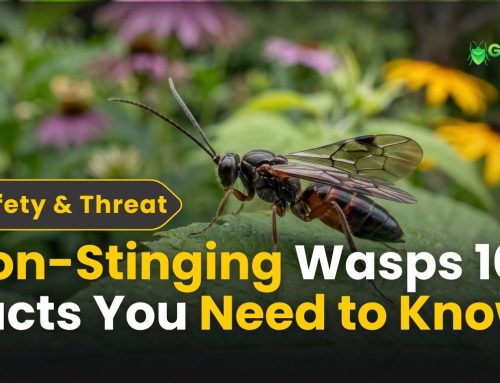
Ground Hornets: Identification, Treatment & Elimination
Your Lawnmower Just Triggered Something Horrifying
You’re mowing the back lawn on a Saturday afternoon in August same thing you’ve done a dozen times this summer. Then, without warning, you walk over one specific patch of grass and everything changes. Within two seconds you’re surrounded. You’re being stung multiple times, swatting, running toward the house while something you can’t quite see is attacking you from multiple angles.
By the time you’re inside, you’ve been stung five times. Your heart is pounding. You’re trying to catch your breath. And you’re asking the question that every Connecticut homeowner in this situation asks: What exactly just attacked me, and where is it?
If this happened to you or if you’ve noticed a suspicious hole in your lawn with insects going in and out you may have just discovered a ground hornet colony. And here’s what you need to know immediately: this situation is categorically different from an aerial wasp or hornet nest. It’s more dangerous, requires different identification, demands different treatment approaches, and needs immediate professional attention in almost every situation.
This guide covers everything: ground hornet identification, why they’re so dangerous, what kills them effectively, and exactly why DIY treatment of a ground colony is almost always a mistake.
Let’s start with what you’re actually dealing with.
What Are Ground Hornets? The Identification Guide
First, clarification: ground hornets are not a distinct species. The term “ground hornet” refers to hornets and wasps that nest in the ground and in Connecticut, that almost always means yellow jackets (Vespula species), which are technically wasps but commonly called hornets in casual conversation.
Why the confusion? Because yellow jackets can nest either in the ground OR in trees. When they nest in trees, they build paper nests. When they nest in the ground, they establish colonies in existing cavities abandoned rodent burrows, soil crevices, under concrete or decking, in wall voids accessed from ground level.
Identifying a Ground Hornet Colony
The ground hornet nest entrance is the primary identifier. Look for:
The entrance hole:
- Quarter to golf ball-sized opening in the lawn, soil, mulch, or under decking
- Often appears hidden under a rock, vegetation, or landscaping edge
- May have disturbed soil around it from workers entering and exiting
- Single entrance hole in most cases, though complex tunnel systems extend underground
Worker activity patterns:
- Yellow and black striped insects (workers) consistently entering and exiting
- Stream of workers returning from foraging
- Activity intensifies in warm afternoons and evenings
- Can reach peak traffic levels of 50+ workers per minute in an established colony
Underground tunnel system:
- Extends 1–4 feet below the surface
- Multiple chambers for different purposes (larvae, pupae, food storage)
- Not visible from the surface but explains the extensive colony size
Yellow Jacket Characteristics You’ll Notice
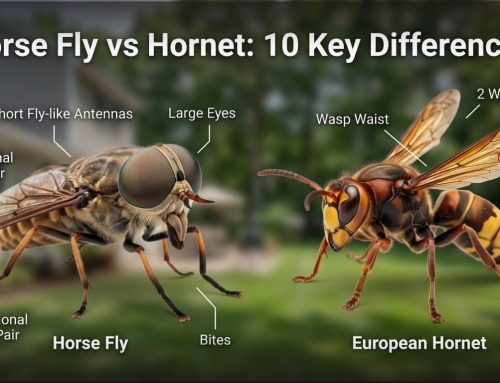
If you actually see the insects particularly if you’re being stung you’ll confirm yellow jackets by their appearance:
- Size: 0.5–0.75 inches (smaller than true hornets like European hornets)
- Color: Bright yellow and black stripes, very distinctive
- Behavior: Aggressive, rapid flight pattern, responsive to vibration
- Sting ability: Can sting multiple times (unlike bees)
For complete visual identification including photos of yellow jackets and comparison to other species, our wasp and hornet identification guide for Connecticut is the most comprehensive regional resource available.
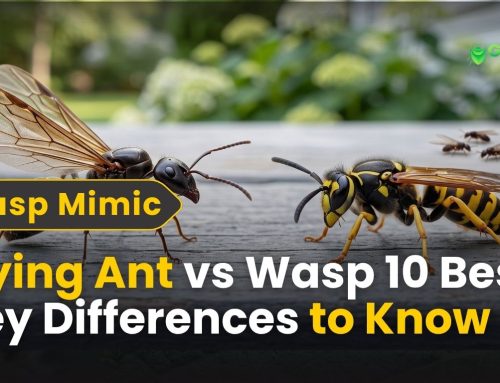
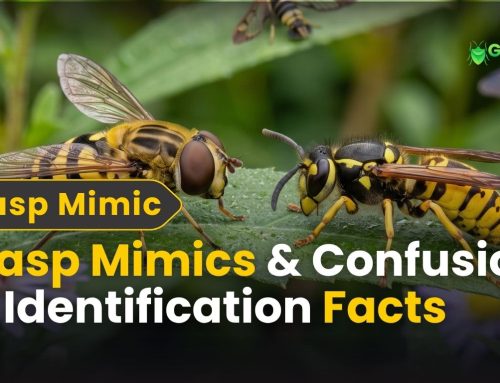
Not sure if what you’re seeing is actually a yellow jacket ground hornet or something else? Our quick reference on flying insects that look like wasps helps you rule out lookalikes before you treat.
Why Ground Hornets Are Different And Exponentially More Dangerous
Once you understand why ground hornet colonies are categorically more dangerous than aerial nests, you’ll understand why this situation demands professional attention rather than a DIY approach.
The Invisibility Problem
Aerial nests are visible. You can see the paper ball hanging from a branch, eave, or shrub. You know where it is, you maintain distance, you approach deliberately and carefully if you need to.
A ground hornet nest? The entrance might be a quarter-inch hole in your lawn you’ve walked past a thousand times without noticing. You have no warning before you’re directly on top of it. By the time you realize where the colony is, you’re in the middle of its defensive territory.
This invisibility is why ground hornet stings happen so suddenly and to so many people in such a short window. Your child steps on the entrance. A pet runs over the nest. You’re mowing the lawn. Zero awareness, zero chance to retreat, immediate mass defensive response.
The Vibration Trigger Problem
Yellow jackets in ground nests are exquisitely sensitive to vibration. The underground tunnel system acts as a natural amplifier. Here’s what triggers a mass defensive response from a ground hornet colony:
- Lawnmower passing 10–15 feet away
- String trimmer use within 20+ feet
- Heavy footsteps near the entrance
- Children running across the lawn
- Power tools being used in the yard
- Even a dog running nearby
A single vibration event can trigger the emergence of hundreds of workers from underground tunnels a phenomenon called “explosive exit response” by pest management professionals. It’s genuinely explosive in its speed and scale.
Aerial wasps are territorial and defensive, but they defend from an entrenched position. Ground hornets respond to vibration with a dispersed, coordinated attack from multiple angles, surrounding the perceived threat before retreat is possible.
The Colony Size Problem
Yellow jackets in ground nests reach larger colony sizes than most aerial-nesting species. By August, a well-established ground hornet colony can contain 3,000 to 5,000+ workers. This is not theoretical this is documented by pest management services across Connecticut every season.
An aerial paper nest might have 400–500 workers at peak season. A ground yellow jacket colony with 5,000 workers is exponentially more dangerous. It has more workers available for defensive response, more foraging capacity, and a more complex, hardened tunnel system that makes treatment significantly more challenging.
The Underground Tunnel Complexity Problem
Surface treatment of a ground hornet nest entrance is almost useless. The colony extends 1–4 feet below the surface through a complex network of tunnels, chambers, and passages. The queen is deep underground, not near the entrance.
This is why what kills ground hornets requires specialized approaches that penetrate the tunnel system not just surface spraying. Consumer products simply cannot reach deep enough into an underground nest to eliminate the colony. Even professional products require proper application technique and the right formulation.
For a complete breakdown of why ground nest treatment is so specialized, our comprehensive ground hornet treatment guide for Connecticut covers the technical aspects of why underground colonies are resistant to surface-level approaches.
The Seasonal Reality of Ground Hornets in Connecticut
Understanding when ground hornet colonies are most dangerous helps you anticipate risk and plan prevention.
Spring (April–May): Founding Phase
A queen emerges from hibernation in the soil or a protected location. She locates a suitable underground cavity an abandoned rodent burrow, soil cavity, or void. She begins establishing the founding nest alone.
Colony size: 1–20 workers by late May.
Risk level: Low
Your action: Prevention and inspection
Early Summer (June–July): Growth Phase
Workers are expanding the underground tunnel system and foraging actively. Colony is rapidly growing but not yet at maximum size.
Colony size: 50–300 workers by late July.
Risk level: Moderate
Your action: Detection and professional treatment catching a ground hornet nest in June or July, before it reaches full size, is vastly preferable to dealing with it in August.
Late Summer (August–September): Maximum Size and Aggression
This is the nightmare scenario. The colony has reached maximum size potentially thousands of workers. Food is becoming scarce (dietary shift driving aggressive foraging). Defensive instincts are at peak levels.
Colony size: 1,000–5,000+ workers
Risk level: Extremely High
Your action: Professional treatment immediately this is not a DIY situation. Not with consumer products. Not with any level of confidence of success.
Fall (October–November): Decline and New Queens
Workers begin dying. New queens and males emerge for mating. Foraging becomes erratic. A dying colony is actually more dangerous than a healthy one desperate workers with nothing to lose sting more readily.
Risk level: High but declining
Your action: Professional treatment if still present; exterior sealing to prevent overwintering queens
For a complete colony lifecycle breakdown, our wasp lifespan and lifecycle guide covers the full annual cycle from founding through death.
How to Eliminate Ground Hornets: Treatment Options That Actually Work
The critical point: what kills ground hornets is fundamentally different from what kills aerial wasps. Consumer products designed for aerial nests will not adequately treat underground colonies.
Professional Treatment: The Effective Standard
Professional insecticidal dust This is the gold standard for ground hornet elimination. Here’s how it works:
- Dust (typically containing pyrethrins or pyrethroids) is applied directly into the ground nest entrance using specialized injection equipment
- Workers passing through the entrance get coated with dust
- Dust is tracked throughout the underground tunnel system as workers move
- It reaches the queen, larvae, and all interior chambers
- Workers are killed throughout the nest interior
- Colony dies completely, usually within 24–48 hours
Professional dusts (such as Delta Dust, Drione, or similar formulations) are dramatically more effective than consumer products because:
- Higher concentration of active ingredient
- Properly calibrated for deep penetration
- Includes spreading agents that promote throughout-nest distribution
- Remaining residual activity continues killing workers for days
Why this works when other methods fail:
Consumer aerosol spray applied to the entrance it creates a toxic zone at the entrance, kills any workers currently exiting or entering, but does not penetrate the tunnel system. The colony retreats deeper underground. The queen survives. Within 24–48 hours, workers fill the gaps left by those killed and resume normal activity.
Professional dust, by contrast, is carried throughout the colony via worker behavior. It reaches chambers far below the surface. The queen cannot escape it.
Secondary Professional Treatments
Pyrethroid liquid injection For certain ground situations, professional-grade liquid insecticide is injected directly into the ground cavity. Less commonly used than dust but effective in specific conditions.
Foam injection Professional expansion foam combined with insecticide is used in some ground nest scenarios, particularly when the tunnel system is complex or extends into wall voids.
What Does NOT Work for Ground Hornets
Understanding what to avoid is as important as knowing what works:
Consumer aerosol wasp spray Penetration depth is insufficient. Triggers mass defensive response before enough product is delivered. Dangerous for the person applying it.
Boiling water Ineffective; doesn’t reach the colony interior. Triggers a mass stinging response from thousands of workers.
Gasoline, diesel, or other flammable liquids Do not do this. It is illegal in most jurisdictions, extremely dangerous, and does not effectively eliminate the colony. This is a fire hazard that can cause explosions if improperly used. Never consider this option.
Sealing the entrance This is actively dangerous. Sealing traps workers inside with no exit. They will find an alternative exit potentially into your home through a foundation crack or wall void. This converts an outdoor problem into an indoor emergency.
Flooding the nest Doesn’t effectively eliminate the colony; triggers a dispersed, aggressive response.
If you’re asking “what kills ground hornets” because you’re thinking about trying a DIY approach, please reconsider. The specialized equipment and professional-grade products required are not available to consumers, and the risk of failure with all the consequences that entails is very high.
Contact our professional team for ground hornet elimination throughout Connecticut.
Best Time to Treat a Ground Hornet Nest
Timing matters even for professional treatment. Here’s why and when:
Optimal Treatment Window
After dark (10 PM–5 AM) on a cool night (below 60°F) is the standard professional treatment window for ground nests, just as it is for aerial nests. Here’s why:
- Maximum workers inside the underground nest chambers (not foraging outside)
- Darkness suppresses worker activity and responsiveness
- Cool temperature further reduces worker activity levels
- Queen is protected deep in the colony core when workers are inside the nest
Why Early Season Is Better Than Late Season
A ground hornet nest discovered and treated in June is vastly preferable to one treated in August for several reasons:
| Timing | Colony Size | Worker Aggression | Treatment Difficulty | Risk Level |
| June | 50–150 | Moderate | Straightforward | Low–Moderate |
| July | 200–500 | Moderate-High | More complex | Moderate |
| August | 1,000–3,000+ | Extremely High | Significantly complex | Extremely High |
| September | 1,500–5,000 | Peak + desperate | Maximum difficulty | Extreme |
An early-season ground hornet nest treatment is a single-visit professional job that’s over quickly. A late-season colony may require multiple treatments, deeper penetration, more complex equipment, and significantly more risk to the treatment technician.
This is why early detection before the colony reaches maximum size is so critical. A nest found in June is solvable. A nest ignored until August becomes a genuine emergency.
Ground Hornet Prevention: Stop Them Before They Nest
Once you understand how ground hornets establish colonies, prevention becomes straightforward.
Fill Underground Cavities
The primary prevention measure: eliminate the underground nesting sites that ground hornets exploit.
What to do:
- Scan your lawn for abandoned rodent burrows they appear as small, perfectly round holes
- Fill them completely with soil, packing it firmly
- Cover with fresh sod or grass seed
- Check again in spring for new burrows (some animals will reopen closed burrows)
When to do it:
- Best time is in early spring (April) before queens begin searching for nesting sites
- Also effective in fall (October) as a preventive measure
Seal Structural Vulnerabilities
Ground hornets (yellow jackets) also nest in ground-level entry points to structures:
- Seal cracks in foundation walls with caulk or concrete patching
- Ensure basement window wells are sealed or protected
- Check for gaps where deck structures meet the foundation
- Seal openings where utilities enter the home at or near ground level
- Ensure sump pump discharge does not create attractive conditions (standing water, wet soil)
Eliminate Attractive Conditions
Ground hornets are attracted to:
- Fermented fruit (fallen fruit near trees) — pick it up daily during late summer
- Open trash and recycling containers — seal all outdoor trash with locking lids
- Standing water — eliminate puddles and standing areas in your yard
- Organic debris — don’t leave piles of mulch, leaves, or compost near the home exterior
For our complete prevention guide, see how to deter hornets from nesting on your property.
Pro Tips From Connecticut Pest Management Experts
Tip 1: The entrance hole you find in August existed in May.
By the time you discover a ground hornet colony, it’s been establishing for months. The queen founded the nest in spring. Early spring property inspections, looking specifically for small holes in your lawn that might harbor founding colonies, are your best prevention strategy.
Tip 2: A vibration trigger is not a personal attack.
Yellow jackets attacking your lawnmower or trimmer are responding to vibration, not hunting you specifically. But they will pursue you if you’re moving near their nest. Understand that any yard equipment with vibration is a ground hornet trigger — plan your yard work to avoid suspected colony areas.
Tip 3: Yellow jackets hunt in late afternoon.
Peak foraging activity for ground hornets is typically 2–5 PM, when workers are actively leaving the nest to search for food. This is when they’re most likely to investigate your outdoor food, trash, and activities. Closing this window (bringing trash inside, covering food, limiting outdoor time) reduces attractiveness.
Tip 4: A damaged ground nest is more dangerous.
If the entrance has already been disturbed by mowing, foot traffic, or a previous unsuccessful treatment the colony is in full alert mode. Attempting treatment at this point is exponentially more dangerous. Professional assessment becomes critical.
Tip 5: Multiple colonies on the same property are not unusual.
We frequently discover secondary ground hornet colonies during inspection of a property where one has already been found. Yellow jackets sometimes establish multiple nests within a single property. After treatment of a primary colony, request a full property scan for secondary nests.
Real Stories: Ground Hornet Encounters in Connecticut
Wilton, CT The August Lawnmower Incident
“I was mowing the back lawn in mid-August. Mowed over what I thought was just a bare patch in the grass. Within a second, I was swarmed. I got stung seven times on my legs before I made it to the deck. My neighbor heard me yelling and came out to help. It was the scariest thing that’s ever happened to me. Green Pest Management came out that day, treated a massive ground yellow jacket nest with professional dust application. The colony was dead within 24 hours. The technician told me the colony probably had over 3,000 workers. I had no idea it was there.”
Derek H., Wilton CT
New Canaan, CT The Dog Incident
“Our golden retriever started yelping in the back yard for no apparent reason. We didn’t realize until our vet showed us the stings dozens of them, mostly on the face and paws. She was stung by ground yellow jackets we never knew were nesting under our back patio. We kept her inside and called Green Pest Management immediately. They located the colony, treated it that evening with professional equipment. Our dog is fine, but it was genuinely scary. She could have had a much worse reaction.”
Michelle G., New Canaan CT
Stamford, CT — The Detection Win
“During our annual spring inspection, we noticed what looked like a small hole in our lawn in the back corner — about the size of a dime. It seemed insignificant. Our pest management technician identified it as an early-stage ground yellow jacket colony that was just getting established. We authorized treatment that same day. Professional dust down the entrance, and the colony was eliminated. The technician said that same nest in July would have been massive and far more complex to treat. This one was almost trivial. Best early detection we ever had.”
Robert M., Stamford CT
FAQ: Ground Hornets Your Questions Answered
Q1: Are ground hornets the same as yellow jackets?
A: In practical terms, yes. “Ground hornet” is a colloquial term for yellow jackets (Vespula species) that nest in the ground. They are technically wasps, not true hornets (which are European hornets and bald-faced hornets). The term “ground hornet” specifically refers to their nesting location, not their species classification.
Q2: What is the best treatment for ground hornets?
A: Professional insecticidal dust applied directly into the underground nest entrance by a trained technician is the gold standard. The dust penetrates the tunnel system, reaches the queen and interior colony chambers, and completely eliminates the colony within 24–48 hours. Consumer-grade products cannot adequately penetrate underground tunnel systems.
Q3: Can I treat a ground hornet nest myself?
A: For small founding nests with minimal worker activity, some informed homeowners have successfully treated with professional-grade products obtained through commercial suppliers. However, for the vast majority of ground hornet situations encountered by homeowners nests already established by mid-summer professional treatment is strongly recommended. The risk of failure is high, and failure means an enraged, more defensive colony.
Q4: How deep do ground hornet nests go?
A: Underground yellow jacket nests typically extend 1–4 feet below the surface, with the primary queen chamber and largest worker populations often found at the deeper end of this range. The tunnel system is complex, with multiple branches leading to different functional chambers. This depth is why surface-level treatment is so ineffective.
Q5: How many workers are in a ground hornet colony?
A: By late summer in Connecticut, a well-established ground hornet (yellow jacket) colony can contain 3,000 to 5,000+ workers. Some exceptionally large colonies may exceed 5,000. This is significantly larger than most aerial paper nests, which typically max out at 400–700 workers, and explains why ground colonies are so dangerous.
Q6: What kills ground hornets most effectively?
A: Professional insecticidal dust is the most effective treatment. Dust applied into the entrance coats workers, is carried throughout the tunnel system, and reaches the queen. Pyrethroids (deltamethrin, bifenthrin, cypermethrin) and natural pyrethrins (in professional formulations) are the active ingredients that actually work in underground situations.
Q7: When should I treat a ground hornet nest?
A: The optimal time for professional treatment is after 10 PM on a cool night (below 60°F), when maximum workers are inside the underground chambers. However, the more critical timing factor is seasonal treating a ground hornet nest in June or July, before it reaches maximum size, is vastly preferable to waiting until August or September when the colony has expanded to thousands of workers.
The Bottom Line: Ground Hornets Demand Professional Attention
Here’s what every Connecticut homeowner needs to understand about ground hornets: they are not a DIY problem in most cases. The invisibility, the vibration sensitivity, the explosive colony size, the deep underground tunnel systems, the professional-grade products required for effective treatment all of these factors combine to make ground hornet elimination a professional job.
The cost of a failed DIY treatment in terms of an even more aggressive colony, the risk of mass sting incidents, the stress of the situation, and the eventual need for professional treatment anyway far outweighs the cost of calling a professional in the first place.
If you have a ground hornet colony on your property in Greenwich, Stamford, Darien, New Canaan, Wilton, Westport, or anywhere in Connecticut, don’t wait. Don’t try DIY approaches. Call a professional immediately.
Our team at Green Pest Management specializes in ground hornet elimination throughout Fairfield County with:
Fast, same-day or next-day service
Professional-grade dust application
Complete colony elimination (queen included)
Underground tunnel system penetration
Safe, effective, family-safe application
Follow-up inspection and prevention guidance
Contact Green Pest Management today for professional ground hornet elimination in Connecticut. Act now before the colony reaches maximum size.
Additional Resources
- Hornet Control Guide: 15 Expert Tips
- How to Get Rid of Hornets Nest: Complete Removal Guide
- Eliminate Ground Hornets: CT Treatment Guide
- Ground Hornet Treatment in CT
- Yellow Jacket Deep Dive: Everything You Need to Know
- Immediate Hornet Control in CT
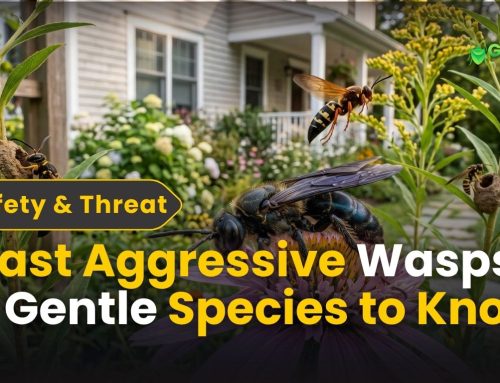
- Are Hornets Territorial? What Triggers an Attack
- Wasp & Hornet Behavior Hub