Ground Wasp Nest: Pictures, ID & What to Do
You Almost Stepped on It — Now What?
It happened to a homeowner in Stamford, CT last August. She was walking through her backyard on a Sunday afternoon, barefoot, heading toward the garden. She felt a sharp burning sensation on her foot then another on her ankle before she even registered the hole in the ground three inches from where she’d stepped.
By the time she got inside, she’d been stung six times. The ground wasp nest beneath her lawn had gone completely undetected for weeks.
This scenario plays out hundreds of times every summer across Fairfield County, Connecticut in backyards in Greenwich, along garden paths in Darien, beneath the manicured lawns of New Canaan and Westport. Ground wasp nests are the most dangerous stinging insect situation most homeowners will ever encounter and they’re almost always invisible until it’s too late.
This guide gives you ground wasp nest pictures described in detail, complete identification for every ground-nesting species in Connecticut, and a clear step-by-step plan for what to do when you find one.
Keep reading. This information could prevent a serious injury.
Why Ground Wasp Nests Are So Uniquely Dangerous
Most pest nest threats are visible. You see the gray paper ball hanging from your tree. You notice the open honeycomb comb under your eave. You can choose to avoid them.
Ground wasp nests give you no such warning.
The entire colony sometimes thousands of individuals lives completely below the soil surface. There’s no visible structure above ground. The only surface clues are subtle, easy to miss, and sometimes completely absent. You can unknowingly walk past the same nest entrance daily for weeks before an accidental disturbance triggers a mass attack.
And when ground wasps attack, they do so fast and in numbers. According to Wikipedia’s profile on yellow jackets the most common and dangerous ground-nesting wasp in Connecticut these insects release alarm pheromones upon disturbance that immediately recruit dozens to hundreds of nestmates to join the defensive attack.
The Centers for Disease Control and Prevention (CDC) identifies stinging insects, including ground-nesting yellow jackets, as responsible for dozens of fatal reactions annually in the United States — with many more serious non-fatal stinging incidents.
The danger is real. The urgency is real. Let’s get you the information you need.
Ground Wasp Nest Pictures: What You’re Actually Looking At
Since we’re working with text descriptions rather than photographs, this section gives you the most detailed visual descriptions of ground wasp nest pictures possible — detailed enough that you can match what you’re seeing in your yard to the correct species and threat level.
Picture #1: The Yellow Jacket Ground Nest Entrance
This is the most dangerous scenario you’ll encounter.
What it looks like from above:
- A hole in the soil, roughly the diameter of a quarter to a golf ball (approximately 1–1.5 inches)
- The hole is smooth-edged and well-defined clearly excavated, not a random soil crack
- Loose dirt or a subtle soil mound may surround the entrance, though sometimes the surface looks completely undisturbed
- The surrounding grass may show slight yellowing or dying in a small radius this happens because the underground colony activity disrupts root systems
- No above-ground paper structure none
What you see happening at the entrance:
- A constant, purposeful stream of yellow-and-black wasps entering and exiting
- Workers move rapidly darting in and out with clear directional purpose
- Traffic is heaviest on warm, sunny days between mid-morning and mid-afternoon
- Even a few feet away from the entrance, you may notice workers hovering defensively if the nest is mature and disturbed
The insects themselves:
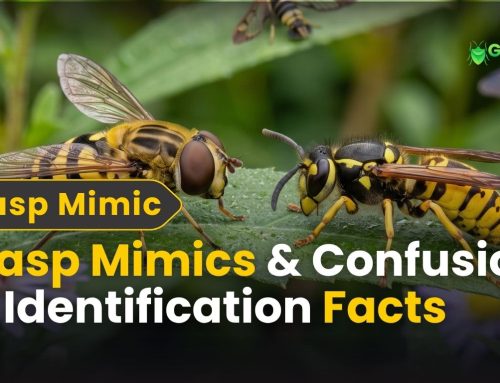
- Smooth, shiny bodies — not fuzzy like bees
- Bright yellow and black banding — bold, high-contrast pattern
- Narrow waist — the classic wasp “waist” is clearly defined
- Antennae appear slightly bent at rest
- Size: Approximately ½ inch long
For complete yellow jacket species identification and biology, our yellow jacket deep dive resource is the most comprehensive guide available for Connecticut homeowners.
Picture 2: The Bumblebee Ground Nest
This looks alarming but is far less dangerous.
What it looks like from above:
- An entrance hole similar in size to yellow jacket entrances — approximately 1 inch diameter
- Often located near dense vegetation, compost heaps, under garden sheds, or in areas with long grass
- May be partially concealed by vegetation growing around the entrance
- Less defined edges than yellow jacket entrances — slightly rougher, more irregular
- Surrounding soil may have minimal disturbance
What you see happening:
- Slower, more lumbering insect traffic — bumblebees don’t move with the same rapid urgency as yellow jackets
- Workers emerging with visible orange or yellow pollen balls on their hind legs — this is one of the clearest identifiers
- Flight pattern is bumbling and rounded — hovering more than darting
The insects:
- Fuzzy, rounded bodies — distinctly hairy compared to wasps
- Yellow and black banding, but with a rounder, heavier body profile
- Some species have orange markings on the abdomen
- Larger than yellow jackets — approximately ¾ to 1 inch
Bumblebees are critical native pollinators and are generally non-aggressive unless the nest is directly disturbed. Connecticut homeowners should avoid disturbing bumblebee nests and consider professional relocation rather than elimination whenever possible.
Picture 3: The Cicada Killer Wasp Burrow
This one looks terrifying but is actually harmless.
What it looks like from above:
- A larger entrance hole than yellow jacket or bumblebee nests — approximately 1 to 1.5 inches in diameter
- The most distinctive feature: a kidney-shaped or U-shaped mound of loose, freshly excavated soil around the entrance — sometimes quite substantial
- Located almost exclusively in sunny, well-drained, dry soil — lawn edges, sandy areas, garden borders, between pavement cracks
- Individual burrows may be scattered across an area if multiple females are nesting nearby
What you see happening:
- Very large insects — up to 2 inches long — entering and exiting the hole
- Females may be observed hauling paralyzed cicadas — sometimes larger than themselves — underground
- Males may hover and “patrol” territory aggressively but cannot sting
The insects:
- Black with yellow markings — similar to yellow jackets but dramatically larger
- Reddish-brown coloring on the thorax (middle body segment) — a key identifier
- Wings have a reddish-amber tint
- Solitary — each female maintains her own individual burrow
Despite their intimidating appearance, cicada killers pose virtually no threat to humans. Males bluster but lack stingers; females can sting but almost never do unless directly handled.
For a broader comparison of insects that look threatening but aren’t, visit our guide on flying insects that look like wasps.
Picture 4: The Ground Hornet Nest
Similar entrance to yellow jackets but with larger, more intimidating occupants.
What it looks like from above:
- Entrance hole similar to yellow jackets — approximately 1–1.5 inches
- May show slightly more disturbed soil around the entrance
- Sometimes located at the base of trees, along fence lines, or beneath wooden structures
- European hornets occasionally nest in underground cavities or at the base of old tree stumps
What you see happening:
- Larger insects than yellow jackets — clearly bigger even in flight
- Brown and yellow coloring rather than the brighter yellow-black of yellow jackets
- May be active at night — European hornets are uniquely nocturnal among stinging insects
For detailed identification and treatment of this specific scenario, visit our ground hornets identification and treatment guide.
Types of Wasps That Live in the Ground: Complete Connecticut Guide
Now that you can picture each nest type, here’s the definitive identification chart for types of wasps that live in the ground in Connecticut:
| Species | Entrance Size | Soil Mound? | Colony? | Aggression | Insect Size |
| Eastern Yellow Jacket | Quarter–golf ball | Minimal | Yes (thousands) | Extreme | ½ inch |
| German Yellow Jacket | Quarter–golf ball | Minimal | Yes (thousands) | Extreme | ½ inch |
| Ground Hornet (European) | Golf ball+ | Moderate | Yes (hundreds) | Very High | 1–1.5 inches |
| Bumblebee | ~1 inch | Minimal | Small (50–400) | Low | ¾–1 inch |
| Cicada Killer Wasp | 1–1.5 inches | Large kidney mound | No (solitary) | Very Low | 1.5–2 inches |
| Digger Wasp (various) | ½ inch | Small | No (solitary) | Very Low | ¼–½ inch |
| Mole Cricket Wasp | ½–¾ inch | Minimal | No (solitary) | Very Low | ½–¾ inch |
Key takeaway: The size of the mound is NOT proportional to the danger. Yellow jacket nests — the most dangerous — often show the least surface disturbance. Cicada killer burrows — the least dangerous — create the most obvious mounds.
For a detailed comparison of all wasp and hornet species found in Connecticut, our wasp and hornet ID encyclopedia for Connecticut is your most comprehensive local resource.
How to Find a Ground Wasp Nest Before It Finds You
The single most effective thing you can do is locate ground nests early in the season — before colonies reach their dangerous peak populations in late summer.
Spring Scouting (April–May): Your Best Window
In spring, queen wasps are building new nests alone or with a small initial worker force. Colonies are tiny — sometimes just 5–20 individuals. Treatment at this stage is infinitely easier and safer than in August.
How to scout your property effectively:
- Walk your lawn slowly in early to mid-morning on a warm spring day
- Look for insect traffic patterns — a wasp repeatedly returning to the same ground point is a strong indicator of a nest
- Scan sunny, south-facing lawn areas first — yellow jackets prefer warm, dry soil
- Check around tree stumps, retaining walls, and under deck edges — common preferred locations
- Look near any soil disturbance from last year — previously excavated soil is easier to dig in
- Watch for hovering behavior — a wasp hovering close to the ground and then dipping down repeatedly is likely checking or entering a nest entrance
Summer Detection (June–August)
By summer, ground nests are established and active. Detection becomes easier — but the stakes are higher.
Warning signs of an active summer ground nest:
- Unexplained buzzing sounds near ground level in a specific area
- Sudden, unprovoked stinging while doing yard work
- Multiple wasps seen repeatedly flying to the same ground point
- Dead grass or a sunken depression in a small patch of lawn
- Wasps seen emerging from beneath deck boards or from around a retaining wall base
If you’re seeing these signs in your yard in Greenwich, Wilton, Westport, or anywhere in Connecticut — stop all lawn activity in that area immediately and contact a professional pest control team for safe assessment and treatment.
What Triggers a Ground Wasp Nest Attack?
Understanding what provokes ground-nesting wasps helps you avoid accidental attacks while you’re waiting for professional treatment.
Common attack triggers:
- Lawnmower vibrations — the single most common trigger for ground wasp attacks in residential settings; underground colonies are highly sensitive to ground vibrations
- Weed trimmers — even more provocative than mowers because of the proximity to the ground
- Foot traffic directly over the nest — even if you don’t step on the entrance hole
- Digging or aerating soil near the nest
- Strong odors — certain perfumes, scented sunscreen, and sweat can trigger defensive behavior
- Dark colors — yellow jackets associate dark-colored animals with predators (bears, skunks); wearing dark clothing near a nest increases risk
- Rapid movement near the nest entrance
What NOT to do if you suspect a ground nest:
Do not mow the area until the nest is treated
Do not pour water, gasoline, or bleach into the hole
Do not cover the entrance with soil or rocks — this traps and enrages the colony
Do not spray standard aerosol wasp spray into the entrance — it won’t penetrate deep enough and will agitate workers
Do not try to locate the nest by digging
For a complete guide on wasp and hornet behavior patterns, visit our wasp and hornet behavior hub.
Wasp Nest With Funnel Shape: Is It a Ground Nest or Something Else?
When people search “wasp nest with funnel,” they often encounter one of two very different scenarios:
Scenario 1: The Funnel-Shaped Burrow Entrance (Insect)
This is the cicada killer wasp burrow described earlier — a ground hole with a conical or funnel-shaped entrance and a substantial soil mound. The funnel shape comes from the angle of excavation and the loose soil piled around the opening.
This is NOT dangerous. Cicada killers are solitary, and females rarely sting.
Scenario 2: The Funnel Web (Spider — Not a Wasp)
Many people confuse funnel web spider constructions with wasp nests. Funnel webs appear as flat silk sheets with a funnel-shaped tube retreating to a hidden corner — commonly found in low grass, garden edges, and basement corners across Connecticut.
How to tell the difference immediately:
- Silk material → Spider web, not a wasp nest
- No insect traffic → Spider web confirmed
- Wasp traffic entering a ground hole → Insect ground nest
Neither funnel web spiders nor cicada killers are significant threats to most Connecticut residents. If you’re uncertain which you’re dealing with, our complete wasp nest identification chart guide covers every nest type with full visual descriptions.
DIY Treatment: Why It Almost Always Makes Things Worse
Every summer, we respond to emergency calls from homeowners across Stamford, Darien, and New Canaan, CT who tried to treat a ground wasp nest themselves — and triggered a mass attack in the process.
Here’s the honest breakdown of why DIY ground nest treatment fails:
Problem 1: Aerosol Sprays Don’t Reach the Colony
A standard hardware store wasp spray has a penetration depth of a few inches at best. A yellow jacket ground nest can have chambers 12–24 inches underground, with multiple tunnels and side chambers. Spraying into the entrance hole kills a handful of workers near the surface while thousands of others in deeper chambers remain completely unaffected — and now they’re angry.
Problem 2: Sealing the Entrance Traps and Enrages the Colony
Some homeowners try to solve the problem by covering the entrance hole with dirt, rocks, or foam. This is one of the most dangerous mistakes possible. The colony will immediately begin excavating a new exit — which could be anywhere within a 3-foot radius, including into an adjacent structure or directly under a deck board where people walk.
Problem 3: Gasoline and Bleach Are Dangerous and Illegal
Pouring gasoline into a ground nest is environmentally illegal in Connecticut, as classified by the Connecticut Department of Energy and Environmental Protection (DEEP), and genuinely dangerous — creating fire and explosion risk while exposing soil and groundwater to toxic contamination. It also frequently fails to eliminate the colony.
Problem 4: Wrong Timing Maximizes Exposure
Treating during the day when workers are most active means you’re surrounded by thousands of foraging wasps at peak population. Professional treatment at night — when all workers have returned to the nest — is exponentially safer and more effective.
For a detailed comparison of when DIY is reasonable versus when professional help is essential, our hornet nest removal DIY vs. professional guide gives you an honest, balanced assessment.
The bottom line: For any active ground wasp nest with confirmed yellow jacket traffic, professional treatment is not optional it’s the only approach that reliably works and keeps your family safe.
Professional Ground Nest Treatment: What Actually Happens
When Green Pest Management CT responds to a ground wasp nest in Greenwich, Wilton, Westport, or elsewhere in Connecticut, here’s what the professional process looks like:
Step 1: Identification and Risk Assessment
The technician first confirms the species — yellow jacket, ground hornet, bumblebee, or cicada killer — because each requires a different approach. The size and activity level of the colony are assessed from a safe distance.
Step 2: Treatment Timing
Professional treatment is scheduled for after dark or very early morning when all colony members are inside the nest and activity is at its lowest.
Step 3: Insecticide Dust Application
The most effective treatment for ground nests is professional-grade insecticide dust applied directly into the nest entrance using a specialized duster. Dust products penetrate deep into underground chambers, coating the entire tunnel system. Workers carry the dust on their bodies as they move through the colony, distributing it throughout and eliminating the colony at its source.
Step 4: Entrance Monitoring
The entrance is monitored — never sealed immediately — to allow treated workers to continue carrying insecticide deeper into the colony for maximum effectiveness.
Step 5: Follow-Up Inspection
A follow-up visit confirms complete colony elimination and checks for any secondary entrance activity.
This is the only approach that reliably eliminates the entire underground colony — not just the workers visible at the surface. For immediate professional response in Connecticut, see our ground hornet treatment in CT service page.
Types of Wasp Nests: Ground vs. Aerial A Complete Comparison
While this guide focuses on ground nests, it’s helpful to understand how they compare to other nest types in terms of risk and treatment:
| Nest Type | Location | Visibility | Danger Level | DIY Safe? |
| Yellow jacket ground nest | Underground | None | Extreme | Never |
| Bald-faced hornet (enclosed) | Trees, eaves | Visible | Extreme | Never |
| Paper wasp (open comb) | Eaves, overhangs | Visible | Moderate | Small nests only |
| European hornet (wall/tree) | Wall voids, trees | Hidden | Very High | Never |
| Mud dauber tubes | Walls, eaves | Visible | Very Low | Yes |
| Bumblebee ground nest | Underground | None | Low | Possibly |
| Cicada killer burrow | Underground | Mound visible | Very Low | Yes |
For a complete visual comparison of all nest types — including the hornet nest vs wasp nest comparison — see our dedicated hornet nest vs wasp nest key differences guide.
Real Connecticut Homeowner Experiences
“We had a yellow jacket ground nest in our backyard in Greenwich that we discovered the hard way — my son was playing in the yard and got stung four times before we even knew what was happening. The nest entrance was completely invisible in the grass. We called Green Pest Management the same evening and they treated it that night. By the next morning there was zero activity. Absolutely wish we’d been checking our yard more carefully earlier in the season.”
— Homeowner, Greenwich, CT
“I found what looked like a ground wasp nest near my garden in Westport in early July. I made the mistake of trying to spray it myself with hardware store wasp killer — made things so much worse. I had to run inside and slammed the door behind me with about a dozen wasps following me. Professional treatment the next day sorted it completely. Don’t do what I did.”
— Homeowner, Westport, CT
Pro Tips: Expert Advice for Connecticut Homeowners
Pro Tip 1: Inspect before you mow — every time in summer.
Walk your lawn briefly before starting the mower each time between June and October. Look for unusual insect activity near ground level. Thirty seconds of inspection could prevent a serious stinging incident.
Pro Tip 2: Treat in spring when possible.
A queen yellow jacket building a new nest in May is alone or has fewer than 20 workers. Addressing the situation in spring eliminates the problem before it becomes a summer emergency.
Pro Tip 3: Note the flight pattern.
A wasp that repeatedly returns to the exact same spot on the ground is almost certainly nest-bound. Watch from a distance — you don’t need to get close to confirm a ground nest location. Mark the area with a flag or stake and keep everyone away.
Pro Tip 4: Wear light colors when doing yard work.
Yellow jackets and hornets associate dark colors with predators. Light-colored clothing reduces — though does not eliminate — the likelihood of provocation near an undetected nest.
Pro Tip 5: Know when wasps are least active.
Ground nests have the lowest activity in very early morning (before 7 AM) and after dark. If you need to work near a suspected nest area while waiting for professional treatment, these windows carry slightly lower risk.
Your Ground Nest Safety Checklist
Use this before, during, and after discovering a ground wasp nest:
When you first suspect a ground nest:
- Stop all lawn activity in the area immediately
- Mark the suspected location with a visible stake or flag
- Keep children and pets completely away from the area
- Do NOT attempt DIY treatment
- Observe from a safe distance (20+ feet) to confirm nest traffic
- Note the insect type — yellow jacket, bumblebee, or other
Before calling a professional:
- Note the approximate location of the entrance hole
- Estimate how long you’ve been seeing activity
- Note whether anyone has been stung and where
- Have emergency antihistamine available for household members with known allergies
After professional treatment:
- Avoid the treated area for 24–48 hours
- Do not water the treated soil for at least 24 hours
- Schedule a follow-up inspection to confirm complete elimination
- Ask about preventive treatment for next season
FAQ: Ground Wasp Nest Pictures, ID & Treatment
Q1: What does a ground wasp nest look like from the surface?
A: In most cases, you see very little above ground — that’s what makes ground nests so dangerous. The primary visual clue is a hole in the soil approximately quarter to golf ball sized, with rapid insect traffic entering and exiting. Loose dirt around the entrance and subtle yellowing of surrounding grass may also be present. The insects themselves — typically smooth-bodied yellow and black wasps moving with rapid, purposeful flight — are the strongest identifier. If you want to compare what you’re seeing to visual descriptions of every nest type, our wasp nest identification chart guide has detailed descriptions for each.
Q2: How do I know if I have a yellow jacket ground nest vs. a bumblebee nest?
A: The two clearest differentiators are the insects themselves and their flight behavior. Yellow jackets are smooth-bodied, bright yellow-and-black, and move with rapid darting flight. Bumblebees are fuzzy, rounder, and slower — with visible orange or yellow pollen on their hind legs. Bumblebee activity is docile and lumbering; yellow jacket activity is fast and purposeful. Yellow jackets are also considerably more aggressive — if wasps from the hole are dive-bombing you when you approach within 10 feet, it’s almost certainly yellow jackets.
Q3: Can I pour water or gas into a ground wasp nest to kill it?
A: Never. Pouring water rarely penetrates deep enough to affect the colony and can trigger an immediate defensive response. Gasoline is environmentally illegal in Connecticut under state environmental regulations, creates genuine fire and explosion risk, and often fails to eliminate the colony. Both approaches are dangerous to you and harmful to the surrounding environment. Professional dust injection is the only reliably effective and safe treatment method for active ground nests.
Q4: How big can a yellow jacket ground nest get?
A: Significantly larger than most people realize. A yellow jacket ground nest can house 1,000 to 5,000+ workers by late summer, with underground chambers extending 1–2 feet deep and several feet wide. By August and September — peak season in Connecticut — these colonies are at maximum population and maximum aggression. What starts as a small queen nest in May can become a massive underground colony before you even notice the entrance hole.
Q5: What should I do immediately after being stung by ground wasps?
A: Move away from the area quickly but calmly — running triggers chase behavior. Get indoors. Remove any stingers if present (yellow jackets don’t leave stingers, but bees do). Wash the area with soap and water. Apply ice to reduce swelling. Take an antihistamine if available. Monitor for signs of allergic reaction — severe swelling, difficulty breathing, dizziness, or widespread hives require immediate emergency medical attention. For sting treatment guidance, see our treatment of hornet sting guide.
Q6: How do I prevent ground wasp nests from forming in my yard?
A: Prevention is challenging because yellow jacket queens actively select nesting sites based on soil condition, sun exposure, and availability. The most effective strategies are: early spring scouting to catch new nests before they grow, filling any existing ground holes in your lawn during winter, maintaining dense, healthy turf (sparse or bare soil areas are preferred), and scheduling a preventive perimeter treatment with a professional pest control service in late spring. Our how to deter hornets from nesting guide covers preventive strategies in detail.
Q7: Are ground wasp nests active at night?
A: Most ground wasp species — particularly yellow jackets — are not active at night. Workers return to the nest as daylight fades and remain inside until morning. This is why night treatment by professionals is far safer and more effective — the entire colony is present and workers are not actively defending the perimeter. European hornets are the notable exception — they can be active after dark. For a full breakdown of wasp and hornet activity timing, see our guide on when wasps and hornets are least active.
Act Now Before Someone Gets Hurt
Ground wasp nests are the most invisible, most unpredictable, and most dangerous stinging insect situation in Connecticut residential settings. Every day you delay is another day your family, your pets, and anyone who enters your yard is at risk.
Think about what’s at stake:
- Your children playing in the backyard — unaware of the colony inches beneath the grass
- Your weekend barbecue disrupted by a swarm from a ground entrance no one noticed
- Your routine lawn maintenance accidentally triggering a mass attack of thousands of insects
- A neighbor or guest stepping near the entrance and suffering a serious stinging incident on your property
None of these scenarios are hypothetical. They happen every summer in Greenwich, Stamford, Darien, New Canaan, Wilton, and Westport, CT.
The solution is straightforward: professional identification and treatment, performed safely at night, with professional-grade products that actually penetrate to the colony — eliminating the threat completely rather than temporarily.
Our team at Green Pest Management CT has treated thousands of ground wasp nests across Fairfield County. We know exactly what to look for, exactly how to treat each species, and exactly how to make sure the problem doesn’t come back.
For immediate professional help, visit our ground hornet treatment in CT service page or our hornet exterminator services page for fast response.