Rat Removal Companies Near Me: How to Find the Best
You hear scratching in the walls at 2 a.m. You find droppings behind the kitchen cabinets. There’s a gnawed hole in the pantry shelf where nothing was chewed last week. If any of this sounds familiar, you’re already searching for rat removal companies near me and you’re right to act fast.
Rats reproduce quickly, carry serious diseases, and cause structural damage that gets more expensive the longer you wait. In Fairfield County, Connecticut, and across the broader NYC metropolitan corridor, rat infestations are a year-round problem that only intensifies as seasons change.
This guide walks you through everything you need to know: what professional rat exterminators actually do, how the process works from inspection to exclusion, why the NYC-Connecticut corridor is such a hotspot for rodent activity, and how to choose the right company for your home in Greenwich, Stamford, Darien, Westport, or anywhere in the region.
What Are Rat Removal Companies and What Do They Actually Do?
A lot of homeowners assume a rat exterminator just sets a few traps and leaves. That’s the old model. Modern professional rat extermination services go far beyond snap traps in the basement.
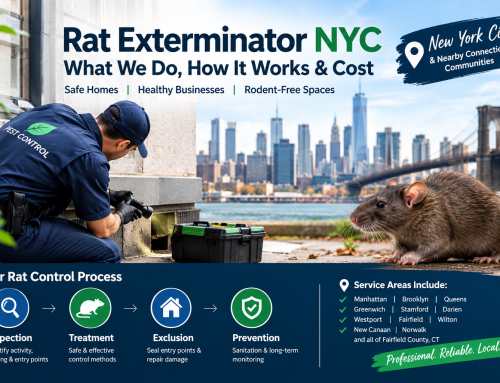
A reputable rat removal company provides a complete pest management solution that typically includes:
- Thorough property inspection to identify entry points, nesting areas, and food sources
- Species identification to determine whether you’re dealing with Norway rats, roof rats, or another species
- Customized treatment plans using baiting, trapping, and exclusion techniques
- Rat exclusion services that seal entry points so new rats can’t get in
- Sanitation recommendations to eliminate attractants
- Follow-up visits to confirm the infestation is fully resolved
The goal isn’t just to kill the rats currently inside your home. It’s to make your property inhospitable so they don’t come back. This comprehensive approach is known as Integrated Pest Management (IPM), and it’s the standard that the EPA recommends for safe and effective pest control.
The Full Scope of Professional Rat Extermination Services
When you hire a qualified rat exterminator, you’re getting someone who understands rodent behavior at a biological level. Rats are neophobic they’re suspicious of new objects in their environment, which is why amateur trapping efforts often fail. A professional knows how to pre-bait stations, position traps along runways, and use monitoring tools to track activity patterns over time.
Professional services also address the structural side of the problem. Rats can squeeze through holes the size of a quarter. They gnaw through wood, drywall, insulation, and even electrical wiring. A thorough rat removal company will identify every potential entry point gaps around utility lines, damaged vent screens, cracks in the foundation — and seal them with materials rats can’t chew through.
Why the NYC-Connecticut Corridor Has a Serious Rat Problem
If you live in Fairfield County and commute into New York City, you already know the rat situation in the city is legendary. Brooklyn, Manhattan, and Queens consistently rank among the most rat-infested urban areas in the entire country. But what many residents don’t realize is that the problem doesn’t stop at the state line.
How Brooklyn, Manhattan, and Queens Rat Issues Spread to Fairfield County
The NYC rat population primarily Norway rats thrives on the dense infrastructure, abundant food waste, and aging sewer systems of the five boroughs. As urban development pushes outward and populations shift along the Metro-North corridor, rodent pressure increases in towns like Stamford, Greenwich, Norwalk, and Darien.
Several factors make this corridor particularly vulnerable:
- Commuter rail lines and highways create continuous pathways for rodent migration
- Dense suburban development in towns like Westport and Fairfield provides shelter and food sources
- Older housing stock in many Fairfield County neighborhoods has the kind of foundation gaps and aging infrastructure that rats exploit
- Proximity to Long Island Sound gives rats access to waterfront properties and drainage systems
- Seasonal migration patterns push rats indoors as temperatures drop across the tri-state area
A New York rat exterminator dealing with a Brooklyn brownstone faces many of the same challenges as a rat exterminator in Stamford or New Canaan. The species are the same. The behavior is the same. The structural vulnerabilities are remarkably similar. The difference is scale NYC deals with the problem at a citywide level, while Connecticut homeowners deal with it property by property.
If you split your time between a Manhattan apartment and a Westport home, you may be unknowingly transporting rodent problems between locations. Rats hitch rides in moving boxes, furniture, and even vehicles. It’s more common than most people think.
Signs You Need a Rat Exterminator Immediately
Rats are nocturnal and secretive. By the time you see one during the day, you likely have a significant infestation. Here’s what to watch for:
Visual Evidence
- Droppings — Dark, pellet-shaped, roughly the size of a raisin. You’ll find them along baseboards, in cabinets, behind appliances, and near food storage.
- Grease marks — Rats travel the same paths repeatedly, leaving dark smudges along walls and baseboards from the oils in their fur.
- Nesting material — Shredded paper, fabric, insulation, and dried plant matter gathered in hidden corners, attics, or crawl spaces.
- Live or dead rats — Seeing one rat almost always means more are present.
Sounds and Smells
- Scratching or scurrying in walls, ceilings, or under floors, especially at night
- Squeaking or chattering sounds from enclosed spaces
- A strong ammonia-like odor from accumulated urine, particularly in poorly ventilated areas
Property Damage
- Gnaw marks on wood, plastic, wiring, and food packaging
- Holes in walls or floors roughly two inches in diameter
- Damaged insulation in attics or crawl spaces
- Chewed electrical wiring, which creates a genuine fire hazard
If you notice any combination of these signs, it’s time to contact professional pest control services before the infestation grows beyond what simple measures can handle.
The Professional Rat Removal Process: Step by Step
Understanding what happens after you call a rat removal company helps you set realistic expectations and evaluate whether a company is doing the job properly.
Step 1: Inspection and Assessment
A thorough inspection is the foundation of effective rat extermination. A trained technician will examine your entire property — interior, exterior, attic, basement, crawl spaces, garage, and perimeter. They’re looking for:
- Active entry points and potential entry points
- Droppings, grease marks, and runways
- Nesting sites and food sources
- Structural vulnerabilities
- Moisture issues that attract rodents
This inspection typically takes one to two hours for an average home. The technician should explain their findings clearly and provide a written assessment before any work begins.
Step 2: Treatment and Elimination
Based on the inspection, the technician develops a treatment plan. This may include:
- Tamper-resistant bait stations placed along active runways and entry points
- Snap traps and multi-catch traps positioned in high-activity zones
- Tracking powder in voids and wall cavities where rats travel
- Exterior baiting around the perimeter to reduce the population before they enter
The treatment phase usually spans two to four weeks, with the technician returning multiple times to monitor progress, reset traps, and adjust the strategy based on activity levels.
Step 3: Rat Exclusion Services
This is the step that separates a temporary fix from a permanent solution. Rat exclusion involves physically sealing every entry point on your property using materials like steel wool, hardware cloth, metal flashing, and expanding foam designed for pest control.
Common exclusion points include:
- Gaps around plumbing and utility penetrations
- Damaged vent screens and soffit vents
- Gaps under doors and around garage doors
- Cracks in the foundation
- Spaces around air conditioning lines
- Roof intersections and chimney flashing
Exclusion is labor-intensive and requires knowledge of rodent behavior. Miss one entry point, and the rats will find it. This is why DIY natural remedies and store-bought solutions rarely provide lasting results.
Step 4: Follow-Up and Monitoring
A reputable company won’t disappear after the initial treatment. Follow-up visits confirm that activity has stopped, exclusion points are holding, and no new rats have found their way in. Many companies offer ongoing monitoring programs, especially for properties in high-pressure areas like Stamford, Norwalk, and Greenwich.
DIY vs. Professional Rat Extermination: What Really Works
Let’s be honest everyone tries the DIY route first. You buy traps from the hardware store, set them along the wall, and hope for the best. Sometimes it works for a single rat. For anything beyond that, DIY approaches almost always fall short.
Here’s why:
Rats learn quickly. They observe other rats getting caught in traps and learn to avoid them. They detect human scent on improperly handled traps. They develop bait shyness if they consume a sublethal dose of rodenticide.
You’re treating symptoms, not the source. Traps catch individual rats. They don’t address the entry points letting new rats in, the food sources attracting them, or the nesting sites supporting reproduction.
Rodenticides carry risks. Improper use of rat poison poses serious dangers to children, pets, and wildlife. The CDC provides detailed guidance on rodent control safety that most homeowners aren’t familiar with.
The infestation grows faster than you can trap. A single female rat can produce up to seven litters per year, with six to twelve pups per litter. By the time your traps catch three rats, a dozen more may have been born in your walls.
Professional rat extermination services address the entire problem population, entry points, attractants, and prevention in a coordinated strategy that DIY methods simply can’t replicate.
How to Choose the Best Rat Removal Companies Near Me
Not all pest control companies are equal. When you’re searching for rat removal companies near me in Fairfield County, here’s what separates the reliable ones from the rest:
Licensing and Certification
Connecticut requires pest control operators to be licensed through the Department of Energy and Environmental Protection (DEEP). Verify that any company you consider holds current state licensing and that their technicians carry individual applicator certifications. This isn’t optional — it’s the baseline.
Experience with Local Rat Species
Fairfield County primarily deals with Norway rats (Rattus norvegicus), which are large, ground-dwelling rodents that burrow under foundations and enter through basement-level gaps. Roof rats (Rattus rattus) are less common but appear in some areas, particularly near the waterfront in towns like Westport and Darien. A company that understands the behavioral differences between these species will deliver better results.
Integrated Pest Management Approach
Ask prospective companies about their IPM practices. A quality rat exterminator will emphasize inspection, exclusion, and sanitation over chemical treatments alone. They should be willing to explain their methods, discuss safety precautions, and provide a clear timeline for resolution.
Local References and Reviews
Look for companies with documented experience in your specific town. A company that regularly handles rat infestations in Greenwich colonial homes may approach the job differently than one primarily servicing Stamford apartment buildings. Local knowledge matters.
Transparent Communication
The best rat removal companies near me will give you a clear written estimate, explain exactly what they plan to do, and set realistic expectations for the timeline. Be wary of companies that promise overnight results or refuse to explain their methods.
Seasonal Rat Activity in Connecticut
Rat behavior in Fairfield County follows predictable seasonal patterns that affect when and how infestations develop:
Fall (September–November): This is peak season for rats moving indoors. As temperatures drop across Greenwich, Wilton, New Canaan, and the rest of the county, Norway rats actively seek warm shelter. Most homeowners first notice infestations during this period.
Winter (December–February): Rats established inside your home remain active year-round. They don’t hibernate. Winter infestations are often the most severe because rats have been breeding inside walls and attics for weeks or months.
Spring (March–May): Outdoor rat populations surge as food sources become available. Rats that overwintered indoors may become more active and visible as they forage more aggressively.
Summer (June–August): Rat populations peak. Young rats from spring litters are now mature and breeding. This is when perimeter activity is highest, particularly around gardens, compost piles, and outdoor dining areas.
Understanding these patterns helps you time inspections and preventive measures effectively. The best time to call a rat exterminator is before fall — but if you already have signs of activity, don’t wait for a “better” season.
Preventing Future Rat Infestations
Once your rat problem is resolved, these steps help keep rats from returning:
- Seal all exterior gaps larger than a quarter inch, including around utility lines, vents, and foundation cracks
- Store food in airtight containers, including pet food and bird seed
- Eliminate outdoor food sources by securing trash cans, cleaning grills, and removing fallen fruit
- Trim vegetation away from your home’s exterior to remove rat highways
- Address moisture issues like leaky faucets, poor drainage, and standing water
- Maintain your property by repairing damaged screens, weatherstripping, and roof flashing
- Schedule periodic inspections with a pest control professional, especially if you live in a high-pressure area like Stamford or Norwalk
Prevention is always less disruptive and less stressful than dealing with a full-blown infestation. If you’re unsure where your property’s vulnerabilities are, a professional inspection can identify them before rats do.
Frequently Asked Questions
How quickly can a rat removal company eliminate an infestation?
Most professional rat extermination services resolve active infestations within two to four weeks, depending on severity. Larger infestations or properties with extensive structural vulnerabilities may require additional time. The exclusion phase — sealing entry points — is often the most time-intensive part of the process.
Are rats dangerous to my family and pets?
Yes. Rats carry diseases including leptospirosis, hantavirus, salmonella, and rat-bite fever. They contaminate food and surfaces with urine and droppings. They also carry fleas and mites that can transfer to pets. The CDC’s rodent control guidelines outline the specific health risks in detail.
What’s the difference between a rat exterminator and a general pest control company?
A rat exterminator specializes in rodent behavior, biology, and exclusion techniques. While general pest control companies may handle rats as part of a broader service menu, a specialized rat removal company typically has deeper expertise in rodent-specific challenges like exclusion, burrow treatment, and population monitoring.
Do I need to leave my home during rat treatment?
In most cases, no. Modern rat extermination services use tamper-resistant bait stations and strategically placed traps that don’t require you to vacate your home. Your technician will explain any specific precautions, especially if you have small children or pets.
Can rats really cause structural damage?
Absolutely. Rats gnaw constantly to keep their teeth from overgrowing. They chew through wood, drywall, insulation, PVC pipes, and electrical wiring. Chewed wiring is a genuine fire hazard and one of the most serious risks associated with rat infestations in older Fairfield County homes.
How do rats get into my house in the first place?
Rats enter through any opening larger than about half an inch. Common entry points include gaps around plumbing penetrations, damaged vent screens, cracks in the foundation, gaps under doors, and spaces around utility lines. Norway rats, the most common species in Connecticut, typically enter at ground level or below.
Is the NYC rat problem affecting Connecticut?
Yes. The dense rat populations in Brooklyn, Manhattan, and Queens create regional pressure that extends along transportation corridors into Fairfield County. Towns closest to the New York border — particularly Stamford, Greenwich, and Norwalk — experience higher rodent pressure as a result. A New York rat exterminator and a Connecticut rat exterminator often deal with the same species and similar structural challenges.
What should I do if I see one rat in my house?
Seeing one rat almost always means more are present. Rats are nocturnal and avoid human contact, so a daytime sighting suggests a significant population. Contact a professional rat removal company as soon as possible rather than attempting DIY solutions, which rarely address the underlying infestation.
How long does rat exclusion last?
Properly installed rat exclusion — using steel wool, hardware cloth, metal flashing, and commercial-grade sealants — can last for many years. The key is using materials that rats cannot gnaw through and ensuring every potential entry point is addressed. A quality exclusion job is the single most effective long-term prevention strategy.
Are rat removal services safe for pets and children?
Professional rat exterminators use tamper-resistant bait stations, secured traps, and targeted application methods designed to minimize risk to non-target animals and people. Always inform your technician about pets and children in the home so they can adjust their approach accordingly.
Conclusion
Finding the right rat removal companies near me isn’t just about eliminating the rats currently in your home — it’s about protecting your property, your family’s health, and your peace of mind for the long term.
Whether you’re dealing with a sudden infestation in a Darien colonial, a recurring problem in a Stamford apartment building, or preventive concerns at a Westport waterfront property, the principles remain the same: thorough inspection, strategic treatment, comprehensive exclusion, and ongoing monitoring.
The NYC-Connecticut corridor will likely continue to face rat pressure for the foreseeable future. The dense populations in Brooklyn, Manhattan, and Queens don’t respect state lines, and Fairfield County’s mix of older housing stock and suburban development creates ideal conditions for Norway rats to thrive.
Don’t wait until the problem escalates. If you’re noticing signs of rat activity — droppings, gnaw marks, scratching sounds, or actual sightings — reach out to Green Pest Management CT for a professional inspection. Our team understands the specific rodent challenges facing homeowners across Greenwich, Stamford, Darien, Westport, Fairfield, Wilton, New Canaan, and Norwalk, and we use Integrated Pest Management strategies that deliver lasting results.
Your home should be a place of comfort, not a battleground with rodents. Take the first step today and get the problem under control before it gets worse.