Bedroom Ants: Where They Come From & How to Eliminate Them
Seeing Ants in Bedroom at Night can be confusing, especially when there is no obvious food nearby. In most cases, the ants are foraging workers using the bedroom as a route to food or moisture, entering through an exterior gap, or traveling from a protected nesting area elsewhere in or around the structure.
The best response is not to spray every ant immediately. Watch where the workers travel, check windows, baseboards, exterior walls and adjoining rooms, eliminate food and moisture, identify the insect, and use an appropriately labeled ant-control method when necessary. Repeated large-ant activity, ants emerging from walls, or activity during Connecticut’s cold season can justify a professional inspection.
For Fairfield County homeowners in Greenwich, Stamford, Darien, Westport, Fairfield, Wilton, New Canaan and Norwalk, the location of the bedroom also matters. A second-floor bedroom may have very different entry routes from a first-floor room beside a patio or foundation.
This guide explains how to find the source and solve the infestation rather than only removing the workers visible beside your bed.
Why Are Ants in My Bedroom at Night?
Ants may appear in a bedroom at night because they are searching for food or water, following an established trail through the room, entering through a window or exterior-wall opening, or traveling from a nearby nest.
Some ant species also show significant nighttime foraging activity. A quiet, dark bedroom can make activity easier to notice than it is during the day.
If you find ants at night:
- Watch their route before cleaning it.
- Remove food, drinks and trash.
- Inspect windows, baseboards and exterior walls.
- Check the bedroom and adjoining rooms for moisture.
- Look outside for vegetation or trails reaching the structure.
- Photograph or save a specimen for identification.
- Use ant bait or another product only according to its label.
- Avoid indiscriminately spraying workers if you are trying to use a baiting strategy.
- Monitor activity over several days.
- Call a pest professional when the infestation persists, involves structural areas, or may involve carpenter ants.
For ant problems occurring elsewhere, Green Pest Management CT’s room-by-room Connecticut ant guide covers kitchens, bathrooms, bedrooms, yards, gardens and vehicles.
What Does It Mean to Have Ants in a Bedroom?
“Bedroom ants” are not a specific species. The term describes ants that happen to be active in the bedroom.
That distinction is important.
The bed, carpet or bedroom itself may have nothing to do with the colony. Ant workers can travel considerable distances from their nest while following resources and established routes.
A bedroom may simply sit between an exterior entry point and something the ants need.
Ant colonies are social systems. Workers forage for resources and can establish chemical trails that other workers follow. The ants walking along a baseboard therefore represent activity from a larger colony rather than a collection of unrelated insects.
Successful pest control requires asking where that colony is and why its workers keep using the bedroom.
Signs of a Bedroom Ant Infestation
One ant crawling near a window does not necessarily mean you have a serious infestation.
Repeated activity provides better evidence.
Watch for trails following baseboards, several ants appearing from the same wall or trim gap, activity returning night after night, ants entering around a window, workers appearing near electrical or utility penetrations, and ants in more than one room.
Large ants repeatedly appearing near wood or structural areas deserve closer identification.
Where You See Them Matters
Ants concentrated beside a window suggest a different investigation from ants emerging beneath an interior wall.
If the trail disappears through the exterior-wall side of the room, inspect the matching area outside during daylight.
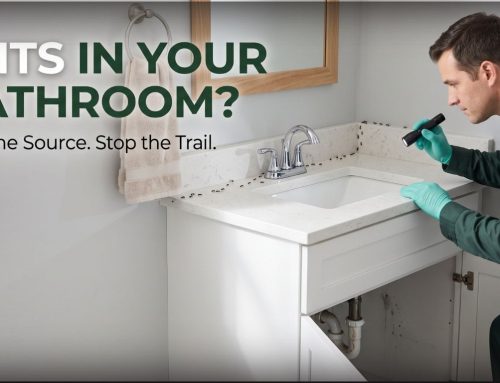
If ants move toward an adjoining bathroom, moisture may be involved. Our guide to bathroom ant removal explains why plumbing, condensation and damp materials can support activity.
If the trail leads toward the kitchen, food may be the main resource. Follow the more specific process for getting rid of kitchen ants instead of treating the bedroom as an isolated infestation.
Why Are Ants More Noticeable at Night?
Ants do not all follow the same daily activity pattern.
Species, temperature, humidity, colony needs and environmental conditions can influence when workers forage.
Some species can be active at night, and warm weather can affect when outdoor foraging occurs.
There is also a much simpler explanation: you may notice them more.
At night, bedrooms are quieter. Lights illuminate floors and nightstands at close range, and people spend extended periods in one room without normal daytime movement.
A few workers that went unnoticed during the afternoon may suddenly become obvious.
Nighttime activity alone therefore does not identify the species or prove that ants live inside the bedroom walls.
The useful information comes from consistently observing where they travel.
Where Do Bedroom Ants Come From?
Several sources are common enough to check first.
Windows and Exterior Walls
A window assembly includes joints, trim, siding transitions and other potential entry areas.
Ants nesting outside can exploit small gaps and travel along structural edges.
Do not immediately caulk every opening while an active trail is unexplained. First establish how the ants are moving and whether the opening is an entry route.
Baseboards and Wall Voids
If ants repeatedly emerge at the edge of a baseboard, the space behind it may provide a route.
That does not necessarily mean the colony is directly behind the trim.
Wall voids connect different parts of a structure and may contain plumbing, wiring and other pathways.
Tree Branches and Vegetation
Branches and dense vegetation touching a building can provide insects with additional routes to siding, windows and roof areas.
This is especially relevant for wooded properties in communities such as Wilton and New Canaan and mature landscaped properties in Greenwich.
Vegetation contact does not prove it caused the infestation, but it is worth including in an exterior inspection.
Food in the Bedroom
A surprising number of bedroom ant problems have an ordinary explanation.
Snack wrappers, cups, sugary drinks, bedside candy, children’s food and pet bowls can provide resources.
Check beneath furniture rather than only cleaning obvious surfaces.
Moisture
Bedrooms are usually drier than bathrooms, but water can still be present.
Window condensation, roof leakage, an adjoining bathroom, air-conditioning equipment or an exterior leak can create localized dampness.
Persistent moisture should be investigated as a building issue regardless of whether ants are present.
Ants in Bedroom at Night and Carpenter Ants
Seeing large ants after dark can lead homeowners to immediately conclude they have carpenter ants.
That conclusion may be correct in some cases, but appearance and timing alone are not enough.
Carpenter ants excavate galleries in wood to create nesting space. They do not eat wood as termites do.
Moisture-compromised wood can be relevant to carpenter-ant activity, which is why repeated sightings around windows, roof areas and damp structural components deserve attention.
Potential clues include repeated large-ant activity, workers consistently emerging from structural areas and indoor activity during periods when outdoor foraging is limited.
None of these alone confirms a nest.
Professional identification is appropriate if carpenter ants are suspected.
Make Sure the Insects Are Really Ants
Identification should happen before treatment.
Worker ants typically have elbowed antennae and a narrow waist. Reproductive ants can develop wings and may suddenly appear indoors.
If winged insects appear near bedroom windows, don’t assume they are wasps.
Our flying ant versus wasp identification guide explains the basic distinctions.
Termites can also be confused with winged ants. Large numbers of winged insects emerging from walls or structural wood warrant proper identification.
If the insects don’t look like ants at all, Green Pest Management CT’s pest identification comparison hub may help narrow the possibilities before any treatment begins.
Risks and Problems Associated With Bedroom Ants
For most households, ordinary ants in a bedroom are primarily a nuisance.
That does not mean persistent activity should be ignored.
A recurring trail indicates that insects have reliable access to the living area. Structural activity can sometimes point toward gaps or moisture conditions requiring repair.
Carpenter-ant infestations can also be relevant to wood because the ants excavate nesting galleries.
A separate risk comes from inappropriate pesticide application.
Bedrooms contain bedding, clothing, children’s possessions and surfaces that people contact for long periods. Applying pesticide indiscriminately to mattresses, bedding or floors is not an appropriate response unless a product is specifically labeled for that exact application and all directions are followed.
The U.S. Environmental Protection Agency provides pesticide safety guidance for households, including the importance of reading labels and minimizing unnecessary exposure.
How to Eliminate Ants in Bedroom at Night: Step by Step
The best first night response is investigation, not panic.
Step 1: Turn on the Light and Watch the Trail
Observe the ants for several minutes without disturbing them if practical.
Find both ends of visible movement.
Where are they emerging? Where are they going?
Take photographs and note the exact location. Good pictures can help with later identification.
Step 2: Remove Food and Drinks
Remove open beverages, snack packaging, dishes and trash.
Vacuum crumbs beneath the bed, nightstands and other furniture.
If pets enter the bedroom, inspect feeding areas too.
Don’t spray while cleaning. You are trying to understand whether food removal changes the ants’ behavior.
Step 3: Look for Moisture
Inspect windows for condensation or staining.
Check adjoining bathrooms, ceilings beneath roof areas and any nearby plumbing.
Moisture damage should be corrected for building-health reasons in addition to pest prevention.
Step 4: Inspect Entry Points
Look around the window frame, baseboards, exterior-wall penetrations and door frames.
Then inspect the corresponding exterior wall in daylight.
Look for visible ant trails, vegetation contact, landscape beds and building gaps.
Avoid blocking intentional drainage or ventilation features.
Step 5: Identify the Ant
Try to establish the approximate type before choosing a treatment.
Save a specimen in a small sealed container if professional identification may be needed.
If large ants repeatedly appear around structural wood, move professional inspection higher on the priority list.
Step 6: Use Bait Strategically When Appropriate
Ant bait is designed to exploit foraging and food-sharing behavior.
Workers need to find and accept it, so placement matters.
Use only products labeled for indoor ant control and for the intended placement location.
Children and pets should not be able to access pesticides improperly.
Step 7: Don’t Spray Around a Baiting Site
A repellent insecticide can discourage workers from reaching bait.
This is a common reason homeowners get inconsistent results after buying several products and applying all of them at once.
Follow the selected product’s instructions rather than improvising combinations.
Step 8: Monitor Activity
Do not judge colony control solely by what happens within a few minutes.
Track activity over time.
If the ants repeatedly disappear and return, reconsider their entry route, food source and identification.
Step 9: Seal Appropriate Entry Points
Once activity is understood and controlled, correct suitable cracks and gaps.
Weather stripping, window maintenance and utility penetration repairs can reduce future pest access.
Exclusion is prevention, not a substitute for controlling a colony that is already established.
Bait vs Spray vs Exclusion for Bedroom Ants
Different methods solve different parts of the problem.
| Method | Useful for | Main limitation |
| Cleaning | Removing food and trail residues | Does not eliminate the colony |
| Moisture repair | Removing water and damp conditions | Doesn’t kill established ants |
| Ant bait | Targeting foraging colony behavior | Must be accepted and correctly placed |
| Labeled pesticide treatment | Selected routes or infestation conditions | Misuse can expose occupants unnecessarily |
| Exclusion | Reducing future entry | Cannot remove an existing colony alone |
| Professional IPM | Combining diagnosis, prevention and treatment | Requires inspection |
Integrated Pest Management is valuable because it combines these methods according to evidence.
The EPA describes Integrated Pest Management as a coordinated approach using information about pests and available control methods rather than depending on pesticide application alone.
DIY Methods: What Helps and What Doesn’t?
For a small, recent infestation with a clearly visible route, DIY management may be enough.
Good DIY work begins with sanitation, monitoring, moisture correction and properly labeled pest-control products.
Some homeowners also use vinegar to wipe ant trails. Cleaning can remove residues from a surface, but wiping a trail is not the same as eliminating the colony.
Essential oils and other home remedies deserve similar caution.
“Natural” does not mean risk-free. Certain oils can cause irritation, damage surfaces or present hazards to pets depending on the substance and exposure.
Avoid homemade chemical mixtures.
Green Pest Management CT’s DIY and natural pest-remedy guide explains how to evaluate these methods without treating every household ingredient as a pesticide.
What Not to Do When You Find Ants Beside Your Bed
Don’t spray bedding, pillows or mattresses with an insecticide that is not specifically labeled for that use.
Don’t follow online instructions telling you to mix household chemicals.
Don’t tear open walls because ants disappeared behind a baseboard.
Don’t assume the nearest crack contains the nest.
Don’t immediately seal an active route before determining where it leads.
Don’t scatter multiple baits and sprays randomly around the room.
And don’t assume a dark ant is a carpenter ant simply because it looks large at midnight.
Methodical inspection gives you better information and usually reduces unnecessary pesticide use.
How to Prevent Bedroom Ants
Once the active problem is under control, shift attention to prevention.
Use this bedroom ant checklist:
- Avoid leaving food and sweet drinks overnight.
- Empty bedroom trash regularly.
- Vacuum beneath furniture and around baseboards.
- Correct window condensation or water intrusion.
- Repair plumbing or roof leaks affecting adjoining areas.
- Maintain windows, screens and appropriate exterior seals.
- Check weather stripping.
- Trim vegetation that creates unnecessary building contact.
- Inspect exterior walls where indoor trails appear.
- Keep pesticides stored in original labeled containers.
- Monitor recurring activity early.
- Correct moisture-damaged materials instead of simply treating pests around them.
For most homes, prevention is not about making the building completely insect-proof. It is about eliminating the practical conditions and routes pests are most likely to use.
Connecticut Seasons and Bedroom Ant Behavior
Fairfield County’s changing seasons provide useful context for ant observations.
Spring
Ant foraging generally becomes more visible as temperatures rise.
Spring rain and changing soil conditions can alter outdoor activity. This is a good time to inspect foundations, windows and vegetation after winter weather.
Summer
Warm weather supports heavy outdoor ant activity.
Hot conditions can also shift when ants forage, which can make evening and nighttime trails particularly noticeable.
Air conditioning can create condensation issues in some settings, so unusual moisture deserves attention.
Fall
Ants can remain active as long as temperatures permit.
Fall maintenance is valuable. Repair damaged seals, address water problems and correct exterior gaps before winter.
Winter
Repeated bedroom ants during Connecticut’s colder periods deserve closer attention.
Outdoor activity decreases substantially when conditions are cold. Consistent indoor sightings can therefore warrant investigation of protected structural areas.
This doesn’t automatically prove an indoor nest, but it makes the observation more diagnostically useful.
Bedroom Ants in Fairfield County Homes
Local housing and landscaping can shape how ants reach bedrooms.
Greenwich homes with mature trees and extensive landscaping may have abundant outdoor ant activity near the structure. The goal is generally to prevent meaningful indoor access, not eliminate every outdoor colony.
Stamford and Norwalk include apartments, multifamily properties and closely spaced buildings in addition to single-family homes. Ant routes in these properties may extend through shared structural areas.
Darien, Westport and Fairfield homes can experience humid coastal and near-coastal conditions. Windows, decks, rooflines and moisture management deserve attention where ants repeatedly appear.
Wilton and New Canaan contain many wooded properties. Tree and vegetation contact can be worth inspecting when bedroom activity occurs on upper floors.
Green Pest Management CT serves all of these communities as well as surrounding Fairfield County areas.
Are Bedroom Ants Coming From the Yard?
They may be.
When a bedroom is on the first floor, an outdoor nest near the foundation can provide a straightforward route indoors.
For an upper floor, inspect tree branches, vines, siding transitions and building features connecting ground or roof areas to the room.
Outdoor ants do not automatically require control.
Ants are normal members of Connecticut ecosystems, so ants in yard elimination should target genuine pest problems rather than attempting to sterilize an entire lawn.
Garden colonies also need context. Ants climbing plants may sometimes be associated with aphids or other insects producing sugary honeydew. Ants in garden control can therefore require plant inspection instead of blanket ant treatment.
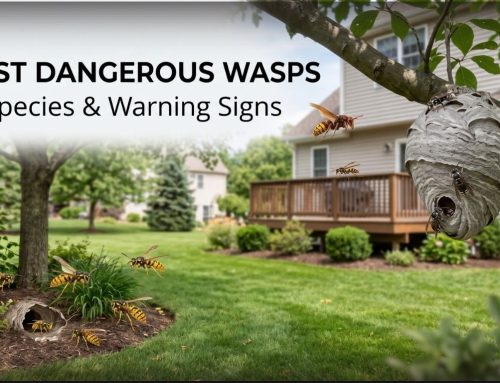
If insects around the yard are flying into a ground hole rather than following a crawling trail, stop and verify the species. Green Pest Management CT’s ground-nesting wasp guide helps distinguish stinging insects that require different safety precautions.
Bedroom Ants vs Bed Bugs
Ants and bed bugs are very different pests.
Ants have a recognizable segmented body, antennae and generally move along foraging routes. Bed bugs are flattened, wingless insects that feed on blood and typically hide near places where people rest.
Ants walking on a bed do not become bed bugs, and seeing an ant beside a pillow does not mean it is feeding on you.
If you experience unexplained skin marks, do not diagnose the pest from a bite appearance alone. Skin reactions have many potential causes.
Find and identify the actual insect or seek a qualified inspection.
DIY vs Professional Ant Control
A homeowner can often manage isolated foragers when the source is clear and no structural issue is suspected.
Professional inspection becomes more appropriate when activity is persistent or unexplained.
Consider calling a pest-control professional when:
- Ants return despite reasonable DIY measures.
- Workers appear in several rooms.
- Large ants repeatedly emerge from walls or trim.
- Moisture-damaged structural wood is present.
- Activity continues during cold weather.
- The nest location cannot be determined.
- You cannot confidently identify the insect.
- Children or pets make safe treatment placement difficult.
For homeowners deciding whether an inspection is warranted, Green Pest Management CT’s professional pest-control service guide explains the value of an inspection-led approach.
What Happens During Professional Bedroom Ant Treatment?
Professional ant service should begin with questions.
A technician needs to know when activity started, where the ants appear, whether they are more visible at night and which treatments have already been used.
Inspection
The bedroom inspection may include baseboards, windows, doors, adjoining rooms and visible structural routes.
Exterior inspection can be equally important.
Depending on the evidence, the technician may inspect foundation areas, landscaping, utility penetrations and possible moisture conditions.
Identification
Species identification helps determine likely nesting and feeding behavior.
This is especially important when carpenter ants are suspected.
Treatment
Treatment depends on the findings.
An IPM plan can involve targeted bait, an appropriately labeled residual treatment, moisture recommendations, sanitation, habitat modification and exclusion.
Professional pest control should not mean automatically spraying an entire bedroom.
Monitoring
Activity after treatment is useful evidence.
A professional can assess whether the colony appears controlled or whether workers have shifted to another route requiring further investigation.
Pesticide Safety in Bedrooms
Bedrooms deserve particularly conservative pesticide use because occupants spend hours there in close contact with surfaces and fabrics.
Never use a pesticide on a mattress, pillow, bedding, children’s toy or clothing unless its label specifically permits that use.
Follow application, ventilation and re-entry instructions exactly.
Keep products in their original containers and out of reach of children and pets.
The EPA’s information on pesticide labels explains why directions are not optional suggestions: the label establishes legal use requirements.
If pesticide exposure or poisoning is suspected, follow the product’s emergency instructions and contact the appropriate medical or poison-control resource.
When Bedroom Ants Suggest a Whole-House Problem
Finding ants in a bedroom does not mean the problem starts there.
Imagine a two-story Connecticut house where ants first appear near an upstairs window. A few days later, workers appear in the bathroom below. Later, another trail develops near the kitchen.
Treating those as three independent problems could miss the structural route connecting them.
This is why mapping sightings is so useful.
Write down the room, time, direction and approximate number of ants. A pattern may emerge.
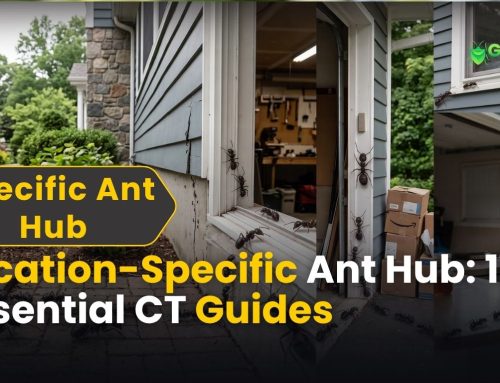
The complete location-specific ant control hub can help interpret activity across different parts of the property.
Expert Insight: Follow the Ant, Not the Room Name
Homeowners naturally focus on the room where the pest becomes inconvenient.
Pest professionals think in routes.
A worker moving across a bedroom may have started outdoors and traveled through a wall. The same colony may send workers somewhere else tomorrow.
That is why the strongest questions are:
Where are the ants entering?
What are they trying to reach?
Where does the return trail go?
What structural or environmental condition supports the activity?
Once those questions are answered, the treatment becomes more precise and unnecessary pesticide use can often be reduced.
Frequently Asked Questions
Why do I only see ants in bedroom at night?
Some ants forage more actively under particular nighttime temperature and humidity conditions, and ants can also be easier to notice when the room is quiet. Timing alone does not identify the species or nest.
Do ants in my bedroom mean there is a nest in the wall?
Not necessarily. Ants may simply use a wall void as a route from an outdoor colony. Repeated emergence from one structural location makes further inspection worthwhile.
Why are ants in my bedroom when there is no food?
They may be seeking water, traveling through the room, or using an entry point. Inspect windows, exterior walls, adjoining bathrooms and moisture conditions.
How do I eliminate ants in bedroom at night?
Observe their trail, remove food and moisture, identify their route, use appropriately labeled bait or treatment where necessary, and seal suitable entry points after the infestation is understood.
Should I spray ants next to my bed?
Avoid indiscriminate spraying, especially on bedding and furniture. Use any pesticide strictly according to its label. Spraying around an active bait placement can also interfere with some bait strategies.
Are nighttime bedroom ants carpenter ants?
They could be, but nighttime activity does not prove the species. Large ants repeatedly associated with structural wood or moisture should be professionally identified.
Will ants crawl on me while I sleep?
Ants can crawl across surfaces, including beds, if their route takes them there. Most common household ant activity is associated with foraging rather than seeking sleeping people.
Can ants enter an upstairs bedroom from outside?
Yes. Ants can reach upper levels through wall voids, siding, utility routes, vegetation or branches contacting the structure.
Why do bedroom ants return after I kill them?
The workers you killed may represent only a small portion of the colony. If the colony, food or water resource and entry route remain, additional ants may continue appearing.
When should I call Green Pest Management CT?
Schedule an inspection when ants repeatedly return, appear from structural areas, occur in several rooms, may be carpenter ants, or remain unexplained after reasonable prevention efforts. Green Pest Management CT serves Greenwich, Stamford, Darien, Westport, Fairfield, Wilton, New Canaan, Norwalk and surrounding Fairfield County.
Conclusion
If you’re seeing ants in bedroom at night, resist the temptation to treat the bedroom as the entire problem.
The workers beside the bed may have originated outdoors, traveled through a wall, crossed from an adjoining bathroom or followed a long-established structural route.
Start by watching.
Trace the workers before wiping them away. Remove food and drinks, investigate moisture, inspect windows and baseboards, and examine the corresponding exterior area. Correct favorable conditions and use only pest-control products properly labeled for the intended application.
For recurring infestations, think beyond the visible ants. Successful Integrated Pest Management addresses the colony, the resources supporting it and the route workers use to enter the living space.
Connecticut’s seasonal weather and Fairfield County’s combination of wooded, coastal, urban and suburban properties make that property-specific diagnosis important.
Green Pest Management CT serves homeowners in Greenwich, Stamford, Darien, Westport, Fairfield, Wilton, New Canaan, Norwalk and nearby Fairfield County communities. When nighttime bedroom ants keep returning, appear to originate inside structural areas, or may be carpenter ants, schedule a professional inspection so the source can be identified rather than repeatedly treating only the ants you see.