Rat Exterminator Brooklyn: Local Service Guide
If you’re looking for a Rat Exterminator Brooklyn, something has probably already happened. You heard scratching behind the stove at night, found droppings beside the recycling bins, or got a building notice you hoped you’d never see. A rat exterminator does far more than set a few traps. A competent provider inspects the property, confirms the species and the routes rats are using, removes the active population, seals the openings they use to get in, cuts off their food and shelter, and returns to make sure the problem stays solved. In Brooklyn, the job has extra layers: shared walls, rear yards, curbside trash, and buildings where one neighbor’s gap becomes everyone’s problem.
This guide walks through that process, the signs people tend to miss, what drives cost, and how to vet a provider. One thing to be clear about first: Green Pest Management CT is a Connecticut company serving Fairfield County, including Greenwich, Stamford, Darien, Westport, Fairfield, Wilton, New Canaan, and Norwalk. We don’t operate in Brooklyn. What we can offer is a clear picture of how professional rodent control should work, which helps no matter who you hire.
A rat exterminator inspects the property, identifies the species, removes active rats with traps or tamper-resistant bait stations, seals entry points through rat exclusion services, reduces food and shelter, and monitors for re-entry. Cost depends on building size, the number of access points, and how much exclusion work is needed.
What Does a Rat Exterminator Brooklyn Do?
A rat exterminator is a pest control technician trained in rodent biology and control methods. Many professionals prefer the title “rodent control specialist” because the job is managing an animal population, not killing whatever shows up on a given night. Rats are wary and good at hiding, so a serious technician spends as much time looking as trapping.
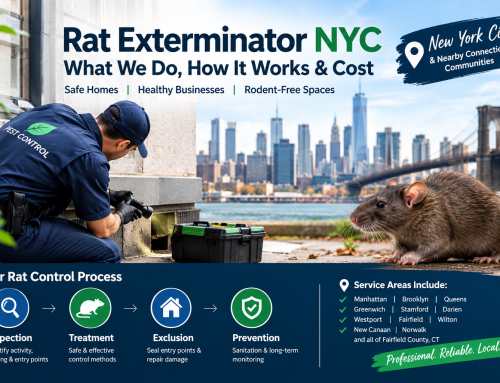
A professional rat extermination service typically includes:
- A full interior and exterior inspection for current and past activity
- Species identification, since Norway rats and roof rats behave differently
- Mapping of runways, burrows, nests, and entry points
- Removal of active rats with traps or secured bait stations
- Rat exclusion services that physically block access
- Sanitation and food-source guidance
- Follow-up visits to confirm the plan is working
A good technician also avoids common shortcuts. They don’t scatter loose poison and leave, and they don’t promise a rat-free building after one visit. Sealing a wall before the rats inside are removed is a costly mistake, because trapped rats can die out of reach and leave an odor that is hard to trace.
Signs of Rats in Brooklyn Homes and Buildings
Rats are nocturnal, so the first clue is often a sound or a smell rather than an animal. Watch for:
- Scratching, scurrying, or gnawing inside walls and ceilings after dark
- Droppings along walls, under sinks, around stored boxes, or near food
- Greasy rub marks along baseboards, pipes, and beams
- Gnaw marks on pipes, wood, packaging, and wiring
- Burrows at the base of stoops, foundations, fences, or sheds
- Shredded paper, fabric, or insulation pulled into nesting spots
- A musty, ammonia-like odor in cellars and closets
If you’re not sure what you’re seeing, pest identification comparison resources can help you narrow it down before you call anyone.
Rats or Mice? A Quick Comparison
| Feature | Rats (usually Norway rats) | House mice |
| Droppings | About 3/4 inch, capsule-shaped | About 1/4 inch, rice-shaped |
| Gnaw marks | Larger, often on pipes and wood | Small and fine |
| Burrows | Common along foundations and yards | Rarely outdoors |
| Typical spots | Cellars, ground-level walls, yards | Pantries, kitchens, wall voids |
Norway rats are the species most often found at ground level in Brooklyn. Roof rats are less common across most of the borough, but they climb pipes, wires, and fences and can nest higher up. Confirming the species matters because it changes where traps go and where entry points are most likely.
Why Brooklyn Attracts Rats
Rats go wherever food, water, and shelter are easy to reach. Brooklyn offers plenty of all three, along with a building stock that gives rats many ways in.
Older Buildings and Shared Structures
Many rowhouses and brownstones predate modern sealing standards. Shared party walls let rats travel from one cellar to the next. Common weak points include gaps around gas and water lines, cracked foundation walls, worn bulkhead doors, and openings in areaways, the sunken spaces in front of many brownstones.
Trash and Food Habits
Bags left on the curb overnight, overflowing dumpsters near restaurants, uncovered bins, pet food, compost, and fallen fruit all add up. Rats don’t need much to stay put, and they can find small amounts even when the trash looks contained. Ants follow the same crumbs, so a kitchen ant problem is often a sanitation signal too. Our guide to getting rid of ants in the kitchen covers that side of the issue.
Construction and Sewer Connections
Construction and utility work disturb burrows and push rats into neighboring buildings. Sewer and floor drain connections are another route. Drain flies often show up in the same neglected drains, so our drain fly and gnat control hub addresses that part of the problem as well.
Risks and Problems Rats Create
Rats contaminate food prep areas, stored goods, and surfaces with droppings, urine, and hair. The CDC’s rodent resources describe several diseases rodents can spread to people, including salmonellosis and leptospirosis, and note that rat bites, while uncommon, can cause serious infection. If a rat dies in a wall or trap, use gloves and a plastic bag, never bare hands.
Property damage is often the bigger expense. Rats gnaw constantly to keep their incisors worn down, so they chew through plastic piping, insulation, drywall, framing, and electrical wiring. Chewed wiring is a real fire risk. Pets can be exposed through hunting, bait, or droppings, and rodenticides can poison predators such as hawks, owls, and cats that eat poisoned rats.
Prevention Tips for Brooklyn Homes and Buildings
Prevention costs far less than cleanup, and it’s the part most people skip. Start with these:
Outside the Building
- Keep trash in rigid, lidded containers, and set bags out only close to pickup time
- Rinse food containers before they go in the bin
- Keep rear yards clear of brush, stacked lumber, and loose food
- Check fence bases and seal gaps where fences meet the building
- Store bird seed and pet food indoors or off the ground
- Keep bulkhead doors and areaway covers tight
Inside the Cellar and Apartments
- Seal gaps around pipes and conduit with proper materials, not foam alone
- Install door sweeps on cellar and exterior doors
- Fix leaks and clear standing water
- Keep stored goods in sealed plastic bins, off the floor
- Store food in sealed containers, even in apartments
For building owners and managers, schedule exterior checks after storms, construction, or utility work, and encourage tenants to report sightings early. When a shared fence line or cellar wall is involved, coordinate with the neighboring owner. One unsealed gap can undo a good job.
DIY Rat Control vs. Professional Service
Homeowners can handle the basics: storing trash correctly, cleaning up food, sealing an obvious gap with metal mesh, and cleaning droppings safely. You can also look into home-based natural pest deterrents for minor pest issues. DIY usually struggles in three places: finding real entry points, placing traps along active runways, and using rodenticides safely.
| Task | DIY | Professional |
| Finding entry points | Visible gaps only | Inspects foundation, roofline, drains, and shared walls |
| Trap placement | Trial and error | Set along confirmed runways |
| Species confirmation | Often a guess | Confirmed from droppings, tracks, and damage |
| Bait | Risky if loose or misplaced | Secured stations, label-directed, away from kids and pets |
| Exclusion | Foam or caulk | Hardware cloth, concrete, and flashing |
| Follow-up | Checking traps yourself | Scheduled monitoring and adjustments |
Cleaning Up Droppings Safely
Don’t sweep or vacuum dry droppings, because that spreads dust. Ventilate the room, wear gloves, and consider a respirator for larger areas. Spray droppings with a disinfectant or a bleach solution (roughly one part bleach to ten parts water), let them soak for at least five minutes, wipe with paper towels, and double-bag the waste. Attics, crawl spaces, and heavily soiled insulation are jobs for a professional.
When to Call a Professional
- Rats appear in more than one room or floor
- Droppings show up in food areas or storage
- You hear activity inside walls or above ceilings
- Wires, insulation, or pipes show chew damage
- Traps have been set for a couple of weeks without results
- Your building is multi-unit, shares cellars or trash areas, or has a food business on site
The Professional Rat Treatment Process
A sound job follows a logical order. Treating the wrong area or sealing too early makes things worse. Timelines vary by property, but a solid process looks like this.
Step 1: Intake and History
The technician asks when you first noticed activity, where you’ve seen it, whether you have pets or small children, what you’ve already tried, and whether there’s been recent construction, storm damage, or a change in trash habits. Those answers shape where the inspection starts.
Step 2: Inspection, Inside and Out
The inspection covers the whole property, not just the room where you heard noise.
Interior Checks
Technicians look at cellars, kitchens, pantries, laundry areas, pipe chases, and gas and water service entries. They check for droppings, rub marks, and gnaw damage.
Exterior Checks
Outside, they walk the foundation, stoops, areaways, bulkhead doors, rear yards, fence lines, sewer cleanouts, and trash areas. In multi-family buildings, the inspection extends to shared cellars and trash rooms.
Step 3: Confirm the Species and Map Activity
Once the walkthrough is done, the technician confirms the species and marks where activity clusters. That activity map drives everything else. Fresh droppings beside a gas line tell a different story than an old burrow along a fence.
Step 4: Remove the Active Population
Depending on the situation, a technician may use snap traps, multi-catch traps, or tamper-resistant bait stations. Rodenticides are regulated products, so they should be placed in secured stations, used according to label directions, and kept away from children, pets, and wildlife. Trapping also gives a useful count of how many rats you’re dealing with.
Step 5: Rat Exclusion Services
This is where lasting results come from. Rats can squeeze through openings about half an inch wide, and they’ll chew larger ones if they need to. Good exclusion work typically includes:
- Lining gaps with galvanized hardware cloth, often 1/4-inch mesh, before filling with concrete or metal flashing
- Installing door sweeps and weatherstripping on cellar and exterior doors
- Sealing utility penetrations with appropriate materials
- Repairing foundation cracks and damaged bulkhead doors
- Fitting rodent-resistant covers on vents
- Coordinating with a licensed plumber for sewer or drain openings
Foam alone rarely holds because rats chew through it. Metal and concrete last.
Step 6: Sanitation and Habitat Reduction
The technician should explain what to change: trash containers, compost, bird feeders, pet food, clutter, and overgrown plants near the foundation. The goal is to remove the reasons rats have to stay.
Step 7: Monitoring and Follow-Up
Follow-up visits check activity levels, reset traps and stations, verify that exclusion is holding, and catch new openings. You should leave with a written summary of what was found, what was sealed, what needs attention from you, and when the next visit is scheduled.
A Realistic Example
Here’s a simplified scenario to show how the pieces fit. A three-story rowhouse has a cellar apartment, a rear yard with an old shed, and a neighbor’s compost bin along the shared fence. The inspection finds fresh droppings near a gas line in the cellar, a gap at the base of the shed, and rub marks along the fence. The plan includes trapping in the cellar, secured bait stations in the yard away from the play area, sealing the gas line penetration with metal mesh and concrete, and asking the neighbor to secure the compost bin. A follow-up visit a few weeks later confirms the cellar traps are empty and the repairs are holding.
What Affects Rat Extermination Cost in Brooklyn
Cost is the first question most people ask, and it usually gets the vaguest answer. Pricing depends on the property and the work required, not a single flat rate. These factors move the number most:
- Building type and size: a single rowhouse, a multi-family brownstone, and a larger walk-up each take different time to inspect and treat
- Extent of activity: a few rats in a cellar is a different job than an established colony in walls and yards
- Entry points: a handful of gaps is quick work, while dozens of openings around old utility lines take longer
- Exclusion materials and labor: metal, concrete, and flashing cost more than foam but hold up far better
- Access and coordination: shared walls, neighboring owners, plumbing work, and landlord approvals add steps
- Monitoring plan: a one-time service differs from ongoing visits
- Cleanup scope: removing contaminated insulation or cleaning a heavily soiled attic adds time and materials
How Quotes Are Usually Structured
Some providers quote per visit and others per scope. Many offer combined plans that include inspection, treatment, exclusion, and follow-up. Recurring monitoring is common in multi-unit buildings and food-service settings. Whatever the format, a quote should list each component and state what is excluded.
Red Flags in a Quote
Be cautious if a company gives a firm price over the phone without inspecting the property, offers bait alone with no exclusion plan, can’t explain what will be sealed, or pushes you to sign before you’ve seen the scope. A very low figure often means a single visit with no follow-up. If you want to see how another pest service is typically scoped, our hornet exterminator cost guide walks through the same logic.
Seasonal Rat Patterns in New York and Connecticut
Rats don’t hibernate. They adjust to the season, and each adjustment shapes where you’re likely to see them.
- Winter: Cold pushes rats into warm cellars, wall voids, and garages. Many cellar problems first surface in the colder months.
- Spring: Breeding picks up as temperatures rise. A single female can produce several litters a year, so a small spring problem can become a large one by summer.
- Summer: Outdoor food sources peak, and sightings often rise around trash, parks, rear yards, and construction sites.
- Fall: Rats look for shelter before winter, which makes gaps around foundations and utility lines most vulnerable. Early fall is the best time to seal.
Storms add another layer. Heavy rain and coastal flooding can drive rats out of burrows and into buildings, which matters for low-lying Brooklyn blocks and for shoreline towns like Westport, Fairfield, and Norwalk. Snow cover in Connecticut winters also hides outdoor runways, so signs may not appear until the thaw.
Trash-driven pests overlap as well. In late summer, yellow jackets are drawn to the same food scraps that attract rats. If you’re dealing with both, our yellow jacket behavior guide covers what to watch for.
Local Information: Brooklyn and Connecticut
What Makes Brooklyn Different
Density changes the math. A rat problem rarely stays on one lot. Shared cellars, party walls, common trash areas, and connected backyards mean a clean job next door affects you, and vice versa. Commercial strips with restaurants add steady food sources, and many buildings are rentals where the owner, tenants, and building manager all have a role. Whether the building is a Park Slope brownstone, a Bushwick walk-up, or a Sunset Park building above a storefront, the basic logic is the same: find the access points, remove the food, and bring the neighbors into the plan.
Rules, Reporting, and Responsibilities in NYC
Several city agencies touch rodent control, and knowing who does what helps you act faster.
- NYC 311 takes rodent complaints and routes them to the appropriate agency.
- HPD, the Department of Housing Preservation and Development, handles housing maintenance complaints in residential buildings, including rodent conditions.
- The Department of Health and Mental Hygiene oversees the public health side of rodent control and licenses pest control work in the city.
- Property owners are generally responsible for rodent control on their property, and owners of multiple-dwelling buildings carry specific obligations under housing rules.
Pest control companies working in New York should hold state pesticide business registration and licensed technicians. Ask for proof of both. Requirements change, so confirm current rules on the official city and state websites.
What Connecticut Homeowners See
Fairfield County homes bring a different mix. Fieldstone foundations, stone walls, crawl spaces, detached garages, woodpiles, and bird feeders create cover. Larger lots in Greenwich, Darien, Wilton, and New Canaan often have wooded edges that rats use as travel routes, while denser commercial corridors in Stamford and Norwalk cluster food sources. Connecticut licenses commercial pesticide applicators through the Department of Energy and Environmental Protection, and UConn Extension offers research-based pest guidance for homeowners. If you’re in Fairfield County and want to see how we approach professional service, our trusted professional pest control services page explains the process.
How to Choose a Rat Exterminator in Brooklyn
If you’re searching for rat removal companies near you, slow down before signing anything. Ask:
- Are you licensed for pest control work in New York City, and can you show your state pesticide registration?
- Are your technicians certified, and do they have rodent-specific training?
- Will you inspect the interior and exterior before recommending a plan?
- Do you follow Integrated Pest Management, which combines inspection, sanitation, exclusion, and targeted control?
- Can you show exactly what you’d seal, where, and with what materials?
- How do you protect children, pets, and non-target wildlife?
- What follow-up is included, and how do you measure progress?
Integrated Pest Management is the approach the EPA describes in its IPM principles. A company that uses it will talk about the building, not just the rats you saw.
Common Mistakes to Avoid
- Sealing holes while rats are inside. They chew their way out or die behind the wall.
- Using loose poison near baseboards, under sinks, or anywhere children and pets can reach.
- Relying on ultrasonic devices. University extension research has not shown them to reliably drive rats out.
- Treating only the sighting. If the trash habits and cellar gap stay the same, rats come back.
- Sweeping droppings dry. It spreads dust you don’t want to breathe.
- Waiting for a third sighting. Early activity is the easiest to solve.
- Choosing on price alone. A bargain with no inspection is often a bait-only visit.
Frequently Asked Questions
What does a rat exterminator do?
A rat exterminator inspects for active rats and entry points, identifies the species, removes the population with traps or secured bait stations, seals gaps through rat exclusion services, reduces food and shelter, and follows up to confirm the problem has ended.
How can I tell if I have rats or mice?
Rat droppings are about three-quarters of an inch long, while mouse droppings are closer to a quarter inch. Rats also leave larger gnaw marks, heavier rub marks, and louder scratching inside walls. A technician can confirm the species from the evidence.
How much does rat extermination cost in Brooklyn?
Cost depends on building size, how many rats are active, how many entry points need sealing, and whether follow-up is included. Ask for an inspection-based quote with a written scope. Any estimate given without seeing the property is only a rough guess.
Who is responsible for rats in a NYC rental building?
Building owners generally carry responsibility for rodent control in shared and multiple-dwelling areas. Tenants can report conditions through NYC 311, and HPD handles housing maintenance complaints. Requirements can change, so confirm current rules with the city.
Are rat poisons safe around kids and pets?
They can be used more safely in tamper-resistant, secured stations placed according to label directions. Loose bait is the biggest risk. Keep children and pets away from any treatment area and follow the technician’s instructions closely. Many professionals rely on trapping and exclusion first for this reason.
How long does professional rat removal take?
Small, simple jobs can resolve within several weeks. Multi-unit buildings and jobs requiring heavy exclusion take longer. Expect at least one follow-up visit, and ask for a realistic timeline after the inspection.
Can rats come back after treatment?
Yes, if entry points, food sources, or neighboring activity remain. Treatment removes the current rats, while exclusion and sanitation keep new ones from moving in. Monitoring catches new activity early.
Is rat exclusion worth the investment?
For most properties, yes. Trapping deals with the rats already inside. Exclusion addresses how they got in and keeps the next group out. Ask for a list of what will be sealed and why.
Do you serve Brooklyn, Manhattan, or Queens?
Green Pest Management CT serves Connecticut, primarily Fairfield County communities such as Greenwich, Stamford, Darien, Westport, Fairfield, Wilton, New Canaan, and Norwalk. For Brooklyn, Manhattan, or Queens, choose a provider licensed for New York work and use the questions in this guide to compare companies.
Conclusion
A rat exterminator does far more than trap rats. The real work is finding how rats get in and what keeps them fed, removing the population, sealing the building, and checking that the problem stays gone. In Brooklyn, shared structures, curbside trash, and neighboring properties add complications, which is why a thorough inspection matters so much. Learn the signs, act early, and insist on a written plan before any work begins.
If you’re in Connecticut and seeing rats in Greenwich, Stamford, Darien, Westport, Fairfield, Wilton, New Canaan, or Norwalk, Green Pest Management CT can schedule an inspection and explain your options in plain language. If you’re in Brooklyn, use this guide as a checklist when you look for a rat exterminator, and choose a licensed New York provider who inspects before quoting.