How to Get Rid of Hornets Nest: Removal Guide
There’s a Hornets Nest on Your Property. Here’s What to Do Right Now.
You found it. Maybe you nearly walked into it on the way to your shed. Maybe your lawnmower triggered a swarm from a ground nest in your lawn you never knew existed. Maybe your kid came running inside crying, stung twice before they even knew what happened.
However you discovered it, you’re now standing inside your house, looking out at the problem, wondering: How to Get Rid of Hornets Nest safely, completely, and without making things dramatically worse?
You’re in the right place. This guide gives you the complete, honest, step-by-step answer covering aerial nests, ground hornets, bald-faced hornet removal, the best time to treat a hornets nest, DIY vs. professional options, and exactly when you should absolutely not attempt this yourself.
We serve homeowners across Greenwich, CT, Stamford, CT, Darien, CT, New Canaan, CT, Wilton, CT, and Westport, CT, and the situations we describe in this guide are ones we handle every single week across Fairfield County. This is practical, real-world guidance. Not YouTube bravado.
Let’s start with what you need to know first.
Step 1: Don’t Touch Anything Yet Identify Before You Act
The biggest mistake homeowners make when trying to get rid of a hornets nest is rushing straight to treatment without understanding what they’re dealing with. That’s how you end up with a failed treatment, an enraged colony, and a trip to urgent care.
Before you do anything else, answer these three questions from a safe distance:
Question 1: What species is this?
The treatment approach for a bald-faced hornet nest is different from a European hornet nest, which is different again from a ground hornet (yellow jacket) situation. Getting this wrong can mean an ineffective treatment at best or a dangerous, triggered attack at worst.
Question 2: What type of nest is it?
- Aerial paper nest (hanging from tree, shrub, or eave) gray, football-shaped, enclosed
- Cavity nest (inside wall void, attic, tree hollow) — entry point visible but nest interior hidden
- Ground nest (hole in lawn, soil, under decking) — the most dangerous type for casual discovery
Question 3: How large is the colony?
Colony size directly determines risk level and whether DIY treatment is appropriate. A founding nest with fewer than 10 workers is a very different situation from an established August colony with hundreds or thousands.
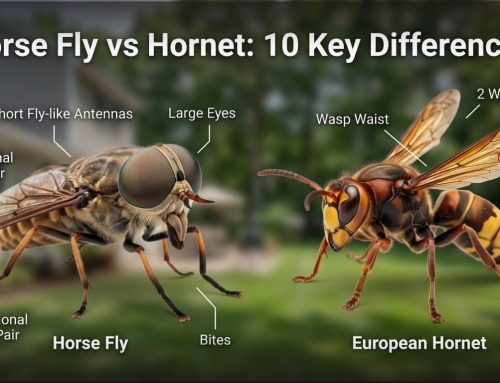
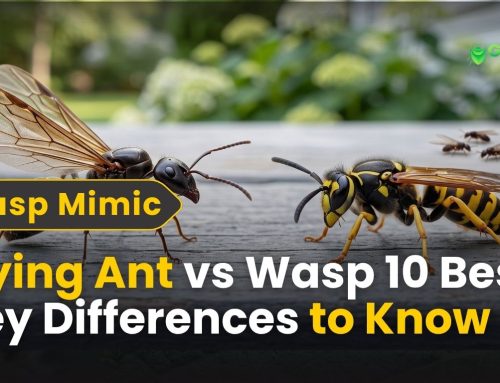
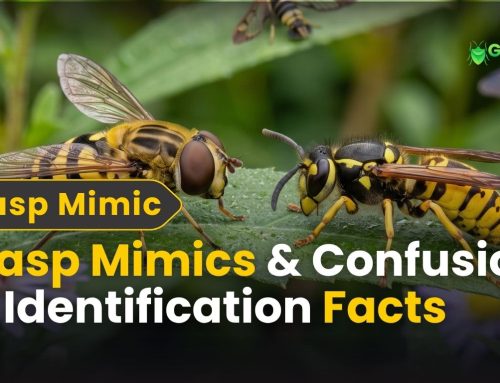
For complete species identification with photos and behavioral notes, our wasp and hornet ID guide for Connecticut is the most comprehensive regional resource available. If you’re not 100% certain what you’re looking at, identify first — then treat.
Step 2: Assess Your Risk Level Honestly
Once you’ve identified the species and nest type, honestly assess your risk level. This is not the time for bravado.
High Risk Call a Professional
- Any nest larger than a tennis ball with active workers
- Any ground hornet (yellow jacket) nest with confirmed activity
- Any nest inside a wall void, attic, or structural cavity
- Bald-faced hornet nests of any size their pursuit behavior makes DIY treatment genuinely dangerous
- Any nest near a doorway, walkway, or children’s play area
- Any nest that has already been disturbed
- Anyone in your household with a known sting allergy
Lower Risk Informed DIY May Be Appropriate
- Small founding nest (smaller than a golf ball) with fewer than 10 visible workers
- Accessible location with clear retreat path
- No previous disturbance
- No allergy concerns in the household
- Appropriate timing conditions available (cool night, below 55°F)
The honest truth: Most of the hornet situations Connecticut homeowners encounter fall into the “call a professional” category simply because they’re usually discovered when the colony is already well-established. If you’re reading this in July, August, or September, there’s a very good chance your nest needs professional attention.
Our hornet exterminator services for Connecticut homeowners are specifically designed for fast, safe response to exactly these situations.
Step 3: Understand the Colony You’re Dealing With
Effective hornet nest removal requires understanding the colony structure you’re targeting. This isn’t academic it directly informs why certain treatments work and others fail completely.
The Queen Is the Target
Every hornet colony is built around a single queen. She is the reproductive engine — laying eggs continuously from spring through late summer. Every worker in the nest was produced by her. If you eliminate workers but not the queen, the colony continues rebuilding.
This is the fundamental reason why surface spraying fails so consistently. You kill the workers you can see. The queen is deep inside the nest, protected by multiple layers of paper casing or underground tunnel systems. She survives, continues laying, and the colony restores itself within days.
Effective hornet control means reaching the queen. Every treatment decision should be evaluated against this benchmark: will this product, in this application, penetrate deeply enough to reach and kill the queen?
The Colony Lifecycle Drives Your Timing
Understanding where the colony is in its seasonal lifecycle tells you exactly how large and how dangerous the nest is. For a complete lifecycle breakdown, our wasp lifespan and lifecycle guide covers the full annual cycle from hibernation to colony collapse.
The practical summary for treatment purposes:
- Spring (April–May): Founding queen alone or with first workers. Easiest, safest intervention window.
- June: Colony at 50–200 workers. Still manageable with correct approach.
- July–September: 200 to 5,000+ workers depending on species. Requires professional treatment.
- October–November: Colony dying but workers are desperate and aggressive.
If you found your nest in late summer which is when most people find them you are almost certainly dealing with an established, maximum-aggression colony. Treat this with appropriate respect.
Step 4: Choose the Right Treatment for Your Nest Type
This is where the specifics matter enormously. Here is the correct treatment approach for each nest type.
How to Get Rid of an Aerial Hornet Nest
Aerial paper nests the type built by bald-faced hornets and some yellow jacket species are the most visually identifiable and, in some ways, the most straightforward to treat when caught early.
What works:
Pyrethroid aerosol spray (professional-grade) Applied directly and continuously into the single nest entrance point at the bottom of the nest structure. Professional formulations penetrate significantly deeper into the nest interior than consumer products.
What doesn’t work:
- Spraying the exterior of the nest paper — the insulating layers prevent product from reaching workers inside
- Knockdown sprays aimed at flying workers — you kill foragers but never reach the colony interior
- Knocking the nest down physically — catastrophically dangerous; releases every worker simultaneously
Step-by-step for accessible founding nests (small only):
- Wait until after 10 PM on a night below 55°F
- Wear full protective clothing — long sleeves, gloves, eye protection
- Position yourself at maximum spray distance (15–20 feet for jet sprays)
- Apply a continuous 10-second burst directly into the entrance hole
- Retreat immediately — do not wait to observe
- Remain clear for 48 hours
- Confirm complete activity cessation before physical removal
For established bald-faced hornet nests: Please read our comprehensive guide on hornet nest removal in Connecticut before attempting anything. The pursuit behavior of this species makes established nest removal a professional job in the vast majority of situations.
How to Get Rid of a Ground Hornet Nest
Ground hornet removal is the most dangerous type of how to get rid of hornets nest situation a Connecticut homeowner can face. Yellow jacket ground colonies can contain 5,000+ workers by late summer housed in an underground tunnel system that extends well below the surface.
What works:
Insecticidal dust (professional-grade) Applied directly into the ground nest entrance hole. Dust coats workers as they pass through the tunnel entrance, gets carried throughout the nest system, and reaches the queen and larvae. This is what professional technicians use because it works.
Pyrethroid liquid treatment Applied at and around the entrance for certain situations.
What does NOT work (and is actively dangerous):
- Consumer aerosol spray — cannot penetrate underground tunnel systems; triggers explosive exit response
- Boiling water — ineffective; triggers attack
- Gasoline, diesel, or other flammable liquids — illegal, extremely dangerous, do not do this
- Blocking the entrance — forces workers to find alternative exits, potentially into your home
- Digging out the nest — triggers mass defensive response from thousands of workers
The ground hornet reality check: If you have a confirmed ground nest with active worker traffic, this is a professional job. Our team specializes in ground hornet treatment in CT with professional dust application that eliminates the colony through the tunnel system safely, completely, and without triggering the explosive defensive response that makes consumer treatment so dangerous.
For more on eliminating ground nests specifically, see our dedicated guide to eliminating ground hornets in Connecticut.
How to Get Rid of a Cavity Hornet Nest
Cavity nests hornets nesting inside your wall voids, attic spaces, or tree hollows are the most challenging type of hornet nest removal because the nest structure is completely hidden. You can only see the entrance point and the workers using it.
What works:
Professional insecticidal dust injection Applied directly into the cavity through the entrance point using specialized injection equipment. Dust disperses throughout the cavity, coats all surfaces and workers, and reaches the queen.
Professional expansion foam with insecticide Used in some cavity situations to simultaneously treat and seal.
What doesn’t work:
- Consumer spray at the entrance — cannot reach the interior of the cavity; workers simply retreat deeper
- Sealing the entrance — the most dangerous response possible for a cavity nest. Trapped workers will find a new exit — potentially into your living space through an interior wall
If you discover hornets entering your wall or soffit: Do not spray the entrance. Do not seal the entrance. Mark the location and call a professional immediately.
Our team handles immediate hornet control in CT for wall void situations — including the specialized dust injection equipment that makes cavity treatment effective.
Step 5: The Best Time to Kill a Hornets Nest Timing Your Treatment
Even with the right product and the right approach, treating at the wrong time dramatically reduces effectiveness and increases your sting risk. Understanding when are wasps least active is central to effective treatment timing.
The Optimal Treatment Window
Best time to kill a hornets nest:
- After 10 PM to 5 AM — maximum workers inside the nest, minimal defensive activity
- Temperature below 55°F (13°C) — suppresses flight and reduces response speed
- Cool, calm, overcast conditions — reduces ambient activity further
- No previous disturbance to the nest — a previously disturbed colony is on high alert 24–48+ hours after
Why nighttime works:
At night, essentially all foraging workers have returned to the nest. Your treatment reaches the maximum number of workers simultaneously — including workers that were outside during daytime and would have been missed. The queen is inside the nest. The colony’s defensive response, while still present, is slower and less coordinated in darkness and cold.
Critical exception European hornets are nocturnal. If your nest is identified as European hornets, they are active and territorial after dark. Nighttime approach still reduces overall numbers but does not eliminate the nighttime defensive response this species maintains.
For our complete timing guide including daily activity patterns, weather effects, and seasonal considerations, read when are wasps least active and the best time to act.
Timing Mistakes That Guarantee Failure
Treating at midday: Up to 70% of foraging workers are outside the nest. You kill a fraction of the colony. The queen survives. Workers return to find the nest compromised and become hyper-aggressive.
Treating immediately after a disturbance: The colony is already on high alert. Alarm pheromones have been released. Defensive workers are primed. This is the highest-risk scenario for treatment.
Treating in summer heat: Warm temperatures maintain peak activity. Workers respond faster. More workers are recruited to defend. Treatment effectiveness drops while personal risk rises.
Step 6: DIY vs. Professional Hornets Nest Removal Make the Right Call
This is the decision point every Connecticut homeowner reaches when dealing with a hornet nest. Here’s the framework for making it correctly.
DIY Hornet Nest Removal: When It’s Appropriate
| Situation | DIY Appropriate? |
| Founding nest, golf ball or smaller, few workers | Yes, with correct approach |
| Established aerial nest, tennis ball or larger | No — professional recommended |
| Ground hornet nest, any size with active workers | No — professional required |
| Wall void or cavity nest | No — professional required |
| Bald-faced hornet nest, any size | No — professional required |
| Any previously disturbed nest | No — professional required |
| Known allergy in household | No — professional required |
Why DIY Hornet Nest Removal Consistently Fails
Wrong product selection: Consumer products are significantly less concentrated than professional formulations. They lack residual activity, penetration ability, and the specific application characteristics needed for different nest types.
Incomplete treatment: Consumer sprays that reach the nest exterior kill surface workers. The queen and interior workers survive. Within 48–72 hours, the colony has rebuilt its defensive worker population and resumed normal activity. You’ve accomplished nothing permanent and the colony is now more defensive than before.
No queen elimination: This is the critical failure point. Without reaching and killing the queen, every treatment is temporary. Professional products and application methods are specifically designed to penetrate to the colony core.
Personal risk without professional equipment: Full professional bee suits, sealed eyewear, gloves, and respirators represent a fundamentally different level of protection from anything consumer protective clothing provides. The risk exposure between a professional and a DIY homeowner attempting the same treatment is not comparable.
Our complete 15-tip hornet control guide covers the full DIY vs. professional comparison in detail, including a comprehensive breakdown of when each approach is appropriate for specific Connecticut situations.
What Professional Hornet Nest Removal Includes
When you hire a qualified professional for professional hornet nest removal in Connecticut, here’s what a proper service includes:
Accurate species identification — Treatment strategy selected for the specific species
Complete nest location — Including any secondary nests you haven’t found
Professional-grade treatment — Products and formulations not available to consumers
Queen-targeted elimination — Treatment designed to penetrate to the colony core
Physical nest removal — Safe removal of the nest structure after colony death
Entry point identification and sealing — Preventing future establishment at the same site
Prevention recommendations — Site-specific advice for long-term prevention
Schedule your professional hornet nest removal in Connecticut today. Our team serves all of Fairfield County with fast response and professional-grade treatment.
Step 7: After Treatment What to Do Next
Treating the colony is only part of how to get rid of a hornets nest completely. What you do after treatment determines whether the problem is truly resolved or just temporarily suppressed.
Immediate Post-Treatment (First 48 Hours)
Stay away from the treatment area. Even after a successful treatment, dying workers can remain active for 12–24 hours. Their wasp behaviour becomes erratic and more aggressive as they die a desperate, confused worker is paradoxically more likely to sting than a healthy, purposeful one.
Do not seal the nest entrance yet. For cavity nests, premature sealing traps any surviving workers inside with no exit. Wait until no activity has been observed for at least 48 hours.
Monitor from a safe distance. After 24 hours, observe the nest from 20+ feet. Zero exit/entry activity = treatment successful. Any ongoing activity = treatment incomplete; reassess.
Physical Nest Removal (After Full Colony Death)
Once you’ve confirmed zero activity for 48+ hours, physical removal of the nest structure is important for several reasons:
- Old nests attract new queens in spring looking for established nest sites
- Abandoned nests can harbor secondary pests (carpet beetles, certain fly species)
- Nest material inside wall voids can retain moisture and contribute to structural issues
- Visual confirmation that the nest is completely gone eliminates any uncertainty
For aerial nests: Wear protective clothing regardless of confirmed death — caution costs nothing. Place a large plastic bag over the nest, detach it from its attachment point, seal the bag, and dispose.
For ground nests: After professional dust treatment and confirmed colony death, the entrance can be filled with soil or sealed. The underground tunnel system will naturally collapse over time.
For cavity nests: After professional treatment, entry points are sealed by the technician as part of the service. Physical nest material inside walls typically does not require removal unless it’s accessible and causing structural concerns.
Prevention: Stop the Next Colony Before It Starts
Once your current nest is eliminated, the prevention work begins. Here’s what to do before next spring’s queen emergence:
Seal your home exterior:
- All gaps in soffits, fascia, and eave junctions
- Around window and door frames
- Utility penetrations (electrical, plumbing, HVAC)
- Attic and crawlspace vents (install fine mesh screening)
- Gap where deck structure meets the home
Remove nesting attractants:
- Fill abandoned rodent burrows in your lawn
- Store wood piles away from the home exterior
- Remove or repair weathered wood that queens use for nest material
Eliminate food attractants:
- Seal all outdoor trash containers
- Remove fallen fruit daily from fruit trees
- Clean recycling containers weekly
- Cover outdoor food during cookouts
For our most comprehensive prevention guide, read how to deter hornets from nesting on your property.
Are Hornets Territorial? Understanding Defensive Behavior
One critical reason that how to get rid of a hornets nest requires such careful attention to timing and approach is that hornets are territorial — and their territorial defense system is highly evolved and immediately lethal in its response.
When a hornet worker perceives a threat to the nest, it releases alarm pheromones — chemical signals that instantly communicate danger to nestmates. Within 30 seconds, dozens of additional workers can be mobilized and pursuing the perceived threat.
This is why:
- The wrong approach triggers an overwhelming response before you’ve completed treatment
- A crushed worker near the nest can start an attack you never intended to trigger
- Running from a triggered nest while swatting at pursuing hornets releases more pheromone from any hornets that contact you, recruiting more attackers
Understanding hornet territorial behavior is essential for safe nest management. Our dedicated article on are hornets territorial and what triggers an attack gives you the complete picture of defensive behavior and what you can do to minimize your risk.
Pro Tips From Connecticut Hornet Control Experts
Tip 1: The nest you find in August existed in April.
By the time most homeowners find a hornet nest, it’s been there for months. The founding queen established that site in spring. Early spring inspection of your property every year is the single most effective prevention strategy available.
Tip 2: Check your shed and garage first.
Outbuildings are the most common nesting sites for both European hornets and paper wasps in Connecticut. Their protected, undisturbed interiors are ideal for queen founding in spring. Inspect your outbuildings monthly from April onward.
Tip 3: Don’t treat from above for aerial nests.
Spraying down onto the top of an aerial nest is ineffective. The nest entrance is at the bottom. Treatment must be directed upward into the entrance, not onto the nest exterior.
Tip 4: A damaged nest is more dangerous than an undamaged one.
If wind, an animal, or a previous treatment attempt has already partially damaged the nest structure, do not attempt treatment. The colony is already in full defensive alert mode. This situation requires professional assessment and treatment.
Tip 5: Yellow jacket ground nests expand rapidly.
A yellow jacket ground hornet colony that contains 500 workers in June can have 3,000+ by August. The underground tunnel system expands to accommodate the growing population. Early treatment of ground nests — before July makes a dramatic difference in complexity and risk.
Real Stories From Connecticut Homeowners
Darien, CT The Broom Mistake
“I found what looked like a fairly small hornet nest under my porch roof and knocked it with a broom handle. What happened next was genuinely terrifying. Within two seconds there were hornets everywhere. I got stung four times getting inside and my dog got stung twice. Green Pest Management came out the next morning — full bee suits, professional equipment, done in twenty minutes. The technician showed me that the colony was actually much larger inside than it looked from outside. He said the broom was the worst thing I could have done.”
— Craig M., Darien CT
New Canaan, CT — The Ground Nest Discovery
“My son was mowing our back lawn in August and triggered a yellow jacket ground nest we had no idea existed. He got stung eight times before he made it to the garage. The nest entrance was a hole about the size of a quarter in the grass — completely invisible before the mower went over it. Green Pest Management treated it that same afternoon. They used a dust product that went directly into the tunnel system. By the following morning, zero activity. Nobody’s had a problem since.”
— Jennifer S., New Canaan CT
Westport, CT — The Wall Void Situation
“We started seeing European hornets inside our sunroom in the evenings — always flying toward the window. After a week of this, we called Green Pest Management. Turns out there was a full European hornet colony inside the wall cavity behind the window frame. The entry point was a tiny gap in the exterior window trim. Professional dust treatment into the cavity eliminated the colony within 48 hours. They sealed the entry point afterward. We had been living three feet from a hornet colony for weeks without knowing it.”
— Patricia L., Westport CT
FAQ: How to Get Rid of Hornets Nest
Q1: What is the fastest way to get rid of a hornets nest?
A: The fastest effective method is professional treatment a trained technician using professional-grade pyrethroid dust or liquid applied correctly can eliminate most colonies within 24–48 hours of a single treatment visit. For small founding nests only, a correctly timed DIY nighttime spray treatment can be effective within the same timeframe but must reach the queen to be permanent.
Q2: Is it safe to remove a hornets nest yourself?
A: For small founding nests with fewer than 10 workers, informed DIY treatment is possible with correct timing, proper protective clothing, and appropriate products. For any established colony anything larger than a golf ball with visible workers professional removal is strongly recommended. Ground hornet nests, cavity nests, and bald-faced hornet nests should always be handled by professionals regardless of size.
Q3: What kills hornets instantly?
A: Direct contact with pyrethroid-based insecticides (cypermethrin, bifenthrin, deltamethrin) kills individual hornets rapidly. However, “instant” killing of individual workers does not eliminate the colony. Effective hornet control requires treatment that penetrates to the colony interior and reaches the queen not just surface knockdown of visible workers.
Q4: When is the best time to destroy a hornet nest?
A: The best time to kill a hornets nest is after 10 PM on a cool night (below 55°F), when the maximum number of workers are inside the nest and activity is at its lowest. This timing ensures maximum treatment penetration and minimizes the number of active defensive workers encountered during approach. See our complete guide on when wasps are least active for full timing guidance.
Q5: What kills ground hornets most effectively?
A: Professional insecticidal dust applied directly into the ground nest entrance is the most effective treatment for ground hornets. The dust is tracked throughout the underground tunnel system by workers and reaches the queen. Consumer aerosol sprays cannot penetrate underground tunnel systems adequately and typically trigger a dangerous explosive exit response before sufficient product is delivered.
Q6: Will a hornets nest go away on its own?
A: The colony will die off naturally in late fall when temperatures drop. Workers die, and only mated queens survive winter in dormancy. However, the nest does not “go away” the physical structure remains, and new queens will readily reuse the same site the following spring. Waiting for natural colony death is only appropriate if the nest poses no immediate safety risk to your household.
Q7: How do I know if a hornet nest is dead after treatment?
A: Monitor from a safe distance (15–20 feet) for 48 hours after treatment. A successfully treated colony shows: zero workers entering or exiting the nest entrance; no buzzing audible from the nest structure; no defensive response to gentle vibration near (not at) the nest location. If any workers remain active after 48 hours, the treatment was incomplete and professional retreat ment is needed.
Final Word: Get Rid of That Hornets Nest Before It Gets Worse
Here’s the truth about how to get rid of a hornets nest that no one wants to say directly: the longer you wait, the harder, more dangerous, and more complex the problem becomes.
The founding nest you could have addressed in April with minimal risk is the emergency colony you’re dealing with in August. The small cavity entrance you noticed in June becomes the wall void full of European hornets in September. The quarter-sized hole in your lawn that you ignored becomes the ground yellow jacket colony that sends your child to urgent care in the middle of summer break.
These situations are completely preventable and completely manageable with the right approach at the right time.
If you have a hornet nest on your property right now, in Greenwich, Stamford, Darien, New Canaan, Wilton, Westport, or anywhere across Connecticut act today. Not tomorrow. Not after the weekend. Today.
Our team at Green Pest Management provides fast, professional, family-safe hornet nest removal throughout Fairfield County, with:
Same-week service availability
Accurate species identification and targeted treatment
Professional-grade products that reach the queen
Complete physical nest removal
Entry point sealing and prevention guidance
Family and pet-safe application methods
Contact Green Pest Management today for professional hornet nest removal in Connecticut. Fast response. Complete elimination. Lasting protection.
More Helpful Resources
- Hornet Control Guide: 15 Expert Tips
- Wasp & Hornet Behavior Hub — Complete 2026 Guide
- Ground Hornet Treatment in CT
- Hornet Nest Removal in CT — Professional Service
- Are Hornets Territorial? What Triggers an Attack
- When Are Wasps Least Active? Best Time to Act
- Hornet Sting Treatment Guide
- Immediate Hornet Control in CT