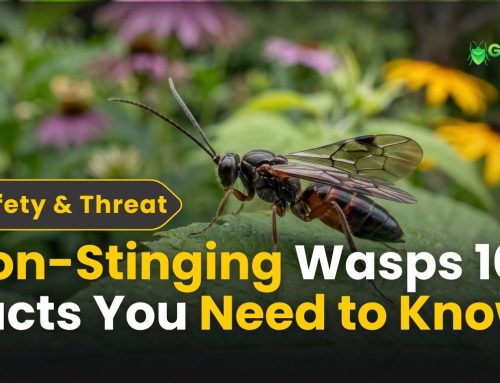
Wasp vs Hornet: Complete Comparison Guide for Connecticut Homeowners
INTRODUCTION: Why You Need to Know the Difference
You’re sitting on your back patio in Greenwich, Connecticut, enjoying a peaceful afternoon when a striped insect buzzes past your face. Your heart skips a beat. Is it a wasp? A hornet? Should you run?
Here’s the thing: Most homeowners use these terms interchangeably, but there’s a critical difference between wasps and hornets that directly affects how dangerous they are to your family and what you should do about them.
Last summer, we received a frantic call from a Stamford homeowner who thought a wasp nest near her children’s bedroom window was “just a small problem.” Within two weeks, what started as a single nest became three separate colonies. Her 8-year-old got stung twice before she took action. By then, removing the nests cost significantly more than early intervention would have.
This is exactly why understanding the Wasp vs Hornet in the CT comparison hub is essential for every Connecticut resident.
The difference isn’t just academic, it’s about protecting your family, understanding the actual threat level, and knowing exactly when (and how) to take action. In this guide, we’ll break down everything you need to know about Wasp vs Hornet in CT, their specific behaviors in Connecticut, and the safest removal strategies.
What’s the Difference? Wasp vs Hornet Explained
Understanding the Basics: Are Hornets Even Wasps?
This might surprise you: yes, hornets are technically a type of wasp. Think of it like this—all hornets are wasps, but not all wasps are hornets.
Here’s what that means for you:
Wasps are the broad category that includes hundreds of species. Some are solitary (living alone), while others live in colonies.
Hornets are specifically social wasps that live in large groups. They’re a subset of the wasp family, known for building those distinctive paper-like nests.
For Connecticut homeowners, this distinction matters because it affects their nesting behavior, aggression levels, and removal difficulty. Understanding this wasp vs hornet comparison hub helps you know exactly what you’re dealing with.
SIZE & APPEARANCE: How to Identify Them
Physical Characteristics That Matter
When you see an insect approaching, you have about three seconds to identify it. Let’s make that identification simple.
Typical Wasp Characteristics:
- Size: ½ to 1 inch long
- Body Shape: Slender, narrow waist (pinched middle)
- Color: Usually yellow and black stripes, though some are red, blue, or metallic green
- Appearance: Sleek, almost futuristic-looking, with a pointed abdomen
- Texture: Smooth, shiny exoskeleton
- Wings: Held flat against the body when resting
Typical Hornet Characteristics:
- Size: ¾ to 1.5 inches (noticeably larger than most wasps)
- Body Shape: Thicker, more robust build (less dramatic pinching)
- Color: Usually reddish-brown and black, or white and black (bald-faced hornets are mostly black)
- Head: Larger, more prominent head compared to the body
- Markings: Bold, distinctive patterns often with white or light-colored bands
- Wings: Similar to wasps, held flat when at rest
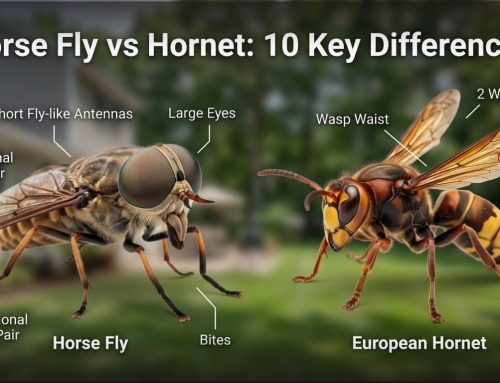
The Quick Identification Rule: If it’s noticeably larger and thicker-bodied with bold coloring patterns, it’s likely a hornet. If it’s smaller and sleek, it’s probably a standard wasp.
Pro Tip for Connecticut Residents: The bald-faced hornet, common in Darien and Westport, is actually not a true hornet but a yellowjacket wasp. Yet it behaves like a hornet and deserves the same respect. Don’t get caught up in the name; focus on size and behavior instead.
BEHAVIOR & AGGRESSION: The Real Risk Factor
Why Aggression Level Matters to Your Safety
Here’s where the wasp vs hornet comparison hub becomes genuinely important for your safety decisions.
Wasp Aggression Levels:
Most wasps are semi-aggressive. They’ll defend their nest if provoked, but they won’t hunt you down. Picture-wing wasps, mud daubers, and paper wasps are generally docile unless you directly threaten their nest.
- Hunting Behavior: Wasps actively hunt for food, including other insects and sometimes even human food at picnics
- Sting Behavior: They only sting when defending their territory—directly threatened
- Provocation Level: You need to be fairly close to the nest or appear to be a direct threat
- Recovery Time: Wasps can sting multiple times (their stinger doesn’t get stuck like honeybees)
Hornet Aggression Levels:
Hornets are significantly more aggressive than most wasps. They actively patrol their territory and will attack insects (and sometimes humans) that enter their airspace—even if you’re just walking past.
- Territorial Behavior: Hornets defend a much larger area around their nest
- Patrol Patterns: They actively fly patrol routes, looking for threats
- Sting Trigger: Less provocation needed—they may sting if you’re within 10-15 feet of the nest
- Multiple Stings: They attack in groups, often delivering multiple stings in rapid succession
- Persistence: Unlike wasps, hornets will chase perceived threats for significant distances
The Dangerous Reality: Here’s what a New Canaan homeowner experienced: She was simply pruning bushes near what she thought was a small paper wasp nest. It was actually a hornet nest. Three hornets attacked, delivering 8 stings total before she could get inside. One sting on the neck caused swelling that required urgent care.
Why the Difference Exists:
Hornets build larger colonies (up to 400-500 insects per nest) compared to wasps (50-100 typically). With more mouths to protect, hornets evolved more aggressive defense mechanisms.
Behavioral Timeline in Connecticut:
- Spring: Wasps and hornets become active; single queens begin building nests
- Summer: Colonies grow rapidly; aggression increases as nests expand
- Late Summer/Early Fall: Peak aggression—colonies are at maximum size, preparing for winter
- October-November: Activity decreases as temperatures drop
NESTING HABITS: Where They Build & What That Means
Understanding Their Nesting Behavior
The wasp vs hornet comparison hub must include nesting habits because this directly affects how to handle removal safely.
Wasp Nesting Patterns:
Most Connecticut wasps build open, umbrella-shaped nests under eaves, roof lines, and window frames:
- Location Preferences: Sheltered areas like soffits, attics, porch ceilings
- Size: Small to medium (roughly the size of a fist to a grapefruit)
- Materials: Paper-like material made from chewed wood fibers mixed with saliva
- Visibility: Completely visible—you can see every cell where larvae develop
- Number of Nests: Solitary wasp species may build individual small nests
- Accessibility: Often within reach, making removal more feasible
Hornet Nesting Patterns:
Most hornets build enclosed, gray, papery nests that look like large footballs or teardrops:
- Location Preferences: High places—tree branches, roof peaks, siding corners, sometimes under eaves
- Size: Large (often 12-24 inches tall, sometimes much bigger)
- Materials: Multi-layered, thick paper covering with a single entrance hole
- Interior Structure: Organized chambers where the colony lives and develops larvae
- Visibility: Mostly hidden inside the layers—you can’t see inside
- Number of Nests: Single queen per nest, but multiple nests possible on the same property
- Accessibility: Often 20+ feet high, making DIY removal dangerous
Special Connecticut Case: Ground-Nesting Hornets
In Wilton, Westport, and other Connecticut towns, yellowjacket wasps (which behave like hornets) create ground nests in:
- Abandoned rodent holes
- Landscape mulch
- Under deck boards
- Inside wall voids
These are particularly dangerous because you might accidentally disturb them while gardening or mowing.
Why Location Matters for Removal:
If a paper wasp nest is on your garage wall, you might handle removal yourself with proper precautions. But a hornet nest 25 feet up in an oak tree requires professional removal. You can learn more about safe hornet nest removal in Connecticut from licensed professionals.
STING DANGERS: Pain, Allergies & When to Worry
Understanding Sting Risk & Severity
This is where the wasp vs hornet comparison hub becomes truly personal—because it affects your family’s health.
Wasp Sting Characteristics:
- Pain Level: Moderate to significant (3-5 on a 1-10 pain scale)
- Swelling: Localized, typically subsides within 6-12 hours
- Reaction Timeline: Immediate sharp pain, moderate swelling
- Allergic Potential: Rare severe allergic reactions (about 1-3% of the population)
- Medical Concern: Usually requires basic first aid only
- Multiple Stings: Possible but less common (usually a single sting incident)
Hornet Sting Characteristics:
- Pain Level: More intense (5-7 on a 1-10 pain scale)
- Swelling: Larger swelling area, lasting 24+ hours
- Venom Potency: Higher venom concentration causes worse reactions
- Allergic Potential: Higher risk of severe allergic reactions
- Medical Concern: Multiple stings (3+) create a significant health risk
- Multiple Stings: Common, as they attack in coordinated groups
Real Numbers from Connecticut Emergency Rooms:
According to data from Connecticut hospitals, hornet stings account for more than 70% of hymenoptera-related ER visits, despite representing a smaller percentage of total incidents. This tells you something important: hornet incidents tend to be more severe.
The Allergy Factor:
If you or your family members have any history of allergies (food, environmental, or insect-related), you have an elevated risk with both wasps and hornets. However, hornets pose a greater overall risk due to:
- Higher venom concentration
- Multiple stings in single incident
- Larger reaction areas
- Greater cardiovascular involvement
Warning Signs You Need Emergency Care:
Seek immediate medical attention if you experience:
- Swelling around the mouth, throat, or eyes
- Difficulty breathing or wheezing
- Rapid or irregular heartbeat
- Dizziness or fainting
- Severe abdominal cramping
- Signs of anaphylaxis (extreme reactions)
First Aid for Stings (At Home):
- Remove the stinger immediately (scrape it off, don’t squeeze)
- Wash the area with soap and water
- Apply an ice pack for 15-20 minutes
- Take over-the-counter antihistamine
- Apply hydrocortisone cream if itching develops
- Avoid scratching to prevent infection
QUICK COMPARISON TABLE: Wasps vs Hornets at a Glance
| Feature | Wasps | Hornets |
| Size | ½ – 1 inch | ¾ – 1.5 inches |
| Aggression | Moderate | Highly Aggressive |
| Sting Pain | 3-5/10 | 5-7/10 |
| Nest Type | Open, umbrella-shaped | Enclosed, football-shaped |
| Nest Location | Low (eaves, soffits) | High (trees, roof peaks) |
| Colony Size | 50-100 insects | 300-500 insects |
| Territorial Range | Small area | Large, 20+ ft radius |
| DIY Removal Risk | Moderate | Very High |
| Professional Help Needed | Sometimes | Usually Yes |
| Ground Nesting | Rare | Common (yellowjackets) |
WHY DIY REMOVAL OFTEN FAILS (And Why It’s Dangerous)
The Reality of Homemade Solutions
You’ve probably seen those videos of people spraying hornet nests with store-bought spray. Sometimes it works in the video. In reality? Here’s what actually happens:
The Problem with Store-Bought Sprays:
- Incomplete Application: The spray kills visible insects but doesn’t penetrate the nest structure
- Escaped Colony: Survivors regroup inside the nest, actually making them MORE aggressive
- Incomplete Elimination: The queen survives, and within days, the colony rebuilds
- Cost Inefficiency: You buy a spray, it fails, then you call professionals anyway (and pay more)
The Danger of DIY Wasp/Hornet Removal:
- Distance Misjudgment: What seems like a safe distance isn’t—hornets can attack from 15+ feet
- Inadequate Protection: Regular clothing doesn’t protect against multiple stings
- Timing Mistakes: Spraying at the wrong time of day (they’re inside the nest midday, outside hunting early morning/evening)
- Incomplete Nests: Removing the visible nest without treating inside or removing the queen means they return
- Hidden Nests: Ground nests or wall cavity nests are impossible to treat properly without professional equipment
Real Case Study – Westport Resident:
Mark thought his paper wasp nest was small enough to handle. He sprayed it at 10 AM. By afternoon, the wasps had built a second nest nearby. He sprayed again. By the next day, there were three nests, and his neighbor got stung. Total cost by then: in failed spray products plus professional removal. Had he called professionals first, the removal would have been guaranteed.
PROFESSIONAL REMOVAL: Why Experts Make the Difference
What Professional Removal Actually Includes
When you hire a licensed pest control professional for wasp or hornet removal, you’re getting:
Professional Assessment:
- Proper identification of species
- Nest location mapping (including hidden nests)
- Risk assessment for your property
- Determination of the best treatment method
Safe Removal Process:
- Appropriate protective equipment rated for stinging insects
- Proper pesticide application (EPA-approved, applied correctly)
- Complete nest removal and disposal
- Treatment timing that minimizes escape/aggression
Prevention & Follow-Up:
- Identification of what attracted them
- Sealing entry points
- Removal of future nesting sites
- Follow-up visits if needed
Guaranteed Results:
- If they return within the warranty period, professionals return at no cost
- They’re insured against injury claims
- They document treatment for your records
For serious infestations or high-risk situations, professional hornet exterminator services for safety and peace of mind are genuinely your best option.
THE DANGER FACTOR: Health Risks Beyond Basic Stings
Specific Health Concerns for Connecticut Residents
Who’s at Higher Risk:
- Children under 10: More prone to panicked reactions; may not recognize danger
- Adults 60+: Higher risk of severe allergic reactions
- Anyone with existing allergies: Cross-reactivity possible
- Pregnant women: Hormonal changes increase allergic reaction risk
- People taking certain medications: Some medications increase allergic response
Beyond the Sting:
- Infection Risk: Scratching sting sites can lead to secondary infection
- Psychological Impact: Fear of going outside (especially for children)
- Property Damage: Some species (like certain wasps) can damage wood structures
- Food Contamination: Wasps attracted to outdoor eating create sanitation concerns
PRO TIPS: What Connecticut Pest Professionals Recommend
Expert Recommendations from the Field
Tip #1: Timing Is Critical
The best time to treat wasp or hornet nests is late evening (just before dusk) or very early morning (before 8 AM) when insects are less active. Spring nests are also easier to eliminate before they grow large. Don’t wait—a small nest in April becomes a serious problem by July.
Tip #2: Location Assessment
Walk your property in early spring and identify potential nesting sites. Look for:
- Eaves and soffits
- Tree branches near the house
- Deck undersides
- Porch corners
- Shed interiors
Removing these potential sites before spring arrivals (late March-April) prevents nesting in the first place.
Tip #3: Elimination of Attractants
Wasps hunt for protein; hornets hunt for almost anything that moves. Reduce attractants by:
- Covering garbage bins immediately after use
- Removing fallen fruit from trees
- Keeping compost bins sealed
- Not leaving pet food outside
- Cleaning up after outdoor meals immediately
Tip #4: Nest Removal Timing
If you find a new paper wasp nest in early spring with just 5-10 cells, professional removal at that stage is cheaper and faster. By mid-summer, with hundreds of cells, removal becomes more complex and expensive.
Tip #5: Second Nest Prevention
After removal, the location sometimes attracts new queens. Ask your professional about the treatment of the removal area to prevent re-infestation.
Tip #6: Recognition of Ground Nests
In Connecticut, areas with sandy or loose soil (common in Darien, New Canaan, and Westport) are particularly conducive to ground-nesting hornets. If you see multiple insects diving into the ground or mulch, don’t investigate—call professionals immediately.
CHECKLIST: Is This a Wasp or Hornet Nest?
Use this checklist to help identify what you’re dealing with:
APPEARANCE CHECKLIST:
Insect is ½ to 1 inch long = Likely Wasp
Insect is ¾ to 1.5+ inches = Likely Hornet
Body is slender with a pinched waist = Wasp
Body is thick and robust = Hornet
Yellow and black stripes = Often Wasp (but could be either)
White/cream and black or reddish-brown = Likely Hornet
NEST CHARACTERISTICS CHECKLIST:
Open, umbrella-shaped nest = Paper Wasp
Fully enclosed, papery football/teardrop = Hornet Nest
Nest is small (fist-to-grapefruit sized) = Wasp
Nest is large (12″+ tall) = Hornet
Nest under eaves/soffits/porch = Wasp
Nest in trees or high on a building = Hornet
Single entrance hole visible = Hornet
Multiple exposed cells = Wasp
BEHAVIOR CHECKLIST:
Insects only react when the nest is directly threatened = Wasp
Insects patrol and attack approaching people = Hornet
Single sting incident = Likely Wasp
Multiple stings from one encounter = Hornet
Insects hunting for food = Wasp or Hornet (both do this)
Insects actively defending a 20+ ft radius = Hornet
SAFETY FIRST: When to Call Professionals IMMEDIATELY
Don’t attempt DIY removal if:
- The nest is 10+ feet high – Risk of falling while treating is too high
- Inside your home (attic, wall cavities) – Professionals have special equipment
- You’re allergic to stings – Risk of anaphylaxis is too serious
- Anyone in the household has severe allergies – Removal must be done perfectly
- The nest is directly above a play area, patio, or entry – Danger zone too risky
- Multiple family members were stung before – Pattern indicates aggressive colony
- You see ground nests – These are particularly aggressive and hard to locate completely
- You’re unsure what species it is – Different species need different approaches
Take action before it spreads. A small problem now becomes a major issue in 4-6 weeks.
WHAT CONNECTICUT HOMEOWNERS ARE SAYING
Real Stories from Local Homeowners
Sarah M., Greenwich, CT: “I found a small paper wasp nest in March on my shed. I thought I could spray it myself. By May, there were three separate nests on my property. Finally called professionals, and they found a fourth nest hidden in my roof soffit. So glad I got professional help before someone got hurt.”
James T., Stamford, CT: “Our family has a tree nut allergy, and we were terrified about hornets. Professional removal made us feel safe again. They identified the nests, explained the risk level, and removed everything safely. The peace of mind was worth every penny.”
Michelle D., Darien, CT: “My 6-year-old got stung by a hornet last summer. We didn’t even know it was there. Immediate professional removal and treatment of the area gave us our backyard back. Now we do early spring inspections every year.”
FAQ: Your Wasp and Hornet Questions Answered
Frequently Asked Questions About Wasps and Hornets in Connecticut
Q1: Are paper wasps less dangerous than hornets?
A: Paper wasps are generally less aggressive, but they can still sting multiple times and cause serious allergic reactions. The key difference is that paper wasps are less likely to attack unprovoked. Hornets actively defend a much larger territory and will attack with less provocation. However, “less aggressive” doesn’t mean “safe to ignore”—professional removal is still recommended if the nest is near living areas.
Q2: Can I use a wasp trap to eliminate a nest?
A: Traps catch individual insects but don’t eliminate the colony. They can actually increase aggression, as captured insects release alarm pheromones that alert the nest. For small paper wasp problems, professional removal is more effective. Traps are useful for monitoring activity, but shouldn’t be your primary solution.
Q3: What time of year is best for removal?
A: Early spring (March-April) is ideal because nests are smallest and colonies are just starting. Summer removal is possible but more complex due to larger nests. Fall is still viable but risky due to heightened aggression as colonies prepare for winter. Never wait until late summer—that’s when incidents spike.
Q4: How can I prevent wasps and hornets from nesting on my property?
A: Learn how to deter hornets from nesting by removing attractants, sealing potential nesting sites, and treating vulnerable areas in early spring. Professional inspection in February-March identifies risk areas before insects arrive.
Q5: Are natural removal methods effective?
A: Some natural methods (like smoke) might temporarily scatter insects, but they don’t eliminate the colony. Smoke irritates the nest, but they’ll rebuild. Essential oils and other “natural” sprays generally don’t work. Professional methods using EPA-approved approaches are most effective.
Q6: What should I do if I get stung?
A: Remove the stinger immediately, wash the area, apply ice, and take an antihistamine. Watch for allergic reactions (swelling beyond the sting area, difficulty breathing, swelling of lips/throat). Seek emergency care if anaphylaxis symptoms appear. For multiple stings, seek medical evaluation even without severe symptoms.
Q7: Are bald-faced hornets actually hornets?
A: No—they’re actually yellowjacket wasps despite the name. However, they behave like true hornets (highly aggressive, build enclosed nests, actively defend territory). Treat them with the same caution as true hornets. If you spot bald-faced “hornets” in Westport or Wilton, consider professional ground hornet treatment in Connecticut.
Q8: How long does professional removal take?
A: Most treatments take 15-45 minutes, depending on nest size and location. Complete elimination usually occurs within 24 hours. Some professionals recommend follow-up visits to ensure no reinfestation.
Additional Resources for Connecticut Homeowners
Understanding the specific dangers in your area:
If you’re concerned about how harmful hornets are to your property and family, learn more about how harmful hornets are and their impact on Connecticut properties.
Comprehensive removal options:
For property owners ready to take action, explore how to rid of hornets safely and effectively with professional guidance.
Specialized treatment for ground-nesting species:
Ground-nesting hornets require different approaches. Learn about ground hornet treatment in Connecticut and why ground nests are particularly dangerous.
After-sting care:
If someone has already been stung, review the treatment of hornet sting guidance and when medical attention is necessary.
Immediate action required:
When you need fast response, immediate hornet control in Connecticut services can dispatch professionals quickly for active threats.
GEOGRAPHIC FOCUS: Why Location Matters in Connecticut
Why Connecticut’s Specific Conditions Create Unique Challenges
Greenwich & Darien: These areas have extensive tree coverage with older oaks and maples that attract nesting hornets. The proximity to water (Long Island Sound) creates humid conditions that hornets prefer.
Stamford & New Canaan: Urban/suburban mix with mixed landscaping creates ideal nesting conditions. More residential proximity to nests increases human encounter risk.
Westport & Wilton: Sandy, loose soil composition makes these areas particularly vulnerable to ground-nesting hornets and yellowjackets. Residential properties with landscaping attract both wasps and hornets.
Across CT: Spring arrivals (March-April) and peak activity (July-September) follow predictable patterns. Early intervention in the spring prevents summer infestations.
FINAL CALL TO ACTION: Protect Your Family Today
The Time to Act Is Now
You’ve learned the critical differences between wasps and hornets. You understand the risks. You know why DIY solutions fail.
Now it’s time to protect your family.
Here’s what to do right now:
Step 1 – Immediate Assessment: Walk your property this week. Look for nests in trees, under eaves, in ground areas, and in sheds. Take photos if you find anything.
Step 2 – Act Before Summer: If you find anything, contact professionals immediately. Spring removal is faster, safer, and more affordable than summer removal when colonies are huge.
Step 3 – Professional Inspection: Even if you don’t see nests, schedule an early-spring inspection. Professionals spot hidden nests (roof soffits, wall cavities, ground areas) that you’ll miss.
Step 4 – Prevention Setup: Ask your professional about prevention measures for your specific property.
Don’t delay. Every week you wait, colonies grow larger. A small problem in March becomes a major problem by June.
Ready to take action? Book a professional inspection today and get peace of mind for your Connecticut home. Our team serves all Connecticut areas, including Greenwich, Stamford, Darien, New Canaan, Wilton, Westport, and beyond.
Your family’s safety is too important to gamble on DIY solutions.
Next Steps: Your Safety Starts Here
Three reasons to contact professionals TODAY:
- Early detection saves money: Spring treatment costs 40-60% less than summer treatment
- Professional safety: Trained technicians use proper equipment and EPA-approved methods
- Guaranteed results: Licensed professionals back their work—if it returns, they return free
Don’t wait for a family member to get stung.
Get professional wasp and hornet removal now. Our Connecticut pest management team responds quickly to protect your home and family.