Identify Wasp Species Simple Guide to Common Types
Introduction
You’re standing in your backyard in Stamford or Greenwich, enjoying a peaceful afternoon, when you notice it—a flying insect circling your patio. Your first instinct? Fear mixed with uncertainty. Is it a wasp? A hornet? Is it dangerous?
The problem is, you can’t tell. And if you can’t identify wasp species correctly, you don’t know whether to panic or relax. You don’t know if that nest under your eave is a threat or a benefit. You don’t know whether to call for professional help or leave it alone.
This uncertainty stops you from enjoying your yard completely. You watch your kids play with one eye on the sky. You avoid certain areas of your property. You spend money on failed DIY removal attempts that don’t work.
The good news? Learning to identify wasp species is actually simple once you know what to look for. In the next few minutes, you’ll understand exactly how to spot the difference between a harmless paper wasp and an aggressive yellow jacket. You’ll know which types are dangerous and which ones you can safely ignore. You’ll feel confident about what’s nesting in your home.
Let’s make your yard feel safe again.
Why Identifying Wasp Species Actually Matters for Your Family
Most people use the term “wasp” for everything flying and stinging. But here’s the reality: not all wasps are created equal. Some species are peaceful. Some are aggressive predators. Some nest on your structures. Some tunnel underground where you can’t see them.
Getting identification wrong has real consequences. You might attempt dangerous DIY removal on a hornet nest that should only be handled by professionals. You might panic about a harmless mud dauber and spend money removing it unnecessarily. You might dismiss an aggressive yellow jacket as just a regular wasp and miss the warning signs of a dangerous infestation growing under your property.
When you can accurately identify wasp species, you:
- Know which insects pose genuine threats to your family’s safety
- Understand which nests need professional removal versus which you can manage
- Avoid unnecessary panic about harmless species
- Take appropriate action before small problems become major infestations
- Protect your children and pets from actual dangers
Let’s start with the basics so you can become confident at identifying what’s actually in your yard.
Body Parts of a Wasp: What to Look For (The Foundation)
Before diving into specific species, you need to understand the basic anatomy of a wasp so you know what features to observe when you’re trying to identify wasp species from a distance.
The Three Body Sections (Most Important Feature)
All wasps have three distinct body sections: head, thorax, and abdomen. The thorax (middle section) and abdomen (back section) are connected by an extremely thin, pinched area called a “waist” or “petiole.”
This thin waist is the single most important identifying feature of a wasp. It’s what distinguishes wasps from bees and hornets. When you’re trying to identify what you’re seeing, look at the waist first. Is it noticeably thin and pinched? That’s a wasp (or a hornet, but we’ll address that distinction next).
The Wing Configuration (How They Sit at Rest)
Different wasp species hold their wings differently when they’re not flying. Paper wasps hold their wings in a roof-like or tent-like position folded down over their back—this creates a peaked appearance. Yellow jackets and hornets hold their wings flat against their body when at rest. This difference is visible from a distance and helps you identify which type you’re observing.
Legs and Their Visibility in Flight
Paper wasps have noticeably long, thin legs that hang down visibly when they’re flying. You can actually see the legs dangling below the body—it’s quite distinctive once you notice it. Yellow jackets and hornets don’t have legs that are as visible in flight. The legs appear to tuck closer to the body.
What Color Are Wasps? Color Patterns for Identifying Species
Color is often the first thing you notice about an insect, so understanding common wasp color patterns helps you narrow down species quickly.
Yellow and Black Striped Wasps (Vivid and Bright)
The most striking color pattern you’ll see is bright yellow combined with bold black stripes. This combination is immediately recognizable and unmistakable once you know what to look for.
Yellow jackets have this vivid yellow-and-black appearance. The yellow is almost fluorescent in brightness—not a dull or muted yellow, but an aggressive, in-your-face bright yellow. The stripes are regular and geometric. This is the species responsible for most late-summer stinging incidents in Connecticut yards.
If you see this color pattern, you’re likely looking at a yellow jacket. These are the wasps that ruin picnics, attack unprovoked, and form ground nests with thousands of individuals. They require professional treatment when nesting near your home.
Reddish-Brown Wasps with Yellow Markings (Earthier Tones)
Paper wasps have a completely different color profile. Their bodies are reddish-brown or dark brown—earthy, warm tones rather than bright. They have yellow or orange markings, but the yellow is far less vivid and prominent than yellow jackets. The overall appearance is warmer and less striking.
This color difference is reliable for distinguishing paper wasps from yellow jackets. Once you train your eye to see this distinction, you’ll immediately recognize paper wasps by their warmer, less vivid coloration.
Black and White Wasp Identification (Distinctive Markings)
Bald-faced hornets (which are actually a true hornet, not a regular wasp) have black bodies with distinctive white or cream-colored markings on the face—hence the name “bald-faced.” They also have white stripes running along the abdomen.
The white facial marking is absolutely distinctive. No other Connecticut wasp or hornet looks like this. If you see a large black insect with a white face, you’re looking at a bald-faced hornet, which is highly aggressive and requires professional removal.
Metallic Black Wasps (Shiny, Reflective)
Mud daubers have a striking metallic black body that gleams and reflects light. Some species have a blue metallic sheen. This is completely different from the matte black of hornets. The metallic appearance is key to identification.
Mud daubers are solitary, non-aggressive wasps that actually benefit your yard by hunting spiders. They’re absolutely harmless to humans.
Types of Wasps: Complete Species Breakdown
Now that you understand the basic features to look for, let’s go through the specific types of wasps you’re likely to encounter in your Connecticut yard.
Paper Wasps (Most Common Social Wasps)
Size: ½ to ¾ inches long
Color: Reddish-brown to dark brown with yellow or orange markings
Distinctive Features: Slender body with very pronounced thin waist; wings held roof-like over back; long legs visible when flying
Nesting Behavior: Build umbrella-shaped, open-comb nests (no covering) under eaves, porch ceilings, pergolas, and window frames. Nests are visible and easy to spot.
Aggression Level: Moderate. Defend nests if directly threatened but peaceful away from nest. Can sting multiple times but rarely do unless provoked.
Threat Assessment: Paper wasps are beneficial insects that hunt pest insects. They’re not aggressive by default. A nest on your home is manageable and often not worth removing unless it’s in a high-traffic area.
What to Do: Observe from distance. If nest is in location where family gathers, professional removal is available. But many paper wasp nests can coexist peacefully on your property without incident.
For detailed paper wasp management strategies, check our comparison of wasp vs hornet guide.
Yellow Jackets (Aggressive Ground Nesters)
Size: ½ to ¾ inches (similar to paper wasps but appears stockier)
Color: Bright yellow and black bold stripes—vivid and fluorescent yellow
Distinctive Features: Robust, stocky body; wings held flat against body; attracted to human food and garbage
Nesting Behavior: Build nests underground in old rodent burrows, holes, or inside building cavities. Nests are hidden—you see entrance holes with insects coming and going.
Aggression Level: Extremely aggressive. Attack readily and in groups. Chase threats. Scavenge human food aggressively. Multiple stings are common.
Threat Assessment: Yellow jackets are the single most dangerous and problematic wasp species in Connecticut. They’re responsible for the vast majority of stinging incidents during late summer and fall.
What to Do: Never attempt DIY removal of ground nests. Yellow jackets are too aggressive and the nests too difficult to access. Professional removal is essential. Keep food and garbage sealed to avoid attracting them.
Mud Daubers (Non-Aggressive Solitary Wasps)
Size: 1 to 1.5 inches long—noticeably longer than paper wasps
Color: Metallic black body (sometimes with blue sheen) often with yellow or red markings
Distinctive Features: Extremely thin, elongated body; metallic, gleaming appearance; solitary (one wasp per nest, not colonies)
Nesting Behavior: Build distinctive organ-pipe-shaped mud nests on walls, under eaves, and on building sides. Nests look like little mud tubes stacked parallel to each other.
Aggression Level: None. Solitary wasps are focused on hunting spiders and completely ignore humans. Won’t sting unless directly grabbed.
Threat Assessment: Zero threat. These are beneficial insects that control spider populations naturally. No removal needed.
What to Do: Leave them alone. The mud nests will be abandoned at season’s end and won’t be reused. Appreciate the spider control they’re providing your yard.
Tarantula Hawks (Large, Non-Threatening Despite Reputation)
Size: 1.5 to 2 inches—largest wasp in Connecticut
Color: Dark blue-black body with orange or red wings—very striking appearance
Distinctive Features: Very large, robust body; brightly colored wings that are visible even in flight; elegant proportions
Nesting Behavior: Solitary wasps that dig burrows in sandy soil hunting ground spiders
Aggression Level: Non-aggressive toward humans despite fearsome appearance. Only interested in hunting spiders.
Threat Assessment: Zero threat to humans. The reputation for having one of the most painful insect stings is real, but you’d have to actually grab one to get stung.
What to Do: Consider yourself lucky if you see one—they’re rare in Connecticut. Observe from distance and appreciate the natural spider control.
What Does a Hornet Look Like? Hornets vs. Wasps Explained
This is where many people get confused. Hornets ARE a type of wasp biologically, but they’re fundamentally different from the “regular” wasps we’ve discussed above.
Key Differences: How to Tell Hornets Apart
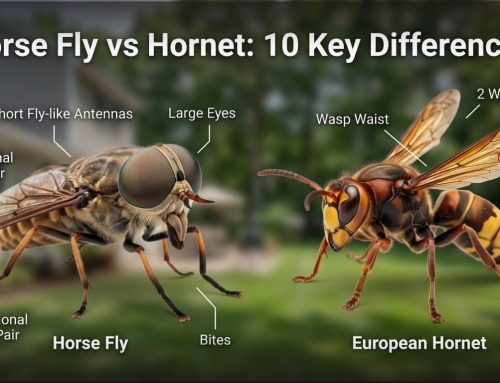
Body Shape: Hornets are noticeably more robust and thick-bodied than paper wasps. They appear substantial and powerful, not delicate and slender. This is the single most reliable distinguishing feature.
Size: Hornets are larger. Bald-faced hornets are ¾ to 1 inch long—noticeably larger than paper wasps. European hornets are even bigger at ¾ to 1.25 inches.
Markings: In Connecticut, all true hornets have light-colored markings on dark bodies. Bald-faced hornets have white faces and white body stripes. European hornets have brown and orange coloring.
Nesting: Hornets build large, enclosed papery nests (completely covered, not open-comb like paper wasps). The nests are often huge—basketball-sized or larger in many cases.
Aggression: Hornets are aggressive and territorial. They defend nests from considerable distance. They’ll pursue threats and attack unprovoked if they perceive danger.
For a comprehensive breakdown, explore our explanation of hornet and wasp differences.
Bald-Faced Hornets (Most Common True Hornet in Connecticut)
Size: ¾ to 1 inch
Appearance: Black body with distinctive white facial markings and white abdominal stripes
Nesting: Large gray, football-shaped enclosed nests in trees, often 40+ feet up
Danger Level: Highly aggressive and dangerous. This is not an insect to approach or attempt DIY removal on.
Action Required: Professional removal is necessary and strongly recommended.
Yellow and Black Striped Wasp: Is It Dangerous?
When you see a yellow and black striped wasp, your first question is probably: Is it dangerous?
The answer depends entirely on which species you’re looking at.
Paper Wasps with Yellow Stripes (Lower Danger)
Some paper wasp species have yellow stripes. These are not dangerous compared to yellow jackets. They’re the same species we discussed earlier—reddish-brown bodies with yellow markings. They’re peace-loving (relatively speaking) and only defend nests when directly threatened.
Yellow Jackets (High Danger)
The bright yellow and black striped insects that are extremely vivid in color—those are yellow jackets. These ARE dangerous and aggressive. They’ll attack you, sting multiple times, swarm in groups, and are attracted to your food and garbage.
How to Tell the Difference:
- Paper wasps: Earthy brown base color with yellow markings (less vivid)
- Yellow jackets: Bright, fluorescent yellow base color with black stripes (very vivid)
The color difference is reliable once you train your eye to see it. Yellow jackets are unmistakably bright. Paper wasps are noticeably warmer and less striking.
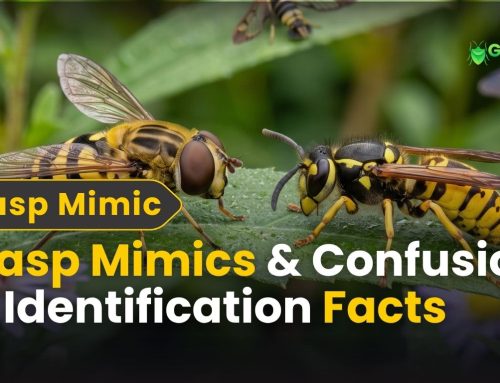
Flying Insects That Look Like Wasps: What Else Could It Be?
Sometimes what you think is a wasp might actually be something else entirely. Here’s how to distinguish true wasps from similar-looking insects.
Wasps vs. Bees (The Critical Difference)
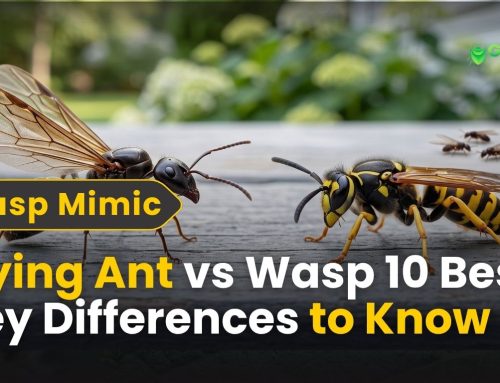
Bees have fuzzy, hairy bodies designed to collect pollen. Wasps have smooth, hairless bodies. This is the single most reliable distinction. Look at the body texture—fuzzy means bee, smooth means wasp.
Bees are generally beneficial and non-aggressive. Wasps are predatory and sometimes aggressive. This distinction matters for how you respond.
Wasps vs. Flies
Some large flies can resemble wasps at first glance. However, flies have only two wings (wasps have four). Flies have larger eyes relative to head size. Flies don’t have the pronounced thin waist that wasps have.
If you’re unsure, look for the thin pinched waist—if present, it’s a wasp or hornet.
Bee Wasp Identification (Honeybees vs. Wasps)
Honeybees are fuzzy and round-bodied. Wasps are smooth and slender. This distinction is usually obvious once you look carefully at body texture.
Honeybees are generally non-aggressive unless defending their hive. Wasps are opportunistic hunters that sometimes attack.
Kinds of Hornets: True Hornets in Connecticut
When we talk about kinds of hornets, we’re referring to true hornet species—insects that are social, aggressive, and have light markings on dark bodies.
Bald-Faced Hornets (Most Common and Dangerous)
These are the large black hornets with white facial markings. They build massive gray football-shaped nests in trees. They’re highly aggressive and will pursue threats. Professional removal is essential.
European Hornets (Increasingly Common)
Brown and orange-colored true hornets that are large and robust. They often nest in building cavities and attic spaces. They’re aggressive defenders and can spread throughout structures if not professionally handled.
Ground Hornets (Underground Nesters)
Ground-nesting hornet colonies can establish in old rodent burrows or cavities. These are extremely dangerous because you might accidentally disturb them while gardening. Professional treatment is mandatory.
For detailed treatment information, see our ground hornet treatment guide.
Are Orange Wasps Dangerous? Identifying Less Common Species
You might see a wasp with orange coloring and wonder: is it dangerous?
Orange wasps can be several species:
- Some paper wasp varieties with orange markings are not particularly dangerous
- Some solitary wasp species with orange coloring are completely non-threatening
- European hornets with orange-brown coloring are dangerous and require professional handling
The key is looking at the complete body—size, body shape, nesting behavior—not just the orange coloring. An orange-colored solitary wasp is harmless. An orange-colored hornet is dangerous.
When in doubt about an unfamiliar species, observe from distance and call professionals for identification if it’s nesting near your home.
Simple Identification Checklist: Identify Wasp Species Quickly
Use this quick checklist whenever you spot a wasp and need to identify it fast.
| Feature | Paper Wasp | Yellow Jacket | Hornet | Mud Dauber |
| Body Size | ½-¾ inch | ½-¾ inch | ¾-1+ inches | 1-1.5 inches |
| Body Shape | Slender, thin waist | Robust, stocky | Very robust, thick | Extremely thin, elongated |
| Color | Brown + yellow | Bright yellow + black | Black + white markings | Metallic black |
| Wing Position | Roof-like | Flat | Flat | Flat |
| Nest Type | Umbrella, open-comb | Underground | Large enclosed | Mud tubes |
| Aggression | Moderate | Very high | Very high | None |
| Threat Level | Low-moderate | High | High | None |
Quick ID Steps:
- Look at body shape first (slender vs. robust)
- Check color pattern (bright yellow vs. brown vs. black)
- Observe nesting location (structure vs. ground vs. tree vs. mud)
- Assess aggression (peaceful vs. attacking)
What You Need to Know About Wasp Identification in Connecticut
Connecticut’s specific climate and geography create ideal conditions for multiple wasp and hornet species throughout the year.
Geographic Hotspots (Greenwich, Stamford, Darien, New Canaan, Wilton, Westport)
Coastal Areas like Greenwich and Stamford have abundant paper wasps on residential structures, yellow jackets attracted to human food sources, and some bald-faced hornets in wooded areas.
Suburban Properties in New Canaan and Wilton support diverse wasp populations with larger yards providing space for different species to coexist.
All Connecticut Areas experience the same core species, though suburban properties might see more hornets in trees while denser residential areas see more yellow jackets around food sources.
Seasonal Identification Timing
Spring (April-May): Queens emerging, small nests building, low activity visible
Early Summer (June-July): Colonies growing rapidly, more insects visible, moderate nesting activity
Late Summer/Fall (August-September): Peak activity, maximum aggression, largest nests, most stinging incidents
Winter (December-March): Dormant, no flying insects visible, old abandoned nests visible in trees
Why DIY Identification Falls Short (And When You Need Professionals)
You might think you can identify wasps yourself and handle any problems that arise. But here’s the reality: DIY approaches often fail because:
Misidentification Leads to Wrong Strategies
You can’t visually inspect a ground nest safely without disturbing it. You can’t get close enough to tree nests for positive identification. You might think something is a harmless wasp when it’s actually an aggressive hornet.
Unsafe Removal Attempts Backfire
Attempting to spray or remove a hornet nest triggers aggressive defense. Multiple stings are common. Sealing a yellow jacket entrance traps the insects inside, prompting them to chew through walls and spread throughout your home.
Incomplete Removal Means the Problem Returns
DIY approaches might kill some insects but leave the colony intact. The insects rebuild and the problem returns worse than before.
When to Call Professionals:
- You can’t identify the species with certainty
- The nest is a hornet nest (any true hornet requires professional handling)
- It’s a ground yellow jacket nest
- The nest is in a difficult location (high tree, inside wall cavity)
- Multiple nests exist on your property
Our hornet exterminator services throughout Connecticut provide expert identification and professional removal. Take action now—contact us for same-day assessment and safe removal planning.
Real Stories: How Identification Prevented Problems
Story 1: The Misidentified Nest (Westport)
“I saw a large nest in my backyard tree and called it a paper wasp nest. My neighbor suggested I spray it myself. When I approached with pesticide, hundreds of insects came out attacking me. I got stung 12 times before getting inside. Looking back at photos, it was obviously a bald-faced hornet nest. Proper identification would have told me to call professionals immediately instead of approaching it.” — Maria T., Westport, CT
Story 2: The Ground Nest Surprise (Greenwich)
“My kids were playing in the yard when they noticed yellow insects coming out of the ground. I recognized the bright yellow coloring as yellow jackets and knew that ground nests require professional treatment. We called immediately before anyone got stung, and the nest was safely removed. Knowing to identify that color pattern saved my kids from a dangerous encounter.” — Robert S., Greenwich, CT
Pro Tips for Safe Wasp Species Identification
Observe from Distance: Use binoculars or camera zoom rather than getting close. 10+ feet away is safe for observation.
Look for the Thin Waist First: This single feature tells you whether you’re dealing with a wasp or hornet. Thin waist = likely wasp or hornet. Thick throughout = likely yellow jacket or true hornet.
Note the Nesting Location: Underground = yellow jacket. Tree = possibly hornet or paper wasp. Eaves = likely paper wasp. These location patterns are reliable clues.
Check for Aggression: Peaceful and ignoring you = paper wasp or solitary wasp. Actively pursuing = yellow jacket or hornet.
Take Photos for Confirmation: If you can’t identify with certainty, photograph from distance and have professionals confirm before attempting any removal.
Frequently Asked Questions About Wasp Species Identification
What’s the simplest way to tell a wasp from a hornet?
Look at body thickness. Wasps (especially paper wasps) are slender with a thin waist. Hornets are robust and thick-bodied throughout. This single feature is the most reliable distinction.
Are all yellow and black striped insects dangerous?
No. Paper wasps might have yellow stripes but are less dangerous than bright yellow yellow jackets. The vivid brightness of the yellow distinguishes aggressive yellow jackets from other species.
Can I identify wasps by sound?
Buzzing sound might indicate size (larger insects buzz deeper), but sound alone is unreliable. Use visual identification first, sound as secondary confirmation.
What should I do if I find a wasp nest on my home?
Observe from distance first. Identify the species. If it’s a harmless species in a location where it won’t cause problems, you might leave it. If it’s a hornet or yellow jacket, or if it’s in a high-traffic area, professional removal is recommended.
How can I tell if a nest is active?
Active nests have visible insect activity—wasps flying in and out, crawling on the surface. Abandoned nests are weathered, have no activity, and might have emergence holes. Never approach close to confirm—observe from distance.
The Bottom Line: Identifying Wasp Species Protects Your Family
Being able to accurately identify wasp species is one of the most practical skills you can develop for protecting your Connecticut home.
You now understand:
- The basic body features that distinguish different wasp types
- Color patterns and what they mean
- The difference between wasps and hornets
- Which species are dangerous and which are harmless
- When professional help is necessary
- How to safely observe and identify from distance
This knowledge eliminates uncertainty. You’ll know whether to panic or relax. You’ll understand whether that nest is a threat or a benefit. You’ll take appropriate action—either leaving harmless species alone or calling professionals for genuine threats.
Your family’s safety and your peace of mind depend on this information.
Don’t Let Uncertainty Stop You from Using Your Yard
If you’ve found a wasp or hornet nest on your property and need expert identification and safe removal, our team is here to help. We’ve identified and safely removed hundreds of nests throughout Connecticut—from Greenwich to Westport and everywhere in between.
Contact us today for professional identification and removal planning. We provide same-day assessment, clear communication about what we’ve found, professional removal using proper methods, and prevention strategies to reduce future problems.
Stop wondering. Stop avoiding parts of your yard. Get professional confirmation and solutions.
Take action now—your family deserves a safe, wasp-free yard.