Wasp vs Hornet vs Yellow Jacket: 9 Dangerous Differences
Introduction
You’re hosting a summer barbecue in your Westport, Connecticut backyard when you notice something’s wrong.
Three different stinging insects are circling your guests. One is large and slow. One is aggressively diving at your soda can. One is hovering near the trash.
Which one should you worry about? Are they all the same insect? Can they all sting?
This is a question we hear constantly from homeowners across Greenwich, Stamford, Darien, New Canaan, and Wilton, CT. And it’s critical because wasp vs hornet vs yellow jacket isn’t just an identification question it’s a safety question.
The truth is: these three insects are NOT the same. They look different, behave differently, sting differently, and pose different levels of danger to your family.
Understanding the differences could mean the difference between a manageable situation and a medical emergency.
In this guide, you’ll learn the 9 critical differences between wasps, hornets, and yellow jackets. You’ll know exactly which one is buzzing around your yard. And you’ll understand precisely what to do about it.
Let’s identify the threat to your home.
Understanding the Stinging Insect Family Tree
Before we compare these three, let’s clarify the family structure.
Wasps, hornets, and yellow jackets all belong to the order Hymenoptera and family Vespidae. Think of it like this:
- Vespidae family = All stinging insects (the broad category)
- Wasps = General category of solitary and colonial hunters
- Yellow Jackets = A specific, aggressive wasp species
- Paper wasps = Another wasp species
- Hornets = A specific type of wasp (large, aggressive species)
- Wasps = General category of solitary and colonial hunters
So technically, hornets are wasps. And yellow jackets are wasps. But when people say “wasp,” they usually mean non-hornet, non-yellow-jacket species.
This is why wasp vs hornet vs yellow jacket classification matters. Each has distinct behavior and danger levels.
The 9 Dangerous Differences: Complete Breakdown
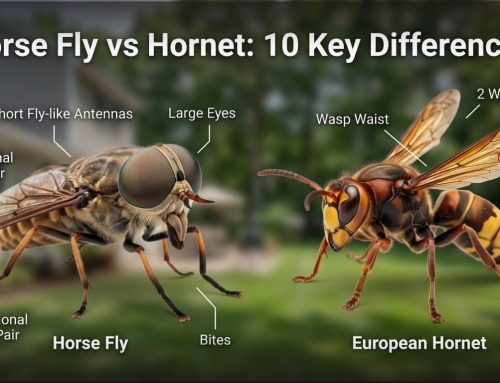
Difference 1: Size and Physical Appearance
Wasps (general):
- Size: 0.5–1.5 inches
- Slender, elongated bodies
- Smooth, shiny appearance
- Various colors (red, blue, metallic, brown)
- Less intimidating appearance
Yellow Jackets:
- Size: 0.5–0.75 inches
- Stockier than wasps
- Bold yellow and black stripes
- Thick, wasp-like appearance
- Smaller than true hornets
Hornets:
- Size: 0.5–2.5 inches (much larger)
- Robust, bulky bodies
- Bold color patterns (bald-faced have white markings; European have brown/yellow)
- More intimidating appearance
- Noticeably larger than yellow jackets
Why it matters: Larger insects carry more venom. If you’re seeing something the size of a quarter or larger with bold markings, you’re likely dealing with a hornet—the most dangerous of the three.
Difference 2: Nest Construction and Location
This is where wasp vs hornet vs yellow jacket becomes immediately practical.
Wasp nests:
- Paper-like, umbrella-shaped or open-comb design
- 3–8 inches in diameter
- Visible individual cells (open design)
- Built under eaves, gutters, tree branches, porch roofs
- Generally protected but accessible
Yellow Jacket nests:
- Enclosed, papery gray color
- Wasp-sized (4–12 inches)
- Often built in ground holes, wall cavities, or attic spaces
- Hard to locate because many are underground
- Can have multiple entrance holes
Hornet nests:
- Large, enclosed, gray or tan papery structure
- Football or teardrop shaped
- 12–36 inches or MUCH larger
- Built high (trees, building eaves, utility poles)
- Highly visible and imposing
- Single entrance hole (rarely multiple)
Practical application: If you see a large (12″+ inches), enclosed, gray nest high in a tree, that’s a hornet nest. If you see smaller open-comb nests under eaves, that’s likely wasps. If you see nests near ground level or underground, that’s probably yellow jackets.
Learn more about nest identification and differences between wasp and hornet nests.
Difference 3: Aggression and Territorial Behavior
This is the most critical difference for safety.
Wasp aggression:
- Generally non-aggressive
- Attack only when nest is threatened or food is disturbed
- Single defensive sting common
- Unlikely to pursue or swarm
- More interested in hunting insects than confronting humans
Yellow Jacket aggression:
- Highly aggressive
- Attack when food is threatened (attracted to human food)
- Likely to sting multiple times
- Will pursue if disturbed
- More aggressive in late summer (scavenging season)
- Competitive with other insects and humans
Hornet aggression:
- Extremely aggressive and territorial
- Attack with minimal provocation
- Patrol territory aggressively
- Coordinate group defense (swarming)
- Will chase intruders 50+ feet from nest
- Most likely to sting unprovoked
The danger ranking: Hornets are most aggressive. Yellow jackets are very aggressive. Regular wasps are least aggressive.
If you’re being aggressively pursued, you’re likely dealing with a hornet or yellow jacket. Wasps typically don’t behave this way.
Difference 4: Diet and Attraction to Human Areas
Wasp diet:
- Primarily carnivorous (hunt insects)
- Less interested in human food
- Active hunters
- Less likely to invade picnics or garbage areas
- More predictable around specific hunting grounds
Yellow Jacket diet:
- Hunters (especially early season)
- Scavengers in late summer and fall
- HIGHLY attracted to human food (sugary drinks, meat, garbage)
- Most likely to crash your picnic
- Most likely to get into garbage cans
- Most problematic around food storage areas
Hornet diet:
- Primarily hunters (seeking insects)
- Less interested in human food than yellow jackets
- Forage in larger territories
- Less likely to attack food sources
- More likely to encounter while hunting near your property
Why this matters: If you’re being harassed at a picnic or around garbage, you probably have yellow jackets. They’re scavenger-focused and attracted to human food. Hornets are less food-motivated but more aggressive overall. Regular wasps are least interested in your food.
Difference 5: Sting Capability and Venom Composition
Wasp stings:
- Can sting multiple times (don’t die after stinging)
- Deliver moderate venom (2 micrograms typical)
- Cause localized pain and swelling (1–3 inches)
- Sharp pain lasting 5–10 minutes
- Swelling subsides within 24 hours
- Allergic reactions rare in non-sensitized individuals
Yellow Jacket stings:
- Can sting multiple times
- Deliver moderate venom (similar to wasps)
- Cause localized pain and moderate swelling (2–4 inches)
- Slightly more painful than wasp stings
- Swelling can persist 24–48 hours
- More likely to cause allergic reactions due to aggression (more stings)
- Pain is sharp and immediate
Hornet stings:
- Can sting multiple times (specialized barbed stinger)
- Deliver HIGH venom volume (5–10+ times more than wasps)
- Cause extreme pain (“white-hot injection” descriptions)
- Severe swelling (4–8 inches or more)
- Pain persists 24–48 hours
- Swelling can interfere with movement or vision
- More likely to cause systemic allergic reactions
- Multiple stings can trigger anaphylaxis
The hornet sting vs wasp sting comparison is dramatic. One hornet sting equals the pain of multiple wasp stings. This is why hornet attacks are medical emergencies.
Difference 6: Colony Size and Social Structure
Wasp colonies:
- 50–200 insects typical
- Organized but less coordinated than hornets
- Individual wasps hunt somewhat independently
- Defensive but not swarm-prone
- Smaller nests = smaller defensive force
Yellow Jacket colonies:
- 1,000–4,000+ insects (surprisingly large)
- Highly organized and coordinated
- Aggressive collective defense
- Swarm readily when threatened
- Large numbers make them dangerous despite smaller individual size
- Fall/winter colonies can be massive
Hornet colonies:
- 300–700+ insects
- Highly organized
- Coordinated group defense
- Rapid swarm response
- Entire colony mobilizes when nest is threatened
- Individual hornets are more dangerous due to venom, but collective threat is still massive
Why this matters: A yellow jacket colony can be surprisingly large (up to 4,000), making them a serious threat despite smaller size. Hornet colonies are smaller but consist of more powerful individuals. Wasp colonies are smallest and least coordinated.
Difference 7: Season and Activity Patterns
Wasp activity:
- Active spring through fall
- Peak activity summer to early fall
- More docile in spring
- Less problematic in hot peak summer
- Predictable seasonal patterns
Yellow Jacket activity:
- Active spring through fall
- Problem peaks in late summer/fall (scavenging season)
- MORE aggressive September–October
- Increasingly desperate for food as season ends
- Most dangerous in fall
- More likely to enter homes seeking shelter
Hornet activity:
- Active May–October (6-month season)
- Peak aggression July–September
- Highly active during warm spells
- Less active in cool weather
- More dangerous during summer heat
Practical knowledge: If you’re having problems in late August or September, yellow jackets are likely the culprit. If you’re having issues throughout summer, hornets or regular wasps are more probable.
Difference 8: Response to Threats
Wasp response:
- Flee if possible
- Sting only if directly grabbed or nest touched
- Don’t pursue aggressively
- One or two stings typical in defense
- Relatively predictable threat response
Yellow Jacket response:
- Aggressive pursuit
- Sting readily
- Multiple stings common
- Persistent attackers
- Will follow humans 50+ feet
- Defensive and offensive behavior combined
Hornet response:
- EXTREMELY aggressive pursuit
- Chase intruders 50–100+ feet
- Swarm attacks common
- Coordinate group defense
- 15+ stings in severe cases
- Most dangerous response pattern
- Attack with minimal provocation
The key difference: Regular wasps are defensive (protect nest). Yellow jackets are aggressive (defend territory and food). Hornets are extremely aggressive (defend territory and actively patrol).
Difference 9: Geographic and Climate Considerations for Connecticut
Connecticut has specific stinging insect challenges.
Wasp presence in CT:
- Present but less problematic
- Various species in moderate numbers
- Generally manageable
- Not a primary pest concern
Yellow Jacket presence in CT:
- HIGHLY problematic in Connecticut
- Two aggressive species established
- Ground nesting common in CT
- Serious late-summer/fall issue
- Primary pest complaint in many areas
- Attracted to CT suburbs and human food sources
Hornet presence in CT:
- Bald-faced hornets established statewide
- European hornets increasingly problematic
- Both species more aggressive than northern wasps
- Growing population in Connecticut
- Serious safety concern
- More problematic than yellow jackets in terms of danger level
Connecticut reality: If you’re a CT homeowner, yellow jackets are your most frequent problem, but hornets pose the greatest danger. Regular wasps are generally manageable.
Side-by-Side Comparison Table
Here’s how the three stack up:
| Feature | Wasps | Yellow Jackets | Hornets |
| Size | 0.5–1.5″ | 0.5–0.75″ | 0.5–2.5″ |
| Color | Varies | Bold yellow/black | White/black or brown/yellow |
| Nest Type | Open-comb | Enclosed or ground | Large enclosed |
| Nest Location | Eaves, branches | Ground, walls | Trees, eaves, high |
| Aggression | Low-moderate | Very high | Extremely high |
| Venom Volume | Low | Moderate | Very high |
| Sting Pain | Moderate | Moderate-high | Extreme |
| Colony Size | 50–200 | 1,000–4,000 | 300–700 |
| Attack Behavior | Defensive | Aggressive/pursuing | Extremely aggressive/swarming |
| Season Peak | Summer | Late summer/fall | Mid-summer |
| CT Problem Level | Low | Very high | Extremely high |
| Danger Rating | 3/10 | 6/10 | 9/10 |
Identification Guide: What You’re Actually Looking At
How to Identify a Wasp
- Slender body (thin waist)
- Size: under 1.5 inches
- Color varies (red, blue, brown, metallic)
- Open-comb nest visible under eaves
- Not aggressively pursuing you
- Less interested in your food
Action: Generally safe to leave alone or avoid.
How to Identify a Yellow Jacket
- Thick, stocky body
- Bold yellow and black stripes
- Size: 0.5–0.75 inches
- Enclosed nest or ground hole with single entrance
- Aggressively pursuing/diving at food
- Very interested in your garbage and drinks
- Buzzing around picnic areas
Action: Remove food sources, seal garbage, avoid nests. Professional removal if nest is close to home.
How to Identify a Hornet
- Large, robust body (1–2.5 inches)
- Bold color patterns (white/black or brown/yellow)
- Large, enclosed, papery nest (12″+ inches)
- Nest hanging from tree branches or high eaves
- Aggressively patrolling even far from nest
- WILL attack with minimal provocation
- Large, imposing appearance
Action: DO NOT attempt removal. Call professional immediately. Keep family away.
Which Is the Real Threat?
Danger ranking (for Connecticut homeowners):
- Hornets – Most dangerous individually, extremely aggressive, painful stings, most likely to cause serious injury
- Yellow Jackets – Most frequent problem, very aggressive, large colonies, problematic in late season
- Wasps – Least dangerous, generally non-threatening, manageable with caution
But here’s the nuance: Yellow jackets are your most common problem, but hornets are your most serious threat.
You’ll probably encounter yellow jackets more often. But if you encounter a hornet nest, the danger level is substantially higher.
Safety Recommendations by Insect Type
If You Encounter Wasps
Move away slowly
Don’t swat at them
Close doors/windows
Avoid nest area
Generally safe to coexist
Professional removal optional
If You Encounter Yellow Jackets
Don’t expose food outdoors
Seal garbage cans
Don’t approach nests
Avoid confrontation
Professional removal recommended if nest is near activity areas
Be especially cautious late summer/fall
If You Encounter Hornets
DO NOT attempt DIY removal
Keep people and pets away
Professional removal REQUIRED
Don’t approach or disturb
Expect response from entire colony if threatened
Call professionals immediately
The key rule: Hornet encounters require professional help. Yellow jacket encounters often do. Wasp encounters usually don’t.
Professional Removal: When You Need Help
Signs You Need Professional Removal
- Large, enclosed nest on your property
- Nest near play areas or frequent human activity
- Multiple nests on your property
- Ground nests (especially yellow jackets)
- Aggressive insects despite distance
- Anyone in household has insect allergies
- Children or elderly present
What Professional Removal Includes
Identification of insect species
Danger assessment
Safe removal technique
Complete colony elimination
Preventive treatment
Follow-up monitoring
Professional hornet and stinging insect removal services are available throughout Connecticut for homeowners in Greenwich, Stamford, Darien, New Canaan, Wilton, and Westport.
Prevention Strategies for All Three Species
Reduce Attractants
- Keep garbage sealed and in shaded areas
- Don’t leave pet food outside
- Clean up fallen fruit from trees
- Keep compost sealed
- Don’t leave drinks unattended
Eliminate Nesting Sites
- Trim tree branches near home
- Seal gaps in siding and soffit
- Remove dead wood
- Clean gutters regularly
- Inspect property monthly (March–October)
Early Detection Saves Lives
- Walk property in spring and early summer
- Look for small nests (golf-ball sized)
- Check eaves, branches, and high areas
- Document nest locations
- Call professionals when small nests are found
Early detection allows easier removal before colonies grow large.
Real Connecticut Cases: Why This Matters
Case 1: The Backyard Discovery
A family in New Canaan, CT found a large hornet nest in their oak tree (35+ inches). They called professionals immediately. Professional removal happened within 24 hours. Family stayed safe. Nest was gone before late summer peak season.
Lesson: Early detection and professional response prevents emergencies.
Case 2: The Yellow Jacket Invasion
A business in Stamford, CT had yellow jackets infesting their dumpster area in September. Multiple employees were stung. They tried DIY removal and failed multiple times. Professional removal finally succeeded after employees got hurt.
Lesson: Yellow jackets in late summer are serious. Professional help is more cost-effective than injuries.
Case 3: The Wasp Coexistence
A homeowner in Westport, CT found a small wasp nest under a deck eave. They monitored it, kept a distance, and never had problems. The nest disappeared naturally in fall. No removal necessary.
Lesson: Not every nest requires immediate removal. Wasp nests can often be managed with distance and caution.
Customer Testimonials
“We had a huge hornet nest in our tree. Within an hour of calling, the team came and assessed it. Within 24 hours, it was gone safely. Professional, efficient, and our family felt safe again.” James M., Greenwich, CT
“Late summer, we were getting attacked by yellow jackets constantly. DIY failed twice. Called professionals. Problem solved. Worth every penny.” Sandra L., Darien, CT
“We found a small wasp nest under our porch. The team said we could monitor it safely or remove it. We chose to monitor, and it left naturally. Great advice.” Robert T., New Canaan, CT
FAQ: Wasp vs Hornet vs Yellow Jacket
Q1: Are yellow jackets wasps or hornets?
Yellow jackets are technically wasps, but they’re a specific, highly aggressive wasp species. They’re NOT hornets. Understanding this distinction helps with safety decisions.
Q2: Which is more dangerous a hornet or yellow jacket?
Hornets are more dangerous individually due to higher venom and more intense aggression. But yellow jackets are more problematic due to larger colonies and attraction to human areas.
Q3: What’s the difference between wasp and hornet nests?
Wasp nests are small, open-comb designs visible under eaves. Hornet nests are large, enclosed, papery structures hanging from trees. This visual difference helps identification.
Q4: Were wasps aggressive?
Regular wasps are generally non-aggressive. They attack only when threatened. Hornets and yellow jackets are much more aggressive.
Q5: When should I call a professional?
Call professionals for large nests, hornet nests, multiple nests, or if anyone in your household has insect allergies. For small wasp nests, you can monitor safely.
Q6: Can I remove a hornet nest myself?
No. Hornet removal is dangerous and should always be handled by professionals. DIY removal consistently leads to multiple stings.
Q7: Which is worse, a hornet or a yellow jacket?
Hornets are individually more dangerous (larger, more venomous, more aggressive). Yellow jackets are more problematic overall (larger colonies, attracted to human areas, and very aggressive).
Take Action: Know What You Have
You now understand wasp vs hornet vs yellow jacket. You know the differences. You know the dangers.
The critical next step is identification.
Do you have a stinging insect nest on your property? Here’s what to do:
- Identify the insect – Use this guide to determine which species
- Assess the risk – Large/enclosed/hornet = serious threat
- Take action – Leave alone (wasps), monitor (small nests), or call professionals (hornets)
- Protect your family – Keep people away until resolved
If you have any doubt, call a professional. Better safe than stung.
Schedule a professional inspection for stinging insects on your Connecticut property. We serve Greenwich, Stamford, Darien, New Canaan, Wilton, and Westport, CT.
Learn More: Comprehensive Resources
For detailed information on Connecticut stinging insect management:
- Wasp vs Hornet in CT: Comparison Hub – Complete species guide
- Wasps vs Hornets CT: Differences & Dangers – Safety information
- Are Hornets Wasps? Differences Explained – Biological perspective
- Which Is Worse: Hornet or Wasp? – Danger comparison
- How Harmful Hornets Are – Health risks
- Rid of Hornets – Removal strategies
- Eliminate Ground Hornets – Ground nesting species
- Treatment of Hornet Sting – First aid
- Immediate Hornet Control in CT – Emergency services
- Hornet Nest Removal in CT – Professional removal
- Ground Hornet Treatment in CT – Ground treatment
- How to Deter Hornets from Nesting 2025 – Prevention
For scientific information, visit the Connecticut Department of Energy & Environmental Protection or University of Connecticut Integrated Pest Management.
Final Word
Wasp vs hornet vs yellow jacket is more than academic. It’s about understanding the threat to your family.
- Wasps are manageable with caution
- Yellow jackets require attention and prevention
- Hornets require professional action
Now that you understand the differences, you can make informed decisions about your property’s safety.
If you’ve identified hornets or large yellow jacket nests on your Connecticut property, don’t delay.
Contact Green Pest Management CT today for professional inspection and removal. Your family’s safety is too important to risk.
We serve Greenwich, Stamford, Darien, New Canaan, Wilton, and Westport, CT with professional stinging insect identification and removal.