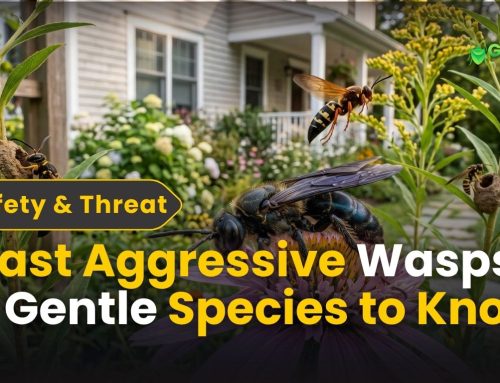
Which Is Worse a Hornet or Wasp? 7 Shocking Differences
Introduction
You’re in your Westport, Connecticut backyard on a beautiful summer day when you notice a large insect circling your family. Your stomach drops.
Is it a hornet? A wasp? And more importantly, which is worse: a hornet or a wasp?
This is the question that keeps homeowners up at night across Greenwich, Stamford, Darien, New Canaan, and Wilton, CT. Because the answer determines whether you can relax or whether you need to call in professional help immediately.
Here’s what most people don’t realize: not all stinging insects are created equal. The difference between a hornet and a wasp isn’t just biological. It’s the difference between a manageable annoyance and a genuine safety threat to your family.
In this guide, I’ll break down exactly which is worse: a hornet or a wasp, why hornets are significantly more dangerous, and what you need to do to protect your home. By the time you finish reading, you’ll understand why pest control professionals prioritize hornet removal and why you should too.
Which Is Worse: A Hornet or a wasp? The Direct Answer
Let me be clear: Hornets are significantly worse than wasps.
This isn’t opinion. It’s based on documented behavior, physiology, and historical incident data.
Wasps are generally:
- Non-confrontational unless directly threatened
- Solitary hunters, despite living in colonies
- Capable of delivering painful stings, but rarely does unless provoked
- Less likely to swarm or follow a person
Hornets, conversely, are notably:
- Highly territorial and aggressive by default
- Coordinated defenders of their massive colonies
- Quick to sting with minimal provocation
- Likely to pursue and attack intruders
- Capable of delivering multiple, intensely painful stings
The practical difference: A wasp might sting you once if you threaten its nest. A hornet swarm might sting you 15+ times before you escape.
That’s why are hornets more aggressive than wasps? is one of the most critical questions for homeowners.
The 7 Shocking Differences: Why Hornets Are Worse
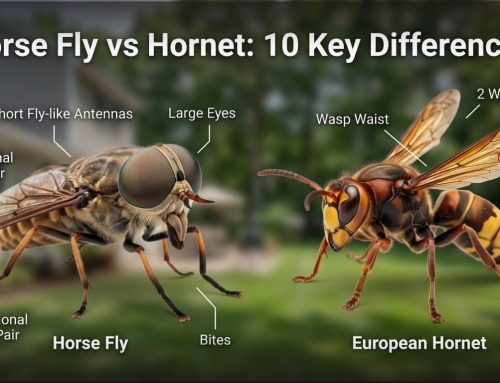
1. Size: Hornets Deliver More Venom
Wasp size: 0.5–1.5 inches
Hornet size: 0.5–2.5 inches (some species larger)
Size matters because larger insects produce more venom. When a hornet stings, it injects significantly more venom than a wasp.
A single wasp sting contains approximately 2 micrograms of venom. A hornet sting can contain 5–10 times that amount depending on the species.
Why this matters: More venom = more pain, more swelling, greater allergic reaction risk, and longer recovery time.
If you spot something the size of a nickel buzzing near your face, it’s likely a wasp. If it’s the size of a quarter or larger, it’s probably a hornet—and you should be more cautious.
2. Aggression: The Most Shocking Difference
Here’s where which is worse, a hornet or a wasp becomes crystal clear.
Wasp aggression:
- Attack when threatened or when food is disturbed
- Retreat if they outnumber is poor
- Generally ignore humans if humans ignore them
- Occasional defensive sting, not coordinated attacks
Hornet aggression:
- Actively patrol and defend territory
- Attack perceived threats even when the nest isn’t directly threatened
- Coordinate group defense (swarming behavior)
- Chase intruders for 50+ feet from the nest
- Sting repeatedly without hesitation
- More likely to sting unprovoked during peak season (July–August)
Real-world example: A Connecticut homeowner accidentally bumped a hornet nest while trimming bushes. Within seconds, 12+ hornets attacked. He received 18 stings before escaping. A wasp in the same situation would have driven him away with one or two defensive stings.
This behavioral difference is why professional removal is urgent for hornets but optional for wasps.
3. Hornet Sting vs Wasp Sting: Pain and Duration
The hornet sting vs wasp sting comparison reveals why so many people fear hornets.
Wasp sting characteristics:
- Sharp, burning pain (5–10 minutes of peak pain)
- Localized swelling (1–3 inches)
- Itching and redness subside within 24 hours
- Rarely requires medical attention
- Manageable with ice and an antihistamine
Hornet sting characteristics:
- Excruciating pain (described as “white-hot injection”)
- Severe, spreading swelling (3–6 inches or more)
- Pain persists 24–48 hours
- Swelling can interfere with movement or vision
- Higher likelihood of systemic allergic reaction
- Frequently requires medical attention
- Multiple stings can trigger anaphylaxis
Researchers rate hornet stings among the most painful insect stings in North America. Some species rival bee stings in pain intensity—but hornets are far more aggressive.
If you’ve been stung and the pain is extreme and prolonged, you likely encountered a hornet. That’s important information for understanding the threat on your property.
4. Nesting Behavior: Territory and Protection
The differences in difference between wasp and hornet nest construction reveal why one is more dangerous.
Wasp nests:
- Papery, open-comb designs
- 3–8 inches in diameter
- Built in protected locations (eaves, gutters, branches)
- Colonies of 50–200 insects
- Easily visible and avoidable
- Less territorial about nest protection
Hornet nests:
- Large, enclosed, football-shaped structures
- 12–36+ inches in diameter
- Built high and prominently (trees, eaves, utility poles)
- Colonies of 300–700+ insects
- Defended aggressively and relentlessly
- Highly territorial—will attack anything near the nest
The danger implication: A larger colony with more aggressive defenders means a higher risk. A hornet nest isn’t just an inconvenience—it’s an active threat.
In Connecticut, bald-faced hornets and European hornets build massive nests that are visible from the street. If you see a large, enclosed gray nest on your property in Greenwich, Stamford, or Darien, CT, you have a genuine safety issue.
5. Behavior: Hunting Style and Provocation
Wasps are hunters that focus on:
- Catching insects to feed larvae
- Scavenging dead meat
- Opportunistic feeding on human food (sugar, meat)
- Generally solitary foraging despite colonial living
- Predictable behavior—they want to eat, not fight
Hornets hunt differently:
- Target other wasps and insects aggressively
- Hunt in coordinated groups
- Defend foraging territory actively
- More likely to encounter humans while hunting
- Aggressive hunting style means they’re primed for combat
- Territorial while foraging, not just at nest
This behavioral difference explains why you’re more likely to be attacked by a hornet while simply existing in your yard.
6. Colony Size and Organization: Strength in Numbers
Wasp colonies: 50–200 insects
Hornet colonies: 300–700+ insects
Larger colonies = larger defensive forces. When you’re near a hornet nest, you’re not risking one sting. You’re risking a coordinated attack from dozens of insects.
This is critical for understanding whether hornets are more aggressive than wasps. It’s not just individual aggression—it’s a collective response.
A hornet nest with 500+ occupants is essentially a tiny army. If you disturb it, the entire force mobilizes.
7. Danger Level: Which Is Truly Worse?
Now, the definitive answer: Which is worse: a hornet or a wasp?
Wasp danger rating: 3/10
- Generally non-threatening to humans
- Attack only when directly threatened
- Painful but manageable sting
- Rare allergic reactions in non-sensitive people
- Can be deterred with simple precautions
- DIY removal possible for those comfortable with risk
Hornet danger rating: 8/10
- Highly aggressive and territorial
- Attack with minimal provocation
- Extremely painful, longer-lasting stings
- More likely to cause serious allergic reactions
- Swarming behavior can cause serious injury
- Professional removal strongly recommended
- Multiple stings can be life-threatening
The bottom line: A hornet is substantially worse. If you’re asking this question because you found one on your property, professional removal is the right choice.
Wasp vs Hornet vs Yellow Jacket: The Complete Picture
Many homeowners confuse these three insects. Here’s how they compare:
| Feature | Wasp | Yellow Jacket | Hornet |
| Size | 0.5–1.5″ | 0.5–0.75″ | 0.5–2.5″ |
| Color Pattern | Varies; less bold | Bold yellow/black | White/black or brown/yellow |
| Nest Type | Open or mud tubes | Enclosed or ground | Large enclosed |
| Aggression | Low-moderate | Very high | Extremely high |
| Food Focus | Hunters; insects | Scavengers; sugary foods | Hunters; insects |
| Sting Pain | Moderate | Moderate-high | Extremely high |
| Likelihood to Sting | If threatened | If threatened | Minimal threat needed |
Yellow jackets are the most problematic wasps because they’re aggressive like hornets but appear smaller. They’re attracted to human food and garbage, making them common nuisances.
But even aggressive yellow jackets are generally less dangerous than hornets due to smaller venom loads and less coordinated attacks.
Health Risks: Why Hornet Stings Are Serious
Understanding the hornet sting vs wasp sting health impact is essential for safety.
Systemic Reactions and Allergies
Wasp sting allergic reactions:
- Rare in non-sensitized individuals
- Usually localized (swelling at the sting site only)
- Severe reactions possible but uncommon
Hornet sting allergic reactions:
- More common due to higher venom volume
- Can trigger full-body reactions
- Anaphylaxis risk is real
- Multiple stings exponentially increase risk
- People with bee allergies are at the highest risk
Multiple Stings
A single hornet sting is unpleasant. Five hornet stings are serious. Twenty hornet stings can be life-threatening.
Wasps rarely deliver multiple stings. Hornets regularly do, especially in swarms.
Vulnerable Populations
Children, elderly people, and those with allergies are at the highest risk from hornet sting incidents. These groups can experience severe reactions to a single or few stings.
If anyone in your household has bee or wasp allergies, hornet removal becomes medically urgent. Don’t wait.
Real-World Cases: Why Hornets Matter
Case Study 1: The Hidden Nest
A family in New Canaan, CT, discovered a hornet nest in their attic soffit. It had been there for 6 weeks without anyone knowing.
When the father went to trim that section of the house, he accidentally bumped the nest. Within seconds, hornets poured out.
He received 12 stings on his face and neck alone. His face swelled so severely that he couldn’t see out of one eye. He required emergency room treatment and steroid injections to manage the reaction.
Lesson: Hidden nests are common. Regular inspections save lives.
Case Study 2: The Backyard Encounter
A child playing in a Wilton, CT yard ran near a ground hornet nest. The child received 8 stings before an adult could intervene.
The child’s arm swelled severely, and she experienced difficulty breathing—indicating an allergic reaction developing. She required emergency transport and epinephrine treatment.
Lesson: Children are particularly vulnerable. Nest elimination is a parental responsibility.
Case Study 3: The Stubborn DIY Attempt
A homeowner in Stamford, CT, found a small hornet nest and tried DIY removal with store-bought wasp spray.
The spray temporarily slowed the hornets but didn’t eliminate the colony. Enraged, the remaining hornets attacked more aggressively. The homeowner called for professional help after sustaining 9 stings.
Professional removal (which required nighttime treatment and professional-grade products) succeeded where DIY failed.
Lesson: DIY hornet removal consistently fails. Professional help is worth every penny.
Behavioral Differences: Understanding Aggression
Why Are Hornets So Aggressive?
Evolution. Hornets are aggressive because aggression works. Colonies that defend territory vigorously survive. Passive colonies don’t.
Hornets don’t sting because they’re “mean.” They sting because:
- Territorial protection – Nest defense is survival
- Resource competition – Large colonies need large food territories
- Pheromone signaling – Alarm pheromones recruit more defenders
- Genetic programming – Aggression is hardwired
Understanding this doesn’t make them less dangerous. It just explains why they’re so consistently aggressive.
Predictability: When Attacks Happen
Wasp attacks are predictable:
- Only the near-threatened nest
- Only during food competition
- Generally avoidable with simple precautions
Hornet attacks are less predictable:
- Can happen near nest (even 50+ feet away)
- Can happen during foraging
- Less avoidable even with precautions
- More likely during peak season (July–August)
If you live near a hornet nest in Darien, CT, or elsewhere, you can’t simply “stay away.” Your property IS their territory.
Recognition Guide: Identify the Threat
Knowing which is worse: a hornet or a wasp is one thing. Identifying which one is on your property is critical.
How to Identify a Hornet Nest
Large, papery, enclosed structure (12–36″+ inches)
Gray or tan color (not white)
Football or teardrop shape
Single entrance/exit hole
Attached to tree branches, building eaves, utility poles
High placement (often 15+ feet)
How to Identify a Wasp Nest
Smaller, open-comb structure (3–8 inches)
Umbrella or inverted teacup shape
Visible individual cells
Located under eaves, gutters, and branches
Lower placement (often accessible)
When to Call a Professional
Call immediately if you see:
- Large enclosed nest (hornet)
- Nest near play areas or frequent human activity
- Nest within 20 feet of the home entrance
- Ground nest (hornets or yellow jackets)
- Multiple nests on the property
- Any nest you’re uncomfortable identifying
Don’t attempt DIY removal of hornets. The risk isn’t worth it.
Prevention: Stop Problems Before They Start
Reduce Hornet Attraction
- Remove dead wood and tree branches
- Seal gaps in siding and soffit
- Keep garbage sealed
- Don’t leave pet food outside
- Clean up fallen fruit from trees
- Trim vegetation near home
Detect Early
- Inspect property monthly (March–October)
- Look for quarter-sized nests (early stage)
- Check eaves, branches, and high areas
- Catch infestations before they’re massive
Create Hostile Territory
- Hang decoy nests (hornets avoid areas with existing nests)
- Use motion-activated sprinklers
- Install insect netting on screened porches
- Apply peppermint-oil deterrent around entry points
Early detection is your best defense. A golf-ball-sized nest can be removed quickly. A basketball-sized nest is a major operation.
Professional Removal: Why It’s Worth It
If you find a hornet nest on your property in Greenwich, Stamford, New Canaan, Wilton, Westport, or Darien, CT, professional removal is the smart choice.
What Professional Removal Includes
Free inspection and identification
Danger assessment
Safe, effective removal
24–48 hour response time
Follow-up monitoring
Guarantee of complete elimination
Why DIY Fails
DIY removal problems:
- Colony survives initial treatment
- Angered hornets become more aggressive
- Risk of serious injury increases
- Temporary relief, not permanent solution
- Wrong products and timing reduce effectiveness
Professional advantages:
- Industrial-grade treatments
- Optimal timing (nighttime when hornets are dormant)
- Protective equipment (full suits, not just hats)
- Multiple treatment applications
- Expertise in complete colony elimination
A professional hornet exterminator saves you money, time, and risk. Get professional hornet removal services to ensure complete safety.
Hornet Sting Treatment: What to Do
You’ve been stung. Here’s the action plan.
Immediate Response (First 20 Minutes)
- Leave the area – Move away from nest to prevent more stings
- Remove stinger – Scrape off; don’t pinch
- Wash area – Soap and cool water
- Apply ice – 15 minutes on, 15 minutes off
- Take antihistamine – Benadryl or equivalent
- Apply hydrocortisone cream – Reduce inflammation
Watch for Warning Signs
Seek medical attention if you experience:
- Difficulty breathing or swallowing
- Throat or facial swelling (spreading beyond sting area)
- Dizziness or weakness
- Rapid heartbeat
- Multiple stings (3+ from hornet)
- Signs of allergic reaction
Multiple hornet stings are medical emergencies. Don’t hesitate to call 911.
For People with Insect Allergies
If you’re allergic to bee or wasp stings:
- Keep an EpiPen available
- Wear medical alert bracelet
- Know nearest emergency facility location
- Take allergic reactions seriously—they escalate quickly
Learn professional hornet sting treatment options and first aid.
Why Connecticut Needs Hornet Awareness
Connecticut’s climate is perfect for hornet colonization:
- Warm summers (May–October)
- Abundant hardwood trees (oaks, maples)
- Suburban landscape with mixed human/natural habitat
- Multiple native hornet species
Bald-faced hornets and European hornets are both well-established in Connecticut. Both are more aggressive than average wasp species.
If you live in Connecticut, hornet risk is real. This isn’t paranoia—it’s practical awareness.
Customer Testimonials: Real Experiences
“We found a hornet nest in our roof eaves in early July. We called Green Pest Management immediately. They came within 24 hours and removed it completely. No risks, no DIY disaster. Worth every penny.” — Robert M., Greenwich, CT
“My daughter is allergic to bee stings. When we found a hornet nest 15 feet from her swing set, we didn’t hesitate. Professional removal happened the next night. She played all summer safely after that.” — Michelle T., New Canaan, CT
“I tried DIY removal and got stung 6 times. I called professionals after that. They handled it perfectly. Never again DIY for hornets.” — David P., Stamford, CT
FAQ: Which Is Worse? Answers You Need
Q1: Which is worse—a hornet or wasp?
Hornets are significantly worse. They’re more aggressive, deliver more painful stings with more venom, live in larger colonies, and are more likely to attack unprovoked.
Q2: Can a hornet kill you?
Rarely, but yes. Multiple hornet stings (15+) can cause fatal allergic reactions or shock. People with allergies are at higher risk. Seek medical attention for multiple stings.
Q3: Are hornets more aggressive than wasps?
Yes. Hornets actively defend territory and attack perceived threats. Wasps generally only attack when directly threatened.
Q4: How painful is a hornet sting?
Extremely painful. People describe it as a burning injection. Pain persists 24–48 hours, and swelling can be severe.
Q5: What should I do if I find a hornet nest?
Mark its location, keep people and pets away, and call a professional immediately. Don’t attempt DIY removal.
Q6: When are hornets most aggressive?
July and August (peak season). Spring and fall they’re less aggressive. Winter they’re dormant.
Q7: Can I use wasp spray on hornets?
Not effectively. Hornet nests are enclosed and colonies are large. Wasp spray is insufficient. Professional treatment is necessary.
Take Action Now
Which is worse: a hornet or wasp? You now know the answer: hornets are substantially more dangerous.
If you’ve found a hornet nest on your Connecticut property, don’t wait. Don’t experiment with DIY. Don’t hope it goes away.
Take action today:
- Identify the nest location
- Keep people and pets away
- Contact a professional immediately
- Schedule removal within 24–48 hours
- Prevent future nests with professional guidance
Professional hornet removal protects your family. It’s not an expense—it’s an investment in safety.
Book your professional inspection now.
Learn More About Hornet and Wasp Management
For comprehensive information on Connecticut hornet and wasp control:
- Wasp vs Hornet in CT: Comparison Hub – Complete species comparison
- Wasps vs Hornets CT: Differences & Dangers – Safety guide
- Are Hornets Wasps? Differences Explained – Biological perspective
- How Harmful Hornets Are – Health Risk Assessment
- Rid of Hornets – Removal strategies
- Eliminate Ground Hornets – Ground nesting species
- Treatment of Hornet Sting – First aid guidance
- Immediate Hornet Control in CT – Emergency services
- Hornet Nest Removal in CT – Nest elimination
- Ground Hornet Treatment in CT – Ground species treatment
- How to Deter Hornets from Nesting 2025 – Prevention Strategies
Final Word
You came here asking, “Which is worse: a hornet or a wasp?“
The answer is unequivocal: Hornets are significantly worse.
More aggressive. More painful. More dangerous. More likely to swarm. More likely to cause serious injury.
But understanding the difference is just step one. Taking action is step two.
If you have a hornet nest on your property in Greenwich, Stamford, Darien, New Canaan, Wilton, Westport, or anywhere in Connecticut, don’t delay.
Contact Green Pest Management CT today for professional hornet removal. We’ll eliminate the threat and give you peace of mind.
Your family’s safety depends on it.