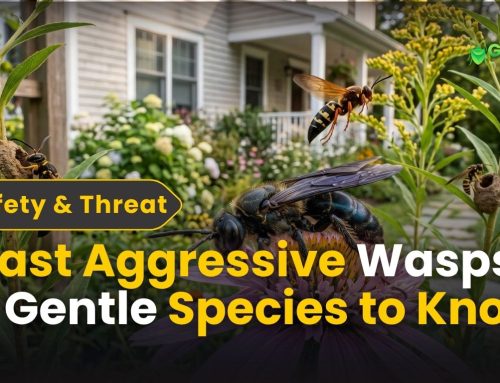
Black and White Wasp Identification: How to Recognize Them Fast
Introduction
You’re in your yard in Darien or New Canaan enjoying a quiet afternoon when you spot it a large flying insect with a distinctive black body and white markings on its face. Your heart rate immediately spikes. You know this isn’t a regular wasp. The size. The coloring. The robust appearance. Everything about it screams danger.
But you don’t know for certain what you’re looking at. Is it a hornet? A specialized wasp? Is it aggressive? Will it attack you? Should you run inside? Call professionals? Attempt to remove it yourself?
The uncertainty is paralyzing. You freeze, unsure whether to panic or stay calm. One wrong move could trigger a swarm attack. One wrong decision about identification could mean serious stinging injuries for you or your family.
Black and white wasp identification seems simple on the surface—you can see the colors clearly but understanding what those colors mean, what species you’re actually observing, and what threat level you’re facing requires specific knowledge most homeowners don’t have.
This guide reveals exactly how to recognize black and white wasps, what species they are, why they’re dangerous, and exactly what to do when you encounter them. You’ll move from uncertainty and fear to confident, informed decision-making about your yard safety.
Let’s identify what’s really in front of you so you can protect your family.
Why Black and White Wasp Identification Matters for Your Safety
When you see black and white wasps or hornets, you’re looking at a very specific group of insects with very specific threat characteristics. These aren’t harmless paper wasps. These aren’t ground-nesting yellow jackets. These are true hornets—and true hornets are among the most dangerous stinging insects in North America.
Getting black and white wasp identification wrong puts your family at serious risk:
You might dismiss it as a harmless wasp and fail to take protective action, allowing a dangerous colony to establish and grow on your property. You might panic unnecessarily about an insect that’s actually peaceful, wasting time and energy on false alarms. You might attempt DIY removal on an insect far too aggressive and dangerous for non-professionals to handle. Your family could end up in the emergency room with multiple serious stings.
When you understand black and white wasp identification correctly, you:
- Know immediately that you’re facing a true hornet, not a regular wasp
- Understand the genuine danger level and threat this insect represents
- Recognize this requires professional intervention, not DIY attempts
- Take appropriate protective measures to keep your family safe
- Prevent serious stinging incidents before they happen
Let’s make sure you can identify these dangerous insects with absolute confidence.
The Distinctive Black and White Marking Pattern: What You’re Looking At
When you see black and white wasps, the most distinctive feature is the white or cream-colored facial markings on a black body. This coloration is so specific and unmistakable that it’s the primary identifying feature of one of Connecticut’s most dangerous insect species.
The White Face Pattern: The Key Identifying Feature
Bald-faced hornets (which are actually true hornets, despite the misleading common name) have jet-black bodies with distinctive white or cream-colored facial markings. The white appears on the face in a pattern that creates an unmistakable appearance—like the hornet has a white mask or white face against the black head.
This white facial marking is absolutely distinctive. No other Connecticut flying insect has this specific appearance. When you see a large insect with a white face on a black body, you’re almost certainly looking at a bald-faced hornet.
Why This Coloring Matters:
The white facial marking is nature’s warning coloration—it communicates “I sting, I’m dangerous, stay away.” This aposematic coloration is designed by evolution to warn predators (and humans) to avoid this insect. When you see it, trust the warning.
The White Body Stripes: Confirmation of Identity
Beyond the distinctive white face, bald-faced hornets also have white stripes running along their abdomen against the black body background. These stripes create a striking contrast that’s visible from considerable distance.
The combination of white facial markings plus white abdominal stripes creates a pattern that’s unmistakable once you train your eye to recognize it. This double pattern—white face AND white body stripes—is specific to bald-faced hornets.
Why This Coloring Pattern Is Important
Black and white wasp identification is important precisely because this coloring pattern indicates a true hornet, not a regular wasp. Regular paper wasps don’t have this distinctive white marking pattern. Yellow jackets (which are wasps, not hornets) don’t have white markings. Only true hornets in Connecticut have this black and white appearance.
Seeing this coloring pattern means you’re facing a genuinely dangerous insect that requires professional handling. It’s not a threat you can manage with observation and caution. It’s not a threat you can DIY remove. It’s a threat that demands professional intervention.
Size Comparison: How Large Are Black and White Wasps?
Black and white wasp identification becomes even more reliable when you combine the distinctive coloring with size comparison.
Bald-Faced Hornet Size: Noticeably Larger Than Regular Wasps
Bald-faced hornets measure ¾ to 1 inch long. This is noticeably larger than paper wasps, which typically measure ½ to ¾ inches. The size difference is visible and meaningful.
When you see an insect that’s clearly larger than typical wasps, combined with black and white coloring, you’ve definitely identified a hornet, not a regular wasp. The size difference alone helps confirm what the coloring suggests.
Why Size Matters for Identification
Slender, small insects with thin waists = paper wasps (harmless). Large, robust insects with white markings = true hornets (dangerous). The size adds another layer of confirmation to the coloring-based identification.
Nesting Behavior: What Their Nests Look Like
Black and white wasp identification is made even easier when you also observe nesting behavior. Bald-faced hornets build distinctively different nests than regular wasps.
The Massive Gray Enclosed Nest: The Clearest Sign
Bald-faced hornets build large, completely enclosed, papery nests that are impossible to miss once you know what to look for. These distinctive nests:
Appearance: Gray or tan papery material, football-shaped or teardrop-shaped, completely smooth except for entrance hole(s)
Size: 1 to 3+ feet in diameter—some reach the size of a basketball or larger
Location: Typically 40+ feet high in tree branches, sometimes on building overhangs or utility structures
Construction: Built from chewed wood fibers mixed with saliva, creating a papery envelope completely surrounding the interior chambers
Distinctiveness: The sheer size and distinctive shape make this nest unmistakable. No other Connecticut insect builds nests this large.
Why the Nest Confirms Identity
If you see a large gray enclosed papery nest in a tree, particularly a high tree, you can confidently identify the inhabitants as bald-faced hornets. The nest appearance alone confirms what the individual insect’s coloring suggested.
This nest + black and white insect appearance = absolute confirmation of hornet identity.
Body Shape: Robust, Not Slender
Black and white wasp identification combines color, size, and body shape. Hornets have distinctive body shapes that differ from regular wasps.
The Robust, Thick-Bodied Appearance
Bald-faced hornets have thick, substantial bodies that appear powerful and muscular. Compare this to paper wasps, which have slender, delicate bodies with thin waists.
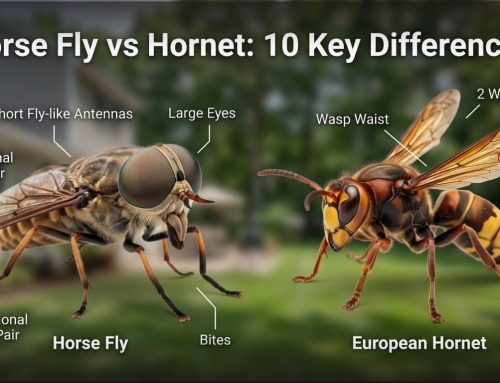
When you’re observing a black and white insect, pay attention to overall body robustness. A thick, substantial body combined with black and white coloring = hornet. A slender body with thin waist = regular wasp (even if it has some white markings).
Why Body Shape Matters
Body shape is one of the most reliable identification features because it’s visible from distance and consistent within species. All true hornets are robust. All paper wasps are slender. This distinction helps you identify with confidence even when other features are less clear.
Comparative Table: Black and White Insects and How to Identify Them
Use this table to confirm your black and white wasp identification by comparing multiple characteristics simultaneously.
| Feature | Bald-Faced Hornet | Paper Wasp with White | Other Insects |
| Size | ¾-1 inch | ½-¾ inch | Varies |
| Color Pattern | Black + white face + white stripes | Brown or brown-yellow, not white face | Various |
| Body Shape | Robust, thick | Slender, thin waist | Varies |
| Nest Type | Large enclosed gray ball | Umbrella-shaped open-comb | Varies |
| Nest Location | High trees, 40+ feet up | Eaves, structures, lower | Varies |
| Aggression | Extremely aggressive | Moderate | Varies |
Hornet vs. Wasp: Understanding the Distinction
Black and white wasp identification is really black and white hornet identification. Understanding the difference between true hornets and regular wasps is crucial for appropriate response.
True Hornets vs. Wasps: Key Differences
True Hornets (Including Black and White Species):
- Always social (live in colonies)
- Always build enclosed papery nests
- Always have light-colored markings on dark bodies (in Connecticut)
- Always robust, thick-bodied
- Always aggressive and territorial
- Always larger than regular wasps
Regular Wasps:
- Can be solitary or social
- Paper wasps build open-comb nests
- Vary in color (brown, yellow, metallic)
- Slender with thin waists
- Less aggressive than hornets
- Generally smaller
When you see black and white coloring, you’re almost certainly looking at a true hornet, not a regular wasp. This distinction determines your appropriate response.
For comprehensive comparison, see our detailed guide on hornet and wasp differences.
Geographic Distribution: Where to Expect Black and White Wasps in Connecticut
Black and white wasps (bald-faced hornets) are found throughout Connecticut in areas with suitable habitat.
Coastal Areas (Greenwich, Stamford, Darien)
These areas have abundant mature trees, wooded patches, and landscaping that bald-faced hornets find attractive. They’re commonly encountered in residential and commercial areas with tree coverage.
Suburban Residential (New Canaan, Wilton, Westport)
Larger properties with mixed forest and developed areas support robust bald-faced hornet populations. The tree canopy and distance from dense human activity make these areas attractive for nesting.
All Connecticut Areas
Bald-faced hornets are established throughout Connecticut. Any area with suitable trees 40+ feet tall is potential nesting habitat. Don’t assume you’re in an area where they’re not present—they’re widespread.
Real Stories: How Black and White Identification Prevented Emergencies
Story 1: The Tree Nest Discovery (Greenwich)
“I noticed a large gray papery structure in my oak tree during summer. The insects flying around it were large with black bodies and white markings on their faces. I immediately recognized this as the black and white wasp description from an identification guide. Rather than approaching or attempting removal, I called professionals. They confirmed it was a bald-faced hornet nest with 200+ individuals. Professional removal prevented what could have been a serious swarm attack if I’d attempted DIY removal.” — Robert T., Greenwich, CT
Story 2: The Backyard Encounter (Westport)
“My daughter came running inside saying she saw a really big wasp with a white face. I looked outside and immediately spotted a large insect with distinctive black and white coloring. Based on black and white wasp identification information, I knew this was dangerous. We kept everyone indoors, called professionals, and they confirmed it was a bald-faced hornet scouting the area. Professional removal of nearby nests prevented a potentially life-threatening encounter in our yard.” — Sarah M., Westport, CT
Why DIY Removal of Black and White Wasps Is Dangerous
Never attempt to remove or manage black and white wasps yourself. Here’s why:
Aggressive Defense
Bald-faced hornets aggressively defend their nests from considerable distance (50+ feet). Approaching a nest triggers immediate, coordinated attack from hundreds of individuals.
Multiple Stings Are Guaranteed
Unlike paper wasps that might produce single stings, bald-faced hornets typically produce multiple stings. They attack in groups and repeatedly sting the same target.
Potent Venom
Hornet venom is more potent than wasp venom. Multiple stings cause severe pain, significant swelling, and potential systemic reactions even in people without known allergies.
Pursuit Distance
These hornets will chase threats for considerable distances. Your escape route might not get you far enough away quickly enough.
High Nest Locations Make Removal Dangerous
Nests are typically 40+ feet high in trees. DIY removal requires ladders, climbing, or other equipment that creates additional danger if hornets attack.
Incomplete Removal Backfires
DIY attempts often kill some insects while leaving the colony functional. The survivors rebuild and the problem returns worse than before.
What to Do When You See Black and White Wasps
Immediate Actions
Maintain Distance
If you see a black and white insect, stay 50+ feet away. Don’t approach. Don’t throw objects at nests. Don’t attempt to swat individual insects.
Go Inside
If you’re outside and encounter one, calmly go inside. Don’t run or panic—just withdraw to safety.
Keep Family Away
If you discover a nest or high hornet activity, keep all family members (including children and pets) away from that area.
Next Steps
Document the Location
Note exactly where you saw the insect or nest. Mark it mentally or physically so family members know to avoid it.
Don’t Attempt Removal
Never spray, trap, seal, or otherwise attempt management yourself. This triggers aggressive defense and creates serious danger.
Contact Professionals Immediately
Call for professional assessment and removal. Don’t delay. Nests grow larger and more aggressive as seasons progress.
For professional handling, explore our hornet exterminator services available throughout Connecticut.
Pro Tips for Confident Black and White Wasp Identification
Look for the White Face First
The distinctive white facial marking is the most reliable feature. If you see this, you’ve identified a hornet.
Confirm with White Body Stripes
Look for white stripes on the abdomen. The combination of white face + white stripes = definite hornet identification.
Check the Nest
Large gray enclosed papery nests in high trees = bald-faced hornet nests. This confirmation of nest type makes identification certain.
Assess Body Robustness
Robust, thick-bodied insects = hornets. Slender insects with thin waists = regular wasps. This helps distinguish between species even without clear color visibility.
Use Binoculars for Observation
Observe from distance using binoculars or camera zoom. This allows detailed observation without approaching close enough to trigger aggressive defense.
FAQ: Questions About Black and White Wasp Identification
What’s the difference between a bald-faced hornet and other black and white insects?
Bald-faced hornets are the primary black and white stinging insects in Connecticut. The combination of white facial markings + white abdominal stripes + large gray enclosed nest + aggressive behavior = bald-faced hornet. No other common Connecticut insect matches this complete description.
Are all black insects with white markings dangerous hornets?
Not necessarily. However, if the insect is ¾+ inches large, has a robust body, white facial marking, and is near a large gray papery nest, it’s almost certainly a dangerous hornet. When in doubt, treat it as dangerous and maintain distance.
Can I use black and white coloring alone to identify hornets?
Color is a strong indicator, but it’s most reliable when combined with size, body shape, nesting behavior, and aggression level. Don’t rely on color alone—use multiple identifying features for confident identification.
What should I do if I see a black and white insect but can’t see a nest?
Maintain distance and avoid the area. The insect might be scouting for a nesting location or traveling. Contact professionals if you repeatedly see them in your yard—they might be establishing a nearby nest.
How fast do black and white hornets grow their nests?
Nests grow rapidly—doubling in size monthly during spring and summer. A small early-season nest becomes massive by late summer. This is why early identification and removal is important.
Can professional removal get rid of black and white wasps safely?
Yes. Professional pest control has the equipment, experience, and protective gear to safely remove hornet nests. They understand the species’ behavior and can time removal for maximum safety.
Don’t Let Fear of Black and White Wasps Keep You From Your Yard
Understanding black and white wasp identification gives you the power to:
- Recognize dangerous hornets with absolute confidence
- Understand the genuine threat they represent
- Know when professional help is essential
- Protect your family with appropriate action
- Eliminate anxiety from uncertainty
You now understand exactly what black and white wasps look like, what they are, and what danger they represent. You can identify them instantly. You know what to do when you encounter them.
Get Professional Assessment for Your Hornet Situation
If you’ve spotted black and white wasps or a large gray nest on your property, contact our professional team immediately.
We identify black and white hornets throughout Connecticut—from Greenwich to Westport and everywhere in between. We assess danger accurately and provide safe professional removal using proper methods and protective equipment.
Don’t delay. Black and white hornets are dangerous and nests grow rapidly. Professional intervention now prevents serious injuries later.