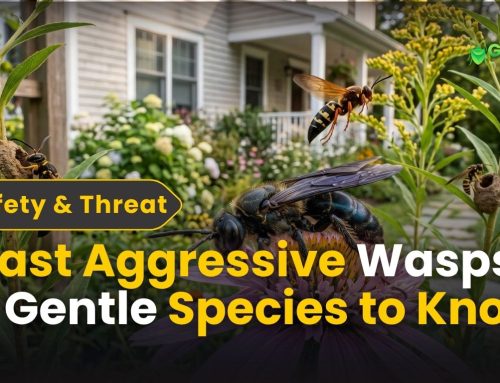
What Does a Hornet Look Like? Identification Guide
Introduction
You’re outside in your Stamford or Greenwich yard when you spot it—a large flying insect circling your porch. Your stomach tightens. It’s definitely bigger than a regular wasp. The body looks robust and powerful. You freeze, unsure whether to run, swat it, or calmly walk inside.
The terrifying question runs through your mind: What does a hornet look like? And more importantly, is this one right now?
The problem is, you can’t tell the difference. Is it a harmless paper wasp, an aggressive yellow jacket, or a genuinely dangerous hornet that will chase you down if you get too close? Misidentifying what you’re seeing leads to panic, wrong decisions, and sometimes dangerous situations where you approach or attempt removal of an insect that’s far more aggressive than you anticipated.
Without proper identification, you stop using parts of your yard. You keep your kids inside on nice days. You live with anxiety about what’s nesting on your home. You waste money on failed DIY removal attempts that make the situation worse instead of better.
Here’s the good news: Learning what does a hornet look like is straightforward once you know the specific visual features to watch for. This guide shows you exactly what to observe size, color, body shape, stripe patterns, leg appearance, and nesting behavior so you can confidently identify whether you’re facing a genuine threat or a misidentified wasp.
By the end of this guide, you’ll know exactly what you’re looking at and what to do about it.
Why Knowing What Hornets Look Like Actually Matters for Your Safety
Most people use “wasp” and “hornet” interchangeably, as if they’re the same thing. They’re absolutely not. Confusing a hornet with a paper wasp leads to catastrophic mistakes that put your family at risk.
Here’s why accurate hornet identification matters:
Hornets are genuinely dangerous. They’re aggressive, territorial, and will pursue threats from considerable distance. Paper wasps are defensive around their nests but peaceful elsewhere. A yellow jacket is an aggressive ground-nesting scavenger. These are completely different threats requiring completely different responses.
When you can accurately identify what does a hornet look like, you:
- Know when to call professionals immediately versus when you can observe safely
- Avoid panicking about harmless species while under-preparing for actual threats
- Take appropriate safety precautions around genuine dangers
- Prevent accidental stinging incidents by understanding actual threat levels
- Make informed decisions about your yard and family safety
Let’s start identifying hornets so you never have to wonder again.
Body Parts of a Hornet: What to Observe First
Before diving into specific hornet types, you need to understand the basic anatomy that makes hornets distinctive.
The Unmistakable Thick Body (The Primary Identifying Feature)
The single most important thing to observe about what does a hornet look like is body thickness. Hornets have robust, substantial bodies that appear heavy and muscular throughout. Compare this to a paper wasp, which has a slender, delicate appearance.
When you’re observing an insect, look at the overall body thickness first. Does it look power-built and substantial, like a tiny linebacker? That’s likely a hornet. Does it look fragile and slender, almost elegant? That’s likely a paper wasp.
This distinction alone eliminates most identification confusion.
The Prominent Narrow Waist (Thinner Than You’d Expect)
Despite the robust body, hornets still have a pinched waist (called a petiole) that connects the thorax and abdomen. However, this waist is less pronounced than in paper wasps. The overall body proportions are different—hornets are thick and substantial everywhere, not just slender with one thin section.
Wing Position and Flight Pattern
What does a hornet look like when flying? Hornets hold their wings flat against their body when at rest, not in the roof-like position of paper wasps. In flight, hornets move with purpose and directness. They fly with power, not the meandering flight of many wasps.
Their wing-beat pattern is faster and more purposeful—you can sense the aggression in their movement.
Leg Appearance and Visibility
Hornets’ legs are held relatively close to the body during flight—they’re not as visibly dangling as paper wasp legs. The legs are substantial and thick, not thin and delicate like many wasps.
What Color Are Hornets? Visual Identification by Color Patterns
Color is usually the first thing you notice about what does a hornet look like, so understanding hornet coloration helps you identify them quickly.
Black and White: The Distinctive Bald-Faced Hornet Pattern
Bald-faced hornets have black bodies with striking white or cream-colored facial markings. The white face pattern is absolutely distinctive—no other Connecticut insect looks like this.
They also have white stripes running along their abdomen against the black body. The contrast is high and visible from distance. When you see a large insect with a white face on a black body, you’re looking at a bald-faced hornet. This is the most common true hornet species you’ll encounter in Connecticut.
Brown and Orange: The European Hornet Pattern
European hornets have brown and orange-yellow coloring—completely different from the black and white pattern of bald-faced hornets. They’re larger than many wasp species, with earthy tones rather than bright colors.
The brown and orange combination, combined with their large size and robust body, makes them distinctive and identifiable once you know what to look for.
Dark Bodies: Comparing to Other Species
Some true hornets are predominantly dark or black with minimal markings. However, the robust body shape and the presence of light-colored markings (even if subtle) distinguish them from paper wasps with dark coloring.
Always combine color with body shape for accurate identification.
Hornet Size Comparison: How Large Do They Get?
Understanding hornet size helps you distinguish them from smaller wasp species.
Bald-Faced Hornets: Three-Quarter to One Inch
Bald-faced hornets measure ¾ to 1 inch long—noticeably larger than paper wasps (which are typically ½ to ¾ inches). This size difference is visible and meaningful. When you see an insect that’s clearly larger than a typical wasp, with a robust body, you might be looking at a hornet.
European Hornets: The Largest Species
European hornets are even larger, reaching ¾ to 1.25 inches long. Some individuals exceed these measurements. These are among the largest stinging insects you’ll encounter in Connecticut. Their size alone is distinctive.
Size as a Confirmation Feature
Size alone isn’t enough for identification—but combined with body shape, color, and other features, it confirms what you’re observing. A large, robust black insect with white markings is almost certainly a bald-faced hornet.
Kinds of Hornets: What Species Look Like in Connecticut
Connecticut has specific hornet species you’re likely to encounter. Understanding what each kind of hornet looks like helps you identify correctly.
Bald-Faced Hornets: Most Common and Most Aggressive
What They Look Like:
- Large black body (¾ to 1 inch)
- Distinctive white facial markings (white face—hence “bald-faced”)
- White stripes on the abdomen against black background
- Robust, thick body throughout
- Wings held flat against body
- Smooth, hairless appearance
Where They Nest:
Large, gray, enclosed, football-shaped nests, often 1-3 feet in diameter, typically 40+ feet high in trees. The nests are so massive and distinctive they’re impossible to miss once you start looking up.
Behavior:
Extremely aggressive and territorial. Will pursue threats from 50+ feet away. Attack in groups from their large colonies (often 100-400+ individuals). More dangerous than any other Connecticut hornet species.
Danger Level:
Very high. These are among the most dangerous stinging insects in North America. Never attempt DIY removal. Professional intervention is absolutely necessary.
For comprehensive information about bald-faced hornets, check our comparison of wasp vs hornet guide.
European Hornets: Increasingly Common, Dangerous
What They Look Like:
- Large, robust body (¾ to 1.25 inches)
- Brown and orange-yellow coloring
- Distinct striping pattern
- Visible when you look closely, golden or amber-colored wings
- Heavy, substantial build
- Prominent thorax (middle body section)
Where They Nest:
Large gray enclosed nests similar to bald-faced hornets, but more oval or rounded rather than football-shaped. They nest in tree cavities, attic spaces, wall cavities, and building overhangs—sometimes closer to human activity than bald-faced hornets prefer.
Behavior:
Aggressive and territorial. Defend nests vigorously. Active longer into fall than many species (they’re called “yellowjackets of the fall”). More likely to establish nests in buildings compared to other hornets.
Danger Level:
High. These are powerful fliers with potent venom. Multiple stings are possible and serious. Less aggressively pursuing than bald-faced hornets but still genuinely dangerous.
Ground Hornets: Hidden But Dangerous
What They Look Like:
Ground-nesting hornet species share characteristics with their tree-nesting cousins robust bodies, light markings on dark backgrounds, substantial size. However, you’ll see them emerging from ground entrance holes rather than hanging from tree branches.
Where They Nest:
Underground in old rodent burrows, soil cavities, or protected ground locations. You discover them by finding entrance holes with hornets coming and going, or by accidentally disturbing them while gardening.
Behavior:
Extremely defensive when nest is disturbed. They attack aggressively because the nest is hidden and they’re protecting their only access point.
Danger Level:
Very high, particularly for accidental encounters. You might disturb a ground nest without realizing it exists until you’re being attacked.
For detailed ground hornet management, explore our ground hornet treatment guide.
Hornet vs. Wasp: The Key Differences Explained
Understanding how what does a hornet look like compares to wasps is crucial for accurate identification and appropriate response.
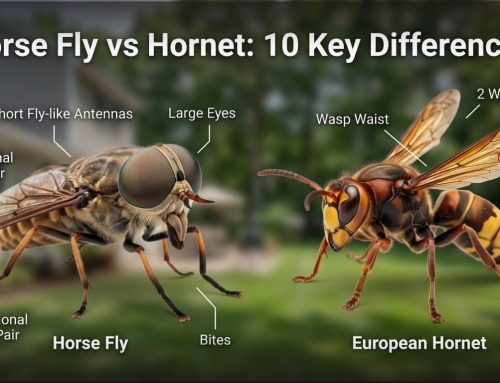
Body Shape: The Most Reliable Distinction
| Feature | Hornet | Paper Wasp |
| Body Build | Robust, thick, substantial | Slender, delicate |
| Waist Prominence | Less pronounced, body thick throughout | Extremely thin waist, pinched appearance |
| Overall Proportion | Powerful, muscular appearance | Elegant, thin appearance |
| Size | Generally larger (¾-1.25 inches) | Smaller (½-¾ inches) |
Markings: Light Coloring Pattern
Hornets in Connecticut always have light-colored markings on dark bodies. Paper wasps don’t have this distinctive white or light marking pattern. Bald-faced hornets have white faces and white abdominal stripes. European hornets have orange-brown coloring.
Nesting Behavior
Hornets build large, completely enclosed papery nests—the nest has a protective paper covering all around it. Paper wasps build open-comb nests where every cell is visible with no covering.
Aggression Level
Hornets are aggressively territorial and defensive. Paper wasps are peaceful away from their nests and defensive only when directly threatened. Hornets will pursue threats; paper wasps won’t.
For a comprehensive comparison, see our guide on how hornets compare to wasps.
What About Yellow Jackets? Are They Hornets?
This is where identification gets confusing for many people. Yellow jackets are NOT true hornets. They’re wasps. However, they’re dangerous like hornets.
What Yellow Jackets Look Like
Yellow jackets have bright yellow and black bold striping—vivid, fluorescent yellow combined with solid black stripes. The yellow is unmistakably bright, not muted or earthy like paper wasps.
They’re smaller than true hornets but stocky and robust in build. They’re ground-nesting insects with massive underground colonies. They’re attracted to human food and garbage.
Why People Confuse Them
Yellow jackets are aggressive and dangerous like hornets. They build nests like hornets. They sting multiple times like hornets. But they lack the light facial markings on dark bodies that true hornets have. They don’t reach the size of true hornets.
When you see bright, vivid yellow and black stripes, you’re looking at a yellow jacket, not a true hornet. Both require professional removal when nesting near your home, but they’re different insects requiring different understanding.
For the full breakdown, check our guide on wasp vs hornet vs yellow jacket differences.
Hornet Nesting Behavior: What Does a Hornet Nest Look Like?
Understanding what does a hornet look like includes understanding their nests, since you’re likely to see the nest before seeing the insects themselves.
Bald-Faced Hornet Nests: Large, Gray, Football-Shaped
These massive nests are impossible to miss once you start looking. They’re:
- Size: 1-3+ feet in diameter (basketball-sized or larger)
- Color: Gray from the papery material
- Shape: Football or teardrop shape, completely enclosed except for entrance hole(s)
- Location: High in trees (40+ feet), sometimes on building overhangs or utility structures
- Texture: Papery, built from chewed wood fibers
The nests are so large and distinctive that seeing one confirms you’re dealing with bald-faced hornets.
European Hornet Nests: Enclosed, Oval-Shaped
Similar to bald-faced hornet nests but more oval or rounded rather than football-shaped. These nests:
- Location: Tree cavities, attic spaces, wall cavities, sometimes building overhangs
- Size: Can be substantial, though usually smaller than bald-faced nests
- Appearance: Gray, papery, completely enclosed
- Challenge: Often nest in building cavities, making them problematic for homeowners
Nests inside attics or walls are particularly concerning because they can spread throughout the structure.
Ground Hornet Nests: Underground and Hidden
Ground nests have entrance hole(s) in the ground with hornet activity visible. You won’t see the actual nest structure—it’s underground. The danger comes from accidentally disturbing the entrance while gardening or moving around the yard.
Visual Identification Checklist: Confirm What You’re Seeing
Use this checklist when you spot an insect and need to confirm whether it’s a hornet.
| What to Look For | Hornet | Not a Hornet |
| Body Build | Robust, thick, substantial | Slender, thin waist prominent |
| Size | ¾ inch or larger | Usually smaller |
| Face Markings | White or light marks on dark body | No distinctive facial marks |
| Color Pattern | Black + white OR brown + orange | Varied, but not dark with light marks |
| Wing Position | Flat against body | Often roof-like position |
| Nest Type | Large, enclosed, papery | Open-comb or other styles |
| Aggression | Very aggressive, pursues threats | Less aggressive away from nest |
| Nesting Location | Trees 40+ feet up or building cavities | Eaves, structures, sometimes ground |
Quick ID Steps:
- Observe body shape (robust vs. slender)
- Check for light facial/body markings on dark background
- Estimate size (larger than paper wasps)
- Note nesting location if visible
- Observe behavior (aggressive pursuit vs. peaceful)
Geographic Hotspots: Where Hornets Are Most Common in Connecticut
Connecticut residents from Greenwich to Westport encounter hornets in different concentrations depending on the local environment.
Coastal Areas (Greenwich, Stamford, Darien)
These areas have abundant mature trees, well-developed landscaping, and structures that hornets find attractive. Bald-faced hornets are common in wooded areas. Yellow jackets (confused with hornets) are prevalent around food sources.
Suburban Residential (New Canaan, Wilton, Westport)
Larger properties with mixed landscaping support diverse hornet populations. Bald-faced hornets thrive in forested areas and tall trees. European hornets increasingly nest in building cavities on these properties.
Building Cavities
Anywhere with suitable attic space, wall cavities, or hollow building sections is attractive to European hornets. Modern building construction doesn’t always exclude them effectively.
Why DIY Hornet Identification Fails (And When Professional Help Is Essential)
You might think you can identify and handle hornets yourself. But here’s what actually happens:
Poor Identification Leads to Wrong Strategies
You can’t safely inspect a 40-foot tree nest for positive identification. You can’t check a ground nest without risking stirring up the colony. You might misidentify a dangerous hornet as a harmless wasp.
Unsafe Removal Attempts Backfire
Approaching a hornet nest to spray it triggers aggressive defense. Multiple hornets attack immediately. You’re stung repeatedly while the pesticide slowly takes effect. Some people end up in the emergency room.
Incomplete Removal Creates Worse Problems
DIY attempts might kill some hornets but leave the nest intact. The insects rebuild. The infestation returns worse than before. Sealing a nest entrance traps hornets inside, prompting them to chew through walls and spread throughout your home.
When You Absolutely Need Professionals:
- You can’t identify with certainty
- The nest is large or in a difficult location
- You want to confirm whether it’s a true hornet or just a yellow jacket
- Any hornet nest (any true hornet requires professional handling)
- Multiple nests on your property
Get professional hornet identification and removal today. Our team throughout Connecticut provides same-day assessment, expert identification, and safe professional removal. Don’t risk family safety with DIY approaches.
Real Stories: How Proper Identification Prevented Disasters
Story 1: The Tree Nest Encounter (New Canaan)
“I noticed a large gray nest in our oak tree and thought I could spray it myself. My neighbor, who knew what hornets looked like, convinced me to call professionals first. The assessment confirmed it was a bald-faced hornet nest with over 200 individuals far too aggressive for DIY removal. Professional removal saved us from what could have been a serious stinging incident involving multiple family members.” David M., New Canaan, CT
Story 2: The Misidentified Ground Nest (Westport)
“My daughter was almost stung while playing in the yard when I noticed yellow jackets coming out of a ground hole. I immediately recognized the bright yellow and black pattern and kept everyone away from that area. We called professionals who confirmed it was a massive underground colony. Quick identification and restraint prevented injuries.” Jennifer L., Westport, CT
Pro Tips for Safe Hornet Observation and Identification
Observe from Distance
Use binoculars or a camera with zoom function. Stay 10+ feet away. Never approach a nest to get a closer look or confirm identification.
Look for the Nest First
If you spot a large gray papery structure in a tree, assume it’s a hornet nest. The nest appearance is more reliable than individual insect observation.
Document What You See
Take photos from distance. The photos help professionals confirm identification and assess danger level.
Note Behavioral Cues
Aggressive insects pursuing you back toward your house are likely hornets. Peaceful insects ignoring you are likely harmless wasps.
Trust Your Instinct
If an insect makes you nervous—if it looks substantial and aggressive—treat it as a potential hornet and maintain distance. Your safety instinct often recognizes threats before conscious analysis does.
FAQ: Questions About Hornet Appearance and Identification
What does a hornet look like compared to a bee?
Hornets have smooth, hairless bodies. Bees have fuzzy, hairy bodies adapted for pollen collection. This is the simplest distinction. Hornets also have longer bodies and more aggressive behavior.
Are all large flying insects hornets?
No. Large flies, dragonflies, and some wasps can be large without being hornets. The key is looking at body shape (robust vs. slender), markings (light on dark background), and behavior.
Can I identify a hornet by its wings?
Wings alone aren’t definitive, but hornets hold their wings flat against their body when at rest, not in the roof-like position of paper wasps. Wing color can provide clues (golden in European hornets) but use multiple features for confirmation.
What should I do if I think I see a hornet?
Observe from distance and document what you see. Don’t approach or attempt identification from close range. If you’re concerned, contact professionals for confirmation and guidance.
Are all black and white flying insects hornets?
No. But if you see a large (¾+ inch) insect with a white face on a black body, it’s almost certainly a bald-faced hornet. This coloration is distinctive.
How quickly do hornets attack?
Very quickly. If you disturb a nest or come within what hornets perceive as their territory, they’ll pursue and attack within seconds. This is why distance is so important.
The Bottom Line: Understanding What Hornets Look Like Protects Your Family
You now understand the specific visual features that distinguish hornets from other stinging insects. You know:
- Hornets are robust and substantial-bodied, not slender
- They have distinctive light markings on dark bodies
- They’re larger than most wasps
- They build large, enclosed papery nests
- They’re aggressively territorial and dangerous
- Professional identification and removal is essential
This knowledge eliminates uncertainty. When you see a large black insect with white markings, you’ll immediately recognize it as a bald-faced hornet and know to maintain distance and call professionals. You’ll understand the threat level and respond appropriately.
Your family’s safety depends on this understanding.
Don’t Wait Get Professional Confirmation Today
If you’ve spotted what you believe might be a hornet nest on your Connecticut property, don’t take chances with identification or DIY removal.
Contact our professional team today for expert assessment. We identify hornet species accurately, assess danger levels, and provide safe professional removal throughout Greenwich, Stamford, Darien, New Canaan, Wilton, Westport, and all Connecticut communities.
We’ve safely removed hundreds of hornet nests. We understand Connecticut’s hornet species and their behaviors. We protect your family while eliminating the threat.
Take action now your yard should be a safe place for your family to enjoy.