Ground-Nesting Bees & Wasps: 7 Key Differences to Know
When dozens of flying insects suddenly appear over your lawn, one question matters before you reach for a spray: are they bees or wasps? Ground Nesting Bees Wasps can occupy similar-looking areas, yet their behavior, ecological roles, sting risk, and need for treatment can be very different.
Many ground-nesting bees are solitary pollinators that use individual burrows. Solitary ground wasps often hunt other insects and also maintain individual nests. Underground yellow jackets are different: they form social colonies, and many workers may defend the same concealed nest.
For Connecticut homeowners, one of the best identification clues is therefore not color but traffic. Many insects using separate small holes often suggest solitary bees or wasps. Many yellow-and-black workers repeatedly entering one opening raises concern for a social yellow jacket colony.
This guide covers seven practical differences, nest pictures and identification clues, danger levels, seasonal patterns, prevention, DIY versus professional pest control, and when a nest should be evaluated by Green Pest Management CT.
Quick Answer: How Can You Tell Ground-Nesting Bees From Wasps?
Start with appearance, then confirm your impression with behavior and nest arrangement.
Many ground-nesting bees are visibly hairy and collect pollen. They commonly maintain individual burrows, even when many bees nest close together. Many wasps look smoother. Solitary digger wasps also use individual burrows, while social yellow jackets may send numerous workers through one shared underground entrance.
No single clue is foolproof.
| Identification Clue | Ground-Nesting Bees | Solitary Ground Wasps | Underground Yellow Jackets |
| Body appearance | Often hairier | Often smoother | Relatively smooth |
| Nest arrangement | Usually individual burrows | Usually individual burrows | Shared social nest |
| Many holes possible? | Yes | Yes | Usually traffic concentrates at colony entrance |
| Social workers? | Generally no for common solitary ground nesters | No | Yes |
| Defensive colony behavior | Usually limited | Usually limited | Can be strong |
| Main ecological role | Pollination | Often predation | Predation/scavenging varies |
| Need for control | Often none | Often none | Depends strongly on location and exposure |
These are field indicators, not absolute taxonomic rules. Connecticut has many bee and wasp species, so use several characteristics together.
Green Pest Management CT’s ground-nesting wasp identification guide provides additional visual and behavioral clues.
What Are Ground-Nesting Bees and Wasps?
“Ground nesting” describes where an insect nests, not a particular species.
A variety of bees and wasps spend part of their life cycle below ground. Some excavate their own tunnels. Others use existing cavities.
Ground-Nesting Bees
Many native bees are solitary ground nesters. A female creates and provisions her own nest rather than living in a honey-bee-style colony with thousands of workers.
Several females may select the same favorable patch of soil. This can make solitary bees look social when dozens of insects appear at once.
Those aggregations can be impressive, but “many bees in one area” doesn’t necessarily mean “one large hive.”
Ground-nesting bees are also important pollinators.
Solitary Ground Wasps
Many wasps are solitary as well.
Digger wasps excavate or use ground burrows and provision nest cells with prey for their developing young. Cicada killers are a familiar example: females capture cicadas and transport them to underground nest cells.
A large solitary wasp can look intimidating without presenting the same practical risk as a social yellow jacket colony.
Ground-Nesting Yellow Jackets
Certain yellow jackets commonly use underground cavities. Rather than seeing a conspicuous paper nest, the homeowner may see only a small entrance and steady worker traffic.
That difference changes the risk assessment.
Yellow jackets are social insects. Workers protect a common colony containing the queen and developing brood. Disturbing an active nest may bring multiple defensive workers into contact with the person or animal causing the disturbance.
For more background, see Green Pest Management CT’s Ground-Nesting Wasp Guide and yellow jacket behavior guide.
Difference 1: Bees Are Usually Hairier Than Common Ground Wasps
Appearance is a useful starting point.
Many ground-nesting bees have conspicuous body hairs. Those hairs are biologically useful because female bees transport pollen to provision their nests.
Common social wasps such as yellow jackets tend to look smoother.
But avoid using “fuzzy equals bee” as your entire identification method. Bee and wasp appearances vary, and viewing a fast-moving insect from several yards away can distort color, size, and shape.
Look Beyond Black and Yellow
Black-and-yellow markings don’t automatically mean yellow jacket.
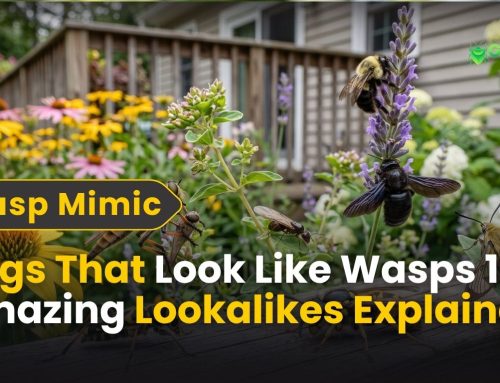
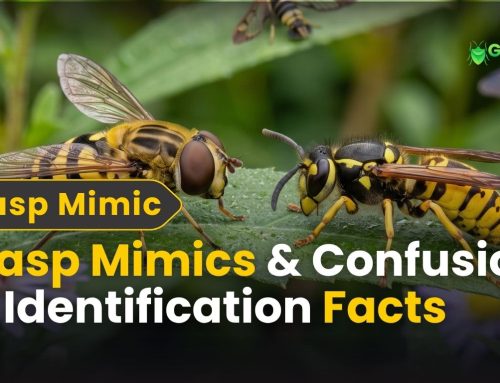
Numerous insects have contrasting markings, including non-stinging mimics. Some bees and wasps are primarily black, metallic, reddish, or patterned in ways that don’t match the familiar cartoon image of a bee.
Green Pest Management CT’s bee versus wasp identification guide and guide to flying insects that resemble wasps can help narrow an uncertain ID.
Difference 2: Separate Holes Often Point to Solitary Insects
Nest arrangement is one of the most useful observations a homeowner can make.
Imagine seeing thirty insects flying low across a dry, sunny section of lawn. At first glance, it looks like an enormous colony.
Then you notice many separate holes.
That pattern is consistent with an aggregation of solitary ground-nesting bees or wasps. Suitable soil can attract many individual nest builders to a relatively small area.
Solitary Doesn’t Mean One Insect Per Yard
This wording causes considerable confusion.
Solitary means individual females generally maintain their own nests instead of operating through a social worker system. It doesn’t mean solitary species avoid their own kind or that only one can occur on a property.
A favorable patch of soil can support numerous adjacent burrows.
This distinction can prevent unnecessary insecticide treatments against beneficial insects.
Difference 3: Heavy Traffic Into One Hole Can Mean Yellow Jackets
This is the pattern Connecticut homeowners should treat more cautiously.
If many yellow-and-black wasps repeatedly enter and exit the same ground opening, suspect a social nest until you have better identification.
The hole itself may be remarkably small.
What you can’t see is more important: an underground cavity containing the colony’s nest.
Why the Nest Is Easy to Miss
Yellow jackets can use existing spaces below ground, including old animal burrows. Grass, leaves, roots, landscape material, or natural contours can obscure the entrance.
The homeowner may walk past it repeatedly without noticing anything.
Then a lawn mower crosses the area and the situation changes immediately.
The wasp nest in the ground identification guide explains underground entrance patterns in greater detail.
For visual comparisons, see Green Pest Management CT’s ground nesting hornets pictures guide. Remember that “ground hornet” is a common informal term and does not identify a specific species.
Difference 4: Colony Defense Is Much Stronger in Social Wasps
Bees and wasps shouldn’t be ranked with a simple “one is dangerous and one isn’t” rule.
Behavior and social structure matter more.
A solitary female has her own nest to reproduce. A yellow jacket worker belongs to a social colony in which numerous workers can participate in nest defense.
That makes an active underground yellow jacket colony especially relevant around people.
Everyday Yard Work Can Trigger Defense
The problem with underground colonies is that people often disturb them unintentionally.
Common triggers include:
- Running a lawn mower over the entrance
- Using a string trimmer nearby
- Digging or edging
- Pulling weeds
- Moving landscape stones
- Walking directly beside the nest
- Children playing in the area
- Dogs investigating the opening
- Landscape crews working without knowing the nest is present
If insects begin directing attention toward you, move away rather than continuing your identification attempt.
Do not deliberately disturb a nest to “test” whether it is aggressive.
Can Ground-Nesting Bees Sting?
Females of many bee species can sting, but the practical risk varies greatly by species and situation. Many solitary ground-nesting bees aren’t defending a communal colony with a large worker force.
That doesn’t make handling them appropriate. It does mean their risk should not automatically be equated with an underground yellow jacket nest.
Difference 5: Bees Collect Pollen; Many Ground Wasps Hunt Prey
The insects are using your landscape for very different biological purposes.
Bees generally collect pollen and nectar to provision their offspring. That’s why they are so important to pollination.
Many solitary wasps are predators.
Different species specialize in different prey. Cicada killers provide an obvious example: females hunt cicadas and provision underground cells for their offspring.
Other wasps prey on other insects or arthropods.
This makes many ground-nesting wasps ecologically useful even though they are capable of stinging.
Beneficial Does Not Mean “Never a Problem”
An insect can have an ecological benefit and still create a practical conflict.
A solitary wasp burrow at an unused edge of a large Greenwich property may be easy to tolerate. The same nesting activity concentrated next to a preschool play area requires another discussion.
Integrated Pest Management (IPM) accounts for both ecological role and actual human exposure.
The U.S. Environmental Protection Agency’s Integrated Pest Management information describes this risk-based approach to pest management.
Difference 6: Nest Pictures Look Very Different Once You Know What to Look For
When people search for ground wasp nest pictures, they often expect to see an actual nest.
With subterranean insects, that may not happen.
Ground-Nesting Bee Burrows
Depending on species, you may notice individual openings and disturbed soil. Multiple holes can be distributed across one suitable area.
Solitary Wasp Burrows
A larger solitary wasp may create a more conspicuous individual excavation. Observing one insect repeatedly using the opening is an important clue.
Yellow Jacket Ground Nests
The visible evidence may consist almost entirely of worker traffic at a concealed entrance. The nest structure lies within a cavity beneath the surface.
Above-Ground Paper Nests
An exposed open-comb nest is a different nesting type commonly associated with paper wasps. A large enclosed paper nest in a tree or shrub also isn’t a typical underground nest.
Compare these structures with the types of wasp nests guide and paper wasp nest identification resource.
Don’t place your phone directly over an active ground entrance to obtain a photograph. Behavior observed with zoom from a safer position is more valuable than a close-up of the hole.
Difference 7: Their Seasonal Patterns Aren’t Identical
Connecticut’s seasons offer useful identification context.
Timing alone doesn’t confirm a species, but it can help support an identification.
Spring: Watch for Solitary Bee Activity
Spring can bring noticeable ground-nesting bee activity as adults use suitable soil.
A lawn containing numerous separate entrances and relatively nondefensive insects may therefore be experiencing beneficial seasonal bee activity rather than a yellow jacket infestation.
At the same time, surviving social-wasp queens begin establishing new annual colonies.
Summer: Social Wasp Colonies Grow
As yellow jacket colonies develop, the number of workers increases.
Hidden entrances become easier to detect. Summer lawn maintenance also creates more opportunities for a mower or trimmer to disturb a previously unnoticed colony.
Late Summer and Early Fall: Yellow Jackets Become More Noticeable
Established social colonies can become especially conspicuous later in Connecticut’s warm season.
This overlaps with outdoor dining, swimming, gardening, children’s activities, lawn maintenance, and patio use.
Consequently, homeowners often report yellow jacket problems during a period when both wasp activity and human outdoor activity are high.
Winter: Annual Social Colonies End
As Connecticut moves into late fall and winter, the normal colony lifecycle and colder conditions bring outdoor yellow jacket colonies to an end. Newly produced queens overwinter separately and begin new colonies in another season.
An abandoned social nest isn’t normally a permanent multi-year colony that simply resumes normal worker activity each spring.
Green Pest Management CT’s wasp lifecycle guide explains the annual cycle further.
Why Are Ground-Nesting Bees and Wasps in My Yard?
Ground nesting doesn’t mean your lawn is dirty or neglected.
Your property is habitat, and suitable habitat attracts insects.
Soil texture, drainage, moisture, vegetation density, sun exposure, existing holes, and sheltered cavities can all influence nest-site selection. Different species prefer different conditions.
Yellow jackets may exploit existing underground spaces such as abandoned rodent burrows. Some solitary bees favor patches where soil conditions allow excavation. Digger wasps choose places where they can establish individual burrows.
Fairfield County’s varied residential landscapes naturally provide many possibilities.
Greenwich and New Canaan properties may contain expansive lawns, stonework, mature plantings, and wooded margins. Stamford and Norwalk may have tighter outdoor areas where nesting insects and people overlap more frequently. Darien, Westport, Fairfield, and Wilton properties commonly combine lawns with gardens, patios, pools, stone features, and landscape beds.
There is no single yard condition responsible for every ground-nesting insect.
Are Ground-Nesting Bees and Wasps Dangerous?
Species, social behavior, and location determine practical danger.
An aggregation of solitary pollinating bees in an unused portion of a lawn presents a different risk from a social yellow jacket colony beside the front walkway.
A nest deserves particular attention when it is close to:
Children’s play spaces, building entrances, patios, pools, outdoor seating, pet areas, frequently mowed grass, gardens, driveways, walkways, and other unavoidable activity areas all increase potential exposure.
People with known insect-venom allergies should avoid investigating active nests themselves.
If someone develops difficulty breathing, substantial throat or tongue swelling, fainting, or other symptoms suggesting anaphylaxis after a sting, seek emergency medical attention. Pest identification can wait during a medical emergency.
The Centers for Disease Control and Prevention’s venomous insect guidance provides additional sting-safety information.
When Should Ground-Nesting Bees or Wasps Be Treated?
Treatment should depend on identification and risk rather than simply the presence of an insect.
Ground-nesting bees in a low-conflict location can often be tolerated. The same is true for many solitary predatory wasps.
A confirmed or strongly suspected yellow jacket colony beside an unavoidable high-use area is a stronger candidate for intervention.
Use this quick decision process:
- Observe the insects without approaching the entrance.
- Determine whether they use one shared opening or separate burrows.
- Look for bee-like hair, wasp body shape, size, and markings.
- Consider the season.
- Evaluate defensive behavior without deliberately provoking it.
- Determine whether people or pets can realistically avoid the area.
- Request professional identification when the species or risk remains unclear.
The goal isn’t “kill every ground-nesting insect.” The goal is to resolve genuine pest conflicts safely and proportionately.
Ground-Nesting Bees Wasps: Mistakes to Avoid
Misidentification creates two problems: beneficial insects may be unnecessarily killed, or a defensive social colony may be handled too casually.
Do not pour gasoline, kerosene, bleach, boiling liquids, or improvised chemicals into holes.
Don’t attempt to burn an underground nest.
Avoid repeatedly flooding an active nest with a garden hose, poking the entrance with tools, or intentionally mowing over it.
Also don’t immediately plug a suspected active yellow jacket entrance. The visible hole is only an access point. Blocking it doesn’t establish that the concealed colony has been eliminated.
When pesticides are appropriate, use only products suitable for the target pest and application site, and follow label directions. The EPA’s pesticide safety resources explain responsible pesticide-use practices.
How to Prevent Ground-Nesting Insect Conflicts
It isn’t realistic—or environmentally desirable—to make an entire Connecticut property incapable of supporting bees and wasps.
Prevention should focus on reducing nesting opportunities in high-use areas and limiting conditions that contribute to repeated conflicts.
Maintain healthy turf where exposed soil isn’t wanted. Address rodent activity appropriately because abandoned burrows can create cavities. Keep garbage closed and clean food or sugary beverage spills around patios and outdoor dining spaces.
Observe neglected or infrequently mowed sections before using equipment. If you know an active nest exists, tell landscapers and other workers before they enter the area.
For buildings, seal appropriate gaps after confirming that an active colony isn’t occupying the void.
Avoid routinely applying broad-spectrum insecticides to a lawn merely because ground-nesting insects might appear.
Pollinator-conscious prevention and effective pest management aren’t opposing goals. Good IPM attempts to accomplish both.
DIY vs. Professional Management
The appropriate choice depends on what is actually nesting.
| Situation | Sensible Starting Point |
| Solitary bees in an unused area | Monitor; avoid unnecessary treatment |
| Solitary wasp away from people | Identification and monitoring |
| Numerous insects but many separate holes | Identify before treating |
| Numerous yellow jackets entering one hole | Professional assessment |
| Nest next to doorway or playground | Professional inspection |
| Wasps entering foundation/siding | Inspect for structural nesting |
| Severe venom allergy in household | Avoid DIY nest exposure |
| Identification remains uncertain | Obtain professional ID |
One of the most useful things a pest professional can provide is a correct diagnosis. Applying a control product isn’t necessarily the first or best action.
Green Pest Management CT’s professional pest control resource provides an option when an active nest creates a genuine conflict.
What Happens During a Professional Inspection and Treatment?
Professional pest management should begin by finding out what the insect is doing.
Identification
A technician observes the insect’s appearance, entrance pattern, behavior, nest location, and seasonal context.
This helps distinguish pollinating ground bees, solitary wasps, yellow jackets, and insects using structural cavities.
Site and Risk Assessment
Nest placement can determine whether control is justified.
A technician considers children, pets, entrances, paths, lawn-care routes, outdoor living spaces, neighboring activity, and structural involvement.
Management Decision
If insects present little practical risk, monitoring may be appropriate.
When an active social colony creates significant exposure, the professional can select an appropriate management method based on the pest, location, product labeling, and site conditions.
Treatment and Monitoring
When pesticide treatment is warranted, products should be registered for the intended use and applied in accordance with their labels.
The site is then evaluated as appropriate for continued activity.
Prevention
After active nesting has ended, suitable exclusion or habitat-management recommendations can address preventable conditions.
Homeowners dealing specifically with yellow jackets or suspected “ground hornets” can review Green Pest Management CT’s Connecticut ground hornet treatment information.
Local Ground-Nesting Bee and Wasp Concerns in Fairfield County
Connecticut homeowners encounter these insects differently depending on how they use their properties.
On larger Greenwich, New Canaan, or Wilton properties, an insect aggregation at a distant lawn edge may create little conflict. Problems often emerge when landscapers unexpectedly disturb a concealed nest.
In Stamford and Norwalk, smaller yards and closer walkways can make separation from an active social colony difficult.
Darien, Westport, and Fairfield homes may have pools, patios, gardens, sports spaces, and established landscaping that keep people regularly moving across potential nesting areas.
Regardless of ZIP code, Green Pest Management CT uses the same core principle: identify before treating.
The company’s Connecticut wasp and hornet ID encyclopedia can help homeowners compare suspected species before scheduling service.
Frequently Asked Questions
Are ground-nesting bees and ground wasps the same thing?
No. Bees and wasps are different insect groups, although both include species that nest below ground. Many ground-nesting bees are pollinators, while many solitary ground wasps hunt other insects.
How can I tell ground-nesting bees from yellow jackets?
Look at appearance and nest traffic together. Many ground-nesting bees are hairier and use individual burrows. Yellow jackets look relatively smooth, and numerous workers may repeatedly enter and exit one shared underground nest entrance.
Why are there dozens of ground bees in my lawn?
Many solitary bees can choose the same patch because its soil, drainage, sunlight, or vegetation suits their nesting needs. Numerous bees in one area do not necessarily represent one social colony.
What does a ground wasp nest look like?
It depends on the species. A solitary wasp may use an individual soil burrow. An underground yellow jacket nest may show almost no nest structure at the surface—only a small entrance with repeated worker traffic.
What kind of wasp lives in the ground in Connecticut?
Several types of wasps can use the ground, including solitary digger wasps and certain yellow jackets. Cicada killers also excavate burrows. Identification requires more than simply knowing that the insect disappears underground.
Are ground-nesting bees dangerous?
Many solitary ground-nesting bees are relatively nondefensive compared with social yellow jackets. Female bees of many species can sting, however, so avoid handling them and consider individual allergy concerns.
Should I treat ground bees in my yard?
Often, no treatment is necessary when solitary ground-nesting bees occupy a low-conflict area. Correct identification should come first because these insects can provide valuable pollination.
When should ground wasps be treated?
Treatment is most worth considering when a defensive social colony—such as underground yellow jackets—creates unavoidable exposure around entrances, play areas, pools, patios, pets, gardens, or routine lawn maintenance.
Should I fill holes made by ground bees or wasps?
Don’t immediately fill an actively used hole without identifying its occupant. In particular, plugging an active social-wasp entrance does not necessarily eliminate the concealed colony.
When should I call a pest control professional in Connecticut?
Arrange a professional inspection when many yellow jackets use one entrance, the nest is near regular human activity, wasps appear to enter the building, someone has a serious venom allergy, or you cannot confidently determine whether you have bees, solitary wasps, or a social colony.
Conclusion: Identify Ground-Nesting Bees & Wasps Before You Treat
When comparing ground nesting bees wasps, the most important difference isn’t simply whether the insect is yellow, black, fuzzy, large, or small. Nest structure and behavior frequently tell you more.
Many separate holes with relatively hairy pollinators may indicate solitary ground-nesting bees. A large individual wasp using one burrow could be a cicada killer or another solitary species. Many yellow-and-black workers repeatedly disappearing into one entrance deserve more caution because they may indicate an underground yellow jacket colony.
That distinction matters for both safety and environmental responsibility.
Connecticut landscapes naturally support pollinators and predatory insects, and not every nest needs pest control. When a defensive colony overlaps with entrances, play areas, pools, patios, pets, or unavoidable lawn care, professional assessment becomes much more valuable.
Green Pest Management CT provides professional inspection and pest management throughout Greenwich, Stamford, Darien, Westport, Fairfield, Wilton, New Canaan, Norwalk, and surrounding Fairfield County communities. If you’re uncertain what is nesting in your lawn, schedule an inspection before treating the site—the right identification is the foundation of effective Integrated Pest Management.