Ground-Nesting Hornets Pictures: 7 Essential Photos & Signs
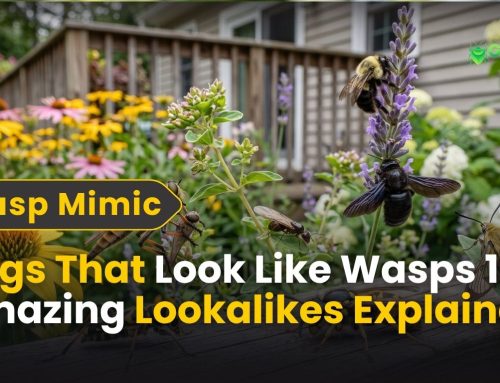
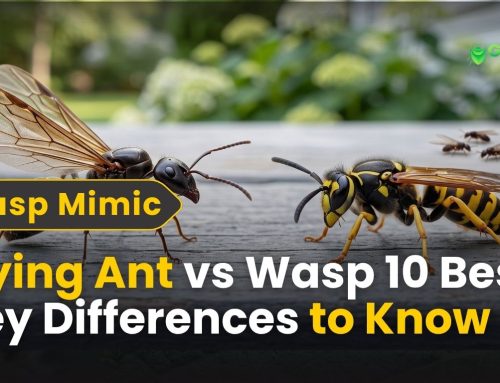
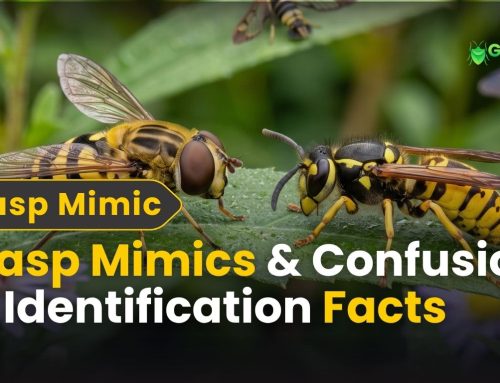
If you’re searching for ground nesting hornets pictures after finding a large wasp or a busy hole in your Connecticut lawn, the first thing to know is that “ground hornet” isn’t a precise insect identification. What homeowners call ground hornets may actually be yellow jackets, cicada killers, other solitary wasps, or even ground-nesting bees.
Pictures are useful, but the safest identification combines the insect’s appearance with its behavior. Numerous yellow-and-black workers repeatedly using one ground opening suggest something very different from a single large cicada killer entering its own burrow.
This visual identification guide explains seven photos and signs worth looking for, how to distinguish ground wasps from bees, why underground nests develop, which nests present the greatest danger, and when Fairfield County homeowners should arrange a professional inspection.
Editor’s note: The photo sections below include recommended photo subjects and captions for original Green Pest Management CT images. Use genuine photographs that accurately show the identified insect or nest. Do not use an unrelated stock photo and label it as a specific species.
Quick Answer: What Do Ground-Nesting Hornets Look Like?
There isn’t one insect called a “ground-nesting hornet.” In Connecticut, homeowners using this term may be seeing an underground yellow jacket colony or a large solitary wasp such as a cicada killer.
The quickest identification clues are:
- Many relatively small yellow-and-black wasps sharing one underground entrance: suspect social yellow jackets.
- One very large wasp repeatedly using an individual burrow: consider a cicada killer or another solitary wasp.
- Numerous fuzzy insects using separate small holes: consider ground-nesting bees.
- Wasps disappearing into siding or a foundation opening: consider a concealed structural nest rather than a true soil nest.
- An exposed open-comb paper nest: likely paper wasps, not ground-nesting “hornets.”
- A large enclosed paper nest above ground: an aerial social-wasp nest, not an underground nest.
- Strong defensive activity around a shared entrance: treat the area cautiously and avoid disturbing it.
Green Pest Management CT’s ground nesting wasp identification guide provides a deeper comparison when you cannot tell whether you have a social or solitary species.
Are Ground Hornets Really Hornets?
Usually, the name doesn’t tell you enough to make that conclusion.
“Ground hornet” is commonly used for large or intimidating wasps associated with soil. It isn’t reliable identification terminology.
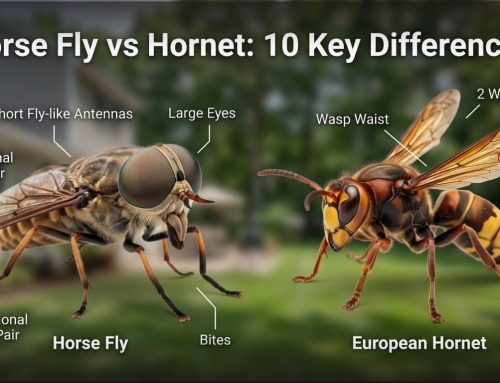
Hornets themselves are wasps, but not every wasp is a hornet. Yellow jackets are also social wasps, while cicada killers belong to a very different group of solitary wasps.
This naming confusion is one reason image searches can make identification harder rather than easier. A search for ground nesting hornets pictures may return photographs of yellow jackets, cicada killers, European hornets, bald-faced hornets, and unrelated wasps.
For Connecticut homeowners, behavior and nest architecture are often more informative than the word “hornet.”
The Connecticut wasp versus hornet comparison and wasp, hornet, and yellow jacket guide explain these classifications in greater detail.
Ground Nest Identification at a Glance
| Photo or Observation | Possible Identification | Nest Pattern | Relative Concern |
| Many yellow-and-black workers entering one lawn hole | Yellow jackets | Social underground colony | Higher near people |
| One very large wasp entering a burrow | Cicada killer/digger wasp | Solitary | Usually lower |
| Numerous fuzzy insects over many holes | Ground-nesting bees | Mostly individual nests | Usually lower |
| Workers entering a foundation gap | Yellow jackets or another cavity nester | Concealed colony | Needs inspection |
| Open paper cells under an overhang | Paper wasps | Exposed aerial nest | Not a ground nest |
| Large gray enclosed nest in tree | Aerial social wasps | Enclosed paper nest | Not a ground nest |
Relative concern doesn’t mean “safe” or “dangerous” in every case. Nest position, species, individual sensitivity to venom, children, pets, and the need to work around the site all affect practical risk.
Photo & Sign 1: Many Yellow-and-Black Wasps Enter One Hole
Recommended photo: Original image showing yellow jacket workers entering and leaving one underground opening from a safe photographic distance.
Suggested caption: Yellow jackets repeatedly using the same underground nest entrance.
Suggested alt text: Yellow jackets entering a ground nest opening in a Connecticut lawn.
This is one of the most important pictures for homeowners to recognize.
An underground yellow jacket colony can have an extremely inconspicuous entrance. You may see little more than a hole in grass, around roots, near landscape materials, or associated with an existing cavity.
The nest itself is hidden.
Look for Worker Traffic
Don’t stand over the entrance. Watch from far enough away that your presence doesn’t affect insect behavior.
A social nest typically produces repeated traffic through one location. Workers may arrive, disappear underground, and reappear from the same opening.
This is considerably different from several solitary insects maintaining separate burrows.
An experienced pest professional pays attention to that traffic because an empty-looking hole doesn’t identify anything. Flight behavior provides biological context.
For additional nest examples, see the ground wasp nest pictures and identification resource and wasp nest identification chart.
Photo & Sign 2: A Large Cicada Killer at an Individual Burrow
Recommended photo: A verified cicada killer beside its soil burrow with enough surrounding ground visible to show the individual nest entrance.
Suggested caption: A cicada killer, often informally called a ground hornet, at a solitary burrow.
Suggested alt text: Cicada killer wasp beside a burrow in soil.
Seeing a very large wasp going underground can be alarming. Size, however, doesn’t automatically indicate the greatest risk.
Cicada killers are large solitary wasps. Females dig burrows and provision nest cells with cicadas for their offspring.
They are one reason the phrase “ground hornet” creates so much confusion.
Cicada Killer vs. Yellow Jacket
The nesting pattern provides an important clue.
A cicada killer female typically operates an individual burrow. Yellow jackets are social: many workers serve a single colony.
Male cicada killers may fly conspicuously around nesting areas and challenge other insects, but males do not possess functional stingers. Females can sting, yet their normal behavior differs from a colony of yellow jackets collectively protecting a communal underground nest.
This doesn’t mean handling a cicada killer is appropriate. It means identification should be based on biology rather than frightening appearance.
Green Pest Management CT’s ground hornet identification and treatment guide provides more help with this common identification problem.
Photo & Sign 3: Numerous Separate Holes With Bee Activity
Recommended photo: A broad image showing multiple individual ground-nesting bee holes rather than an extreme close-up of a single entrance.
Suggested caption: Multiple individual ground-nesting bee burrows can look like a large underground colony.
Suggested alt text: Ground-nesting bee burrows in a Connecticut yard.
This is one of the easiest situations to misidentify from a photograph.
A homeowner may see dozens of insects moving over one patch of lawn or exposed soil and conclude that a massive wasp colony is underground.
But numerous insects don’t necessarily mean one social nest.
Many ground-nesting bees are solitary. Favorable soil can attract many females to the same general area while each maintains an individual nest.
Ground-Nesting Bees vs. Wasps
| Feature | Ground-Nesting Bees | Social Yellow Jackets | Solitary Ground Wasps |
| Body | Often visibly hairy | Relatively smooth | Varies |
| Nest arrangement | Commonly separate burrows | Shared colony | Usually individual burrow |
| Entrance pattern | Many separate holes possible | Concentrated worker traffic | Individual activity |
| Behavior | Usually relatively nondefensive | Can defend colony strongly | Usually less defensive |
| Ecological role | Pollination | Predation/scavenging and other roles | Often predators |
These are field clues, not absolute rules. Appearance varies among species.
The bee versus wasp identification guide offers additional visual comparisons.
Correct identification also supports Integrated Pest Management (IPM). Beneficial pollinators shouldn’t automatically be targeted simply because they nest in the ground.
The U.S. Environmental Protection Agency’s Integrated Pest Management information explains how identification and risk-based decision-making fit into responsible pest management.
Photo & Sign 4: A Small Entrance With No Visible Nest
Recommended photo: A clearly marked—but safely photographed—yellow jacket entrance in established turf showing how little nest material is visible.
Suggested caption: An underground social-wasp nest may be indicated only by a small entrance and regular worker traffic.
Suggested alt text: Small underground yellow jacket nest entrance in grass.
Pictures of the hole itself often disappoint homeowners because there may be almost nothing distinctive about it.
That’s useful information.
An underground social-wasp nest doesn’t need a large mound, exposed paper comb, or dramatic surface structure. The visible opening is simply access to a cavity below.
Potential ground-level entrances can occur around existing burrows, roots, landscape edges, stones, hardscaping, retaining features, or other protected cavities.
Why a Picture of the Hole Isn’t Enough
A hole without an insect provides weak identification evidence.
Other animals and insects also dig or use holes. Even when wasps are present, the entrance doesn’t reliably tell you the species.
A useful identification photo includes the insect when that image can be captured without approaching the nest. A short zoomed video showing normal traffic patterns can sometimes provide more information than a close-up photograph of dirt.
Never put a phone or camera directly above an active entrance to get better ground wasp nest pictures.
The types of wasp nests guide can help compare underground cavities with exposed and aerial nests.
Photo & Sign 5: Defensive Activity Around the Entrance
Recommended image sequence: Photos taken with optical zoom showing several yellow jackets concentrated around an active ground entrance. Do not approach or provoke a nest to create this image.
Suggested caption: Multiple social wasps concentrated around an entrance can indicate an active colony.
An insect’s response to nearby activity can provide an important clue.
Social yellow jackets have a communal nest containing a queen, brood, and workers. A perceived threat immediately around that nest can result in collective defensive behavior.
A solitary wasp doesn’t have a large worker colony to summon.
The Nest May Be Discovered by Accident
Many Connecticut homeowners don’t find an underground nest by inspecting their lawn. They find it while mowing.
A mower, string trimmer, digging tool, wheelbarrow, dog, or person can create vibration and movement directly around a previously hidden entrance.
If numerous wasps suddenly emerge and focus on activity around the site, move away from the immediate area.
Don’t continue the disturbance to determine whether they’re “really aggressive.”
Green Pest Management CT’s yellow jacket behavior guide explains why social colony defense differs from solitary wasp behavior.
Photo & Sign 6: Wasps Entering a Foundation or Structural Gap
Recommended photo: Wasps approaching a genuine foundation, siding, or structural opening, photographed without obstructing the flight path.
Suggested caption: Wasp traffic at a foundation gap may indicate a concealed structural nest rather than a true ground nest.
Suggested alt text: Wasps entering a foundation opening on a Connecticut home.
Not every insect disappearing near the ground is actually nesting in soil.
This distinction is especially important around houses.
Wasps can access concealed spaces through building openings. An entrance near a foundation, siding edge, utility penetration, or other structural gap might lead into a wall or building cavity.
Don’t Immediately Seal an Active Opening
Seeing insects enter a crack naturally makes homeowners want to seal it.
Don’t make sealing the first step when an active social colony may occupy the cavity.
Blocking an exterior opening doesn’t eliminate the insects inside. It may complicate their movement and the eventual treatment.
A professional inspection can determine whether the activity involves soil, a structural void, or another concealed nest location.
For situations involving difficult-to-access colonies, see Green Pest Management CT’s professional hornet exterminator services.
Photo & Sign 7: A Paper Nest Means Something Different
Recommended photo: Side-by-side original photographs of an open paper-wasp comb and an enclosed aerial nest, clearly labeled.
Suggested caption: Paper wasp and enclosed aerial nests are structurally different from concealed underground nests.
This final visual clue helps rule out ground nesting.
Paper wasps commonly build exposed combs with visible cells. Other social wasps can construct enclosed paper nests above ground.
Those structures don’t look like an underground yellow jacket entrance.
Bald-faced hornets, despite their common name, are actually a type of yellow jacket. They typically build conspicuous enclosed aerial nests rather than ground nests.
If you’ve found a gray paper structure hanging from a branch or attached to a building, you’re dealing with a different nest situation from insects disappearing underground.
Compare photographs in the paper wasp nest identification guide and bald-faced hornet identification guide.
Why Do Ground Wasps Choose Connecticut Yards?
Finding a ground nest doesn’t automatically mean a lawn is poorly maintained.
The property simply offered suitable nesting conditions.
Some social yellow jackets can occupy existing cavities, including abandoned animal burrows. Solitary ground wasps may excavate suitable soil themselves. Different species favor different combinations of soil condition, drainage, vegetation, sun exposure, and shelter.
Fairfield County has diverse residential landscapes. Properties can contain mature trees, stone walls, landscaped beds, turf, wooded edges, hardscaping, and undisturbed soil—all of which create different insect habitats.
Food affects foraging patterns as well. Wasps may investigate fallen fruit, garbage, outdoor food, sugary drinks, and other insects.
Finding wasps around food does not prove their nest is underneath the feeding site.
When Are Ground-Nesting Wasps Active in Connecticut?
Connecticut’s seasonal climate strongly influences social-wasp activity.
Spring
Surviving social-wasp queens establish new colonies. Early nests are relatively small and can be hard to notice.
Spring is also a time when some ground-nesting bees become conspicuous. This is why many individual holes in spring shouldn’t automatically be classified as a yellow jacket problem.
Summer
Social colonies develop as new workers emerge.
Increasing traffic makes hidden underground entrances easier to notice. Routine mowing and landscaping also increase the chances of accidental nest disturbance.
Late Summer and Early Fall
Established yellow jacket colonies can become especially conspicuous during this period.
Outdoor dining, pools, patios, gardening, sports, and lawn care also keep Connecticut residents outside, creating more opportunities for human-wasp encounters.
Late Fall and Winter
The normal annual colony cycle and cold Connecticut weather bring outdoor yellow jacket colony activity to an end. Newly produced queens overwinter separately in protected places and can establish colonies in another season.
An old nest is therefore not simply a permanent colony that operates underground year after year.
For additional lifecycle information, see the wasp lifespan and colony cycle guide.
Are Ground-Nesting Hornets Dangerous?
The practical danger depends on what insect is actually present.
A solitary cicada killer and an underground yellow jacket colony shouldn’t be assigned the same risk simply because both are called “ground hornets.”
Social yellow jackets can defend an underground nest with multiple workers. Many wasps are also capable of stinging repeatedly.
Location makes a major difference.
A social nest beside a front door, children’s play set, pool, patio, garden path, driveway, dog area, or regular mowing route creates significantly more exposure than a solitary wasp using a distant section of a large property.
People with known insect-venom allergies should avoid investigating active nests themselves. Potential symptoms of a severe systemic allergic reaction require emergency medical attention. The CDC’s information about venomous insect exposure provides authoritative safety information.
What Not to Do With an Underground Wasp Nest
Once homeowners identify a likely yellow jacket entrance, some common DIY responses can increase exposure rather than solve the problem.
Do not pour gasoline, kerosene, bleach, or miscellaneous household chemicals into a nest. Don’t light the nest on fire, repeatedly flood it with a garden hose, insert tools into the entrance, or intentionally run a mower over it.
Avoid immediately plugging an active entrance as well. A concealed colony is more than the hole you can see.
If pesticides are used, the product must be appropriate for the pest and site and applied according to its label. The EPA’s pesticide safety guidance provides information for homeowners about responsible pesticide use.
DIY Observation vs. Professional Pest Control
Not every ground-nesting insect needs extermination.
| Situation | Appropriate Starting Point |
| Individual solitary wasp far from people | Identification and monitoring |
| Ground-nesting bees in low-conflict location | Consider tolerance and monitoring |
| Numerous yellow jackets using one entrance | Professional assessment |
| Social nest next to walkway or play area | Professional pest control |
| Uncertain species | Professional identification |
| Wasps entering a building | Structural inspection |
| Household member with severe venom allergy | Avoid DIY exposure |
| Previously treated nest remains active | Professional evaluation |
The purpose of professional pest control isn’t simply to kill any wasp seen outdoors. A sound IPM approach identifies the pest, evaluates exposure, and chooses an intervention proportional to the actual problem.
What Happens During Professional Ground-Wasp Treatment?
A professional treatment process should start with diagnosis.
1. Identify the Insect
The technician examines appearance, behavior, season, entrance traffic, and nest characteristics.
This step prevents ground-nesting bees or relatively low-risk solitary wasps from being mistaken for a defensive social colony.
2. Locate the Active Entrance
The visible nest opening is evaluated without unnecessary disturbance. Structural activity is distinguished from true underground nesting where possible.
3. Assess Risk
The technician considers surrounding doors, patios, paths, play areas, pets, landscaping activity, buildings, and other relevant conditions.
4. Choose the Management Approach
When control is justified, treatment is selected for the pest and location and performed according to applicable product labeling and safety requirements.
5. Monitor the Result
Post-treatment observations determine whether meaningful activity remains. Homeowners should follow the technician’s guidance instead of immediately approaching or reopening the area.
6. Address Preventable Conditions
Once the colony is inactive, appropriate exclusion, landscape maintenance, sanitation, or other IPM measures can help reduce future conflicts.
Connecticut homeowners with a confirmed active nest can review Green Pest Management CT’s ground hornet treatment services in Connecticut.
Preventing Ground-Nesting Wasp Problems
No responsible pest professional can guarantee that a flying wasp will never nest somewhere on an outdoor property. Prevention is about reducing opportunities and human conflicts.
Useful measures include maintaining healthy turf where bare soil isn’t wanted, managing rodent problems that create burrows, keeping outdoor garbage contained, removing persistent food residue, cleaning sugary spills, and checking infrequently maintained areas before mowing.
Structural gaps should be addressed when appropriate, but only after confirming that an active colony isn’t using them.
Avoid widespread “just in case” insecticide treatments. IPM favors targeted control based on actual pest evidence.
Ground-Nesting Wasps in Fairfield County, CT
The same insect can create different problems depending on the property.
In Greenwich, Wilton, and New Canaan, larger landscaped properties and wooded edges can allow a nest to remain unnoticed until gardeners or lawn crews work near it.
In Stamford and Norwalk, homes and outdoor spaces may sit closer to sidewalks, driveways, neighboring properties, and busy entrances. A nest in a small lawn can therefore be difficult to avoid.
Darien, Westport, and Fairfield properties frequently combine lawns with pools, patios, gardens, children’s spaces, stonework, and mature landscaping. Nest position can matter as much as species.
Green Pest Management CT serves homeowners throughout these communities and surrounding Fairfield County. If photographs and safe-distance observations aren’t enough to identify an active nest, a professional inspection can clarify whether you’re dealing with yellow jackets, a solitary wasp, ground-nesting bees, or a structural pest problem.
The Connecticut wasp and hornet identification guide is also available for additional comparisons.
When Should You Schedule a Professional Inspection?
Arrange an inspection when numerous insects use one ground entrance, the identification remains uncertain, wasps show defensive activity, or the location forces family members or workers to pass close to the nest.
Professional help is particularly appropriate around entrances, patios, swimming pools, children’s areas, pet spaces, and regular landscaping routes.
Structural activity also deserves an inspection. Wasps entering near the foundation may be using part of the building rather than the soil.
Green Pest Management CT provides professional pest control assistance throughout Greenwich, Stamford, Darien, Westport, Fairfield, Wilton, New Canaan, Norwalk, and nearby Fairfield County communities.
Frequently Asked Questions
What do ground-nesting hornets look like?
There is no single species accurately described by that common name. Homeowners may be referring to yellow jackets, cicada killers, or other ground-nesting wasps. Look at body shape, size, entrance traffic, and whether insects share a nest.
What should I look for in ground nesting hornets pictures?
Look for the insect and its nesting behavior, not simply a photograph of a hole. Numerous yellow-and-black workers sharing one underground opening can suggest yellow jackets, while one large wasp using an individual burrow may be a solitary species.
What does a ground hornet nest look like?
The surface may show nothing more than a small soil or lawn opening. If the colony is underground, the actual nest structure is hidden inside a cavity. Repeated insect traffic is often the most obvious clue.
Are yellow jackets ground hornets?
People sometimes call underground yellow jackets “ground hornets,” but yellow jackets and true hornets aren’t identical classifications. Using the actual pest name is more useful when determining risk and treatment.
Are cicada killers dangerous?
Female cicada killers can sting, but these solitary wasps don’t have a communal worker colony defending one nest in the way social yellow jackets do. Their large size often makes them appear more threatening than their normal behavior suggests.
How can I tell ground-nesting bees from ground wasps?
Many ground-nesting bees appear hairier and use separate burrows, while common social yellow jackets are smoother and may send numerous workers through one entrance. Use several identification clues because appearance varies among species.
Why are wasps going into a hole in my lawn?
They may be nesting in an underground cavity or individual soil burrow. Yellow jackets can use existing cavities, while solitary wasps may excavate their own burrows. Observe traffic from a safe distance rather than investigating the hole directly.
When should an underground yellow jacket nest be treated?
Treatment becomes particularly important to consider when a social colony creates unavoidable exposure around entrances, play spaces, patios, pools, pet areas, gardens, or landscaping routes. Low-conflict solitary insects may not need treatment.
Should I cover a ground wasp nest entrance?
Do not simply cover an active social-wasp entrance. Blocking the visible hole doesn’t establish that the concealed colony has been eliminated and can create additional complications.
Can Green Pest Management CT identify a ground-wasp problem?
Green Pest Management CT provides professional pest inspection and management services throughout Fairfield County, including Greenwich, Stamford, Darien, Westport, Fairfield, Wilton, New Canaan, and Norwalk. Professional assessment is appropriate when photographs don’t provide a confident identification or an active colony creates a safety concern.
Conclusion: Use Ground-Nesting Hornet Pictures as Clues, Not Proof
Ground nesting hornets pictures can be valuable for narrowing an identification, but a photo by itself shouldn’t determine whether an insect needs treatment.
The most useful evidence combines appearance with behavior. Many smaller yellow-and-black workers repeatedly using one underground opening may indicate a social yellow jacket colony. One very large wasp using an individual burrow may be a cicada killer. Numerous insects using separate holes may be ground-nesting bees or other solitary insects.
For Connecticut homeowners, making that distinction prevents two opposite mistakes: ignoring a defensive colony in a high-traffic location or unnecessarily treating beneficial insects that present little practical risk.
If an active underground nest is close to your home, walkway, pool, patio, play area, pets, or normal lawn-care route, Green Pest Management CT can identify the problem and recommend an appropriate IPM-based solution. Homeowners in Greenwich, Stamford, Darien, Westport, Fairfield, Wilton, New Canaan, Norwalk, and surrounding Fairfield County areas can schedule a professional inspection when visual identification isn’t enough.