Ground-Nesting Wasp Identification: 7 Key Signs to Know
Seeing yellow-and-black insects repeatedly disappear into a hole in your lawn can raise an immediate question: what exactly is living down there? Ground nesting wasp identification is important because an underground yellow jacket colony, a solitary digger wasp, and a group of harmless ground-nesting bees require very different responses.
For Connecticut homeowners, the quickest clues are the number of insects, whether they share one entrance, their appearance, their flight pattern, and how they react when the area is disturbed. Many wasps entering one small opening can indicate a social colony, while individual insects using separate holes are more likely to be solitary species.
This guide explains seven identification signs, what ground wasp nests actually look like, when they present a danger, which Connecticut species are commonly confused, how season affects activity, and when professional pest control is appropriate.
Green Pest Management CT serves homeowners throughout Greenwich, Stamford, Darien, Westport, Fairfield, Wilton, New Canaan, Norwalk, and surrounding Fairfield County communities.
Quick Ground Nesting Wasp Identification Guide
Before getting closer to a suspected nest, observe it from a safe distance.
| What You See | What It May Indicate | General Concern |
| Many yellow-and-black wasps using one hole | Yellow jacket colony | Higher |
| One large wasp using one burrow | Solitary digger wasp or cicada killer | Usually lower |
| Many insects using separate holes | Ground-nesting bees or solitary wasps | Usually lower |
| Fuzzy insects around individual soil holes | Ground-nesting bees | Usually lower |
| Constant traffic into one hidden cavity | Social wasp nest | Requires caution |
| Wasps entering a foundation or siding gap | Concealed structural nest | Professional inspection recommended |
| Open paper comb above ground | Paper wasps | Not a ground nest |
| Large enclosed paper nest in tree or shrub | Aerial wasp/hornet colony | Not a ground nest |
The most important rule is simple: don’t identify an underground nest based on the hole alone.
How insects use that hole tells you considerably more.
What Is a Ground-Nesting Wasp?
A ground-nesting wasp is any wasp that constructs a nest underground or occupies an existing subterranean cavity. “Ground wasp” isn’t one scientific species.
The term can include social wasps such as certain yellow jackets as well as solitary insects such as cicada killers and other digger wasps.
That distinction matters.
Social yellow jackets live together in a colony and can collectively defend their nest. Solitary wasps generally maintain individual burrows and don’t have an entire worker force protecting a shared colony.
Ground-nesting bees introduce another identification challenge. They are not wasps at all, yet homeowners frequently find them emerging from similar-looking holes.
Green Pest Management CT’s broader Ground-Nesting Wasp Guide explains ground-nesting behavior in more depth, while the Connecticut wasp and hornet identification encyclopedia provides additional species comparisons.
Sign 1: Many Wasps Are Using the Same Ground Opening
This is one of the strongest clues you can observe without touching the nest.
If numerous wasps repeatedly enter and exit one opening, you may be looking at an established social colony.
Yellow jackets can use underground cavities such as abandoned animal burrows. From the surface, the entrance can appear surprisingly insignificant. The visible hole isn’t the nest itself—it’s the doorway into the nest.
Watch the Traffic Pattern
Observe from far enough away that the insects aren’t responding to you.
An active social colony can show a consistent stream of workers approaching and leaving the same location. In established colonies, traffic may become especially noticeable as the season progresses.
Contrast that with a solitary wasp.
A female solitary wasp may repeatedly return to her own burrow, but you won’t normally see the same worker traffic associated with a social yellow jacket colony.
The practical distinction is:
Many insects + one shared opening = increased suspicion of a social nest.
Individual insects + separate burrows = increased suspicion of solitary insects.
It isn’t an absolute identification by itself, but it is an excellent first clue.
For more examples, see Green Pest Management CT’s wasp nest in the ground identification guide and ground wasp nest pictures and ID resource.
Sign 2: The Insects Have a Smooth, Defined Wasp Body
Body appearance can help separate wasps from bees.
Yellow jackets generally have a relatively smooth body with contrasting markings and a defined wasp shape. Ground-nesting bees are often noticeably hairier because body hairs help collect and transport pollen.
Color should never be the only identification feature.
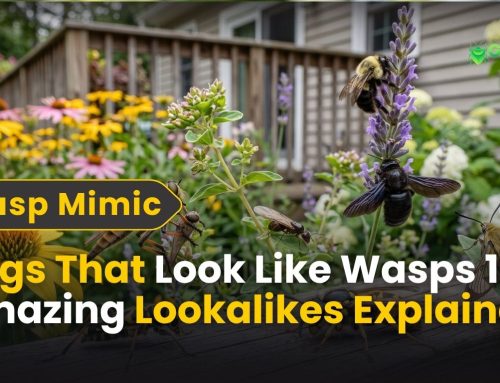
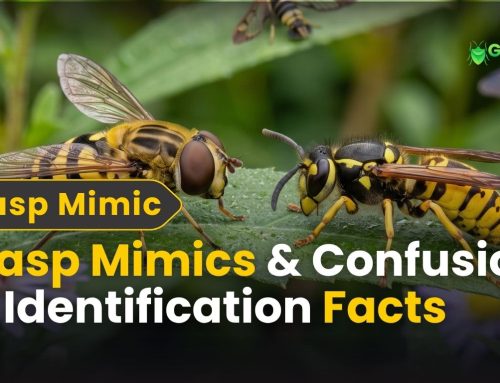
Many unrelated insects display black-and-yellow coloration, and even wasp species vary substantially in color and pattern. Some flying insects also mimic wasps because resembling a stinging insect can discourage predators.
Wasp vs. Ground-Nesting Bee
| Feature | Ground-Nesting Wasp | Ground-Nesting Bee |
| Appearance | Often smooth or less hairy | Often visibly hairy |
| Body shape | Frequently defined/slender | Often more robust |
| Primary ecological role | Often insect predator | Pollinator |
| Nesting | Social or solitary, depending on species | Many species are solitary |
| Soil activity | One or multiple entrances | Frequently individual burrows |
| Colony defense | High in some social wasps | Generally much lower for solitary species |
These are useful field clues rather than absolute taxonomic rules.
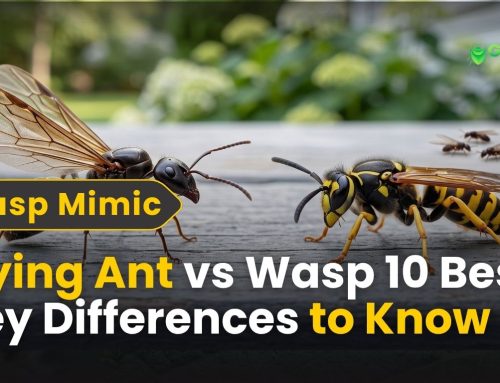
If you are still unsure, compare your observations with Green Pest Management CT’s bee versus wasp identification guide and flying insects that resemble wasps.
Avoid catching or swatting insects to obtain an identification. A photograph taken without approaching the entrance is safer and often more useful.
Sign 3: The Nest Entrance May Be Almost Invisible
Homeowners searching for ground wasp nest pictures often expect a dramatic nest.
Usually, that isn’t what an underground nest looks like.
A yellow jacket nest can be almost entirely concealed. At ground level, you might see nothing more than a relatively small hole among grass, roots, leaves, stonework, or landscaping.
The internal nest and occupied cavity are hidden below the surface.
Common Places to Look for Activity
Ground-level wasp traffic can occur near:
- Existing or abandoned animal burrows
- Lawn edges
- Roots and vegetation
- Landscape beds
- Stones and hardscaping
- Retaining features
- Protected soil cavities
- Foundation edges
- Other sheltered ground-level voids
Do not put your face near the entrance to see inside.
You will generally learn more by watching incoming and outgoing insects than by inspecting the hole itself.
The types of wasp nests identification guide and wasp nest identification chart can help distinguish underground nests from exposed paper nests.
Sign 4: Defensive Behavior Points Toward a Social Species
Behavior can be more useful than appearance.
Social wasps protect a shared colony containing the queen and developing brood. If activity immediately around an underground nest triggers multiple wasps to respond, that raises concern that you’re dealing with a defensive social species.
Yellow jackets can be particularly problematic because people frequently discover a nest by accident.
The lawn can look completely normal until someone:
- Runs a mower over the area
- Uses a string trimmer nearby
- Digs into the soil
- Pulls weeds around the opening
- Moves rocks or landscaping materials
- Walks close to the nest
- Allows a dog to investigate
- Disturbs the area during yard maintenance
An apparently calm nest can therefore become a problem when vibration and movement occur close to its entrance.
If wasps begin responding to your presence, stop trying to identify them at close range and leave the immediate area.
Solitary Doesn’t Mean Incapable of Stinging
Female solitary wasps of many species possess stingers. “Solitary” shouldn’t be interpreted as “physically unable to sting.”
The important distinction is that they aren’t generally defending a large communal colony with numerous workers.
This is one reason a large solitary wasp can represent less practical risk than a smaller social yellow jacket.
Green Pest Management CT’s yellow jacket species and behavior guide provides further information about these differences.
Sign 5: Multiple Separate Holes Often Suggest Solitary Bees or Wasps
This clue prevents a lot of unnecessary treatments.
Imagine walking onto a sunny portion of the lawn and seeing dozens of insects flying low over the soil. Looking more closely from a safe position reveals many separate holes.
It can look like a huge colony.
It may actually be an aggregation of solitary ground-nesting bees or wasps.
“Solitary” does not necessarily mean only one insect is present on the entire property. Suitable soil conditions can attract many individuals to the same general location while each maintains its own nest.
Why Ground-Nesting Bees Are Commonly Misidentified
Ground-nesting bees can appear suddenly and in noticeable numbers. A homeowner who sees dozens of insects automatically assumes there must be one large hive underground.
Often, there isn’t.
This matters because native and other ground-nesting bees can be valuable pollinators and may pose relatively little risk compared with a defensive yellow jacket colony.
Integrated Pest Management (IPM) favors correct identification before intervention. Beneficial insects should not be treated simply because they use the ground.
The U.S. Environmental Protection Agency’s Integrated Pest Management information describes the broader principles of identifying and managing pests while limiting unnecessary interventions.
Sign 6: A Very Large Solitary Wasp May Be a Cicada Killer
Large wasps often cause the greatest alarm while being among the most commonly misunderstood ground-nesting species.
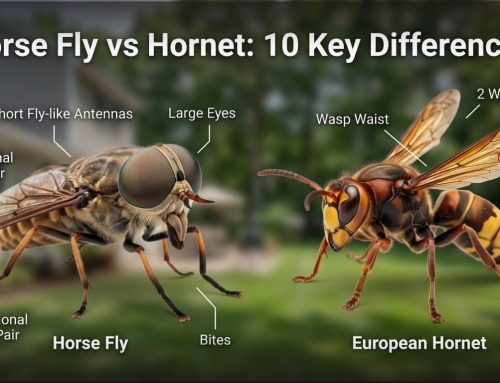
Cicada killers are solitary wasps that excavate burrows and provision them with cicadas for their offspring. Because of their large size and ground-nesting behavior, people often refer to them informally as “ground hornets.”
That common name creates confusion.
Ground Hornet Doesn’t Always Mean Hornet
Searches for “ground nesting hornets pictures” often mix several different insects together.
Hornet, yellow jacket, cicada killer, and ground wasp aren’t interchangeable terms.
If you see one very large wasp repeatedly visiting an individual soil burrow rather than many smaller workers entering a communal nest, a solitary wasp should be considered.
Male cicada killers may fly conspicuously around nesting areas but cannot sting. Females can sting, although they generally don’t display the communal defensive behavior associated with a social yellow jacket nest.
See Green Pest Management CT’s ground hornet identification and treatment guide for additional comparisons.
Sign 7: Season Provides Important Identification Clues
Connecticut’s seasons strongly influence wasp activity.
Season alone cannot identify an insect, but combining timing with appearance and nest behavior improves accuracy.
Spring
Social wasp colonies begin small. Queens establish nests and produce the early generations of workers.
Spring is also a time when homeowners can notice ground-nesting bees. Multiple insects around numerous individual holes should therefore not automatically be labeled a yellow jacket infestation.
Summer
Social wasp colonies develop as worker numbers increase.
This is also when lawn maintenance can expose previously unnoticed underground nests. A mower may pass over an inconspicuous nest location and trigger defensive activity.
Late Summer and Early Fall
Established yellow jacket colonies can become particularly noticeable later in the warm season.
Worker populations and foraging activity make them easier to detect, while Connecticut residents are still spending significant time on patios, lawns, decks, gardens, pools, and sports areas.
Late Fall and Winter
Connecticut’s freezing temperatures end normal activity for annual outdoor social-wasp colonies. Newly produced queens survive the winter in protected locations and establish new colonies in a future season.
The same functioning yellow jacket colony does not simply remain active underground all winter and resume business as usual in spring.
The wasp lifecycle guide explains this seasonal cycle in more detail.
Why Do Wasps Nest in the Ground?
Ground nesting isn’t necessarily evidence of a lawn problem.
The property simply provides a usable nesting site.
Yellow jackets may take advantage of existing underground cavities, including abandoned animal burrows. Solitary species can choose soil based on drainage, texture, sun exposure, vegetation coverage, and ease of excavation.
Fairfield County’s mix of suburban lawns, landscaped beds, wooded edges, stone features, mature trees, and natural terrain provides plenty of potential habitat.
Food availability also influences where workers forage. Outdoor garbage, fallen fruit, sugary drinks, food residue, and other insects can attract wasp activity, although the presence of feeding wasps does not prove the nest is nearby.
Are Ground-Nesting Wasps Dangerous?
The answer depends on which wasp you have.
An underground social yellow jacket colony can pose a meaningful sting risk, especially near high-traffic areas. Many solitary ground wasps present substantially less risk.
Nest location is just as important as species.
A colony in a remote corner of a property has a different exposure level from one beside:
- A front walkway
- Children’s play equipment
- A patio or deck
- A swimming pool
- A frequently mowed lawn
- A pet area
- A driveway
- A garden
- A building entrance
People with known insect-venom allergies should avoid approaching suspected nests. Symptoms of a serious allergic reaction following a sting require urgent medical attention. The Centers for Disease Control and Prevention’s guidance on venomous insects provides additional safety information.
Ground-Nesting Wasp Identification: What Not to Do
The most preventable problems happen when homeowners try to force insects out before knowing what species they have.
Do not pour gasoline, bleach, kerosene, or improvised mixtures into an underground nest. Don’t attempt to burn it, flood it with a garden hose, insert tools into the hole, or deliberately mow over an active entrance.
Also avoid immediately plugging the opening.
Sealing a visible entrance does not prove that an underground colony has been eliminated. In structural situations, blocking an active access point can create even more complicated movement.
If a pesticide is used, it must be appropriate for the pest and application site and used according to its label. Homeowners can review the EPA’s pesticide safety guidance for responsible pesticide-use principles.
Can You Prevent Ground-Nesting Wasps?
You cannot guarantee that a flying insect will never choose your Connecticut property, but you can reduce some favorable conditions and potential conflicts.
A practical prevention checklist is:
- Maintain healthy turf in high-use areas where bare soil isn’t desired.
- Monitor old animal burrows and recurring problem areas.
- Address rodent activity using appropriate IPM methods.
- Keep outdoor garbage containers closed.
- Clean food and sweet beverage spills around patios.
- Remove fallen fruit where it causes persistent insect activity.
- Observe infrequently mowed areas before running equipment through them.
- Tell landscapers about known active nests.
- Seal appropriate structural gaps after confirming they are not being used by an active colony.
- Avoid routine, unnecessary insecticide applications to the entire lawn.
Prevention should reduce human-pest conflict without attempting to eliminate beneficial insects from the landscape.
DIY vs. Professional Ground Wasp Control
Some situations call for observation rather than treatment. Others warrant professional pest control.
| Situation | Best Starting Point |
| Solitary bee or wasp in remote location | Monitor and avoid unnecessary treatment |
| Numerous separate bee burrows | Identify before considering control |
| Many yellow jackets entering one hole | Professional assessment is appropriate |
| Nest beside front door or play area | Professional service is recommended |
| Nest connected to foundation/wall | Professional inspection |
| Species cannot be identified | Get identification help |
| Known severe sting allergy in household | Avoid DIY exposure |
| Old inactive hole | Confirm activity before taking action |
Professional service becomes more valuable as uncertainty, colony defensiveness, structural involvement, and human exposure increase.
For a broader comparison, see DIY versus professional hornet nest removal.
What Happens During Professional Treatment?
Professional treatment begins with inspection rather than automatically applying pesticide.
Inspection and Identification
A technician determines where insects are entering, whether they share a colony, and what species or pest group is most likely involved.
Behavior is especially important when the actual underground nest cannot be seen.
Risk Assessment
A nest next to a heavily traveled path requires different management from a solitary burrow far from human activity.
Children, pets, landscaping work, building entrances, and sensitive areas all influence the treatment decision.
Treatment Selection
If intervention is appropriate, the technician selects a control method suited to the target pest, nest location, and product labeling.
This is part of responsible Integrated Pest Management: use the right intervention for the actual problem rather than automatically treating every flying insect.
Monitoring and Prevention
After treatment, activity is evaluated as appropriate for the control method used. Once a colony is inactive, relevant exclusion or habitat modifications can be considered.
Green Pest Management CT’s professional hornet and wasp services provide additional information about professional stinging-insect management.
Ground-Nesting Wasps in Fairfield County, Connecticut
Local property conditions can change how a nest affects homeowners.
In Greenwich, New Canaan, and Wilton, larger lawns, wooded margins, stonework, and mature landscapes can provide many natural nesting opportunities. Nests may go unnoticed until landscaping crews work nearby.
In Stamford and Norwalk, tighter residential spaces can place a nest close to sidewalks, driveways, neighbors, entrances, and outdoor living areas.
Darien, Westport, and Fairfield properties frequently combine lawns, gardens, patios, pools, play areas, and landscaped spaces. A nest doesn’t need to be physically attached to the house to interfere with normal use of the property.
Across Fairfield County, the basic identification principle remains the same: determine what is nesting before deciding whether it needs to be eliminated.
Green Pest Management CT’s Connecticut wasp and hornet ID guide can help homeowners narrow an identification before requesting service.
When Should You Call a Pest Control Professional?
Consider scheduling a professional inspection when many wasps are using the same ground opening, the species isn’t clear, the nest is close to routine activity, or anyone would need to approach the entrance to treat it.
Professional help is particularly appropriate for nests near children, pets, entrances, pools, walkways, or regular landscaping routes.
You should also seek help when wasps appear to enter a building at ground level. What looks like a ground nest could actually involve a foundation, siding, or wall void.
Green Pest Management CT provides professional pest management throughout Greenwich, Stamford, Darien, Westport, Fairfield, Wilton, New Canaan, Norwalk, and nearby Fairfield County areas. Homeowners with an active problem can schedule professional pest control assistance.
Frequently Asked Questions
How can I identify a ground-nesting wasp?
Ground nesting wasp identification should combine appearance and behavior. Look at whether the insect is smooth or hairy, its general coloration and size, how many insects are present, and whether they all use one entrance. Many workers entering one hole may indicate a social yellow jacket colony.
What does a ground wasp nest look like?
An underground wasp nest may have very little visible structure at the surface. You may only see a small entrance with repeated wasp traffic. The actual nest occupies a concealed cavity below ground.
Are ground wasps the same as yellow jackets?
No. “Ground wasp” is a broad description of nesting behavior. Some yellow jacket species nest underground, but solitary digger wasps and other wasps also use soil.
How can I tell ground-nesting bees from wasps?
Ground-nesting bees are generally hairier and may maintain many separate burrows in the same patch of soil. Wasps usually appear smoother. Nest behavior, body shape, and entrance patterns should be considered together rather than relying on color alone.
Are ground hornets actually hornets?
Not necessarily. “Ground hornet” is an informal name commonly applied to several ground-nesting wasps, including large solitary species such as cicada killers. Identification should be based on the actual insect rather than the nickname.
Why are yellow jackets going into a hole in my lawn?
They may have established a nest in an existing underground cavity, including an old animal burrow. The visible opening can lead to a larger nest space concealed beneath the lawn.
When should a ground wasp nest be treated?
Treatment should be considered when a defensive social-wasp colony creates meaningful exposure to people or pets. Nests beside entrances, play areas, patios, pools, or mowing routes deserve particular attention. Solitary beneficial insects in remote areas may not require treatment.
Should I fill a ground wasp hole?
Do not fill an entrance while an active social colony is using it. Blocking the hole does not necessarily eliminate the nest and may cause surviving insects to search for another route.
Do ground wasps survive Connecticut winters?
Annual social-wasp colonies normally decline when cold weather arrives. Future queens overwinter separately and establish new colonies later. Suitable locations can attract new nesting activity in subsequent years.
What should I do if I can’t identify the wasp?
Keep people and pets away, photograph or observe the insects from a safe distance, and request professional identification. Avoid experimenting with the nest while you’re uncertain whether you’re dealing with beneficial ground-nesting bees, solitary wasps, or defensive yellow jackets.
Conclusion: Identification Comes Before Treatment
Good ground nesting wasp identification isn’t based on finding a hole and assuming everything inside is dangerous. The best clues are the insects themselves, the number of entrances, worker traffic, body characteristics, behavior, nest location, and season.
Many yellow-and-black insects repeatedly using one underground entrance deserve more caution because they may represent an established yellow jacket colony. Numerous separate holes with individual insects may instead belong to solitary bees or wasps that provide ecological benefits and often do not need control.
For Connecticut homeowners, this distinction protects both people and beneficial insects. It also prevents risky DIY treatments that may fail to address the real problem.
If you discover persistent ground-wasp activity near a walkway, patio, pool, play area, building entrance, or frequently maintained lawn, Green Pest Management CT can provide a professional inspection and recommend an appropriate IPM-based solution. Service is available throughout Greenwich, Stamford, Darien, Westport, Fairfield, Wilton, New Canaan, Norwalk, and surrounding Fairfield County communities.