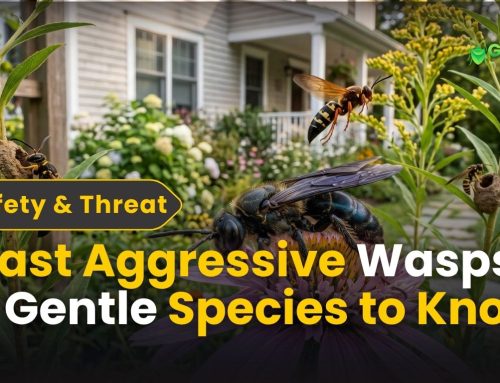
Do Hornets Eat Wasps? Predator Behavior Explained
You Noticed Fewer Wasps But More Hornets. Here’s Why That’s Actually Worse.
It happened to a homeowner in Wilton, CT last summer. She noticed the paper wasp nest on her back porch had fewer wasps than usual. “Maybe they’re dying off,” she thought. Problem solved, right?
Wrong.
Three days later, she discovered a massive hornet nest under her deck just twelve feet away. The hornets hadn’t solved her pest problem. They had moved in and taken over. The wasps didn’t disappear because the season ended. They disappeared because something was eating them.
That something? Hornets.
If you’ve been wondering do hornets eat wasps, the short answer is yes and understanding exactly how and why this happens reveals some of the most fascinating and important behavioral facts about stinging insects in Connecticut. More importantly, it explains why a hornet colony near your home is never the “lesser of two evils” it’s a problem that demands immediate professional attention.
Let’s break it all down.
Do Hornets Eat Wasps? The Definitive Answer
Yes. Hornets do eat wasps and they do it regularly, deliberately, and efficiently.
This isn’t occasional or accidental. Hornet species like the European hornet (Vespa crabro) and the bald-faced hornet (Dolichovespula maculata) are active predators that include wasps as a meaningful part of their diet, particularly during their colony’s protein-intensive larval-rearing phase.
What makes this especially significant is the method hornets use. Unlike many predators that wait passively for prey, hornets will actively seek out and hunt smaller wasps. They don’t just happen upon a wasp they pursue them.
According to Wikipedia’s entry on the European hornet, Vespa crabro is one of the most versatile and effective insect predators in its range, consuming a wide variety of prey including other Hymenoptera the insect order that includes all wasps, bees, and ants.
This predatory relationship is one of the most misunderstood dynamics in backyard pest management. And it matters enormously for homeowners across Greenwich, Stamford, Darien, New Canaan, and all of Fairfield County.
How Do Hornets Hunt and Kill Wasps?
The Hunt: Precision Over Power
Hornets are surprisingly strategic hunters. A foraging hornet worker will locate prey including smaller wasps at shared food sources, near flowers, or even near the entrance of a wasp nest.
Here’s how the predation sequence typically unfolds:
Step 1: Detection
The hornet identifies a smaller wasp through visual and chemical cues. Wasps emit pheromones that hornets can detect, making active wasp nests a target-rich environment.
Step 2: Approach and Capture
The hornet approaches rapidly and uses its powerful mandibles not its stinger to seize and immobilize the wasp. The hornet’s mandibles are significantly stronger than those of smaller wasp species, giving it a decisive physical advantage.
Step 3: Processing
Once captured, the hornet chews the wasp’s body into a protein-rich paste or ball. This is called a prey ball and it’s specifically designed for transport back to the nest.
Step 4: Colony Feeding
The protein ball is carried back and fed directly to the hornet colony’s developing larvae. The larvae are the primary consumers of protein in the colony. Adult hornets primarily consume sugar nectar, fruit juice, and the carbohydrate secretions produced by their own larvae.
This efficient, purposeful hunting strategy makes hornets a genuine apex predator among stinging insects in Connecticut’s ecosystem.
For a deeper understanding of how hornet anatomy enables this predatory behavior, visit our guide on body parts of a wasp simple anatomy explained, which covers the mandible structure and physical adaptations common to both wasps and hornets.
Which Hornets Eat Wasps? Species-Specific Breakdown
Not all hornets prey on wasps with equal frequency or aggression. Here’s how Connecticut’s most common hornet species compare as wasp predators:
European Hornet (Vespa crabro)
The European hornet is the most significant wasp predator you’ll encounter in Connecticut. Large, powerful, and highly adaptable, European hornets regularly hunt:
- Paper wasps (Polistes species)
- Yellow jackets (various Vespula species)
- Small bumblebees
- Other flying insects
European hornets are particularly effective because of their size advantage (workers reach 1–1.5 inches) and their ability to forage at night — an unusual trait among stinging insects. This nocturnal activity means they can hunt near wasp nests when the wasps are less alert and less active.
Their presence near your Darien or Westport home is a serious concern. Not only are they dangerous in their own right, but their hunting behavior can disrupt local bee and beneficial insect populations.
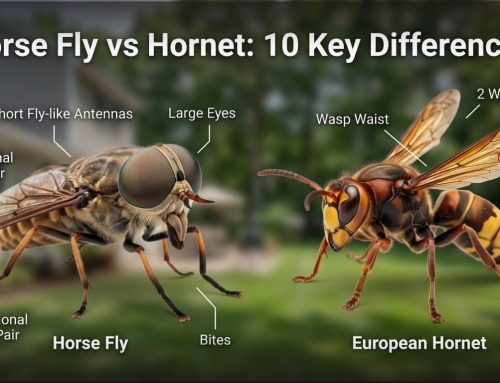
For a detailed comparison, our yellow jacket vs. European hornet guide covers the key differences between these two species in Connecticut.
Bald-Faced Hornet (Dolichovespula maculata)
Despite its name, the bald-faced hornet is technically a type of yellow jacket not a true hornet. However, its size, aggression level, and predatory behavior firmly place it in the “hornet” category for practical purposes.
Bald-faced hornets actively prey on:
- Yellow jackets (including their own close relatives)
- Paper wasps
- Flies and other soft-bodied insects
Their large paper nests often found in trees, shrubs, and on building overhangs across Greenwich and New Canaan can contain 400–700 workers at peak season. These colonies are exceptionally territorial and will attack perceived threats aggressively.
Want to know exactly what a bald-faced hornet looks like? Our visual guide to what a hornet looks like has detailed descriptions and identification tips for Connecticut residents.
Do Hornets Attack Wasp Nests Directly?
This is where things get really interesting and really dangerous for homeowners who mistake a hornet activity surge for “the wasps clearing out.”
Yes, hornets will sometimes raid wasp nests directly. This behavior has been documented in both European hornets and bald-faced hornets. The raid typically targets:
- Larvae and pupae (extremely high protein, easy to harvest)
- Eggs (nutritionally valuable for developing hornet larvae)
- Adult wasps that attempt to defend the nest
A raiding event is swift and violent. A small group of hornet workers will approach a wasp nest, overwhelm the defenders through size and aggression, and harvest larvae and pupae directly from the nest cells. The defending wasps though numerous are significantly smaller and physically outmatched.
This raiding behavior is more common when:
- The hornet colony is large and protein demands are high
- Alternative prey is scarce
- The wasp nest is accessible (not fully enclosed)
- The wasp colony is weakened by disease, parasites, or late-season decline
The implications for your property are significant. If hornets are raiding wasp nests near your home, it signals that a large, established hornet colony is nearby — and that colony poses a far greater risk to your family than the wasps did.
Don’t assume the problem is getting better. Contact our Connecticut pest control professionals before a hornet infestation escalates.
Are Hornets Territorial? Understanding Defensive Behavior
Yes hornets are highly territorial, and this is one of the most critical behavioral facts you need to understand as a Connecticut homeowner.
Hornet colonies establish and actively defend a territory around their nest. The size of this defensive zone varies by species and colony size, but it can extend several meters in all directions from the nest entrance.
Within this territory, hornet workers actively patrol. They respond to:
- Perceived threats from humans, animals, or other insects
- Vibration (lawnmowers, power tools, footsteps)
- Sudden movements
- Specific scents (perfumes, certain chemicals, alarm pheromones)
- The presence of competing insects including wasps
This territoriality is directly connected to their predatory behavior. Hornets don’t just eat wasps they also defend their foraging territory against wasps and other competing insects. A wasp that enters a hornet’s established foraging range may be attacked and killed as a competitor, not just as prey.
This dual motivation predation and territorial defense makes hornets particularly dangerous in residential environments. Unlike a passive pest that simply builds a nest and forages, hornets actively expand and defend their territory.
Read more about this behavioral dynamic in our detailed analysis of are hornets more aggressive than wasps a common question from homeowners in Stamford and Westport who have encountered both species on their property.
Territorial Danger Zones: What Homeowners Need to Know
| Distance From Nest | Risk Level | Recommended Action |
| 0–3 feet | Extreme | Do not approach under any circumstances |
| 3–10 feet | Very High | Maintain distance; do not disturb |
| 10–20 feet | High | Move slowly; avoid sudden movements |
| 20–50 feet | Moderate | Avoid vibration-producing activities |
| 50+ feet | Lower (but variable) | Monitor; do not provoke |
These distances are approximate and increase significantly if the nest has been recently disturbed. A previously disturbed colony can remain on high alert for hours.
The Colony Lifecycle: How It Shapes Predatory Behavior
Understanding the colony lifecycle explains exactly when hornets are most likely to eat wasps and why their behavior shifts throughout the season.
Spring: The Queen Starts Everything
In early spring (March–April in Connecticut), an overwintered queen emerges from hibernation and begins building a new colony from scratch. At this stage, her protein needs are high she’s raising the first generation of workers entirely alone.
During this phase, the queen actively hunts insects for protein. Wasps are potential prey, but colonies are so small at this point that there’s little organized predation.
Early Summer: Colony Growth and Active Hunting
By June and July, worker numbers are growing rapidly. The colony has dozens to hundreds of workers that need to feed developing larvae. Protein demand spikes.
This is when organized wasp hunting begins in earnest. Workers actively patrol wider territories and hunt more aggressively. Wasp populations near a growing hornet colony begin to decline noticeably.
Late Summer: Peak Predation Maximum Danger
August through September represents the peak of both the hornet colony’s size and its predatory activity. Colonies at this stage may contain hundreds to over a thousand workers, all requiring constant protein input to support larvae.
Wasp hunting intensifies. If a wasp colony is nearby, raids on that colony’s nest become more likely. This is the period when homeowners notice the dramatic reduction in visible wasps near their yard sometimes incorrectly assuming the problem has resolved.
For a complete breakdown of how this seasonal cycle plays out across Connecticut, our comprehensive wasp and hornet behavior hub is the definitive resource.
Fall: Colony Collapse and New Queens
By October, the hornet colony begins to collapse. New queens and males emerge for mating flights. Workers become increasingly desperate for food and significantly more aggressive.
The lifespan of individual hornet workers is only a few weeks. The colony itself is annual it does not survive winter. Only newly mated queens enter hibernation, overwintering in protected locations like wall voids, under bark, or in leaf litter.
This is a critical point for homeowners in New Canaan and Wilton: If a queen overwinters inside your home’s wall or attic, she will emerge in spring and begin a new colony inside or very close to your structure. This is how hornet problems that seem to “go away” in winter come back worse the following year.
What Eats Wasps and Hornets? The Natural Predator Ecosystem
Since we’re discussing what hornets eat, it’s worth addressing the flip side: what eats wasps and hornets? Understanding this gives you a complete picture of the stinging insect food web in Connecticut.
Natural predators of wasps and hornets include:
- Birds — Starlings, robins, and the specialized honey buzzard prey on wasps and wasp larvae
- Praying mantis — Ambush predators that capture wasps on flowers and vegetation
- Dragonflies — High-speed aerial hunters that catch wasps in flight
- Robber flies — Aggressive insect predators that paralyze and consume wasps
- Spiders — Orb-weavers and garden spiders regularly trap wasps in webs
- Skunks — Raid ground nests at night for larvae (their thick fur protects against stings)
- Raccoons — Opportunistically raid accessible nests for larvae
- Bears — Documented in Fairfield County, CT — will destroy entire nests for the larvae
According to the Connecticut DEEP, black bear sightings have been increasing in Fairfield County, including areas near Wilton and New Canaan. Bears that raid wasp or hornet nests near your property can disrupt the site and scatter angry workers across a wide area.
The critical limitation: None of these natural predators will eliminate an established wasp or hornet colony on your property. They reduce individual numbers at most. For complete control, professional treatment is the only effective solution.
For our complete guide to natural predators and what eats wasps and hornets in Connecticut, visit our complete wasp and hornet predator feeding guide.
When Are Wasps Least Active? And Does It Affect Hornet Hunting?
Understanding when wasps are least active matters for two reasons: your personal safety, and understanding when hornets are most effective as hunters.
Wasps are least active:
- After dark (most species)
- In temperatures below 50°F
- During rain and heavy cloud cover
- Before sunrise
Hornets exploit this. European hornets, being nocturnal hunters, time some of their hunting activity to periods when wasp colonies are settled and less defensive. A wasp nest at 2 AM is far easier to approach and raid than the same nest at 2 PM when hundreds of active workers are patrolling the exterior.
This nocturnal hunting advantage is one reason European hornets are such effective predators of other social wasps. They’re active when their prey is at its most vulnerable.
For homeowners, this also means that European hornets flying near your porch lights at night are not random events. They are active, hunting insects — and a light-attracted hornet is one that may sting if startled or cornered.
Why Having Hornets “Eat Your Wasps” Is Never a Solution
Let’s address this directly, because it’s a misconception we encounter regularly from homeowners in Greenwich, Stamford, and Darien:
“I have hornets near my wasp nest maybe the hornets will take care of the wasps for me.”
This logic is understandable, but dangerously wrong. Here’s why:
Problem 1: Hornets Are More Dangerous Than Most Wasp Species
European hornets and bald-faced hornets have:
- Larger venom payload per sting
- Higher colony aggression when disturbed
- Wider defensive perimeters
- More workers responding to alarm pheromones
Trading a paper wasp problem for a European hornet colony is trading a manageable situation for a genuinely dangerous one.
Problem 2: Hornets Don’t Eliminate Wasp Colonies They Just Reduce Numbers
Even active hornet predation will not eliminate a healthy wasp colony nearby. The wasp queen continues laying eggs. Workers continue to be replaced. Predation pressure may slow colony growth but won’t end it.
You could end up with both a wasp problem and a hornet problem simultaneously — a scenario we see multiple times every summer across Fairfield County.
Problem 3: When Hornets Finish With the Wasps, They Won’t Leave
Once a hornet colony is established near your home, it will remain for the entire season regardless of wasp availability. When wasp populations drop, hornets shift to other prey or to scavenging your food and trash.
The bottom line: do not rely on hornets to solve your wasp problem. Call a professional.
Our team provides immediate hornet control in CT for exactly these situations — fast response, professional-grade treatment, family-safe application.
Pro Tips: How to Protect Your Connecticut Home From Both Wasps and Hornets
Here’s actionable advice from our experienced technicians who have handled stinging insect cases across all of Connecticut:
Pro Tip 1: Inspect your property in early April.
Queen hornets begin scouting for nesting sites before most homeowners think about pest control. A small founding nest in April is infinitely easier to address than an established colony in August.
Pro Tip 2: Don’t interpret wasp decline as problem resolution.
If you had wasps and they seem to have disappeared, look harder — not less. A hornet colony moving in nearby is a common explanation, and it requires immediate attention.
Pro Tip 3: Multiple nests in the same area signal a territorial dispute.
If you see both wasps and hornets in the same corner of your yard, you’re witnessing active territorial competition. This significantly increases sting risk for anyone in the area both insects are on high alert.
Pro Tip 4: Never attempt to relocate a nest.
Some homeowners try to move nests to “safer” locations. This is extremely dangerous and almost never works. Both wasps and hornets will defend a relocated nest just as aggressively as the original site.
Pro Tip 5: Seal your home before fall.
Overwintering queens seek protected spaces in October–November. Seal gaps in soffits, eaves, and foundation walls before the first frost to prevent queens from establishing inside your structure.
For a complete prevention checklist, read our guide on how to deter hornets from nesting on your property.
Real Stories From Connecticut Homeowners
Darien, CT The Hidden Hornet Colony
“We had a paper wasp nest on our fence for most of the summer. By mid-August, we noticed far fewer wasps. My husband thought it was great problem solved. Then our dog ran near the hedgerow and got stung six times. Turned out there was a massive hornet nest inside the shrubs. The hornets had been hunting the wasps for weeks. Green Pest Management came out immediately, removed the hornet nest safely, and confirmed the wasp nest had been significantly reduced by the hornets. We had no idea both species were on our property.”
Karen B., Darien CT
New Canaan, CT The Nighttime Discovery
“We kept hearing a loud buzzing near our porch light every evening. We assumed it was large moths. When a pest technician came for a routine inspection, he immediately identified them as European hornets which apparently fly at night. There was a nest in our attic eave we’d never seen. The fact that they were hunting at night explained why we kept finding dead insects near the door every morning.”
Robert H., New Canaan CT
Stamford, CT Both Species at Once
“By September we had both wasps and hornets active in our yard simultaneously. Every time we went outside we felt like we were in a war zone. We made the mistake of spraying both nests ourselves which made things dramatically worse. Green Pest Management handled both colonies professionally within 48 hours. I wish we’d called earlier instead of trying to DIY it.”
Christine P., Stamford CT
FAQ: Do Hornets Eat Wasps Your Questions Answered
Q1: Do hornets eat wasps alive or do they kill them first?
A: Hornets kill wasps before consuming them. The hornet seizes the wasp using its powerful mandibles and crushes or immobilizes it rapidly. The wasp is then chewed into a protein ball for transport. The process is swift typically seconds from capture to immobilization. Adult hornets do not typically consume the wasp whole; they process the body mass into a form suitable for feeding to larvae.
Q2: Will hornets eliminate a wasp nest on my property?
A: No. While hornets will prey on individual wasps and may raid wasp nests for larvae, they will not eliminate an established wasp colony. The wasp queen continues producing workers faster than hornets can predate them. You may see reduced wasp numbers near an active hornet colony, but both species can coexist simultaneously creating a compounded risk on your property.
Q3: Are hornets more dangerous than wasps when protecting their colony?
A: Generally, yes. Hornets particularly European hornets and bald-faced hornets maintain larger defensive perimeters, respond in greater numbers to alarm pheromones, and deliver more venom per sting than most common wasp species. For a detailed comparison, see our guide on which is worse — a hornet or wasp sting.
Q4: Do hornets eat wasps in winter?
A: No. By winter in Connecticut, worker hornets are dead. Only mated queens survive winter by entering a dormant state (hibernation/diapause). Queens do not hunt or feed during this period. All predatory behavior occurs during the active season spring through fall.
Q5: Can I use hornets as a form of natural wasp control?
A: This is not recommended under any circumstances. You cannot control where hornets establish their colony, how large it grows, or how aggressively it defends its territory. Attempting to encourage a hornet colony near your home to control wasps creates a far more dangerous situation than the original wasp problem. Always use professional pest management services for safe, effective control of both species.
Q6: How do I know if I have both wasps and hornets on my property?
A: Look for two distinct types of activity: paper wasps typically build open, umbrella-shaped nests on eaves and overhangs. Hornets build enclosed paper nests in trees, shrubs, or wall voids. If you’re seeing two different insect sizes and two different nest types near each other, you likely have both species present. Our wasp and hornet identification guide for Connecticut has photos and descriptions to help you distinguish between them.
Q7: Is it true that European hornets are nocturnal?
A: Yes European hornets are the most nocturnal of common stinging insects in Connecticut. They are regularly observed flying and hunting at night, attracted to artificial light sources. Most wasp species are exclusively diurnal (daytime active). This nocturnal activity makes European hornets particularly effective as nighttime hunters of resting wasp colonies, and also creates unexpected sting risk for homeowners who encounter them near outdoor lighting after dark.
Final Word: Hornets Eating Wasps Is Nature’s Drama Don’t Make It Yours
The fact that hornets eat wasps is one of the most fascinating predator-prey relationships in your backyard ecosystem. It tells you something profound about the hierarchy of stinging insects and the brutal efficiency of colony-based survival.
But here’s what it means for you practically: if you’re seeing hornets where you used to see wasps, your pest problem hasn’t improved. It has escalated.
A hornet colony is larger, more territorial, more aggressive, and more dangerous than the wasp colony it replaced or displaced. And unlike the wasps which were at least somewhat predictable a hornet colony defending its territory is one of the most reactive and dangerous situations a Connecticut homeowner can face.
Don’t wait to find out just how serious it is.
Whether you’re in Greenwich, Stamford, Darien, New Canaan, Wilton, or Westport or anywhere across Connecticut our team at Green Pest Management has the expertise, equipment, and professional-grade treatments to eliminate both wasp and hornet colonies safely, completely, and permanently.
Contact Green Pest Management now for fast, professional wasp and hornet control in Connecticut. Your family’s safety is worth one phone call.