Non-Stinging Wasps: 10 Amazing Facts You Need to Know
A “non-stinging wasp” is usually a wasp that either cannot effectively sting people or is so unlikely to sting that it presents little practical risk around a home. Many tiny parasitoid wasps fall into this low-risk category. Other solitary wasps can technically sting but rarely do because they have no large social colony to defend.
That distinction matters in Connecticut. Not every narrow-waisted flying insect around a garden, lawn, deck, or house needs to be killed. Many wasps are beneficial predators or parasitoids that help control other insects. At the other end of the spectrum, yellow jackets, hornets, and paper wasps can defend their colonies and should be treated quite differently around occupied nests.
For homeowners in Greenwich, Stamford, Darien, Westport, Fairfield, Wilton, New Canaan, Norwalk, and nearby Fairfield County communities, knowing the difference helps prevent unnecessary pesticide use while keeping families safe.
Here are 10 facts that explain what non-stinging wasps really are, how to recognize low-risk species, which wasps deserve caution, and what to do if you find an active colony.
What Is a Non-Stinging Wasp?
“Non-stinging wasp” is a useful everyday term, but it is not one precise taxonomic group.
Wasps belong to an enormously diverse collection of insects within the order Hymenoptera. The structure people call a stinger evolved from the female egg-laying organ, the ovipositor. In some groups, it functions as a venom-injecting defensive or hunting tool. In others, the ovipositor is primarily adapted for egg laying and is not a practical weapon against people.
Sex matters as well: male wasps do not have a stinger because they do not have an ovipositor.
For residential pest management, it is useful to divide wasps into three practical groups:
| Wasp type | Can it sting people? | Typical homeowner risk |
| Many tiny parasitoid wasps | Often no practical sting capability | Very low |
| Male wasps | No | None from stinging |
| Solitary hunting wasps | Females of many species can | Usually low |
| Paper wasps | Yes | Higher around a nest |
| Yellow jackets | Yes, repeatedly | Significant around colonies |
| Hornets | Yes, repeatedly | Significant around colonies |
This is why identification should come before treatment.
Green Pest Management CT’s Connecticut wasp and hornet identification encyclopedia can help homeowners distinguish common groups without having to approach an insect closely.
Fact 1: Male Wasps Cannot Sting
This is one of the clearest examples of a truly non-stinging wasp.
Male wasps lack a stinger. A wasp’s stinger is evolutionarily derived from the ovipositor, an egg-laying structure, so males do not possess one.
That can explain some apparently intimidating behavior.
For example, male solitary wasps of certain species may fly around nesting territories, approach other insects, or investigate objects passing nearby. Even if a male acts territorial, it cannot sting.
The problem for a homeowner is that determining an unfamiliar insect’s sex from several feet away is not always realistic.
Do not pick up a live wasp because you believe it might be male. A female of the same species may be nearby and capable of stinging.
The practical takeaway is that aggressive-looking flight does not automatically mean an insect can sting—or that it is attacking you.
Fact 2: Many Parasitoid Wasps Are Essentially Harmless to People
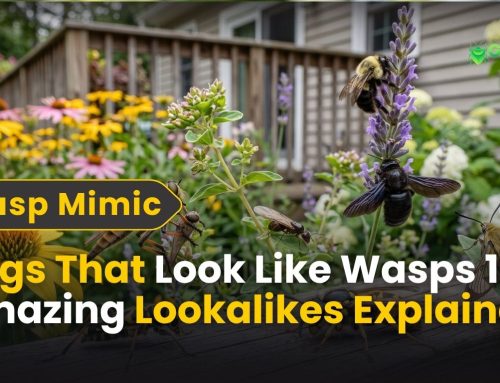
Parasitoid wasps represent one of the most misunderstood groups in the wasp world.
Rather than establishing a large colony and defending it, parasitoids typically lay eggs in or on other arthropods. Their developing young ultimately kill the host.
That sounds dramatic, but these wasps can be extremely useful in ecosystems and agriculture because their hosts often include insects considered pests.
Many are tiny and pose no meaningful sting threat to people.
What does a parasitoid wasp look like?
There is no single appearance. Parasitoid wasps occur in many shapes and sizes.
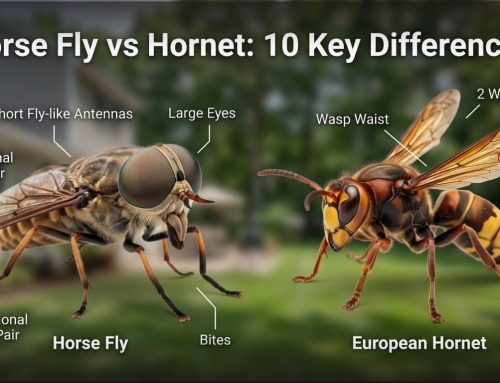
Some have extremely slender bodies. Some have long ovipositors that can look frighteningly similar to giant stingers.
A long ovipositor does not automatically mean the insect is equipped to inject venom into you.
Green Pest Management CT’s guide to what a parasitic wasp looks like provides identification details, while the parasitoid wasp information hub explains their ecological role.
Fact 3: A Long “Stinger” May Actually Be an Ovipositor
This is one of the most useful visual lessons for homeowners.
Some parasitoid wasps have dramatically long egg-laying structures extending from the abdomen. To someone unfamiliar with wasp anatomy, this can look like an oversized weapon.
Its purpose may instead be to reach a host hidden inside wood, plant material, or another protected location.
The female deposits an egg using this specialized ovipositor.
Appearance can therefore lead to exactly the wrong risk assessment: a strange-looking parasitoid with an impressive ovipositor may represent far less danger than a familiar yellow jacket worker with a relatively inconspicuous stinger.
Green Pest Management CT’s overview of wasp body parts and anatomy provides useful context.
Fact 4: “Non-Stinging” and “Least Aggressive” Do Not Mean the Same Thing
These terms are frequently mixed together.
A non-stinging wasp cannot effectively sting a person. A low-aggression or low-risk wasp may be physically capable of stinging but normally has little reason to do so.
Cicada killers are a good example of the difference.
These large solitary ground-nesting wasps can look intimidating. Males may patrol nesting areas, but males cannot sting. Females can sting, yet they are generally reluctant to sting people unless mishandled or severely provoked.
Mud daubers are another example. Females possess a stinger used in their predatory biology, but they generally present far less residential sting risk than an occupied yellow jacket colony.
Among the least aggressive wasps from a practical homeowner perspective are many solitary species and parasitoid groups.
The key distinction is colony defense.
Social wasps have a queen, developing young, nest structure, and fellow colony members to protect. Solitary wasps generally do not have hundreds of workers ready to defend one entrance.
Fact 5: Not Every Ground-Nesting Wasp Is Dangerous
A hole in the lawn with a wasp flying around it often causes immediate concern.
Sometimes that concern is warranted. Other times it is not.
Yellow jackets can occupy underground cavities and vigorously defend them. Accidentally mowing over a yellow jacket nest can produce a multiple-sting incident.
However, many solitary wasps also use the soil.
A solitary ground-nesting female creates and provisions her own nest rather than operating as one worker in a large defensive colony. Multiple individual nests can sometimes occur in favorable soil, creating considerable activity while still representing a different biological situation from one social yellow jacket nest.
This distinction matters before any treatment decision is made.
Green Pest Management CT’s ground-nesting wasp guide explains the broader range of insects homeowners may find in soil, while the ground wasp identification guide helps separate common possibilities.
What suggests yellow jackets instead?
Watch from a safe distance.
Numerous similarly sized workers repeatedly entering and leaving one specific opening can indicate a social colony. Do not stand beside that opening to investigate.
Fact 6: Solitary Wasps Can Be Excellent Natural Pest Controllers
Automatically killing every wasp can work against a homeowner’s pest-management goals.
Many wasps prey on insects or spiders.
Depending on the species, solitary wasps may hunt caterpillars, cicadas, spiders, aphids, beetle larvae, and other arthropods to provide food for their offspring.
Parasitoid wasps can similarly suppress host populations.
This natural predator-prey relationship fits well with the principles of Integrated Pest Management (IPM).
The U.S. Environmental Protection Agency describes Integrated Pest Management as an environmentally sensitive approach based on understanding pests and selecting appropriate management methods rather than relying automatically on pesticides.
Around a Connecticut landscape, that means identifying an insect before determining that control is justified.
An occasional solitary wasp hunting in a garden may actually be providing pest suppression at no expense to the homeowner.
Fact 7: Social Wasps Are the Ones That Usually Deserve More Caution
Understanding low-risk wasps becomes easier when you compare them with social species.
Yellow jackets, hornets, and paper wasps live in colonies during the active season. Workers have a shared nest to defend.
That changes the risk substantially.
Yellow jackets
Yellow jackets can establish colonies underground or in protected cavities, including parts of buildings. Their nests may be difficult to see, allowing people to approach without realizing what is there.
Learn more about their behavior in the yellow jacket deep-dive guide.
Bald-faced hornets
Bald-faced hornets are technically yellow jackets despite their common name. They create enclosed gray paper nests, often in trees and shrubs.
Workers can defend the colony when the nest is threatened. The bald-faced hornet identification and removal guide explains the major warning signs.
European hornets
European hornets are true hornets and can occupy tree cavities and structural spaces.
They are large, but size should not be the only factor used to judge risk.
Paper wasps
Paper wasps build exposed paper combs with visible cells. They are often encountered beneath eaves, porches, railings, and sheltered building components.
Individuals away from the nest may be relatively unconcerned with people, but colony defense can occur when someone approaches the comb.
For a broader risk comparison, see the most dangerous wasps and warning signs guide.
Fact 8: Wasps Sting; They Don’t Usually “Bite” People in Defensive Encounters
Wasps do have mandibles and can use them for nest construction, prey handling, and other tasks.
But the familiar painful defensive injury is a sting.
Female stinging wasps inject venom through the stinger. Unlike a honey bee worker, a yellow jacket, paper wasp, or hornet usually does not leave its stinger embedded in human skin.
That means many wasps can sting more than once.
The distinction becomes especially important around social colonies because remaining beside the nest can expose someone to repeated stings from the same insect as well as other workers.
If an encounter involves a hornet, the hornet sting symptoms and first-aid guide explains what symptoms deserve attention.
Fact 9: Sting Pain Is Not a Reliable Measure of Danger
People often assume that the wasp with the most painful sting must also be the most dangerous.
That is not how medical risk works.
Entomologist Justin Schmidt’s well-known work comparing Hymenoptera sting pain illustrates how much sting sensations differ among species. However, a pain scale measures the experience of pain, not the probability of anaphylaxis.
A painful local sting may remain medically uncomplicated.
A less dramatic sting can cause a life-threatening allergic reaction in someone sensitive to that insect’s venom.
For homeowner safety, these factors matter more than pain ranking:
- Whether symptoms remain localized
- Whether breathing is affected
- Whether the tongue or throat is swelling
- Whether hives develop away from the sting
- Whether dizziness or fainting occurs
- How many times the person was stung
If severe systemic symptoms develop after any insect sting, call 911.
Fact 10: Correct Identification Can Prevent Unnecessary Pest Control
This is where knowledge of non-stinging and low-risk wasps has practical value.
A good pest professional does not treat every flying insect as though it were a yellow jacket.
The first question is: what insect is actually present?
The second is: is there a nest?
The third is: does that nest create unacceptable risk?
That sequence is central to Integrated Pest Management.
A few tiny parasitoid wasps outdoors may need no treatment whatsoever. A solitary mud nest attached to an unused shed may be a very different situation from an active yellow jacket colony inside the wall next to the kitchen.
Identification reduces pesticide use, protects beneficial insects, and helps direct control toward pests that genuinely present a health or property concern.
Connecticut homeowners can compare unfamiliar insects using Green Pest Management CT’s wasp and hornet identification guide.
How Can You Identify a Non-Stinging or Low-Risk Wasp?
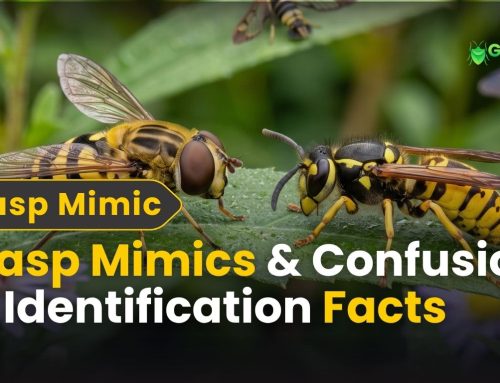
There is no visual feature that lets a homeowner safely classify every wasp as harmless.
Behavior and nesting style provide useful clues.
Solitary wasps usually operate individually rather than as members of a large worker force. Parasitoid wasps can be very small and may occur around vegetation where their hosts are present.
Social wasps show different patterns.
Repeated streams of workers entering and leaving one opening deserve caution. An active enclosed paper nest or open comb with multiple adults also indicates a social colony.
A safe identification checklist
From a distance, look at:
- Approximate body size and color
- Whether one insect or many are present
- Whether insects repeatedly return to one opening
- Ground, aerial, or structural nesting location
- Shape and construction of a visible nest
- Whether activity is concentrated around a specific spot
Do not trap a live wasp with your hand, stand beside the entrance, or disturb the nest to obtain a photograph.
Use camera zoom from a safe position.
For nest identification, Green Pest Management CT’s guide to common wasp nest types offers another useful comparison.
What Causes Wasps to Appear Around Your Home?
Wasps use residential properties because they provide food, prey, water, and nesting habitat.
Flowering gardens naturally attract many insects, including beneficial wasps. This is not necessarily a pest problem.
Solitary wasps may appear where prey is plentiful or soil conditions support nesting.
Social wasps look for protected colony sites, including cavities, overhangs, vegetation, and structural gaps.
Yellow jackets may also forage around garbage, fallen fruit, meat, sweet beverages, and outdoor meals.
Seeing wasps therefore does not automatically mean you have a dangerous nest.
The behavior pattern is usually more informative than the number of isolated insects seen across an entire property.
Connecticut Wasp Season: When Will You See Them?
Fairfield County’s seasonal climate creates a predictable general pattern.
Spring
Overwintered queens of social wasps emerge and begin new colonies. Solitary species also become active according to their own life cycles.
Garden activity increases as temperatures rise.
Summer
Wasp diversity and activity become much more noticeable. Beneficial solitary wasps can hunt throughout landscaped yards while social colonies increase in worker population.
Late summer into early fall
Social colonies may become large, creating increased chances of homeowner encounters.
Outdoor eating also brings people into contact with scavenging yellow jackets.
This period is when accurate identification is especially valuable. A large number of visible insects does not necessarily mean every one should be treated.
Cold weather
Many annual social-wasp colonies die with colder weather. Newly produced queens of certain species overwinter and begin new colonies the following year.
Different solitary species overwinter at different life stages.
For questions about daily and seasonal activity, see the guide to when wasps are least active.
Non-Stinging and Low-Risk Wasps in Fairfield County Landscapes
Greenwich, Stamford, Darien, Westport, Fairfield, Wilton, New Canaan, and Norwalk contain a mix of suburban landscapes, wooded areas, gardens, mature trees, lawns, and ornamental plantings.
That habitat supports far more than pest species.
Homeowners may see solitary hunting wasps moving through lawns and gardens, tiny parasitoids around vegetation, and other beneficial insects that never establish the kind of defensive colony associated with yellow jackets.
Wooded and larger properties in Wilton, New Canaan, and Greenwich can support diverse insect communities. Gardens and mature landscaping throughout Westport, Darien, Fairfield, Norwalk, and Stamford likewise provide habitat for prey insects and their natural predators.
The presence of wasps alone is therefore not evidence that a property needs pesticide treatment.
Green Pest Management CT evaluates species, nest type, location, and risk before recommending pest-management action.
When a “Harmless” Wasp Might Actually Be a Problem
Misidentification is the main concern.
A homeowner may assume insects entering a ground hole are harmless solitary wasps when the opening actually leads to a yellow jacket colony.
Another person may see activity around the roofline and assume insects are simply passing through when workers are entering a structural void.
Warning signs that deserve greater caution include concentrated worker traffic, a growing paper nest, insects repeatedly entering the home, defensive behavior around one location, or multiple people being stung in the same area.
Use Green Pest Management CT’s wasp and hornet Safety & Threat Assessment when the risk level is uncertain.
What to Do If You Get Stung
If you are stung, move away from the location first. A nearby colony could mean additional stings.
Wash the sting site with soap and water, apply a cold pack wrapped in cloth for short intervals, and monitor your symptoms.
Wasps generally do not leave a stinger behind. If a stinger is visibly present after an unidentified insect sting, remove it promptly.
Signs of an allergic emergency
Call 911 if the sting causes signs of suspected anaphylaxis, such as difficulty breathing, tongue or throat swelling, fainting, or rapidly developing systemic symptoms.
The American Academy of Allergy, Asthma & Immunology’s stinging-insect allergy guidance provides additional information on severe venom reactions.
Someone with prescribed epinephrine should use it according to their medical emergency plan.
For uncomplicated stings, the wasp sting treatment and first-aid guide provides more detail.
Prevention: Living Safely With Beneficial Wasps
Wasp prevention should not mean attempting to sterilize a property of insects.
A better goal is to prevent dangerous social colonies from overlapping with people while leaving beneficial, low-risk insects alone where practical.
Homeowners can:
- Inspect eaves, railings, sheds, and play structures periodically.
- Watch for concentrated traffic before mowing unfamiliar ground.
- Check dense shrubs before pruning.
- Keep garbage containers securely closed.
- Clean food and sugary drink spills after outdoor meals.
- Avoid handling solitary wasps.
- Teach children not to disturb nests.
- Keep people and pets away from active social-wasp colonies.
- Repair suitable structural gaps after confirming they are inactive.
Do not seal an opening that an active yellow jacket or hornet colony is using. Trapping workers inside a structural void may cause them to search for another route.
The hornet and wasp control guide provides additional preventive steps.
DIY vs. Professional Identification and Control
DIY observation is appropriate when it can be done without approaching a nest.
Photos taken from a safe distance can help identify insects. Homeowners can also improve sanitation and eliminate obvious food attractants without disturbing colonies.
Active nest removal is different.
Professional inspection makes sense when insects are repeatedly entering the same structural gap, a social colony is underground beside a walkway, a nest is above a frequently used door, ladder access would be required, or someone in the household has an insect-venom allergy.
Avoid indiscriminate pesticide spraying simply because an insect resembles a wasp.
The EPA provides guidance on using pesticides safely, including following pesticide label directions and minimizing unnecessary exposure.
How Professional Pest Identification Works
A professional inspection starts by observing rather than treating.
A technician considers insect size, markings, flight patterns, nesting behavior, entry points, nest construction, and surrounding habitat.
The next question is whether control is actually justified.
For a low-risk solitary species, the recommendation may emphasize tolerance or habitat management rather than pesticide treatment.
For a social-wasp colony next to people, targeted management may be appropriate.
If a colony occupies a building void, treatment and subsequent exclusion must occur in the proper sequence. Simply sealing the entry before the colony has been controlled can create additional problems.
This identification-first process is a core part of Integrated Pest Management.
When a dangerous colony is confirmed, homeowners can use professional wasp and hornet control services rather than risking close contact.
Common Mistakes Homeowners Should Avoid
The most common mistake is assuming that every wasp is aggressive.
Another is making the opposite assumption—deciding an unfamiliar ground-nesting insect is harmless and standing next to the entrance to inspect it.
Avoid destroying beneficial insects without identification. Do not handle unfamiliar wasps, disturb occupied nests for photographs, spray insects indiscriminately, or attempt elevated nest removal from a ladder.
Never use gasoline, fire, or improvised chemicals against a nest.
Responsible pest control identifies the organism, determines whether a genuine problem exists, and uses an appropriate response.
Frequently Asked Questions
Are there really non-stinging wasps?
Yes. Male wasps cannot sting, and many parasitoid wasps present no practical sting capability to people. Other species commonly called harmless can technically sting but are extremely unlikely to do so during normal encounters.
What are the least aggressive wasps?
Many solitary species, including mud daubers and various hunting or parasitoid wasps, are among the lowest-risk groups around homes. Their behavior differs substantially from social yellow jackets defending a colony.
Can a parasitoid wasp sting humans?
Many parasitoid wasps cannot meaningfully sting humans, while capabilities differ among the enormous number of parasitoid species. Their visible ovipositor is often an egg-laying structure rather than a defensive stinger designed for humans.
Why does a harmless wasp have a huge stinger?
What appears to be a huge stinger may actually be an ovipositor. Some female parasitoid wasps use a long ovipositor to place eggs into hosts hidden in wood or other materials.
Are male wasps able to sting?
No. Only females have the anatomical structures from which the stinger evolved. Male wasps cannot sting.
Are ground wasps dangerous?
It depends on the species. Ground-nesting yellow jackets can strongly defend a social colony, while many solitary ground-nesting wasps pose much less risk. Identification is essential before treatment.
Do wasps bite or sting people?
Wasps possess mandibles, but the familiar painful defensive injury is generally a venomous sting from a female. Social species such as yellow jackets and hornets may sting more than once.
Are non-stinging wasps beneficial?
Many are. Parasitoid and solitary wasps can suppress populations of caterpillars, aphids, spiders, beetles, and other arthropods, making them important parts of natural ecosystems and biological control.
Should I spray a harmless wasp nest?
Not automatically. First determine the species and whether the insects present an actual safety problem. Unnecessary spraying can kill beneficial organisms without addressing a genuine pest concern.
When should I call pest control for wasps?
Arrange a professional inspection when many workers repeatedly enter one location, an active social colony is close to people, insects are emerging inside the house, safe identification is impossible, or someone at the property has a serious insect-venom allergy.
Conclusion: A Non-Stinging Wasp May Be a Helpful Neighbor
The term non-stinging wasp includes insects with very different biology. Male wasps cannot sting, many parasitoid species pose virtually no sting threat, and numerous solitary wasps are capable of stinging but rarely present meaningful danger to homeowners.
The important distinction is between these low-risk insects and social species protecting an active colony.
Yellow jackets, hornets, and paper wasps require more caution when their nests overlap with doors, lawns, decks, pools, play areas, or occupied structures. A strange-looking solitary wasp hunting in a Connecticut garden may need no control at all.
That identification-first approach protects people without treating beneficial insects unnecessarily—and it is a fundamental part of responsible Integrated Pest Management.
For homeowners in Greenwich, Stamford, Darien, Westport, Fairfield, Wilton, New Canaan, Norwalk, and surrounding Fairfield County communities who cannot determine what type of wasp they are seeing, Green Pest Management CT can provide a professional stinging-insect inspection and identification assessment and recommend management only when it is appropriate.