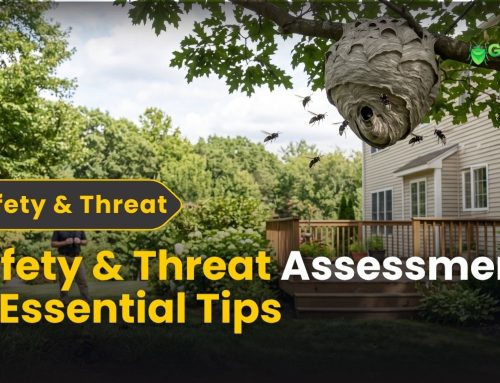
Wasp Sting Treatment: 10 Essential Steps for Fast Relief
Wasp sting treatment starts with getting away from the insect or nest, washing the sting site with soap and water, applying a cold compress, and monitoring for an allergic reaction. Unlike honey bees, wasps usually do not leave their stingers behind and may sting more than once. Most uncomplicated stings cause temporary pain, redness, itching, and swelling.
The situation becomes urgent if symptoms spread beyond the sting site. Difficulty breathing, swelling of the tongue or throat, fainting, or other signs of anaphylaxis require immediate emergency care. Call 911, and if the person has prescribed epinephrine, use it promptly according to their emergency plan.
For homeowners in Greenwich, Stamford, Darien, Westport, Fairfield, Wilton, New Canaan, Norwalk, and surrounding Fairfield County communities, treating the sting is only half the issue. It is also important to determine whether an active yellow jacket, paper wasp, or hornet colony is close enough to cause another encounter.
This guide covers safe first aid, hornet versus wasp stings, pain and swelling, allergic reactions, identification, prevention, Connecticut seasonality, and when professional pest control makes sense.
Medical note: This article offers general educational information rather than individual medical advice. Contact a qualified healthcare professional about specific symptoms or treatment decisions.
What Is Wasp Sting Treatment?
Wasp sting treatment is immediate care intended to limit discomfort, protect the skin, monitor for an allergic reaction, and identify symptoms requiring medical attention.
For an uncomplicated local sting, this usually means cleaning the skin, using a cold compress and monitoring symptoms.
A wasp sting occurs when a female wasp uses her stinger to inject venom into the skin. Yellow jackets, paper wasps, hornets, and many solitary wasps belong to this broad insect group, although their behavior and likelihood of stinging people differ substantially.
A practical treatment plan must distinguish among three situations:
| Reaction | Common signs | Appropriate response |
| Local reaction | Pain, limited redness, itching, swelling | First aid and monitoring |
| Large local reaction | Swelling extending substantially around the sting | Medical advice may be appropriate |
| Systemic allergic reaction | Symptoms occurring beyond the sting site | Prompt medical evaluation; emergency care for anaphylaxis |
| Suspected anaphylaxis | Breathing/throat problems, fainting, rapidly progressing multisystem symptoms | Call 911; use prescribed epinephrine |
| Numerous stings | Many venom exposures | Prompt medical assessment |
Green Pest Management CT’s wasp and hornet Safety & Threat Assessment provides additional guidance for assessing the source of a sting around a property.
Wasp Sting vs. Bite: Which Happened?
Wasps have both mandibles and a stinger, but the painful defensive injury experienced by people is generally a sting.
Their mandibles are useful for constructing nests, processing food, handling prey, and other tasks. The stinger is the structure that injects venom.
Hornets are wasps and operate in the same general way.
Do wasps leave a stinger?
Usually, no.
A honey bee worker typically leaves its barbed stinger in human skin. Wasps, yellow jackets, and hornets generally retain their stingers, which allows them to sting repeatedly.
If a stinger is visibly embedded after an insect encounter and you are uncertain what stung you, remove it promptly. Do not delay removal while trying to determine whether scraping or pulling is better.
For identification help, compare insects using the Connecticut wasp and hornet identification guide rather than attempting to capture a live specimen.
Wasp Sting Treatment: 10 Essential Steps
1. Move Away From the Nest Immediately
The first treatment step happens before you touch the sting site.
Move to a safer location.
A yellow jacket or hornet sting may indicate that you have entered a colony’s defensive area. Social wasps can respond together, so remaining near the nest to inspect it can expose you to additional stings.
Do not stand nearby swatting at insects. Move purposefully toward a secure building or vehicle.
If several insects are attacking, protect your face and eyes while leaving. Do not jump into a swimming pool, pond, or other body of water in an attempt to escape. Wasps may remain in the area.
Once secure, you can address the sting.
2. Look for a Stinger—but Don’t Waste Time Searching for One
Wasps normally do not leave stingers in the skin.
If nothing is visible, do not dig into the skin looking for one.
If a stinger is visibly present, which can happen when the insect responsible was actually a honey bee, remove it promptly.
This is a good example of why homeowner insect identification can be unreliable after a sudden sting. People often use “bee,” “wasp,” and “hornet” interchangeably.
The bee versus wasp identification guide explains the distinguishing characteristics without requiring close contact with an active nest.
3. Wash the Sting With Soap and Water
Once you are safely away from the insects, gently wash the affected area with soap and water.
This will not remove venom that has already been injected, but cleaning the skin is sensible basic wound care, particularly because itching can lead people to scratch the site.
Avoid aggressive scrubbing.
After cleaning, pat the area dry and examine it for redness, swelling, and the location of the sting.
If rings, bracelets, or other tight items are near a rapidly swelling hand or arm, seek appropriate medical guidance rather than waiting for them to become difficult to remove.
4. Apply a Cold Compress
A cold pack can reduce discomfort and help with local swelling.
Wrap ice or a cold pack in a thin cloth rather than placing it directly against the skin for a prolonged period. Apply it for short intervals and allow the skin to warm between applications.
Elevation can also be useful when a limb is swollen.
The Mayo Clinic’s first-aid guidance for insect bites and stings provides additional general medical guidance for uncomplicated reactions.
5. Know What a Normal Local Reaction Looks Like
A typical wasp sting can cause:
- Immediate sharp, burning, or hot pain
- Redness
- Tenderness
- Local swelling
- Itching
- Warmth around the site
Symptoms vary considerably between individuals.
Some people develop what clinicians call a large local reaction, in which swelling becomes much more extensive than the small area surrounding the sting. Large local reactions can be uncomfortable without necessarily being the same as anaphylaxis.
Seek medical advice if swelling is severe, worsening, involves a sensitive location, or creates other concerns.
More importantly, pay attention to symptoms appearing somewhere other than the sting site.
6. Watch Closely for a Wasp Sting Allergy
Anaphylaxis is the most important acute medical risk associated with a wasp or hornet sting.
According to the American Academy of Allergy, Asthma & Immunology’s information on stinging-insect allergies, insect venom can trigger serious systemic reactions in susceptible individuals.
Emergency warning signs can include:
- Difficulty breathing or wheezing
- Tightness or swelling in the throat
- Tongue swelling
- Widespread hives or itching away from the sting site
- Dizziness, weakness, or fainting
- Rapid progression of symptoms
- Significant gastrointestinal symptoms when part of a broader reaction
Call 911 for suspected anaphylaxis.
Someone who has prescribed epinephrine should use it according to their medical emergency plan. Epinephrine is the first-line treatment for anaphylaxis; antihistamines are not a substitute for epinephrine during a severe allergic reaction.
A person who experiences a systemic reaction should discuss the episode and future preparedness with an allergist or other qualified healthcare provider.
7. Treat Multiple Stings More Seriously
The number of stings matters.
Receiving numerous stings means receiving a greater total venom dose. A large number of stings can be medically significant even in someone without a known insect-venom allergy.
Children and people with smaller body mass can be particularly vulnerable to heavy sting exposure.
After multiple stings, get away from the colony first and seek prompt medical advice or assessment. Call emergency services immediately if serious symptoms develop.
This situation also suggests that a social-wasp colony may be nearby.
Yellow jackets, for example, frequently establish concealed colonies in ground cavities and structural voids. Homeowners sometimes discover them only after a lawn mower, string trimmer, or landscaping work disturbs the nest.
The yellow jacket behavior and identification guide explains these encounters in greater detail.
8. Don’t Judge Danger by the Pain Scale
Wasp stings hurt, but pain intensity is not a reliable measure of medical danger.
Entomologist Justin Schmidt became well known for comparative insect-sting pain research. Such pain scales can help describe the subjective experience of different stings, but they do not predict whether a specific person will have anaphylaxis.
A sting with moderate pain can cause a severe allergic reaction in a susceptible individual. A very painful sting can remain a local reaction.
Factors affecting perceived pain include the species involved, sting location, personal pain sensitivity, amount of venom, and number of stings.
Focus on your symptoms, particularly symptoms affecting parts of the body away from the sting site, rather than trying to give the sting a numerical score.
9. Avoid Unproven Home Treatments
A painful sting can tempt people to use almost anything available in the kitchen, garage, or medicine cabinet.
Avoid cutting the skin, trying to suck out venom, applying harsh household chemicals, or using flammable substances.
Venom is injected rapidly. It cannot simply be pulled back out using a household technique.
For uncomplicated stings, established first-aid measures are preferable to elaborate home remedies. Medication decisions should follow product directions and, when needed, advice from a healthcare professional or pharmacist.
Home remedies should never delay emergency treatment for an allergic reaction.
10. Find the Source Without Approaching It
Once the immediate medical issue has been handled, determine why the sting happened.
Do this from a distance.
One wasp visiting a flower tells you very little. Repeated insects traveling in and out of the exact same location strongly suggest a colony.
Look from a safe observation point for activity around:
- Ground holes
- Shrubs and hedges
- Tree cavities
- Eaves and soffits
- Siding gaps
- Porch ceilings
- Deck framing
- Railings
- Sheds
- Stone walls
- Rooflines
Do not walk up to the suspected opening for a better look.
For ground activity, Green Pest Management CT’s ground-nesting wasp identification guide can help distinguish possible nests.
Hornet Sting vs. Wasp Sting Treatment
Treatment principles are generally similar.
Hornets are wasps, so both stings involve venom injected through a stinger. Immediate priorities remain leaving the nest area, basic first aid, and monitoring for an allergic reaction.
A hornet sting is not automatically a more serious medical event because the insect is larger.
Species, sting number, sting location, venom sensitivity, and individual allergy history all influence the outcome.
For a focused comparison, see the hornet sting versus wasp sting guide and the dedicated hornet sting symptoms and first-aid resource.
Which Wasps Are Most Dangerous?
People frequently ask which are the most dangerous wasps in Connecticut.
There is no single answer based solely on species.
For homeowners, some of the highest-risk situations involve social-wasp colonies located where accidental disturbance is likely.
Yellow jackets are particularly important because colonies may be underground or concealed inside structures. A homeowner can walk or mow directly over a nest without realizing it is there.
Bald-faced hornets build conspicuous enclosed paper nests and can defend their colonies. Despite their name, bald-faced hornets are technically a type of yellow jacket.
European hornets are true hornets and are another social species found in the Northeast.
Paper wasps can defend nests too, although an isolated paper wasp foraging away from the colony may have little interest in people.
The Connecticut wasp-versus-hornet comparison provides more regional identification and risk information.
The practical rule is that colony location matters as much as insect identity. A nest beside a child’s play set presents a very different threat from a solitary wasp hunting insects at the far edge of a property.
What Are the Least Aggressive Wasps?
“Aggressive” is often used too broadly.
Social wasps can be highly defensive around a colony without actively seeking people elsewhere. Solitary and parasitoid wasps generally present much less residential sting risk because they do not have a large social colony to defend.
Many tiny parasitoid species are effectively harmless to homeowners and provide natural biological control by attacking other insects.
Green Pest Management CT’s parasitoid wasp resource explains why these beneficial insects should not automatically be treated as pests.
Searching for a “non stinging wasp” can also oversimplify the issue. Some species pose essentially no practical threat to humans; others possess a functional sting but very rarely use it defensively against people.
Never pick up an unidentified wasp to test the difference.
Why Wasp Stings Happen Around Connecticut Homes
Most stings around homes can be traced to one of two situations: accidental nest disturbance or close interaction with a foraging wasp.
Landscape maintenance is a common trigger. Lawnmowers and trimmers can disturb underground yellow jackets. Hedge trimming can bring a homeowner directly against an aerial nest concealed in foliage.
Structural colonies present another risk. Wasps may use openings around rooflines, soffits, siding, flashing, vents, or other construction details.
Outdoor dining can attract yellow jackets as well, particularly later in the warm season.
These encounters explain why pest professionals focus on flight patterns rather than simply counting random wasps.
Repeated traffic to one opening means far more than a few wasps scattered around a yard.
Wasp Season in Connecticut
Social-wasp activity changes significantly through the year.
Spring: colonies begin
Overwintered queens emerge when conditions warm and establish new nests.
Early colony activity can be easy to miss because worker numbers remain low.
Summer: populations grow
Colonies add workers and become increasingly active. This is when repeated traffic into wall gaps, trees, ground openings, and rooflines can become easier to identify.
Late summer and early fall: increased encounters
Late summer into early fall can be an important period for sting incidents in Fairfield County.
Established social colonies may contain many workers. At the same time, residents are mowing lawns, maintaining gardens, swimming, grilling, eating outdoors, and using patios and decks.
Scavenging yellow jackets may also become more noticeable around food and beverages.
Cold weather
Many annual social-wasp colonies die as colder conditions arrive. Newly produced queens of some species overwinter and begin new colonies the following year.
The guide to when wasps are least active offers additional seasonal context.
Preventing Wasp Stings Around Your Home
You cannot—and generally should not—remove every wasp from a Connecticut landscape. Many wasps are beneficial predators or pollinators.
Integrated Pest Management (IPM) instead focuses on preventing unacceptable risk.
Useful prevention steps include:
- Keep exterior garbage containers securely closed.
- Clean sugary drinks and food spills after outdoor gatherings.
- Inspect frequently used outdoor structures periodically.
- Watch lawns for repeated insect traffic before mowing.
- Check shrubs before pruning.
- Teach children not to throw objects at nests.
- Tell landscapers and contractors about known nests.
- Repair appropriate exterior gaps after confirming they are inactive.
- Avoid swatting at solitary foraging wasps.
- Keep people and pets away from established colonies.
Do not prematurely seal a wall opening that active yellow jackets or hornets are using. Trapping a colony inside a void can cause workers to search for other exit routes, potentially toward occupied rooms.
The hornet and wasp prevention guide provides additional property-management strategies.
DIY Wasp Control vs. Professional Treatment
There is a meaningful distinction between DIY prevention and DIY nest removal.
Sanitation, monitoring, food management, and appropriate repairs are sensible homeowner tasks. Approaching an established social-wasp colony with an aerosol can introduces substantially more risk.
Professional evaluation is advisable when a nest is underground beside a walkway, inside a building void, close to an entrance, above a frequently used deck, near children, or high enough to require a ladder.
A known venom allergy in the household should lower the threshold for professional intervention.
Homeowners should also follow pesticide labels carefully. The U.S. Environmental Protection Agency provides practical information on safe pesticide use and pest management.
Never use gasoline, fire, boiling liquids, or improvised chemical mixtures against a nest.
The DIY versus professional hornet nest removal guide offers a more detailed risk comparison.
What Professional Wasp Treatment Involves
Good pest control begins with a professional inspection.
A technician evaluates insect traffic, nest location, likely species, surrounding structures, and human exposure. The treatment strategy for an exposed paper-wasp nest can be very different from one used for yellow jackets occupying a wall void.
Integrated Pest Management combines accurate identification, monitoring, targeted control, sanitation, and exclusion where appropriate.
Treatment is selected for the specific pest and site, following applicable pesticide labeling and safety requirements. Follow-up monitoring may be appropriate with concealed colonies.
Structural exclusion is typically addressed after activity has stopped rather than by blindly sealing an active colony inside.
Connecticut homeowners with a hazardous colony can explore professional wasp and hornet control services instead of approaching an inaccessible nest.
Wasp Sting Concerns in Fairfield County
Fairfield County properties provide a wide range of potential nesting environments.
In Greenwich and New Canaan, mature landscaping, wooded edges, stone walls, tree cavities, and larger properties can conceal nests until yard work brings someone nearby.
Stamford and Norwalk combine urban and suburban settings, where a colony around a shared walkway, siding gap, driveway, or porch can put multiple people close to the insects.
Homes in Darien, Westport, and Fairfield often include decks, pools, landscaped yards, sheds, roof overhangs, and outdoor entertainment spaces—the same areas where unnoticed nests can become a summer safety issue.
Wilton’s wooded residential settings can similarly provide ground cavities, hollow trees, outbuildings, and natural nesting opportunities.
The management principle is consistent across every town: determine where the colony is relative to people.
Green Pest Management CT serves Greenwich, Stamford, Darien, Westport, Fairfield, Wilton, New Canaan, Norwalk, and surrounding Fairfield County areas. When repeated wasp activity suggests a colony near occupied space, homeowners can schedule a professional inspection rather than testing the nest’s defensive behavior themselves.
When to Call Pest Control After a Sting
A single sting does not necessarily mean your property requires treatment.
If you were stung by a lone insect away from any nest, monitor the area and avoid unnecessary pesticide use.
A professional inspection becomes more appropriate when you see repeated insect traffic into the same location, multiple people have been stung in one area, insects are entering occupied rooms, or an active nest is near routine human activity.
Also seek assistance when the nest requires ladder work or when someone living at the property has a known insect-venom allergy.
The goal is not simply to kill the insect that caused the sting. It is to identify whether an active colony presents an ongoing exposure risk.
For difficult or urgent situations, Green Pest Management CT’s emergency hornet and wasp removal guidance explains the immediate steps homeowners can take.
Frequently Asked Questions
What is the best immediate wasp sting treatment?
Move away from the insects, wash the site with soap and water, apply a cloth-wrapped cold pack, and monitor your symptoms. Seek emergency help for breathing difficulty, throat or tongue swelling, fainting, or other symptoms suggesting anaphylaxis.
How long does pain from a wasp sting last?
Sharp initial pain often improves with time, while redness, itching, tenderness, and swelling can last longer. Individual reactions vary. Contact a healthcare professional if symptoms are severe, worsening, or concerning.
Does a wasp leave its stinger in you?
Usually not. Most wasps retain their stingers and can potentially sting repeatedly. Honey bee workers are much more likely to leave a barbed stinger behind.
Should I squeeze a wasp sting?
No. Squeezing or cutting the sting site will not reliably remove venom and can further irritate the skin. Wash the area and use appropriate first aid instead.
Is a hornet sting treated differently from a wasp sting?
The basic first-aid approach is generally the same because hornets are wasps. Move to safety, clean the area, use a cold compress, and monitor for a systemic allergic reaction.
When is a wasp sting an emergency?
Call 911 for suspected anaphylaxis, particularly when a person develops breathing difficulty, significant tongue or throat swelling, fainting, or rapidly worsening systemic symptoms. Use prescribed epinephrine according to the person’s emergency plan.
Can you suddenly become allergic to wasp stings?
Allergic reactions can occur even when past stings did not produce the same response. Do not assume a previous mild reaction guarantees future stings will also be mild. Discuss systemic reactions with an allergist.
Which wasps are most dangerous in Connecticut?
Social species around established colonies create some of the greatest residential exposure risks. Yellow jackets and bald-faced hornets are examples. Individual venom allergy and the number of stings can be more medically important than species alone.
Should I remove a wasp nest myself after being stung?
Not necessarily. If the nest is active, underground, concealed in a building, near a high-use area, or requires a ladder, professional treatment is generally the safer approach. Do not approach the colony again simply to confirm what stung you.
How can I prevent another wasp sting?
Avoid disturbing known nests, monitor lawns and shrubs before maintenance, keep outdoor garbage covered, clean food spills, and watch for repeated flight into one location. Arrange professional inspection when an active colony overlaps with areas people regularly use.
Conclusion: Treat the Sting, Then Address the Source
Effective wasp sting treatment has two parts. First, deal with the immediate medical issue: move to safety, clean the sting site, use a cold compress, and watch closely for an allergic reaction. Breathing difficulty, significant throat or tongue swelling, fainting, or other signs of anaphylaxis require emergency medical care.
Second, determine whether the sting indicates an ongoing pest problem.
One passing wasp may require no pest treatment at all. Repeated yellow jacket, hornet, or paper wasp activity around a ground hole, wall opening, roofline, shrub, deck, or other fixed location suggests a colony that deserves a proper safety assessment.
For homeowners in Greenwich, Stamford, Darien, Westport, Fairfield, Wilton, New Canaan, Norwalk, and surrounding Fairfield County communities, Green Pest Management CT can provide a professional stinging-insect inspection and treatment assessment when an active colony creates an ongoing sting risk.