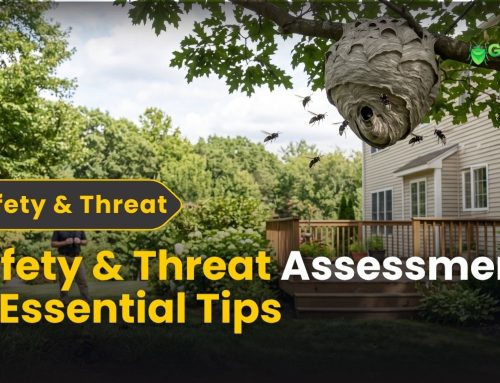
Most Dangerous Wasps: 10 Key Species & Warning Signs
The most dangerous wasps are not necessarily the biggest or the ones with the most painful sting. For homeowners, risk depends on venom sensitivity, the number of stings, colony size, nest location, and how strongly a species defends its nest. In Connecticut, yellow jackets, bald-faced hornets, European hornets, and paper wasps are among the social wasps homeowners should know.
One fact matters more than any “danger ranking”: a routine wasp or hornet sting can become a medical emergency in someone experiencing anaphylaxis. Multiple stings can also be medically significant even without a known allergy.
For homeowners in Greenwich, Stamford, Darien, Westport, Fairfield, Wilton, New Canaan, Norwalk, and surrounding Fairfield County, the greatest practical threat is often an active colony in the wrong place—beside a doorway, underground next to a lawn, inside a wall, or near a deck, pool, or play area.
This guide compares 10 important wasp groups, explains sting versus bite, warning signs of a dangerous nest, sting pain, allergy symptoms, first aid, prevention, and when professional pest control is appropriate.
Medical note: This article provides general safety information and does not replace evaluation or treatment from a medical professional. Call 911 for a suspected severe allergic reaction.
What Makes a Wasp Dangerous?
There is no scientifically meaningful universal ranking of the “most dangerous wasps” for every homeowner.
A better risk assessment considers five factors: whether the species lives socially, how strongly the colony defends its nest, the number of workers present, the likelihood that people will accidentally disturb the colony, and the medical response of anyone who gets stung.
That changes how a pest professional looks at a property.
A large wasp peacefully feeding on a flower at the back of a property may present little practical risk. A concealed yellow jacket colony directly beside a child’s play area can be much more significant.
Here is a useful homeowner comparison:
| Wasp group | Typical nest/behavior | Practical residential risk |
| Yellow jackets | Ground cavities or structural voids; social | High near an active nest |
| Bald-faced hornets | Enclosed aerial paper nests; social | High when nest is disturbed |
| European hornets | Cavities; social | Significant near colony |
| Paper wasps | Open paper comb; social | Moderate to high near nest |
| Aerial yellow jackets | Enclosed aerial nests; social | Significant near occupied nest |
| Cicada killers | Solitary ground nesters | Generally low |
| Mud daubers | Solitary nest builders | Generally low |
| Potter/mason wasps | Solitary | Generally low |
| Spider wasps | Solitary hunters | Generally low unless handled |
| Parasitoid wasps | Usually tiny/solitary | Very low practical sting risk |
Correct identification is important. Green Pest Management CT’s Connecticut wasp and hornet identification encyclopedia provides a regional reference for homeowners.
1. Yellow Jackets: A Major Residential Sting Concern
Yellow jackets rank among the most important stinging-insect concerns around Connecticut homes because they live in social colonies and can strongly defend a nest.
Their nesting habits create another problem: people often do not know a colony exists until they disturb it.
Depending on species and circumstances, yellow jackets may use underground cavities or sheltered structural spaces. A small entrance in a lawn, stone wall, siding gap, or building exterior can lead to a much larger concealed colony.
Warning signs of a yellow jacket colony
The strongest clue is repeated directional traffic.
If multiple yellow-and-black insects repeatedly fly into and out of exactly the same ground opening or structural gap, stay away from it.
A lawn mower, string trimmer, hedge trimmer, or footstep near an underground colony can trigger a defensive response.
Yellow jackets may also become conspicuous around outdoor food, garbage, sugary beverages, and cookouts, especially as the season progresses.
The yellow jacket identification and behavior guide provides a more detailed Connecticut-oriented overview.
2. Bald-Faced Hornets: Defensive Aerial-Nest Wasps
Despite the common name, a bald-faced hornet is actually a type of yellow jacket.
Adults are primarily black with white or ivory markings. Colonies construct distinctive gray, enclosed paper nests, commonly in trees, shrubs, and sometimes around structures.
A mature nest is difficult to miss once leaves thin out, but it can remain surprisingly concealed inside dense vegetation during summer.
Why are bald-faced hornets dangerous?
The issue is colony defense.
A single worker away from the nest is not equivalent to standing near an occupied colony. When their nest is threatened, workers may defend the area.
Do not shake the branch, throw an object at the nest, strike it with equipment, or approach closely for a photograph.
Green Pest Management CT’s bald-faced hornet identification guide explains what these insects and their nests look like.
3. European Hornets: Large Social Wasps Found in the Northeast
European hornets are true hornets and among the larger social wasps a Connecticut homeowner may encounter.
Size alone often causes alarm, but a large insect is not automatically more dangerous than a smaller yellow jacket.
The key question is whether a colony is nearby.
European hornets commonly use sheltered cavities, including hollow trees and structural voids. Repeated activity around a cavity entrance can indicate a nest.
Anyone uncertain whether a large insect is a hornet or yellow jacket can use the yellow jacket versus European hornet guide for comparison.
Is a hornet sting worse?
A hornet sting can be painful, but pain intensity is not the same as medical severity. Allergy and the number of stings matter more than simply identifying the insect as a hornet.
For sting-specific information, see the hornet sting symptoms and first-aid guide.
4. Paper Wasps: Usually a Risk When the Nest Is Too Close
Paper wasps build exposed paper combs rather than the enclosed football-shaped nests associated with bald-faced hornets.
Common nesting locations around homes include eaves, porch ceilings, sheds, railings, deck components, and other sheltered surfaces.
The insects can defend these nests if people get too close.
This creates a practical distinction: a paper wasp hunting insects or drinking nectar away from the nest often has little reason to sting you. A nest attached above a door that opens several times a day creates repeated opportunities for conflict.
See the paper wasp nest identification guide for nest characteristics.
5. Aerial Yellow Jackets: Social Colonies Above Ground
Not every yellow jacket colony is underground.
Some yellow jacket species construct aerial nests, which can create confusion with bald-faced hornet nests and other social wasp colonies.
Their practical risk comes from the same combination of factors: social colony, multiple workers, nest defense, and location.
Never identify a nest by putting your face close to its entrance.
A zoomed photograph taken from a safe area can provide useful information without entering the insects’ flight path. The wasp nest identification chart can then help narrow down the possibilities.
6. Cicada Killers: Intimidating but Usually Lower Risk
Cicada killers demonstrate why appearance alone is a poor measure of danger.
These large solitary wasps excavate ground nests and provision them with cicadas for their offspring. Their size and ground activity can look alarming, particularly when multiple nests occur in suitable soil.
However, solitary wasps do not have a large worker colony to defend in the same way yellow jackets do.
Males may behave territorially around nesting areas, but male wasps cannot sting. Females can sting but generally are not looking for conflict with people.
They should still be treated with respect and not handled.
The broader lesson is important: “ground-nesting wasp” does not automatically mean “yellow jacket.”
Use Green Pest Management CT’s ground-nesting wasp identification guide before assuming every hole represents a dangerous social colony.
7. Mud Daubers: Solitary Wasps With Low Human Risk
Mud daubers build characteristic mud nests on protected structures and hunt spiders to provision their offspring.
They generally pose much less sting risk than colony-forming yellow jackets or hornets.
Because mud nests can appear around buildings, homeowners sometimes assume any wasp nest attached to a structure is dangerous. Nest architecture is an important identification clue.
Mud daubers are another reason Integrated Pest Management, or IPM, begins with pest identification.
Eliminating every beneficial solitary wasp is neither necessary nor an effective approach to landscape pest management.
8. Potter and Mason Wasps: Beneficial Solitary Hunters
Potter and mason wasps are generally solitary and use small mud structures, existing cavities, or similar nesting sites depending on the species.
Many prey upon caterpillars and other insects.
Although females of many solitary wasp species are physically capable of stinging, their behavior toward humans differs greatly from that of a social colony defending hundreds or thousands of nestmates.
An individual should still not be grabbed or handled.
For homeowners, however, these insects generally belong much closer to the “leave alone” end of the management spectrum than an active yellow jacket colony beside the patio.
9. Spider Wasps: Painful Potential, Low Residential Colony Risk
Spider wasps hunt spiders as food for their young. The family includes species with formidable stings, including highly specialized species outside Connecticut that have become famous in discussions about insect-sting pain.
Yet pain potential alone is not a useful measure of everyday residential risk.
Most spider wasps are solitary. They do not form large defensive worker colonies like yellow jackets.
This illustrates an important difference between “which wasp can deliver a painful sting?” and “which wasp is most likely to create a serious residential exposure?”
Those are not the same question.
10. Parasitoid Wasps: Usually Not Dangerous to People
The term wasp covers an enormous number of species, including very small parasitoids that regulate populations of other insects.
Many parasitoid wasps pose essentially no practical sting concern to homeowners.
They may lay eggs in or on other insects, making them important natural biological-control organisms.
Green Pest Management CT’s parasitoid wasp information hub explains this beneficial side of wasp biology.
For homeowners specifically wondering about a non stinging wasp, the answer is more nuanced than a single species name. Some parasitoid groups cannot meaningfully sting humans, while other low-risk wasps technically possess stinging capability but rarely use it against people.
What Are the Least Aggressive Wasps?
“Least aggressive wasps” is a useful search phrase but not a precise biological category.
Wasps do not fit neatly onto one universal aggression scale.
Many solitary wasps—mud daubers, parasitoid wasps, cicada killers, and various hunting wasps—typically present low sting risk because they lack a large colony to defend.
Paper wasps often forage around yards without interacting with people but can become defensive around their nest.
Yellow jackets and hornets should likewise not be characterized as randomly hunting humans. Their most important defensive behavior generally occurs around colonies or during direct encounters.
A better question is: “Does this species live in a social colony, and am I close to that colony?”
That is much more useful for assessing risk.
Wasp Sting vs. Wasp Bite
When people say a wasp “bit” them, they usually mean it stung them.
Wasps do have mandibles, which they use to manipulate food, prey, and nest-building material. Their primary defensive weapon against humans, however, is the stinger.
Female wasps deliver venom through the stinger.
Unlike a worker honey bee, many wasps can sting repeatedly because the stinger does not normally remain embedded in human skin.
That ability becomes particularly relevant when someone remains beside a defensive colony.
Wasp Sting Pain Scale: Does More Pain Mean More Danger?
No. Sting pain and medical risk are not the same thing.
Entomologist Justin Schmidt’s comparative work on Hymenoptera sting pain became widely known as the Schmidt Sting Pain Index. It provides fascinating insight into subjective pain, but homeowners should not use a pain ranking to decide whether a sting is medically dangerous.
A relatively ordinary sting can cause anaphylaxis in someone with a severe venom allergy.
Conversely, an intensely painful sting may remain a localized reaction.
Medical risk depends on factors including allergic sensitivity, number of stings, sting location, individual health circumstances, and total venom exposure.
If symptoms begin affecting breathing, circulation, or areas away from the original sting, pay attention to the symptoms—not the pain score.
Wasp Sting Allergy: The Most Important Danger
Anaphylaxis is the most important immediate medical complication of an insect sting.
The American Academy of Allergy, Asthma & Immunology’s information on stinging-insect allergy describes severe reactions that can occur after stings.
Emergency warning signs may include:
- Difficulty breathing or wheezing
- Significant tongue or throat swelling
- Widespread hives or itching
- Dizziness, weakness, or fainting
- Rapid progression of symptoms
- Significant gastrointestinal symptoms as part of a broader reaction
Call 911 for suspected anaphylaxis.
People prescribed epinephrine for insect-venom allergy should use it promptly according to their individual emergency plan. Antihistamines are not a replacement for epinephrine when anaphylaxis is occurring.
People who experience systemic sting reactions should discuss their risk and future preparedness with an allergist.
First Aid After a Wasp or Hornet Sting
The first step in wasp sting treatment is to leave the area.
If a colony is nearby, remaining there exposes you to additional stings.
Once safely away:
- Inspect the skin. Wasps normally do not leave a stinger, but remove one promptly if it is visibly present after an unidentified insect sting.
- Wash the sting site gently with soap and water.
- Apply a cold pack wrapped in fabric for short periods to reduce discomfort and swelling.
- Avoid scratching the skin.
- Monitor for symptoms beyond the sting site.
- Seek medical advice for severe reactions, concerning swelling, or numerous stings.
- Call 911 for suspected anaphylaxis.
The Mayo Clinic’s insect sting first-aid guidance provides additional medical information.
Green Pest Management CT’s detailed wasp sting treatment guide covers first aid and warning signs in greater depth.
Warning Signs of a Dangerous Wasp Nest
You do not always need to see a nest to know one may be present.
Experienced pest professionals pay close attention to directional flight. Multiple workers repeatedly disappearing into the same opening are a strong clue.
Common warning signs include:
- Repeated wasp traffic to one ground hole
- Activity through siding or soffit gaps
- Numerous insects entering a hollow tree
- An enclosed paper nest in a shrub
- An open comb under an eave
- Defensive activity around one specific part of a property
- Wasps repeatedly appearing inside living areas
- Increased activity after mowing or landscaping
Do not stand next to an entry point and try to count insects.
Observe from a safe distance.
Why Dangerous Wasp Encounters Happen
Most serious encounters around homes happen because people unknowingly approach or disturb colonies.
Common triggers include lawn mowing, string trimming, hedge cutting, moving deck furniture, opening sheds, pressure washing, construction work, and children playing near a concealed nest.
Food can bring yellow jackets close to people as well.
Outdoor meals, open soda containers, fallen fruit, garbage, pet food, and recycling residue can attract foraging workers.
The distinction between foraging and nest defense matters. A worker scavenging around a picnic table is a nuisance and possible sting risk, but a large colony directly beneath that table creates a substantially different threat.
Connecticut Wasp Season and Risk
Connecticut’s seasonal climate shapes when homeowners encounter social wasps.
Spring
Queens that survived winter establish new nests. Colonies are relatively small, and early nesting activity may be easy to overlook.
Summer
Worker populations increase. Repeated traffic around ground openings, rooflines, shrubs, and wall gaps becomes easier to detect.
Late summer and early fall
This is an especially important period for Fairfield County homeowners.
Social colonies can be well established, while outdoor human activity remains high. Landscaping, pools, patios, cookouts, children’s play, and yard maintenance all create opportunities for accidental encounters.
Yellow jackets may also become conspicuous around food and sweet drinks.
Late fall and winter
Cold conditions end many annual colonies. Newly produced queens of certain species survive in protected sites and begin new colonies in a later season.
The old paper nest itself generally is not simply reused as a continuing colony, although the same favorable property can attract new nesting activity.
Most Dangerous Wasps Around Fairfield County Homes
In Greenwich, Stamford, Darien, Westport, Fairfield, Wilton, New Canaan, and Norwalk, risk is strongly influenced by property design and landscape conditions.
Mature trees can provide natural cavities. Stone walls and abandoned animal burrows can offer protected spaces. Rooflines and siding can contain structural openings. Dense hedges can conceal aerial nests.
Pools, decks, outdoor kitchens, play equipment, gardens, and heavily traveled walkways then put people close to those nesting opportunities.
On wooded properties in Wilton or New Canaan, a colony may remain unnoticed until landscaping occurs. In more densely developed parts of Stamford or Norwalk, a structural nest can place residents, neighbors, and contractors close to insect traffic.
Greenwich, Darien, Westport, and Fairfield properties with extensive landscaped areas and outdoor recreation spaces may present similar overlap between people and colonies.
The town itself does not determine danger. Nest position does.
Preventing Dangerous Wasp Problems
Good prevention is based on Integrated Pest Management rather than indiscriminate pesticide use.
IPM combines identification, monitoring, sanitation, habitat modification, exclusion, and targeted control where necessary.
Around a Connecticut home, useful precautions include keeping garbage containers covered, cleaning food and sweet-drink spills, checking shrubs before pruning, and watching lawns before mowing.
Inspect sheds, railings, porch ceilings, eaves, deck framing, play structures, and other protected nesting sites periodically.
Seal appropriate exterior construction gaps only after confirming that no active colony is occupying them.
This last point is important. Do not simply plug an entrance actively used by yellow jackets or hornets. Insects trapped within a structural void can search for other routes, potentially toward occupied portions of the building.
The EPA’s Integrated Pest Management guidance explains the broader prevention-first approach.
DIY vs. Professional Wasp Removal
DIY observation and prevention are reasonable for many low-risk situations. DIY treatment of an established social colony can be very different.
Consider professional assessment when a nest is underground next to a walkway, inside a structure, above a doorway, beside a deck or pool, or high enough to require ladder work.
A known insect-venom allergy in the household is another strong reason not to perform nest treatment personally.
The DIY versus professional hornet nest removal guide explains these risk factors.
Never attempt nest control using fire, gasoline, or improvised pesticide mixtures. Pesticide products must be used according to their labeling. The U.S. Environmental Protection Agency provides consumer guidance for safe pest control and pesticide use.
What Professional Wasp Treatment Involves
Professional pest control starts with inspection and identification.
A technician studies insect traffic, evaluates likely nesting locations, identifies the insect when possible, and considers how people use the surrounding area.
Treatment then targets the colony and nesting situation rather than merely spraying random workers.
Integrated Pest Management also considers future prevention. Once structural activity has been resolved, appropriate exclusion measures may help reduce similar problems.
This sequence matters because exclusion before colony control can make some structural problems worse.
Green Pest Management CT provides professional wasp and hornet control services for nests that pose a residential safety concern.
When Should You Call a Pest Professional?
Professional inspection is particularly appropriate when repeated wasp activity is concentrated around one location, a colony is concealed in a wall or roof, or a nest is close to areas people regularly use.
It is also sensible when the species cannot be identified safely, children or pets regularly pass the colony, ladder work would be required, someone has a known sting allergy, or a previous treatment attempt has failed.
The goal is not to eliminate every beneficial wasp from the yard.
The goal is to identify a genuine threat and manage it with the least unnecessary risk.
Homeowners can use Green Pest Management CT’s wasp and hornet behavior guide to distinguish normal foraging from activity that suggests an established colony.
Frequently Asked Questions
What are the most dangerous wasps in Connecticut?
Yellow jackets, bald-faced hornets, European hornets, and other social wasps deserve the most caution around occupied colonies. The most dangerous situation is generally a defensive colony positioned where people can accidentally disturb it.
Are hornets more dangerous than wasps?
Hornets are wasps. A hornet is not automatically more dangerous than every other wasp. Colony behavior, nest location, number of stings, and venom allergy are more useful measures of risk.
Which wasps are least aggressive?
Many solitary wasps, including mud daubers, cicada killers, and numerous parasitoid species, generally have little reason to sting people. They do not defend large social colonies the way yellow jackets do.
Are there non-stinging wasps?
There are wasps that pose essentially no meaningful sting threat to humans, particularly among tiny parasitoid species. Other solitary wasps can technically sting but rarely do so unless captured or handled.
Can wasps sting more than once?
Yes. Wasps generally do not leave their stinger behind after stinging human skin, so yellow jackets, paper wasps, and hornets can potentially sting repeatedly.
What makes a wasp sting dangerous?
The greatest medical concerns are anaphylaxis and substantial venom exposure from numerous stings. Pain intensity alone does not indicate how medically serious a reaction will become.
What should I do after a wasp sting?
Get away from any nest, wash the site with soap and water, use a cloth-wrapped cold pack, and monitor symptoms. Call 911 immediately for suspected anaphylaxis.
How do I know if yellow jackets are nesting in my yard?
Repeated workers entering and leaving the same small ground opening are a key warning sign. Keep away from that spot and avoid mowing or trimming around it until it has been assessed.
Should I seal a wall opening that wasps are using?
Not while an active colony remains inside. Sealing the exterior entrance can cause trapped wasps to seek alternate routes. Have the colony assessed and controlled before appropriate structural exclusion.
When should I call professional pest control for wasps?
Professional help is appropriate for active social-wasp colonies near people, concealed structural nests, ground colonies near traffic areas, high nests requiring ladders, and properties where someone has a known venom allergy.
Conclusion: The Most Dangerous Wasp Is Often the One You Don’t Know Is There
The most dangerous wasps cannot be ranked by body size, color, or sting pain alone. For Connecticut homeowners, risk comes from the interaction of species, colony size, nest location, number of stings, and individual venom sensitivity.
Yellow jackets, bald-faced hornets, European hornets, and paper wasps deserve respect around active nests. Many solitary and parasitoid wasps, by contrast, present little practical danger and can be beneficial parts of the landscape.
Watch for the warning sign pest professionals find especially useful: repeated directional flight into one fixed location. That pattern can reveal a colony even when the nest itself is hidden.
Never disturb a suspected nest simply to identify it, and call 911 for signs of anaphylaxis following a sting.
For homeowners in Greenwich, Stamford, Darien, Westport, Fairfield, Wilton, New Canaan, Norwalk, and surrounding Fairfield County communities, Green Pest Management CT can provide a professional stinging-insect inspection and pest-control assessment when wasp activity indicates a colony may be creating an ongoing safety concern.