Funnel Shaped Wasp Nest: What Species Makes These?
That Funnel-Shaped Structure in Your Yard Is It a Wasp Nest?
You’re walking through your backyard in Wilton or New Canaan, CT, and you notice something odd near the base of a shrub or tucked against your garden wall. It looks almost like a small paper cone narrow at one end, slightly wider at the other with insects darting in and out of the opening.
Your first thought might be: Is that a spider web? A bird’s nest? Some kind of fungus?
Then a wasp lands on it, and your stomach drops.
A wasp nest with funnel shape is one of the most misidentified and misunderstood nests homeowners encounter. People often don’t recognize it as a wasp nest at all which means they get too close, disturb it, and suddenly find themselves in the middle of a very angry swarm.
Here’s what you need to know: identifying a funnel-shaped wasp nest correctly can protect your family from a dangerous encounter. This guide will walk you through exactly which species build these nests, what they look like up close, where they’re typically found across Connecticut, and what you should do the moment you spot one.
Found something near your home that looks like a funnel nest? Don’t touch it. Contact Green Pest Management CT for a safe, professional inspection.
What Exactly Is a Funnel Shaped Wasp Nest?
The term “wasp nest with funnel” can refer to a few different things depending on the species involved. In general, funnel-shaped wasp nests are characterized by:
- A narrow, tube-like entrance that flares or narrows like a funnel
- Either a paper-based or earthen structure surrounding the entrance
- Heavy insect traffic entering and exiting through the funnel opening
- Location at or near ground level, in low shrubs, or in structural voids
It’s important to understand that the funnel isn’t always the nest itself sometimes it’s the entrance architecture leading into a much larger underground or concealed nest. Other times, the entire nest is shaped in a funnel or cone-like form.
To put it in context with other nest types, check out our comprehensive guide to Types of Wasp Nests: All Shapes & Materials Explained it gives you the full picture of what’s out there.
Which Species Build Funnel Shaped Nests?
This is the question everyone wants answered. Let’s go through each species clearly and specifically.
1. Yellow Jackets The Most Common Funnel Nest Builder
When most people in Greenwich, Stamford, or Darien, CT describe a wasp nest with funnel entrance, they’re almost always looking at a yellow jacket nest.
Yellow jackets (Vespula and Dolichovespula species) are among the most aggressive wasps in North America. Their ground nests frequently feature a distinctive funnel-shaped or tube-like entrance at soil level — sometimes just a hole in the grass, but often with a small papery tube or funnel structure built around the opening.
What it looks like:
- Small circular or oval opening in the soil, approximately nickel-to-quarter sized
- Sometimes surrounded by a short paper tube or funnel collar built from chewed wood pulp
- Loose soil or dead grass around the entrance from excavation
- High, rapid traffic of yellow jackets entering and exiting
Why the funnel shape?
Yellow jackets build the funnel entrance deliberately. It serves as a defensive bottleneck narrowing the entrance makes it easier for guards to monitor and control who enters the nest. It also helps regulate temperature and moisture inside the colony.
Colony size: A single yellow jacket ground nest can house 1,000 to 15,000 workers by late summer. That funnel opening might look small, but it leads to an enormous underground structure.
For a deeper understanding of yellow jacket behavior and biology, visit our Yellow Jacket Deep Dive: Everything You Need to Know.
2. Aerial Yellow Jacket (Dolichovespula arenaria) Funnel Nests in Trees and Shrubs
While most people associate yellow jackets with the ground, the aerial yellow jacket actually builds above-ground nests that sometimes exhibit a funnel-shaped entrance at the bottom of the nest structure.
What it looks like:
- Grayish-white paper nest hanging from a tree branch, shrub, or eave
- Rounded, football-like outer envelope
- Distinct funnel or tube-shaped exit point at the bottom of the nest
- Smaller than bald-faced hornet nests but similarly enclosed
Where found in CT:
These nests are common in wooded areas of New Canaan, Wilton, and Westport — particularly in ornamental shrubs, low tree branches, and occasionally under deck structures.
Aggression level: High. Aerial yellow jackets are significantly more aggressive than paper wasps and will defend their nest vigorously if approached.
3. Polistes Paper Wasps Funnel-Like Starter Nests
Early in the season, paper wasps (Polistes species) build nests that can appear funnel-like or cone-shaped. A queen starting a new nest in spring creates a small, hanging structure with a single stalk and at very early stages, before workers are added, the nest can take on a narrow, elongated funnel shape.
What it looks like:
- Small, gray or tan papery structure
- Open-faced with visible hexagonal cells
- Narrow at the attachment point, slightly wider below
- Attached under eaves, inside grills, behind shutters
Important distinction: As the season progresses and the colony grows, paper wasp nests expand outward and lose the funnel appearance. The classic open honeycomb shape develops. If you’re seeing a funnel shape in a paper wasp nest, it’s likely an early-season nest which actually means now is the best time to act before the colony grows.
For more on what these nests look like at different stages, see our Paper Wasp Nest: What It Looks Like & Where guide.
4. Bald-Faced Hornets Funnel Exit at Base of Enclosed Nests
Bald-faced hornets (Dolichovespula maculata) are technically yellow jackets, despite the “hornet” name. Their large, enclosed, gray paper nests often feature a downward-pointing funnel or tube exit at the base of the outer envelope.
What it looks like:
- Large, gray, football-to-basketball-sized paper nest
- Smooth outer envelope with layered, wavy surface texture
- Funnel-shaped or tube exit at the bottom — the primary entrance/exit point
- Usually positioned 6–30 feet off the ground in trees or on building structures
Why the funnel exit matters:
The funnel opening on a bald-faced hornet nest is intentionally positioned downward. This makes it harder for predators to enter while allowing easy exit for foraging workers. It also helps drain rainwater from the interior.
Bald-faced hornets are known for their extreme territorial aggression. Our Bald-Faced Hornet Identification & Removal guide explains what you’re dealing with and why professional removal is always recommended.
5. European Hornets Funnel Entrance in Cavity Nests
European hornets (Vespa crabro) are the only true hornet species established in North America. They frequently build nests inside wall voids, tree cavities, and hollow logs and the entrance to these hidden nests often takes on a funnel or tube shape as they expand the opening with paper construction.
What it looks like:
- No visible outer nest structure — just an entry point in wood, wall siding, or a tree hollow
- The entrance may be surrounded by a papery, funnel-like collar constructed by the hornets
- Brown and yellow coloring around the hole from activity
- Larger than typical yellow jacket entrance holes
Common locations in CT:
- Hollow trees in wooded neighborhoods like Darien and Greenwich
- Attic vents and soffits in older homes
- Wall voids near exterior wood siding
- Rotted fence posts and wooden garden structures
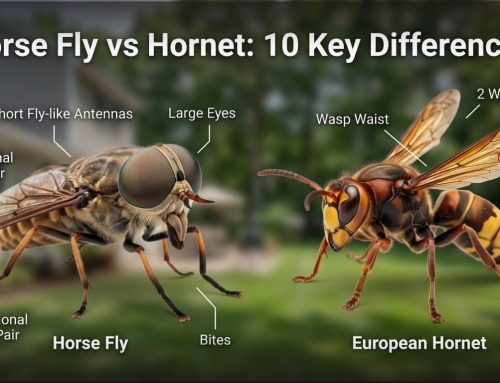
To compare European hornets with yellow jackets in detail, visit our Yellow Jacket vs European Hornet comparison guide.
Wasp Nest Identification: Funnel vs Other Nest Types
Not every unusual nest structure is funnel-shaped. Here’s a quick comparison to help you distinguish a wasp nest with funnel from other common types you might encounter:
| Nest Type | Shape | Material | Funnel Present? | Most Common Builder |
| Ground funnel nest | Hidden, tubular entrance | Soil + paper | Yes (entrance) | Yellow Jacket |
| Aerial enclosed nest | Football/teardrop | Paper pulp | Sometimes (exit) | Bald-faced Hornet, Aerial Yellow Jacket |
| Open comb nest | Umbrella/flat | Paper pulp | No | Paper Wasp |
| Mud tube nest | Cylindrical tubes | Dried mud | No | Mud Dauber |
| Wall void nest | No external shape | Paper pulp inside | Entry collar | European Hornet |
| Tree cavity nest | No external shape | Paper pulp inside | Sometimes | European Hornet |
For a complete visual comparison of all nest types, our Wasp Nest Identification Chart is an excellent resource to bookmark.
Is That Funnel a Spider Web or a Wasp Nest?
This is an incredibly common source of confusion and it matters a great deal, because the two require completely different responses.
Funnel weaver spiders (Agelenidae family) build funnel-shaped webs that sit horizontally in grass or low shrubs. These can look startlingly similar to a wasp nest entrance at first glance.
How to tell them apart:
| Feature | Funnel Wasp Nest | Funnel Spider Web |
| Material | Paper pulp or soil | Silk threads |
| Insects present? | Yes — wasps flying in/out | No — or spider visible |
| Structure | Firm, solid | Delicate, translucent |
| Location | Ground, eaves, trees | Low grass, shrubs |
| Activity | Constant insect movement | Still unless disturbed |
According to Wikipedia’s entry on Funnel Weaver Spiders, funnel webs are typically flat, sheet-like webs with a tube-shaped retreat harmless to humans and completely non-aggressive.
If you’re seeing active insect movement and the structure feels firm or papery, you’re almost certainly dealing with a wasp nest with funnel not a spider web.
Where Are Funnel Wasp Nests Most Commonly Found in Connecticut?
Homeowners across Greenwich, Stamford, Darien, New Canaan, Wilton, and Westport, CT report finding funnel-shaped nests in a surprisingly wide range of locations. Here’s where to look and where to be careful:
In your yard:
- Patches of lawn near landscaping edges
- Gaps in stone walls or retaining walls
- Near compost bins or wood piles
- Under garden sheds or decks
- At the base of ornamental shrubs
On your home’s exterior:
- Soffits and eave overhangs
- Behind downspouts and gutters
- Around window frames and door casings
- Inside unused outdoor light fixtures
- In cracks in foundation walls
In natural settings nearby:
- Inside hollow tree trunks
- In tree branches overhanging your property
- Under fallen logs or raised tree roots
- Along fence lines with wooden posts
Pro Tip: Peak nest activity in Connecticut runs from June through September. The funnel entrance will be most visible and most active during morning and early afternoon hours when foragers are returning to the nest. Learn when wasps are least active to observe safely.
How Dangerous Is a Funnel Wasp Nest?
The honest answer: extremely dangerous, depending on the species and colony size.
Here’s the problem with funnel-shaped wasp nests specifically: their design makes them easy to overlook and easy to accidentally disturb. A ground-level funnel entrance blends into the landscape. You might step near it while gardening, drive a lawn mower over it, or let a child run past it and trigger an immediate, aggressive response from the colony.
The danger is proportional to colony size:
- A small early-season paper wasp nest: manageable risk
- A mid-season yellow jacket ground nest with 2,000+ workers: serious danger
- A late-summer ground nest at peak population: potentially life-threatening, especially for anyone with allergies
According to the National Pest Management Association, stinging insects send more than 500,000 people to emergency rooms annually. Many of these incidents involve ground nests that were disturbed accidentally.
For information on how harmful these insects can truly be, read our guide on How Harmful Hornets Are the same risks apply to aggressive yellow jacket colonies with funnel nests.
Types of Wasps That Live in the Ground Full Breakdown
Since ground-level funnel nests are the most commonly encountered by homeowners, it’s worth knowing exactly which species you might be dealing with when you find that telltale hole in your lawn.
Yellow Jackets (Vespula and Dolichovespula spp.)
- Most aggressive ground-nesting wasp in Connecticut
- Colonies of 1,000–15,000 workers
- Will pursue threats over long distances
- Most active June–October
Eastern Cicada Killer (Sphecius speciosus)
- Large, intimidating wasp but generally non-aggressive
- Solitary species — no colony to defend
- Creates distinctive burrow holes in soil
- Rarely stings humans unless directly handled
Digger Wasps (Sphex spp. and others)
- Solitary wasps that burrow into soil
- Small colonies or completely solitary
- Low aggression level
- Often mistaken for yellow jackets
European Hornets (Vespa crabro)
- Occasionally nest in ground or soil embankments
- True hornet — larger than yellow jackets
- Moderately aggressive; will defend nest
Bumblebees (Bombus spp.)
- Not wasps — but sometimes nest in ground and are confused with ground-nesting wasps
- Rounder, fuzzier appearance
- Less aggressive; rarely sting without provocation
For help distinguishing between these species, our Ground Hornets: Identification & Treatment guide provides detailed visual and behavioral comparisons.
Ground Wasp Nest Pictures What to Look For
Since many readers are searching for ground wasp nest pictures to identify what they’ve found, here are the key visual characteristics to look for at a ground-level funnel entrance:
Yellow jacket ground nest entrance:
- Clean, round hole approximately ½ inch to 1 inch in diameter
- Smooth, worn edges from constant traffic
- Sometimes surrounded by a small paper collar or funnel structure
- Loose, excavated soil nearby
- Dozens to hundreds of wasps entering/exiting continuously
Cicada killer burrow:
- Larger hole, 1–2 inches in diameter
- Mound of loose soil beside the entrance
- Single large wasp (1–1.5 inches) occasionally visible
- Much lower traffic than yellow jacket nest
Digger wasp nest:
- Small hole, ¼ to ½ inch
- Minimal traffic — solitary species
- Usually in sandy, well-drained soil
Visit our Ground Wasp Nest Pictures: ID & What To Do page for a visual gallery and detailed identification guide — it’s one of the most useful resources we have for homeowners trying to identify what’s in their yard.
Funnel Nest vs Other Nest Types How to Tell the Difference
Still not 100% sure what you’re looking at? Here’s a practical checklist you can use standing at a safe distance from the nest:
Funnel Wasp Nest Identification Checklist
- Is there a tube-like or narrowing entrance to the structure?
- Are insects (not bees) flying in and out actively?
- Is the structure made of papery, grayish material?
- Is the entrance at or near ground level?
- Is there no visible honeycomb or wax material?
- Are the insects slender with a narrow waist (not round and fuzzy)?
- Is activity highest in the morning and midday hours?
If you checked most of these boxes, you’re very likely looking at a wasp nest with funnel entrance most probably yellow jackets.
For comparison with hornet nests specifically, our Hornet Nest vs Wasp Nest: Key Differences guide explains the differences in structure, size, and species behavior clearly.
And if you’re wondering whether what you’ve found might be a bee hive rather than a wasp nest, the Bee Hive vs Wasp Nest: How to Tell Apart guide will settle the question quickly.
Why DIY Treatment of Funnel Nests Almost Always Fails
We get it your first instinct is to pour something into that hole, seal it up, or spray it with whatever’s under the sink. Here’s why that approach is not just ineffective, but genuinely dangerous:
Problem 1: You can’t see the full nest
The funnel entrance is just the opening. The actual nest structure may extend 1–2 feet underground with multiple chambers. Surface treatment reaches only a fraction of the colony.
Problem 2: Blocking the entrance traps an angry colony
If you seal the funnel entrance, tens of thousands of wasps are suddenly trapped and they will chew through any nearby surface to escape, including interior walls and flooring.
Problem 3: Aerosol sprays don’t penetrate deep enough
Standard consumer wasp sprays are designed for aerial nests within visible range. They can’t deliver treatment deep enough into a ground nest to reach the queen.
Problem 4: You’ll likely get stung
Yellow jackets respond to vibration, carbon dioxide from exhaled breath, and perceived threats. Approaching a funnel nest without proper protective equipment puts you in serious danger.
Problem 5: The queen survives
If the queen isn’t eliminated, the colony will rebuild sometimes within days. You’ll have gone through a dangerous ordeal for temporary results.
Our Hornet Nest Removal: DIY vs Professional guide breaks down exactly why professional treatment outperforms DIY in almost every scenario.
Real Stories From Connecticut Homeowners
“I found what I thought was just a hole in the ground behind my garage in Greenwich. I poked at it with a stick big mistake. Within seconds I had dozens of yellow jackets on me. I ended up in urgent care. Green Pest Management came out the next morning, treated the nest properly, and I haven’t seen a single wasp since.”
Homeowner, Greenwich, CT
“There was a grayish funnel-shaped structure in my hedge in Westport that I almost mistook for a spider web. I got closer and realized wasps were flying in and out of it. I called Green Pest Management right away instead of trying to deal with it myself best decision I made.”
Homeowner, Westport, CT
“We had an aerial nest in our pine tree in Darien with a funnel exit at the bottom. My kids play in that yard every day. The team identified it as a bald-faced hornet nest and removed it safely. I didn’t realize how dangerous it was until they explained the colony size.”
Parent, Darien, CT
Pro Tips: Protecting Your Home From Funnel Wasp Nests
Prevention is always better than removal. Here’s what pest management professionals recommend for homeowners in Fairfield County, CT:
Early season inspection (April–May):
- Walk your property perimeter and check for new nest activity
- Look for queens starting nests under eaves, on railings, and in shrubs
- A queen’s nest in spring = a colony of thousands by August
Reduce attractants:
- Keep outdoor garbage cans sealed tightly
- Clean up fallen fruit from trees
- Don’t leave sugary drinks or food uncovered outdoors
- Rinse recycling containers before leaving them outside
Seal entry points:
- Fill cracks in foundation walls and siding
- Install fine mesh over vents and soffits
- Check for gaps around window frames and door casings
- Replace rotted wood that could serve as nesting material
Lawn maintenance:
- Fill in ground rodent burrows promptly (yellow jackets frequently take them over)
- Don’t leave ground-level debris like tarps or boards that create voids
- Watch for increased wasp activity before mowing near shrub borders
For a comprehensive prevention strategy, our Hornet Control Guide: 15 Expert Tips covers exactly what professional pest managers recommend to keep your property nest-free.
Act now before peak season hits. Reach out to Green Pest Management CT for a property inspection and preventive treatment plan.
When to Call a Professional Non-Negotiable Situations
Some situations require professional intervention. No exceptions. If any of the following apply to you, stop reading and make the call:
- The funnel nest is in a high-traffic area (near a door, walkway, or play area)
- Someone in your household is allergic to stings
- The nest is inside a wall, attic, or crawlspace
- The colony has already been disturbed and wasps are agitated
- You’ve found multiple nest locations on your property
- The nest entrance is larger than a golf ball (indicating a mature, large colony)
- Children or pets regularly use the area near the nest
Green Pest Management CT serves all of Greenwich, Stamford, Darien, New Canaan, Wilton, Westport, and surrounding Connecticut communities with licensed, professional wasp and hornet nest removal.
Our Hornet Exterminator Services team uses targeted treatments that eliminate the colony not just the surface workers with products that are safe for your family and pets.
For urgent situations, our Immediate Hornet Control in CT service responds quickly when you can’t wait.
FAQ Section Funnel Shaped Wasp Nests
What wasp makes a funnel shaped nest?
Yellow jackets are the most common builders of funnel-shaped nest entrances, particularly in ground nests. Aerial yellow jackets and bald-faced hornets also create funnel or tube-shaped exits on their enclosed aerial nests. European hornets may build funnel-like paper collars around tree or wall cavity entrances.
Is a funnel shaped nest in the ground dangerous?
Yes — extremely. Ground nests with funnel entrances are most commonly yellow jacket nests, which can house thousands of aggressive workers. They respond rapidly and en masse to any perceived threat. Accidental disturbance during lawn work is one of the most common causes of serious stinging incidents in Connecticut.
How do I tell a funnel wasp nest from a funnel spider web?
A wasp nest will have firm, papery or earthen material and active insect traffic in and out of the opening. A funnel spider web is made of delicate silk threads, is translucent, and has no insect traffic you may see a spider resting at the tube entrance. See our guide on types of wasps that live in the ground for further comparison.
What should I do if I find a funnel nest in my yard?
Do not approach, poke, or spray it. Mark the location clearly so others avoid the area. Keep children and pets away. Observe from at least 15 feet and note the activity level. Then contact a professional pest management service for safe identification and removal.
Can I seal the entrance to a funnel wasp nest?
Never seal the entrance. This traps the colony underground or inside a wall, causing them to chew through surrounding material — potentially into your living space. It also creates an extremely agitated colony that poses even greater danger. Always use professional treatment methods.
When is a funnel wasp nest at its most dangerous?
Late summer (July–September) is when ground nest colonies reach peak population sometimes exceeding 10,000 workers. The colony also becomes more aggressive in late summer as natural food sources become scarce. Earlier in the season (May–June), nests are smaller and slightly less dangerous but still require professional treatment.
How do professionals treat a funnel wasp ground nest?
Licensed pest management professionals use targeted insecticide dusts or liquid treatments injected directly into the nest entrance. Treatment is typically performed at dusk or dawn when wasps are least active and most workers are inside the nest. Follow-up inspection confirms full colony elimination. Learn about the best time to treat a hornet nest for more detail on timing strategies.
Take Action Before That Funnel Nest Becomes a Full-Scale Crisis
Here’s the bottom line: a wasp nest with funnel entrance is never something to ignore, put off, or attempt to handle with a can of spray from the hardware store.
What looks like a small hole in your lawn today could be the entrance to a colony of 5,000 to 15,000 stinging insects by the time August arrives in Stamford, Greenwich, or Westport. And all it takes is a lawn mower passing too close, a child running through the yard, or a dog sniffing at the wrong spot — and a peaceful afternoon turns into a medical emergency.
You don’t have to figure this out alone.
Green Pest Management CT provides expert wasp and hornet nest identification, safe removal, and long-term prevention for homeowners throughout Fairfield County and the greater Connecticut area. Our licensed technicians know exactly what species they’re dealing with, where the full nest structure is located, and how to eliminate it completely not just temporarily.
Contact Green Pest Management CT today and protect your home and family before the colony gets any bigger.
Additional resources to help you stay informed:
- Wasp & Hornet ID Encyclopedia Connecticut
- Wasp vs Hornet vs Yellow Jacket: Full Comparison
- How to Get Rid of Hornets: Nest Removal Guide
- Eliminate Ground Hornets: Step-by-Step
- Wasp & Hornet Behavior Hub
Your safety matters more than a quick fix. When in doubt — call the professionals.