DIY & Natural Remedies: 10 Powerful Solutions That Work
Fruit flies circling the fruit bowl, wasps investigating the deck, and unidentified flying insects appearing near windows can quickly turn a comfortable Connecticut home into a frustrating place to live. Many homeowners understandably want to try a simple, low-impact remedy before reaching for a pesticide or scheduling professional pest control.
The most effective DIY pest remedies have one thing in common: they address a specific pest and a specific problem. Apple cider vinegar traps can capture adult fruit flies. Soap solutions can improve certain fly traps. Physical exclusion can prevent insects from entering a house. Sanitation can eliminate breeding material. But essential oils, homemade sprays, DIY zappers, and other popular remedies have important limitations.
This DIY & Natural Remedies Hub explains 10 practical approaches, what each can and cannot accomplish, how to use DIY methods safely, and when an infestation in Greenwich, Stamford, Darien, Westport, Fairfield, Wilton, New Canaan, Norwalk, or elsewhere in Fairfield County deserves a professional inspection.
A useful rule from the field is simple: don’t start by asking what kills an insect. Start by identifying the insect and finding out why it is there.
What Is a DIY & Natural Remedies Hub?
A DIY & Natural Remedies Hub is a homeowner resource for nonprofessional pest-control techniques, including traps, sanitation, exclusion, habitat modification, mechanical controls, and selected plant-derived or household products.
DIY pest management is most effective when it follows principles similar to Integrated Pest Management (IPM). IPM does not rely on one “miracle” product. Instead, it combines identification, monitoring, prevention, physical controls, sanitation, and appropriately selected treatments.
The U.S. Environmental Protection Agency’s Integrated Pest Management guidance describes IPM as an environmentally sensitive approach based on pest life cycles, pest interactions with the environment, monitoring, and appropriate management methods.
For a Connecticut homeowner, that might mean determining whether the tiny insects around a kitchen sink are fruit flies or drain flies before putting out vinegar. Outdoors, it could mean identifying a paper wasp nest rather than automatically treating every yellow-and-black insect as a hornet.
That distinction matters.
If identification is wrong, the remedy is often wrong too.
Quick answer: Which natural pest remedies actually work?
For common household flying pests, the most useful DIY measures are sanitation, removal of breeding sources, exclusion, moisture correction, targeted traps, and habitat modification. Apple cider vinegar (ACV) traps can reduce adult fruit flies, but they generally do not eliminate eggs and larvae developing elsewhere. Essential oils may have repellent activity against certain insects under particular conditions, but their performance and persistence are variable.
For stinging insects, an occupied nest presents a different safety issue. Homemade sprays and close-range nest treatments can provoke defensive behavior and should not be treated like a kitchen fruit-fly problem.
Identify the Pest Before Trying a Home Remedy
Pest identification is the first step because insects that look similar can originate from completely different places.
A tiny fly in a kitchen might be developing in fermenting fruit. Another might be associated with organic material in a drain. A third may originate from damp potting soil.
Similarly, “wasp” can describe insects with dramatically different nesting and defensive behavior.
For flying pests, check:
- Where insects appear most frequently: kitchen, drain, window, attic, soil, garbage area, deck, or exterior wall.
- What they look like: size, body shape, color, wing position, and whether the body is fuzzy or smooth.
- When activity occurs and whether insects repeatedly travel to one opening.
- Whether food, moisture, decaying organic material, standing water, or a nest is nearby.
- Whether activity is occasional or continuing to increase despite cleanup.
When tiny kitchen flies are difficult to distinguish, Green Pest Management CT’s fruit fly vs. drain fly identification guide explains the differences. The fly vs. gnat guide can narrow the possibilities further.
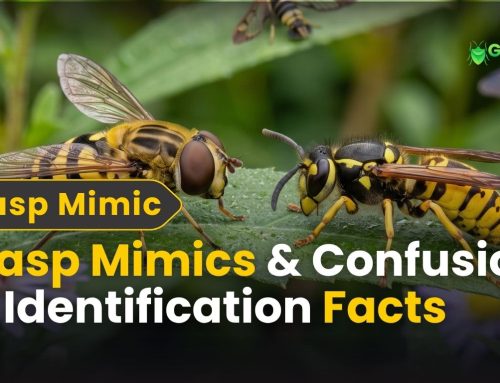
For stinging insects, compare suspected species with the Connecticut wasp and hornet identification encyclopedia or this practical wasp, hornet, and yellow jacket comparison.
Correct identification saves time and prevents unnecessary treatment.
Why Pests Appear in Connecticut Homes
A pest problem is usually caused by access to food, water, shelter, nesting habitat, or a suitable breeding source.
Connecticut’s changing seasons make those resources available in different ways throughout the year. Warm weather supports insect reproduction and outdoor activity. Summer meals, recycling containers, compost, ripe produce, pet food, and sugary residues can attract flies and social wasps. Moist drains and accumulated organic material can support other small flies.
Homes also provide numerous entry points: damaged screens, gaps around doors, utility penetrations, soffits, siding gaps, vents, and other openings.
Fairfield County has another important characteristic: properties can combine mature landscaping, wooded edges, gardens, patios, older structures, and dense neighborhoods. The pest pressure at a wooded Wilton or New Canaan property may therefore look different from a kitchen fly issue in Stamford or Norwalk.
The objective of effective pest management is to determine what is supporting the population and remove or manage that condition.
DIY & Natural Remedies Hub: 10 Practical Pest Solutions
The following remedies are useful in the right situation, but none should be viewed as a universal treatment. Several are primarily intended for flies rather than stinging insects.
1. Apple Cider Vinegar (ACV) Traps for Fruit Flies
Apple cider vinegar traps are among the best-known home remedies for fruit flies.
Fruit flies are attracted to odors associated with fermenting organic matter. That makes apple cider vinegar useful as an attractant in a simple monitoring and trapping device.
How to make an ACV fruit fly trap
Pour a small amount of apple cider vinegar into a small cup or jar. Add a drop of dishwashing liquid to reduce surface tension. Position the container close to the area where adult fruit flies are active, but away from food-preparation surfaces where it could be spilled.
Another design covers the container and uses small entry holes or a paper funnel.
The important point isn’t the exact container. It’s what happens elsewhere in the kitchen.
A trap captures adults. It doesn’t automatically eliminate eggs and larvae developing in fermenting material.
Why an apple vinegar fly trap sometimes “doesn’t work”
Homeowners often put down an ACV trap, catch 20 flies, and wonder why another 20 appear the following day.
The trap may actually be working perfectly.
New adults can continue emerging from an overlooked breeding source.
Inspect overripe produce, the bottoms of fruit containers, onions and potatoes, recycling, garbage residue, beverage containers, spills beneath appliances, mop buckets, and other moist organic material.
Our guide to where fruit flies come from explains how an infestation can persist even in an otherwise clean kitchen.
For a deeper explanation of the method itself, see whether an apple cider vinegar fruit fly trap works.
2. White Vinegar Fruit Fly Traps
What if you have white vinegar but no apple cider vinegar?
A white vinegar fruit fly trap can catch some flies, but plain white vinegar doesn’t provide exactly the same fermentation aroma as apple cider vinegar. ACV is therefore generally the more practical starting point when targeting fruit flies.
If a vinegar trap attracts little activity, don’t keep changing recipes indefinitely.
Confirm that the insects actually are fruit flies.
Drain flies, fungus gnats, and other small flies require different source-control strategies. A trap should therefore be treated as both a control device and a diagnostic clue—not proof of species by itself.
Most importantly, never mix household cleaning products casually. Vinegar is an acid, and household chemicals can produce dangerous reactions when combined. Keep DIY pest remedies simple and follow product labels.
3. Dish Soap Traps
Dish soap is commonly added to liquid fly traps because it changes the liquid’s surface properties, making it harder for attracted insects to remain on top and escape.
This creates a useful distinction: soap usually isn’t what attracts fruit flies in these traps. The bait or fermenting odor is doing that job.
A simple dish soap trap may combine:
- A small container.
- An appropriate fruit-fly attractant such as apple cider vinegar.
- A small drop of dish soap.
- Placement near observed fly activity.
Avoid assuming that “more soap” means better control. An excessive amount can change the odor of the bait without solving the underlying infestation.
These traps are best used alongside source elimination.
Green Pest Management CT’s guide to the best DIY and store-bought fruit fly traps explains when trapping should be supplemented by other measures.
4. A Fruit Fly Water Bottle Trap
A used plastic water bottle can be repurposed into a simple fruit fly water bottle trap.
One common design cuts the top portion from the bottle and reverses it to create a funnel leading toward an attractant in the bottom. A disposable bottle can be convenient when populations are noticeable and homeowners don’t want open bowls of vinegar throughout the kitchen.
Placement still matters more than elaborate construction.
Put the trap near fly activity, not randomly across the room. Keep it away from children’s and pets’ access, and don’t position a potentially spillable trap directly beside uncovered food.
What bottle traps can tell you
Traps also help monitor activity.
If one trap captures substantially more fruit flies near a recycling area than a second trap beside a sink, that information can help direct the inspection toward the recycling storage area.
This is IPM thinking applied on a small scale: monitor first, then direct effort where the evidence points.
5. Remove the Fruit-Fly Breeding Source
For fruit flies, this is usually the most important “natural remedy” in the entire guide.
Adult traps can be satisfying because you can see immediate captures. Breeding-source elimination isn’t as visually dramatic, but it attacks the reason the population persists.
Inspect produce and food-storage locations carefully. Discard spoiled or fermenting material appropriately. Refrigerate susceptible produce when practical. Rinse recyclable beverage containers before storing them. Clean sticky residue from trash and recycling bins and inspect under or behind nearby appliances.
If activity clusters around plumbing, investigate the plumbing area rather than continuing to add countertop traps. The insect may not be a fruit fly at all.
The Green Pest Management CT fruit fly authority hub covers identification, breeding sources, trapping, and prevention in greater depth, while the guide to fruit flies associated with drains helps homeowners investigate sink-related activity.
Why source removal beats endless trapping
Imagine ten adult flies are visible but developing stages remain in overlooked fermenting material.
Removing visible adults addresses the symptom.
Removing the developmental source interrupts the cycle.
For persistent infestations, this difference is fundamental.
6. Physical Exclusion: Screens, Doors, Gaps, and Entry Points
One of the most dependable pesticide-free pest controls isn’t a scent or a spray.
It’s a barrier.
Well-maintained screens, door sweeps, sealed openings, and properly managed utility penetrations can substantially reduce unwanted insect entry. Exclusion works because insects cannot adapt to a physical opening that no longer exists.
Check window screens for tears, doors for daylight-visible gaps, and penetrations for cables and pipes. Pay particular attention to recurring indoor activity associated with one window, wall, attic area, or exterior-facing room.
Use materials appropriate to the building component and avoid blocking required drainage or ventilation.
Exclusion has a limitation with social wasps: don’t seal an opening that is actively being used as the entrance to a concealed nest.
Closing the visible entrance may not eliminate the colony and can create additional problems, including movement toward another opening. Repeated wasp or yellow jacket traffic into a wall void warrants species identification and a professional assessment.
For homeowners unsure what is entering the structure, the flying insects that look like wasps guide can help avoid a mistaken identification.
7. Sanitation and Moisture Management
“Keep the house clean” is weak pest-control advice because it isn’t specific enough.
Effective sanitation means removing the particular resource a particular pest needs.
For flies, that can mean fermenting organic material, garbage residue, drain buildup, food spills, or animal waste. For other insects, persistent moisture may be a contributing condition. Outdoors, unmanaged food waste and sugary residues can increase insect activity near areas where people gather.
Useful preventive habits include prompt spill cleanup, sensible food storage, routine trash management, rinsing sticky recycling containers, correcting leaks, and avoiding prolonged accumulation of wet organic debris.
No home must be sterile.
The goal is to prevent concentrated resources from remaining available long enough to support pest reproduction or repeated foraging.
Outdoor sanitation around Fairfield County homes
During Connecticut’s warm months, decks and patios become eating spaces. Open beverages, food waste, grilling residue, and unsecured trash can attract foraging yellow jackets and other insects.
Keep waste containers closed and clean up sugary spills promptly. This won’t remove an established nest, but it can reduce attractive food sources around high-use areas.
8. Essential Oils and Plant-Based Repellents
Peppermint, clove, citronella, eucalyptus, lemongrass, and other essential oils appear frequently in online natural fly repellent recipes.
Some plant-derived compounds can demonstrate insect-repellent or insecticidal activity under specific experimental conditions. The problem arises when laboratory observations get translated into exaggerated claims about whole-home pest control.
Concentration, formulation, pest species, exposure, application surface, volatility, and environmental conditions all affect performance.
Essential oils also evaporate. A noticeable smell is not evidence that a pest population has been controlled.
Are essential oils a natural fly repellent?
Some essential-oil formulations may temporarily deter certain flies, but they should not replace sanitation, exclusion, and breeding-source control. If flies are reproducing inside a home, masking an area with a strong scent doesn’t remove eggs or larvae.
Use additional caution around children and animals. “Natural” does not mean inherently harmless. Essential oils can cause irritation or toxicity depending on the substance, concentration, exposure route, and species of pet.
The ASPCA’s poison-control information is a useful resource for pet-related exposure concerns.
Don’t apply homemade essential-oil mixtures to people, pets, food-contact surfaces, pollinators, nests, or structures without knowing whether that use is safe and appropriate.
9. Fans and Airflow for Localized Fly Relief
Air movement is an overlooked mechanical control.
A fan does not eradicate an infestation, but increased airflow can make it more difficult for small flying insects to hover and land in a localized area. This makes fans potentially useful around certain temporary gathering spaces where appropriate.
The limitation is clear: moving air manages behavior in a small zone. It doesn’t address where insects breed or nest.
Think of airflow as comfort management rather than population elimination.
If a kitchen needs a fan running constantly to keep flies away, investigate the breeding source instead.
10. DIY Zappers and Light Traps: Use the Right Tool for the Right Pest
DIY zappers and light-based traps seem appealing because they’re passive: plug them in and wait.
Their actual usefulness depends heavily on insect behavior.
Not every pest is strongly attracted to ultraviolet or visible-light devices. Fruit flies, for example, are often more strongly associated with fermentation odors and breeding material. Outdoor zappers may also kill non-target insects without addressing the pest responsible for a homeowner’s problem.
Indoors, commercial insect light traps can have legitimate applications when correctly selected and positioned. This is especially relevant to sensitive commercial settings, but placement and sanitation still matter.
Don’t install an electrical DIY trap in damp areas or modify electrical equipment beyond its intended use.
A better decision framework is:
Identify the insect → locate its source → determine what attracts it → choose a trap based on that biology → monitor results → correct the underlying condition.
For indoor fruit flies, compare trapping options in our guide to indoor fruit fly killer products.
Comparing DIY and Natural Pest Remedies
Here is a practical comparison for homeowners:
| Remedy | Best Use | Main Advantage | Main Limitation |
| ACV traps | Adult fruit flies | Simple monitoring and capture | Does not remove breeding sources |
| White vinegar trap | Small fly experimentation | Uses a common household product | Often less attractive than ACV |
| Dish soap trap | Enhancing liquid traps | Helps retain attracted flies | Not source control |
| Water bottle trap | Adult fruit flies | Reusable DIY design | Doesn’t stop development elsewhere |
| Source removal | Fruit flies and many pests | Targets the underlying cause | Requires careful inspection |
| Exclusion | Pest entry prevention | Long-lasting physical control | Must be applied correctly |
| Sanitation | Flies and foraging insects | Removes food/breeding resources | Requires ongoing maintenance |
| Essential oils | Limited repellency situations | Plant-derived option | Variable performance and persistence |
| Fans | Localized flying-insect relief | Chemical-free | Does not eliminate populations |
| Zappers/light traps | Selected flying insects | Passive monitoring/control | Pest-specific; can affect non-targets |
The broad pattern is important: methods that alter habitat, eliminate breeding sources, or physically exclude pests typically solve a more fundamental problem than methods intended only to repel or kill individual adults.
Natural Remedies That Homeowners Should Not Rely On
Online pest advice often presents household substances as universal insect killers. That can create ineffective or unsafe experiments.
Several principles can prevent problems.
Do not mix cleaners or chemicals to create a “stronger” pest remedy. Don’t burn substances indoors to produce insect-repelling smoke. Don’t apply unregistered homemade mixtures to an occupied stinging-insect nest. Don’t pour random chemical combinations down plumbing. And don’t assume food-grade or plant-derived substances are harmless at every concentration.
For pesticide products, the EPA emphasizes following the product label. EPA guidance on using pesticides safely and correctly provides broader household safety information.
A product intended for one site, pest, or application should not be improvised for another.
Why DIY Remedies Fail
DIY treatment most often fails for one of several predictable reasons.
The homeowner may have misidentified the pest. A trap may be killing adults without reaching eggs, larvae, a queen, or a nest. The actual source may be hidden in a drain, wall void, stored food area, recycling container, or outdoors. A repellent may simply move activity to another location. Or treatment may stop too early because visible activity temporarily declines.
Fruit flies demonstrate this perfectly.
A kitchen can contain multiple traps that capture adults every day while one overlooked breeding site continuously replaces them.
Stinging insects present the opposite problem. A homeowner may see only two or three wasps at a particular spot but overlook that those individuals are workers moving to and from a much larger concealed colony.
Treatment should therefore be based on pest biology rather than just the number of insects visible at one moment.
Natural Pest Control vs. Integrated Pest Management
Natural pest control and IPM overlap, but they aren’t identical.
“Natural” describes the perceived origin or character of a particular method. Integrated Pest Management describes a decision-making process.
IPM asks several questions:
What pest is present? Is intervention necessary? Where is its source? Can sanitation, exclusion, or habitat modification solve the problem? What is the lowest-risk effective treatment for the situation? Did the treatment work?
That framework is more useful than dividing every solution into “chemical” or “natural.”
Physical exclusion is an excellent example. It isn’t a natural repellent, yet sealing an appropriate pest entry point can provide durable pest reduction without continuous pesticide application.
Green Pest Management CT applies this problem-solving mindset when evaluating pest pressure in Connecticut properties.
DIY Remedies for Wasps and Hornets Require Different Safety Rules
A countertop fruit fly and a hornet nest should never be approached as equivalent DIY projects.
Social wasps can defend a colony. Nest location also matters: aerial nests, ground nests, and concealed structural nests create different treatment problems.
If you see repeated stinging-insect traffic, first determine what you’re dealing with. The wasp vs. hornet Connecticut comparison hub provides a useful starting point.
For nest characteristics, compare a suspected structure using the wasp nest identification chart and the guide to hornet nest vs. wasp nest differences.
Paper wasps
Paper wasps commonly make exposed, umbrella-like comb nests. Smaller nests can appear beneath eaves and other sheltered structures.
Learn the distinguishing nest characteristics in our guide to what a paper wasp nest looks like.
Even an exposed nest should not be handled casually. Colony size, location, individual allergy risk, access conditions, and season all influence risk.
Yellow jackets
Yellow jackets are social wasps and may establish nests in the ground or structural cavities. Activity can become particularly noticeable around food during late summer.
The yellow jacket deep-dive guide explains identification and behavior.
Repeated flight into a hole in the soil is especially important. Don’t block the opening or investigate by placing your face, hand, or tools near it.
For identification help, see the ground-nesting wasp guide.
Bald-faced hornets
Bald-faced hornets are actually aerial yellowjackets despite their common name. They create distinctive enclosed paper nests, commonly attached to vegetation or structures.
If you’ve found a gray paper nest with black-and-white insects around it, consult the bald-faced hornet identification and removal guide before approaching.
Bees and beneficial wasps
Not every flying insect around a property needs to be eliminated.
Bees are important pollinators, and many solitary or parasitoid wasps play valuable ecological roles. The parasitoid wasp resource hub explains why many of these insects are very different from social, nest-defending yellow jackets.
When appearance is confusing, use the bee vs. wasp identification guide before deciding what action is appropriate.
Risks and Problems Associated With Flying Pests
The consequences depend on the species.
Fruit flies are mostly a sanitation and nuisance problem in homes, but their persistence usually indicates that suitable developmental material remains available. In food businesses, fly activity requires particular attention to sanitation and food-handling practices.
Wasps and hornets create a different concern because they can sting. Colony defense can increase the hazard around nests, particularly when people accidentally disturb a nest while landscaping, using outdoor equipment, opening shutters, or working around a structure.
A sting can also cause a severe allergic reaction in susceptible individuals. The Centers for Disease Control and Prevention and medical professionals can provide health information, while emergency symptoms require appropriate medical care rather than pest-control advice.
Do not attempt to capture or treat stinging insects while someone is experiencing a medical emergency.
A Practical Home Pest Prevention Checklist
Connecticut homeowners can reduce many recurring insect problems with routine inspection rather than waiting for a large infestation.
- Keep susceptible produce appropriately stored and remove spoiled food promptly.
- Clean beverage spills and sticky residues.
- Rinse recycling and maintain trash containers.
- Investigate repeated fly activity around sinks and drains.
- Repair damaged window and door screens.
- Inspect door sweeps and obvious exterior gaps.
- Correct leaks and persistent moisture where practical.
- Monitor exterior insect traffic rather than approaching suspected nests.
- Keep outdoor eating areas and trash-storage zones clean.
- Trim or manage vegetation where it interferes with building inspection.
- Check seldom-disturbed exterior areas for early nest development where safe.
- Never seal an opening being actively used by a suspected wasp colony without determining what is inside.
Prevention works best as a routine rather than a response to a crisis.
Seasonal Pest Activity in Fairfield County, Connecticut
Connecticut’s four-season climate changes insect pressure throughout the year.
Spring
As temperatures rise, insect activity increases. Overwintered reproductive insects emerge, new nests may be established, and homeowners begin opening windows and spending more time outdoors.
This is a useful time for screen repair, exclusion inspection, and monitoring for new stinging-insect activity.
Summer
Warm temperatures support high insect activity.
Fruit flies can multiply rapidly when appropriate breeding material is available, especially around ripe produce and recycling. Outdoor gatherings provide food and sugary residues that can attract foraging insects.
Social wasp colonies are also growing.
A minor nest noticed early in the warm season can be a very different situation from a mature colony later in the year.
Late summer and early fall
This is frequently when homeowners become much more aware of yellow jackets and other social wasps. Colony populations have developed, and yellow jackets may become conspicuous around sweet foods, garbage, outdoor drinks, and patios.
For homeowners seeing increased activity, our guide to when wasps are least active provides behavioral context. It should not, however, be interpreted as a guarantee that DIY nest treatment is safe.
Fall and winter
Cold weather reduces the activity of many outdoor insects, but indoor conditions remain suitable for some pests. Heated homes provide stable temperatures, while stored food, drains, moisture, and other resources remain available.
Winter is also a useful time to address building maintenance and exclusion issues before the next warm season.
Local Pest Concerns Across Greenwich, Stamford, Darien, and Westport
Fairfield County isn’t one uniform environment.
Greenwich properties can range from dense residential areas to larger wooded landscapes. Stamford combines urban, suburban, and commercial settings. Darien and Westport have residential properties where decks, landscaping, mature trees, garages, exterior structures, and outdoor dining can influence encounters with flying insects.
These differences affect where professionals inspect.
A wasp problem at a Greenwich home may originate from landscaping or a structural void. A Stamford apartment or commercial space may require a closer investigation of sanitation, plumbing, waste storage, or neighboring conditions. A Darien deck problem may involve a nearby nest rather than anything inside the house.
The same principle applies in Fairfield, Wilton, New Canaan, and Norwalk: diagnosis should reflect the property rather than relying on a generic treatment plan.
DIY vs. Professional Pest Control
DIY methods make sense when a pest is correctly identified, the source is accessible, the problem is limited, and the remedy does not expose people or pets to unnecessary risk.
A few fruit flies caused by forgotten produce are a good example. Remove the source, clean the area, use an ACV trap to monitor remaining adults, and continue checking for activity.
Professional pest control becomes more appropriate when identification is uncertain, populations continue despite source removal, a concealed breeding source is suspected, activity spans multiple areas, or stinging insects are nesting in a hazardous location.
Situation-based comparison
| Situation | DIY May Be Appropriate | Professional Inspection Is Worth Considering |
| A few fruit flies | Yes, after finding the source | If activity persists |
| Suspected drain flies | Basic inspection/cleaning | Persistent or widespread activity |
| Occasional insect entering window | Repair screen/exclusion | Repeated unexplained entry |
| Essential-oil repellency | Limited supplemental use | Not a substitute for infestation control |
| Ground-nesting stinging insects | Avoid disturbing nest | Often appropriate |
| Wasps entering wall void | Do not seal entrance | Professional assessment recommended |
| Large aerial hornet/wasp nest | Avoid close approach | Professional service recommended |
| Unknown flying insect | Photograph/identify first | Inspection when identification remains uncertain |
The dividing line isn’t whether a homeowner is “capable” of DIY work. It is whether the method is likely to reach the biological source without creating unnecessary risk.
What Happens During a Professional Pest Inspection?
Professional pest management should begin with diagnosis rather than automatic application.
A typical process involves identifying the pest, interviewing the homeowner about activity, inspecting relevant interior and exterior areas, locating likely nesting or breeding conditions, evaluating entry points, and determining what factors are sustaining the problem.
Treatment depends on those findings.
For flies, the recommendation may emphasize sanitation and source removal. For a structural pest issue, exclusion may form part of the long-term plan. For social wasps, the strategy depends on species, nest location, access, and activity.
After treatment, monitoring helps determine whether activity is declining as expected and whether additional conditions need correction.
Homeowners considering help with persistent flying insects can review Green Pest Management CT’s overview of flying insect control services or learn when a fly exterminator may be appropriate.
For hornet concerns, the company’s hornet exterminator services guide explains the safety considerations involved.
Common DIY Pest-Control Mistakes
One of the biggest mistakes is treating before identifying.
Another is evaluating success too early. Killing the adults visible today doesn’t necessarily say anything about insects that will emerge from developmental sites tomorrow.
Repellents can also be misused. Moving insects from one corner to another isn’t elimination. Similarly, spraying an unknown substance into a wall opening or sealing a known active wasp entrance may complicate the situation.
DIY treatments also fail when homeowners keep adding remedies instead of reassessing the diagnosis.
If an apple vinegar fly trap catches nothing after repeated observations, ask whether you’re actually dealing with fruit flies.
If many fruit flies are caught but the population doesn’t decline, ask where they’re developing.
If a “single wasp” appears at the exact same exterior hole every few minutes, ask whether that hole is an active nest entrance.
Good pest management is a sequence of informed questions.
Are Homemade Remedies Safer Because They’re Natural?
Not necessarily.
Hazard depends on a substance’s properties, concentration, route of exposure, amount, and who or what is exposed. Plant-derived products can irritate skin, eyes, and airways or create risks for pets when used improperly.
Conversely, a physical measure such as repairing a screen may involve no pesticide at all and provide better long-term prevention.
Rather than assuming “natural = safe” and “synthetic = dangerous,” evaluate the actual method, its intended use, and its exposure risk.
For pesticide information and labels, homeowners can use the EPA’s National Pesticide Information Center resources and EPA guidance. NPIC is a cooperative agreement between Oregon State University and the EPA and provides science-based pesticide information.
When using any registered pesticide, the label directions govern its legal and appropriate use.
Special Considerations for Children and Pets
Households with children and pets should think about placement as well as ingredients.
An open vinegar trap might be low-tech, but it can still be knocked over. Sticky monitoring devices should not be accessible to pets. Essential oils need to be selected with awareness of pet sensitivities. Electrical traps require appropriate positioning.
Store pest-control products in their original containers rather than transferring them to drink bottles or unlabeled jars.
For accidental pesticide exposures in the United States, the Poison Control resource provides immediate guidance. Serious symptoms require emergency medical attention.
Creating a Low-Impact Pest Management Plan at Home
Homeowners interested in minimizing pesticide use can adopt a simple IPM-style process.
First, identify the insect. Photograph it when possible and note where and when it appears.
Second, inspect for resources: food, moisture, organic material, entry points, or nest activity.
Third, remove conditions that can be corrected safely. This might involve disposing of spoiled produce, cleaning recycling, fixing a screen, or correcting a leak.
Fourth, select a targeted monitoring method. For confirmed fruit flies, an ACV trap can show whether adult activity is decreasing.
Fifth, measure the result rather than relying on impressions.
If sightings continue at the same level, reconsider the source and identification.
Finally, escalate when the risk, location, or complexity exceeds reasonable DIY management.
This process is less dramatic than spraying everything in sight, but it is generally far more informative.
When to Call Green Pest Management CT
A professional inspection is worth considering when a pest keeps returning despite appropriate sanitation and source control, when you cannot identify the insect, or when the suspected source is inaccessible.
For wasps and hornets, professional help becomes especially important when a colony is associated with a wall or structural void, a ground nest is close to high-traffic areas, the nest is difficult to access, or someone at the property has a history of serious sting reactions.
Green Pest Management CT works with homeowners in Greenwich, Stamford, Darien, Westport, Fairfield, Wilton, New Canaan, Norwalk, and surrounding Fairfield County communities.
The goal of a professional visit should not simply be to kill the insects currently visible. It should be to identify the pest, locate the source where possible, evaluate contributing conditions, select an appropriate management strategy, and help reduce recurrence.
Homeowners dealing with a stinging-insect problem can also review the guide to DIY vs. professional hornet nest removal before deciding how to proceed.
For situations requiring professional assistance, contact Green Pest Management CT to schedule an inspection and discuss the activity occurring at your property.
Frequently Asked Questions
What is the best natural way to get rid of fruit flies?
The best approach is to locate and eliminate the breeding source. Remove fermenting produce or other organic material, clean affected containers and surfaces, manage recycling and garbage, and investigate concentrated activity around drains. ACV traps can then capture and monitor remaining adults.
Do apple cider vinegar traps really kill fruit flies?
Yes, apple cider vinegar traps can capture adult fruit flies when designed and positioned appropriately. They are not a complete solution if larvae continue developing in a separate food or organic source.
Can I make a white vinegar fruit fly trap?
Yes, but white vinegar may not attract fruit flies as effectively as apple cider vinegar because it has a different odor profile. If trapping fails, verify that the insects are actually fruit flies before experimenting with more bait recipes.
Why do you add dish soap to a fruit fly trap?
A small amount of dish soap reduces the liquid’s surface tension, making it harder for flies that contact the bait to remain on the surface and escape. The soap is generally an enhancement rather than the primary attractant.
What is a fruit fly water bottle trap?
It is a DIY trap made from a plastic bottle, commonly using an inverted top to form a funnel leading toward bait. It can capture adults, but breeding-source removal is still necessary for long-term control.
Are essential oils effective natural fly repellents?
Some plant-derived compounds can provide repellency against certain insects under particular conditions, but performance varies significantly. Essential oils should be considered supplemental rather than a replacement for exclusion, sanitation, and source control.
Why do fruit flies keep coming back after I kill them?
An active breeding source probably remains somewhere nearby, or the insect may have been incorrectly identified. Check produce, recycling, garbage residue, beverage spills, and other moist organic material, and investigate plumbing areas when activity is concentrated there.
Should I use a DIY spray on a wasp or hornet nest?
Close-range DIY treatment can expose a person to defensive stinging insects and may be particularly hazardous with concealed, difficult-to-access, or established nests. Identify the species and nest location first, and consider professional treatment when disturbance could trigger defensive activity.
Should I seal a hole where yellow jackets are entering my house?
Not while it is serving as an active colony entrance. Blocking one route may fail to eliminate the nest and can potentially redirect insect movement. Have suspected structural nest activity evaluated before sealing the opening.
When should Connecticut homeowners call professional pest control?
Consider a professional inspection when identification is uncertain, an infestation persists after appropriate DIY source control, insects appear from an inaccessible structural area, or a wasp/hornet colony poses a sting risk. Green Pest Management CT serves homeowners throughout Greenwich, Stamford, Darien, Westport, Fairfield, Wilton, New Canaan, Norwalk, and nearby Fairfield County communities.
Conclusion: Make DIY Pest Control About the Source, Not the Symptom
The best lesson from this DIY & Natural Remedies Hub is that effective pest management rarely depends on a secret ingredient.
ACV traps, dish soap traps, a fruit fly water bottle trap, physical barriers, airflow, and selected natural repellents can all have useful roles. The strongest long-term solutions, however, usually come from accurate identification, elimination of breeding sources, sanitation, moisture management, exclusion, and ongoing monitoring.
A kitchen full of fruit flies needs more than an apple vinegar fly trap. It needs an investigation into where the flies are developing. A recurring stream of yellow jackets needs more than a homemade repellent. It requires understanding whether a colony is nearby and whether treatment can be performed safely.
That approach aligns with Integrated Pest Management: understand the pest first and use the most appropriate intervention for the actual problem.
For Connecticut homeowners in Greenwich, Stamford, Darien, Westport, Fairfield, Wilton, New Canaan, Norwalk, and surrounding Fairfield County areas, Green Pest Management CT can provide a professional inspection when a DIY solution has reached its limits or a pest presents a safety concern.