Parasitic Wasp Life Cycle: 7 Fascinating Stages Explained
If you’ve spotted a tiny, delicate wasp hovering near your garden in Greenwich or Stamford, you might be watching one of nature’s most fascinating pest controllers at work. Unlike the aggressive yellow jackets or hornets that send homeowners running, parasitic wasps are beneficial insects that naturally control garden pests without posing threats to humans.
Understanding the parasitic wasp life cycle reveals why these insects are considered allies rather than enemies in Connecticut yards. These tiny wasps—often no bigger than a gnat spend their entire existence hunting down aphids, caterpillars, beetle larvae, and other destructive pests that damage your tomatoes, roses, and ornamental plants throughout Fairfield County.
In this comprehensive guide, you’ll learn exactly what happens during each stage of their development, why they’re safe to have around your family and pets, how to identify different species common to our region, and when these beneficial insects are most active in Connecticut’s seasonal climate. Whether you’re a concerned homeowner in Darien wondering if that tiny wasp is dangerous, or a gardener in Westport looking to encourage natural pest control, this article will give you the complete picture.
What Is a Parasitic Wasp?
Parasitic wasps, also called parasitoid wasps, are a diverse group of insects belonging to several families within the order Hymenoptera. Unlike their more familiar cousins the social wasps that build paper nests and defend territories parasitic wasps are typically solitary hunters that live independently rather than in colonies.
These remarkable insects have evolved a unique survival strategy: they lay their eggs inside or on other insects, and their developing larvae consume the host from the inside out. While this might sound like something from a science fiction movie, it’s actually one of nature’s most effective pest control mechanisms.
Key characteristics that define parasitic wasps:
- Size: Most species measure between 1/8 inch to 1/2 inch long—much smaller than common paper wasps or hornets
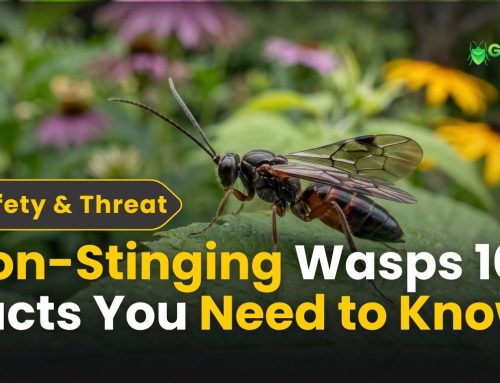
- Body structure: Slender, delicate bodies with long antennae and often thread-like waists
- Coloration: Typically black, brown, or metallic blue-green (very different from the yellow and black pattern of yellow jackets)
- Behavior: Non-aggressive toward humans; focused entirely on finding host insects
- Habitat: Gardens, agricultural fields, forests, and anywhere their host insects live
In Connecticut, you’ll find numerous species active from late spring through early fall, with peak activity during the warm summer months when pest populations are highest. They’re particularly common in Greenwich, Stamford, and throughout Fairfield County wherever gardens and natural areas provide habitat for both the wasps and their prey.
The term “parasitic” refers to their reproductive strategy, but “parasitoid” is actually more accurate since the wasp larvae eventually kill their host—unlike true parasites that keep their hosts alive. However, both terms are commonly used in pest management and gardening circles.
Why Parasitic Wasps Matter to Connecticut Homeowners
For property owners dealing with garden pests, these tiny wasps provide free, chemical-free pest control. A single parasitic wasp can attack dozens or even hundreds of pest insects during its lifetime, significantly reducing populations of:
- Aphids that damage roses and vegetables
- Tomato hornworms that devastate vegetable gardens
- Cabbage worms in cole crops
- Scale insects on ornamental shrubs
- Whiteflies in greenhouses and gardens
- Various beetle larvae that damage lawns and plants
Professional pest management companies like Green Pest Management CT recognize the value of these beneficial insects and incorporate them into Integrated Pest Management (IPM) strategies, working to preserve beneficial species while controlling harmful pests.
Do Parasitic Wasps Sting Humans?
This is the most common question homeowners in Norwalk, New Canaan, and Wilton ask when they first learn about parasitic wasps. The simple answer brings welcome relief: most parasitic wasps cannot sting humans at all, and those that technically can, almost never do.
Here’s why these insects pose virtually no threat:
Physical limitations: The majority of parasitic wasp species have ovipositors (egg-laying organs) that are specially adapted for piercing soft-bodied insects, not mammal skin. Their “stingers” are actually modified egg-laying tubes designed to penetrate caterpillar bodies or insect eggs—not defend against large animals.
No defensive behavior: Unlike aggressive hornets or territorial wasps that defend nests, parasitic wasps are solitary and have no nest to protect. They have no evolutionary reason to attack humans.
Size considerations: Many species are so small that even if they attempted to sting, their ovipositor couldn’t penetrate human skin. It would be like trying to pierce leather with a sewing needle.
Venom absence: Most parasitic wasps lack the venom glands found in social wasps. Their primary weapon is their egg-laying behavior, not chemical defense.
Rare Exceptions Worth Noting
While extremely uncommon, a few larger parasitic wasp species could theoretically deliver a sting if handled roughly or trapped against skin. These instances are exceptionally rare and typically result in nothing more than a minor pinprick sensation—nothing like the painful experience of a hornet sting or wasp sting.
Real-world perspective: In over two decades of professional pest control experience across Connecticut, Green Pest Management CT technicians have never documented a genuine parasitic wasp sting incident. By contrast, we respond to dozens of hornet and social wasp removal calls every season where homeowners have been stung multiple times.
How to Distinguish Beneficial Parasitic Wasps from Stinging Species
If you see small wasps in your Darien or Fairfield garden, here’s how to tell if they’re beneficial parasitic wasps or potentially problematic species:
Parasitic wasps typically:
- Fly slowly and deliberately around plants, inspecting leaves
- Show no interest in humans, food, or drinks
- Don’t build visible paper nests
- Measure less than 1/2 inch in most cases
- Have slender, delicate bodies
Stinging wasps typically:
- Fly more aggressively with rapid movements
- May investigate food, sweet drinks, or garbage
- Build paper nests under eaves, in bushes, or underground
- Measure 1/2 inch to over 1 inch long
- Have robust, thick bodies with prominent yellow or white markings
For help identifying flying insects that look like wasps, our identification guides provide detailed photos and descriptions specific to Connecticut species.
Parasitic Wasp Life Cycle: The 7 Complete Stages
Understanding the parasitic wasp life cycle helps explain why these insects are so effective at controlling pest populations and why their presence in your garden should be encouraged rather than feared. The cycle varies slightly among the thousands of species, but most follow this general pattern:
Stage 1: Egg Laying (Oviposition)
The life cycle begins when an adult female parasitic wasp locates a suitable host. This process demonstrates remarkable sophistication:
Host detection: Female wasps use multiple sensory systems to find hosts, including:
- Visual cues (movement, color, plant damage patterns)
- Chemical signals (pheromones released by host insects)
- Vibrations (movement of caterpillars or larvae inside plant stems)
- Plant volatile compounds (chemicals released by damaged plants that essentially “call” for help)
Once a host is located, the female uses her ovipositor to lay one or more eggs either inside the host’s body (endoparasitoids) or on its exterior (ectoparasitoids). Some species inject eggs directly into caterpillars, while others place them inside aphids, beetle larvae, or even other parasitic wasp larvae.
Duration: The egg-laying process takes only seconds to minutes per host. A single female may parasitize dozens of hosts throughout her lifetime.
Connecticut timing: In our region, you’ll see this behavior most actively from May through September, with peak activity in June and July when pest populations are highest in gardens across Greenwich and Stamford.
Stage 2: Egg Development
After being deposited, the egg remains dormant or begins slow development depending on environmental conditions and species.
Temperature dependency: Like all cold-blooded insects, development speed depends heavily on ambient temperature. Warm Connecticut summers accelerate development, while cooler spring conditions slow it down.
Duration: Typically 2-10 days, though this varies significantly by species and temperature. Some species have adapted eggs that remain dormant until the host reaches a specific developmental stage.
Protection mechanism: The egg is protected inside or on the host, which continues its normal activities—feeding, growing, and unknowingly providing nutrition for the developing parasitic wasp.
Stage 3: Larval Hatching
The tiny wasp larva emerges from the egg and begins the most critical phase of development.
Internal feeding strategy (endoparasitoids): For species that develop inside the host, the newly hatched larva carefully consumes non-essential tissues first. This keeps the host alive and functioning as long as possible, ensuring fresh nutrition. The larva typically avoids vital organs until it’s nearly fully grown.
External feeding strategy (ectoparasitoids): Species that develop on the outside of the host either consume the host gradually or inject paralyzing chemicals that preserve it like living food storage.
Duration: This first larval stage is brief—usually just 1-3 days—before molting to the next stage.
Stage 4: Larval Growth (Multiple Instars)
Like all insects, parasitic wasp larvae grow through a series of molts called instars. Most species go through 3-5 larval stages.
Exponential growth: The larva increases dramatically in size during this phase, consuming more and more of the host tissue. What started as a microscopic speck now occupies a significant portion of the host’s body cavity.
Host symptoms: By the later larval stages, parasitized insects show visible signs:
- Sluggish movement
- Reduced feeding
- Discoloration
- Swollen or distorted body shape
- Eventual cessation of all activity
Duration: The entire larval period typically lasts 1-3 weeks depending on species, temperature, and host quality. Connecticut’s warm July and August temperatures accelerate development compared to cooler May or September conditions.
Observable example: If you’ve ever seen a tomato hornworm covered in small white cocoons, you’ve witnessed the results of this stage. The Braconid wasp larvae have finished feeding, exited the now-dying caterpillar, and formed protective cocoons on its exterior.
Stage 5: Pupation
When fully grown, the larva enters the pupal stage where it undergoes metamorphosis from a worm-like larva to the adult wasp form.
Location varies by species:
- Some pupate inside the now-dead host
- Others exit and form cocoons on the host’s exterior
- Some drop to the ground and pupate in leaf litter or soil
- A few form cocoons on nearby plant material
Dramatic transformation: Inside the pupal case, the larva’s body completely reorganizes. Larval structures dissolve and adult features—wings, legs, antennae, reproductive organs—develop from specialized cell clusters.
Duration: Typically 1-2 weeks in summer conditions common to Fairfield County. However, some species overwinter as pupae, extending this stage to several months when they pupate in late summer or fall.
Protection: The pupal case provides some protection from weather and predators, though many pupae are discovered and eaten by birds, ants, or other predators.
Stage 6: Adult Emergence
The fully formed adult wasp chews or forces its way out of the pupal case, emerging ready to begin its own reproductive cycle.
Initial vulnerability: Newly emerged adults have soft bodies and incompletely hardened wings. They need several hours to fully harden and become flight-capable.
Sex ratios: Interestingly, many parasitic wasp species can control the sex of their offspring. Fertilized eggs become females, while unfertilized eggs develop into males. This allows the mother to adjust the sex ratio based on environmental conditions and available resources.
Immediate needs: Adult wasps need:
- Water sources (dew, puddles, plant moisture)
- Nectar or honeydew for energy
- Shelter from predators and weather
- Mates (for females of most species)
Duration before reproduction: Some species can begin laying eggs within hours of emergence, while others need several days to mature sexually.
Stage 7: Adult Reproduction and Host-Seeking
The adult stage completes the cycle as mature wasps seek mates and appropriate hosts for the next generation.
Adult lifespan: Most parasitic wasps live only 1-4 weeks as adults, though this varies considerably. Their brief adult lives are intensely focused on reproduction.
Energy sources: Unlike their carnivorous larvae, adult parasitic wasps typically feed on:
- Flower nectar (they’re actually important pollinators)
- Honeydew produced by aphids
- Plant sap
- Pollen
This is why gardens with diverse flowering plants in Westport and New Canaan support larger populations of beneficial parasitic wasps.
Host-seeking behavior: Female wasps spend most of their adult lives searching for suitable hosts. Their sensory abilities are remarkable—some can detect chemical signals from a single host caterpillar from several meters away.
Reproduction rates: Depending on species, a single female may parasitize:
- Just a few dozen hosts (larger species with bigger eggs)
- Several hundred hosts (tiny species attacking aphids or whiteflies)
Connecticut seasonal patterns: In our climate, most parasitic wasps complete 2-4 generations per growing season. The final generation in late summer/early fall typically overwinters in the pupal stage, emerging the following spring when pest populations begin building again.
Common Parasitic Wasp Species in Connecticut
Fairfield County and surrounding Connecticut areas host dozens of parasitic wasp species. Here are some you’re most likely to encounter:
Braconid Wasps (Family Braconidae)
Appearance: Small to medium-sized (1/8 to 1/2 inch), often brown, black, or reddish with long antennae
Hosts: Caterpillars, aphids, beetle larvae
Identification clue: If you see white rice-like cocoons covering a dying tomato hornworm, that’s the work of Braconid wasps. The larvae have finished feeding and pupated externally.
Garden value: Excellent control of garden caterpillars including cabbage worms, hornworms, and various moth larvae
Ichneumon Wasps (Family Ichneumonidae)
Appearance: Slender bodies, often 1/2 to 1 inch long with very long antennae; many have extremely long ovipositors extending from their rear
Hosts: Caterpillars, wood-boring beetles, sawfly larvae
Identification clue: The impressively long ovipositor (sometimes several inches) is used to drill through wood to reach beetle larvae tunneling inside trees
Garden value: Control of wood-boring pests and various caterpillars; particularly beneficial in areas with mature trees
Trichogramma Wasps (Genus Trichogramma)
Appearance: Microscopic—only about 1/50 inch long, often invisible to the naked eye
Hosts: Insect eggs, particularly moth and butterfly eggs
Identification clue: You’ll likely never see these tiny wasps, but you might notice pest eggs that appear darkened or discolored—signs they’ve been parasitized
Garden value: Attack pest eggs before they hatch, preventing damage entirely; commercially available for release in gardens
Chalcid Wasps (Superfamily Chalcidoidea)
Appearance: Tiny (mostly under 1/4 inch), often with metallic blue, green, or bronze coloring
Hosts: Wide variety including aphids, whiteflies, scale insects, beetle larvae, and other parasitic wasps
Identification clue: Metallic sheen and extremely small size; often seen walking on leaves inspecting for hosts
Garden value: Exceptional control of soft-bodied pests like aphids and whiteflies; some species attack hundreds of aphids in their lifetime
Aphelinid Wasps (Family Aphelinidae)
Appearance: Minute (under 1/8 inch), delicate bodies, often yellowish or black
Hosts: Whiteflies, scale insects, aphids
Identification clue: Frequently seen on the undersides of leaves where whiteflies congregate
Garden value: Specialized whitefly predators; essential for greenhouse pest management
How to Identify a Parasitic Wasp
When you spot a small wasp-like insect in your Darien or Wilton garden, here’s how to determine if it’s a beneficial parasitic species:
Visual Identification Checklist
Size indicators:
- Smaller than 1/2 inch (most species)
- Very slender, delicate body
- Thread-like waist between thorax and abdomen
- Long, prominent antennae (often as long as the body)
Color patterns:
- Solid black, brown, or reddish colors
- Metallic blue, green, or bronze sheen
- NOT bold yellow and black stripes (that’s likely a yellow jacket)
- NOT black and white patterns (possibly a bald-faced hornet)
Behavioral clues:
- Slowly inspecting plant leaves and stems
- Hovering near aphid colonies or caterpillars
- Walking deliberately on plant surfaces
- No interest in humans, food, or garbage
- No visible nest construction
- NOT building paper structures
- NOT showing aggression toward people
Wing characteristics:
- Two pairs of clear or slightly tinted wings
- Relatively small wings compared to body
- Wings held flat over back when resting
What Parasitic Wasps DON’T Look Like
To avoid confusion with stinging species, remember parasitic wasps typically don’t have:
- Large, robust bodies
- Bright yellow and black warning coloration
- Visible paper nests nearby
- Aggressive defensive behavior
- Interest in human food or drinks
For detailed visual comparisons, our guide on how to identify wasp species includes photographs of both beneficial and problematic species common to Connecticut.
Are Parasitic Wasps Dangerous to Humans?
The short answer: No. Parasitic wasps pose essentially no danger to humans, pets, or livestock. Here’s the complete safety picture:
Human Safety
Sting risk: As covered earlier, the overwhelming majority of parasitic wasp species cannot sting humans. Their ovipositors aren’t designed for defense and usually can’t penetrate skin.
Allergic reactions: Since stings are virtually non-existent, allergic reactions are not a concern. People with bee or wasp sting allergies don’t need to worry about parasitic wasps.
Disease transmission: Parasitic wasps don’t bite, don’t transmit diseases to humans, and don’t contaminate food or living spaces.
Aggressive behavior: These solitary insects have no defensive instincts toward humans. You can work in a garden with hundreds of parasitic wasps actively hunting without any interaction.
Pet and Livestock Safety
Parasitic wasps are equally harmless to:
- Dogs and cats
- Chickens and other poultry
- Horses and livestock
- Pet rabbits and guinea pigs
In fact, pets are far more likely to benefit from reduced pest populations than to have any negative interaction with parasitic wasps.
Environmental Safety
From an ecological perspective, parasitic wasps are purely beneficial:
Non-target effects: They’re highly host-specific, attacking only particular pest species without harming beneficial insects like ladybugs, lacewings, or native bees.
Chemical-free control: Their presence reduces or eliminates the need for pesticide applications, protecting pollinators, soil organisms, and water quality.
Ecosystem balance: They’re a natural part of Connecticut’s ecosystem, helping maintain healthy insect populations without causing imbalances.
When to Seek Professional Pest Control
While parasitic wasps themselves are harmless, their presence might indicate:
- High pest populations: If you see many parasitic wasps, you likely have a significant pest problem they’re addressing
- Nesting confusion: Sometimes homeowners mistake social wasp nests for parasitic wasp activity
If you’re uncertain about what species you’re seeing, or if you have visible nests forming on your Greenwich or Stamford property, contact professional pest control services for accurate identification and appropriate management recommendations.
The team at Green Pest Management CT can distinguish beneficial parasitic wasps from problematic species and develop IPM strategies that preserve beneficial insects while addressing genuine pest threats.
The Role of Parasitic Wasps in Integrated Pest Management
Professional pest control has evolved significantly over the past few decades. Modern Integrated Pest Management (IPM) recognizes that not all insects are pests—some are valuable allies in maintaining healthy properties.
What Is IPM?
Integrated Pest Management is an ecosystem-based approach that combines:
- Monitoring: Regular inspection to identify pest populations and beneficial insects
- Prevention: Modifications that make environments less hospitable to pests
- Biological control: Encouraging natural predators and parasites
- Targeted treatment: Using the least toxic, most specific methods when intervention is necessary
The EPA endorses IPM as the most sustainable approach to pest management, and it’s the foundation of how Green Pest Management CT approaches properties throughout Fairfield County.
How Parasitic Wasps Fit into Professional IPM
Natural pest suppression: Parasitic wasps provide continuous, free pest control without chemicals, recurring costs, or environmental impacts.
Reduced chemical dependency: Properties with healthy parasitic wasp populations require fewer pesticide applications, saving money and protecting pollinators.
Long-term sustainability: Unlike one-time chemical treatments, parasitic wasp populations are self-sustaining if conditions support them.
Resistance prevention: Pests can’t develop resistance to parasitic wasps the way they do to pesticides.
How Professional Services Support Beneficial Insects
When you work with pest management professionals who understand beneficial insects, they:
- Preserve beneficial populations: Use selective treatments that target problem species while protecting parasitic wasps and other beneficial insects
- Time treatments strategically: Schedule applications when beneficial insects are least active
- Create habitat: Recommend landscaping modifications that support parasitic wasp populations
- Monitor balance: Track both pest and beneficial insect populations to maintain natural equilibrium
This approach is particularly effective in Connecticut’s diverse suburban landscapes where gardens, ornamental plantings, and natural areas create ideal conditions for biological control.
Encouraging Parasitic Wasps in Your Connecticut Garden
If you’d like to boost parasitic wasp populations on your Norwalk, New Canaan, or Fairfield property, these strategies create favorable conditions:
Plant Diversity Is Key
Adult parasitic wasps need nectar for energy. The best gardens include:
Flowering herbs:
- Dill, fennel, and parsley (allow some to flower)
- Cilantro (coriander) flowers
- Oregano, thyme, and mint blooms
Native wildflowers:
- Black-eyed Susan
- Coneflower (Echinacea)
- Goldenrod
- Asters
- Wild bergamot
Ornamental flowers with accessible nectar:
- Alyssum
- Yarrow
- Cosmos
- Marigolds
- Zinnias
Why these work: Parasitic wasps have short mouthparts and need flowers with exposed or easily accessible nectar. Large, complex flowers like roses or tulips don’t provide the resources they need.
Provide Water Sources
Shallow dishes: Place shallow plates or saucers with pebbles and water in garden areas. The pebbles give tiny wasps safe landing spots.
Dripping water: A slowly dripping faucet or irrigation system provides both water and humidity.
Morning dew: Dense plantings and mulched areas retain morning dew, which parasitic wasps use for hydration.
Minimize Pesticide Use
Chemical impacts: Broad-spectrum insecticides kill parasitic wasps as readily as they kill pests. Even organic pesticides like pyrethrins are toxic to beneficial insects.
Targeted approach: If treatment is necessary, use:
- Spot treatments rather than broadcast spraying
- The least toxic option effective for the specific pest
- Application timing that minimizes beneficial insect exposure
Professional expertise: Green Pest Management CT’s IPM approach identifies situations where treatment is essential versus where beneficial insects can provide natural control.
Create Habitat Diversity
Undisturbed areas: Leave some areas with leaf litter, ground covers, and unmowed grass where parasitic wasps can find shelter.
Hedge rows and shrubs: Mixed plantings provide protection from wind and predators.
Avoid excessive mulching: While mulch benefits plants, deep mulch layers can reduce ground-dwelling parasitic wasp populations.
Accept Some Pest Damage
Tolerance threshold: Allowing low levels of aphids, caterpillars, or other pests ensures parasitic wasps have hosts to sustain their populations.
Natural balance: Gardens with established parasitic wasp populations experience pest outbreaks less frequently and less severely.
Cosmetic vs. harmful damage: Learn to distinguish between minor cosmetic damage (a few chewed leaves) and true plant health threats.
Seasonal Activity Patterns in Connecticut
Understanding when parasitic wasps are most active in our region helps you appreciate their role in natural pest management:
Spring (April – May)
Emergence: Overwintered pupae begin emerging as temperatures consistently reach 50-60°F. Early spring species target aphids and other early-season pests.
Activity level: Moderate, increasing as temperatures warm
What you’ll see: Small parasitic wasps on early flowering plants and inspecting emerging pest populations
Early Summer (June – July)
Peak activity: This is the period of highest parasitic wasp activity across Greenwich, Stamford, and surrounding areas. Multiple generations overlap, creating large populations.
Activity level: Very high
What you’ll see: Parasitic wasps on flowering herbs, vegetables, and ornamentals. Parasitized aphids, caterpillars with cocoons, and reduced pest damage.
Late Summer (August – September)
Continued activity: Warm temperatures support continued reproduction, though populations may decline slightly from peak levels.
Activity level: High to moderate
What you’ll see: Final generations preparing for winter. Some species begin transitioning to overwintering stages.
Fall (October – November)
Decline: As temperatures drop and host insect populations crash, parasitic wasp activity decreases rapidly.
Activity level: Low to none
What you’ll see: Final adults seeking overwintering sites. Most species enter dormancy as pupae, eggs, or (rarely) adults in protected locations.
Winter (December – March)
Dormancy: Connecticut winters are too cold for active parasitic wasps. They overwinter in various life stages depending on species.
Activity level: None
What’s happening: Parasitic wasps in pupal stages inside dead hosts, in soil, or under bark wait for spring warmth to trigger emergence.
DIY Monitoring vs. Professional Pest Management
Most homeowners can successfully encourage and enjoy the benefits of parasitic wasps without professional assistance. However, certain situations call for expert involvement:
When DIY Approaches Work Well
You can manage parasitic wasp populations yourself if:
- You’re dealing with typical garden pests like aphids or caterpillars
- You want to create beneficial insect habitat
- You’re implementing preventive landscaping practices
- You need help identifying beneficial vs. problematic species
- Pest populations are manageable and not causing significant damage
DIY resources:
- Extension service publications
- Online identification guides including our parasitic and parasitoid wasp hub
- Gardening communities and forums
- Books on beneficial insects
When to Call Professional Pest Control
Consider professional services when:
Identification uncertainty: You’re not sure if you’re seeing beneficial parasitic wasps or potentially problematic species. Misidentification could lead to unnecessary treatments that harm beneficial insects.
Aggressive wasp problems: You have visible nests, aggressive wasps near entries or high-traffic areas, or confirmed hornet or social wasp populations that require removal.
Severe pest infestations: Pest populations exceed what biological control can manage, threatening plant health or property damage.
Integrated management planning: You want a comprehensive IPM strategy that balances pest control with beneficial insect conservation.
Safety concerns: Children, pets, or family members with insect allergies require careful management of all stinging insects.
Property-wide issues: Large properties with multiple pest problems benefit from professional monitoring and coordinated management.
What Professional Services Provide
When you contact Green Pest Management CT for properties in Darien, Westport, Wilton, or throughout Fairfield County, you receive:
Accurate identification: Experienced technicians distinguish beneficial parasitic wasps from species requiring management.
Customized IPM strategies: Plans tailored to your property’s specific conditions, pest pressures, and beneficial insect populations.
Selective treatments: When intervention is necessary, professionals use methods that target problem species while protecting beneficial insects.
Ongoing monitoring: Regular inspections track both pest and beneficial insect populations, adjusting strategies as conditions change.
Expert guidance: Recommendations for landscaping, habitat modification, and cultural practices that support natural pest control.
Safety assurance: Professional removal of genuinely problematic wasp or hornet nests using appropriate safety equipment and techniques.
For questions about specific insects on your property or to schedule an inspection, our team provides expert guidance based on decades of experience with Connecticut’s unique pest and beneficial insect populations.
Parasitic Wasps vs. Other Beneficial Insects
Parasitic wasps are one component of a healthy beneficial insect community. Understanding how they compare to other helpers provides perspective:
Ladybugs (Lady Beetles)
Similarities: Both are predators of soft-bodied pests like aphids
Differences:
- Ladybugs are generalist predators (both adults and larvae eat aphids)
- Parasitic wasps are specialists (each species targets specific hosts)
- Ladybugs are larger and easily visible
- Ladybugs provide immediate pest reduction; parasitic wasps work over time
Complementary roles: Gardens with both ladybugs and parasitic wasps see better pest control than those with just one.
Lacewings
Similarities: Larvae are voracious predators of aphids, mites, and small caterpillars
Differences:
- Lacewing larvae actively hunt and consume multiple prey
- Parasitic wasp larvae develop inside single hosts
- Lacewings have larger prey ranges
- Adult lacewings are larger (about 3/4 inch) with distinctive lacy wings
Complementary roles: Lacewings provide quick pest knockdown; parasitic wasps prevent future generations.
Ground Beetles
Similarities: Both contribute to pest control in garden environments
Differences:
- Ground beetles are nocturnal hunters that eat soil-dwelling pests, slugs, and caterpillars
- Parasitic wasps work during daylight on above-ground pests
- Ground beetles are much larger (1/2 to 1 inch)
Complementary roles: Ground beetles control different pest species than parasitic wasps, increasing overall control.
Predatory Wasps (Like Mud Daubers)
Similarities: Both are wasps that help control pest populations
Differences:
- Predatory wasps are larger and hunt spiders or caterpillars to provision nests
- Parasitic wasps lay eggs in living hosts
- Some predatory wasps can sting defensively; parasitic wasps cannot
- Predatory wasps build visible mud or paper nests
Complementary roles: Each targets different pest groups, providing broader pest management.
The most resilient, pest-resistant gardens support diverse beneficial insect communities where multiple species work together, each filling a unique ecological role.
Common Misconceptions About Parasitic Wasps
Let’s address some widespread misunderstandings Connecticut homeowners often have:
Misconception 1: “All Small Wasps Are the Same”
Reality: The term “wasp” encompasses thousands of species with vastly different behaviors, diets, and risks. Tiny parasitic wasps have almost nothing in common with yellow jackets or hornets beyond basic body structure.
Why it matters: Treating all wasps as dangerous pests leads to unnecessary elimination of beneficial species.
Misconception 2: “If It Looks Like a Wasp, It Can Sting Me”
Reality: The ability and inclination to sting humans varies enormously among wasp species. Most parasitic wasps physically cannot sting people.
Why it matters: Fear-based reactions lead to killing beneficial insects that pose no threat.
Misconception 3: “Parasitic Wasps Will Attack My Garden Plants”
Reality: Parasitic wasps are carnivorous throughout their life cycle (though adults drink nectar). They don’t damage plants—they protect them by controlling herbivorous pests.
Why it matters: Recognizing parasitic wasps as allies encourages conservation rather than elimination.
Misconception 4: “Dead Caterpillars with White Cocoons Are Diseased”
Reality: Those white rice-like structures on dying hornworms or caterpillars are parasitic wasp pupae—evidence that biological control is working perfectly.
Why it matters: Understanding this natural process prevents unnecessary pesticide use and preserves the next generation of beneficial wasps.
Misconception 5: “I Need to Buy and Release Beneficial Insects”
Reality: While commercially available beneficial insects (including some parasitic wasps like Trichogramma) can supplement populations, creating favorable habitat is usually more effective and sustainable.
Why it matters: Habitat improvement provides long-term benefits, while releases may not establish if conditions aren’t suitable.
Misconception 6: “Organic Pesticides Won’t Harm Beneficial Insects”
Reality: Many organic pesticides (pyrethrins, neem oil, insecticidal soaps) kill beneficial insects as effectively as synthetic chemicals.
Why it matters: “Organic” doesn’t mean “selective”—IPM strategies that preserve beneficials require careful product selection and application timing regardless of whether products are organic or synthetic.
Frequently Asked Questions
What is a parasitic wasp?
A parasitic wasp is a beneficial insect that lays its eggs inside or on other insects. The developing wasp larvae consume the host insect, providing natural pest control. These tiny wasps most smaller than 1/2 inch are found throughout Connecticut gardens and are harmless to humans, pets, and plants.
Do parasitic wasps sting humans?
No, the vast majority of parasitic wasp species cannot sting humans. Their ovipositors (egg-laying organs) are designed for piercing soft insect bodies, not mammal skin, and most species lack defensive venom entirely. Unlike social wasps and hornets, parasitic wasps are solitary and non-aggressive toward people.
How long does the parasitic wasp life cycle take?
The complete parasitic wasp life cycle typically takes 3-6 weeks during Connecticut’s warm summer months, though this varies by species and temperature. The cycle includes egg (2-10 days), larval stages (1-3 weeks), pupa (1-2 weeks), and adult stages. Some species complete 2-4 generations per season in our climate.
Are parasitic wasps dangerous to humans or pets?
No, parasitic wasps pose no danger to humans, pets, or livestock. They cannot deliver meaningful stings, don’t transmit diseases, and show no defensive or aggressive behavior toward people or animals. They’re among the safest beneficial insects in Connecticut gardens.
What does a parasitic wasp look like?
Most parasitic wasps are very small (1/8 to 1/2 inch), with slender bodies, long antennae, and narrow waists. They’re typically black, brown, or metallic blue-green—not the yellow and black pattern of stinging wasps. Many species have thread-like bodies that look delicate compared to robust social wasps.
How can I tell the difference between beneficial parasitic wasps and stinging wasps?
Parasitic wasps are smaller, have slender bodies, move slowly and deliberately on plants, show no interest in people or food, and don’t build visible nests. Stinging wasps like yellow jackets are larger, more robust, fly aggressively, may investigate food, and often have bright yellow markings and visible nests.
Should I encourage parasitic wasps in my Connecticut garden?
Yes, parasitic wasps provide free, chemical-free pest control that reduces aphids, caterpillars, and other garden pests. Encourage them by planting diverse flowers (especially herbs like dill and fennel), providing shallow water sources, minimizing pesticide use, and tolerating low levels of pest insects that serve as hosts.
When are parasitic wasps most active in Connecticut?
Parasitic wasps are most active from June through August in Connecticut, with peak populations in July when temperatures are warmest and pest populations are highest. Activity begins in April-May as overwintered wasps emerge and declines in September-October as they enter dormancy for winter.
Can parasitic wasps damage my garden plants?
No, parasitic wasps don’t damage plants. Adult wasps drink nectar from flowers but don’t eat plant tissue. Their larvae are carnivorous, consuming only insect hosts. Parasitic wasps actually protect garden plants by controlling pest insects that would otherwise cause damage.
What pests do parasitic wasps control in Connecticut gardens?
Different parasitic wasp species target different pests including aphids, caterpillars (hornworms, cabbage worms), whiteflies, scale insects, beetle larvae, and various moth eggs. A diverse parasitic wasp population provides broad-spectrum biological control of most common garden pests in Greenwich, Stamford, and throughout Fairfield County.
Conclusion: Partners in Pest Management
The parasitic wasp life cycle represents one of nature’s most elegant pest control mechanisms a fascinating biological process that benefits Connecticut homeowners without chemicals, costs, or environmental impacts. These tiny beneficial insects work tirelessly throughout the growing season, controlling aphids on your roses, preventing hornworms from devastating your tomatoes, and protecting ornamental plants from destructive caterpillars.
Understanding their seven life stages from precise egg laying through larval development, pupation, and adult emergence reveals why parasitic wasps are so effective at maintaining balanced insect populations. Each generation targets the next wave of garden pests, providing continuous protection that synthetic pesticides simply can’t match.
For homeowners in Greenwich, Stamford, Darien, Westport, Fairfield, Wilton, New Canaan, Norwalk, and throughout Fairfield County, the message is clear: those tiny wasps hovering near your plants aren’t threats requiring elimination they’re valuable allies deserving protection and encouragement.
By creating favorable conditions diverse flowering plants, water sources, minimal pesticide use, and habitat diversity you can support robust parasitic wasp populations that significantly reduce pest problems year after year. The investment is minimal; the returns substantial.
When you do encounter stinging wasps or hornets that require professional attention, Green Pest Management CT provides expert identification and targeted solutions that address genuine threats while preserving beneficial species. Our Integrated Pest Management approach recognizes that effective pest control works with nature’s systems rather than against them.
The next time you spot a tiny wasp carefully inspecting your garden plants, take a moment to appreciate the complex life cycle unfolding before you—and the pest control services that insect is providing absolutely free.
For questions about specific insects on your property, assistance distinguishing beneficial species from problematic ones, or professional pest management services that preserve your garden’s helpful insects, contact Green Pest Management CT. Our experienced team serves Connecticut homeowners with solutions that protect both your property and the beneficial insects that make it healthier.