Nest Identification Guide: Identify Bird, Bee, Wasp & Hornet Nests with Photos (2026)
Introduction: That Weird Structure in Your Yard Could Be a Serious Problem
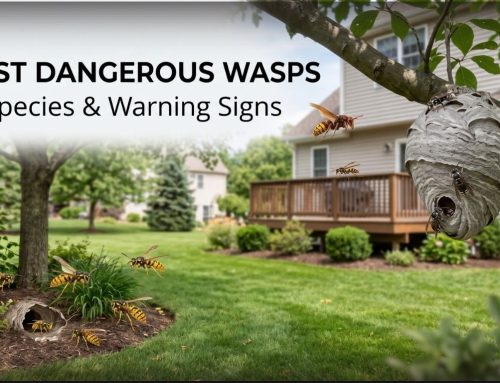
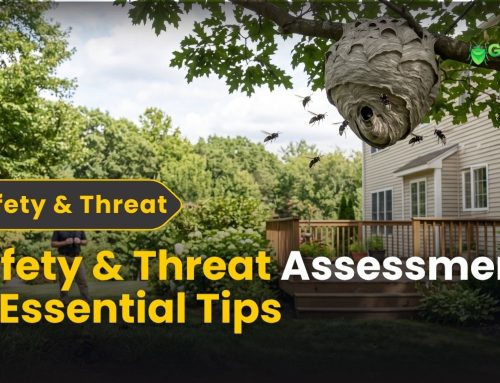
You’re doing some weekend yard work in your backyard in Greenwich, CT, when you notice something hanging from a tree branch — a grayish, paper-like ball the size of a football. Or maybe you spot a cluster of mud tubes under your deck in Stamford, or a funnel-shaped web near your garden in New Canaan. Your first instinct? What is that thing, and should I be worried?
You should be.
What you’re looking at could be a bald-faced hornet nest, a yellow jacket ground nest, a mud dauber tube, or simply a bird’s nest — and the difference matters enormously. One wrong move — reaching out, poking it, or trying to knock it down — can trigger a swarm that sends you to the emergency room.
This comprehensive nest identification guide is designed to help homeowners across Connecticut — from Darien to Wilton, Westport to New Canaan — quickly and accurately identify what type of nest they’re dealing with, understand the risks involved, and take the right course of action.
Whether it’s a paper nest, a ground nest, a mud nest, a honeycomb structure, or a funnel-shaped burrow, this guide breaks down every type with clear descriptions, photo cues, behavioral clues, and expert safety advice.
Don’t guess. Don’t poke. Read this first.
Table of Contents
- Why Nest Identification Matters
- Quick Visual Nest ID Chart
- Paper Nests: Wasps and Hornets
- Ground Nests: Yellow Jackets and Ground Hornets
- Mud Nests: Mud Daubers and Potter Wasps
- Honeycomb Nests: Bees
- Tree and Wall Nests: Hidden Dangers
- Funnel-Shaped Nests
- Bird Nests vs. Pest Nests
- Nest Identification by Location
- When to Call a Professional
- DIY vs. Professional Removal
- Real Stories from CT Homeowners
- Pro Tips for Nest Prevention
- FAQ Section
1. Why Nest Identification Matters More Than You Think
Here’s the thing most homeowners don’t realize: not all nests are the same, and not all insects behave the same way when threatened.
Treating a honey bee hive like a wasp nest can destroy a protected pollinator colony. Spraying a bald-faced hornet nest with the wrong product from the wrong distance can provoke a full-scale attack. Ignoring a yellow jacket ground nest near your patio in Westport, CT can result in multiple family members getting stung during a simple barbecue.
According to the Centers for Disease Control and Prevention (CDC), stinging insect allergies cause approximately 90–100 deaths per year in the United States — and many of these are preventable with proper identification and action.
The risks are real. The solutions are clear. You just need to know what you’re dealing with.
Proper nest identification also helps you:
- Choose the right treatment (aerosol spray, foam, dust, or professional service)
- Understand the threat level (passive vs. aggressive species)
- Avoid destroying beneficial insects like native bees and paper wasps that control garden pests
- Protect your family and pets from unnecessary stings
- Act at the right time certain nests require treatment at specific seasons
2. Quick Visual Nest ID Chart
Use this at-a-glance comparison table to make your first identification before diving deeper:
| Nest Type | Shape | Material | Location | Insect | Aggression Level |
| Paper Nest (Enclosed) | Round/oval, layered | Chewed wood pulp | Trees, eaves, attics | Bald-faced hornet, European hornet | Very High |
| Paper Nest (Open-comb) | Upside-down umbrella | Chewed wood pulp | Porch ceilings, overhangs | Paper wasp | Moderate |
| Ground Nest | Hidden entrance hole | Soil cavity | Lawns, gardens, decks | Yellow jackets, ground hornets | Extremely High |
| Mud Nest (Tubes) | Parallel clay tubes | Dried mud | Walls, eaves, wood | Mud dauber wasps | Very Low |
| Mud Nest (Pot-shaped) | Small clay pot | Dried mud | Sheltered surfaces | Potter wasps | Very Low |
| Honeycomb Nest | Hexagonal cells, exposed | Wax | Trees, walls, attics | Honey bees | Low–Moderate |
| Bumblebee Nest | Messy, loose | Grass/moss | Ground, old rodent holes | Bumblebees | Low |
| Funnel Nest | Funnel-shaped silk | Silk webbing | Low grass, shrubs | Funnel web spiders (NOT insects) | N/A |
| Bird Nest | Cup/dome/platform | Sticks, grass, mud | Trees, ledges, gutters | Various birds | N/A |
3. Paper Nests: The Most Common (and Most Dangerous) Nest Type
What Is a Paper Nest?
Paper nests are arguably the most recognizable — and most mishandled — type of stinging insect nest. They’re made from chewed wood fibers mixed with saliva, creating a papery, lightweight, but surprisingly sturdy structure.
There are two major varieties you’ll encounter in Connecticut:
3a. Enclosed Paper Nests (Hornets)
These are the football-sized or basketball-sized gray or tan structures you’ll find hanging from tree branches, attached to the sides of houses, under decks, or tucked into attic spaces in areas like Darien, CT and Stamford, CT.
Key identifying features:
- Shape: Round to oval, completely enclosed with a single entrance hole at the bottom
- Color: Grayish-tan with a swirling, wood-grain pattern
- Size: Can grow from golf ball size in spring to basketball size by late summer
- Texture: Papery, layered, with visible construction rings
- Location: Typically elevated — trees, eaves, overhangs, attics, inside wall cavities
The most common builder of these enclosed paper nests in Connecticut is the bald-faced hornet (Dolichovespula maculata). You can learn more about identifying this species through our detailed bald-faced hornet identification and removal guide.
Why these nests are dangerous:
Bald-faced hornets are extraordinarily territorial and aggressive. They can sting multiple times, and they will coordinate attacks. A colony can contain anywhere from 400 to 700 individuals by late summer. Disturbing the nest — even vibrations from a lawnmower — can trigger a defensive swarm.
The European hornet (Vespa crabro) also builds enclosed paper nests, though they often choose hollow trees or wall voids. European hornets are the only true hornet species in North America and are notably larger. Compare these species in our yellow jacket vs. European hornet breakdown.
SAFETY WARNING: Never attempt to knock down or spray an enclosed hornet nest without professional guidance. These nests contain hundreds of highly aggressive insects. One wrong move can result in dozens of simultaneous stings.
3b. Open-Comb Paper Nests (Paper Wasps)
These are smaller, open-faced structures that look like an upside-down umbrella or a tiny honeycomb hanging from a stem or attached directly to a surface.
Key identifying features:
- Shape: Flat, open, hexagonal cell structure — no outer covering
- Color: Gray to brown
- Size: Usually smaller than a fist; ranges from a few cells to 20–30 cells
- Location: Under eaves, porch ceilings, door frames, window sills, garden furniture, mailboxes
Common builders: Paper wasps (Polistes species), including the Northern paper wasp and European paper wasp — both common throughout Wilton, CT and New Canaan, CT.
Paper wasps are considerably less aggressive than hornets but will still sting if directly threatened. Their nests are smaller and easier to treat, but they should still be approached with caution.
You can identify paper wasp species more specifically using our wasp species identification guide.
What to do:
- Small, early-season nests (4–8 cells, no visible larvae) can sometimes be knocked down at night with a jet spray
- Larger nests with larvae or active adults call a professional
4. Ground Nests: The Hidden Threat Beneath Your Feet
Why Ground Nests Are the Most Dangerous
If paper nests are the most visible threat, ground nests are the most dangerous — precisely because you often don’t know they’re there until you’ve already disturbed them.
In Connecticut, ground-nesting yellow jackets and ground hornets are responsible for the majority of serious sting incidents every summer season. Homeowners in Greenwich, CT and Westport, CT frequently encounter these in their lawns, garden beds, and under wooden decks.
What Does a Ground Nest Look Like?
Ground nests are deceptively subtle. Here’s what to look for:
Key identifying features:
- Entrance: A hole in the ground roughly the size of a quarter to a golf ball, often surrounded by loose soil
- Traffic: Constant buzzing, flying insects entering and exiting the hole
- Location: Lawns, under landscaping timbers, beneath decks, in the base of old tree stumps, near retaining walls
- Size: Underground chambers can expand to contain thousands of insects
- Visual clues: A small mound of loose soil, dead grass nearby, or a slight depression in the turf
Common builders in Connecticut:
- Eastern yellow jacket (Vespula maculifrons) — the most common and most aggressive
- German yellow jacket (Vespula germanica)
- Cicada killer wasps (Sphecius speciosus) — large but relatively docile
- Bumblebees — also ground-nesting but far less aggressive
For a comprehensive breakdown of yellow jacket behavior and biology, visit our yellow jacket deep dive resource.
The Scale of the Problem
A single yellow jacket ground nest can house 1,000 to 5,000 workers by midsummer. By late August and September — peak season in Connecticut — these colonies reach maximum population and maximum aggression.
According to Wikipedia’s entry on yellow jackets, ground-nesting yellow jackets are classified as one of the most aggressive stinging insects in North America, capable of stinging multiple times and releasing alarm pheromones that recruit additional defenders.
Think about this: You mow your lawn on a Saturday afternoon in Stamford, CT. The lawnmower vibrations disturb a yellow jacket nest 18 inches underground. Within seconds, 200–300 workers swarm out. You have no warning. You have no time.
This scenario plays out hundreds of times every summer in Connecticut.
Take action before it spreads. If you notice ground-nesting insect activity in your yard, contact our professional pest control team before someone gets hurt.
For specific ground hornet identification and professional treatment options in CT, see our ground hornets identification and treatment guide and our dedicated ground hornet treatment in CT page.
5. Mud Nests: The Clay Architects of the Insect World
Mud Dauber Nests
Mud dauber wasps are among the most distinctive nest-builders you’ll encounter. Their nests are immediately recognizable once you know what to look for — and importantly, they’re built by one of the most docile stinging insects around.
Key identifying features:
- Shape: Cylindrical clay tubes, often stacked in parallel groups
- Color: Gray to dark brown (dried mud)
- Size: Each tube is roughly the diameter of a finger and 1–2 inches long; multiple tubes may cluster together
- Location: Under eaves, inside garages, on sheltered walls, inside barns, under wooden decks
- Texture: Hard, rough mud surface
Common builders:
- Black and yellow mud dauber (Sceliphron caementarium) — builds parallel tube clusters
- Blue mud dauber (Chalybion californicum) — often reuses abandoned black and yellow mud dauber nests
- Organ pipe mud dauber (Trypoxylon politum) — builds long, vertical tubes resembling organ pipes
What’s inside: Each mud tube contains paralyzed spiders (the wasp’s food source for larvae) and a single egg. Mud daubers are solitary insects — they do not form colonies and they rarely sting unless directly grabbed or pinched.
Should you remove mud dauber nests?
Honestly? Unless they’re in a highly visible or inconvenient location, mud dauber nests are relatively harmless and will be abandoned after the larvae mature. However, their nests can attract blue mud daubers that reuse the tubes, and the dried mud can stain surfaces. Removal is simple — scrape with a putty knife when the nest is confirmed empty (typically in winter or early spring).
Potter Wasp Nests
Potter wasps (Eumenes species) build tiny, elegant, pot-shaped mud cells that look almost like miniature clay jars. They’re remarkable architectural achievements.
Key identifying features:
- Shape: Small, rounded pot or jug with a distinct neck opening, sealed with mud after provisioning
- Size: About the size of a marble
- Location: Twigs, stems, wooden fences, under eaves
- Color: Gray-brown mud
Like mud daubers, potter wasps are solitary and non-aggressive. They pose no threat to humans and should generally be left alone or removed with minimal concern.
6. Honeycomb Nests: Recognizing Bee Colonies
Honey Bee Hives
Honey bees (Apis mellifera) are among the most beneficial insects on the planet — and they’re also among the most misidentified nest builders. Many homeowners panic when they see a honey bee hive, assuming it’s as dangerous as a wasp or hornet nest. In reality, honey bees are comparatively gentle and will only sting when genuinely threatened.
That said, a honey bee colony inside your wall void in New Canaan, CT is still a serious structural and safety issue that requires professional attention.
Key identifying features:
- Shape: Exposed hexagonal wax comb with perfectly uniform six-sided cells
- Color: Golden-yellow to dark brown wax; the comb itself is a distinctive honeycomb pattern
- Size: Can grow to the size of a basketball or larger over several seasons
- Location: Hollow trees, wall cavities, attics, old wooden structures, under eaves
- Smell: Mature honey bee colonies have a distinctive sweet, waxy odor
Swarms vs. established hives:
A honey bee swarm is a temporary cluster of bees resting on a branch or fence post — it looks alarming but is actually the least dangerous form of honey bee presence. Swarms are docile (they have no nest to defend) and usually move on within 24–48 hours.
An established colony inside a wall or tree is a different matter. These require professional removal ideally by a beekeeper who can relocate the queen and colony intact.
Important: In many states, including Connecticut, honey bees receive varying levels of protection due to their critical role in agriculture and ecosystems. Check Connecticut’s Department of Agriculture guidelines on bee colony removal before taking action.
For more on identifying bee species vs. wasps, check out our detailed bee vs. wasp identification guide.
Bumblebee Nests
Bumblebees (Bombus species) also build nests, but they look nothing like a honey bee hive. Bumblebee nests are small, loosely organized, and often underground.
Key identifying features:
- Shape: Irregular, messy cluster of waxy cells — not the neat hexagonal pattern of honey bees
- Material: Wax, pollen, grass, moss — a rough, organic-looking structure
- Location: Abandoned rodent burrows, under garden sheds, in compost heaps, in long grass
- Size: Small — typically containing 50–400 individuals (much smaller than honey bee colonies)
- Seasonal: Bumblebee nests die off in autumn; only the new queens overwinter
Bumblebees are non-aggressive unless directly provoked and are critical native pollinators. Their nests should be avoided and left alone whenever possible.
7. Tree and Wall Nests: The Hidden Dangers Inside Your Home
Nests Inside Trees
Both honey bees and European hornets (Vespa crabro) commonly nest inside hollow trees. From the outside, the only clue may be a stream of insects entering and exiting a small hole in the trunk.
Warning signs:
- Constant insect traffic in and out of a tree hole
- Buzzing sounds from inside the trunk
- Sticky, dark staining around the entrance hole (indicates wax/honeycomb inside)
- Increased insect activity around a specific tree
Tree-nesting insects are particularly difficult to treat because the nest itself is protected by wood. Professional treatment typically involves injecting insecticide dust directly into the cavity. For information on dealing with European hornets specifically, our hornet nest removal guide covers this in detail.
Nests Inside Walls and Attics
This is perhaps the most concerning scenario for homeowners. Yellow jackets, European hornets, and honey bees can all establish colonies inside wall voids, attics, and crawl spaces.
Warning signs of a wall nest:
- Buzzing or rustling sounds inside walls, especially in evening hours
- Increased insect traffic near a crack, gap, or vent on the exterior
- Insects appearing inside the home, particularly near light sources
- Dark staining or soft spots on drywall (from wax comb inside the wall)
- Unexplained insect entry through electrical outlets or ceiling fixtures
Why wall nests are particularly serious:
- The colony is protected and can grow to enormous size before detection
- Removal requires cutting into the structure in many cases
- Untreated wax honeycomb inside a wall can melt in summer, attracting other pests (ants, rodents, cockroaches)
- European hornet colonies inside walls can chew through drywall over time
If you suspect a wall nest in your Stamford, CT or Darien, CT home, do not delay. The problem grows with every passing week. Reach out to our expert pest control team for a thorough inspection.
8. Funnel-Shaped Nests: Not Always What You Think
The Funnel Web Spiders, Not Insects
When most people search “funnel-shaped nest,” they’re usually looking at a funnel web spider construction not an insect nest at all. It’s worth including in a nest identification guide because the confusion is so common.
Key identifying features:
- Shape: Flat, sheet-like web with a funnel or tube leading to a hiding spot
- Material: Silk — not mud, paper, or wax
- Location: Low grass, shrubs, garden beds, basement corners, wood piles
- Inhabitants: Funnel web spiders (Agelenidae family) — common in Connecticut, generally harmless
The grass spider (Agelenopsis species) is the most common builder of funnel webs in Connecticut and is entirely harmless to humans.
However, if you see a funnel-shaped depression in the soil with insect traffic — not a silk web that’s likely a cicada killer wasp or similar ground-nesting insect.
Funnel-Shaped Ground Openings (Insect Version)
Cicada killer wasps (Sphecius speciosus) dig individual burrows with a distinctive mound of loose dirt around the entrance. The opening leads to a funnel-shaped underground chamber.
Key identifying features:
- Shape: U-shaped or funnel-shaped entrance hole, about 1–1.5 inches in diameter
- Location: Sunny, well-drained soil; lawns, sandy areas, garden edges
- Inhabitants: Large, solitary wasps (1–2 inches long) with yellow and black markings
- Behavior: Solitary — each female digs her own burrow; non-aggressive despite intimidating size
Cicada killers look threatening but are rarely aggressive toward humans. Males cannot sting; females rarely do.
9. Bird Nests vs. Pest Nests: How to Tell the Difference
Why People Confuse Bird and Pest Nests
It happens constantly, especially in spring when multiple species are building nests simultaneously. A homeowner spots a cluster of materials in a tree or bush and isn’t sure whether it’s a bird nest or something more dangerous.
Here’s how to tell the difference:
| Feature | Bird Nest | Wasp/Hornet Nest |
| Material | Grass, twigs, mud, feathers | Chewed wood pulp (papery), wax, or mud tubes |
| Shape | Cup, dome, or platform | Round/oval (enclosed), umbrella (open), tubes |
| Texture | Soft, organic, fibrous | Crisp, papery, or hard mud |
| Inhabitants | Birds (visible flying in/out) | Wasps/bees (constant buzzing flight patterns) |
| Sound | Bird calls, chick chirping | Buzzing, humming |
| Location | Trees, gutters, windowsills | Trees, eaves, ground, walls |
| Smell | Neutral to slightly earthy | Faintly sweet (bees) or neutral (wasps) |
Common bird nests in Connecticut:
- American robin — neat mud-and-grass cup nest in shrubs or trees
- House sparrow — messy grass and feather collection in any cavity
- Barn swallow — mud cup nest under eaves (can be confused with mud dauber nests)
- Baltimore oriole — distinctive woven hanging pouch nest
Bird nests are protected under the Migratory Bird Treaty Act, which makes it illegal to disturb, move, or destroy active nests of most native bird species. Always confirm a nest is from an insect before taking any action.
10. Nest Identification by Location: A Practical Reference
Where you find the nest is one of the strongest identification clues. Here’s a location-based quick reference:
Under the Eaves of Your House
- Paper wasp open comb — most common
- Bald-faced hornet early nest — becomes enclosed as it grows
- Barn swallow mud nest — cup-shaped, with bird feathers visible
In a Tree Branch or Bush
- Bald-faced hornet enclosed paper nest — large, gray, round
- Honey bee hive — inside hollow branches
- Baltimore oriole nest — long woven pouch (bird nest)
- Paper wasp open comb — smaller umbrella shape
In the Ground
- Yellow jacket colony — hole with heavy insect traffic
- Bumblebee nest — less defined entrance, gentle buzzing
- Cicada killer burrow — large entrance mound, giant solitary wasps
- Ground hornet nest — similar to yellow jacket
For more on what distinguishes these ground-dwelling species, our ground hornets identification page has detailed photos and descriptions.
On Walls, Fences, or Wooden Surfaces
- Mud dauber tubes — parallel clay cylinders
- Potter wasp cells — small clay pot shapes
- Early paper wasp nest — small, open-comb structure
Inside Wall Voids or Attic Spaces
- European hornet colony — large enclosed paper nest
- Yellow jacket colony — paper nest within wall cavity
- Honey bee hive — wax honeycomb, often with sweet odor
In the Garage or Shed
- Mud dauber nests — common on rafters and walls
- Paper wasp nests — under roofline and in corners
- European hornet — may enter through gaps and nest inside
In or Near Gutters
- Paper wasp nests — common inside gutters and downspouts
- Bird nests — House sparrows frequently nest in gutters
11. Nest Identification by Insect Behavior Behavioral Clues That Help You Identify
Sometimes the nest itself isn’t visible, but insect behavior gives it away. Here’s what to watch for:
Aggressive, dive-bombing behavior near a specific area:
Almost certainly a bald-faced hornet or yellow jacket nest nearby. These species actively patrol a perimeter around their nest and will engage perceived threats. Learn more about whether hornets are territorial and what triggers their attacks.
Large, slow-moving insects entering soil holes:
Likely cicada killer wasps or bumblebees generally non-aggressive
Rapid, erratic flight patterns in a constant stream from a wall crack or vent:
Could be a yellow jacket or European hornet wall nest serious concern
Insects carrying yellow pollen on legs entering a ground hole:
Bumblebees look for the orange or yellow pollen baskets on their hind legs
Black-and-yellow striped wasps clustering near eave:
Likely paper wasps or early-stage yellow jacket nest
Large, rusty-orange and black insects active at night (yes, at night):
European hornets one of the few stinging insects active in the dark. Their nocturnal activity is a strong identifier.
For a complete behavioral breakdown of wasp and hornet species, visit our comprehensive wasp and hornet behavior hub.
12. Seasonal Nest Activity in Connecticut: What to Expect Month by Month
Understanding seasonal timing helps with nest identification and timing of treatment.
Spring (March–May): New Beginnings
- Queen wasps and hornets emerge from overwintering sites to begin new colonies
- First nests are very small (golf ball size or smaller) and may have only 5–15 cells
- Ground-nesting queens begin excavating new chambers
- This is the easiest time to treat — small colonies, fewer workers
- Honey bee swarms are common in May as colonies split
Summer (June–August): Rapid Growth
- Colonies expand rapidly as worker populations multiply
- July–August = peak nest size and maximum aggression
- Ground nests become deeply established and difficult to locate
- This is when most sting incidents occur
- Bald-faced hornet nests can reach basketball size by August
Late Summer/Fall (September–October): Maximum Danger
- Colonies are at maximum population (thousands of workers)
- Workers become more aggressive as food sources decline
- Yellow jackets in particular become extremely hostile and unpredictable
- This is the time when most CT homeowners in Greenwich, Wilton, and Westport report stinging incidents
- New queens are being produced and will overwinter
Winter (November–February): Dormancy and Die-Off
- All workers die in freezing temperatures
- Only newly mated queens survive to start colonies next spring
- Old nests will NOT be reused by the same species (though other species may move in)
- Safest time to remove abandoned nests, if desired
13. The Difference Between Wasp and Hornet Nests A Deeper Look
People frequently ask: “What’s the difference between a wasp nest and a hornet nest?”
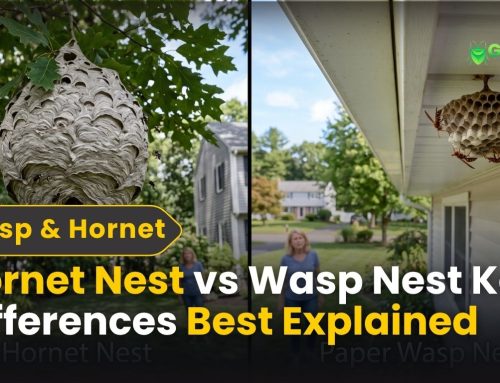
It’s an important distinction. Our dedicated difference between wasp and hornet nest guide covers this in full detail, but here’s a summary:
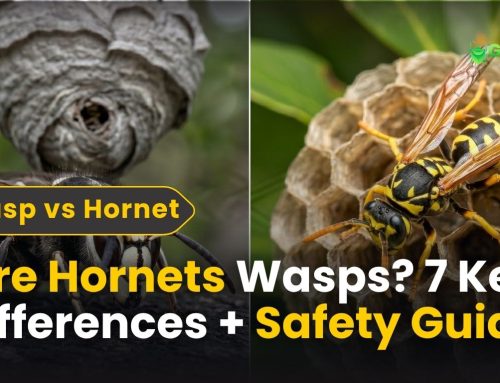
Hornet nests (Bald-faced hornet, European hornet):
- Completely enclosed with paper covering
- Generally larger than paper wasp nests
- Single entrance hole at the bottom
- Usually elevated (trees, eaves, high on structures)
- Colony sizes 400–1,000+
- Extremely aggressive if disturbed
Wasp nests (Paper wasps, yellow jackets):
- Paper wasps build open-comb nests no outer paper covering
- Yellow jackets build enclosed nests similar to hornets but underground or in wall voids
- Paper wasp nests are small and flat
- Yellow jacket nests can be enormous if underground
- Moderate to very high aggression depending on species
Both require professional treatment when mature. For a full comparison of species found in Connecticut, our wasp and hornet ID encyclopedia is your most complete local resource.
14. Why DIY Nest Removal Fails The Honest Truth
Every summer, we hear from homeowners across Stamford, Greenwich, and Darien who tried to handle a nest themselves — and regretted it.
Here’s why DIY nest removal consistently fails:
Problem 1: Wrong Product
Most hardware store aerosols are contact killers they kill what they hit, but they don’t penetrate deep into the colony. For a ground nest with 3,000 workers in underground chambers 18 inches deep, a can of spray is a temporary annoyance at best.
Problem 2: Wrong Timing
Many DIYers spray during the day when workers are active. This maximizes your exposure to stinging workers while minimizing effectiveness. The right time to treat most nests is after dark when workers have returned to the nest and activity is lowest. Our guide on when wasps are least active explains exactly why timing is critical.
Problem 3: Partial Treatment
Knocking down a paper wasp nest removes the structure but doesn’t eliminate the remaining workers, who will immediately begin rebuilding. Partially treating a yellow jacket ground nest can scatter the colony into wall voids or nearby areas, making the problem worse.
Problem 4: Misidentification
Treating a honey bee hive as a wasp nest with the wrong product and approach can kill an irreplaceable pollinator colony and potentially expose you to thousands of defensive bees. Proper identification is non-negotiable.
Problem 5: Personal Risk
Professional pest control technicians wear full protective suits and use specialized equipment. Homeowners typically don’t. The risk of serious stinging injury or anaphylactic reaction during DIY nest removal is very real.
For a balanced breakdown of when DIY might be appropriate versus when you absolutely need a pro, read our hornet nest removal DIY vs. professional comparison.
Bottom line: DIY solutions offer temporary relief. They don’t eliminate the colony. They don’t prevent reinfestation. For real, long-term protection of your home and family, professional treatment is the only reliable option.
15. Real Stories from Connecticut Homeowners
Story 1: The Hidden Ground Nest in Wilton, CT
“We had a ground nest in our backyard lawn that we didn’t even know existed until my husband ran over it with the lawnmower in late July. He got stung eight times before he could get inside. We called Green Pest Management that same day. The technician located the nest entrance — which we never would have found on our own — and treated it professionally. Two days later, the activity was completely gone. I wish we’d been paying more attention earlier in the season.”
Homeowner, Wilton, CT
Story 2: The Attic Hornet Nest in Greenwich, CT
“We noticed a constant buzzing in our attic in August and kept seeing what we thought were large flies. Turns out it was a bald-faced hornet nest the size of a basketball — completely hidden inside the attic space. We had no idea. The exterminator said it was one of the larger colonies he’d seen that season. If we’d tried to handle that ourselves, someone would have been seriously hurt.”
Homeowner, Greenwich, CT
Story 3: The Misidentified Nest in Westport, CT
“I saw a big round gray thing hanging from our oak tree and honestly thought it was some kind of weird seed pod or growth. My neighbor told me it was a hornet nest. I was skeptical but looked it up and sure enough the photos matched exactly. I’m really glad I didn’t try to knock it down. The pest control team handled it safely and explained exactly what it was.”
Homeowner, Westport, CT
16. Pro Tips for Preventing Nest Establishment
Prevention is always better than treatment. Here are expert-level nest prevention strategies specifically for Connecticut homeowners:
Structural Prevention
- Seal all exterior gaps and cracks larger than ¼ inch — use caulk, steel wool, or expandable foam
- Install fine mesh screens over vents, soffits, and attic openings
- Replace or repair damaged wood trim — wasps prefer weathered, soft wood for nest-building material
- Keep garage and shed doors closed when not in active use
Landscaping Prevention
- Remove old tree stumps that provide hollow nesting cavities
- Fill ground holes in your lawn promptly — they can be colonized quickly
- Keep lawn well-maintained — long grass provides ground-nesting insects with better concealment
- Remove dense brush or wood piles near the foundation
Early Season Monitoring
- Inspect your property in April and early May when queens are just beginning to build — early nests are small and much easier (and safer) to address
- Check eaves, window frames, and porch ceilings monthly through summer
- Look for increased insect traffic around any specific point on your home’s exterior
Nest Deterrents
- Fake wasp nests (commercial paper wasp decoys) can sometimes deter paper wasps from building nearby — they’re territorial and avoid areas where other colonies appear established
- Peppermint oil applied to likely nesting surfaces (eaves, window frames) may reduce early nest-building — some studies support its deterrent effect
- Regular inspection of known problem areas is the most reliable prevention method
For more detailed seasonal strategies, see our how to deter hornets from nesting guide.
17. Checklist: Should You Call a Professional?
Use this decision checklist to determine if your situation requires professional intervention:
Call a professional if:
- The nest is enclosed (round, paper-covered) — hornet nest
- The nest is located inside a wall void, attic, or crawl space
- The nest is in or near a ground hole with heavy insect traffic
- The nest is inside a hollow tree or structural cavity
- The nest is larger than a softball
- You or a family member has a known bee/wasp sting allergy
- You’ve been dive-bombed or stung near the nest location
- You’re in Greenwich, Stamford, Darien, New Canaan, Wilton, Westport, or elsewhere in CT and want guaranteed results
- Previous DIY treatment failed
- The colony appears to be a honey bee hive (requires specialist relocation)
Proceed carefully if (small, accessible, early-season nests only):
- Open paper wasp nest with fewer than 8 cells and no visible larvae
- Nest is clearly accessible, in an isolated location
- No known sting allergies in household
- Appropriate protective equipment available
Never attempt yourself:
- Any enclosed hornet nest
- Any ground nest with confirmed heavy traffic
- Any wall or structural void nest
- Large honey bee colony
- Any nest located near a child’s play area or high-traffic zone
18. Professional Nest Removal Services in Connecticut
If you’re in Greenwich CT, Stamford CT, Darien CT, New Canaan CT, Wilton CT, Westport CT, or anywhere in Connecticut, professional pest management is your safest and most reliable option for nest removal.
What professional service includes:
- Accurate identification of the nest species and type
- Risk assessment of the nest location and colony size
- Selection of appropriate treatment (spray, dust, foam, or physical removal)
- Proper timing — treatments scheduled for optimal effectiveness
- Full protective equipment for technician safety
- Follow-up inspection to confirm colony elimination
- Preventive recommendations to reduce future nesting
Our team at Green Pest Management CT specializes in stinging insect control throughout Fairfield County and the greater Connecticut area. We’ve handled thousands of nests — from small early-season paper wasp structures to enormous bald-faced hornet colonies and deeply embedded ground nests.
For immediate hornet control in CT, visit our immediate hornet control service page.
For professional hornet nest removal specifically, our hornet nest removal in CT service has you covered with fast, safe, guaranteed results.
Don’t wait. Nest colonies double and triple in size every few weeks during summer. A small problem today becomes a major hazard by August. Contact us now and let’s solve this before someone gets hurt.
19. Comparing Nest Types: The Complete Reference Table
| Nest Type | Insect | Aggression | Season | DIY Safe? | Treatment Type |
| Enclosed paper (tree/eave) | Bald-faced hornet | Very High | June–Oct | NO | Professional only |
| Enclosed paper (wall/attic) | European hornet / Yellow jacket | Very High | June–Oct | NO | Professional only |
| Open-comb paper (small) | Paper wasp | Moderate | April–Sept | Possibly (early) | Aerosol spray at night |
| Ground nest | Yellow jacket | Extremely High | May–Oct | NO | Professional — dust injection |
| Ground burrow (large) | Cicada killer | Low | July–Aug | Possibly | Dust/granules |
| Mud tubes | Mud dauber | Very Low | June–Aug | Yes | Scrape/remove when empty |
| Pot-shaped mud | Potter wasp | Very Low | May–Aug | Yes | Scrape/remove |
| Wax honeycomb | Honey bee | Low–Moderate | Year-round | NO | Beekeeper + professional |
| Loose underground | Bumblebee | Low | April–Sept | Usually | Relocate if possible |
| Silk funnel web | Funnel spider | N/A (spider) | Year-round | Yes | Remove with broom |
FAQ Section: Nest Identification Guide — Answered by Experts
Q1: How do I identify a wasp nest vs. a hornet nest?
A: The key differences are size, shape, and enclosure. Hornet nests — particularly from bald-faced hornets and European hornets — are fully enclosed, round or oval, and typically larger than wasp nests. Paper wasp nests are open-faced (you can see the honeycomb cells) and resemble an inverted umbrella. Yellow jackets, technically wasps, build enclosed nests similar to hornet nests but almost always underground or in wall voids. If the nest is enclosed, gray, papery, and hanging in a tree or from your eave, treat it as a hornet nest and call a professional. Our wasp vs. hornet ID guide for Connecticut provides detailed photo comparisons.
Q2: I found a round gray paper nest in my tree. How dangerous is it?
A: Very dangerous — especially if it’s fully enclosed and larger than a softball. This is almost certainly a bald-faced hornet nest, and these colonies are among the most aggressive stinging insects in Connecticut. Do not poke, spray, or attempt to remove it yourself. Keep children and pets away from the area and contact a professional pest control service immediately. You can read more about the specific dangers of this species in our how harmful are hornets guide.
Q3: Are honey bee nests dangerous and should I remove them?
A: Honey bees are generally not aggressive and pose far less risk than hornets or yellow jackets. However, an established colony inside your wall or attic is a serious structural concern — the wax comb can melt in summer, attract other pests, and damage building materials. Honey bees should be removed by a licensed beekeeper whenever possible, as they’re vital pollinators. Never use standard wasp spray on a honey bee hive — contact a specialist. Connecticut has local beekeeping associations that may offer free swarm collection.
Q4: I see mud tubes under my eaves. Is this dangerous?
A: Not at all. Mud tubes under eaves are almost certainly the work of mud dauber wasps — solitary insects that are extremely docile and rarely sting. The nests themselves are harmless and can be scraped away when inactive (winter or early spring). If the tubes are active (you see wasps entering/exiting), wait until they’re empty before removing. Mud daubers actually help by hunting and paralyzing spiders, so they’re considered beneficial insects in most cases.
Q5: How can I tell if there’s a ground nest in my yard before I step on it?
A: Look for these warning signs: a hole in the ground approximately the size of a quarter to a golf ball, loose soil around the entrance, and — most importantly — consistent insect traffic in and out of the hole, especially on warm, sunny days. If you see yellow-and-black striped insects repeatedly entering a ground hole, maintain your distance. Mark the area and call a professional. Yellow jacket ground nests are responsible for the majority of serious sting incidents in Connecticut each summer. Our guide on what kills ground hornets has detailed treatment information.
Q6: Do wasp and hornet nests get reused the following year?
A: No — the vast majority of wasp and hornet species do not reuse old nests. Worker populations die off each autumn, and new queens that overwinter will begin building entirely new nests in spring. However, old abandoned nests can be colonized by other species (such as paper wasps moving into an old hornet nest or mice using it for shelter). Old nests should be removed in winter to avoid attracting new colonies nearby. Honey bees are the exception — they can maintain a perennial colony through winter.
Q7: When is the best time to treat or remove a nest?
A: The safest time to treat nests is early spring when colonies are small and queen-only or small-worker populations. For existing summer nests, treatments should be performed at night when all workers have returned to the nest and activity is at its lowest. Never treat a nest during midday when worker populations are at their most active and aggressive. For the complete timing strategy, see our best time to kill hornets nest guide.
Final Call to Action: Protect Your Home and Family Act Now
You’ve now got the complete nest identification guide — the knowledge to recognize every major nest type in Connecticut, understand the risks each poses, and know when to act and when to call for help.
But knowledge only protects you if you act on it.
Here’s the truth about stinging insect nests: they don’t wait for you to decide. Every week of summer, those colonies grow larger, more established, and more aggressive. What’s a small paper wasp nest in June can be a fully armored bald-faced hornet colony by August. What seems like harmless insect activity near a ground hole in May can be a yellow jacket colony with 4,000 workers by September.
The cost of waiting is always higher than the cost of acting.
If you’re in Greenwich CT, Stamford CT, Darien CT, New Canaan CT, Wilton CT, Westport CT, or anywhere across Connecticut, our team at Green Pest Management CT is ready to help. We provide:
- Fast, same-day or next-day service for urgent situations
- Complete nest identification before any treatment begins
- Safe, effective, eco-conscious treatment methods that protect your family and pets
- Guaranteed results — we stand behind every job we do
- Preventive recommendations so the problem doesn’t come back
Whether it’s an aerial hornet nest, a ground yellow jacket colony, a wall void European hornet problem, or anything in between — we’ve seen it and handled it thousands of times across Fairfield County.
Our hornet exterminator services and hornet control guide with 15 expert tips are just the beginning of what we offer.