Gnat & Drain Fly Control: 10 Powerful Ways to Get Rid of Them
Tiny flies around a kitchen sink, bathroom drain, basement, or houseplant can look almost identical from across the room, but they often require completely different treatments. Effective gnat and drain fly control starts by identifying the insect and finding where its immature stages are developing. Killing the adults alone rarely solves a continuing infestation.
This Gnat & Drain Fly Control Hub explains how to get rid of gnats, drain flies, fungus gnats, and commonly confused fruit flies by targeting their actual breeding conditions. You’ll learn how to distinguish a drain fly vs. fruit fly, inspect drains and plants, use traps correctly, choose sensible drain treatments, prevent recurrence, and recognize when a professional inspection is warranted.
For homeowners in Greenwich, Stamford, Darien, Westport, Fairfield, Wilton, New Canaan, Norwalk, and surrounding Fairfield County, the core principle is straightforward: follow the insects to their source instead of treating every small fly as the same pest.
How Do You Get Rid of Gnats and Drain Flies?
The best way to get rid of gnats and drain flies depends on the species. Drain fly control requires finding and removing the moist organic material supporting larval development. Fungus gnat control focuses on infested potting media and moisture management. Fruit fly control requires eliminating fermenting food or beverage sources. Adult traps can reduce visible flies and help monitor progress, but traps alone usually cannot eliminate a breeding population.
A practical Integrated Pest Management approach follows this sequence:
- Capture or photograph an adult and identify it.
- Map where the greatest number of flies appears.
- Inspect drains, plants, food, recycling, or other likely sources based on the identification.
- Remove the material supporting larvae rather than just killing adults.
- Correct leaks, excess irrigation, sanitation problems, or other contributing conditions.
- Use species-appropriate traps to monitor adults.
- Reinspect if catches do not steadily decrease.
- Avoid indiscriminate chemical applications and homemade chemical mixtures.
- Address building or plumbing defects where necessary.
- Request professional pest control when the species or source cannot be determined.
This source-based approach follows the principles described in the EPA’s Integrated Pest Management guidance.
What Is a Gnat & Drain Fly Control Hub?
A Gnat & Drain Fly Control Hub is a comprehensive resource for identifying and controlling the small flies commonly described by homeowners as “gnats.”
The word gnat creates considerable confusion because it is not a precise household pest diagnosis. People often call practically any tiny flying insect a gnat. The insect could actually be a fungus gnat, drain fly, fruit fly, phorid fly, or another small fly.
That distinction isn’t academic. It tells you where to inspect.
A fungus gnat around indoor plants points toward moist growing media. A fuzzy drain fly repeatedly resting around a shower points toward persistently wet organic material. Fruit flies hovering around bananas or beverage recycling point toward fermenting material.
Treating all three with the same bottle of vinegar is one of the most common reasons DIY fly control fails.
What is a drain fly?
Drain flies, commonly called moth flies, belong to the fly family Psychodidae. Adults typically have a tiny, fuzzy, moth-like appearance. Many species associated with buildings develop in wet environments containing organic material and microorganisms.
The common name “drain fly” can make homeowners assume the insects always breed inside a sink drain. They don’t have to. Suitable wet organic matter elsewhere may support development.
That’s why a professional inspection looks beyond the nearest sink when ordinary drain cleaning doesn’t solve the problem.
What is a fungus gnat?
Fungus gnats are small, delicate flies. Several species encountered around indoor plants belong to the family Sciaridae.
Adults can resemble tiny mosquitoes at first glance. Larvae live in moist environments and are commonly associated with potting media containing fungi and decaying organic matter.
Plant gnats are therefore managed very differently from drain flies.
Spraying adults around the windows while continuing to keep every pot continuously wet addresses the visible symptom without correcting a major contributing condition.
What is a fruit fly?
The fruit flies homeowners commonly encounter belong primarily to the family Drosophilidae. They are attracted to fermenting plant material and frequently become noticeable around ripe produce, beverage residue, recycling, garbage, and food-preparation spaces.
Fruit flies are exactly why vinegar traps have such a strong reputation.
Apple cider vinegar gives off fermentation-related odors that can attract these flies. That does not mean the same trap is a universal solution for every tiny insect in a bathroom or kitchen.
Green Pest Management CT’s fruit fly authority resource provides more detailed information specifically for confirmed fruit-fly infestations.
Drain Fly vs. Fruit Fly vs. Fungus Gnat Identification
When people search for “gnat vs fruit fly pictures,” they’re usually trying to answer a practical question: what should I treat?
You don’t need to become an entomologist, but you do need enough identification detail to choose the correct source.
| Feature | Drain Fly | Fungus Gnat | Fruit Fly |
| General appearance | Fuzzy, moth-like | Slender, delicate, mosquito-like | Compact, small fly |
| Typical color | Grayish to dark | Usually dark | Often tan to brownish |
| Wings | Broad-looking and hairy | Clear, slender-looking | Typical fly wings |
| Flight behavior | Often weak, short flights | Light, wandering flight | Active around food sources |
| Common indoor location | Drains, bathrooms, wet areas | Houseplants and windows | Kitchens, produce, recycling |
| Likely larval habitat | Wet organic material | Moist growing media | Fermenting organic material |
| ACV trap usefulness | Not primary control | Not primary control | Often useful |
| Main control priority | Remove wet breeding material | Correct growing-media conditions | Eliminate fermenting source |
Pictures are useful, but behavior and location often solve the identification puzzle faster.
How drain flies look
At rest, drain flies can look like tiny moths. Their bodies and wings appear hairy or fuzzy, and the wings may be held roof-like over the body.
They aren’t typically strong, sustained fliers. A disturbed adult may make a short flight and land nearby.
Seeing several fuzzy flies sitting on bathroom walls close to a drain is a much stronger drain-fly clue than seeing one unidentified insect near the kitchen sink.
How fungus gnats look
Fungus gnats generally look slimmer. Their longer legs and delicate build can give them a mosquito-like appearance.
Adults often wander around plant foliage, pots, nearby walls, and windows. When you water or disturb an infested plant and tiny dark flies emerge from around the container, fungus gnats deserve consideration.
How fruit flies look
Common household fruit flies have a more compact body than fungus gnats. They may be tan or brownish, and some familiar species have reddish eyes.
Homeowners frequently notice them hovering rather than resting. Their attraction to ripe produce, fermented beverages, and food residue is an important clue.
Green Pest Management CT provides a closer comparison in its fruit fly vs. drain fly identification guide and fly vs. gnat guide.
Signs You Have an Active Breeding Problem
An individual fly may simply have entered from another location. A pattern of recurring adults indicates something different.
One useful field observation is whether the population replenishes itself. If you remove or capture visible adults today and another group appears tomorrow, look for a developmental source.
The exact location of those adults provides additional evidence.
Drain-fly activity may concentrate around particular fixtures or persistently wet areas. Fungus gnats may repeatedly occur around one group of plants. Fruit flies may congregate around produce, a beverage station, recycling, or waste.
Adults can move away from where they developed, so their resting location is not absolute proof of the source. It is a starting point for inspection.
Signs worth investigating
Pay attention when you see:
- Several tiny flies every day rather than a single occasional insect.
- Fuzzy flies repeatedly resting on walls near plumbing fixtures.
- Small dark flies emerging around houseplants when pots are watered or disturbed.
- Tiny flies clustering around fruit, wine, beer, juice, soda, recycling, or garbage.
- Fly numbers that decline briefly and then rebound.
- Activity from several fixtures or rooms.
- Continuing fly activity despite ordinary surface cleaning.
- Small flies associated with an unusual damp area.
- Adults appearing from an inaccessible structural location.
- A trap that continuously captures flies without an overall reduction in sightings.
The last sign is particularly important. A full trap can mean the trap works, but it can also mean the infestation does not.
Why Gnats and Drain Flies Keep Coming Back
Homeowners often say they have “killed them all” only to see more tiny flies a day or two later.
The adults were killed. The population wasn’t.
Flies undergo complete metamorphosis: egg, larva, pupa, adult. Adult-targeted treatment may leave immature stages protected within their developmental material.
For drain flies, that can mean wet organic matter. For fungus gnats, larvae may remain in moist growing media. For fruit flies, immature stages can continue in fermenting material.
This is why spraying every flying adult is an inefficient strategy when the source remains intact.
Moisture changes the equation
Persistent moisture is one of the strongest recurring themes with drain flies and fungus gnats.
A bathroom fixture can look clean from above while less visible areas support wet organic material. A plant may look healthy even though its growing medium remains wetter than necessary for extended periods.
Basements, utility spaces, laundry rooms, and infrequently used fixtures deserve attention when activity doesn’t fit the obvious explanation.
Professionals also remain alert to plumbing or moisture conditions outside the scope of pest-control repair. When the building problem is maintaining the insect problem, the building condition has to be corrected.
Organic material provides development sites
“Organic material” does not necessarily mean a pile of obvious waste.
Thin films, decaying roots, accumulated residue, fermenting liquid, and small quantities of deteriorating food can provide suitable conditions for particular small flies.
The insect doesn’t need the home to look dirty.
It needs a small habitat that meets its biological requirements.
Gnat & Drain Fly Control Hub: 10 Powerful Control Methods
The best treatment is not all 10 methods at once. Choose the methods that fit the identified insect and source.
1. Identify the Species Before Choosing a Treatment
Everything starts here.
Capture a specimen if practical or take a close, well-lit photograph. Compare its shape, wings, legs, coloration, and behavior. Record exactly where you found it.
Then ask what surrounds that area.
Are there plants? A floor drain? Fresh produce? Beverage bottles? A rarely used sink? A wet utility space?
If you have a compact brownish fly around fermenting fruit, fruit-fly controls make sense. If the fly looks fuzzy and activity is concentrated around plumbing, investigate drain-fly habitat. If a slender fly rises from plant pots, inspect the plants.
Correct identification can eliminate entire categories of unnecessary treatment.
When identification remains uncertain, Green Pest Management CT’s flying-insect identification hub can help narrow the possibilities before treatment begins.
2. Test Whether the Drain Is Really Producing Flies
“There’s a fly beside my sink” is not evidence that the fly developed in the drain.
Kitchens bring numerous fly resources into one small space: fruit, plants, recycling, garbage, beverages, drains, and open windows.
Bathrooms may contain plants, damp areas, several fixtures, and exterior windows.
Start by mapping activity.
Which fixture consistently has the most adults? Are insects resting on the wall above one particular drain? Does activity occur after a fixture has been unused? Does another nearby sink have no flies at all?
Simple monitoring can help isolate a likely source. Professionals may use appropriate trapping and inspection methods to establish where adult emergence is occurring.
Do not completely obstruct a plumbing fixture or create a drainage hazard in an attempt to test it.
If the evidence points away from plumbing, change your investigation rather than repeatedly treating the drain.
3. Remove the Organic Film Supporting Drain Flies
Once a drain or related wet area has been reasonably established as a breeding source, focus on the material supporting larvae.
This is the part many DIY approaches miss.
Pouring a liquid through a drain is not necessarily equivalent to removing organic film adhered to accessible surfaces. Where appropriate and safe for the specific fixture, mechanical cleaning can physically remove developmental material.
Plumbing configurations vary, so maintenance needs to match the fixture. Never dismantle plumbing beyond your ability or perform work that could cause leakage or damage.
A plumbing professional may be necessary where the condition involves inaccessible piping or a plumbing defect.
What about drain treatments?
Drain treatments should be chosen based on what the product is designed to accomplish and whether it is appropriate for the plumbing system.
Enzyme- or microbial-based drain-maintenance products are sometimes used to help manage organic material, but product performance and suitability vary. They should be used according to their labels, not treated as magic drain-fly killers.
Caustic drain openers are intended for specific plumbing purposes. They should not be casually repurposed as insecticides.
The objective is to remove or manage the breeding material without damaging plumbing or creating an exposure hazard.
4. Correct Leaks, Standing Moisture, and Structural Conditions
When cleaning produces only temporary improvement, ask why the area keeps returning to a fly-friendly condition.
Look for dripping fixtures, condensation, persistent standing moisture, wet debris, or drainage conditions that do not resolve normally.
A concealed plumbing issue can sometimes require a licensed plumbing professional rather than repeated pest treatments.
This is an important distinction in Integrated Pest Management.
Pest control can address an insect. It cannot repair a broken pipe, correct a drainage defect, or rebuild a damaged fixture.
Recurring small flies from an unexpected structural location are especially important. Rather than spraying repeatedly into a crack, have the source professionally investigated.
5. Manage Plant Gnats by Treating the Plant Environment
If you’ve confirmed fungus gnats, move your attention away from the sink.
Inspect the plants.
Fungus gnat larvae commonly develop in moist growing media containing fungal growth and decomposing organic matter. Continuously damp potting mix can encourage them.
Water plants according to the needs of the plant species rather than on an automatic schedule. When horticulturally appropriate, allowing the upper growing medium to dry somewhat between watering can make conditions less favorable to fungus gnats.
Remove dead leaves and plant debris from pots. Check drainage and saucers so containers are not needlessly sitting in water.
For valuable or sensitive plants, consult appropriate horticultural guidance before making major watering changes.
The goal is not to stress the plant in order to kill gnats. It is to avoid unnecessary, persistent moisture while maintaining healthy plant care.
What about yellow sticky cards?
Sticky monitoring cards can capture adult fungus gnats around plants and provide useful evidence about which pots have the greatest activity.
They target adults rather than larvae.
Treat them as monitoring and population-reduction tools rather than proof that the breeding problem is solved.
If captures remain heavy, continue investigating the growing-media conditions.
6. Use ACV Traps for Fruit Flies, Not Every “Gnat”
This is where many searches for “how to get rid of gnats” go wrong.
Apple cider vinegar traps are useful for fruit flies because fruit flies respond to fermentation-related odors. Drain flies and fungus gnats have different ecological relationships.
A basic ACV trap uses a small amount of apple cider vinegar as an attractant. Adding a small drop of dishwashing liquid changes the liquid’s surface tension, making escape more difficult after contact.
If confirmed fruit flies are the problem, Green Pest Management CT’s apple vinegar fly trap instructions show how to build one properly.
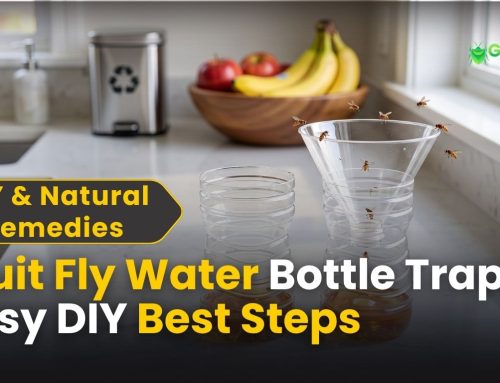
A reusable funnel design can also be made using the fruit fly water bottle trap method.
The trap still doesn’t remove eggs and larvae elsewhere.
Think of it as an adult-control and monitoring device.
7. Remove Fruit Fly Food and Fermentation Sources
Fruit flies require an entirely different source hunt from fungus gnats and drain flies.
Inspect produce first, but don’t stop at the fruit bowl.
Check onions and potatoes stored in cabinets. Look beneath produce baskets and inside bags. Inspect recycling containers and bottles that held wine, beer, juice, soda, or similar liquids.
Clean garbage cans beneath the liner if leakage has occurred.
Look beneath appliances when food or beverages could have spilled there.
This matters when homeowners believe they have found a “fruit fly nest in drain.” Fruit flies do not construct a nest in the way wasps do. When fruit flies are associated with a drain, the relevant issue is whether suitable fermenting organic material is present where immature flies can develop.
For source-finding help, see where fruit flies come from inside homes and how to investigate fruit-fly activity around drains.
8. Use Vinegar, Soap, Essential Oils, and Natural Remedies Correctly
DIY remedies aren’t interchangeable.
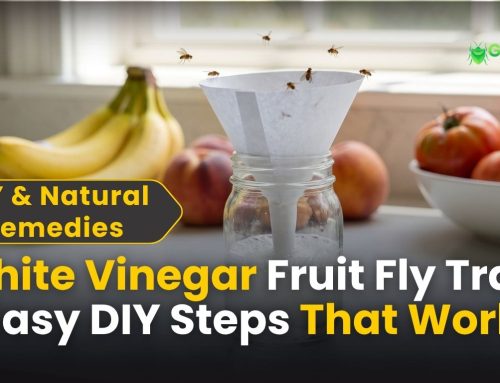
A white vinegar fruit fly trap may capture some fruit flies, although apple cider vinegar is generally a more practical attractant because of its fermentation-associated odor. Green Pest Management CT’s white vinegar fruit fly trap guide explains that distinction.
Dish soap traps also need context. Soap typically assists the liquid trapping mechanism; it does not solve the developmental source.
Essential oils are another category entirely.
Certain plant-derived compounds can demonstrate repellent activity against particular insects under specific conditions, but practical results depend on species, concentration, formulation, application, and environment. Essential oils do not remove drain biofilm or correct saturated potting soil.
Strong scents may also interfere with an attractant trap if positioned right beside it.
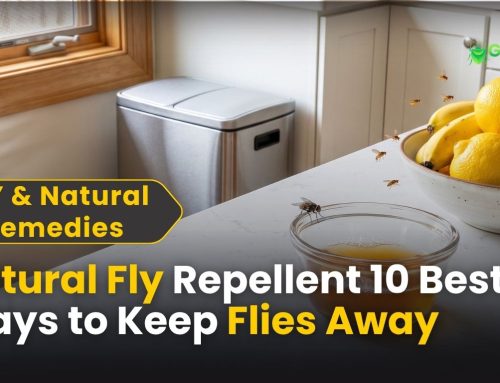
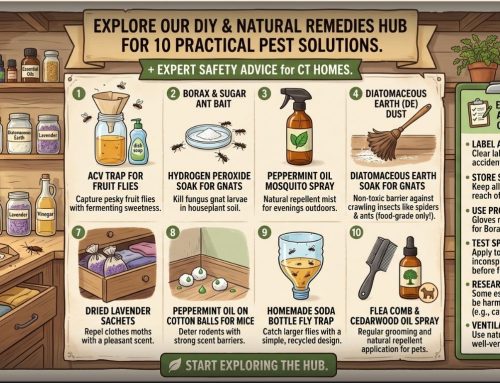
For homeowners who prefer lower-impact approaches, the natural fly repellent guide and DIY natural remedies hub explain where these methods fit—and where they don’t.
“Natural” also isn’t a synonym for harmless. Concentrated essential oils can cause irritation and may pose risks to pets depending on the substance and exposure.
9. Use Light Traps and DIY Zappers Selectively
Electronic fly traps and DIY zappers are tempting because they appear to work automatically.
But a trap is only as useful as an insect’s response to it.
Different flies respond differently to visual cues, odors, and environmental conditions. A device effective for one type of flying insect may have limited value for another.
Commercial insect light traps can be useful for monitoring and control in appropriate environments. Location is important, particularly around food-handling spaces and exterior doors.
Outdoor bug zappers can also affect non-target flying insects and should not be assumed to address the species causing the original complaint.
Most importantly, an electrical trap captures adults.
It does not remove larvae from potting mix, clean organic material from drains, fix a leak, or remove fermenting produce.
If you’re evaluating adult trapping products, Green Pest Management CT’s overview of indoor fly-control products provides additional context.
10. Monitor the Population Until the Life Cycle Is Interrupted
Source removal doesn’t always make every adult disappear immediately.
Adults that developed before treatment can remain visible for a while. That is why monitoring matters.
Instead of expecting an instant zero, look for a consistent downward trend.
Record where flies appear and, if you’re using suitable traps, compare captures over time. If numbers decline after source correction, continue monitoring and sanitation.
If the population stays steady or rebounds, investigate three possibilities.
The species was misidentified. The original source was not fully corrected. Or a second developmental source exists.
This diagnostic loop—identify, treat the source, monitor, reassess—is far more effective than repeatedly applying different household remedies.
What Is the Best Drain Treatment for Drain Flies?
There is no single liquid that should be described as the best treatment for every drain-fly problem.
The most dependable strategy is to identify the breeding site and remove the material supporting development.
Where accessible organic buildup is the issue, physical cleaning is important. Where the problem is persistent moisture, moisture correction matters. Where damaged plumbing is involved, plumbing repair may be necessary.
Products marketed for drain maintenance should only be used when appropriate for the plumbing and according to their instructions.
Do boiling water treatments work?
Extremely hot water is commonly recommended online as a drain-fly cure.
It should not be relied upon as a complete solution.
A brief flush may not remove the organic film supporting larvae, and very hot water can present burn risks or be unsuitable for certain plumbing systems and components.
Source removal is the more useful objective.
Does baking soda and vinegar kill drain flies?
The familiar baking-soda-and-vinegar reaction is not a substitute for identifying and removing a breeding site.
The foaming reaction may appear impressive, but visible fizz does not demonstrate that developmental material throughout a drain system has been removed or that larvae have been eliminated.
It also encourages a poor pest-control habit: choosing a recipe before diagnosing the pest.
Does bleach kill drain flies?
A household product shouldn’t be repurposed as an insect-control treatment merely because it can contact insects.
Bleach also creates serious hazards when mixed with incompatible chemicals. Never combine chlorine bleach with vinegar, acids, ammonia, or other household products unless a product label explicitly directs a compatible use.
The EPA’s guidance on controlling household pests safely emphasizes prevention and using pesticide products according to label directions.
The Most Important Chemical Safety Rule: Never Mix Drain Products
Small-fly problems can be frustrating enough that homeowners begin combining drain cleaners, vinegar, bleach, detergents, and other substances.
Do not do this.
Mixing incompatible household chemicals can release hazardous gases, cause splattering or heat, damage surfaces or plumbing, and create an emergency much more serious than the flies.
Keep pest-control products in their original containers. Follow labels. Do not transfer chemicals into drink bottles or unlabeled containers.
If one treatment doesn’t work, that is a reason to revisit the identification and source—not to create a stronger homemade mixture.
Understanding the Drain Fly Life Cycle
Knowing the life cycle explains why adult-only control is frustrating.
Drain flies undergo egg, larval, pupal, and adult stages. The immature stages remain associated with suitable wet developmental material, while adults become the visible part of the infestation.
That creates two different pest-control targets.
The adult stage tells you something is happening. The larval habitat tells you where the population is being produced.
Swatting adults attacks the evidence.
Source removal attacks production.
Environmental factors influence development, so rigid promises about exactly how many days an infestation will take to disappear aren’t appropriate without knowing the species and conditions.
What should happen after successful control is more important: fewer new adults should be produced.
Understanding the Fungus Gnat Life Cycle
Fungus gnats also undergo complete metamorphosis.
Adults live above the growing medium, where homeowners notice them. Eggs are laid in suitable moist material, and larvae live in the growing medium, feeding primarily on fungi and decaying organic material; some may also feed on plant roots.
That explains why adult sticky cards alone can disappoint.
They intercept part of the population after immature stages have already developed.
Managing the larval habitat is therefore central to control.
Can plant gnats harm houseplants?
Fungus gnat adults are mostly nuisance insects. Larvae, particularly at higher populations, can feed on roots and may become a concern for seedlings, cuttings, and some plants.
Plant symptoms are not specific enough to diagnose fungus gnats by themselves. Poor drainage, overwatering, root disease, nutrition, and other horticultural issues can produce similar symptoms.
Identify the insects and inspect the growing conditions rather than diagnosing solely from yellow leaves.
Understanding the Fruit Fly Life Cycle
Fruit flies demonstrate the same underlying lesson in a different habitat.
Females lay eggs around suitable fermenting material. Larvae develop within that food-rich environment before pupating and emerging as adults.
An ACV trap only interacts with the adult stage.
Imagine that the adults are removed every evening but a forgotten bag of deteriorating produce remains in a cabinet. New insects can continue completing development.
This is why homeowners sometimes report that an apple vinegar fly trap “creates” more fruit flies.
It doesn’t.
The trap makes existing adults easier to see while the hidden source continues producing them.
For comprehensive fruit-fly elimination guidance, Green Pest Management CT’s guide to getting rid of fruit flies fast expands on source management and monitoring.
Is There Really a Fruit Fly Nest in a Drain?
Not in the way most people mean by “nest.”
Fruit flies don’t build organized nests like paper wasps, hornets, or ants build colonies. If fruit flies are developing in organic material associated with a drain, that location is better described as a breeding or developmental site.
The terminology matters because a “nest treatment” mindset encourages homeowners to pour something down the opening and assume the problem is finished.
The better questions are:
What species is the fly? Is suitable organic material actually present? Is the drain truly the source? Are other fermenting materials nearby?
In kitchens, a fly beside the sink could just as easily be attracted to recycling under the counter.
Evidence should determine the treatment.
Why Common Home Remedies Fail
Most failed DIY treatments fit into one of several patterns.
The pest was misidentified
A homeowner finds tiny flies, searches “how to get rid of gnats,” and sets an apple cider vinegar trap.
The flies are fungus gnats.
Nothing happens.
The problem wasn’t the trap recipe. The wrong pest-control strategy was selected.
Only adults were targeted
Sticky cards, light traps, sprays, and vinegar traps all focus heavily on adult insects.
If larvae remain in the source, adult control can become an endless maintenance task.
The wrong drain was treated
A house can have numerous fixtures. Treating the kitchen sink because that is where the homeowner first saw an adult may accomplish nothing if the actual source is elsewhere.
Cleaning was cosmetic instead of biological
A sink can look spotless while inaccessible wet organic material persists.
Similarly, a countertop can look immaculate while a deteriorating potato remains in the pantry.
Good pest sanitation removes the resource the pest uses rather than merely making surfaces look clean.
Moisture wasn’t corrected
Cleaning a wet area without correcting the reason it remains wet can set up the same problem again.
Risks and Problems Associated With Small Flies
For most homeowners, drain flies, fruit flies, and fungus gnats are first and foremost nuisance pests. Large or persistent populations still deserve investigation.
Drain-fly activity can signal wet organic conditions requiring sanitation, moisture correction, or plumbing attention.
Fungus gnats can become irritating around indoor plants and may indicate persistently moist growing conditions. Their larvae can affect susceptible plant roots when populations become substantial.
Fruit flies breed in decomposing and fermenting organic material and can move across kitchen surfaces and food environments.
Food-handling businesses have additional sanitation responsibilities. Green Pest Management CT’s resource on fruit fly control in restaurants discusses those concerns in more depth.
When small flies may indicate a larger problem
Unusually heavy fly activity, particularly from concealed structural areas, deserves closer attention.
Some small fly species can be associated with significant sanitation, drainage, or plumbing conditions. The correct response isn’t to assume the worst, but persistent unexplained emergence should be investigated rather than covered up with air fresheners, essential oils, or repeated insect sprays.
An Integrated Pest Management Approach to Gnats and Drain Flies
Integrated Pest Management is especially well suited to small flies because identifying and changing the habitat often matters more than broad pesticide treatment.
The EPA’s Integrated Pest Management information describes IPM as an environmentally sensitive approach that uses information about pest life cycles and their interactions with the environment.
For a Connecticut home, the process looks practical rather than technical.
First identify the fly. Then locate the developmental material. Remove that material where possible. Correct moisture, sanitation, irrigation, or entry conditions. Use adult traps to monitor results. Apply targeted pest-control measures only when necessary and appropriate.
This method avoids the common cycle of trying vinegar on Monday, essential oils on Tuesday, a zapper on Wednesday, and another drain product on Thursday.
DIY vs. Professional Gnat and Drain Fly Control
Many small-fly problems can be handled successfully by homeowners when the species and source are obvious.
A fungus gnat issue limited to a few overwatered houseplants is a reasonable DIY project. So is a straightforward fruit-fly infestation traced to forgotten produce.
A confirmed accessible source of drain-fly development may also be manageable with appropriate sanitation and maintenance.
Professional pest control becomes more valuable when identification is uncertain, the source is inaccessible, several rooms or fixtures are involved, or activity continues after appropriate corrective measures.
| Situation | DIY Approach May Be Reasonable | Professional Inspection Worth Considering |
| A few plant gnats at one pot | Yes | If activity persists after plant-care correction |
| Confirmed fruit flies from spoiled produce | Yes | If new adults continue after source removal |
| A few drain flies at an accessible fixture | Often | If cleaning doesn’t stop emergence |
| Several affected drains | Limited | Yes |
| Flies emerging from walls or structural gaps | Avoid guessing | Yes |
| Unknown small fly species | Identification first | Yes if unresolved |
| Persistent moisture or plumbing concerns | Basic observation | Pest/plumbing assessment may be appropriate |
| Heavy recurring fly activity | Temporary trapping only | Yes |
Green Pest Management CT’s guide explaining when to call a fly exterminator provides additional decision points.
What Happens During a Professional Inspection?
A good professional inspection doesn’t begin by treating every drain in the house.
It begins with questions.
Where were the flies first seen? Which rooms have the highest numbers? Have any traps caught specimens? Did the problem begin after introducing plants or produce? Is activity associated with a particular plumbing fixture? Have any treatments already been attempted?
A technician can then inspect the locations suggested by the evidence.
Species identification
Identifying the adult fly determines which sources deserve priority.
This can immediately redirect an investigation. Confirmed fungus gnats, for example, make plant areas much more relevant than kitchen drains.
Activity mapping
Where adults occur throughout a home matters.
Several adults around one basement utility area suggest a different investigation from individual flies scattered around houseplants upstairs.
Source inspection
Depending on the species, an inspection may evaluate drains, plumbing-adjacent areas, moisture conditions, plants, organic debris, produce storage, recycling, garbage, food residue, and possible exterior entry.
Treatment planning
Once the evidence supports a source, an Integrated Pest Management plan can prioritize source correction and appropriate controls.
Sometimes the recommendation is primarily sanitation. Sometimes moisture correction is central. Sometimes exclusion or targeted pest-control treatment is warranted.
If a plumbing defect is suspected, a qualified plumbing professional may need to address that portion of the problem.
Monitoring
Professional control should also consider what happens afterward.
Declining adult numbers support the conclusion that the important source was found. Continued activity means the inspection needs to expand or the identification needs to be revisited.
Green Pest Management CT’s professional flying insect control services explain how recurring indoor flying-pest concerns can be assessed.
How to Prevent Drain Flies
Drain-fly prevention focuses on sanitation and moisture conditions rather than routinely pouring pesticides into drains.
Maintain plumbing fixtures appropriately. Address leaks rather than allowing persistent moisture to continue. Keep drains and related accessible components clean according to their intended maintenance requirements.
Pay attention to fixtures that receive little routine use and to other areas where water and organic matter can accumulate.
If drain-fly activity appears after a period of moisture or a plumbing problem, don’t simply eliminate the adults and forget the underlying condition.
Preventing a favorable developmental habitat is more dependable than repeatedly treating one.
How to Prevent Fungus Gnats and Plant Gnats
Healthy plant care and gnat prevention often overlap.
Use appropriate growing media and containers with suitable drainage. Match irrigation to the plant’s needs instead of watering automatically just because the calendar says so.
Remove dead foliage from pots and don’t allow saucers to remain full of unnecessary standing water.
Inspect new houseplants, especially before grouping them with an established collection.
Sticky monitoring cards can help detect adult fungus gnats early, but don’t leave them where children or pets can contact the adhesive.
For plants requiring consistently moist conditions, use horticultural advice specific to that species rather than deliberately drying it beyond its tolerance.
How to Prevent Fruit Flies
Fruit-fly prevention is primarily food and organic-waste management.
Inspect produce frequently. Promptly remove damaged or fermenting fruits and vegetables. Check stored potatoes, onions, and similar foods rather than focusing only on countertop fruit.
Rinse containers with beverage residue before storing them for recycling. Keep waste receptacles clean, including beneath liners.
Clean spills promptly, especially sugary beverages, wine, juice, and organic food liquids.
If fruit-fly activity repeatedly returns, follow the source-finding process in Green Pest Management CT’s fruit fly control authority hub.
A Practical Small-Fly Prevention Checklist
A monthly or seasonal inspection can prevent many minor fly issues from becoming persistent:
- Identify tiny flies before choosing a home remedy.
- Inspect wet areas rather than assuming every insect originated in a drain.
- Keep plumbing fixtures appropriately maintained.
- Address leaks and persistent moisture promptly.
- Remove accessible organic buildup where it supports fly development.
- Avoid unnecessarily wet houseplant soil while meeting plant-care requirements.
- Clean plant debris from pots and saucers.
- Inspect ripe and stored produce regularly.
- Rinse beverage recycling and manage garbage residue.
- Use ACV traps primarily for confirmed fruit flies.
- Use monitoring cards appropriately around fungus-gnat problems.
- Repair damaged screens where insects are entering from outdoors.
- Monitor adult activity after source correction.
- Never mix bleach, vinegar, drain openers, pesticides, or household chemicals.
- Arrange a professional inspection when repeated source-control attempts fail.
This checklist focuses on environmental conditions because those are often what allow small flies to persist.
Seasonal Gnat and Drain Fly Activity in Connecticut
Connecticut’s climate has four distinct seasons, but indoor small flies don’t follow the outdoor calendar perfectly.
Spring
Rising temperatures increase insect activity throughout the region. Homeowners also begin watering actively growing houseplants more frequently and opening windows and doors.
Spring is a useful time to inspect screens, plumbing areas, basements, plant collections, and moisture-prone locations.
Summer
Summer provides warmth, increased humidity, fresh produce, outdoor meals, beverages, and more organic material moving through kitchens.
Fruit flies can become particularly conspicuous when produce ripens quickly.
Plants may also be watered more often, potentially increasing fungus gnat habitat when growing media remain unnecessarily wet.
Drain-fly development can continue wherever suitable wet organic conditions persist.
Late summer and fall
Late summer and early fall can be a busy period for small-fly complaints.
Connecticut homes may contain garden tomatoes, peaches, apples, berries, and other produce. Cookouts and entertaining add beverage recycling and food waste.
Warm indoor conditions can continue supporting fly development even as outdoor temperatures begin falling.
Winter
Cold weather suppresses many outdoor insects, but a heated house creates a different environment.
Drain flies can persist when indoor breeding conditions remain suitable. Fungus gnats can reproduce around indoor plants. Fruit flies can remain active when fermenting organic material is present.
Winter fly activity is therefore useful evidence.
Instead of waiting for cold weather to solve it, look for the indoor source.
Gnat and Drain Fly Problems in Fairfield County, Connecticut
Fairfield County contains a broad range of housing, and those structural differences affect fly inspections.
The insect’s biology doesn’t change from town to town, but the potential source locations do.
Greenwich
Greenwich properties can range from compact residences to homes with multiple bathrooms, finished basements, bars, utility spaces, extensive landscaping, and numerous indoor plants.
When a fly problem is limited to one area, a focused inspection may be straightforward. When adults appear in several distant locations, technicians need to distinguish between multiple sources and adult dispersal.
Stamford
Stamford includes single-family homes, apartments, multifamily properties, and commercial environments.
Shared building systems can make source determination more complicated in some properties. An individual resident can maintain excellent sanitation and still need help identifying where recurring activity originates.
The solution remains evidence-based identification rather than automatic drain treatment.
Darien
Darien homeowners may encounter small flies around kitchens, bathrooms, laundry areas, basements, plant collections, or seasonal food and beverage storage.
If a problem begins during warm-weather entertaining, recycling and beverage residue deserve attention along with plumbing.
Westport
Westport homes often combine indoor and outdoor living during Connecticut’s warmer months. Produce, entertaining, kitchens, bars, doors, and outdoor food can all influence fly complaints.
The location where adults are most concentrated remains the best place to begin investigating.
Fairfield
Fairfield properties may experience the same fruit fly, drain fly, and fungus gnat problems found throughout the county.
Garden produce entering a kitchen creates different conditions from a small fly associated with a basement drain, which is why “tiny fly” isn’t a sufficient diagnosis.
Wilton and New Canaan
Homes in Wilton and New Canaan can include larger properties with basements, utility areas, plant collections, garages, multiple kitchens or beverage areas, and substantial landscaping.
More square footage means more potential sources to rule out when adults aren’t concentrated in one obvious location.
Norwalk
Norwalk includes diverse residential and commercial environments. In multifamily or mixed-use buildings, small-fly activity may sometimes require a broader assessment of building conditions rather than focusing only on the room where adults become visible.
Across all of these communities, Green Pest Management CT’s role is the same: identify the pest, investigate the source, and recommend a control strategy appropriate to the actual conditions.
Common Mistakes to Avoid
The biggest error is treating “gnat” as a complete identification.
Another frequent mistake is assuming location proves source. A fruit fly can land beside a sink. A fungus gnat can fly away from a plant and appear at a window. A drain fly can disperse from its developmental location.
Adult traps also create false confidence.
Catching 30 flies may feel productive, but if another 30 appear tomorrow, trapping has not interrupted the source.
Homeowners should also avoid overusing repellents. Driving adult flies from one countertop to another doesn’t eliminate larvae.
Most importantly, don’t escalate by mixing products. Failed treatment is a diagnostic signal, not an invitation to combine chemicals.
When DIY Treatment Has Gone Far Enough
DIY control has reached its limit when the treatment is becoming more complicated but the evidence isn’t improving.
If you’ve correctly identified a fungus gnat, modified appropriate plant-care conditions, and still have substantial activity across numerous pots, further evaluation may be worthwhile.
If fuzzy drain flies persist after accessible breeding material has been cleaned and moisture conditions corrected, broaden the investigation.
If supposed “fruit flies” ignore ACV traps entirely, verify the identification.
And if numerous small flies emerge from an inaccessible location in the building, avoid blind treatment.
A professional inspection is particularly useful because identifying an overlooked source can prevent weeks of treating the wrong place.
Building a Long-Term IPM Plan
The best long-term small-fly program can be summarized as identification, source elimination, prevention, and verification.
Identification tells you where to look.
Source elimination interrupts reproduction.
Prevention makes the environment less favorable.
Verification tells you whether those changes worked.
This is more durable than relying on one pesticide, vinegar recipe, drain treatment, or electronic device.
The approach also reduces unnecessary product use. If a plumbing repair removes the conditions supporting drain flies, routine spraying in that room may offer little additional value.
That is why IPM fits Green Pest Management CT’s approach to Connecticut pest management: treatment should respond to evidence, not simply the presence of an insect.
Frequently Asked Questions
How do I get rid of gnats in my house?
First determine which type of “gnat” you have. Fungus gnats usually require management of moist plant-growing media, fruit flies require fermenting-source removal, and drain flies require identification and removal of wet organic breeding material. Adult traps alone usually don’t eliminate the source.
How can I tell a drain fly vs. fruit fly?
Drain flies are typically fuzzy, broad-winged, and moth-like, while common fruit flies are smoother and more compact. Drain flies are often associated with wet organic conditions; fruit flies commonly gather around fermenting produce, beverage residue, and recycling.
Are fungus gnats coming from my houseplants?
If small, dark, delicate flies repeatedly emerge from or gather around potting media, fungus gnats are a strong possibility. Confirm their appearance and inspect whether the growing medium stays persistently wet.
What causes drain flies in a clean bathroom?
A bathroom can look clean while hidden or less accessible wet organic material remains. Persistent moisture, organic film, or another damp developmental site may support drain flies. Visible surface cleanliness alone doesn’t rule out a source.
Is there such a thing as a fruit fly nest in a drain?
Fruit flies do not build a nest in the way social insects do. They may develop in suitable fermenting organic material associated with a drain, but the area is more accurately described as a breeding site. Confirm the fly species before treating the plumbing.
Does vinegar get rid of drain flies?
Vinegar should not be relied upon as the primary solution for confirmed drain flies. Apple cider vinegar is more useful as an attractant for fruit flies. Drain-fly control should focus on removing wet organic developmental material and correcting moisture conditions.
What drain treatments work for drain flies?
The right approach depends on the source and plumbing. Physical removal of accessible organic buildup and correction of moisture conditions are central measures. Any drain-maintenance product should be appropriate for the plumbing and used according to its directions. Never mix drain products.
Why do gnats keep coming back after I spray them?
Spraying adults does not necessarily affect eggs, larvae, or pupae in the breeding site. If new flies keep appearing, identify and remove the material supporting immature stages rather than continuing adult-only control.
When should I call pest control for drain flies or gnats?
Consider a professional inspection when the species cannot be identified, activity persists after proper source correction, multiple rooms or drains are affected, or flies appear to originate from inaccessible structural or plumbing areas.
Does Green Pest Management CT handle gnats and drain flies?
Green Pest Management CT provides professional flying-insect inspection and pest-management services for homeowners in Greenwich, Stamford, Darien, Westport, Fairfield, Wilton, New Canaan, Norwalk, and surrounding Fairfield County areas. Persistent or unexplained activity is a good reason to schedule an inspection.
Conclusion: Stop the Breeding Source, Not Just the Adult Flies
The most important lesson in this Gnat & Drain Fly Control Hub is that “tiny fly” is not a diagnosis.
Drain flies, fungus gnats, and fruit flies can occupy the same Connecticut home while requiring entirely different control strategies. Drain flies point toward suitable wet organic developmental material. Plant gnats direct attention toward growing media and moisture. Fruit flies usually lead back to fermenting produce, beverages, waste, or other organic food sources.
That is why generic remedies produce inconsistent results.
Apple cider vinegar traps can be useful for confirmed fruit flies, but they don’t clean a drain. Sticky cards can help monitor fungus gnats, but they don’t correct unnecessarily wet potting media. Drain treatments cannot fix a leaking pipe. Essential oils and other natural repellents may alter insect behavior in some circumstances, but they do not remove larvae from their developmental habitat.
Effective control follows the biology: identify the insect, locate its source, remove the developmental material, correct contributing moisture or sanitation conditions, and monitor the population afterward. That is the foundation of Integrated Pest Management and a more dependable strategy than repeatedly treating the adult insects you happen to see.
For homeowners in Greenwich, Stamford, Darien, Westport, Fairfield, Wilton, New Canaan, Norwalk, and surrounding Fairfield County, persistent small flies do not have to become a permanent household problem. When careful DIY inspection and source correction fail to stop them, contact Green Pest Management CT to schedule a professional inspection and determine what is actually producing the activity.