How to Get Rid of Gnats: 10 Powerful Ways That Work
If tiny flies keep appearing around your houseplants, kitchen sink, bathroom drain, or fruit bowl, the fastest way to get rid of gnats is to identify what they actually are and eliminate where they are breeding. “Gnat” is a loose household term: the insect may be a fungus gnat, drain fly, fruit fly, or another small fly, and each requires a different treatment.
For Connecticut homeowners, killing the adults you see is rarely enough. Fungus gnats can develop in moist potting media, drain flies in wet organic material, and fruit flies in fermenting food or beverage residue.
This guide explains how to get rid of gnats using 10 source-focused methods, how to identify the pest, which DIY traps make sense, what not to put down a drain, and when homeowners in Greenwich, Stamford, Darien, Westport, Fairfield, Wilton, New Canaan, Norwalk, and nearby Fairfield County should request a professional inspection.
How Do You Get Rid of Gnats?
To get rid of gnats permanently, identify the type of small fly, locate its breeding material, remove or correct that source, and monitor adult activity until it declines. For fungus gnats, focus on plant moisture and growing media. For drain flies, remove wet organic buildup and address persistent moisture. For fruit flies, eliminate fermenting produce, beverage residue, garbage, and recycling sources.
A practical process is:
- Identify the insect before treating it.
- Determine where adult activity is most concentrated.
- Inspect plants, drains, produce, recycling, garbage, and wet areas according to the species.
- Remove the source where eggs and larvae are developing.
- Correct excess moisture, leaks, sanitation issues, or overwatering.
- Use species-appropriate traps to monitor adults.
- Reinspect if fly numbers do not decline.
- Avoid mixing vinegar, bleach, drain cleaners, or other household chemicals.
- Repair plumbing or structural problems when those conditions support the infestation.
- Schedule professional pest control when the source remains unknown or inaccessible.
This approach follows the principles of Integrated Pest Management described by the EPA: use pest biology and monitoring to make targeted control decisions.
What Are Gnats?
“Gnat” isn’t a precise identification for the tiny flies commonly found indoors.
Homeowners routinely use the word for several unrelated small flying insects. Three of the most frequently confused groups are fungus gnats, drain flies, and fruit flies.
Knowing which one you have is critical because an apple cider vinegar trap intended for fruit flies won’t correct fungus gnat larvae living in a flowerpot.
Fungus gnats
Fungus gnats are small, slender flies frequently associated with houseplants. Many common indoor fungus gnats belong to the family Sciaridae.
Adults can resemble miniature mosquitoes, with long-looking legs and a delicate dark body.
Their larvae live in moist growing media rich in fungi and organic material. This relationship with moisture explains why plant gnats frequently become established when potting soil remains consistently wet.
Drain flies
Drain flies, also known as moth flies, are typically fuzzy, tiny flies with broad, hairy-looking wings. Many indoor drain-fly problems involve wet environments containing suitable organic material.
The name can be misleading because seeing one near a drain doesn’t prove it developed there.
Professionals inspect for the actual developmental source rather than assuming the closest sink is responsible.
Fruit flies
Fruit flies are small, more compact flies commonly associated with fermenting fruits, vegetables, beverages, garbage, and recycling.
Some commonly encountered fruit flies have conspicuous reddish eyes.
They respond strongly to fermentation-related odors, which is why apple cider vinegar is a useful attractant.
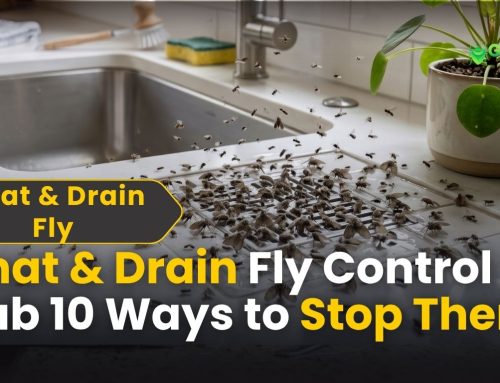
For a deeper look at these distinctions, Green Pest Management CT’s Gnat & Drain Fly Control Hub covers identification and source control in detail.
Gnat vs. Fruit Fly vs. Drain Fly: Identification Guide
When homeowners search for “gnat vs fruit fly pictures,” the most useful comparison includes behavior and breeding location rather than appearance alone.
| Feature | Fungus Gnat | Drain Fly | Fruit Fly |
| Body | Slender and delicate | Fuzzy, moth-like | Compact |
| Typical color | Dark | Grayish/dark | Tan to brownish |
| Wings | Clear, delicate | Broad and hairy-looking | Typical fly wings |
| Common location | Houseplants | Drains and wet areas | Kitchens and produce |
| Larval source | Moist growing media | Wet organic material | Fermenting organic material |
| ACV traps | Limited value | Not primary control | Often useful |
| Main solution | Plant moisture/source management | Remove wet breeding material | Remove fermentation source |
Green Pest Management CT’s fly vs. gnat identification guide provides additional comparison points.
For insects around sinks, the drain fly vs. fruit fly guide is particularly useful.
Where the fly appears provides a clue
Look at patterns rather than individual insects.
Small dark flies that rise from a flowerpot when it is disturbed strongly suggest you should investigate fungus gnats.
Fuzzy insects repeatedly resting on the bathroom wall beside one fixture point toward a drain-associated source.
Compact flies hovering around bananas, wine bottles, beverage recycling, or ripe tomatoes make fruit flies more likely.
None of these clues is absolute by itself, but combining appearance, behavior, and location usually narrows the possibilities considerably.
Signs You Have a Gnat Infestation
One small fly that enters through an open door isn’t the same as an indoor breeding population.
The more important sign is replacement.
You remove the adult flies, and more appear.
Repeated adult activity suggests eggs, larvae, or pupae are continuing through the life cycle somewhere nearby.
Homeowners should investigate when several small flies appear every day, adults consistently concentrate around the same plant or fixture, tiny flies emerge after watering plants, fuzzy flies repeatedly rest around plumbing, or vinegar traps keep filling without the population disappearing.
Where adults occur can guide your search.
The goal isn’t simply to ask, “Where are the gnats?”
Ask, “What resource around this location could be producing them?”
Why Do I Suddenly Have Gnats in My House?
Small flies appear when food, moisture, organic material, and suitable developmental conditions come together.
Sometimes the source is obvious. A heavily watered houseplant may support fungus gnats.
Sometimes it is hidden. A potato can deteriorate at the back of a pantry or sugary liquid can leak beneath a recycling-bin liner.
Drain-associated small flies can be more challenging because the developmental material may not be visible from the room.
Warmth and moisture matter
Many flies develop faster when environmental conditions are favorable. Heated Connecticut homes can also maintain suitable conditions when outdoor temperatures are cold.
That’s why winter doesn’t guarantee an end to indoor gnat problems.
Habits can create favorable conditions
Plant owners sometimes water on a fixed schedule rather than according to the plant’s actual needs.
Kitchen recycling can accumulate drink residue.
An infrequently maintained wet area may develop organic buildup.
None of these situations requires extreme neglect. Insects can exploit surprisingly small resources.
How to Get Rid of Gnats: 10 Methods That Target the Source
Different gnats require different treatments. The methods below should be selected according to identification rather than applied indiscriminately.
1. Identify the Gnat Before Treating It
Identification saves more time than any homemade trap.
Capture an adult when practical or take a close photograph while it is resting. Note body shape, wings, legs, coloration, and exact location.
Then map the activity.
Do you see adults almost exclusively around houseplants? Around a single bathroom drain? Around produce and recycling?
Avoid choosing a remedy based only on the word “gnat.”
If you can’t identify the insect, Green Pest Management CT’s broader flying-pest identification resources provide useful comparisons.
2. Let Fungus Gnat Soil Dry Appropriately
If fungus gnats are confirmed, examine how the affected plants are watered.
Fungus gnat larvae favor moist growing media containing fungi and organic material. Keeping plant media constantly wet can create highly favorable conditions.
For plant species that tolerate it, allowing the upper growing medium to dry somewhat between watering can make that environment less favorable.
Don’t deliberately dehydrate a plant simply to eliminate gnats.
Plant species have different moisture requirements. Orchids, tropical plants, seedlings, succulents, and other plants cannot all be managed with the same watering rule.
Match the adjustment to the plant.
Check plant drainage too
Make sure pots drain as intended.
Empty unnecessary standing water from saucers where appropriate and remove dead leaves and decaying plant material from the soil surface.
If one pot generates most of the adults, isolate and inspect it carefully.
This is source control rather than adult control, which is why it produces more meaningful results.
3. Use Sticky Monitoring Traps for Plant Gnats
Yellow sticky cards can capture adult fungus gnats around plants.
Position them according to product instructions near affected plants without allowing children or pets access to the adhesive.
Sticky cards have two purposes.
First, they reduce some adult activity.
Second, and more importantly, they monitor the population.
If one plant’s card catches many gnats while cards around other plants remain almost empty, you’ve learned where to concentrate your source-management work.
Sticky cards don’t eliminate larvae from the growing media, so use them alongside appropriate moisture and plant management.
4. Find the Drain Actually Producing Drain Flies
Don’t pour a treatment into every drain because a fly was found near the sink.
First establish whether a drain really is involved.
Inspect where fuzzy adults repeatedly rest. Compare activity near several fixtures. Check bathrooms, kitchens, basement or utility fixtures, and other appropriate wet areas based on the pattern you’re observing.
Remember that adult flies can move after emerging.
A drain located several feet from the flies may still be involved, while a drain directly beneath them might not be.
This is where methodical inspection outperforms guesswork.
The Green Pest Management CT Gnat & Drain Fly Control Hub explains additional source-isolation strategies.
5. Remove Organic Material From Confirmed Drain Sources
Drain-fly control is primarily a source-removal problem.
Larvae develop in wet organic material. When a fixture is confirmed as a source, accessible organic buildup should be removed using methods appropriate to that fixture and plumbing.
Simply sending liquid down a pipe may not physically remove material attached to surfaces.
This is why repeated drain treatments sometimes produce disappointing results.
If the relevant plumbing is inaccessible or you aren’t qualified to dismantle it safely, bring in an appropriate professional rather than damaging the fixture.
What should you pour down a drain for gnats?
There is no universal liquid that safely and effectively solves every “gnat in the drain” problem.
Products intended for drain maintenance should be suitable for the plumbing and used according to their directions. Don’t improvise pesticide or household chemical applications.
When drain-fly activity continues after accessible cleaning, look for another source or an underlying moisture or plumbing issue.
6. Correct Leaks and Persistent Moisture
If a source remains wet, cleaning may provide temporary relief without preventing recurrence.
Inspect for dripping fixtures, leaks, persistent condensation, standing water, and unusual damp areas.
A plumbing defect is fundamentally a building-maintenance problem.
A pest-control technician may help identify the relationship between flies and a wet area, but plumbing repairs should be completed by an appropriately qualified professional.
This distinction is important because no insecticide repairs a leaking pipe.
Persistent small flies can sometimes function as an early warning that an environmental condition needs attention.
7. Remove Fruit-Fly Breeding Sources
Many people looking for information on how to get rid of gnats actually have fruit flies.
If that is your situation, inspect food and waste rather than plant soil.
Start with produce. Check bananas, tomatoes, peaches, berries, potatoes, onions, and other items that can deteriorate.
Then inspect beverage residue and recycling.
Wine, beer, soda, juice, and other drink containers can retain attractive fermenting residues. Rinse them before keeping them indoors for recycling.
Clean garbage cans under the liner where leaks have occurred.
Look beneath nearby appliances if food or liquid may have spilled there.
Green Pest Management CT’s guide explaining where fruit flies come from covers commonly overlooked sources.
8. Use Apple Cider Vinegar Traps for Confirmed Fruit Flies
ACV traps can be very useful when identification points to fruit flies.
Apple cider vinegar gives off fermentation-related odors that attract adult fruit flies. Adding a small drop of dish soap changes the liquid’s surface tension and can help prevent flies contacting the solution from escaping.
It is important to understand what the trap does not do.
It does not treat fungus gnat larvae in potting media.
It does not remove drain-fly breeding material.
It does not eliminate fruit-fly larvae developing in forgotten produce.
Use it as an adult trap and monitoring device.
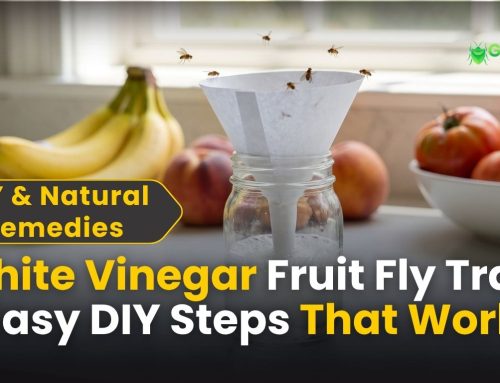
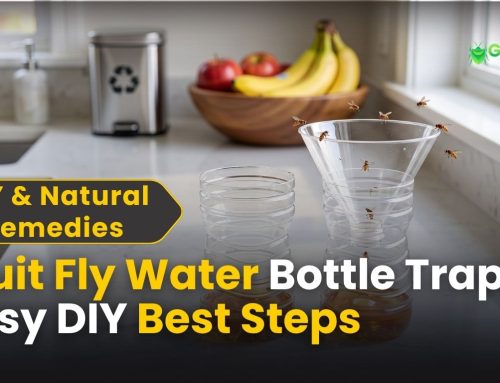
Green Pest Management CT’s apple vinegar fly trap guide and fruit fly water bottle trap instructions show two useful designs.
9. Use Natural Remedies With Realistic Expectations
Natural fly repellents and essential oils receive plenty of attention online.
Plant-derived compounds in peppermint, citronella, lemongrass, eucalyptus, clove, and other oils may show repellent activity against particular insects under certain conditions. Real-world effectiveness varies based on concentration, formulation, species, and environment.
Repelling adults is also very different from ending reproduction.
Peppermint fragrance doesn’t remove fungus gnat larvae from damp potting mix. Essential oil around a sink doesn’t clean developmental material from a drain.
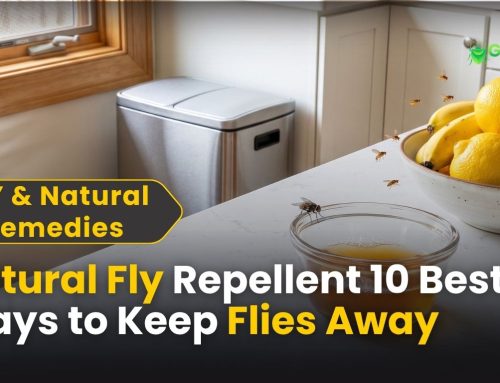
For a more detailed comparison, Green Pest Management CT’s natural fly repellent guide discusses the strengths and limitations of these methods.
“Natural” doesn’t automatically mean harmless. Concentrated essential oils can irritate people and may pose risks to pets depending on the substance and exposure.
10. Monitor Until the Adults Stop Returning
After source control, monitor rather than assuming the problem is over immediately.
Adult flies that developed before corrective work can remain visible temporarily. What you’re looking for is a continuing decline in activity as no new generations replace them.
Keep track of where adults occur.
If fungus gnat catches fall after plant-moisture correction, that is useful confirmation.
If drain flies continue emerging at the same level after cleaning one fixture, expand the source investigation.
If an ACV trap fills continuously, find the fruit-fly breeding material instead of merely replacing the vinegar forever.
Control is successful when the source stops producing new adults.
Drain Fly vs. Fruit Fly: Why the Difference Changes Treatment
This is one of the most consequential identification errors in household fly control.
A fruit fly near a drain doesn’t automatically make it a drain fly. Kitchens concentrate many resources in a small space.
A drain fly is generally fuzzy and moth-like. A typical household fruit fly has a more compact body and is closely associated with fermenting organic material.
The distinction changes your next action.
Confirmed fruit flies → inspect produce, food, beverage residue, recycling, and fermenting organic material.
Confirmed drain flies → investigate wet organic developmental sites.
Can fruit flies breed in drains?
Fruit flies may develop in suitable fermenting organic material associated with plumbing environments, but “fruit fly nest in drain” isn’t technically the right concept.
Fruit flies don’t construct nests.
They use suitable organic material as developmental sites.
If suspected fruit flies gather near a drain, first confirm the species and investigate whether that location genuinely contains appropriate breeding material.
Green Pest Management CT’s guide to investigating fruit flies in drains explains how to work through that question.
What About White Vinegar, Baking Soda, and Bleach?
Homemade drain recipes are popular because homeowners already have the ingredients.
They also create considerable misunderstanding.
A white vinegar fruit fly trap may capture some fruit flies, although apple cider vinegar is generally a more useful fruit-fly attractant.
The baking soda and vinegar reaction creates visible fizz, but visible reaction isn’t proof that a developmental source has been removed throughout a drain.
Bleach should not be treated casually as a universal insect killer.
Most importantly, never mix bleach with vinegar or other acids. That combination can release dangerous chlorine gas. Don’t combine different drain cleaners either.
The EPA’s guidance for controlling household pests safely recommends prevention and careful use of pest-control products. Follow product labels rather than improvising chemical combinations.
Risks and Problems Associated With Gnats
Most fungus gnats and drain flies in homes are primarily nuisance pests, but their presence can reveal underlying conditions worth correcting.
Fungus gnat larvae can become a horticultural issue, particularly with seedlings and susceptible roots when populations are substantial.
Drain flies may indicate persistent wet organic material. Recurring or unusually heavy activity can justify investigating moisture, sanitation, drainage, or plumbing conditions.
Fruit flies develop in fermenting material and may move between undesirable organic material and food-related surfaces.
You don’t need to respond to a few tiny flies with indiscriminate pesticide use.
You do need to identify why a population keeps reproducing.
Common Mistakes When Trying to Get Rid of Gnats
Most prolonged DIY infestations involve the same problems:
- Calling every tiny flying insect a fungus gnat.
- Assuming every fly near plumbing came from the drain.
- Treating adults while leaving larvae untouched.
- Setting ACV traps for plant gnats.
- Continually watering infested potting media without assessing plant needs.
- Using vinegar traps without removing fruit-fly food sources.
- Spraying rooms instead of locating developmental sites.
- Using natural repellents as a substitute for source control.
- Pouring random substances into plumbing.
- Mixing household chemicals.
- Treating several drains without confirming which one is active.
- Ignoring persistent leaks or damp conditions.
- Expecting adult flies to disappear immediately after source removal.
- Repeating failed treatment instead of reconsidering pest identification.
The most important lesson is to interpret failure.
When a remedy doesn’t work, don’t automatically use more of it. Ask whether you are treating the right pest and source.
How to Prevent Gnats From Returning
Prevention becomes much easier once you’ve identified what caused the original problem.
For fungus gnats, use plant-specific watering practices and avoid unnecessarily persistent soil moisture. Remove dead plant debris and maintain appropriate drainage.
For drain flies, keep relevant fixtures properly maintained and address leaks or recurring wet organic conditions.
For fruit flies, manage produce, garbage, recycling, beverages, and food residue.
Screens and properly closing doors can also reduce incidental entry from outdoors.
This source-based prevention strategy is a practical form of Integrated Pest Management. It reduces both pest pressure and unnecessary product use.
DIY vs. Professional Gnat Control
DIY treatment makes sense when the species and source are clear.
A small fungus gnat problem limited to one houseplant is a good example. Appropriate plant care and adult monitoring may resolve it.
Fruit flies traced directly to spoiled produce are another straightforward situation.
Professional inspection becomes more valuable when multiple rooms or fixtures are involved, flies emerge from inaccessible structural areas, the species remains unclear, or the population persists after appropriate source correction.
| Situation | DIY Is Often Reasonable | Consider Professional Help |
| Fungus gnats in one plant | Yes | Persistent multi-plant activity |
| Fruit flies from spoiled fruit | Yes | Continued activity after source removal |
| Drain flies at one accessible fixture | Source inspection/cleaning | Persistence after proper cleaning |
| Several affected drains | Limited | Yes |
| Unknown small flies | Identification first | Yes if unresolved |
| Flies emerging from wall/floor area | Avoid blind treatment | Yes |
| Suspected concealed moisture | Basic visual check | Professional assessment |
| Heavy recurring infestation | Monitoring | Professional inspection |
Green Pest Management CT’s guide explaining when to call a fly exterminator can help with that decision.
What Happens During Professional Gnat Control?
Professional pest control should begin with investigation, not automatic spraying.
A technician first works to identify specimens and map where activity is occurring. That evidence determines where the inspection goes next.
With fungus gnats, houseplants and associated growing conditions become important.
With drain flies, the investigation shifts toward drains, persistent moisture, organic material, and potentially plumbing-associated areas.
With fruit flies, produce, food storage, beverage areas, waste, and recycling become priorities.
Once the source is understood, an Integrated Pest Management plan may combine sanitation, moisture management, monitoring, exclusion, targeted pest-control measures, and recommendations for plumbing or building repairs where necessary.
This diagnostic approach is the main advantage of professional service.
Green Pest Management CT offers professional flying insect control services for persistent small-fly problems in its Fairfield County service area.
Seasonal Gnat Activity in Connecticut
Connecticut’s seasons influence small-fly activity, but indoor populations don’t always follow outdoor weather.
Spring
Warmer temperatures increase general insect activity. Houseplants also enter active growth, often leading homeowners to increase watering.
Inspect plant moisture, screens, plumbing areas, and other potential pest sources as temperatures rise.
Summer
Summer provides favorable warmth along with abundant fruit, garden produce, beverages, and outdoor entertaining.
That can increase fruit-fly pressure.
Houseplants may receive additional watering, while humid conditions can make moisture management more important.
Late summer and fall
Late summer is particularly relevant to fruit flies because kitchens may contain ripe garden produce and seasonal fruits.
Recycling and food waste can also increase around gatherings.
Don’t overlook potatoes, onions, tomatoes, and other produce stored away from the main fruit bowl.
Winter
Fungus gnats, drain flies, and fruit flies can all remain active indoors when appropriate conditions exist.
A heated Connecticut home can provide enough warmth for continued development.
If flies appear in winter, look indoors for the source rather than assuming they will disappear because temperatures outside are below freezing.
Local Gnat Problems in Fairfield County
Different properties present different inspection challenges.
Greenwich and New Canaan homes may have numerous bathrooms, plant collections, finished basements, utility rooms, or food and beverage areas. When small flies appear in several sections of a larger property, identifying the primary source becomes especially important.
Stamford and Norwalk include apartments, multifamily residences, single-family houses, and commercial environments. Shared building conditions can sometimes complicate source determination.
Darien and Westport homes may see increased fruit-fly activity around seasonal entertaining, produce, recycling, and outdoor-to-indoor traffic.
Fairfield and Wilton properties can combine gardens, houseplants, basements, utility areas, and varied plumbing conditions.
The town does not determine the treatment.
The species and source do.
That’s why Green Pest Management CT focuses on identifying the pest and conditions supporting it rather than treating every “gnat” complaint with the same product.
When Should You Schedule an Inspection?
A professional inspection is worthwhile when you have made reasonable source-control corrections and the population continues at essentially the same level.
Recurring fuzzy flies from several drains deserve investigation. So do small flies coming from a wall, floor, or inaccessible area.
For plant gnats, widespread activity involving numerous containers may warrant additional pest-management or horticultural guidance.
If the insect’s identity remains uncertain, professional identification can prevent weeks of treating the wrong habitat.
Homeowners throughout Greenwich, Stamford, Darien, Westport, Fairfield, Wilton, New Canaan, Norwalk, and nearby Fairfield County can contact Green Pest Management CT to schedule an inspection when a small-fly infestation stops being a straightforward DIY problem.
Frequently Asked Questions
What is the fastest way to get rid of gnats?
Identify the species and remove its breeding source. For fungus gnats, manage suitable plant moisture conditions. For drain flies, remove wet organic developmental material. For fruit flies, eliminate fermenting food and beverage sources. Killing adults alone usually provides only temporary reduction.
How do I get rid of fungus gnats in houseplants?
Adjust watering according to the plant’s needs so the growing medium does not remain unnecessarily wet, maintain proper drainage, remove decaying plant debris, and use sticky cards to monitor adults. Persistent problems may require additional plant-specific control measures.
What is the difference between a drain fly and a fruit fly?
Drain flies are typically fuzzy and moth-like and commonly develop in wet organic material. Fruit flies are more compact and associated with fermenting fruits, vegetables, beverages, and similar materials.
Why are gnats coming out of my drain?
If the insects really are emerging from the drain, suitable wet organic material may be supporting larvae. Confirm the species and source before selecting drain treatments because fruit flies and other small flies can also occur around sinks.
Will apple cider vinegar get rid of gnats?
ACV is useful primarily as an attractant for adult fruit flies. It is not a complete treatment for fungus gnats or drain flies and does not remove their larval developmental sites.
Can fruit flies have a nest in a drain?
Fruit flies don’t build nests. They can potentially develop in suitable fermenting organic material associated with plumbing environments. Confirm the species and remove the developmental material rather than treating the location as a conventional nest.
Why do gnats keep coming back after I kill them?
Immature flies are probably still developing somewhere, or another source exists. Adult-killing products and traps don’t necessarily affect eggs, larvae, and pupae.
Can I use bleach and vinegar to get rid of drain gnats?
No. Never mix chlorine bleach and vinegar. The reaction can release hazardous chlorine gas. Avoid combining household chemicals or drain products and follow manufacturer labels.
When should I call pest control for gnats?
Call when the species cannot be identified, multiple rooms or drains are affected, flies emerge from inaccessible areas, or appropriate source-control measures fail. Persistent activity is often a sign that the true developmental source has not been located.
Can Green Pest Management CT help with gnats and drain flies?
Yes. Green Pest Management CT provides professional flying-insect inspections and pest-management solutions for homes in Greenwich, Stamford, Darien, Westport, Fairfield, Wilton, New Canaan, Norwalk, and surrounding Fairfield County communities.
Conclusion: How to Get Rid of Gnats for Good
Learning how to get rid of gnats starts with abandoning the idea that every tiny fly requires the same remedy.
A fungus gnat around a houseplant, a fuzzy drain fly in a bathroom, and a fruit fly hovering around recycling can look similar enough to cause confusion. Their breeding biology tells a very different story.
For plant gnats, manage growing-media conditions and moisture. For drain flies, find and remove wet organic breeding material and investigate persistent moisture. For fruit flies, eliminate fermenting produce, beverages, garbage, and recycling sources. Then use traps to monitor whether adult activity is declining.
That source-first process reflects Integrated Pest Management and generally provides more lasting value than continuously spraying adults or experimenting with homemade chemical mixtures.
When you have identified what appears to be a gnat but cannot find what is producing it, a professional inspection can shorten the process considerably. Green Pest Management CT helps homeowners in Greenwich, Stamford, Darien, Westport, Fairfield, Wilton, New Canaan, Norwalk, and surrounding Fairfield County identify persistent flying insects and determine the conditions that need to be corrected.