Fly Exterminator: When to Call a Pro & What It Costs
The Fly Problem That Won’t Go Away
You’ve cleaned the kitchen, emptied the garbage, wiped down the counters, and bought every trap available at the hardware store. And yet, every time you walk into your kitchen or bathroom, there they are hovering near the sink, circling the drain, or clustering around a window that hasn’t been opened in days.
Persistent fly infestations are one of the most frustrating pest problems homeowners face, precisely because the solution seems like it should be simple. Clean up the mess, eliminate the flies. Except it rarely works that way.
Here’s what most people don’t realize: flies aren’t the actual problem. They’re a symptom. And until you address the underlying breeding source which is often somewhere you haven’t thought to look no trap, spray, or DIY fix will give you lasting results.
This guide covers exactly when a fly problem crosses the line from DIY territory into professional service territory, what a qualified fly exterminator actually does differently, and what you can realistically expect to pay for professional flying insect control in Fairfield County. If you’ve been going in circles with a fly problem that just won’t resolve, this is where that changes.
What Is a Fly Exterminator?
A fly exterminator is a licensed pest control professional who specializes in identifying, locating, and eliminating fly infestations through a combination of source investigation, targeted treatment, and prevention planning. The distinction between a fly exterminator and someone who just sprays for bugs is significant.
Effective fly control is fundamentally a diagnostic problem. Different fly species breed in different locations, respond to different treatment methods, and indicate different underlying sanitation or structural issues. A professional who treats fly symptoms without identifying the breeding source will get temporary results at best.
Integrated Pest Management (IPM) principles which form the basis of professional fly control — prioritize source elimination over broad chemical application. This means the work involves thorough inspection, accurate species identification, sanitation guidance, targeted treatment of breeding sites, and structural recommendations where applicable.
Professional fly control services cover a range of flying insect problems, from the classic fruit fly kitchen infestation to drain fly colonies, house fly problems in commercial settings, and phorid fly situations that can indicate far more serious issues beneath a slab or inside plumbing. For a comprehensive overview of the fruit fly authority hub and flying insect control resources available to Connecticut homeowners, that resource covers the full picture.
Identifying Your Fly Problem: Species Matters
Before you can solve a fly problem or meaningfully describe it to a professional you need to know what species you’re dealing with. This isn’t just academic. The breeding location, appropriate treatment, and timeline to resolution all depend on accurate identification.
Fruit Flies
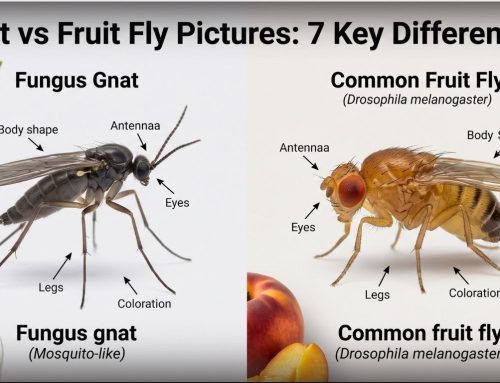
The most common residential complaint across Connecticut. Fruit flies are tiny (about 1/8 inch), tan to brownish-red, with distinctive red eyes. They hover around kitchen surfaces, fruit bowls, garbage cans, and especially sinks and drains. They breed in fermenting organic matter overripe fruit is the obvious one, but the organic film inside drains is by far the most overlooked source.
Understanding where fruit flies actually come from is essential context, because most people focus exclusively on surface-level sources and miss the drains entirely.
Drain Flies
Also called moth flies or filter flies, these are small (about 1/16 inch), dark, and fuzzy-looking with rounded wings. They’re slower-moving than fruit flies and tend to cluster on walls near drains and pipes. They breed exclusively inside the gelatinous organic film that builds up inside drain pipes. If you have small, moth-like flies near bathroom drains that seem unrelated to any food source, drain flies are almost certainly what you’re looking at.
House Flies
Larger (about ¼ inch), gray-bodied, and fast-moving, house flies breed in decaying organic matter garbage, compost, pet waste, and similar materials. A house fly problem indoors usually indicates either a significant outdoor breeding source or an undiscovered indoor issue like a dead animal inside a wall.
Phorid Flies
These are a serious warning sign. Small, hump-backed flies that run erratically across surfaces rather than flying freely. Phorid flies breed in decaying organic matter and they can indicate plumbing leaks, sewage issues, or decomposing material inside a wall or beneath a slab. If you have phorid flies, stop treating symptoms and call a professional for a thorough inspection.
Fungus Gnats
Technically not flies, but frequently confused with them. Fungus gnats are tiny, dark-bodied, and associated with overwatered houseplants or moisture-saturated potting soil. They’re more of a nuisance than a serious health risk, but they multiply quickly if the breeding medium isn’t addressed.
When DIY Fly Control Is Enough and When It Isn’t
This is where a lot of homeowners waste significant time and money. DIY approaches work in specific, limited circumstances. Understanding those boundaries saves you weeks of frustration.
DIY Is Reasonable When:
- You have a mild fruit fly problem that started after bringing home produce
- You can identify and eliminate the breeding source (overripe fruit, uncleaned recycling bin, etc.)
- The infestation is confined to one area and appeared recently
- You haven’t had repeated infestations in the same location
In these situations, thorough source elimination combined with targeted trapping can resolve the problem within one to two weeks. Indoor fruit fly killer products can help knock down adult populations while the breeding source dries up. Apple cider vinegar traps are effective for monitoring and population reduction in mild cases. DIY and store-bought trap options vary in effectiveness depending on the species and infestation stage.
Professional Fly Control Is Necessary When:
- The infestation has persisted for more than two weeks despite cleaning and trapping
- Flies are returning repeatedly in the same location after apparent resolution
- You cannot identify the breeding source despite thorough inspection
- You have drain flies, phorid flies, or any fly activity associated with plumbing
- The infestation is in a commercial kitchen, restaurant, or food service facility
- You’re seeing flies in rooms with no obvious food source (bathroom, basement, utility room)
- The problem involves multiple species simultaneously
The pattern that sends most homeowners to a professional isn’t the initial infestation it’s the third or fourth recurrence. By that point, there’s almost always an unidentified breeding source that requires professional inspection to locate.
What a Professional Fly Exterminator Does Differently
This is the core question for anyone considering professional fly control service. What does a professional actually do that you can’t do yourself?
Comprehensive Source Investigation
A trained fly exterminator conducts a systematic property inspection that goes well beyond what most homeowners consider. This includes:
- Moisture meter assessment of wall and floor areas near plumbing
- Drain sampling and visual inspection using specialized tools
- Inspection of crawl spaces, utility areas, and spaces behind appliances
- Assessment of exterior breeding sources contributing to interior populations
- Review of HVAC and ventilation systems that can transport fly populations between spaces
This level of investigation is what consistently uncovers the breeding sources that homeowners miss particularly in-drain breeding, under-slab issues, and moisture problems behind finished walls.
Accurate Species Identification
Knowing the species determines the entire treatment approach. A professional doesn’t just see “small flies near the sink” they identify whether they’re fruit flies, drain flies, or phorid flies, which completely changes where treatment is focused and what methods are used.
Targeted Treatment of Breeding Sites
Professional fly control involves treating the source, not just the adult population. Depending on the species and situation, this includes:
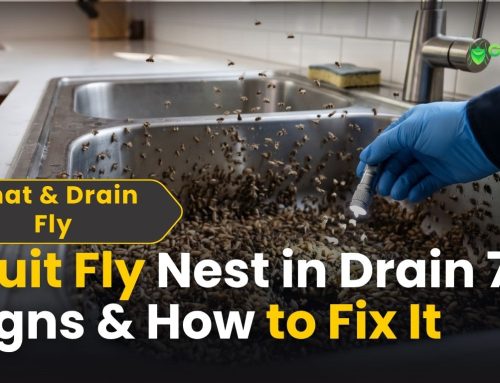
- Drain treatment: Professional-grade microbial cleaners or enzyme-based products applied directly to drain pipes to eliminate the organic film where drain flies and fruit flies breed
- Residual applications: EPA-registered residual insecticides applied to resting and landing surfaces where adult fly populations concentrate
- Insect light traps (ILTs): Professional-grade UV light traps positioned based on fly activity patterns for continuous population monitoring and reduction
- Baiting systems: Professional fly bait formulations applied in specific locations for house fly control
- Exclusion measures: Identification and sealing of exterior entry points contributing to interior infestation
Sanitation and Structural Recommendations
Professional treatment without addressing underlying conditions is temporary by definition. A qualified fly exterminator provides specific, actionable recommendations for sanitation improvements, structural repairs, and plumbing assessment that permanently reduce conditions favorable to breeding.
Fly Exterminator Costs: What to Expect in Connecticut
Professional fly control pricing in Fairfield County reflects the diagnostic complexity of the work. Unlike some pest treatments where the intervention is straightforward, fly control often involves significant inspection time before any treatment begins.
Residential Fly Control Costs (2026 Fairfield County Estimates)
| Service Type | |
| Initial inspection and treatment (fruit flies) | |
| Drain treatment and source elimination | |
| Drain fly professional treatment | |
| Phorid fly investigation and treatment | |
| House fly control (residential) | |
| Follow-up visit |
Commercial Fly Control Costs
| Service Type | |
| Commercial kitchen inspection and treatment | |
| Restaurant monthly fly control contract | |
| ILT installation and service | |
| Multi-area commercial treatment |
Factors That Drive Cost Up
Property size and complexity: A larger home or commercial property with multiple potential breeding sites requires more inspection time and more treatment points.
Species involved: Phorid flies and drain flies often require plumbing investigation that adds time and sometimes coordination with a plumber — this complexity increases professional service cost.
Commercial versus residential: Commercial properties, particularly food service establishments, have higher service frequency requirements and more complex treatment needs.
Recurring service contracts: Many Connecticut businesses opt for monthly or quarterly fly control contracts, which provide better long-term value than individual service calls but require an upfront commitment.
Inspection depth required: If initial treatment doesn’t resolve the issue, subsequent investigation to locate a persistent breeding source adds to total cost — but this is far less expensive than continued DIY attempts that don’t address the actual problem.
Flying Insect Control and Its Connection to Stinging Insects
Fly control and stinging insect control are sometimes more connected than homeowners realize. Certain wasp species, particularly yellow jackets, feed on insects including fly populations around garbage and compost areas. Managing outdoor fly attractants is also part of reducing yellow jacket and hornet foraging pressure near your home.
Additionally, if you’re dealing with flies appearing in areas of your home where there’s no food source inside walls or from attic spaces this can sometimes indicate a dead rodent, bird, or other animal that may have originally been attracted by pest activity or entered through gaps that also allow stinging insects access.
For homeowners managing both flying insect and stinging insect pressures which is extremely common in Fairfield County during summer professional hornet exterminator services and fly control can often be addressed in a coordinated service visit. Working with a provider who handles the full spectrum of flying insect problems is more efficient than managing separate specialists for each issue.
Seasonal Patterns: When Fly Problems Peak in Connecticut
Connecticut’s climate creates distinct peaks in fly activity that Fairfield County homeowners should be aware of.
Late Spring Through Summer (May–August)
This is peak fruit fly and house fly season. Warmer temperatures accelerate fly development dramatically a fruit fly can complete its life cycle from egg to reproducing adult in as little as 8 to 10 days at summer temperatures. Infestations that start small in June can be significant by July if breeding sources aren’t addressed quickly.
Coastal communities like Westport, Fairfield, and Norwalk experience particularly intense summer fly pressure due to the humidity that accelerates fermentation and organic decay the conditions flies need to breed. Restaurant and food service operators in these areas face their peak compliance pressure during these months.
Fall (September–October)
As temperatures drop outdoors, flies seek warmth inside structures. Cluster flies a species that enters homes in fall to overwinter become a common complaint in New Canaan, Wilton, and Darien, particularly in older homes where exterior gaps and soffits haven’t been sealed. These aren’t breeding inside the home; they’re simply using it as a winter shelter. Treatment approach and professional recommendations differ significantly from true breeding infestations.
Winter
Indoor fly activity in Connecticut winter almost always indicates a problem inside a heated space a drain issue, a forgotten bag of produce, or an organic material source inside the structure. Winter fly complaints should be taken seriously precisely because there’s no outdoor breeding population supplementing what you’re seeing. Whatever is sustaining flies in January is located inside your home.
For the fastest resolution of a persistent fly problem regardless of season, how to get rid of fruit flies fast provides an actionable step-by-step approach for homeowners who want to start the process before their professional service appointment.
Commercial Fly Control: A Different Standard
For restaurants, food service businesses, and commercial food handling operations in Stamford, Norwalk, and across Fairfield County, fly control isn’t just a comfort issue — it’s a health code requirement enforced by Connecticut Department of Public Health inspectors and local health districts.
A single fly observed near food preparation surfaces during a health inspection can trigger a violation. A pattern of fly activity can trigger closure. The financial stakes of inadequate fly control in a commercial kitchen are substantially higher than the cost of professional service.
Commercial fruit fly control in restaurant settings requires a fundamentally different approach than residential treatment: more frequent service intervals, detailed documentation for compliance purposes, staff sanitation training, and ILT placement strategy that meets both efficacy and health code requirements.
The most common failure point in commercial fly control isn’t the treatment it’s the interval between treatments. Many food service operators reduce service frequency when fly populations appear low, then face a resurgence that coincides with an inspection visit. Consistent, contracted professional service is the only reliable approach for commercial operations.
Prevention: Reducing Fly Pressure Year-Round
Professional treatment resolves an active infestation. Prevention determines how quickly flies return.
Kitchen and food storage:
- Store all ripe produce in the refrigerator during warm months
- Empty and clean kitchen garbage cans at least twice weekly in summer
- Rinse recycling containers before storing residual liquid is a prime breeding site
- Wipe down under-sink areas and address any moisture from pipe drips immediately
Drain maintenance:
- Run hot water through drains daily
- Use a drain brush to physically remove organic film weekly
- Enzyme-based drain cleaners used monthly significantly reduce drain fly breeding potential
- Never pour grease or food waste down drains
Checking whether fruit flies are breeding in your drains is a critical step that most homeowners skip and it’s often the difference between a problem that resolves and one that persists indefinitely.
Structural exclusion:
- Repair or replace damaged window and door screens
- Seal gaps around pipes and utility penetrations
- Ensure exterior garbage storage is kept away from entry points and has tight-fitting lids
Outdoor management:
- Clean up pet waste promptly — this is a significant house fly breeding source
- Keep compost bins properly managed and away from the structure
- Address standing water and moisture accumulation near the foundation
Finding a Reliable Fly Exterminator in Fairfield County
Not every pest control company has the diagnostic skills and treatment experience to handle persistent fly infestations effectively. When evaluating providers:
Ask specifically about their inspection process. A technician who proposes treatment before conducting a thorough source inspection is skipping the most important step. The inspection should happen first.
Verify Connecticut licensing. Pest control operators in Connecticut must be licensed through the CT DEEP. Verify before booking.
Ask about the specific treatment methods for your fly species. If the technician can’t explain why a particular product or method is appropriate for the species you have, that’s a significant red flag.
Confirm follow-up is included. Fly control frequently requires a follow-up visit to confirm source elimination and address any secondary breeding sites identified after initial treatment.
For homeowners dealing with multiple pest concerns simultaneously — fly problems alongside stinging insect pressure, which is common across Fairfield County in summer — working with a provider who handles both reduces coordination complexity. The professional service resource guide for Connecticut homeowners covers how to evaluate and select providers across pest control categories.
Frequently Asked Questions
When should I call a fly exterminator instead of handling it myself?
Call a professional when a fly infestation has persisted longer than two weeks despite thorough cleaning and DIY treatment, when flies keep returning to the same location after apparent resolution, when you cannot identify the breeding source, or when you’re dealing with drain flies or phorid flies. Phorid flies in particular always warrant professional investigation — they can indicate plumbing or structural issues that need addressing.
How much does a fly exterminator cost in Connecticut?
Residential fly control in Fairfield County typically costs for initial inspection and treatment, with drain treatment and follow-up visits ranging from. Commercial fly control runs higher for initial treatment, with monthly service contracts in the range. Phorid fly investigations that require plumbing coordination cost more due to the diagnostic complexity involved.
What do fly exterminators actually do that I can’t do myself?
The most important difference is diagnostic. Professional fly exterminators conduct systematic source investigations including drain sampling, moisture assessment, and structural inspection that identify breeding sites most homeowners miss. They also have access to professional-grade treatment products and application methods that target breeding sources more effectively than retail options. The inspection phase is where the real value is.
How long does fly exterminator treatment take to work?
Adult fly populations typically reduce significantly within 24–72 hours after professional treatment. Full resolution meaning the complete elimination of breeding populations — usually takes 1–2 weeks as remaining eggs and larvae cycle through. A follow-up inspection at 10–14 days confirms whether all breeding sources have been addressed.
Are the products fly exterminators use safe for my family and pets?
Licensed pest control professionals use EPA-registered products applied at label-compliant concentrations. Your technician will provide specific instructions — typically asking you to keep people and pets away from treated areas for a specified period after application. Always follow these instructions. Ask your technician to explain exactly what products are being used and why if you have specific concerns.
Can fruit flies come back after professional treatment?
Yes, if sanitation conditions that supported the original infestation aren’t addressed. Professional treatment eliminates the current infestation and identifies the source, but if drains aren’t maintained, produce management doesn’t change, or moisture issues aren’t resolved, new fruit fly activity can begin from external sources entering the property. The prevention recommendations your exterminator provides are as important as the treatment itself.
Why do I have flies in my bathroom if there’s no food there?
Bathroom flies are almost always drain flies breeding in the organic film inside drain pipes, or fruit flies that have found a secondary drain source. Phorid flies in a bathroom can indicate a plumbing leak or sewage issue beneath the floor. Any fly activity in a bathroom without an obvious food source should be investigated by a professional the cause is usually plumbing-related and worth addressing promptly.
Do Connecticut restaurants need professional fly control for health compliance?
Yes. Connecticut food service establishments are subject to state and local health code requirements that effectively mandate functioning fly control programs. The Connecticut Department of Public Health and local health districts inspect for fly activity as part of standard food service inspections. A single observed fly near food preparation can trigger a violation. Professional contracted fly control is the only reliable way to maintain compliance during peak season.
What’s the difference between fruit flies and drain flies?
Fruit flies are tan-to-reddish, approximately 1/8 inch, with red eyes, and breed in fermenting organic matter including produce and drain film. Drain flies are smaller, darker, and fuzzy-looking with rounded moth-like wings they breed exclusively in the gelatinous organic film inside drains and pipes. Treatment approaches overlap (both require drain treatment) but differ in specifics. A professional will identify which species you have and treat accordingly.
Is same-day fly exterminator service available in Fairfield County?
Availability of same-day service varies by provider and time of year. Summer months are peak demand season for fly control in Connecticut, which can extend scheduling timelines. For genuine emergencies commercial health inspection pressure or severe infestations local pest control companies serving Greenwich, Stamford, Westport, and surrounding communities often accommodate urgent appointments. Call early in the day and describe the urgency of your situation when you book.
Conclusion: Stop Treating Symptoms and Find the Source
If there’s one takeaway from everything covered here, it’s this: flies are always telling you something. They’re not random. They’re not bad luck. They’re breeding somewhere specific, on something specific, and until that source is found and eliminated, the infestation will continue regardless of how many traps you set or how thoroughly you clean your counters.
For mild, early-stage infestations where the source is obvious, DIY approaches work fine. But for persistent problems the kind where you’ve already tried everything and the flies keep coming back a professional fly exterminator isn’t just a convenience. It’s the diagnostic step that makes actual resolution possible.
In Fairfield County, where summer humidity accelerates fly breeding, older homes create drainage challenges, and commercial food service operations face real compliance stakes, having a reliable local pest control professional is a practical necessity rather than a luxury. Green Pest Management CT serves Greenwich, Stamford, Darien, Westport, Fairfield, Wilton, New Canaan, Norwalk, and surrounding communities with the local knowledge and professional capability that flying insect problems actually require.
If you’ve been fighting a fly problem that won’t resolve, contact Green Pest Management CT to schedule a professional inspection. A thorough assessment of your property — not just the flies you’re seeing, but the conditions creating them — is where lasting resolution begins.