Bedroom Ants Elimination: Stop Ants in Your Room Fast | Connecticut Guide
INTRODUCTION
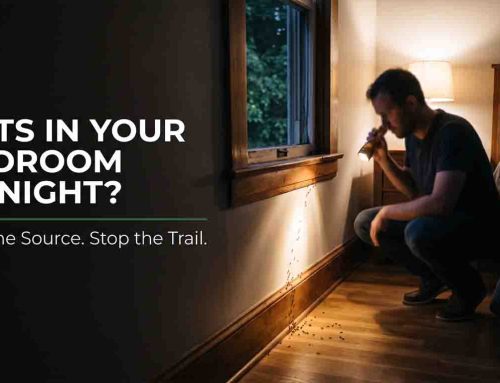
You wake up in the middle of the night and feel something crawling on your arm. You turn on the light and see an ant crawling across your pillow. Within seconds, you notice more ants on your sheets, your nightstand, and crawling up the bedroom wall. The thought that ants have invaded your sleeping sanctuary creates genuine alarm and disgust that exceeds any other pest encounter.
Bedroom ant infestations trigger unique anxiety because your bedroom represents your most private, personal space the place where your family sleeps vulnerable and defenseless. Unlike kitchen ants that are merely annoying, bedroom ants elimination becomes psychologically urgent. Understanding exactly what causes bedroom infestations and how to eliminate them permanently transforms panic into action.
This comprehensive guide reveals why bedrooms attract ants differently than kitchens, why bedroom infestations often indicate more serious underlying problems, and what professional bedroom ants elimination strategies actually succeed where DIY attempts fail. Let’s reclaim your sleeping sanctuary from unwanted invaders.
WHY BEDROOMS ATTRACT ANTS DIFFERENTLY THAN KITCHENS
The Hidden Attractions Most People Miss
Bedroom ant infestations seem mysterious because bedrooms lack obvious food sources like kitchens. But understanding what actually attracts ants to bedrooms reveals effective defense strategies.
- Dead skin cells and dust mites provide protein sources. Humans shed approximately 1.5 grams of skin daily. Dust mites consume this shed skin, and ants harvest dust mites as protein sources. While invisible to you, this microscopic food availability sustains foraging ants effectively. Your bed and bedroom textiles are essentially feeding ants continuously through this overlooked mechanism.
- Bathroom moisture migrates through shared walls. Bedrooms adjacent to bathrooms experience humidity transfer through wall cavities. This moisture attracts moisture-dependent ant species desperately. Water availability matters as much as food for many ant species. A seemingly dry bedroom adjacent to a moisture-rich bathroom becomes attractive to ants seeking reliable hydration.
- Wall cavities provide ideal nesting conditions. Dark, undisturbed interior spaces appeal to ant instincts. Bedroom walls offer protected nesting sites where colonies can expand undetected for months. Unlike kitchen ants establishing temporary foraging sites, bedroom ants often establish permanent colonies inside walls.
- This combination creates a different infestation pattern. Kitchen infestations center on visible food sources and obvious trails. Bedroom infestations often involve hidden wall colonies, with emerging ants being the only visible sign. This invisibility means bedroom infestations often progress much further before detection.
THE BEDROOM-SPECIFIC PROBLEM: CARPENTER ANTS
Why Bedrooms Face Unique Species Challenges
- Carpenter ants commonly nest in bedroom walls, particularly in older Connecticut homes. Unlike sugar ants, which temporarily visit for specific food discoveries, carpenter ants establish permanent residential colonies inside wood structures.
- Understanding carpenter ant behavior changes everything about the elimination approach. Carpenter ants don’t eat wood like termites; they excavate galleries inside wood, creating tunnel systems for colony expansion. These galleries weaken structural integrity gradually. By the time homeowners detect carpenter ants, significant wood damage often exists.
- Bedroom walls are carpenter ant favorites. Wall cavities provide protected spaces for colony expansion. Access to exterior moisture through wall gaps attracts them. Existing wood damage from water intrusion creates perfect conditions. Carpenter ant identification is the critical first step in effective bedroom elimination.
- Detection proves difficult in bedrooms. You may see emerging ants, but no visible trails reveal the colony location. The main colony remains hidden inside the walls. This invisibility allows extensive damage before elimination begins. By contrast, kitchen carpenter ants often establish visible trails revealing their location.
WHY DIY BEDROOM ANTS ELIMINATION FAILS CATASTROPHICALLY
The Wall Cavity Access Problem
Most DIY approaches fail with bedroom ants because they cannot access wall cavities where actual colonies reside. You can spray visible ants all day, but the colony’s queen survives protected inside wall voids.
- Surface spray application cannot reach internal wall colonies. Spray disperses into open air. It kills visible ants but cannot penetrate wall cavities. Interior ants simply retreat deeper into walls, surviving spray applications unaffected. The queen continues reproducing. Within 24-48 hours, new ants emerge, replacing those you killed.
- Bait placement proves ineffective without knowing cavity location. Standard baits positioned on surfaces are discovered occasionally by wall-cavity ants. But without strategic placement along actual ant highways emerging from walls, baits may be ignored entirely. Ants preferring hidden wall routes may never encounter surface baits.
- Wall cavity moisture defeats many DIY bait formulations. Moisture inside walls degrades conventional bait products. Professional wall-cavity baits are formulated specifically for moisture-resistant performance. DIY baits often fail simply because moisture ruins their effectiveness.
The Species Identification Gap
- Most homeowners cannot distinguish carpenter ants from sugar ants or pavement ants. Different species require completely different elimination approaches. Misidentification guarantees treatment failure because the wrong species receives the wrong treatment strategies.
- Carpenter ants require wall cavity access and treatment. Sugar ants require food-source elimination and bait placement. Fire ants require specialized approaches entirely different from carpenter ants. Attempting sugar ant treatment on carpenter ants provides zero effectiveness.
BEDROOM ANTS ELIMINATION: PROFESSIONAL APPROACH EXPLAINED
Step 1: Accurate Species Identification
- The first professional step identifies the exact ant species. Professional ant species identification guides eliminate species-specific treatment selection. This single step determines success probability dramatically.
- Professionals examine ant size, color, behavior patterns, and location. They understand that carpenter ants require wall cavity treatment while sugar ants require different approaches. This identification expertise is foundational.
Step 2: Locating Hidden Colonies
- Professional inspection systematically locates wall cavity nesting sites. Professionals look for:
- Visible wood damage indicating carpenter ant presence. Sawdust-like debris (frass) near baseboards revealing excavation activity. Moisture patterns in walls suggest ideal conditions for ant establishment. Ant emergence timing and patterns reveal nest location.
- Professional moisture meters identify hidden wall moisture patterns. This technology reveals problems invisible to human inspection alone. Wall moisture concentrations indicate where ants have established colonies.
Step 3: Wall Cavity Treatment Access
- Effective bedroom ant elimination requires safe access to wall cavities. Professionals carefully access wall cavities using minimal damage techniques. This might include:
- Removing affected wall sections if extensive damage exists. Dust application directly into wall cavities targeting internal colonies. Foam injection into inaccessible cavities reaches hidden ants. Bait station installation inside walls, ensuring discovery by emerging ants.
- This access requirement explains why bedroom ant elimination differs fundamentally from kitchen treatment. Professional expertise prevents unnecessary structural damage while achieving complete colony elimination.
Step 4: Structural Repairs
- After eliminating ants, structural damage requires professional assessment. Water-damaged wood may require replacement. Termite monitoring may be necessary if structural damage occurred. Professional coordination ensures complete restoration alongside pest elimination.
REAL BEDROOM SCENARIO: THE DARIEN FAMILY AWAKENING
The Rodriguez family woke one morning to discover carpenter ants crawling across their daughter’s bedroom ceiling. The discovery created immediate alarm—knowing ants had invaded their child’s sleeping space generated genuine panic.
They attempted DIY spray treatment, hoping to eliminate ants quickly. For one week, ants seemed to decrease. But in week two, ants returned in greater numbers. The family realized their spray application had failed.
Professional assessment revealed a massive carpenter ant colony in the bedroom wall cavity between the bedroom and adjacent bathroom. Water damage from bathroom moisture had attracted carpenter ants months earlier. The colony had expanded significantly, excavating galleries throughout the wall.
Professional treatment requires carefully assessing the wall cavity, applying dust formulation directly targeting internal ants, and treating the excavated galleries. Structural assessment revealed significant wood damage requiring replacement of affected wall sections.
The elimination took three weeks. Structural repairs took another two weeks. The psychological impact on their daughter—fear of sleeping in the room—took even longer to resolve. This family learned expensive lessons about early professional intervention, preventing months of escalating problems and expensive repairs.
BEDROOM AND ELIMINATION EXPERT CHECKLIST
Critical Steps for Effective Treatment
Detection and Assessment:
- Notice any ants in the bedroom, particularly near walls or baseboards
- Check for sawdust-like debris near baseboard areas
- Look for wood damage or discoloration in bedroom walls
- Document ant’s appearance (size, color, behavior) for species identification
- Note the timing and location of ant sightings
Professional Consultation:
- Contact professionals immediately upon detecting bedroom ants
- Provide detailed information about ant appearance and sightings
- Request species identification before treatment begins
- Ask about wall cavity access and treatment methods
- Inquire about structural assessment needs
Treatment Phase:
- Authorize professional wall cavity assessment
- Allow professionals safe wall access for treatment
- Maintain patience during 5-10 day treatment period
- Report continued ant sightings to professionals
- Schedule follow-up inspections confirming elimination
Prevention Implementation:
- Fix any moisture leaks discovered during assessment
- Reduce bedroom clutter, providing ant harborage
- Seal wall cracks and baseboards after ant elimination
- Monitor adjacent bathrooms for moisture problems
- Schedule quarterly inspections during peak ant seasons
BEDROOM CLUTTER: THE OVERLOOKED PROBLEM
Why Storage Contributes to Infestation
- Bedrooms often accumulate seasonal storage—winter clothes, holiday decorations, stored furniture. This clutter provides perfect harborage for establishing ants.
- Boxes and containers provide hiding spots. Ants nest inside stored items exploiting the shelter. Seasonal rotation means stored items sit undisturbed for months, allowing ant colonies to establish securely.
- Reduce bedroom clutter aggressively to prevent ant establishment. Donate unused items. Store seasonal materials in sealed plastic containers. Keep closets organized and relatively empty.
- This simple prevention measure—clutter reduction—prevents ant colonies from establishing in the first place.
COMPARISON TABLE: BEDROOM ANT CONTROL METHODS
| Method | Bedroom Effectiveness | Safety | Speed | Colony Elimination |
| Surface Spray | Poor (cannot reach wall cavities) | Moderate | Immediate (temporary) | No |
| Surface Baits | Limited (wall ants may not find baits) | High (sealed) | 5-7 days (if found) | Partial |
| Wall Cavity Access | Excellent (reaches hidden colonies) | Professional application | 5-10 days | Complete |
| Professional Treatment | Excellent (comprehensive approach) | Controlled application | 1-2 weeks | Complete + prevention |
FAQ: BEDROOM ANT ELIMINATION QUESTIONS
Your Most Important Questions Answered
Are bedroom ants more dangerous than kitchen ants?
Bedroom ants pose different risks than kitchen ants. Kitchen ants contaminate food. Bedroom ants can bite (particularly fire ants) and crawl across sleeping family members, creating health anxiety. Additionally, carpenter ants in bedrooms cause structural damage that kitchen ants rarely inflict. From a property damage perspective, bedroom carpenter ants are genuinely more dangerous.
Why can’t I just treat bedrooms like kitchens with spray and bait?
Kitchen ants forage in open areas where spray and baits work effectively. Bedroom ants often establish colonies inside walls where surface treatments cannot reach. Wall cavity colonies require wall access and specialized treatment. Treating bedroom ants with kitchen strategies fails because the physical location of colonies differs fundamentally.
How long does professional bedroom ant elimination take?
Complete elimination from first assessment to follow-up confirmation typically takes 2-3 weeks. Colony elimination itself takes 5-10 days. Follow-up inspections require another 7-10 days to confirm no surviving ants. This timeline differs from kitchen elimination because wall cavity access requires more time.
What damage can carpenter ants cause to bedroom walls?
Carpenter ants excavate galleries inside wood, creating extensive tunnel networks. Over months, these galleries weaken the structural integrity significantly. Walls may require partial replacement if damage is extensive. In extreme cases, structural repairs cost thousands. Early professional intervention prevents expensive damage escalation.
Can I prevent bedroom ants without professional intervention?
Prevention alone cannot eliminate existing infestations, but it prevents future invasions. Reduce clutter, fix moisture problems, seal wall cracks, and monitor regularly. However, if ants already exist in walls, professional elimination is necessary. Prevention alone will not remove colonies established inside walls.
Should I be worried if I find ants in my bedroom closet?
Yes, absolutely. Closet ants indicate either wall cavity colonies near closets or storage-based infestations. Either situation requires professional assessment. Closet ants emerging from walls indicate wall cavity colonies requiring professional treatment. Closet ants in stored boxes indicate an immediate professional elimination necessity.
PRO TIPS: BEDROOM-SPECIFIC EXPERTISE
- Timing matters urgently for bedroom ants. Spring emergence of carpenter ants means prompt professional response prevents summer population explosion. Summer detection requires immediate fall intervention, preventing winter wall colonization.
- Moisture problems in adjacent bathrooms often cause bedroom ants. If the bedroom is adjacent to a bathroom with moisture problems, bathroom moisture controls become critical. Fixing bathroom leaks and improving ventilation simultaneously addresses the attractant drawing ants to bedroom walls.
- Wall cavity treatments require professional expertise. Never attempt DIY wall cavity access. You risk structural damage, injury, and treatment failure simultaneously. Professional wall access prevents all these problems while achieving elimination.
- Post-elimination monitoring is crucial. Carpenter ants sometimes reestablish if all galleries aren’t fully treated. Professional follow-up inspections within 7-14 days confirm complete elimination before declaring success.
TAKE ACTION NOW: ELIMINATE BEDROOM ANTS FAST
Finding ants in your bedroom creates legitimate alarm that demands immediate action. Your Greenwich, Stamford, Darien, New Canaan, Wilton, or Westport bedroom represents your family’s sanctuary. Ant invasion violates this sacred space and threatens structural integrity simultaneously.
Get rid of ants fast today:
- Contact professionals immediately upon discovering bedroom ants. Every day of delay allows wall cavity colonies to expand. Early intervention prevents expensive structural damage and limits psychological impact.
Take action before it spreads:
- Bedroom ants often indicate kitchen or basement colonies spreading upward. Professional assessment identifies the complete infestation scope preventing partial treatment that fails repeatedly.
Book a professional inspection:
- Request comprehensive professional assessment identifying species, colony location, and required treatment. This professional evaluation prevents costly DIY mistakes and guarantees effective elimination.
Your family deserves to sleep safely without ant concerns. Professional bedroom ants elimination restores security and peace of mind while preventing expensive structural damage. Don’t tolerate this violation of your private space.
RELATED RESOURCES FOR BEDROOM PROTECTION
- Ant Species Encyclopedia – Expert Identification Guide
- Professional Ant Extermination Process in Connecticut
- Room-Specific Guides – Smart Tips Every Space
- Carpenter Ant Identification Guide – Know What You’re Facing
- Kitchen Ants Removal Prevention – Complete Strategy
- Health & Safety Desk – Workplace Protection