Kitchen Ants Removal Prevention: Stop Them Fast | Connecticut Expert Guide
INTRODUCTION
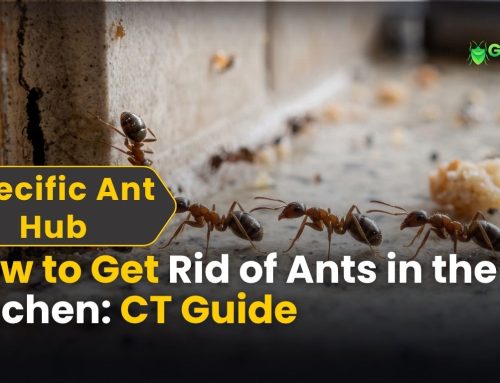
You’re pouring your morning coffee in your New Canaan kitchen when you notice them a thin, organized line of ants marching across the counter toward your sugar bowl like they’re claiming territory. By noon, they’ve infiltrated your pantry. By evening, they’re everywhere.
This nightmare scenario unfolds in thousands of Connecticut kitchens every year. The kitchen is ground zero for ant invasions because it offers everything invading colonies desperately want: abundant food, reliable water, warmth, and shelter. Understanding effective kitchen ants removal prevention strategies transforms your kitchen from an ant highway into a fortress. This comprehensive guide reveals exactly what works, why DIY approaches fail repeatedly, and how to protect your kitchen permanently.
Let’s stop those ants before they take over your home.
WHY KITCHENS ARE ANT MAGNETS
The Perfect Storm: Why Ants Target Your Kitchen
Your kitchen is essentially an all-you-can-eat buffet for invading ant colonies. Understanding why kitchens attract ants helps you implement effective defense strategies.
- Food availability overwhelms ant defenses. Kitchens contain more accessible food than any other room. Crumbs accumulate on counters despite cleaning. Grease coats cooking surfaces. Sugar spills occur regularly. Pet food sits in bowls. Garbage cans overflow. Even “clean” kitchens contain microscopic food particles that ants detect and exploit relentlessly.
- Water sources complete the attraction. Kitchen sinks leak. Dishwashers produce moisture. Refrigerators drip condensation. Ants need water desperately. A single drip becomes an ant magnet. Kitchens provide a constant water supply, making them irresistible to moisture-seeking species.
- Entry points concentrate in kitchens. Baseboards have gaps. Pipes penetrate walls, creating openings. Cabinet undersides offer hidden entry routes. Windows have weather-stripping failures. The kitchen’s complexity of fixtures and connections creates multiple invasion pathways.
- This combination food, water, entry points, and shelter makes kitchen infestation inevitable unless prevention systems actively block invasions. Understanding this reality means understanding that waiting for infestation isn’t an option. Prevention must begin before ants arrive.
THE KITCHEN INVASION SEQUENCE: HOW FAST PROBLEMS ESCALATE
From Scout to Takeover in 72 Hours
Understanding the kitchen ant invasion timeline reveals why immediate action matters.
Hour 0: Scout Discovery
A single scout ant enters through a microscopic gap you’ll never notice. It explores methodically, searching for resources. Within minutes, it discovers food, perhaps crumbs from yesterday’s toast. The scout has found a prize.
Hour 1-6: Pheromone Recruitment Begins
The scout returns to the colony and deposits trail pheromones marking the path between food and the colony entrance. This invisible chemical highway is detectable by every colony member. Recruitment begins immediately.
Hour 12: First Visible Traffic
You notice the first ant trail crossing your counter. What you’re seeing is only the beginning. Hundreds more are traveling the same route you can’t see. The trail strengthens as more ants use it, recruiting exponentially more followers.
Hour 24: Infestation Established
Thousands of ants now forage in your kitchen. They’ve discovered multiple food sources. Satellite trails branch off to pantry, trash can, and pet food areas. The colony has established your kitchen as a primary food source worth defending.
Hour 48-72: Colony Expansion
The colony recognizes your kitchen’s value. They begin establishing satellite nests inside your walls. Pheromone trails multiply. Ant activity becomes visible in multiple kitchen locations. The infestation has transitioned from temporary foraging to permanent colonization.
This entire escalation from single scout to permanent colonization—happens within 72 hours if uninterrupted. This timeline is why early intervention prevents disasters. Delay by even one week allows populations to multiply exponentially.
WHY DIY KITCHEN ANT CONTROL FAILS
The Spray Trap: Why Repeated Treatment Doesn’t Work
Most Connecticut homeowners try to spray first. They see ants. They spray. Ants disappear. Problem solved, right?
Wrong. This apparent success is dangerously deceptive.
Spray kills visible ants but ignores the pheromone system. Those chemical highways marking your kitchen as a food source remain completely active. The colony survives untouched. Within 24-48 hours, new ants follow the same unchanged pheromone trails your spray didn’t affect.
This creates a maddening cycle. You spray. Ants disappear. You feel satisfied. Ants return. You spray again. They disappear. They return. The cycle repeats indefinitely because you’re addressing symptoms without treating causes.
Why bait-only DIY approaches often fail:
Even when homeowners attempt bait-based control, placement often prevents success. Baits positioned haphazardly away from active pheromone trails are ignored by foraging ants. If bait isn’t along the highway ants naturally travel; they discover other food sources first.
Impatience defeats bait effectiveness. Baits require 5-7 days for complete colony elimination. Worker ants must discover baits, carry them back through pheromone trails to the queen, and poison the entire colony from within. During these days, you may see INCREASED ant activity as recruitment accelerates. This appearance of worsening actually indicates baits are working—ants are transporting poison toward the queen.
Impatient homeowners abandon baits prematurely, mistakenly concluding they don’t work when actually they need more time.
Food Source Elimination: Why Cleaning Isn’t Enough
Many homeowners assume eliminating visible food sources solves ant problems. They deep-clean their kitchens meticulously, removing every visible crumb. Then they’re shocked when ants continue appearing.
The problem is microscopic food particles. Standard cleaning removes visible contamination but leaves pheromone trails and food residue intact and imperceptible to humans. Ants detect these microscopic particles and continue recruitment.
Grease residue proves particularly persistent. Cooking surfaces contain grease films invisible to the human eye. Ants detect and harvest this grease reliably. Standard cleaning with water and dish soap doesn’t completely remove grease films. Ants continue arriving to forage for grease.
Pet food attracts ants relentlessly. Leaving pet food bowls accessible ensures continuous ant recruitment. Ants harvest pet food grain by grain, establishing reliable supply lines. This single oversight defeats other prevention efforts.
EFFECTIVE KITCHEN ANTS REMOVAL AND PREVENTION STRATEGY
A Multi-Point Approach That Actually Works
Effective kitchen ant removal and prevention requires simultaneous action on multiple fronts. Single-approach solutions fail because they address only one aspect of the problem.
Strategy Point 1: Complete Food Source Elimination
This forms the foundation of prevention. Remove every accessible food source, forcing ants to look elsewhere:
Deep clean kitchen surfaces daily using a cleaning solution, cutting through grease films. Standard water-based cleaning is insufficient. Use degreasing solutions, ensuring complete residue removal.
Seal all food in airtight, ant-proof containers. Open food boxes, bags, and packages provide easy access. Airtight containers eliminate access. Ants cannot penetrate sealed containers, regardless of how determined.
Remove pet food immediately after feeding. Don’t leave bowls out overnight or during the day. If you must leave food accessible, place bowls on elevated surfaces away from baseboards, cutting off ant access routes.
Clean under and behind appliances where debris accumulates. Crumbs fall under refrigerators and stoves regularly. This hidden food sustains ants invisibly. Monthly deep cleaning removes these hidden attractants.
Take out trash daily and seal trash bins. Trash contains concentrated food sources attracting ants intensely. Daily removal prevents accumulation.
Strategy Point 2: Water Source Elimination
Fix every leak immediately. A single dripping faucet provides enough water to sustain large colonies. Immediate leak repair removes this critical attractant.
Wipe sinks dry after use. Standing water attracts ants for drinking. Quick wipe-down prevents attraction.
Strategy Point 3: Entry Point Sealing
Identify every gap, crack, and opening where ants penetrate:
Inspect baseboards systematically. Gaps in baseboards provide direct entry. Caulking seals these openings, preventing access.
Seal around pipe penetrations comprehensively. Ants exploit even microscopic gaps around plumbing.
Weatherstrip under doors and windows. Draft-prone areas create entry points. Professional weatherstripping eliminates these gaps.
Strategy Point 4: Strategic Bait Placement
Position baits directly along active ant trails where ants naturally travel. Baits placed randomly are ignored. Baits along pheromone trails are discovered immediately.
Professional-grade baits are safer around food preparation areas than DIY spray applications. Sealed bait stations prevent contamination.
Allow baits 5-7 days for complete effectiveness. Resist the urge to evaluate results before this timeframe. Early evaluation leads to premature abandonment.
REAL KITCHEN SUCCESS STORY: THE GREENWICH TURNAROUND
The Harris family discovered sugar ants throughout their Greenwich kitchen in May. Initially, they tried store-bought spray. Ants disappeared. Within 48 hours, ants returned in greater numbers.
They consulted professionals who implemented multi-point elimination. The family deep-cleaned their kitchen, sealing all food in airtight containers. Professionals fixed a leaking sink pipe that had been dripping for months, unnoticed. They sealed baseboards and pipe penetrations comprehensively.
Professional-grade baits were positioned directly along active ant trails discovered during inspection. The family was instructed to maintain baits for 7 days despite increased visible activity on days 3-5 (indicating baits were working).
By day 8, ant activity ceased completely. A professional follow-up two weeks later confirmed colony elimination. The family implemented ongoing prevention—monthly inspections, consistent cleanliness, and immediate leak repair—preventing reinfestation for over two years.
This family learned that a comprehensive approach succeeds where single-method attempts fail repeatedly.
EXPERT KITCHEN ANT REMOVAL PREVENTION CHECKLIST
Essential Steps for Kitchen Protection
Immediate Detection Actions:
- Scout your kitchen early morning (6-8 AM) when ants forage most actively
- Note exact ant trail locations and timing
- Check under appliances for debris piles indicating nesting
- Inspect baseboards and pipe areas for entry points
- Identify food sources attracting ants
Elimination Phase:
- Deep clean kitchen using a degreasing solution, cutting through films
- Seal all food in airtight containers immediately
- Fix every water leak (check under the sink first)
- Remove pet food bowls after feeding
- Take out trash daily in sealed containers
- Place baits along identified ant trails
- Allow baits 5-7 days for full effectiveness
Prevention Phase:
- Seal baseboards comprehensively with caulk
- Seal pipe penetrations where utilities enter walls
- Install weatherstripping under doors and windows
- Clean under appliances monthly
- Monitor weekly for early warning signs
- Maintain obsessive cleanliness standards
Professional Assessment:
- Contact professionals if DIY efforts fail after 10 days
- Request a comprehensive assessment identifying the colony source
- Authorize professional treatment if recommended
- Schedule follow-up inspections confirming elimination
COMPARISON TABLE: KITCHEN ANT CONTROL METHODS
| Method | Speed | Effectiveness | Safety | Long-Term Success |
| Spray Only | Immediate | Temporary only | Moderate risk | Returns in 24-48 hrs |
| Bait Stations | 5-7 days | High if placed correctly | High (sealed) | Permanent if done right |
| Food Elimination Alone | Immediate | Prevents new recruitment | Very safe | Incomplete without baits |
| Professional Treatment | 1-2 weeks | Complete colony elimination | Controlled application | Permanent with prevention |
| Natural Remedies | Slow | Limited effectiveness | Very safe | Usually temporary |
PRO TIPS: KITCHEN-SPECIFIC EXPERTISE
Timing matters more than product. Early detection and immediate action prevent escalation. Even one week of delay allows populations to multiply exponentially. Daily morning inspections during spring and summer catch problems early.
Cleanliness must reach obsessive levels. Standard kitchen cleaning is insufficient. Microscopic food particles remain attracting ants. Kitchen-level cleanliness means virtually no crumbs or grease residue visible even under magnification.
Species identification guides the elimination approach. Sugar ants require different treatment from carpenter ants. Misidentification leads to ineffective treatment.
Patience pays off with bait. Increased ant activity on days 3-5 of bait treatment indicates baits are working, and ants are transporting poison toward the queen. Don’t abandon baits prematurely, thinking they’ve failed.
Prevention requires an entire-home approach. Kitchen infestation often indicates colonies exist in basements or walls, supplying ants to multiple rooms. Kitchen treatment alone fails if the main colony survives. Professional assessment identifies where the main colonies are located.
FAQ: KITCHEN ANT REMOVAL AND PREVENTION
Your Most Important Questions Answered
How quickly do kitchen ants multiply if I ignore early signs?
A single scout ant discovering food can attract hundreds within 12 hours and thousands within 48 hours through pheromone recruitment. Within 2-3 weeks, a full productive colony is established. This rapid growth is why early detection and immediate action prevent disasters.
Why do ants keep returning to my kitchen even after I’ve cleaned it thoroughly?
Ants return because pheromone trails remain active despite cleaning. These invisible chemical highways mark your kitchen as a food source. New ants detect unchanged trails and follow them to food. Trail persistence explains why cleaning alone never eliminates infestations. Baits targeting the entire colony are necessary.
Should I attempt DIY kitchen ant control or contact professionals immediately?
Attempt DIY control for 7-10 days if you’ve detected ants early. Use a comprehensive multi-point approach combining food elimination, water leak repair, entry sealing, and bait placement. If ants persist after 10 days, professional intervention becomes necessary. Delay beyond this point allows exponential growth.
What’s the safest ant bait to use around food preparation areas?
Professional-grade baits in sealed stations are safest around food preparation areas. These containment systems prevent contamination while delivering poison to ants. Avoid open powder or liquid baits near food areas. Professional application ensures safe placement in food-contamination-free zones.
How long does complete kitchen ant elimination take?
Bait-based elimination requires 5-7 days for colony elimination. Full success confirmation requires follow-up inspection 7-14 days after baits begin. The complete process from detection to confirmation typically takes 2-3 weeks. Prevention implementation continues indefinitely.
Can I prevent kitchen ants completely, or will they always return?
Complete prevention is possible with a comprehensive approach combining food elimination, water leak repair, and entry sealing. However, ongoing vigilance is necessary. Monthly inspections, maintenance of cleanliness standards, and immediate leak repair prevent reinfestation indefinitely. Kitchens in older Connecticut homes with numerous entry points require more aggressive ongoing prevention.
TAKE ACTION NOW: PROTECT YOUR KITCHEN TODAY
Don’t wait for a kitchen ant infestation to become a home-wide disaster. Understanding kitchen ant removal and prevention means understanding that early action prevents exponential escalation.
Your Greenwich, Stamford, Darien, New Canaan, Wilton, or Westport kitchen is at risk if you ignore early warning signs. A single ant trail today becomes thousands within 72 hours. What starts as a kitchen problem spreads to bedrooms, bathrooms, and the basement within weeks.
Get rid of ants fast today:
Implement immediate multi-point elimination if you’ve detected kitchen ants. Deep clean. Seal food. Fix leaks. Place baits strategically. Commit to 7-10 days of a comprehensive approach before considering this DIY attempt failed.
Take action before it spreads:
If initial detection occurs, don’t delay treatment. Every day allows populations to multiply. What remains manageable today becomes overwhelming next week.
Book a professional inspection if DIY efforts fail or if you’ve discovered ants in multiple rooms. Professional assessment identifies the complete scope of infestation and locates colony sources, preventing permanent elimination through partial treatment.
Contact professionals now for a comprehensive kitchen ant assessment and elimination. Your family’s health and your kitchen’s integrity depend on effective, complete elimination. Stop ants fast through professional intervention, succeeding where DIY approaches fail.