Seasonal Tactics: Smart Strategies for Every Season
A Complete Year‑Round Ant Control Guide for Fairfield County Homeowners
You wake up on a bright March morning in Stamford, pour a cup of coffee, and open the back door to let in the first real spring air. And there they are. Tiny dark ants weaving across the patio pavers, trailing up the foundation wall, and slipping into a hairline crack near the kitchen window.
You hoped you’d have more time. But ants don’t wait for your calendar. They respond to temperature, moisture, and daylight, and in Connecticut, they shift their behavior with every season. A strategy that works in July fails completely in October. A repellent spray you used in the bathroom last winter might push ants into your bedroom in the spring.
The only way to truly keep your Greenwich, Darien, New Canaan, Wilton, or Westport home ant‑free is to stop fighting them on their terms and start using seasonal tactics. A year‑round plan that matches what ants actually do as the weather changes.
This guide is your master plan. We’ll walk through exactly how ant behavior transforms from spring through winter, what to do before you ever see a single ant, how to respond when they appear, and how to make sure they don’t come back. You’ll get checklists, pro recommendations, and a few hard‑earned lessons from neighbors who learned the hard way.
Why Seasonal Tactics Are the Only Thing That Work in Connecticut
Ants are not a summer problem. They are a year‑round organism that responds to the environment in predictable ways. The pavement ants that invade your Darien bathroom in May are the same colony that spent January huddled five feet under your frozen driveway, waiting for the soil to warm. The odorous house ants that swarm your Greenwich pantry in July are the same colony that bred explosively on a diet of spring protein and early‑summer moisture.
Using the same bait or the same spray all year long is like wearing a winter coat in August. It doesn’t make sense, and it doesn’t work. Seasonal tactics acknowledge that ants need different things in different seasons, and they give you a chance to get ahead of them before they become a visible problem.
The four distinct seasons of Fairfield County create a rhythm that you can learn to read. Spring is about awakening colonies and protein‑seeking workers. Summer is about peak foraging, sugar cravings, and fire ant aggression. Fall is about migration indoors as temperatures drop. Winter is about protecting your home against hidden, dormant colonies that will explode in population the moment warmth returns.
When you work with this rhythm instead of against it, you stop playing whack‑a‑mole. You stop wasting money on products that sit ignored because the colony is craving something else. And you stop the cycle of seasonal invasions that have become a predictable headache in your household.
Spring: Ant Awakening and the First Wave
In Connecticut, spring is a messy, unpredictable season. One day it’s fifty degrees, the next there’s frost on the grass. But ants read the soil temperature, not the calendar. When the ground warms to about fifty degrees for several days in a row—usually by late March or early April in Stamford and Greenwich—the colony wakes up.
Queens that have been semi‑dormant all winter start laying eggs again. Workers emerge for the first time in months, weak and desperate for protein to feed the new larvae. This is why a spring ant invasion often looks different from a summer one. The ants aren’t seeking sugar. They’re seeking meat, grease, and dead insects.
This is also the season when mature colonies produce winged reproductives those flying ants you might see swarming on a warm April afternoon in New Canaan or Wilton. A swarm inside the house is a red flag that a colony is well‑established in a wall void or under a slab, and it’s not something to ignore.
Your seasonal tactics for spring should focus on three things: intercepting protein‑seeking ants before they establish trails, sealing entry points that opened during winter freeze‑thaw cycles, and applying perimeter treatments that create a protective barrier right when the colony is most vulnerable.
Your Spring Ant Prevention Checklist
Here is exactly what you should do between late March and early May to stop the first wave of ants before it starts.
- Walk the entire exterior of your home looking for cracks in the foundation, gaps around utility pipes, and spaces under door thresholds. Freeze‑thaw cycles over the winter have likely opened new entry points that weren’t there in the fall.
- Trim back tree branches and shrubs that are touching the house. Spring growth pushes branches against siding and roofs, creating highways for carpenter ants and acrobat ants.
- Pull mulch away from the foundation so there’s a six‑inch gap of bare soil or gravel. Wood mulch holds moisture and provides ideal spring nesting conditions for pavement ants and odorous house ants.
- Place protein‑based bait stations along exterior trails and near any visible ant mounds. In spring, colonies need protein for brood production, and they will eagerly pick up a granular or gel protein bait and carry it back to the queen.
- Inspect your attic and basement for carpenter ant activity. Spring is when satellite colonies become active and start foraging. Look for sawdust‑like frass, rustling sounds in the walls, or large black ants on window sills.
- Apply a non‑repellent perimeter treatment around the outside of your home. This creates an invisible barrier that ants can’t detect, so they walk through it and transfer the active ingredient deep into the nest.
- Check your bathroom and kitchen for the first signs of pavement ants emerging from under the slab. Tiny piles of sand near the baseboard or a few workers near the sink mean a colony is waking up beneath your floor.
Take action before it spreads. Spring colonies are small and manageable. By June, that same colony could have ten times as many workers.
For a deeper dive into how ant species behave when temperatures rise, our ant behavior facts page explains the fascinating biology that drives these seasonal shifts.
Summer: Peak Foraging and the Fire Ant Threat
By the time June arrives in Fairfield County, ant colonies are operating at full capacity. The queen, well‑fed from a spring of protein gathering, is producing thousands of eggs. Workers are fanning out in long, dense trails, and their dietary focus has shifted. Now they want sugar.
This is the season of the kitchen invasion. Odorous house ants and pavement ants follow the faintest traces of spilled juice, honey, or syrup across counters and inside cabinets. A single crumb under the toaster can support a trailing column of hundreds.
Summer is also when fire ants become a genuine concern, especially in the sunny, open lawns of Stamford, Greenwich, and coastal Darien. Fire ant mounds grow rapidly in hot weather, and colonies become fiercely aggressive. A stepped‑on mound releases an instant swarm of stingers, and multiple stings can lead to a dangerous allergic reaction. This is the time of year when knowing the signs of an ant bite allergy reaction is most important.
Your summer ant control strategies must address both indoor food‑seeking ants and outdoor stinging colonies. The goal is to intercept foraging workers before they reach your food, eliminate active mounds, and maintain the perimeter barrier you established in spring.
Smart Summer Ant Control Strategies
- Switch to sweet liquid baits indoors. In summer, odorous house ants and pavement ants crave carbohydrates. Place Terro‑style liquid bait stations where you see trails, but never on top of the trail itself. You want the ants to find the bait, feed, and carry it home. Patience is critical. The trail will increase for a day or two, and then collapse as the bait reaches the queen. Our Terro ant bait review explains when this type of bait works best and when it won’t.
- Eliminate outdoor food sources. Clean up fallen fruit from trees, keep trash cans tightly sealed, and rinse soda cans and juice bottles before tossing them in the recycle bin. Ants can detect sugar from remarkable distances, and a sticky recycling bin is a standing invitation.
- Inspect your lawn weekly for fire ant mounds. These mounds look like fluffy piles of excavated dirt with no visible entrance hole. If you find one, mark it and keep children and pets away until it can be professionally treated. Our fire ants vs regular ants guide helps you identify these dangerous stingers before someone gets hurt.
- Treat outdoor ant nests with a broadcast granular bait designed for your specific species. For fire ants, a protein‑based granular bait scattered around the mound (never on top of it) lets foraging workers carry the poison deep inside. For pavement ant colonies in driveway cracks, a targeted gel bait placed at the entrance is more effective than a broadcast. Our outdoor ant killer guide covers the best products for each scenario.
- Reapply the non‑repellent perimeter treatment around your foundation. Summer rains and irrigation can degrade the spring application, and a mid‑summer refresh keeps the protective shield intact through the hottest months.
- Monitor indoor moisture. Air conditioning condensate lines and sweaty pipes create the damp microenvironments ants seek. Fix any leaks and wrap pipes with insulation. A dry home is far less attractive to summer ant colonies.
Book a professional inspection if you see fire ant mounds or if indoor trails persist despite baiting. A single missed colony can produce mounds across an entire lawn within a few weeks.
Fall: The Inward Migration
- When September arrives in New Canaan and Wilton, the days are still warm but the nights cool quickly. Ants notice. The shortening daylight triggers a survival response. Colonies that spent all summer foraging in the open now begin to look for winter shelter.
- This is the season when pavement ants move from driveway cracks and patio edges into the warm space under your concrete slab. Odorous house ants abandon outdoor nests and migrate into wall voids that offer steady warmth and access to moisture. Carpenter ants that nested in a rotten tree stump all summer may move into your attic or roof soffit in search of a protected spot to ride out the winter.
- Fall is also the season when you’ll notice ants trailing indoors along baseboards in rooms that were ant‑free all summer. They’re not coming for food, though they’ll certainly take advantage of spills. They’re coming for warmth, and once they find a suitable void, they’ll stay.
- Your fall seasonal tactics should focus on sealing entry points and treating the transition zones where ants are crossing from outside to inside. It’s also the perfect time for a professional interior and exterior inspection to catch colonies that are settling in for the winter.
Essential Fall Tactics for Ant Control
- First, conduct a meticulous exterior sealing pass. Use a flexible polyurethane sealant to fill every crack in the foundation, every gap around utility pipes, and every space under door thresholds. Pay special attention to the seam where the sill plate meets the concrete, because that’s a major entry route for pavement ants. Our comprehensive instructions in how to seal your home against ants will walk you through the right materials for Connecticut’s climate.
- Second, treat inside wall voids with a non‑repellent dust or foam if you’ve had ant problems in previous winters. This targets ants that have already moved indoors before you sealed them in. Never seal ants inside without treating them first, or you’ll force them to find a new exit often in a bedroom or living room.
- Third, remove leaf litter, dead plants, and stacked firewood from against the house. These materials create warm, moist pockets where ants shelter before making the final move indoors. Keeping a clear, dry border around your foundation removes the staging area.
- Fourth, place indoor bait stations in basements, crawlspaces, and attached garages. Ants that are already inside but haven’t yet found their way into your living areas will take the bait back to their wall‑void nest, eliminating the colony before you ever see a single worker upstairs.
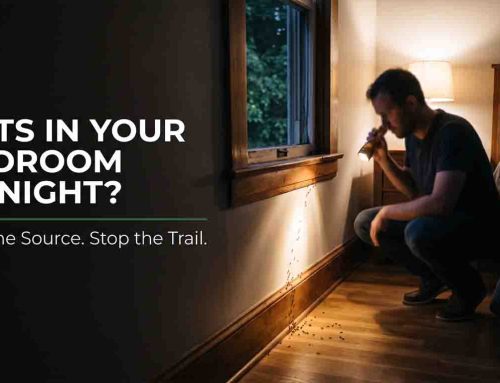
- Fall is the season when bedroom ants elimination becomes especially relevant, because satellite colonies that were forced out of other areas often end up near bedroom windows or behind baseboard heaters. If you’re seeing ants in sleeping areas, check for cracks around window frames and look for moisture from condensation.
Winter: The Hidden Colonies
Winter in Connecticut can feel like a reprieve. The ground freezes. The ants disappear. You might go months without seeing a single worker, and it’s tempting to think the problem is over.
It’s not. Ants don’t die in winter. They enter a state of reduced activity, clustering around the queen deep underground or in the insulated core of your walls. The pavement ant colony under your Greenwich driveway is still there, five feet below the frost line, waiting for the soil to warm. The odorous house ant colony in your Westport bathroom wall is still producing a slow trickle of workers that forage inside the void where you can’t see them.
Winter is not a time for inactivity. It’s a time for monitoring, planning, and addressing the large, hidden colonies that will explode in spring.
Carpenter ant activity can continue all winter inside a heated home. If you hear faint rustling sounds in the walls or ceiling, or if you find piles of frass near baseboards, the colony is awake and active. Our carpenter ant identification guide helps you confirm whether you’re dealing with wood‑destroying ants that require immediate attention.
Winter Tactics That Set You Up for a Pest‑Free Spring
- Check indoor bait stations monthly and replace them if they’ve dried out or been consumed. A well‑maintained bait station placed near known entry points can intercept winter‑active ants before they start a spring explosion.
- Inspect basements, crawlspaces, and utility closets for moisture. Winter condensation on cold pipes can create the damp conditions ants need to stay active indoors. Insulate pipes and use a dehumidifier if necessary.
- Scan the outside of your home on mild winter days. Freeze‑thaw cycles can open new cracks that will be perfect ant entry points come March. A quick patch in January saves a full‑blown invasion in April.
- Order your spring prevention supplies now so they’re ready when you need them. Having fresh bait, sealant, and perimeter treatment on hand in February means you can act the moment you see the first scout, not a week later after the hardware store has been picked over.
- Winter is also the best time to schedule a professional inspection. Technicians can use thermal imaging and moisture meters to find hidden colonies inside walls and under slabs while the outdoor environment is quiet. Treating a nest in February eliminates it before the queen ever lays her first spring egg. Our professional ant extermination process is detailed and can be done any time of year.
Get rid of ants fast today even if you don’t see them. The ones you can’t see are the ones that will overwhelm you in April.
Season‑by‑Season Ant Behavior and Tactics Summary
The table below pulls together everything we’ve discussed into a quick reference you can print and keep.
| Season | Ant Behavior | Key Action | Product Focus | Professional Step |
| Spring | Colonies wake, swarm, seek protein | Seal cracks, apply perimeter treatment | Protein‑based granular or gel baits | Exterior non‑repellent barrier application |
| Summer | Peak foraging, sugar craving, fire ants active | Switch to sweet baits, inspect for mounds | Sweet liquid baits, outdoor granular baits | Fire ant mound treatment, barrier refresh |
| Fall | Migration indoors, seeking warmth | Seal entry points, treat wall voids | Non‑repellent dusts and foams | Interior and exterior inspection, slab treatment |
| Winter | Dormant or slow indoor activity, hidden colonies | Monitor baits, fix moisture, plan for spring | Indoor bait stations, pipe insulation | Thermal imaging inspection, wall‑void treatment |
This table captures the core of seasonal tactics. When you match your actions to the ant’s actual needs and behaviors, you stop reacting and start preventing.
Why DIY Seasonal Tactics Often Fail
- It’s easy to read a checklist and feel confident you can handle ants on your own. And for a single, small pavement ant nest in a driveway crack, you probably can. But most Fairfield County homes have multiple ant species, multiple colonies, and entry points that shift with the seasons.
- The biggest mistake I see is using the same product year‑round. A sweet liquid bait that works wonders in July will be ignored in April, because the colony’s dietary priorities have changed. You’ll think the bait failed or the ants are “immune,” when in fact you’re just serving the wrong menu.
- Another common failure is sealing entry points too soon. If you caulk over an active crack while ants are still trailing from an outside nest, you trap them inside. The colony, cut off from its outdoor entrance, finds a new way out—often through a bedroom closet or a living room ceiling.
- Sprays are tempting because they give instant results, but they’re the enemy of seasonal ant management. A repellent spray applied to a spring trail can scatter the colony and create satellite nests that bloom into a much larger problem by summer. Our comparison of ant spray vs bait explains why the tool you choose matters as much as when you use it.
Seasonal tactics succeed when you match the right product to the right season, apply it at the right time, and integrate sealing, moisture control, and colony elimination into a single coherent plan.
Pro Tips for Year‑Round Ant Mastery
These practical tips come from years of treating homes in Greenwich, Darien, Stamford, and the surrounding towns.
Keep a seasonal ant journal. Nothing fancy—just a notebook where you record the date, location, and type of ant you saw, and what you did about it. Over a year or two, you’ll have a custom map of your home’s ant pressure points.
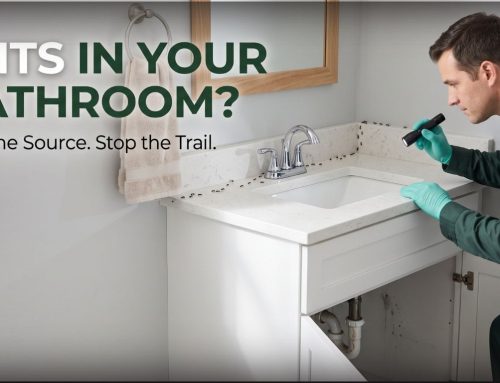
Don’t ignore the bathroom. Pavement ants love the steady warmth and moisture under bathroom slabs. If you see ants in the bathroom in March, you’re almost certainly dealing with a nest under the floor. Our bathroom ants quick fixes can help you contain the situation while you plan a permanent solution.
Kitchen ants in July are usually odorous house ants following a sugar trail. Clean the trail with soapy water, place a sweet bait nearby, and wait. Don’t spray. If you need a fast‑action plan for a kitchen that’s overrun, the tips in ants in kitchen get rid of them fast will get you through the first few days.
Fire ant mounds don’t respond to the same treatments as pavement ant nests. Get a professional ID if you’re unsure. Our ant species encyclopedia is a great starting point for learning the differences.
Invest in a quality sealant and re‑check your work every spring and fall. Caulk cracks, dries out, and separates over time. A ten‑minute walk‑around with a caulk gun twice a year prevents more ant problems than any bait ever will.
Real Stories from Fairfield County Neighbors
“We moved into a beautiful old colonial in New Canaan and within a month we had ants in the kitchen. A friend told me about seasonal tactics and it completely changed my approach. I sealed the foundation in the fall, used protein bait in the spring, and switched to sweet bait in the summer. We’re on year three without an invasion.”
— Tom and Elaine R., New Canaan CT
“I always figured ants were just part of summer in Stamford. Then my daughter was stung by fire ants in the yard, and I panicked. The professionals treated the mounds and taught me how to adjust my approach through the seasons. Now sunshine doesn’t stress me out.”
— Maria V., Stamford CT
“As a widower in my seventies living in Darien, I can’t crawl around sealing cracks like I used to. The seasonal program takes that burden off me. They come in the spring to set the barrier, refresh it in the summer, and do a thorough fall check. For the first time in years, my home feels truly protected.”
— George P., Darien CT
FAQ: Your Seasonal Tactics Questions Answered
Do ants go away in the winter?
No. Ants in Connecticut don’t die off in winter. They move deeper underground or into insulated spaces like your home’s walls and wait out the cold. Pavement ant colonies under slabs remain active all winter, albeit slowly, and odorous house ants can thrive inside a heated wall void even when there’s snow on the ground.
What’s the single most important thing I can do in the spring to prevent ants?
Apply a non‑repellent perimeter treatment around your foundation as soon as the ground thaws. This creates a protective barrier before the first foraging workers emerge. Seal any cracks you find at the same time. Together, these two actions block the vast majority of spring invaders.
Should I use the same bait in summer that I used in spring?
Probably not. Most ant species in Connecticut shift from protein‑seeking in spring to sugar‑seeking in summer. If a bait worked in April but is being ignored in July, it’s time to switch to a sweet liquid or gel.
When do fire ants become a problem in Fairfield County?
Fire ants are most active from late spring through early fall. Mounds become visible and aggressive in hot, dry weather, especially in sunny lawns and against south‑facing foundations. Regular yard inspections starting in May are important.
Can I treat an ant problem in the fall and expect it to be gone by spring?
Yes, if the treatment reaches the colony before it goes dormant. Fall is an excellent time for professional slab injections and wall‑void treatments, because you eliminate the colony that would otherwise overwinter and explode in population come March.
Why do ants keep appearing in my bathroom even in the middle of winter?
You probably have a pavement ant colony under the slab that stays warm from your home’s heating. They follow moisture and emerge through cracks in the grout or around the toilet flange. Winter‑active bathroom ants are a sign of a well‑established colony that needs professional attention.
How often should I reapply perimeter treatments?
In Connecticut, a spring application typically lasts through mid‑summer, but heavy rains and irrigation can degrade it. A mid‑summer refresh and a fall touch‑up are the minimum for year‑round protection. A quarterly program eliminates the guesswork.
Your Year‑Round Action Plan Starts Now
Ants don’t take vacations. They don’t skip a season because you’re busy. They follow the rhythm of the Connecticut year with relentless precision, and the homeowners who stay ahead of them are the ones who adopt seasonal tactics that match that rhythm.
You now have the full blueprint. The spring protein bait. The summer sugar switch. The fall seal‑and‑treat migration defense. The winter monitoring that catches hidden colonies before they explode.
You know why a single can of spray never solves the problem and why the right product at the wrong time is just as useless. Most importantly, you know that you don’t have to handle this alone.
Book a professional inspection today and put your seasonal plan into action with an expert partner who knows Fairfield County ants inside and out.
Contact Us for Expert Ant Control in Fairfield County
Every season is ant season. Let’s make sure they’re never your problem again.