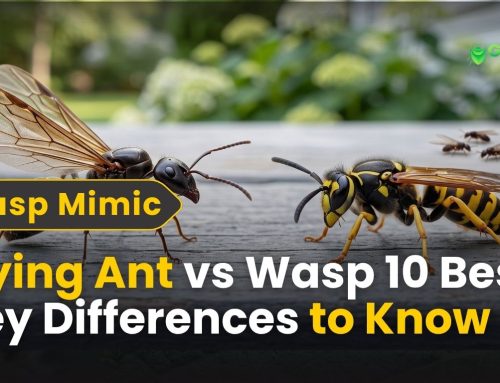
Carpenter Ant Identification Guide – Control Starts Here
You find it on a Saturday morning a small pile of fine, sawdust-like material near your bedroom window frame. At first, you think it’s just construction debris or normal household dust. But then you spot something moving through the pile. Something dark. Something the size of a grain of rice. You lean closer and realize: these aren’t tiny ants. These are large carpenter ants.
Your stomach drops. You’ve heard the horror stories of carpenter ants eating through wooden beams, weakening foundations, and causing tens of thousands of dollars in structural damage. Is this happening to your home right now? How bad is the infestation? Where did they come from?
This moment, when you realize you might have carpenter ants, is exactly why a proper carpenter ant identification guide is so critical. Because here’s the truth: not all ants are equally dangerous. A pavement ant in your kitchen is annoying. Carpenter ants are a potential catastrophe.
If you live in Connecticut, whether it’s Greenwich, Stamford, Darien, New Canaan, Wilton, Westport, or anywhere across CT, carpenter ants are a genuine threat to your home’s structural integrity. This comprehensive guide teaches you everything you need to identify these destructive pests, understand their behavior, recognize the risks, and, most importantly, take immediate action before they cause expensive damage.
Understanding the Carpenter Ant Threat in Connecticut Homes
Why Carpenter Ants Are Different from Other Ant Species
When people think about ant infestations, they often imagine tiny sugar ants marching across kitchen counters. That’s an annoyance. Carpenter ants are something entirely different—and far more dangerous.
Here’s what makes carpenter ants uniquely threatening:
- They don’t eat wood like termites, but they excavate it to create nesting galleries
- A single colony can contain 10,000+ workers, all contributing to structural damage
- Infestations often go unnoticed for months while damage accumulates
- One colony can grow to multiple satellite colonies throughout your home
- The damage they cause is permanent and expensive
- University of Connecticut Extension – Ant Information
When you compare fire ants vs regular ants, fire ants are aggressive and potentially dangerous to people. But carpenter ants? They’re a threat to your property itself. They’re the disease, not the symptom. And in Connecticut, with our humid summers and abundant wooden structures, conditions are nearly perfect for carpenter ant colonies to thrive.
Understanding the distinction between pavement ant identification (annoying but harmless) and carpenter ant identification guide knowledge (critical for home protection) could save you thousands of dollars.
Why Early Identification Matters
This is crucial: carpenter ants don’t appear suddenly with massive infestations. They start small. You find one. Maybe three. You ignore it, thinking it’s no big deal. Six weeks later, you’re finding dozens per day. Three months later, structural damage is underway.
The timeline matters:
Weeks 1–4: Initial colony establishment; few visible ants
Weeks 5–8: Increased foraging activity; visible trails appear
Weeks 9–16: Extensive gallery excavation; frass (sawdust debris) accumulates
Months 4+: Significant structural compromise; expensive repairs needed
Early identification—right at that moment when you see your first carpenter ant—gives you the chance to eliminate the problem before it becomes catastrophic. Delayed identification transforms a manageable problem into a major one.
Complete Carpenter Ant Identification Guide: Key Features
Physical Characteristics That Identify Carpenter Ants
The first step in effective control is correct identification. You can’t eliminate what you don’t recognize. Here’s what to look for:
Size is the most obvious identifying feature:
- Carpenter ants are notably larger than other household ants (1/4 to 1/2 inch long)
- For comparison, pavement ants are only 1/16 to 1/8 inch
- Fire ants are roughly the same size as pavement ants
- If you see an ant that looks “unusually large” compared to other ants, you likely have carpenter ants
Color and appearance give additional clues:
- Most common: solid black or dark brown
- Some species: black body with red or yellowish abdomen
- Body shape: smooth, rounded appearance with defined node (waist section)
- They have distinct body segments compared to smaller ant species
- Look for a single node, not multiple segments on the waist
Location-specific identification signs:
If you find carpenter ants in certain areas, it increases the likelihood of an infestation:
- Window frames and doors (moisture attracts them)
- Attic spaces (ideal nesting location)
- Wood beams and structural members
- Areas with water damage or high moisture
- Dead tree stumps or logs near your home
The Telltale Sign: Carpenter Ant Frass
This is the single most important identification clue. When carpenter ants excavate wood, they don’t eat it they remove it to create galleries. This excavated material, called frass, is pushed out of the nest.
What carpenter ant frass looks like:
- Fine, powdery sawdust-like material
- Contains wood particles, insect body parts, and waste
- Often found in small piles below infested wood
- Color varies: light brown to dark brown depending on wood type
- Unlike termite frass, it’s not mud-like or pellet-shaped
Where to find frass:
- Below window sills and door frames
- Inside wall voids (visible if walls are opened)
- In attics and crawl spaces
- Below infested beams or support members
- Sometimes on the ground outside near infested trees
Finding frass is practically a guarantee that you have carpenter ants. It’s the smoking gun of the carpenter ant identification guide diagnosis.
Acoustic Signals: Listening for Carpenter Ants
Here’s something many people don’t know: you can actually hear carpenter ants working. It sounds strange, but it’s true.
What to listen for:
- A faint rustling or crunching sound inside walls
- Most noticeable at night when it’s quiet
- Sounds like tiny scratching or scraping
- May come from walls, attics, or other voids
- Put your ear against the wall and listen carefully
This acoustic sign, combined with visual identification, provides strong confirmation of an infestation. If you’re hearing sounds and finding frass, you definitely have carpenter ants—and they’re actively working.
Carpenter Ant Behavior: Understanding Your Enemy
Where Carpenter Ants Nest in Connecticut Homes
Carpenter ants are strategic about location selection. They don’t nest randomly—they choose areas that provide specific advantages.
Preferred nesting locations:
Moisture-prone areas
- Under kitchen sinks (water source and wood)
- Bathroom walls with leaks
- Around poorly sealed windows and doors
- Attics with roof leaks
- Crawl spaces with drainage issues
Structural members
- Wood beams in basements
- Framing in attic spaces
- Wooden sills and headers
- Deck support beams
- Porch columns and support structures
Outside initial entry points
- Hollow trees and tree stumps (outdoor colonies)
- Wood piles and landscaping materials
- Dead branches touching your house
- Exterior siding damaged by water
Understanding these preferred locations helps you locate active colonies and target treatment effectively. When you’re developing your carpenter ant identification guide inspection strategy, check these areas first.
The Carpenter Ant Activity Timeline
Carpenter ants follow seasonal patterns that affect when they’re most visible:
Spring (March–May)
- Colonies become active after winter dormancy
- Increased foraging as workers search for food
- Males and females preparing for mating flights
- Visible trails become common
- The best time to catch infestations early
Summer (June–August)
- Peak activity and population growth
- Aggressive expansion into new nesting areas
- Queens are laying eggs constantly
- Maximum visible activity
- Infestations become harder to eliminate
Fall (September–November)
- Still active but at a slightly reduced pace
- Colonies preparing reserves for winter
- Continued damage accumulation
- Good window for treatment
Winter (December–February)
- Outdoor activity minimal (cold temperatures)
- Indoor colonies remain active
- Reduced but continued foraging
- Quieter period for observation
Knowing this timeline helps you understand what you’re seeing and when treatment is most effective.
Risks and Dangers: What Carpenter Ants Actually Do
Structural Damage: The Real Threat
Unlike termites, carpenter ants don’t eat wood for nutrition. Instead, they excavate galleries to create nesting chambers. Here’s why this matters:
The excavation process:
- Workers remove wood fiber by fiber
- Galleries create hollow spaces throughout wooden structures
- Unlike termites, galleries don’t contain mud
- The wood becomes weakened and structurally compromised
- Damage accumulates over months and years
What happens to affected wood:
- Loses structural strength and load-bearing capacity
- Becomes prone to cracking and splitting
- Weakens connections between structural members
- Can compromise walls, floors, and support beams
- Damage is permanent even after the ant elimination
Real-world damage scenarios:
Consider a typical Connecticut home with wood framing. A carpenter ant colony, undetected for 6 months, could:
- Hollow out a 4×4 support beam, reducing its strength by 40%+
- Compromise wall framing, creating structural instability
- Damage floor joists, creating soft spots and sagging
- Weakened roof structure, creating potential collapse risk
This isn’t theory it’s the reality of what untreated carpenter ant infestations cause.
Property Value Impact
Beyond the direct damage costs, carpenter ants create secondary problems:
Inspection and appraisal issues
- Home inspectors specifically look for carpenter ant damage
- Appraisers note structural compromises
- Insurance companies deny claims for pre-existing infestations
- Home sale potential drops significantly
Warranty and liability concerns
- You must disclose infestations to buyers
- Prior infestations affect future buyers’ insurability
- Repair costs become buyer negotiation points
- Home value can drop 5–10% with structural damage
The financial impact extends far beyond just pest elimination costs.
Health Risks (Secondary)
While carpenter ants don’t directly pose health threats like some pest species, they create indirect problems:
Contamination pathways
- Ants travel through dirty areas, then food preparation surfaces
- They can spread bacteria like Salmonella and E. coli
- Allergic individuals may react to ant proteins
- Multiple ants in food create sanitation concerns
Moisture and mold issues
- Carpenter ants are attracted to wood with moisture damage
- Their presence indicates water intrusion problems
- Moisture supports mold growth
- Mold poses respiratory health concerns, especially for children and the elderly
Why DIY Solutions Fail Against Carpenter Ants
The Spray and Pray Problem
When homeowners spot carpenter ants, the instinct is immediate: grab an ant spray and eliminate them. Here’s what actually happens:
What you see:
- Visible ants die within minutes
- Trails disappear immediately
- Feels like you’ve solved the problem
What’s actually happening:
- You’re killing maybe 5% of the colony
- 95% of the colony, including the queen remains completely unaffected
- Dead ants are quickly replaced by dozens more from the nest
- The pheromone trails guiding ants remain intact
- Infestation spreads unchecked
Spraying carpenter ants is like treating symptoms while ignoring the disease. It provides temporary relief but guarantees the problem will return worse than before.
Why Baits Often Fail
Some homeowners think generic ant baits will work on carpenter ants. They won’t—for several critical reasons:
Wrong bait formulation
- Carpenter ants have different dietary preferences from sugar ants
- Generic baits attract pavement ants but repel carpenter ants
- Ants simply avoid the bait and continue foraging elsewhere
- Wrong bait = zero colony elimination
Incomplete colony targeting
- Even carpenter ant-specific baits require proper placement
- Random placement means ants find your food before the bait
- Satellite colonies remain untreated
- New colonies continue forming
Timing and patience requirements
- Baits take 7–14 days for full effectiveness
- Some people interpret slow action as failure
- They switch methods mid-treatment, disrupting the process
- Incomplete treatment leaves survivors to rebuild
The Hidden Colony Problem
This is the biggest DIY challenge: carpenter ants often establish multiple nesting areas simultaneously.
Primary colonies nest in your home’s structure, hidden from easy observation. Satellite colonies are established in secondary locations, fed by workers from the primary colony. Kill the satellites but miss the primary? The primary rebuilds the satellites. Leave even one satellite untouched? It can establish an independent colony.
Most DIY approaches only address visible ant trails and accessible nesting areas. They completely miss hidden colonies in walls, attics, and structural voids.
Professional Solutions: Why Experts Succeed Where DIY Fails
Step-by-Step Professional Approach
Professional pest control specialists follow a systematic process that DIY approaches miss:
Step 1: Thorough Inspection and Identification
- Visual inspection of all potential nesting areas
- Moisture detection in problem areas
- Identification of satellite and primary colonies
- Documentation of damage extent
- Assessment of treatment difficulty
This step alone, proper identification, separates professional success from DIY failure.
Step 2: Strategic Treatment Planning
- Species-specific bait selection based on identified ants
- Colony location targeting (primary and satellites)
- Barrier treatment of entry points
- Timeline and follow-up scheduling
- Prevention recommendations
Step 3: Implementation
- Bait placement at high-activity locations
- Barrier treatments create a protective perimeter
- Sealing of entry points
- Removal of harborage and food sources
- Initial structural recommendations
Step 4: Follow-Up and Monitoring
- Return inspections at strategic intervals
- Assessment of bait consumption and effectiveness
- Additional treatments if needed
- Long-term monitoring for recurrence
- Documentation of results
This comprehensive approach addresses not just visible ants but the entire infestation ecosystem.
Why Professional Treatment Works
When professionals combine proper carpenter ant identification guide knowledge with systematic treatment, success rates exceed 95%. Here’s why:
Species-specific expertise
- Correct identification ensures correct treatment
- Understanding behavior guides placement strategy
- Knowledge of seasonal patterns optimizes timing
- Recognition of damage patterns prevents re-infestation
Access to superior products
- Professional-grade baits unavailable to consumers
- Formulations specifically designed for carpenter ants
- Higher concentrations for faster colony elimination
- Targeted application preventing waste
Hidden infestation discovery
- Professionals know where to look for hidden colonies
- Advanced detection methods find colonies before they cause major damage
- Systematic inspection ensures nothing is missed
- Preventive treatment stops satellite colony establishment
Insurance and guarantees
- Professional treatment often includes guarantees
- Liability coverage protects your home
- Documentation proves treatment occurred
- Peace of mind knowing the problem is solved
Comparison: Treatment Options for Carpenter Ants
Understanding your options helps you make informed decisions:
| Treatment Type | DIY Spray | DIY Bait | Professional Treatment |
| Immediate Results | Fast (but temporary) | Slow (7–14 days) | Moderate (varies by species) |
| Colony Elimination | Unlikely | Possible if correct bait | Highly likely (95%+) |
| Cost | Low upfront | Low upfront | Higher but results included |
| Hidden Colonies | No treatment | No treatment | Specifically targeted |
| Satellite Colonies | Unaddressed | Possibly treated | All treated systematically |
| Recurrence Risk | Very high | Moderate to high | Very low |
| Guarantee | None | None | Often included |
| Time Required | Ongoing (fails over time) | Weeks | Complete in 2–4 weeks |
| Professional Knowledge | None needed | Minimal | Expert guidance included |
This comparison clearly shows why professional treatment succeeds where DIY fails.
Real Success Stories: Carpenter Ant Control in Action
Case Study 1: The Attic Discovery
The Problem: Mark from Greenwich noticed sawdust near his attic entrance in April. He figured it was old insulation settling. By June, he was finding carpenter ants in his kitchen. He tried spraying. They kept coming back.
What Professionals Found: A thorough inspection revealed the primary colony was in his attic (approximately 8,000 ants), with a satellite colony forming in the basement. The spray had only killed visible foragers 99% of the colony remained.
The Solution: Strategic bait placement targeting both colonies, combined with sealing entry points and moisture reduction, eliminated the infestation in three weeks. Follow-up inspections confirmed complete elimination.
Key Lesson: Hidden colonies can be located with proper professional inspection.
Case Study 2: The Delayed Discovery
The Problem Sarah from Stamford found what she thought was a few carpenter ants in her bathroom. She delayed calling professionals, thinking she could handle it with store-bought baits. Nine months later, a structural inspection for a home refinance revealed extensive damage to her bathroom joists.
What She Learned: The infestation had been active for approximately 14 months before discovery. Damage that could have been prevented with early intervention now requires expensive repairs. The delay cost her thousands in structural damage.
Key Lesson: Early professional intervention prevents expensive structural damage. Delay is expensive.
Case Study 3: The Multiple Colony Challenge
The Problem Tom from Darien found carpenter ants in three different areas of his home. He treated each area separately with generic baits. New ants kept appearing. Finally, he called professionals in desperation.
What Professionals Discovered He actually had five colonies: the three he knew about, plus two hidden satellite colonies in wall voids. The generic baits weren’t even the right formulation for his specific carpenter ant species.
The Solution Professional identification revealed his species, proper bait selection, and systematic treatment of all five colonies (known and hidden) eliminated the problem. He learned his DIY approach had failed because he was fighting blind.
Key Lesson: Hidden colonies require professional detection and treatment expertise.
Pro Tips: Protecting Your Connecticut Home from Carpenter Ants
Early Detection Checklist
Use this checklist to catch carpenter ants before major damage occurs:
Monthly Inspection Points
- Check window frames and sills for frass
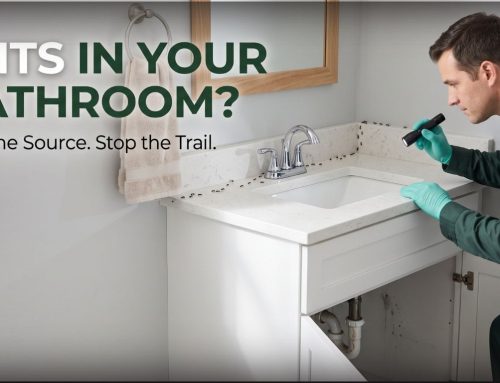
- Inspect under the kitchen and bathroom sinks
- Examine attic spaces (especially near roof leaks)
- Look at the basement beams and support members
- Check exterior wood (siding, trim, deck supports)
- Listen for rustling sounds in the walls
- Inspect dead trees and wood piles near the home
- Look for sawdust piles or trails
- Check for water damage or moisture
- Document any findings with photos
This preventive approach catches infestations early, before expensive damage occurs.
Prevention Strategies That Actually Work
Beyond detection, prevention is critical:
Moisture management (carpenter ants are attracted to moisture)
- Fix leaking pipes and faucets immediately
- Repair roof leaks promptly
- Ensure proper gutter drainage
- Ventilate bathrooms and kitchens
- Use dehumidifiers in damp areas
- Address water intrusion immediately
Harborage removal (eliminate outdoor colonies)
- Remove dead trees and stumps
- Keep wood piles away from your home
- Trim tree branches away from the roof
- Remove loose bark from trees
- Clear vegetation from the foundation
- Don’t store firewood against house walls
Entry point sealing (prevents access to your home)
- Caulk cracks in foundation walls
- Seal around utility penetrations
- Install door sweeps and weatherstripping
- Repair damaged siding and trim
- Seal gaps in exterior walls
- Use our comprehensive sealing guide for detailed instructions
When to Call Professionals Immediately
Don’t wait or experiment if you detect:
Red flags requiring immediate professional attention:
- Visible carpenter ants larger than normal household ants
- Frass (sawdust debris) near wooden structures
- Hollow-sounding wood or structural damage
- Multiple ants in the kitchen or bathroom areas
- Failed DIY treatment attempts
- Previous termite or ant infestation history
- Moisture damage or water intrusion
Contact professionals immediately. Every day of delay gives the infestation more time to cause damage.
FAQ Section: Carpenter Ant Identification and Control
1. How can I tell if the large ants in my home are carpenter ants?
Carpenter ant identification relies on size first; they’re noticeably larger (1/4 to 1/2 inch) compared to other household ants. Look for solid black or dark bodies with smooth, rounded appearances. The most definitive sign is frass (fine sawdust-like debris) near wooden structures. If you find this combination, large ants plus sawdust piles, you have carpenter ants. When in doubt, contact a professional for proper identification rather than risk wrong treatment.
2. Do I have carpenter ants or termites?
Both cause wood damage but differently. Carpenter ants create clean galleries without mud; they just excavate and remove wood. Termites fill galleries with mud and consume wood for nutrition. Carpenter ant frass looks like sawdust piles; termite frass looks like tiny pellets. Carpenter ants are visible and active; termites stay hidden. The easiest way to distinguish: carpenter ants are large and visible; termites are small and hidden. If you can’t determine which, a professional inspection is essential because treatment differs significantly.
3. If I see one carpenter ant, does that mean I have an infestation?
Seeing one carpenter ant doesn’t guarantee an infestation—it could be a scout from an outdoor colony. However, it’s a warning sign that requires immediate investigation. Look for frass, hollow wood, or additional ants. If you find multiple carpenter ants or any frass, a colony is likely active nearby. This is the critical moment to take action before the problem escalates. Don’t wait and see investigate immediately.
4. Can I eliminate carpenter ants myself with baits or spray?
Sprays kill visible ants but leave 95% of the colony untouched, so infestation continues. Generic baits often don’t work because carpenter ants have different preferences than other ant species. Even carpenter ant-specific baits miss hidden colonies. While some DIY attempts partially work, you risk incomplete treatment and recurrence. The safest approach is professional treatment, which achieves 95%+ elimination success. Learn why DIY often fails and professional treatment succeeds.
5. How long does carpenter ant elimination take?
Professional treatment typically achieves full elimination in 2–4 weeks, with complete colony death confirmed by follow-up inspections. DIY attempts often take longer (if they work at all) or fail entirely. The timeline depends on colony size, number of satellite colonies, and species-specific factors. The important point: faster is better because every week delays ongoing structural damage. Start treatment immediately upon identification.
6. What’s the difference between carpenter ants and pavement ants?
Carpenter ants (1/4 to 1/2 inch) are much larger than pavement ants (1/16 to 1/8 inch). Carpenter ants cause structural damage; pavement ants are nuisance pests only. Carpenter ants nest in wood; pavement ants nest in soil and concrete. Understanding this distinction (similar to understanding fire ants vs regular ants differences) helps you assess the actual threat level and respond appropriately. Pavement ants need removal, but don’t threaten structural integrity.
7. How can I prevent carpenter ants from returning after treatment?
Eliminate what attracted them originally: moisture and wood damage. Fix leaks immediately, improve drainage, and remove moisture sources. Eliminate outdoor harborage: dead trees, wood piles, and vegetation touching your home. Seal entry points to prevent new infestations. Maintain these prevention strategies long-term. Continue monthly inspections, catching any new activity early. Professional pest control services can provide ongoing prevention strategies and monitoring, ensuring permanent elimination.
Taking Action: Your Next Steps
You Now Know What To Look For
Understanding the carpenter ant identification guide principles puts you in control of your home’s protection. You can recognize the enemy, understand its threat level, and know when professional help is essential.
But knowledge alone isn’t enough. You must act. And you must act quickly.
This Week: Conduct Your Inspection
Don’t put this off. This weekend, inspect your home:
- Check window sills and frames for frass or damage
- Look under sinks in kitchens and bathrooms
- Examine basement beams and structural members
- Inspect attics and crawl spaces
- Listen for rustling sounds in the walls
- Check exterior wood and foundation
- Take photos of any suspicious findings
If you find carpenter ants or frass, you’ve confirmed the threat. Now you know it’s time to act.
Your Decision Point: DIY or Professional
If you found evidence of infestation:
You’re at a crossroads. You can:
- Try DIY solutions (high failure rate, ongoing infestation risk)
- Call professionals immediately (95%+ success rate, damage prevention, peace of mind)
The choice affects your home’s structural integrity and your property value. Choose wisely.
Take Action Today
Don’t wait another week. Carpenter ant colonies grow exponentially. What’s currently manageable becomes catastrophic within months.
Contact a professional inspector today. Serve Greenwich, Stamford, Darien, New Canaan, Wilton, Westport, and all of Connecticut with expert carpenter ant identification guide services and proven elimination solutions.
Your home’s structural integrity depends on the decision you make right now. Make the smart choice. Call today for a professional inspection and elimination plan.
Additional Learning Resources
Complete Ant Guides and Information
- Complete Ant Species Encyclopedia with Expert Picks
- DIY Ant Elimination Guide: What You Actually Need
- Terro Ant Bait Review: Does It Work Fast?
- Ant Prevention Methods That Save Money
- Outdoor Ant Killer: Best Solutions That Work
Treatment Comparison and Decision Guides
- Ant Spray vs Bait: Which Works Faster?
- Diatomaceous Earth for Ants: Does It Really Work?
- DIY vs Professional Pest Control: What Works Best?
- Professional Ant Extermination Process CT
Specific Problem Solutions
- Get Rid of Sugar Ants: Complete Guide
- Ants in Kitchen: Get Rid of Them Fast
- Ants in Bathroom: Quick Fixes That Work
- Does Vinegar Really Kill Ants? Effective Solutions
Prevention and Protection
Service Areas
We proudly serve all of Fairfield County, Connecticut, including:
- Greenwich, CT
- Stamford, CT
- Darien, CT
- New Canaan, CT
- Wilton, CT
- Westport, CT
- And all surrounding CT communities