DIY Elimination Guide – What You Need to Buy
Introduction: Your Ant Problem Starts Now—But It Doesn’t Have to Continue
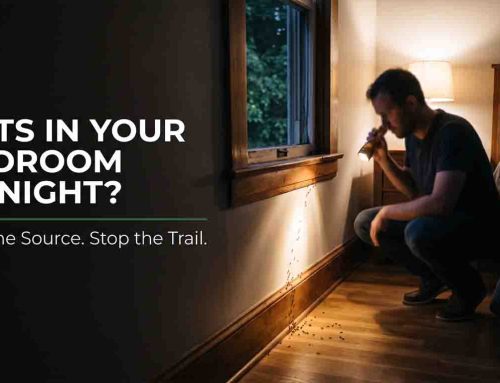
You wake up one morning, walk into your kitchen for coffee, and there it is: a thin black line of ants marching across your countertop toward the sugar bowl. Your heart sinks. You’ve seen the occasional ant before, but this is different. This is an invasion.
Whether you’re dealing with ants in your kitchen, bathroom, or crawling through your living room, the frustration is real. These tiny pests don’t just annoy you—they contaminate your food, damage your home’s foundation, and spread across your property faster than you can say “pest problem.”
Here’s what most homeowners don’t realize: waiting makes it worse. An ant colony can grow from dozens to thousands in just weeks. What started as a minor inconvenience becomes a major infestation that affects your family’s health and your home’s structural integrity.
But here’s the good news: you have options. You don’t need to panic or immediately call for professional help (though we’ll cover when that becomes necessary). With the right knowledge and the right products, you can take control of your ant problem today.
This DIY elimination guide walks you through everything you need to know—from identifying which ant killer actually works to setting up traps that eliminate the entire colony, not just the ants you see. We’ll cover the products that work, the methods that fail, and the exact steps to reclaim your home.
Let’s get started.
Why DIY Ant Control Matters (And Why Many Homeowners Fail)
Before you run to the store, you need to understand something crucial: not all ant solutions are created equal.
Most homeowners try random approaches:
- Spraying the ants they see with generic bug spray
- Setting out bait stations in the wrong locations
- Using outdated methods like vinegar or cinnamon
- Giving up after one week because nothing happened
The result? The ants keep coming back.
Why does this happen? Because surface-level solutions don’t address the root problem—the colony itself. When you see ants in your home, you’re looking at maybe 5% of the actual problem. The real threat is the queen and thousands of workers hidden in your walls, under your foundation, or in nearby soil.
A successful DIY elimination guide approach targets the entire colony, not just the visible ants. That’s what separates solutions that temporarily reduce ants from solutions that permanently eliminate them.
Understanding Your Enemy: Types of Ants You’ll Face
Not all ants are the same, and the wrong approach for your specific ant type wastes time and money.
Common Household Ants in Connecticut
Carpenter Ants These are the largest household ants, typically black or reddish-black. They’re also the most destructive—they tunnel through wood and can cause serious structural damage. If you find carpenter ants, especially in areas like Greenwich, CT, Stamford, CT, or Darien, CT, treating them quickly is critical.
Odorous House Ants Small and brown, these ants emit a distinctive smell when crushed (like rotten coconut). They’re incredibly common in New Canaan, CT, and Wilton, CT homes, and they’re stubborn about leaving once they’ve established a trail.
Pavement Ants. These dark-colored ants typically nest under your foundation and are common throughout Connecticut, including Westport, CT. They’re less destructive than carpenter ants but more numerous.
Pharaoh Ants Tiny and light-colored, pharaoh ants are the hardest to eliminate because they split into multiple colonies if threatened. They love kitchens and bathrooms.
The type of ant you’re dealing with determines which DIY elimination products and strategies will work best. Misidentifying your ant type is one of the biggest reasons DIY efforts fail.
The DIY Elimination Guide: What You Actually Need to Buy
Let’s talk products. Not every product on the shelf works, and marketing claims can be misleading. Here’s what actually delivers results.
1. Ant Baits: The Colony Killer
This is where most successful DIY ant elimination starts. Baits work differently than sprays—they’re the closest thing to a “kill the queen” strategy for homeowners.
How Baits Work: Ants carry poisoned bait back to the colony, where they share it with thousands of workers and the queen. It’s like sending a Trojan horse into enemy territory. The delay (24-48 hours) is actually a feature, not a bug—it gives ants time to spread the poison throughout the colony before they die.
Best Bait Types:
- Gel Baits: Fast-acting, attractive to multiple ant species. They’re excellent for quick problems and can kill visible results within hours.
- Liquid Baits: Slow-acting but extremely effective for complete colony elimination. These work best for carpenter ants and odorous house ants. Our detailed Terro ant bait review covers which products work fastest.
- Solid Baits: Medium-speed and durable. They work well outdoors and in garage settings where liquid baits would dry out.
Pro Tip: Place bait stations along ant trails, not where you think ants “should be.” Ants follow established highways—put bait on the path, and they’ll find it.
2. Ant Traps: Understanding Your Options
Mechanical Traps These don’t poison ants—they trap them. Mechanical traps give you an advantage: they let you monitor ant activity and confirm when the infestation is under control. They’re also safe around children and pets.
Best use: Identifying ant trails and locations before committing to chemical treatments.
Electronic Traps Some newer electronic ant traps emit vibrations or light patterns. Results are mixed, and they’re less reliable than baits or traditional traps.
Sticky Traps Simple but effective for monitoring. Place them along baseboards and corners. If you’re catching dozens of ants daily, your infestation is active and needs immediate attention.
3. Natural Methods: What Actually Works
Here’s something most blogs won’t tell you: not all natural methods work. Some are genuinely effective. Others are just folklore that sounds good but doesn’t eliminate colonies.
What Works:
Diatomaceous Earth (Food-Grade) This white powder consists of fossilized algae with microscopic sharp edges. When ants walk through it, it cuts their exoskeleton, causing dehydration and death. Learn more about diatomaceous earth for ants and how to use it correctly.
Best for: Outdoor perimeter treatment and areas where chemical baits aren’t ideal.
Cinnamon and Essential Oils Ants dislike strong scents, so cinnamon, peppermint, and tea tree oil can repel them temporarily. But here’s the truth: repelling ants isn’t eliminating them. They’ll just relocate and come back. These work best as preventative barriers, not solutions.
Borax-Based DIY Baits You can make your own bait with borax, powdered sugar, and water. It works, but it’s slower than commercial baits and requires careful handling around kids and pets. Only use if commercial baits aren’t available.
What Doesn’t Work:
- Vinegar: Kills individual ants but doesn’t affect colonies. The smell disappears quickly, and ants return within hours.
- Chalk: Drawing lines around ant entry points is mostly myth. Ants find ways around it.
- Instant grits: This old remedy has no scientific basis and won’t eliminate your problem.
Your Step-by-Step DIY Elimination Process
Step 1: Identify the Ant Type and Entry Points (Day 1)
Use a magnifying glass to examine ants you’ve found. Size, color, and behavior matter:
- Large, black or reddish? Likely carpenter ants—treat immediately.
- Tiny, light-colored, smart? Pharaoh ants—use multiple bait stations simultaneously.
- Medium-sized, brown, smelly? Odorous house ants—they’re persistent but manageable.
Document where you’re seeing ants. Take photos. Mark trails with tape. This gives you a roadmap for where to place treatments.
Step 2: Clean Thoroughly (Day 1-2)
Ants follow scent trails. Cleaning breaks those trails and removes food sources that attract them.
- Wipe down all surfaces with hot soapy water (especially kitchen counters, baseboards, and cabinet undersides)
- Sweep and vacuum, paying special attention to corners and cracks
- Remove pet food bowls immediately after pets eat
- Seal food in airtight containers
- Don’t use pesticide-based cleaners—they can interfere with baits
Step 3: Place Bait Stations (Day 2-3)
This is where most success happens. Location is everything.
Placement Strategy:
- Place bait directly on ant trails, not next to them
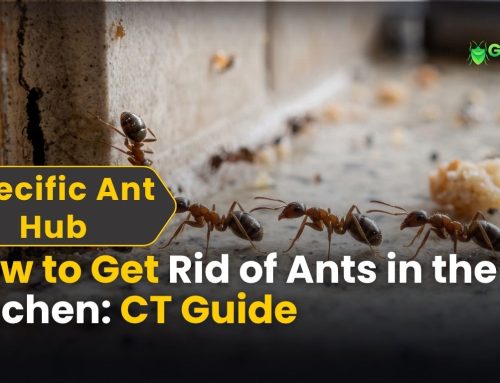
- In kitchens, target countertops and baseboards where ants travel
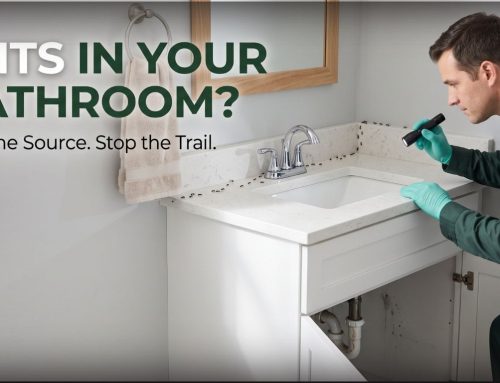
- In bathrooms, place near water sources and under sinks
- For odorous house ants, place bait both indoors and outdoors near entry points
- Space stations 3-6 feet apart along identified trails
For detailed guidance on common problem areas, see our articles on ants in your kitchen—get rid of them fast and ants in your bathroom—quick fixes.
Safety Note: Keep bait away from pet food bowls and children’s play areas. If using solid or liquid baits, place them in bait stations that ants can enter but pets cannot.
Step 4: Monitor and Document (Days 3-7)
Watch your bait stations daily:
- First 24 hours: You should see increased ant activity as they discover the bait
- Days 2-3: Activity may increase as more ants find the bait
- Days 4-7: Activity should decline noticeably
- Day 7+: You should see very few ants
If bait attracts no ants after 48 hours, move the station. You may have the wrong location or ant type.
Step 5: Maintain and Re-treat (Weeks 2-4)
- Replace empty bait stations with fresh ones
- Continue treatment for 2-3 weeks to ensure complete colony elimination
- Don’t stop when ants disappear—continue until you see zero activity for a full week
Step 6: Prevent Re-infestation (Ongoing)
Once you’ve won the battle, prevent the war:
- Seal cracks and gaps in your foundation and walls
- Fix water leaks (ants need water)
- Store food properly and clean spills immediately
- Take out garbage regularly
- Trim vegetation away from your foundation
Our guide on ant prevention methods that save money covers long-term strategies to keep ants out for good.
Bait vs. Spray vs. Natural Methods: The Comparison Table
| Method | Speed | Complete Elimination | Safety (Family/Pets) | Cost-Effectiveness | Best For |
| Gel Baits | Fast (24-48 hrs) | Yes, if placed correctly | High | High | Quick visible results, odorous ants |
| Liquid Baits | Slow (3-7 days) | Excellent | High | High | Carpenter ants, complete colony kill |
| Solid Baits | Medium (2-4 days) | Very Good | High | High | Outdoor perimeter, mixed species |
| Spray (Chemical) | Immediate visual | No, only surface ants | Medium | Low | Emergency response, not primary solution |
| Diatomaceous Earth | Slow (5-10 days) | Fair | Very High | Medium | Outdoor treatment, organic approach |
| Natural Oils | N/A (Repellent only) | No | Very High | Low | Preventative, maintenance barrier |
| Professional Treatment | Immediate + Follow-up | Excellent | Very High | Variable | Complete elimination with guarantee |
Bottom Line: For complete colony elimination, gel or liquid baits are your best bet. They’re fast, effective, and safe. Natural methods work better as prevention than solution.
Why DIY Solutions Fail (And How to Avoid These Mistakes)
Mistake #1: Spraying Visible Ants
When you see ants, your instinct is to kill them immediately. But here’s the problem: the ants you see are less than 5% of your problem.
Spraying gives you instant satisfaction—the ants die—but it leaves the colony intact. Within hours, more ants emerge from the nest to replace the dead ones. It’s like treating a symptom while ignoring the disease.
The Solution: Skip the spray. Use baits instead. Yes, it takes longer, but it actually works.
Mistake #2: Wrong Product for Your Ant Type
Pharaoh ants require different treatment than carpenter ants. Odorous house ants won’t fall for every bait. Using the wrong product wastes time and money.
The Solution: Identify your ant type first. Then match the product to the pest. Our comparison of ant spray vs. bait explains which products work for specific ant species.
Mistake #3: Giving Up Too Soon
Successful DIY ant elimination takes 2-4 weeks, not 2-4 days. When homeowners don’t see results after a few days, they assume it’s not working and try something else. This inconsistency prevents the bait from reaching critical mass in the colony.
The Solution: Commit to your strategy. Give it 2 weeks minimum. Replace bait stations as needed.
Mistake #4: Wrong Placement
Baits don’t work if ants don’t find them. Many homeowners place baits where they think ants should be, not where ants actually travel.
The Solution: Watch ant movement. Place bait directly on the trail, even if it looks inconvenient. Ants follow highways—put your trap on the highway.
Mistake #5: Attracting More Ants with Food
You place baits to kill ants, but your kitchen is still an open buffet. New ants smell the food and decide to move in for a feast.
The Solution: Deep clean. Seal food. Take out garbage. Remove all competing food sources while you’re treating.
Real-World Success Stories from Connecticut Homeowners
Sarah M., Greenwich, CT
“I had carpenter ants in my basement. I tried DIY sprays for a month with no success. I was ready to call professionals when I read about liquid baits. I followed the guide, placed baits along the ant trails, and within two weeks, they were completely gone. Two months later, still no ants. Finally feel like my home is mine again.”
Michael T., Stamford, CT
“The biggest mistake I made was killing the ants I could see instead of using bait. Once I switched to gel baits and stopped spraying, things changed within days. The ants took the poison back to the colony. It worked better than I expected.”
Jennifer L., Darien, CT
“I was skeptical about doing this myself, but the detailed instructions made it so clear. I set up bait stations, waited, and documented everything. By day 10, ant activity had dropped by 80%. This guide literally saved me hundreds in professional pest control fees.”
The Checklist: How to Choose the Best Ant Killer for Your Situation
Use this checklist to select the right product:
Do you have carpenter ants?
- YES → Liquid baits are your priority
- NO → Gel baits work faster
Are you seeing ants primarily in your kitchen?
- YES → Gel baits in bait stations
- NO (Bathroom/basement) → Liquid baits or solid baits
Do you have young children or pets?
- YES → Prioritize gel baits in protective stations; avoid sprays
- NO → More options available; still avoid sprays as primary solution
Have you tried DIY before?
- YES (Failed) → Consider professional help with follow-up monitoring
- NO → Start with gel baits; easy to use, proven results
Do you prefer chemical or natural?
- NATURAL → Diatomaceous earth + essential oils for prevention; baits for elimination
- CHEMICAL → Gel or liquid baits are your best option
What’s your timeline?
- URGENT (Next 2 days) → Start with gel baits; add liquid baits
- FLEXIBLE (2+ weeks) → Liquid baits alone; most cost-effective
External Expert Resources and Government Information
Your local Connecticut resources provide additional guidance:
The Connecticut Department of Energy and Environmental Protection (DEEP) offers information on integrated pest management approaches that balance effectiveness with environmental safety. Their guidelines recommend starting with the least-toxic option—which is why baits matter more than sprays.
EPA guidelines on residential pest control emphasize targeting the colony rather than individual insects. Their recommendation directly supports the bait-first approach outlined in this DIY elimination guide.
For comprehensive homeowner education, the University of Connecticut Home & Garden Education Center provides research-backed information on Connecticut-specific pest species and treatment recommendations.
When DIY Isn’t Enough: Recognizing Signs You Need Professional Help
Be honest with yourself. Sometimes DIY works perfectly. Sometimes it doesn’t. Here’s when you should consider professional intervention:
You Should Call Professionals If:
- You’ve treated for 4 weeks with no improvement. After a month of consistent bait application, you should see dramatic results. If you don’t, you likely need professional identification and treatment.
- You have carpenter ants causing visible damage. Carpenter ants tunnel through wood. Waiting too long can cost you thousands in structural repairs. Learn about the professional ant extermination process in Connecticut to understand when it’s time.
- The infestation is severe. If you’re seeing hundreds of ants daily, the colony is established and massive. Professional treatment eliminates faster.
- You’ve had recurring infestations. Repeated problems suggest your DIY approach isn’t addressing root causes. Professionals conduct thorough inspections to find hidden entry points.
- There are signs of structural damage. Wood damage, sawdust, or hollow-sounding wood indicates advanced carpenter ant damage requiring professional treatment.
Professional vs. DIY Trade-offs:
Our detailed comparison of DIY vs. professional pest control in Connecticut breaks down costs, timelines, and guaranteed results. DIY saves money upfront but takes longer. Professional treatment costs more but delivers certainty.
The Most Important Thing: Start Today
Ant infestations don’t resolve themselves. They grow.
A small problem you ignore for two weeks becomes a medium problem. A medium problem ignored for two more weeks becomes a major problem. By the time you take action, you’re dealing with thousands of ants, potential damage, and significantly higher stress.
Here’s what to do right now:
- Identify your ant type (spend 5 minutes looking at them)
- Trace their trails (mark where you see them most)
- Buy appropriate baits (gel baits for quick results; liquid baits for thorough elimination)
- Place them today (don’t wait until tomorrow)
- Monitor for 2 weeks (document what you see)
- Adjust if needed (move baits if ants aren’t finding them)
This is a DIY elimination guide you can actually complete. It’s not complicated. It’s proven. It works.
Take action before the problem spreads. The difference between an ant problem you handle in week one and week four is literally thousands of ants.
FAQ: Answers to Your Most Common Questions
Q: How long does it actually take to kill ants with baits?
A: Visible ant activity drops within 24-48 hours with gel baits. Complete colony elimination takes 2-4 weeks. Some ants may survive longer if the colony is very large. Don’t stop treatment just because you see fewer ants—continue for the full 2-3 weeks.
Q: Can I use store-bought solutions or do I need to mix my own?
A: Store-bought baits are faster and more reliable than homemade solutions. They’re tested, consistent in strength, and formulated specifically for household ants. Homemade borax baits work but are slower. Unless store-bought baits are unavailable, stick with commercial products.
Q: Are ant baits safe for my dog or cat?
A: Most commercial ant baits are designed to be safe around pets when used correctly in protective bait stations. The poison is formulated for ants’ metabolism and doesn’t significantly affect mammals in small quantities. That said, keep bait away from pet food and treat play areas. If your pet ingests bait, contact your veterinarian.
Q: Why are ants coming back after I killed them?
A: You’re seeing new ants from the colony, not the same ants. Surface killing doesn’t eliminate the queen and workers in the nest. That’s why baits are essential—they eliminate the whole colony. If ants completely return after you stop treatment, either the colony wasn’t fully eliminated or new ants are entering from outside. Treat again and address entry points with proper sealing.
Q: What’s the difference between carpenter ants and termites?
A: Carpenter ants are larger (½ inch+), move quickly, and leave sawdust trails. Termites are smaller, move slowly, and create mud tubes. Carpenter ants eat wood but don’t digest it. Termites digest wood and cause structural damage faster. Both require immediate treatment, but identification matters for choosing the right poison.
Q: Can vinegar kill ants?
A: Vinegar kills individual ants on contact but doesn’t eliminate colonies. It’s effective as a surface cleaner to break ant trails, but once the vinegar smell fades, ants return. Use vinegar as part of your cleaning routine, not as your primary elimination strategy.
Q: How do I prevent ants from coming back after treatment?
A: Seal entry points with caulk, fix water leaks, remove food sources, and maintain cleanliness. Our prevention strategies hub offers smart tips for long-term protection. Regular maintenance prevents re-infestation better than anything else.
The Bottom Line: You Have the Power
You don’t need to live with ants. You don’t need to panic. You don’t even necessarily need to call professionals (though we’re here if you do).
What you need is the right information, the right products, and the willingness to follow through for 2-4 weeks.
This DIY elimination guide gives you everything. The rest is up to you.
Your action plan:
Identify your ant type
Clean thoroughly
Place baits strategically
Monitor progress
Continue treatment for 3 weeks
Seal entry points to prevent return
Start today. Don’t wait. Your ant-free home is just 2-4 weeks away.
Ready to Take the Next Step?
If you’ve tried DIY and aren’t seeing results, or if you have carpenter ants causing structural damage, professional treatment might be your answer. Our team specializes in complete ant elimination for homes throughout Connecticut—including Greenwich, Stamford, Darien, New Canaan, Wilton, and Westport.
Contact us for a free inspection and professional assessment. We’ll evaluate your situation, recommend the best approach, and guarantee results.
Don’t let an ant problem take over your home. Whether you choose DIY or professional help, action today is better than action tomorrow.
Get rid of ants fast today. Your home will thank you.
Additional Resources Mentioned in This Guide
- Prevention Strategies Hub: Smart Tips
- Terro Ant Bait Review: Does It Work Fast?
- Ant Prevention Methods That Save Money
- Outdoor Ant Killer: Best Solutions That Work
- Ant Spray vs. Bait: Which Works Faster?
- Diatomaceous Earth for Ants: Does It Work?
- Professional Ant Extermination Process in Connecticut
- Get Rid of Sugar Ants
- Seal Your Home Against Ants: What to Use
- DIY vs. Professional Pest Control in Connecticut
- Ants in Your Kitchen: Get Rid of Them Fast
- Ants in Your Bathroom: Quick Fixes
- Does Vinegar Really Kill Ants? Effective Solutions
Contact Green Pest Management CT Today – Serving Greenwich, Stamford, Darien, New Canaan, Wilton, Westport, and throughout Connecticut.