Ant Prevention Methods That Save Money – Smart Tips
Three months ago, Tom from Greenwich, CT discovered ants crawling across his kitchen counter. He ignored them, hoping they’d go away.
Today, he’s dealt with a full infestation, spent hundreds on emergency pest control, and dealt with weeks of disruption to his home.
The hard lesson? Waiting is expensive. Prevention is not.
Most homeowners don’t realize that ant prevention methods are actually the cheapest way to handle the problem. You can invest a few hours and minimal money now, or spend significantly more reacting to an infestation later.
This guide shows you exactly how to protect your home and your wallet.
Why Prevention Methods Save You More Money Than You Think
Here’s something pest control professionals won’t tell you directly: they prefer reactive customers to preventive ones.
A reactive customer calls when ants have already invaded. That’s an expensive emergency treatment. A preventive customer seals gaps, manages landscaping, and never calls. That’s lost business.
But you should care about what saves you money.
The Math Behind Prevention
Reactive Approach:
- Emergency pest control service: High cost
- Multiple follow-up treatments: Additional expenses
- Potential property damage: Thousands in repairs
- Food replacement: More than you realize
- Your time disrupted: Priceless stress
Preventive Approach:
- Initial sealing and barriers: Minimal investment
- One-time landscaping adjustments: Often free with effort
- Occasional maintenance: Negligible ongoing cost
- Complete peace of mind: Priceless
The difference? Prevention methods cost a fraction of what reactive treatments cost.
Real Prevention Methods That Work
The most effective ant prevention methods fall into three categories. Learning which one fits your situation saves you from wasting time and money on the wrong approach.
Method 1: Sealing Your Home (The Foundation)
This is where actual prevention starts. Ants can’t invade what they can’t enter.
Where Ants Actually Enter
Professional inspectors have a specific system for finding entry points:
High-Priority Entry Points:
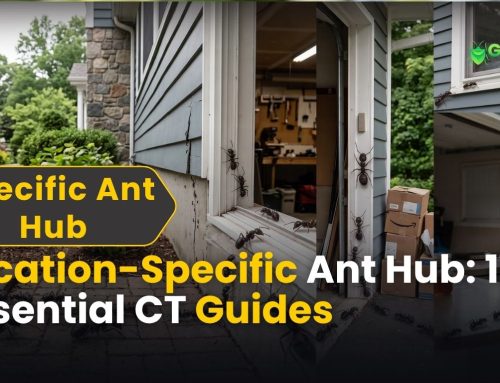
- Gaps around window frames (most common)
- Door frame cracks and gaps
- Utility line penetrations (pipes, cables, wires)
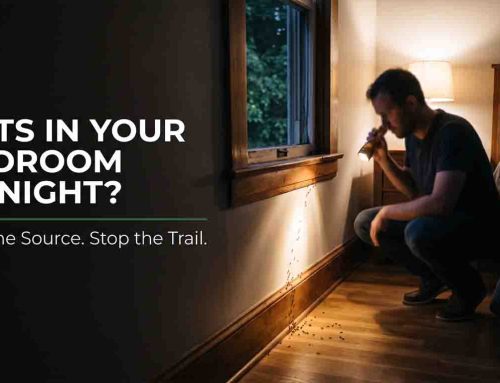
- Kitchen and bathroom baseboards
- Cracks in foundation (even tiny ones)
Secondary Entry Points:
- Attic vents and soffit areas
- Dryer vents and AC unit penetrations
- Gaps between siding and trim
- Cracks around outdoor faucets
The key insight: small gaps = big problems. Ants can fit through spaces you can’t even see. A 1-millimeter gap is an ant superhighway.
How to Seal Properly
The right materials make all the difference:
Use Silicone Caulk (Not Latex)
Latex dries brittle and fails. Silicone stays flexible and lasts years. For foundation cracks larger than 1/4 inch, use expanding foam sealant instead.
Application Steps:
- Clean the gap thoroughly – Remove old caulk, dirt, and debris with a scraper
- Apply smoothly – Use a caulk gun for consistent application
- Tool the surface – Use a wet finger or caulk tool to smooth
- Let it cure – Most silicone needs 24-48 hours to fully set
A single person can seal 8-10 entry points in 4 hours. That’s a weekend project that prevents months of problems.
Which Sealed Areas Matter Most?
For Kitchens:
- Baseboards are non-negotiable (food scents attract ants)
- Under sink gaps absolutely must be sealed
- Window sills in kitchen area are priority
For Bathrooms:
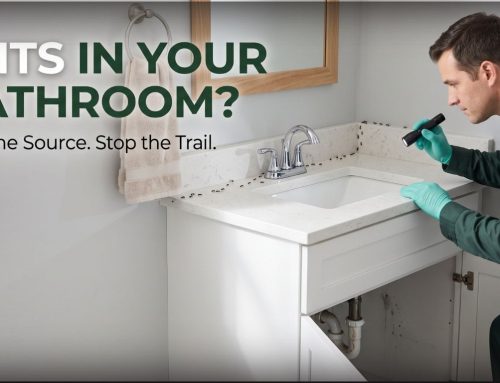
- Baseboards around tub/shower
- Gaps under vanity
- Water pipes and penetrations
For Perimeter:
- Door frames (front and back doors)
- Window frames throughout home
- Corners where trim meets siding
Sealing these specific areas gives you 80% of the prevention benefit.
Method 2: Strategic Barriers & Baits (The Backup)
While sealing stops ants from entering, barriers catch any that try.
Diatomaceous Earth: Nature’s Barrier
This is the most underrated prevention method most homeowners never use.
What It Is: Diatomaceous earth is a natural powder made from fossilized algae. It damages insects’ exoskeletons without harming humans or pets. Food-grade DE is completely safe around families.
How to Use It:
- Apply a 12-inch wide barrier around your home’s foundation
- Use it as a preventive measure, not just treatment
- Reapply after rain (moisture reduces effectiveness)
- Works best in spring before peak season
Why It Works: Unlike sprays that kill visible ants, diatomaceous earth creates a permanent barrier. Any ant crossing it gets affected. It’s like a moat protecting your castle.
Cost Comparison: A single application might use $20-30 in diatomaceous earth but prevents hundreds in potential treatments.
Strategic Bait Placement (Prevention, Not Just Treatment)
Most people use bait only after ants appear. Smart prevention uses it before.
Preventive Bait Strategy:
- Place ant bait along potential entry routes
- Use Terro ant bait or similar liquid formulations
- Replace every 3-4 weeks during spring/summer
- This catches colonies forming nearby before they establish in your home
This turns bait from “emergency response” into “preventive maintenance.”
Method 3: Landscaping Adjustments (The Often-Forgotten Method)
Your yard directly impacts your ant problem. Fix the yard, and half your ant problem disappears.
Landscaping Mistakes That Invite Ants
Problem #1: Plants Too Close to Siding
Overgrown shrubs create bridges for ants to walk directly into your home. They climb foliage, then transfer onto siding at roof level, then enter through gaps.
Solution:
- Maintain 12-inch minimum clearance between plants and foundation
- Trim branches away from roof lines
- Remove dead branches that touch your home
Problem #2: Mulch Against Foundation
Mulch is basically an ant hotel. It provides moisture, shelter, and warmth. Place it too close to your home, and you’re literally inviting colonies.
Solution:
- Keep mulch at least 2 feet away from foundation
- Replace with gravel or hardscape near the house
- If you must use mulch, create a clear gap
Problem #3: Debris Piles and Dead Wood
Dead wood attracts carpenter ants specifically. These aren’t just a nuisance—they can damage structural elements.
Solution:
- Remove fallen branches weekly
- Don’t stack wood near your home
- Chip or dispose of yard debris promptly
- Clear gutters to prevent water accumulation
Problem 4: Moisture Issues
Ants need water. Your yard might be providing it.
Solution:
- Fix outdoor faucet leaks immediately
- Grade soil to drain away from foundation
- Ensure gutters direct water 4+ feet from home
- Address any standing water areas
These landscaping changes require almost no money—mostly effort and attention. Yet they prevent serious ant problems.
Understanding Your Prevention Options: A Practical Comparison
| Prevention Method | Time Required | Difficulty | Effectiveness | Best For | |
| Sealing gaps | 4-6 hours | Easy | Excellent | All homes | |
| Diatomaceous earth | 1-2 hours | Very Easy | Very Good | Perimeter | |
| Preventive baiting | 30 mins | Very Easy | Good | Maintenance | |
| Landscaping fixes | 2-4 hours | Easy | Very Good | Outdoor areas | |
| Professional sealing | 0 hours | Easy | Excellent | Complex situations |
The Real Insight: Most homeowners can handle Method 1-3 themselves and save substantially. Professional help is optional, not required.
Why DIY Prevention Beats Reactive Treatment
Let’s be clear about what happens when prevention doesn’t happen.
The Reactive Trap
When ants invade without prevention:
- Initial Discovery – You find ants in kitchen or bathroom
- First Treatment Attempt – You buy ant spray or ant traps
- Temporary Relief – Visible ants die, but colony unaffected
- Return of Problem – Ants reappear within days
- Frustration Sets In – You realize DIY isn’t working
- Professional Help – Finally calling pest control (expensive)
- Multiple Treatments – Often requires follow-up visits
- Ongoing Anxiety – Worry about reinfestation
This cycle costs far more than upfront prevention.
Why Ant Spray Fails (And Why Prevention Wins)
Ant spray vs bait comparisons always show the same thing: spray creates perception of success, but doesn’t solve the problem.
Spray kills ants you can see but:
- Doesn’t reach the colony (5,000-500,000 members)
- Doesn’t stop new ants from returning
- Requires repeated applications
- Exposes your family to chemicals
- Costs more over time than prevention
Prevention (sealing + barriers):
- Stops ants from entering in the first place
- No repeated applications needed
- Safe for family and pets
- Costs less overall
- Actually solves the problem
Pro Prevention Tips: What Experts Actually Do
Tip 1: The Scout Ant Strategy
Professional pest managers know scout ants are your warning system.
How to use it:
- See a scout ant in your kitchen?
- Follow it back to where it entered
- That’s your #1 sealing priority
- Seal that gap immediately
- Place bait near that entry point
That scout ant just showed you exactly where your prevention failed. Use that information.
Tip 2: The Seasonal Timing Advantage
Prevention works best when done before ants emerge.
Seasonal Timeline:
- February-March: Seal gaps (before spring emergence)
- March-April: Apply diatomaceous earth barrier
- April-September: Maintain bait placement and landscaping
- October: Final inspection before dormancy
Getting ahead of the season is the smartest prevention move.
Tip 3: The Moisture Control Secret
Many homeowners focus only on physical barriers, missing the moisture factor.
What pros check:
- Water pipes under sinks
- HVAC condensation leaks
- Crawl space moisture
- Gutter drainage
- Foundation cracks allowing water
Dry homes attract fewer ants. Period.
Tip 4: Monitor Entry Points Weekly
Prevention isn’t “set it and forget it.”
Weekly maintenance:
- Visual inspection of sealed areas
- Check for new cracks or gaps
- Scan for scout ants
- Replace bait if you notice activity
- Reapply diatomaceous earth if rain occurred
Fifteen minutes weekly prevents major problems.
Real Stories: How Prevention Saved Homeowners Money
Case Study 1: Sarah’s Sealing Success (Stamford CT)
“I spent a Saturday afternoon caulking every gap I could find around my kitchen baseboards and windows. Cost me about $40 in materials. That was six months ago. I haven’t seen a single ant since. Compare that to what my neighbor paid for emergency pest control when ants invaded her kitchen—it was triple that for a single visit. I’ll never ignore prevention again.” — Sarah M., Stamford
Case Study 2: Mike’s Landscaping Lesson (New Canaan CT)
“We were having ants every single year. A pest control expert pointed out our mulch was basically an ant highway into our house. We replaced it with gravel and trimmed shrubs away from the siding. Free effort, minimal materials. Two years later, zero ant problems. This is the cheapest prevention I’ve ever done.” Mike T., New Canaan
Case Study 3: Jennifer’s Barrier Breakthrough (Westport, CT)
“I was skeptical about diatomaceous earth until I tried it. Applied it once in March for less than. I may have seen three or four ants all spring and summer. Last year, without prevention, I had a full kitchen infestation. Never again.” — Jennifer L., Westport
Seal Home Ants Permanently: The Complete Sealing Strategy
The phrase “seal home ants permanently” appears in searches constantly. Here’s how to actually do it.
The Permanent Sealing System
Foundation Level:
- Inspect the foundation for all visible cracks
- Cracks under 1/4 inch: Use silicone caulk
- Cracks 1/4 to 1/2 inch: Use expanding foam + caulk
- Cracks over 1/2 inch: Professional concrete repair needed
Wall Level:
- Seal all gaps at baseboards
- Weatherstrip all doors completely
- Install door sweeps on exterior doors
- Seal around window frames inside and out
Roof Level:
- Install fine mesh screening on vents (1/16-inch mesh)
- Seal around soffit penetrations
- Check areas where utilities enter from the roof
This three-level approach makes your home genuinely ant-proof.
How Long Does It Last?
Quality silicone caulk lasts 5-10 years. Weatherstripping lasts 3-5 years. Mesh screening lasts indefinitely. Your sealing investment creates years of protection, not months.
The Complete Prevention Checklist
Use this to systematically prevent ant problems:
Interior Inspection & Action (2-3 hours)
- Inspect all windows for gaps and cracks
- Caulk all window frames and sills
- Seal all door frames (entrance, patio, garage)
- Check utility penetrations (pipes, cables, wires)
- Caulk baseboards in kitchen and bathrooms
- Install or upgrade door sweeps
- Weatherstrip all exterior doors
Preventive Baiting (30 minutes)
- Place ant bait along potential entry points
- Focus on kitchen baseboards and perimeter
- Document bait locations
- Set calendar reminder for quarterly replacement
Landscaping Adjustments (2-3 hours)
- Trim plants 12 inches away from siding
- Move mulch away from foundation
- Clear debris piles
- Remove dead wood
- Clear gutters
Perimeter Barrier (1-2 hours)
- Apply diatomaceous earth around foundation
- Create 12-inch wide barrier
- Mark reapplication date in your calendar
Ongoing Maintenance (15 minutes weekly)
- Scout for ant entry activity
- Check for new cracks or gaps
- Verify bait station status
- Monitor landscaping maintenance
Total Investment: 8-10 hours spread over 2-3 weeks = Months of protection.
FAQ: Your Prevention Questions Answered
Q1: What’s the single most important prevention method?
A: Sealing gaps. It’s the foundation everything else builds on. Sealed homes are ant-proof homes. The other methods (barriers, baiting, landscaping) support sealing but don’t replace it.
Q2: Can I really prevent ants permanently with DIY methods?
A: “Permanently” is unrealistic—occasional ants may enter despite prevention. But “virtually never” is achievable. Proper sealing + barriers + landscaping prevents 95%+ of problems. You’ll see ants rarely, not constantly.
Q3: Is professional sealing worth the investment?
A: For homeowners who want comprehensive results without effort, yes. Professional sealers know hidden entry points and apply materials correctly. For homeowners comfortable with DIY, the savings are substantial and results are excellent.
Q4: When should I use bait as prevention vs. treatment?
A: Prevention = place bait before seeing ants, quarterly rotation. Treatment = place bait after seeing ants, more aggressive placement. Prevention is less intensive and saves money long-term.
Q5: How much diatomaceous earth do I need?
A: For average home, one 5-pound bag covers perimeter with multiple applications. It costs and lasts most of a season. Reapply after rain and monthly during peak season.
Q6: What if I see ants despite prevention efforts?
A: This means your prevention had a gap. Act fast: identify the ant trail, seal that exact entry point, place bait immediately. This quick response prevents colony establishment.
Q7: Is natural prevention actually effective?
A: Yes for some methods, no for others. Works: Diatomaceous earth, sealing, landscaping changes. Doesn’t work: Vinegar, coffee grounds, cinnamon, chalk. Stick with proven methods.
When to Call Professionals vs. DIY Prevention
DIY Prevention Works If:
You’re doing pure prevention (no active infestation)
You’re sealing small gaps and cracks
You’re adjusting landscaping
You want to save money
You have time on weekends
Call Professionals If:
You already have an active infestation
You want comprehensive sealing
Your home is large or complex
You want guaranteed results
You prefer expert assessment
For homeowners in Greenwich CT, Stamford CT, Darien CT, New Canaan CT, Wilton CT, Westport CT, and throughout Connecticut, professional pest control services understand local ant species and can provide expert guidance.
Your Prevention Action Plan (This Week)
Today:
- Walk your home and identify gaps
- Take photos of problem areas
- Note moisture issues
This Weekend:
- Seal top 5 entry points (4 hours)
- Apply diatomaceous earth barrier (1-2 hours)
- Trim landscaping away from siding (1-2 hours)
Next Week:
- Complete remaining sealing project
- Place preventive bait stations
- Set calendar reminders for maintenance
Following Weeks:
- Monitor and maintain
- Reapply diatomaceous earth as needed
- Check bait status quarterly
That’s it. One month of action = months of protection.
Prevention Methods: The Bottom Line
Ant prevention methods work. The question isn’t whether prevention works—it absolutely does. The question is whether you’ll implement it before the problem starts.
Every homeowner has a choice:
Option 1: Spend a few hours and minimal money now on prevention, then enjoy an ant-free home.
Option 2: Wait for ants to invade, then spend significantly more money on emergency treatments, deal with weeks of disruption, and expose your family to chemicals.
The math is simple. Prevention always wins.
Your Next Step: Get Expert Assessment
While prevention is something you can absolutely handle yourself, professional assessment identifies vulnerabilities you might miss.
If you’re in the Connecticut area, contact our team for a free prevention assessment. We identify your home’s specific vulnerabilities, recommend the right prevention methods, and guide you through implementation.
No pressure. Just expert guidance to protect your home the right way.
Or, if you’re ready to dive into prevention yourself, start with sealing. It’s the highest-impact prevention method and the easiest to do successfully.
Key Takeaways: Prevention Saves Money
Sealing is the foundation – Fix gaps before ants enter
Barriers provide backup – Diatomaceous earth protects the perimeter
Landscaping matters – Your yard impacts indoor problems
Seasonal timing helps – Prevention before spring emergence works best
DIY saves substantially – Most homeowners can handle basic prevention
Weekly maintenance prevents problems – Small effort, big results
Reactive costs thousands – Prevention costs substantially less
Your family deserves safety – Prevention means no chemical exposure
Peace of mind is priceless – Never worrying about ants is valuable
Act now, prevent later – Don’t wait for the problem to start
Final Word: Prevention Is the Smart Money Move
Homeowners who prevent ant problems are homeowners who don’t have ant problems. It sounds obvious, but most people still wait.
Don’t be that person. Implement ant prevention methods today, and you’ll enjoy an ant-free home all season.
Ready to get started? Book your prevention assessment today.
Your home is worth protecting. Your wallet will thank you for choosing prevention.