Spring Ant Prevention Checklist Stop Ants Early 2026
A Step-by-Step Guide for Fairfield County Homeowners
You step outside on a warm March morning in Stamford and spot them. A thin, determined line of tiny dark ants weaving across the patio stones and up the foundation wall. They slip into a crack near the kitchen window, and your heart sinks. It’s happening again.
Spring in Connecticut doesn’t just bring daffodils and songbirds. It wakes up ant colonies that have spent the winter huddled under frozen soil and beneath concrete slabs. By the time you see a single ant, a queen somewhere is already laying eggs at full speed. The window to stop an infestation before it spreads is narrow, and the only way to seal it is with a clear, practical spring ant prevention checklist.
This guide is that checklist. It’s written for homeowners in Greenwich, Darien, New Canaan, Wilton, Westport, and right here in Fairfield County who are tired of the annual spring invasion. Every step is designed to be doable, effective, and permanent.
Let’s get started before the first scouts turn into a trail, and before the trail turns into a colony you can’t ignore.
Why Spring Is the Most Critical Season for Ant Prevention
Understanding the ant’s spring behavior is the foundation of any good spring ant prevention checklist. After months of near-dormancy, colonies wake up hungry and protein-starved. The queen begins laying eggs again, and the first wave of workers emerges in search of food to feed the larvae.
At this stage, the colony is at its smallest. A pavement ant nest under your Darien driveway might have only a few hundred workers in early April. By June, that same colony can number in the thousands. Acting in the spring means you’re fighting a village, not an army.
Moisture from melting snow and spring rains also softens the soil, making it easier for ants to excavate new tunnels and find entry points into your home. Freeze-thaw cycles have created fresh cracks in foundations all over Fairfield County, cracks that ants will exploit within hours of emerging.
Your spring ant prevention checklist works because it hits the colony when it’s most vulnerable: hungry, small, and just starting to expand. Miss this window, and you’ll spend the summer chasing ants from kitchen to bathroom with sprays that never solve the problem.
Your Spring Ant Prevention Checklist: All the Steps
This spring ant prevention checklist is divided into four phases: exterior work, interior sealing, treatment, and monitoring. You can tackle it over a single weekend, or spread it across a few days. The important thing is to start as soon as the ground thaws and before daytime temperatures stay consistently above fifty degrees.
Phase 1: Exterior Foundation and Landscape
The outside of your home is the front line. Ants nest in soil, mulch, and rotten wood, then walk right up to your foundation and look for a way inside.
- Walk the entire perimeter of your home and inspect the foundation walls, sill plate, and any exposed concrete. Look for cracks wider than a credit card, gaps where pipes or wires enter, and spaces under door thresholds.
- Seal every opening you find with a high-quality, flexible polyurethane sealant. This material stretches and contracts with Connecticut’s freeze-thaw cycles without cracking. Our guide to sealing your home against ants lists the best products and techniques.
- Trim back all tree branches and shrubs so nothing touches the roof or siding. Overhanging branches are the main highway carpenter ants use to move from outdoor nests into your attic and walls.
- Pull back wood mulch from the foundation. Keep a bare strip of soil or gravel at least six inches wide all the way around the house. Damp mulch against the foundation is a favorite nesting spot for pavement ants and odorous house ants.
- Check for and repair any leaky outdoor faucets, dripping hoses, or poor drainage near the foundation. Ants follow moisture, and a damp foundation wall is an open invitation.
Phase 2: Interior Inspection and Sealing
Even the smallest gap in a baseboard or around a pipe can become an ant entrance when colonies are actively searching for warmth and food.
- Inspect every room, focusing on the kitchen, bathroom, and basement. Look for cracks in the grout, gaps between the floor and the wall, and openings where plumbing comes through the wall or floor.
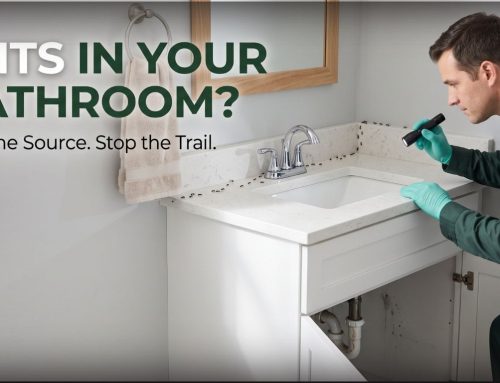
- Seal interior gaps with a paintable silicone caulk. Pay special attention to the space around the bathtub, the toilet flange, and the pipes under sinks. Our ants in bathroom quick fixes article shows exactly where these hidden entry points often hide.
- In the kitchen, pull out the refrigerator and stove if you can, and check for trails, crumbs, or moisture. Clean thoroughly and seal any gaps you find in the walls or floor behind these appliances.
- Check window and door screens for tears, and make sure weatherstripping forms a tight seal. Ants can squeeze through surprisingly small openings when the weather draws them indoors.
Phase 3: Spring Treatment and Baiting
Sealing alone won’t stop ants that have already built nests near your home. This phase of the spring ant prevention checklist targets the active colonies before they can expand.
- Apply a non-repellent perimeter treatment around the outside of your home. Unlike sprays that repel ants, these products are undetectable. Ants walk through the treated zone and carry the active ingredient back to the colony, where it spreads and eventually reaches the queen. This is the most effective way to eliminate early-spring colonies.
- Use protein-based baits along any exterior ant trails you see. In spring, ants crave protein to feed their brood. A granular or gel protein bait placed near the trail (not on top of it) will be eagerly collected and shared inside the nest. Our best ant baits comparison explains which baits work best for different species and seasons.
- If you have a history of indoor ants in the spring, place a few indoor bait stations in the basement, under sinks, and near any past entry points. This intercepts early scouts before they can establish a trail.
- For lawns with visible ant mounds, use a broadcast granular bait designed for your target species. In particular, fire ant mounds that appear in sunny areas of Greenwich and Stamford should be treated immediately to prevent aggressive summer swarms.
Phase 4: Monitoring and Follow-Up
A good spring ant prevention checklist doesn’t end when you put the sealant away. Ants are persistent, and a single missed crack can lead to a trail weeks later.
- Mark your calendar for a follow-up inspection two weeks after you complete the checklist. Walk the perimeter again and check indoors for any new signs of activity.
- Keep a small notebook or a note on your phone to record where and when you saw ants. This helps you identify patterns and target problem areas more precisely next year.
- If you see a persistent trail after baiting, don’t spray it. Contact a professional for an inspection. Spraying a repellent can scatter the colony and make the problem much harder to solve. Our professional ant extermination process explains how we handle rebounding colonies.
Take action before it spreads. Every week of delay lets the colony add hundreds of workers. An early spring effort pays off all summer.
Common Spring Ant Prevention Mistakes (And How to Avoid Them)
I see the same mistakes every year in homes across New Canaan, Wilton, and Westport. Avoid these, and your spring ant prevention checklist will actually work.
Mistake one: Using a repellent spray indoors. You kill the visible ants, but the colony feels threatened and splits into multiple satellite nests. What was a small kitchen problem becomes a whole-house infestation by summer. Read our comparison of ant spray vs bait to understand why the tool matters.
Mistake two: Baiting with sugar when the colony wants protein. In spring, most Connecticut ant species are in protein-seeking mode. A sweet liquid bait like Terro may sit untouched. Check our Terro ant bait review to learn when it works and when to switch.
Mistake three: Sealing cracks while ants are still actively trailing through them. If you trap ants inside the wall, they’ll find a new way out—often into a bedroom or living room. Always bait and eliminate the colony before you seal.
Mistake four: Ignoring the bathroom. Pavement ants nesting under the slab wake up in spring and head for the bathroom floor. If you see tiny piles of sand near the tub, you have an underground colony. Surface sprays won’t touch it. Our seasonal tactics guide explains how to address slab colonies at the right time.
Pro Tips from a CT Exterminator
Here are a few field-tested tricks that don’t always make it into generic checklists but make a big difference in Fairfield County.
Ants follow moisture, and spring is wet. After a heavy rain, walk around your house and look for puddles, damp soil, or water beading on foundation walls. Anywhere water lingers, ants will follow. Fix the drainage, and you fix the ant trail.
Don’t store firewood against the house. Spring is when carpenter ants abandon winter nests in rotting logs and look for a new home. A woodpile leaning against the siding is a bridge straight into your walls.
If you see winged ants inside during early spring, you likely have a mature colony already nesting in a wall void or attic. This is not a DIY moment. A professional can locate the nest and treat it before the swarm turns into a full-blown summer invasion.
Use the ant species encyclopedia to identify what you’re dealing with. Pavement ants, odorous house ants, carpenter ants, and fire ants all respond to different treatments. Guessing wrong wastes time and lets the colony grow.
Real Stories from Fairfield County
“Last spring I found ants in my kitchen in Darien and panicked. I found this spring ant prevention checklist, sealed the outside cracks, and used protein bait for the first time. The trail stopped in three days and never came back. I already have my checklist ready for this year.”
— Joan M., Darien CT
“I’ve lived in my Greenwich home for twenty years and always had ants in the spring bathroom. I thought it was just part of owning an old house. Last year I followed the checklist, sealed the tub gap, and treated the foundation. Not a single ant all summer. The relief is hard to describe.”
— Eleanor S., Greenwich CT
“We had a fire ant scare in our Stamford yard last March. The checklist helped me identify the mound early and get professional treatment before the colony got big. Now I walk the yard every spring weekend.”
— Tomás R., Stamford CT
FAQ: Your Spring Ant Prevention Checklist Questions
When should I start using the spring ant prevention checklist?
In Connecticut, start as soon as the ground thaws and daytime temperatures are regularly above 45 degrees, usually by late March or early April. Starting before you see ants gives you the best chance of stopping the first wave.
How long does the perimeter treatment last?
A professional non-repellent treatment applied in spring can last up to three months. Heavy rains may shorten that, which is why a mid-summer check is a good idea.
Can I do this checklist if I already have ants inside?
Yes, but prioritize baiting first to eliminate the colony. Do not seal entry points until the trail has been gone for several days. Sealing too early traps ants inside.
What if I don’t know which ant species I have?
Use a magnifying glass and compare what you see to the photos in our ant species encyclopedia . If you’re still unsure, a professional can identify them in minutes.
Is this checklist safe for homes with pets and children?
Yes, when you use products as directed and keep baits in tamper-resistant stations. Professional perimeter treatments are applied outside and designed to be safe once dry.
Do I need to repeat the checklist every spring?
Yes, but it gets faster each year. The sealing and inspection become routine, and you’ll learn your home’s specific vulnerabilities. A consistent spring effort prevents ant problems year after year.
Get Started Before the First Scout Appears
A few warm days are all it takes to wake a colony that will spend the rest of the year trying to move into your home. This spring ant prevention checklist gives you everything you need to shut them out before they find the first crack, the first crumb, or the first trace of moisture.
You can do the sealing, the baiting, and the monitoring yourself. But if you’d rather have an expert handle the perimeter treatment, the species identification, and the follow-up, we’re here for every homeowner in Greenwich, Stamford, Darien, New Canaan, Wilton, and Westport.
Get rid of ants fast today. Book a professional spring inspection and start the season with a truly ant-free home.
Contact Us for Expert Ant Control in Fairfield County
Spring is here. Don’t let the ants be, too.