Rat Removal Near Me: 10 Signs You Need Professional Help
It usually starts with a sound. Scratching inside a wall at 2 a.m., or a quick scurry across the attic floor when the house goes quiet. Then you find a few dark droppings behind the water heater, and your mind goes straight to the worst case.
If you are searching for rat removal near me, here is the short answer. Fresh droppings, greasy rub marks, gnawed wires, burrows along the foundation, and noises at night are all strong signs of rats. Once you see more than one of them, a professional inspection is the safest next step, because rats breed fast and rarely leave on their own.
In this guide, we will walk through the 10 clearest signs of rats, how rat droppings differ from mouse droppings, what a rat hole looks like, and when DIY stops making sense. We will also cover what Connecticut seasons mean for homeowners in Greenwich, Stamford, Darien, Westport, Fairfield, Wilton, New Canaan, and Norwalk.
How Do You Know If You Have Rats?
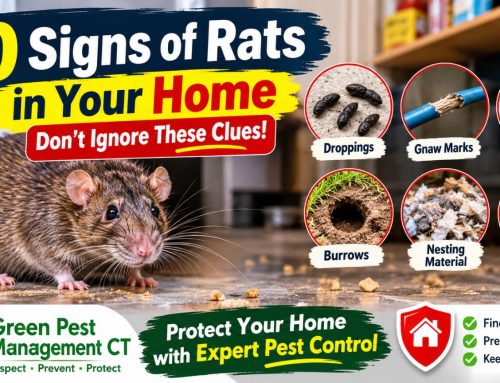
You likely have rats if you notice three or more of these: droppings larger than a grain of rice, gnaw marks, grease smears along walls, nests made of shredded material, burrows near the foundation, nighttime noises, or a musky smell. One sign can be a passing visitor. A pattern means they have settled in.
What Is a Rat Infestation?
A rat infestation means rats have found food, water, and shelter on your property and are using it regularly. They are not just passing through. They are nesting, feeding, and, if conditions allow, breeding.
In Connecticut, the most common species is the Norway rat, a heavy-bodied burrower that lives at ground level and in basements. Roof rats are less common here, but they can turn up in coastal areas and climb into attics and upper floors. Knowing which one you have matters, because it changes where we look and how we trap. That is part of why identification is the first step in any professional pest control service visit.
10 Signs of Rats in Your Home or Yard
1. Droppings in Hidden, Quiet Spots
Rats leave droppings wherever they travel and feed. Check behind appliances, under sinks, along basement walls, inside garage corners, and in attic insulation. A busy rat can leave dozens in a night. If you find a scattering in more than one area, you are probably dealing with more than one animal.
2. Scratching, Squeaking, or Scurrying at Night
Rats are mostly nocturnal. Noises in walls, ceilings, or under floors after dark are one of the most common reasons homeowners call us. Not every attic noise is a rat, though. Squirrels are active by day, and a papery buzzing is a different story, so it helps to know what a paper wasp nest looks like before you assume.
3. Gnaw Marks on Wood, Pipes, and Wiring
Rat teeth never stop growing, so they chew constantly to wear them down. Look for rough, splintered edges on baseboards, door frames, and stored boxes. Chewed wiring is the serious one. It is a real fire risk, and it is one reason we never recommend waiting out a rat problem.
4. Greasy Rub Marks Along Walls
Rats follow the same routes every night and press their bodies against walls as they go. Over time, oil and dirt from their fur leave dark smudges along baseboards, pipes, and beams. These marks tell us where the runways are, which is exactly where traps and exclusion work should go.
5. Burrows Near the Foundation or Under Structures
Norway rats dig. Look along foundations, under decks, beneath sheds, and next to dense plantings. We will describe what a rat hole looks like in detail below, but the short version is a smooth, clean entrance with no cobwebs and no debris.
6. Nests Made From Shredded Material
Rats build nests from whatever is soft and available: insulation, cardboard, paper, fabric, and dry leaves. Finding a pile of shredded material in an attic corner, a wall void, or a garage is a strong sign that rats are not just visiting.
7. A Musky or Ammonia-Like Odor
A stale, musky smell, especially in a closed basement or attic, often points to a long-term problem. Urine builds up where rats nest and travel. The odor gets stronger as the population grows, so a faint smell today can become obvious in a few weeks.
8. Pet Behavior That Changes
Dogs and cats often notice rats before you do. If your pet suddenly sniffs, paws at, or stares at a wall, vent, or cabinet, take it seriously. Pet food left out overnight is also a major attractant, which we will cover in the prevention section.
9. Damaged Food Packaging and Stored Goods
Torn cereal boxes, chewed bags in the pantry, and gnawed pet food containers are classic signs. Rats also drag food back to nesting areas, so you may find hidden stashes of crumbs, seeds, or pet kibble in odd places.
10. Rats Seen During the Day
Seeing a rat in daylight does not always mean a huge infestation, but it often does. Rats avoid people when they can. When they appear during the day, the population may be crowding itself out of nesting space, or food and water are scarce. Either way, it is time to call.
Rat Droppings Identification: What Does Rat Poop Look Like?
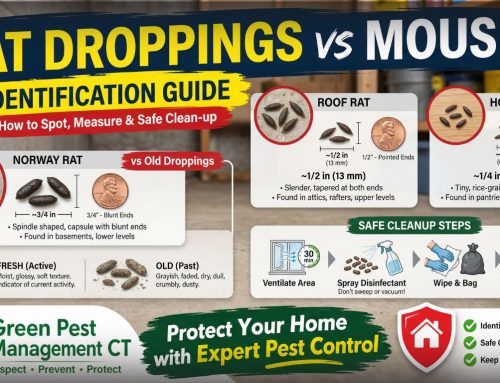
Rat droppings identification is one of the fastest ways to confirm what you are dealing with. Norway rat droppings are about half an inch to three quarters of an inch long, capsule-shaped, and blunt on both ends. Roof rat droppings are a little smaller and more pointed, often described as spindle-shaped.
Fresh droppings are dark, shiny, and soft. Older ones turn gray and crumble when touched. That tells you whether the activity is recent or historic, which helps us decide how urgent the situation is.
Safety note: Do not sweep or vacuum rodent droppings. It can put particles into the air. The CDC recommends wearing gloves, wetting droppings with a disinfectant, and wiping them up with paper towels. You can read the full steps in the CDC guide to cleaning up after rodents.
What Does a Rat Hole Look Like?
A typical rat burrow entrance is about two to four inches wide. The edges are smooth and rounded from repeated use, and the dirt around the opening is packed down rather than loose. You will often find several entrances close together, because Norway rat burrows usually have more than one exit.
Active holes look clean. Cobwebs, leaf litter, or dust inside the opening usually mean it is old. Look near foundations, under porch steps, beside air conditioning units, along fence lines, and next to compost bins or dumpsters.
Inside the house, rats only need a gap about the size of a quarter to squeeze through. Gaps around pipes, vents, garage doors, and utility lines are common entry points.
Rat vs Mouse: What Are the Differences?
Rat vs mouse differences matter because the treatment is different. Mice are smaller, quicker to enter a home, and often nest inside walls. Rats are larger, more cautious, and more likely to burrow outside before moving in. This quick comparison helps with rat identification at home:
| Feature | Rat | Mouse |
| Body size | Larger, thick body (7 to 9 inches without tail) | Small, slim body (2 to 4 inches without tail) |
| Droppings | About 1/2 to 3/4 inch, capsule-shaped | About 1/8 to 1/4 inch, rod-shaped |
| Ears and head | Smaller ears, blunt nose | Large ears, pointed nose |
| Entry gap | About the size of a quarter | About the size of a dime |
| Behavior | Cautious, avoids new objects | Curious, explores quickly |
| Nests | Burrows, attics, wall voids | Walls, cabinets, stored boxes |
A good rule of thumb: if the droppings look like grains of rice, think mouse. If they look more like a small olive pit, think rat. For more help telling similar pests apart, our pest identification comparison guides walk through common look-alikes.
Why Rats Get Into Connecticut Homes
Rats come in for the same three reasons every time: food, water, and shelter.
- Food: Unsecured trash, pet food, bird seed, compost, and fallen fruit.
- Water: Leaky pipes, clogged gutters, and standing water near foundations. Slow drains also help other pests, as we explain in our guide to drain fly and gnat control.
- Shelter: Overgrown shrubs, wood piles, cluttered garages, and gaps in the building envelope.
Kitchens with crumbs and open produce can also draw other pests, such as fruit flies and ants. If you are dealing with ants in your kitchen too, take that as a sign that food access needs attention across the whole house.
Health Risks and Property Damage
Rats are not just a nuisance. They can contaminate food and surfaces with urine and droppings, and they can carry bacteria that cause illness. The CDC lists rodent control as a primary strategy for preventing hantavirus disease, and you can find more in its hantavirus prevention overview. Rats can also bring fleas and ticks into the home.
On the property side, they chew insulation, wiring, and pipes. They can undermine slabs and patios by tunneling. In a coastal Fairfield County home with a finished basement, that kind of damage can stay hidden until it becomes expensive to repair.
Prevention Tips for Connecticut Homeowners
You cannot make a property completely rat-proof, but you can make it far less inviting. Start with these steps:
- Seal gaps. Close openings around pipes, vents, and the foundation with steel wool, metal flashing, or concrete. Rats can chew through soft materials like foam alone.
- Secure trash. Use lidded metal or heavy-duty bins and keep them away from the house.
- Store food properly. Keep pet food and bird seed in sealed containers, and avoid leaving food out overnight.
- Trim vegetation. Keep shrubs and branches off the house and clear brush from the foundation.
- Stack firewood away. Keep it off the ground and away from exterior walls.
- Fix moisture issues. Repair leaks, clean gutters, and improve drainage.
- Inspect twice a year. A quick walk around the property each spring and fall can catch problems early. The CDC also stresses that regular inspection of homes and businesses helps spot rodents before they become established.
DIY Rat Control vs Professional Rat Removal
DIY can work for a single rodent that wandered in. It usually fails when there is an active colony.
Where DIY Falls Short
Store-bought traps and baits treat the symptom, not the cause. Rats are neophobic, meaning they avoid new objects, so a poorly placed trap may be ignored for days. Bait stations can also be unsafe around kids and pets. The EPA has rodenticide safety and use restrictions in place for good reason. And natural repellents rarely solve a real infestation. If you want to know where DIY natural remedies fit and where they do not, we break that down separately.
When Professionals Make the Difference
A trained technician finds entry points you would not think to check, places traps along actual runways, and seals the structure so rats cannot return. We take the same approach to any pest, whether it is rodents or a nest, as we explain when comparing DIY versus professional nest removal. The difference is access, equipment, and experience.
What a Professional Rat Removal Process Looks Like
At Green Pest Management CT, we follow Integrated Pest Management (IPM), an approach the EPA describes as an effective, environmentally sensitive strategy that combines inspection, prevention, and targeted control. Here is what that looks like in practice:
- Professional inspection. We check the exterior, foundation, crawl spaces, basement, attic, and garage for droppings, rub marks, burrows, and entry points.
- Identification. We confirm whether it is rats or mice, and which species, so the plan fits the pest.
- Targeted control. We use traps and, where appropriate, carefully placed control measures that account for children, pets, and wildlife.
- Exclusion. We seal gaps and vulnerable areas so rats cannot come back in.
- Sanitation guidance. We advise on cleanup and on removing what attracted rats in the first place.
- Follow-up. We monitor activity to confirm the problem is resolved.
Skipping exclusion is the most common reason rat problems return. Trapping alone clears the animals you can catch today, but it does not stop the next ones from coming in.
Seasonal Patterns: When Rat Problems Peak in Connecticut
Rats are active all year, but Connecticut weather changes where and how we see them.
- Fall: As temperatures drop, rats look for warm, protected spaces. October and November are common times for homeowners to hear noises in attics and walls.
- Winter: Cold, snowy weather keeps rats indoors near heat sources and food. Activity in basements and garages tends to rise.
- Spring: Breeding picks up and nests grow. Warm weather also exposes burrows once snow melts.
- Summer: Rats nest outside near gardens, compost, and bird feeders, and may move into sheds or outbuildings.
Because they can breed throughout the year when conditions allow, early action matters in every season.
Rat Removal Near Me in Fairfield County, CT
Local conditions shape rat pressure. Older homes with stone or brick foundations, dense neighborhoods, and mature landscaping all give rats places to hide. Waterfront areas in Westport, Norwalk, and Fairfield can add moisture and harborage. Wooded lots in Wilton and New Canaan offer cover, and busy downtown areas in Stamford and Greenwich mean restaurants and dumpsters nearby.
If you manage a food business, our guidance on fruit fly control in restaurants is a good example of how sanitation overlaps across pests. The same principles apply to rodents.
We serve homeowners and businesses in Greenwich, Stamford, Darien, Westport, Fairfield, Wilton, New Canaan, Norwalk, and surrounding Fairfield County towns. If you are seeing signs of rats, schedule an inspection with our pest control team and we will tell you plainly what we find.
When to Call a Professional Right Away
Do not wait if any of these apply:
- You have seen rats more than once, or in daylight.
- You have found droppings in several rooms or in a kitchen or pantry.
- You hear activity in walls or ceilings regularly.
- You see chewed wiring or smell something unusual.
- Children, pets, or someone with a weakened immune system live in the home.
- DIY attempts have not worked after a week or two.
Frequently Asked Questions
What is the fastest way to find rat removal near me?
Search for a licensed local pest control company that offers inspections, exclusion, and follow-up visits. Check reviews, ask about their rodent process, and confirm they serve your town. In Fairfield County, Green Pest Management CT provides rat removal across Greenwich, Stamford, Darien, Westport, and nearby towns.
What are the first signs of rats in a house?
The first signs are usually droppings, scratching noises at night, and gnaw marks. You may also notice grease marks along walls or a musky odor in basements and attics.
How can I tell rat droppings from mouse droppings?
Rat droppings are larger, about half an inch or more, and capsule-shaped. Mouse droppings are small and thin, closer to a grain of rice.
What does a rat hole look like?
A rat hole is usually two to four inches wide with smooth, packed edges. Active burrows look clean, while cobwebs or debris suggest the hole is no longer in use.
What is the difference between a rat and a mouse?
Rats are larger, with thicker bodies, blunt noses, and smaller ears. Mice are slimmer, with big ears and pointed noses. Droppings, size, and nesting habits help confirm which you have.
Are rats dangerous to humans and pets?
Yes. Rats can spread bacteria through urine, droppings, and bites, and they may carry fleas. They can also damage wiring, which creates a fire hazard.
Can rats come back after removal?
They can if entry points are left open. Exclusion work, sanitation, and ongoing monitoring are what keep them from returning.
Do rats go away on their own?
Rarely. If your home provides food, water, and shelter, rats will stay and multiply. Removing those conditions and sealing the structure is the only reliable fix.
When should I call a professional instead of using traps?
Call when you see signs in more than one area, hear regular noises, find chewed wires, or have tried traps without success. A professional can find the source and prevent repeat problems.
Conclusion: Don’t Wait on a Rat Problem
Rats rarely stay small problems. The droppings, noises, rub marks, and burrows we covered are your early warning, and acting on them quickly protects your home, your health, and your wiring. If you are still typing rat removal near me into a search bar at night, that is a sign the problem is already real.
Green Pest Management CT helps homeowners across Greenwich, Stamford, Darien, Westport, Fairfield, Wilton, New Canaan, and Norwalk. Contact our pest control experts to schedule an inspection, and we will give you straight answers and a clear plan.
What is the one sign from this list you have noticed at your place, and where did you spot it?