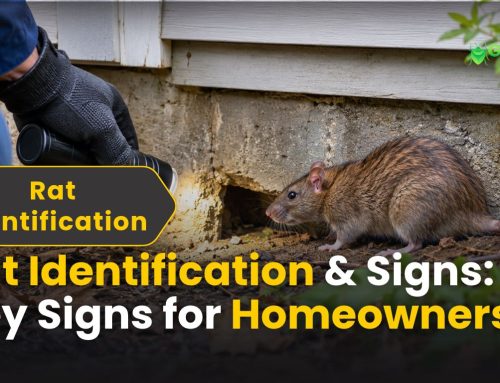
Signs of Rats in Your Home: 10 Clues You Have an Infestation
Introduction: One Dropping Is a Visitor, Several Is a Resident
Rats rarely announce themselves. Most homeowners first notice the signs of rats through something small: a dark pellet beside the dishwasher, a fresh gnaw mark on a cereal box, or a scratching sound inside the basement wall that starts once the house goes quiet. One clue rarely tells the whole story. What matters is how many clues show up, where they cluster, and whether they keep coming back.
The Signs of Rats in Your Home that point to an infestation include droppings in several rooms, gnaw marks on wiring, greasy rub trails along pipes, burrows at the foundation, night noises inside walls, nesting material, a growing urine odor, and activity that returns after cleanup. When two or three of these appear in the same area, you’re probably dealing with an established group rather than a single visitor.
This guide walks through ten clues, explains why rats choose certain homes, and covers the health and structural risks, prevention steps, and what a professional visit involves. Green Pest Management CT inspects homes across Fairfield County, from wooded properties in Greenwich and New Canaan to attached homes in Stamford and Norwalk. In our experience, the homeowners who get back to normal fastest are the ones who write down what they see and where they see it, rather than waiting for a rat to show itself.
What Are the Signs of Rats in Your Home?
Signs of rats are the marks, droppings, sounds, and smells a rodent leaves as it feeds, travels, and nests. Because rats are nocturnal and wary, that evidence usually appears long before anyone spots an animal. Pest professionals treat these clues as the starting point for integrated pest management (IPM), the approach the U.S. Environmental Protection Agency describes for managing pests through inspection, sanitation, exclusion, and targeted control rather than routine spraying.
Visitor Versus Established Population
A visitor leaves a few signs in one place, often near an entry point or a food source. A rat that wandered in through an open crawl space door might leave one dropping and move on.
An established population looks different. Droppings appear in several rooms, the same route shows wear, and nesting material turns up in more than one spot. Norway rats can produce several litters a year, so a small group can grow into a larger one within a single season. Catching the pattern early is the difference between a quick correction and a months-long problem.
Signs and Identification: The 10 Clues
Read these clues as a set. Some appear early and are easy to miss. Others usually mean a group has settled in. No single clue proves an infestation, but several clues in the same space almost always do. Photograph each one with a coin or ruler in the frame for scale, and keep a dated log.
1: Droppings Show Up in Several Rooms
One dropping can mean a single rat passed through. Droppings scattered across a basement, a garage, and a kitchen point to regular travel. Norway rat droppings are about three-quarters of an inch long with blunt ends. Roof rat droppings are closer to half an inch with pointed ends, and house mouse droppings are about a quarter inch. Check under sinks, behind the water heater, along garage walls, and on top of cabinets. Fresh droppings look dark and moist, while older ones turn gray and crumble. Our pest identification comparison hub lays out how look-alike signs differ across species.
2: Droppings Keep Coming Back After Cleaning
Clear a pile of droppings and wait. If fresh pellets appear in the same corner within a week or two, a route is still open or a nest sits nearby. Recurring activity means the source hasn’t been addressed. Note the date, the location, and whether each batch looks fresh. A simple log turns guesses into a pattern, and it gives any technician something concrete to work from.
3: Gnaw Marks on Wiring, Pipes, and Food Packaging
Rats gnaw constantly to keep their incisors worn down, so chewing is almost always a sign of current activity. Fresh marks look pale and clean, while older ones darken. Chewed wiring needs immediate attention. Turn off the affected circuit if you can do so safely, avoid touching exposed wire, and call a licensed electrician alongside a pest professional. Chewed cereal boxes, rice bags, and pet food containers in a pantry or garage show that rats have steady access to food. Move those items into sealed containers.
4: Greasy Rub Trails Along Pipes and Beams
Rats use the same routes again and again, and their oily fur leaves dark smudges where they brush against surfaces. Check pipes, beams, joists, and shelf edges at about body height. A dark band along a pipe that runs from a wall into a floor opening is one of the more reliable signs of a settled route. Hold a flashlight low and angle it across the surface to make these marks easier to spot.
5: Burrows and Worn Runways at the Foundation
Norway rats often dig along foundations, under slabs and stoops, beside stone walls, and beneath decks and sheds. An active entrance is usually two inches or more across, with a clean, packed rim and a greasy ring. Several openings close together, linked by bare or worn paths through the grass, point to an established colony. Chipmunks and moles also make openings, but they don’t leave the greasy ring or the packed runway pattern, so compare before you decide.
6: Scratching or Scurrying Inside Walls at Night
Rats are most active between dusk and early morning, so sounds usually start after the house settles. Listen for a pattern. A sound that moves along a wall, pauses, and starts again, or one that repeats at about the same time each night from the same corner, is more telling than a single noise. Plumbing, heating ducts, and shifting wood also make noise, so sound alone isn’t proof. Paired with droppings or rub marks, though, it’s a strong indicator that animals are living inside the structure.
7: Nesting Material in Attics, Garages, and Wall Voids
Rats shred paper, fabric, insulation, and dry plant material into nests. A rounded pile of pulled insulation, a clump of shredded cardboard in a garage corner, or a bundle of fabric behind a dryer may mean a nest is nearby. Nests matter more than a passing visitor’s droppings, because they’re where animals rest and raise young. Photograph the material before you touch it. Then wear gloves and a mask, since droppings are often mixed in.
8: A Stronger Ammonia-Like Odor
Rat urine has a sharp, ammonia-like smell that becomes noticeable as a population grows. Homeowners often describe a musky odor in basements, crawl spaces, or closets. A faint smell that gets stronger week by week is worth acting on. Rodent urine often fluoresces under ultraviolet light, so a UV flashlight used in a dark room can reveal trails and stains you’d otherwise miss. Wear eye protection, and don’t touch what you find.
9: Pet Food Disappears or Pets Act Unusually
Pets often notice rodents before people do. A dog that fixates on one wall, a cat that refuses to enter the basement, or a pet that paces near the stove may be responding to activity it can hear or smell. Pet food that vanishes overnight, or bags with chewed corners, point to a rodent with steady access. Rats often carry food away to stash it, so you may find missing kibble in unexpected spots.
10: Rats Seen in Daylight or Outside Their Usual Spots
Rats are mostly nocturnal, so a rat that shows up in daylight, especially near bins, sheds, or patios, can signal a crowded population or heavy food pressure. Daytime sightings also happen after disturbances like construction, flooding, or clearing work on a neighboring lot, so consider the context. One daytime sighting isn’t a verdict. Several sightings over a few weeks, combined with the other clues, usually settle the question.
The 10 Clues at a Glance
| Clue | What It Looks Like | What It Suggests |
| Droppings in several rooms | Pellets along walls, under sinks, behind appliances | Regular travel |
| Droppings returning after cleanup | Fresh pellets in the same corner | Open route or nearby nest |
| Gnaw marks | Pale, clean chewing on wire, pipe, or packaging | Active feeding and urgent wiring risk |
| Rub trails | Dark, greasy bands along pipes and beams | Established routes |
| Burrows and runways | Two-inch-plus holes at the foundation, worn paths | Outdoor colony |
| Night sounds in walls | Repeated scratching or movement | Animals inside the structure |
| Nesting material | Shredded fabric, paper, or insulation in a pile | Resting and breeding site |
| Stronger odor | Ammonia-like, musky smell that grows | Growing population |
| Pet and food behavior | Missing food, fixated pets | Steady food access |
| Daytime or unusual sightings | Rats seen in daylight or near bins | Crowding or food pressure |
Causes: Why Rats Settle In Your Home
Rats aren’t targeting your house specifically. They look for food, water, shelter, and a safe route. When all four are available in one place, the property becomes a good base.
Food and water. Unsealed trash, compost, pet food, spilled birdseed, and fallen fruit draw rodents in. Dripping faucets, air conditioner condensate near the foundation, and clogged gutters supply water. Our guide to keeping ants out of the kitchen covers sanitation habits that also cut rodent food sources.
Shelter. Woodpiles, stacked lumber, dense shrubs, and clutter in garages and basements give cover. In Connecticut, stone walls are a major factor. The gaps between stones form protected runs that can connect several yards.
Access. A Norway rat can squeeze through an opening about half an inch wide, and a house mouse can pass through about a quarter inch. Common openings include gaps around pipes and cables, damaged dryer vent flaps, unscreened vents, cracked foundation mortar, and worn door sweeps.
Seasonal pull. As temperatures drop, rodents move toward warm, protected spaces. That’s why many homeowners first notice signs in autumn, even when animals have been nearby all summer.
Risks and Problems: Why Early Action Matters
Rats create three kinds of trouble: health risks, structural damage, and household stress.
Disease. The Centers for Disease Control and Prevention provides current guidance on rodent-related illness and safe cleanup. Leptospirosis can spread through water or soil contaminated with infected urine, and Salmonella can contaminate food and surfaces. Hantavirus is a different concern. People can become infected by breathing in dust contaminated with infected droppings, urine, or saliva, and deer mice are the main U.S. carriers. Never sweep or vacuum droppings. Wet them with disinfectant, wear gloves and a mask, and follow CDC cleanup steps.
Structure and fire risk. Rats gnaw wood, drywall, insulation, and plastic pipe. Chewed wire is the most serious issue, because the damage hides inside walls until a short or arc starts a fire. Leaking plumbing can rot framing and encourage mold behind finishes.
Household stress. Infestations often grow quietly, and the uncertainty wears on people. Sleep suffers, and parents worry about children and pets. A clear inspection and a written plan replace guesswork with a plan you can check.
Prevention Tips: Making Your Home Harder to Enter
Prevention works best as a routine, and most of these steps can start this weekend.
- Seal gaps with steel wool or copper mesh first, then finish with caulk or metal flashing. Foam alone won’t hold, because rats chew through it.
- Cover attic, crawl space, and exhaust vents with 1/4-inch hardware cloth. It keeps air moving and blocks mice as well as rats.
- Fit door sweeps, replace worn weather stripping, and make sure dryer vent flaps close fully.
- Store trash in tight-lidded bins kept away from walls, and keep compost sealed or farther from the house.
- Raise woodpiles off the ground, keep them away from the foundation, and trim shrubs and vines back from the siding. Our garden habits guide for keeping pests away from the house covers yard steps that help with rodents too.
- Pick up spilled birdseed each day, and move feeders away from the house if you can.
- Keep food, including pet food and birdseed, in sealed containers.
- Run a ten-minute monthly check with a flashlight under sinks, behind appliances, along garage walls, and in the basement.
DIY vs Professional Solution
Homeowners can handle the early work: clearing food sources, sealing small reachable gaps with metal materials, and documenting activity. Once the signs repeat, the job usually moves beyond what one person can do safely or completely. Our DIY and professional pest control comparison lays out the same trade-offs for other pests.
| Task | Good for DIY? | Why |
| Clearing food and water sources | Yes | Simple, and it helps every time |
| Photographing and logging signs | Yes | You know your home best |
| Sealing small, reachable gaps with metal materials | Yes | Low risk when the opening is visible |
| Setting a few traps for one sighting | Sometimes | Works for light activity on active routes |
| Inspecting walls, attics, and pipe chases | Usually no | Limited access and contamination risk |
| Activity that returns after sealing | No | Usually means missed routes |
| Chewed wiring | No | Needs a licensed electrician |
Be cautious with home remedies. Scent-based repellents and peppermint products rarely hold up against rats for long. Our guide to do-it-yourself natural remedies explains where those approaches fall short.
Professional Treatment Process: What a Proper Visit Covers
A good provider starts with identification and ends with a written plan. Here is what that usually looks like.
Step 1: Confirm the Species and the Source
The technician reviews your log, examines the signs, and walks the property inside and out. They should explain which evidence points to which species and where the routes run. If they need more information, they should say so.
Step 2: Reduce the Population
Snap traps and tamper-resistant bait stations go on active routes. Every product must be used exactly as its label directs. The U.S. Environmental Protection Agency’s safer pest control guidance explains why label directions matter. Technicians also follow safety practices that protect people and pets, similar to the approach described in our safety-focused pest removal service overview.
Step 3: Seal Once the Population Drops
Exclusion closes entry points with steel wool or metal mesh, hardware cloth, and durable materials. Sealing too early can trap rodents inside walls, where they chew their way out or die somewhere hard to reach.
Step 4: Clean Up and Follow Up
Droppings and nesting material should be removed with gloves, a mask, and disinfectant, following CDC guidance and the label’s contact times. Most cases need at least one follow-up visit to confirm the seals hold. A good provider leaves you with a written summary and a monitoring plan.
Seasonal Information: When Rat Signs Peak in Connecticut
Rats are active all year, but Connecticut’s seasons give them clear patterns to follow.
Fall (late September through November) is the most important window. Temperatures drop, and rats look for shelter. Signs that appear now often become winter infestations, and sealing before the first hard freeze is far easier than working inside walls in January.
Winter brings no hibernation. Heated buildings draw rodents in, and snow reveals fresh tracks running from woodpiles and stone walls toward the house. Winter is a good time to inspect exterior routes.
Spring thaws the soil, reopens burrows, and brings breeding activity. Gardens and new landscaping draw rodents outdoors, and winter damage to seals may become visible.
Summer keeps rats busy around trash, patios, gardens, and irrigation. Outdoor activity is easier to see, so burrows and runways are simplest to check now.
Local Information: Connecticut Homes and Fairfield County
Connecticut’s mix of shoreline, older housing, dense towns, and wooded estates means rodent signs look different from one town to the next. Freeze-thaw cycles open cracks in older foundations, and coastal properties sit close to the marshes and tidal areas along Long Island Sound. Many homes are detached, which gives rats crawl spaces, sheds, and woodpiles to use.
Greenwich and New Canaan. Large lots and stone walls create long, connected travel routes. Burrows often line up along wall edges and lead into wooded areas. Estates with barns and outbuildings need checks at foundations and inside stored materials.
Stamford and Norwalk. Dense streets, commercial corridors, and multi-family buildings mean signs can cross property lines through shared trash areas, storm drains, and sewer lines. A neighbor’s bin can be the reason your garage has droppings, so inspections in these towns often look beyond one property.
Darien, Westport, Fairfield, and Wilton. Shoreline and marsh edges bring rodents near coastal homes, and decks and raised foundations give them hiding places. In wooded Wilton, woodpiles and brush should stay well away from the house.
For related pest guidance, our Connecticut ant control resources cover many of the same yard and foundation habits. Commercial pesticide applicators in Connecticut work under rules overseen by the Connecticut Department of Energy and Environmental Protection, and UConn Extension offers research-based information for homeowners. For detailed rodent management background, the UC Statewide Integrated Pest Management Program publishes practical guidance.
Common Mistakes That Keep Infestations Going
- Calling any small animal a rat. Check the tail and the droppings before you buy traps or bait.
- Sealing while rats are inside. They will chew through drywall and wiring looking for a way out.
- Sweeping droppings. Dry sweeping and vacuuming put contaminated dust into the air.
- Filling holes without photos. Rats often reopen blocked entrances, and you lose the evidence.
- Relying on foam. Rodents chew through it, so pair it with steel wool or metal.
- Waiting for a sighting. By the time you see a rat, there are usually more out of view.
Frequently Asked Questions
How do I know if I have a rat infestation or just one visitor?
A single sign in one spot usually means one visitor. An infestation shows repeated evidence: droppings in several rooms, fresh signs after cleaning, nesting material, night noises that follow a pattern, and rub trails along multiple routes. Two or three of these in the same area is a strong indicator of an established group.
What are the first signs of rats in a house?
Droppings, chewed packaging, and scratching inside a wall are the most common first clues. Check under sinks, behind appliances, in the garage, and in the basement. Greasy rub marks along pipes and small gnaw marks on food packaging often follow.
Is it normal to hear rats in the walls at night?
It’s common when rats are present, since they’re most active from dusk to early morning. Sound alone doesn’t confirm rats, because plumbing and wood can make noise too. A repeated pattern, combined with droppings or gnaw marks, is a much stronger indication.
How fast can a rat problem grow?
Norway rats can produce several litters a year, so a small group can grow within a single season. The problem often looks slow at first, then spreads once nesting begins. Acting on early signs keeps the population small and the work simpler.
Are rat droppings dangerous?
They can be. Droppings may carry germs, and dried material can become airborne when disturbed. Wear gloves and a mask, wet the material with disinfectant, and never sweep or vacuum it. Follow CDC cleanup guidance.
Can rats damage electrical wiring?
Yes, and it’s one of the most serious risks. Rats gnaw cable insulation, which can cause shorts, arcing, or fire, often inside walls where you can’t see it. If you find chewed wiring, have a licensed electrician inspect it promptly.
Can you tell rats from mice by their droppings?
Often, yes. Norway rat droppings are about three-quarters of an inch long with blunt ends, while house mouse droppings are about a quarter inch with pointed ends. Mice tend to scatter pellets widely, while rats leave them along routes. Confirm with tail and track checks when you can.
Will rats leave on their own?
Rats rarely leave a place that still offers food, water, and shelter. If the conditions that drew them in remain, new animals tend to replace those that move on. Lasting results depend on removing food sources and sealing entry points, not just on the animals present.
Do I need a professional for a rat infestation?
Call a licensed provider if you find signs in several rooms, chewed wiring, nesting material, or activity that returns after sealing. A professional can confirm the species, reduce the population safely, seal entry points, and follow up with you in writing.
How much does rat control cost?
Cost depends on the size of the property, how widespread the activity is, the number and difficulty of entry points, whether roof or deck work is needed, how many visits are required, and whether sanitation or repairs are part of the job. Ask for an itemized written estimate after the inspection so you can see exactly what’s included.
Conclusion: Read the Clues and Act Early
The signs of rats add up. One dropping may be a visitor, but droppings in several rooms, chewed wiring, rub trails, burrows, night noises, and nesting material point to a population that has settled in. Read together, these clues show what’s happening and how far it has spread.
In Connecticut, that means paying attention in the fall, watching stone walls and foundations, and treating every chewed wire as urgent. If you’re seeing these signs in your home, don’t wait for the next noise. Start a log, take photos, and contact the Green Pest Management CT team to schedule an inspection. A licensed inspector can confirm the species, map the activity, and give you a written plan you can check against.