What Does a Rat Exterminator Do? Full Process Explained
Scratching in a wall. Small dark droppings behind the kitchen trash. A greasy rub mark along a basement sill. When a rat moves into a Connecticut home, the problem rarely stays small for long. You want to know what a rat exterminator actually does, whether professional help is worth it, and how the process works before someone walks through your door.
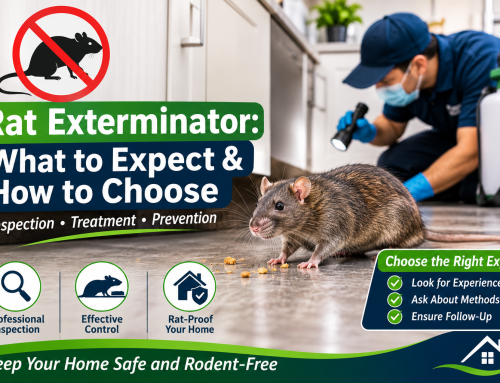
A rat exterminator inspects the property, identifies the rat species and activity pattern, removes the active population using traps or targeted baiting when appropriate, seals entry points through rat exclusion services, reduces food and shelter sources, and sets up a monitoring plan so rats do not return. The best providers use an Integrated Pest Management approach instead of simply dropping poison and leaving.
This guide explains the full process, the signs homeowners miss, the local conditions that make rats common in Greenwich, Stamford, Darien, Westport, Fairfield, Wilton, New Canaan, Norwalk, and nearby areas—and when it is time to call Green Pest Management CT for an inspection.
What Does a Rat Exterminator Do?
A modern rat exterminator is more accurately a rodent control specialist. The job is not just to kill the rat you see. It is to find the rats you cannot see, identify how they are getting in, remove their food and water sources, and stop the cycle.
A professional visit usually includes:
- A detailed interior and exterior inspection
- Species identification, because Norway rats and roof rats behave differently
- Mapping of runways, droppings, burrows, nests, and entry points
- A treatment plan using traps, tamper-resistant bait stations when needed, or a combination
- Rat exclusion services to physically block entry
- Sanitation guidance for contaminated areas
- Follow-up monitoring and prevention recommendations
This is why two homes that look similar on the outside may need very different plans. A house in Darien with a stone foundation and an attached garage has different weaknesses than a Stamford multi-family building with shared trash areas. A professional rat control plan should reflect the property, not a one-size-fits-all package.
Rat Extermination vs. Rat Exclusion: Why the Best Providers Do Both
Rat extermination services focus on removing the active rat population. That may involve snap traps, professional trapping equipment, or rodenticide placed in secure, tamper-resistant stations according to label directions and Connecticut requirements.
Rat exclusion services focus on prevention. Sealing gaps, adding door sweeps, repairing vents, closing foundation penetrations, and blocking roofline access makes it much harder for new rats to enter.
Extermination without exclusion often leads to a repeat problem. Exclusion without addressing an active population can trap rats inside the building, which is worse. The best rodent control plans combine both.
If you are comparing providers, ask a simple question: “Will you show me the entry points and explain how they will be sealed?” A company that only treats the symptoms is not giving you a complete plan.
What Are the Most Common Signs of Rats in a Connecticut Home?
Rats are cautious and mostly active at night, so many homeowners miss the early signs. Look for:
- Droppings near walls, under sinks, in the basement, garage, attic, or behind appliances
- A musky, stale odor in closed spaces
- Scratching, scampering, or squeaking sounds after dark
- Gnaw marks on food packaging, wood, pipe insulation, or electrical wiring
- Greasy rub marks where rats brush against walls and beams
- Burrows near foundations, sheds, woodpiles, or trash areas
- Torn insulation or shredded paper used for nesting
- Pets staring or sniffing at a wall, cabinet, or floor vent
Norway rats are the most common rat in Connecticut. They prefer ground level: basements, crawl spaces, sewers, garages, foundations, and trash areas. Roof rats are less common but can appear in coastal and densely developed neighborhoods, where they often climb and nest above ground level. A professional inspection can confirm which species you are dealing with and where the activity is concentrated.
Why Do Rats Become a Problem in Fairfield County?
Rats need what every pest needs: food, water, and shelter. Homes in Greenwich, Stamford, Darien, Westport, Fairfield, Wilton, New Canaan, and Norwalk offer all three in different ways.
Common local causes include:
- Older homes with fieldstone foundations, crawl spaces, and gaps around pipes
- Detached garages, sheds, and additions with imperfect seals
- Bird feeders, compost bins, pet food left outside, and unsecured trash
- Dense town-center neighborhoods near restaurants and commercial buildings
- Woodpiles, leaf piles, brush, and overgrown foundation plantings
- Sewer and drainage line issues, especially in older developed areas
- Coastal storms and heavy rain that push rats out of outdoor burrows
- Construction activity and utility work that disturb established runways
Rats are year-round in Fairfield County, but calls often increase in fall when temperatures drop and rats look for warmth. Winter activity inside basements, crawl spaces, and garages is common. Spring brings breeding activity, and summer can push rats around outdoor food sources, gardens, and trash areas.
What Problems Do Rats Cause?
Rats are more than a nuisance. They contaminate food and surfaces with droppings, urine, and hair. They can damage insulation, drywall, storage boxes, and electrical wiring. Chewed wiring is a particular concern because it may create fire risk.
They also carry parasites and pathogens, which is why droppings should never be swept up dry without protection. The CDC’s rodent information explains why rodent control is a public health issue, not just a housekeeping issue.
For businesses, rats can affect reputation, inspections, and customer trust. For homeowners, the biggest risks are repeated property damage, contamination, and the stress of not knowing how many rats are present.
What Happens During a Professional Rat Inspection?
A good inspection is the most important part of rat control. Technicians check for current activity, old activity, and future entry points. They look at the floor and the roofline, because rats do not only enter at ground level.
Interior areas inspected include:
- Kitchen, pantry, and utility rooms
- Basement, crawl space, and attic
- Behind appliances and storage areas
- Gaps around plumbing, electrical lines, and HVAC equipment
- Garage-to-house connections
Exterior areas inspected include:
- Foundation walls, sill plates, and vents
- Doors, thresholds, and garage doors
- Roof edges, gutters, soffits, and downspouts
- Utility penetrations and dryer vents
- Trash areas, compost, woodpiles, and sheds
- Neighboring conditions that may push rats onto the property
The technician then creates an activity map. This helps determine whether the problem is centered in the kitchen, basement, garage, roofline, or an exterior burrow. That map drives the treatment plan. This inspection-first approach is a core part of EPA’s Integrated Pest Management principles.
The Rat Treatment Process, Step by Step
Step 1: Confirm the species and activity level
The technician confirms whether the issue is rats, mice, squirrels, or another animal. This matters because traps and entry sealing differ by species. Fresh droppings, rub marks, and active runways help determine where to focus.
Step 2: Build a property-specific plan
There is no useful one-size-fits-all plan for every home. A plan should account for pets, children, crawl space access, landscaping, trash areas, building age, and the severity of activity.
Step 3: Remove the active population
Depending on the situation, a professional may use traps, tamper-resistant bait stations, or both. Trapping can help confirm species and remove rats without relying only on rodenticides. When rodenticide is used, safety and correct placement are essential. The EPA’s rodenticide safety information explains why tamper-resistant stations and label directions matter.
Step 4: Seal entry points with rat exclusion services
This is where long-term control happens. Rats can squeeze through gaps much smaller than many homeowners expect. Sealing with the right materials—not just spray foam—is essential. Door sweeps, vent covers, pipe collars, foundation repairs, and roofline closures all matter.
Step 5: Reduce food, water, and shelter
Trash, birdseed, compost, pet food, dripping pipes, clutter, and overgrown foundation beds all support rodent activity. The technician should explain what to change and what can be corrected during service.
Step 6: Monitor and follow up
Rodent control is not always a one-visit job. Follow-up visits check activity, reset traps if needed, verify exclusion work, and catch issues before they become another infestation.
Step 7: Give you a prevention plan
A professional should leave you with clear recommendations: what to fix, what to monitor, and when to call again. This is especially important in older Fairfield County homes where new gaps can open after renovations, storms, or utility work.
What Are Common Rat Entry Points?
Rats often enter through ordinary building gaps, including:
- Gaps around water, gas, and electrical lines
- Dryer vents and HVAC penetrations
- Broken foundation cracks and sill gaps
- Loose or missing door sweeps
- Garage door corners and gaps
- Open or unscreened crawl space and attic vents
- Roof-to-wall intersections and damaged fascia
- Sewer or drainage line openings
- Additions, porches, and decks built over older foundations
A trained eye looks for rub marks, gnaw dust, and roof-line access, not just obvious holes near the ground. That is why a homeowner can look around and see “nothing,” while a technician finds several likely access points.
DIY Rat Control vs. Hiring a Professional
DIY can be useful for monitoring, cleaning up food sources, and setting a few traps in a garage. But it has limits.
| Task | DIY approach | Professional approach |
| Inspection | Check visible areas | Interior and exterior inspection, including roofline and crawl space |
| Species ID | Often guessed | Confirmed by droppings, tracks, behavior, and damage |
| Trapping | Store-bought traps | Strategic placement, safety, and activity tracking |
| Poison | High risk if misused | Restricted, targeted, tamper-resistant use when appropriate |
| Exclusion | Foam or caulk in obvious gaps | Rodent-resistant sealing of hidden and structural entry points |
| Follow-up | Usually none | Monitoring and plan adjustments |
| Prevention | General cleaning | Property-specific recommendations |
Avoid using loose poison where children, pets, or wildlife can reach it. Avoid touching droppings without gloves and proper disinfection. And avoid sealing holes while rats are still inside—that is a common DIY mistake.
Call a professional when you see rats in multiple rooms, find droppings in food areas, hear activity above ceilings, notice chewed wiring, have a large building, or have already tried DIY without success. If you are searching for “rat removal companies near me,” choose a company that inspects first and explains the plan in plain language.
Rat Extermination in NYC, Brooklyn, Manhattan, and Queens: What CT Homeowners Can Learn
Many people search for a rat exterminator NYC after seeing rats near subway grates, alleys, restaurants, or multi-family buildings. Others look for a rat exterminator Brooklyn, Manhattan, or Queens provider after a sighting in a shared trash area. The same professional standards apply in dense cities and suburban Connecticut: inspect first, identify the problem, remove the active population, seal entry points, and follow up.
If you are comparing an NYC exterminator or a New York rat exterminator with a Connecticut company, ask what is included. Do they provide rat exclusion services? Do they explain safe rodenticide use? Do they offer follow-up? Do they put the scope of rat extermination services in writing? For anyone searching for rat removal companies near me, the lesson is simple: do not hire a provider who promises results over the phone without inspecting the property.
Green Pest Management CT focuses on Connecticut’s Fairfield County, not the New York City boroughs. For homeowners in Greenwich, Stamford, Darien, Westport, Fairfield, Wilton, New Canaan, Norwalk, and surrounding towns, we bring the same inspection-based approach to local homes and properties.
Seasonal Rat Activity in Fairfield County
Rats do not disappear in winter. They adapt. Cold weather pushes them toward warm basements, crawl spaces, garages, and wall voids. Snow cover also gives them hidden runways outdoors.
Spring and summer activity often centers on food sources: compost, gardens, pet food, trash, and outdoor structures. Fall is classic entry season—temperatures drop, natural food sources thin out, and rats look for shelter near foundations. Coastal storms and heavy rain can also move rats out of outdoor burrows and into buildings.
That is why prevention work is worth doing before you see a rat. Sealing gaps and managing food sources in early fall can prevent a winter problem.
Local Rat Concerns in Greenwich, Stamford, Darien, Westport, Fairfield, Wilton, New Canaan, and Norwalk
Local conditions shape the work. In Greenwich, larger properties, detached garages, stone foundations, and landscaped buffers can hide rat runways. In Stamford, the mix of single-family homes, multi-family buildings, restaurants, and commercial corridors creates different food and shelter patterns. Darien and New Canaan often have wooded edges, sheds, and older basements that need careful entry-point work.
Westport and Fairfield combine shoreline weather with town-center businesses and older housing stock, so foundation gaps, garage seals, and trash management all matter. In Wilton, larger lots, compost areas, and outbuildings can support rats if food is available. Norwalk’s waterfront and commercial areas can create rodent pressure that moves toward nearby homes.
No town is “immune,” and no single product fixes every property. That is why Green Pest Management CT inspects before recommending treatment.
How to Prevent Rats Around Your Home
Use this prevention checklist:
- Store trash in hard-sided cans with tight lids; do not leave bags on the ground.
- Remove outdoor pet food and water bowls at night.
- Keep bird feeders away from the house and clean up spilled seed.
- Use compost bins with lids and avoid adding greasy food scraps.
- Keep firewood and lumber off the ground and away from foundation walls.
- Trim foundation plants and remove leaf piles, brush, and clutter.
- Seal gaps around pipes, vents, doors, and garage thresholds.
- Fix dripping outdoor faucets and poor drainage.
- Inspect the basement, attic, and garage after storms or renovations.
- Use gloves and disinfectant if cleaning old droppings, or ask a professional.
For additional low-risk prevention ideas around the home, these natural pest prevention and DIY remedies can complement—not replace—professional rodent control. If you need broader help identifying what pest you are seeing, the site’s pest identification resources are a useful starting point.
Rats are not the only seasonal pest in Fairfield County. If wasps are building under eaves, review professional wasp and hornet extermination services and this Connecticut wasp vs. hornet comparison. For kitchen or drain pests, these indoor fruit fly control products and the guide to when to call a fly exterminator can help. Ants around foundations are another common local issue, covered in this Connecticut ant control by location resource.
How to Choose a Rat Exterminator in Connecticut
Before hiring anyone, ask:
- Are you licensed and insured?
- Will you inspect before recommending treatment?
- Do you use Integrated Pest Management?
- Will you explain potential entry points and sealing work?
- How do you protect children, pets, and non-target wildlife?
- Do you provide follow-up and prevention guidance?
- Do you serve my town in Fairfield County?
The best provider will not pressure you or promise a result without seeing the property. You should understand what will be done, where, and why. For a complete view of services and local resources, visit trusted professional pest control services in Fairfield County.
Frequently Asked Questions
What does a rat exterminator do?
A rat exterminator inspects for activity and entry points, identifies the rat species, removes the active population using traps or safe baiting when needed, seals entry points, reduces food and shelter sources, and monitors the property to help prevent reinfestation.
How do I know if I have rats or mice?
Rat droppings are larger than mouse droppings. Rats also create larger gnaw marks, rub marks, burrows, and louder scratching sounds. A professional inspection confirms the species and the extent of activity.
Do rat exterminators use poison?
Some do when appropriate, using tamper-resistant stations and following label and state requirements. Many situations can be handled with trapping, exclusion, and sanitation. A good provider explains the method and safety precautions before treatment.
What are rat exclusion services?
Rat exclusion services are physical repairs and modifications that block rats from entering a building. Examples include door sweeps, vent covers, foundation sealing, pipe collars, roofline repairs, and closing gaps around utilities.
How long does professional rat treatment take?
The timeline depends on how many rats are present, how accessible the entry points are, and how much exclusion work is needed. Most plans include an initial service plus follow-up monitoring. A provider should explain the expected sequence before starting.
Do I need to leave my home during treatment?
Usually not. If any treatment method requires special precautions, the technician should explain them clearly. Keep children and pets away from traps or bait stations and follow all instructions provided.
Are rats dangerous to people and pets?
Rats can contaminate food and surfaces, carry parasites, and cause property damage. Pets can be exposed through contact with rodents or contaminated areas. Never handle rats or droppings without proper protection.
Can rats come back after treatment?
Yes, if entry points or food sources remain. That is why exclusion, sanitation, and monitoring are essential. Treatment removes the current population; prevention keeps a new population from moving in.
Do you serve New York City or only Connecticut?
Green Pest Management CT serves Greenwich, Stamford, Darien, Westport, Fairfield, Wilton, New Canaan, Norwalk, and surrounding Fairfield County communities. If you are in Brooklyn, Manhattan, or Queens, use the same questions when evaluating a local rat exterminator in NYC.
What should I ask before hiring a rat exterminator?
Ask about licensing, inspection, treatment methods, exclusion work, safety for children and pets, follow-up visits, and prevention guidance. A written plan and clear communication are signs of a professional service.
Conclusion
So, what does a rat exterminator do? A real professional does far more than set a trap. They find the source, identify the species, remove the active population, seal the building against re-entry, reduce food and shelter sources, and monitor the property until the problem is under control.
If you have seen droppings, heard scratching, or found gnaw marks in your home, do not wait for the problem to spread. Green Pest Management CT helps homeowners and property owners in Greenwich, Stamford, Darien, Westport, Fairfield, Wilton, New Canaan, Norwalk, and surrounding Fairfield County areas with inspection-based rat control and exclusion planning. Schedule an inspection and get a clear, practical next step.