Flying Insect Control Services: What Pest Control Actually Does
More Than Just Spraying: The Reality of Flying Insect Control
Most homeowners picture pest control as someone showing up with a sprayer, hitting a few spots, and leaving. For flying insects specifically whether that’s a hornet nest in your backyard, a persistent fruit fly problem in your kitchen, or a yellow jacket colony that’s made a home inside your wall that picture misses almost everything that actually matters.
Flying insect control services cover a genuinely broad range of pest problems, treatment methods, and professional disciplines. What a technician does for a bald-faced hornet nest is completely different from what they do for a drain fly infestation, which is different again from what’s needed for a commercial fruit fly problem in a Norwalk restaurant kitchen.
This article explains what professional flying insect pest control actually involves broken down by pest type, treatment method, and situation so you can understand what you’re getting, evaluate providers intelligently, and make a confident decision about when professional intervention makes sense for your specific problem. Whether you’re in Greenwich dealing with hornets, in Westport with a summer fruit fly situation, or anywhere across Fairfield County where flying insects are a seasonal reality, this guide is for you.
What Are Flying Insect Control Services?
Flying insect control services is an umbrella term for professional pest management programs designed to identify, treat, and prevent infestations caused by flying insect species. This category includes:
- Stinging insects: Hornets, wasps, yellow jackets, and bees
- Nuisance flies: Fruit flies, drain flies, house flies, cluster flies, and phorid flies
- Other flying pests: Gnats, mosquitoes, and flying insects that may be misidentified as wasps or hornets
What unifies these services under one category is the professional approach: accurate identification first, targeted treatment second, prevention planning third. The specific tools, products, and methods vary enormously depending on which flying insect is involved.
It’s worth understanding that flying insect control isn’t a single service — it’s a category of related but distinct professional interventions. A provider who specializes in stinging insect removal may not have deep expertise in fly control, and vice versa. The best local pest control companies handle both competently because Connecticut homeowners regularly face multiple flying insect pressures simultaneously, particularly during summer months.
The Flying Insects Connecticut Homeowners Actually Deal With
Fairfield County’s combination of humid summers, dense tree cover, older housing stock, and coastal proximity creates conditions that support a wide variety of flying insect species. Understanding what’s common in your area helps you communicate more effectively with a pest control professional and set realistic expectations about treatment.
Stinging Insects: Hornets, Wasps, and Yellow Jackets
These are the flying insects most likely to create genuine safety concerns. In Connecticut, the primary species homeowners encounter are:
Bald-Faced Hornets Large, black-and-white insects that build the characteristic football-shaped gray paper nests. Common throughout Wilton, New Canaan, and Darien where wooded lots provide abundant nesting sites in tree canopies. Colonies reach peak size — sometimes 400 to 700 workers by late summer and are extremely aggressive when their nest is disturbed.
European Hornets Larger than yellow jackets, brownish-yellow with reddish markings, and unique in being active at night. They prefer hollow trees and wall cavities. Greenwich and New Canaan homeowners frequently encounter them in mature trees adjacent to landscaped properties.
Yellow Jackets The most problematic stinging insect from a treatment standpoint. Fast, aggressive, and capable of stinging repeatedly. They nest in the ground or inside wall voids and are responsible for the majority of serious sting incidents. Understanding yellow jacket behavior and colony biology explains why wall void infestations are among the most difficult flying insect situations to resolve.
Paper Wasps Slender insects with long legs that dangle in flight. They build small, open-celled nests under eaves, porch ceilings, and deck overhangs. Less aggressive than hornets but will sting if the nest is disturbed. Common across all Fairfield County communities during spring and summer.
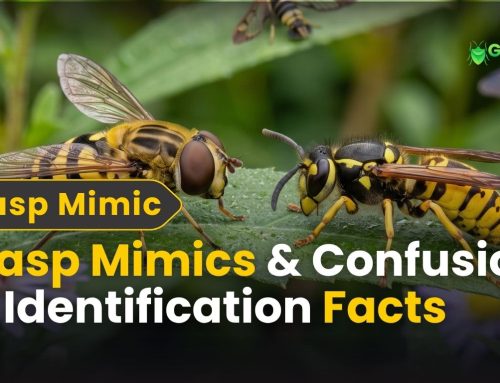
For homeowners trying to tell species apart before calling a professional, the wasp and hornet identification encyclopedia for Connecticut provides detailed visual comparisons specific to species found in the state.
Flies and Small Flying Insects
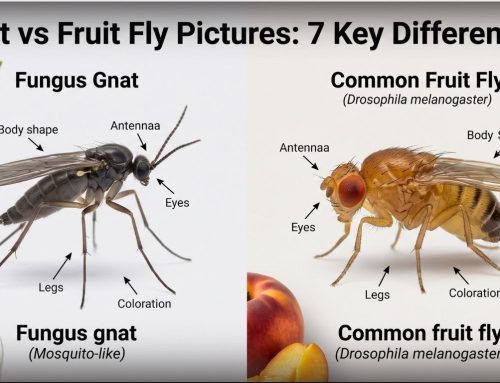
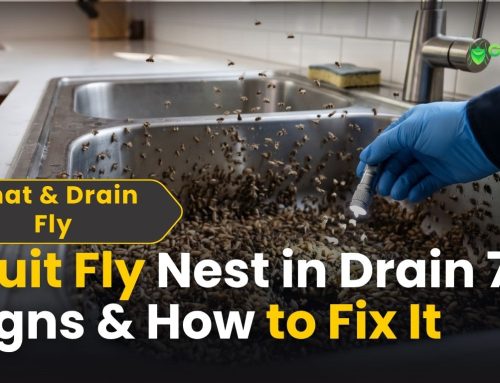
Fruit Flies: The most common residential flying insect complaint year-round. They breed in fermenting organic matter, especially drain film, overripe produce, and residue in recycling bins. What looks like a simple kitchen problem is often a plumbing-adjacent breeding situation that’s harder to resolve than it appears.
Drain Flies: Small, fuzzy, moth-like flies that breed exclusively in the organic matter inside drain pipes. They’re often misidentified as fruit flies but require a different treatment focus.
House Flies: Larger, faster-moving flies that breed in decaying organic matter. An indoor house fly problem almost always indicates either a significant outdoor source or an undiscovered indoor issue like a dead animal inside a wall.
Cluster Flies: A fall and winter concern in Connecticut. These flies enter structures in autumn to overwinter and emerge on warm winter days near windows. They don’t breed indoors and require exclusion rather than source treatment.
Phorid Flies: Small, hump-backed flies that run erratically. Their presence almost always indicates a serious plumbing or structural issue and warrants immediate professional investigation.
What Professional Flying Insect Control Actually Involves
Here’s where the reality of professional pest control diverges most sharply from what most people expect. Effective flying insect control is primarily a diagnostic and investigative process. Treatment is what happens after the problem is accurately understood not before.
Phase 1: Species Identification and Assessment
Every professional flying insect service begins with accurate identification. The species determines the treatment method, the safety protocols required, the likely breeding or nesting location, and the realistic timeline to resolution.
A technician who shows up and immediately begins treating without a thorough assessment is skipping the most important step. This is one of the fastest ways to distinguish professional-quality service from cut-rate pest control.
For stinging insects, assessment includes evaluating nest size, colony activity level, location accessibility, and proximity to people and structures. For flies, it includes systematic inspection of potential breeding sources — drains, organic materials, moisture areas, and structural vulnerabilities.
Phase 2: Treatment Selection Under IPM Principles
Integrated Pest Management (IPM) the professional standard recognized by the EPA guides treatment selection based on what will achieve effective control with the minimum necessary intervention. This means:
- Physical exclusion before chemical treatment where possible
- Targeted application to specific breeding or nesting sites rather than broad area spraying
- Product selection appropriate to the species, location, and environmental considerations
- Monitoring-based approach to confirm effectiveness before concluding service
This isn’t just environmentally responsible it’s more effective. Broad treatments that don’t address the actual source of a flying insect problem provide temporary results at best.
Phase 3: Targeted Treatment Execution
The actual treatment varies dramatically by flying insect type:
For aerial hornet and wasp nests:
- Direct nest treatment using EPA-registered aerosol or dust insecticide, typically applied at dusk or early morning when workers are clustered inside
- Timed application to maximize product contact with the colony
- Protective equipment appropriate to the colony size and species aggression level
For yellow jacket ground nests:
- Dust or liquid insecticide applied directly into the colony entrance, often at night when foraging workers have returned
- Follow-up inspection to confirm complete colony elimination
For wall void stinging insect infestations:
- Drilling of access points into void space
- Dust or foam insecticide injection to reach the colony
- Sealing of access points post-treatment
- Follow-up inspection to confirm elimination and assess for structural repair needs
For fruit fly and drain fly infestations:
- Professional-grade enzyme or microbial drain treatment to eliminate breeding film
- Residual insecticide application to adult resting surfaces
- Source elimination guidance for organic materials contributing to breeding
For cluster fly infestations:
- Exterior perimeter treatment in late summer/early fall before entry
- Interior insecticide application to overwintering populations
- Structural exclusion to seal entry points
For a detailed look at what professional hornet exterminator services include beyond basic treatment, that resource covers the full scope of what competent stinging insect control involves.
Phase 4: Follow-Up and Prevention Planning
Treatment without follow-up confirmation is an incomplete service. Professional flying insect control includes:
- Return inspection to confirm colony or infestation elimination
- Assessment of any secondary activity or additional breeding sites
- Structural and sanitation recommendations specific to the property
- Prevention planning for future seasons
This last component is where the long-term value of professional service accumulates. A technician who’s inspected your Darien property, treated a bald-faced hornet nest, and then walked the exterior with you to identify three potential new nesting sites before next season has provided meaningful value beyond just resolving the current problem.
Flying Insect Control Costs: What to Expect in Fairfield County
Pricing for flying insect control varies considerably based on the pest type, infestation severity, and treatment complexity. Here’s a realistic framework for Connecticut homeowners.
Stinging Insect Services
| Service | |
| Paper wasp nest removal (accessible) | |
| Bald-faced hornet nest removal | |
| Elevated aerial nest (ladder required) | |
| Yellow jacket ground nest | |
| Yellow jacket wall void infestation | |
| European hornet (structural) | |
| Emergency same-day service premium |
Fly and Small Flying Insect Services
| Service | |
| Residential fruit fly inspection and treatment | |
| Drain fly treatment | |
| Cluster fly exterior/interior treatment | |
| Phorid fly investigation | |
| Commercial fly control (per visit) | |
| Monthly commercial fly control contract |
These ranges reflect 2026 Fairfield County market conditions. Actual costs depend on property size, access difficulty, infestation severity, and whether follow-up visits are required.
For a deeper breakdown of what drives hornet treatment costs specifically, the hornet exterminator cost guide for Connecticut covers the factors that move prices up or down in detail.
When Flying Insect Problems Require Immediate Professional Response
Some flying insect situations are inconvenient. Others are genuinely urgent. Knowing the difference helps homeowners prioritize appropriately.
Situations Requiring Same-Day or Emergency Service
Stinging insects:
- Active hornet or yellow jacket nest near a primary entry point or high-traffic outdoor area
- Accidental nest disturbance with aggressive defensive response underway
- Known sting allergy in household with active nest on property
- Nest discovered inside a living space (inside a room, not just a wall)
- Multiple sting incident involving children or pets
Flies:
- Commercial kitchen with health inspection scheduled and active fly infestation
- Phorid fly activity suggesting active plumbing or sewage issue
- Heavy house fly infestation suggesting undiscovered organic material source inside structure
For urgent stinging insect situations, immediate hornet control in Connecticut is available through locally based professionals who can respond within Fairfield County on the same day.
Situations That Can Be Scheduled Promptly (Not Emergency)
- Active but non-threatening aerial nest away from high-traffic areas
- Persistent fruit fly or drain fly infestation without health code implications
- Early-season nest discovery with small colony size
- Cluster fly activity in an unoccupied section of the home
DIY vs. Professional Flying Insect Control: The Honest Assessment
There are genuine cases where homeowners can successfully manage flying insect problems without professional help. And there are cases where DIY attempts waste time, money, and sometimes create safety risks. Here’s the breakdown.
When DIY Is Reasonable
For small stinging insect nests:
A single paper wasp nest smaller than a softball, located in an accessible spot away from regular foot traffic, and discovered early in the season this is a situation where careful, properly timed DIY treatment with appropriate protective measures can work.
For mild fly infestations:
Early-stage fruit fly activity where the source is obvious (a bag of overripe produce, a neglected recycling bin) can often be resolved through thorough source elimination plus targeted trapping. Indoor fruit fly killer products are effective for adult population reduction when the breeding source has genuinely been removed. DIY fruit fly traps serve well as monitoring tools during and after the resolution process.
When Professional Service Is the Right Call
For stinging insects:
Any mature colony meaning anything discovered after June warrants professional treatment. The risk-reward calculation is unfavorable for DIY at this stage. A mature bald-faced hornet nest or wall void yellow jacket colony contains defensive workers with full behavioral development, and the consequences of a failed treatment attempt are significantly more serious than the cost of professional service.
For flies:
When an infestation has persisted more than two weeks despite thorough cleaning, when flies return repeatedly in the same location, when you can’t identify the breeding source, or when drain flies or phorid flies are involved. The fly exterminator guide covering when professional help is warranted walks through this decision framework in more detail.
Seasonal Flying Insect Patterns in Connecticut
Fairfield County’s pest calendar follows predictable patterns that shape when specific flying insect control services are most needed.
Spring (April–May): Prevention Window
The most valuable professional investment of the year. Stinging insect queens are establishing new nests, colonies are tiny, and treatment is straightforward. A spring inspection that catches five early-stage nests on a Wilton property in May prevents five August emergencies. Deterring hornets from nesting during this window through structural exclusion and early intervention is dramatically more cost-effective than reactive treatment later in the season.
Summer (June–August): Peak Demand Season
The highest-volume period for flying insect control services across all of Fairfield County. Stinging insect colonies reach maximum size and aggression. Fruit fly populations explode in humid conditions particularly in coastal communities like Westport and Fairfield where summer humidity accelerates fermentation. Emergency and same-day service demand peaks during this window.
Homeowners should not delay scheduling during summer. A nest that’s been noticed but not treated in late June will be significantly larger and more dangerous by August. Response times from busy local pest control companies also extend as summer progresses.
Fall (September–November): Transition Season
Yellow jacket aggression peaks as workers become increasingly defensive about declining food resources. This is when sting incidents at outdoor gatherings and near garbage areas spike. Cluster fly entry begins in earnest as temperatures drop. Fall is also an important structural exclusion window sealing entry points now prevents cluster flies and other overwintering insects from establishing inside the structure.
Winter: Indoor Problem Season
Any flying insect active inside a heated Connecticut home in winter is telling you something specific. There’s no outdoor supplementation of the population during this period, which means whatever source is sustaining activity is inside your home. Winter fly problems almost always require professional investigation to identify sources that aren’t obvious through casual inspection.
Local Expertise: Why It Matters for Flying Insect Control
Connecticut’s flying insect pressures are shaped by local environmental and structural conditions that a generalist or national franchise operator won’t know as intimately as a locally experienced professional.
The older colonial and Victorian construction found throughout Greenwich, New Canaan, and Darien creates specific structural vulnerabilities — gaps in original siding, deteriorating fascia, and attic spaces with irregular construction — that provide exactly the conditions yellow jackets and European hornets seek for wall void nesting. A technician who’s treated dozens of these situations in these specific communities understands the nuances.
Wilton and Westport properties with significant tree canopy and mature landscaping see consistent bald-faced hornet nest development at heights and locations that require specific access approaches. The shoreline humidity that characterizes Norwalk, Fairfield, and Westport accelerates both fly breeding cycles and the fermentation conditions that attract stinging insects foraging near outdoor dining areas.
This kind of contextual knowledge built through years of treating specific properties in specific communities is what separates a genuinely local expert from someone who treats Connecticut properties as interchangeable with any other state.
For homeowners wanting a broader understanding of wasp and hornet behavior specific to Connecticut conditions, that resource provides the behavioral context that makes local treatment decisions more informed.
Frequently Asked Questions
What do flying insect control services include?
Flying insect control services include professional species identification, systematic property inspection to locate nests or breeding sources, targeted treatment using EPA-registered methods appropriate to the specific pest, follow-up inspection to confirm results, and prevention recommendations. The specific treatment varies significantly between stinging insects like hornets and wasps versus fly infestations each requires a different professional approach.
How much do flying insect control services cost in Connecticut?
Costs vary by pest type and situation. Stinging insect nest removal ranges from depending on species, nest size, and location complexity. Fly control services range from for residential treatment. Emergency same-day service typically adds to standard pricing. Commercial fly control contracts run per month. Always request a written quote before service begins.
Can one pest control company handle both hornets and fruit flies?
Yes and working with a provider who handles the full spectrum of flying insect problems is generally more practical than managing separate specialists. Quality local pest control companies in Fairfield County provide competent treatment for both stinging insects and fly infestations, which matters because Connecticut homeowners regularly deal with multiple flying insect pressures simultaneously during summer.
How do I know which flying insect I have?
Species identification starts with size, color, nesting location, and behavior. Bald-faced hornets build large gray aerial nests; yellow jackets nest in the ground or wall voids; paper wasps build small open-celled nests under eaves. For flies: fruit flies are tiny and reddish-brown; drain flies are fuzzy and dark with rounded wings; house flies are larger and gray. The Connecticut wasp and hornet identification guide provides detailed visual help for stinging insects specifically.
Are flying insect control treatments safe for children and pets?
Licensed pest control professionals use EPA-registered products applied at label-compliant rates. Technicians will advise you to keep people and pets away from treated areas for a specified period after application. Always follow these instructions and ask your technician to explain exactly what products are being used if you have specific concerns about household members or pets with sensitivities.
How long does it take for flying insect control treatment to work?
For stinging insects, colony elimination typically occurs within 24–72 hours after treatment, with complete activity cessation within a week. For fly infestations, adult population reduction is visible within 24–48 hours, but complete resolution including elimination of breeding populations takes 1–2 weeks as remaining eggs and larvae cycle through. Follow-up inspection at 10–14 days confirms full resolution.
Is same-day flying insect control available in Fairfield County?
Many local pest control companies serving Greenwich, Stamford, Westport, Norwalk, and surrounding communities offer same-day service for genuine emergencies. Summer peak season can extend response times, so calling early in the day and clearly communicating the urgency of your situation particularly if there’s an allergy risk or an active stinging insect attack situation improves your chances of same-day scheduling.
Why do flying insect problems keep coming back every year?
Most recurring flying insect problems involve either a persistent breeding source that was never fully eliminated (common with flies), or structural conditions on your property that make it consistently attractive for stinging insect nesting (common with hornets and yellow jackets). Prevention planning including structural exclusion, sanitation improvements, and spring inspection is what breaks the annual recurrence cycle. A good pest control professional will address these underlying factors as part of the service, not just treat the current infestation.
Do I need professional flying insect control for a small wasp nest?
Not always. A small paper wasp nest discovered early in the season, in an accessible location away from high-traffic areas, may be manageable with careful DIY treatment and proper protective measures. However, any mature colony, any nest near a regularly used entry point, any nest inside a structure, or any situation involving known sting allergies warrants professional service. The safety risk of mishandling a mature stinging insect colony almost always outweighs the cost of professional treatment.
Conclusion: Understanding the Service Makes You a Better Client
Flying insect control services aren’t a single thing they’re a collection of distinct professional interventions, each calibrated to a specific pest type, situation, and property context. Knowing what professional flying insect control actually involves helps you evaluate providers accurately, communicate your problem clearly, and set realistic expectations about what treatment will accomplish and how long it will take.
For Fairfield County homeowners, the seasonal reality is that flying insect pressure is consistent, predictable, and manageable when addressed with the right timing and the right professional help. Hornets building in your trees, yellow jackets establishing in your lawn, fruit flies colonizing your kitchen drains these aren’t random events. They follow patterns that professional pest control is designed to address.
Green Pest Management CT serves the full range of Connecticut communities Greenwich, Stamford, Darien, Westport, Fairfield, Wilton, New Canaan, Norwalk, and surrounding Fairfield County with flying insect control services that cover both stinging insects and fly infestations. The comprehensive resource hub for Connecticut pest control services provides additional context on available services and how to select the right provider for your specific situation.
If you’re dealing with a flying insect problem that’s gone beyond what DIY can resolve, contact Green Pest Management CT to schedule a professional inspection. Understanding exactly what you’re dealing with and getting a clear, written treatment plan is where every effective flying insect control service begins.