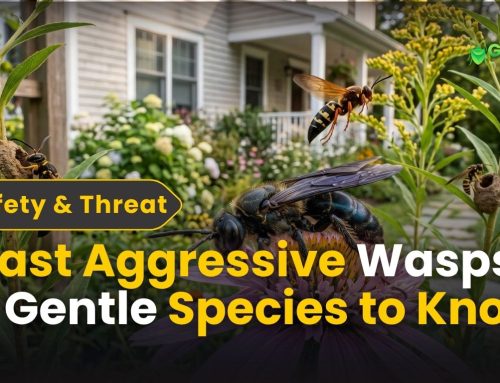
Yellow Jacket vs European Hornet: Identification, Behavior & Sting Comparison
Introduction
It’s a warm summer afternoon in Connecticut. You’re enjoying your patio when you spot it—a striped flying insect buzzing near your deck. Is it a yellow jacket? A European hornet? The distinction matters more than you think, especially when you’re trying to protect your family and property.
Many Connecticut homeowners confuse yellow jackets and European hornets, treating them as the same pest. They’re not. Understanding the differences between these two insects can save you stress, money, and potentially serious injuries. One is more aggressive. The other builds larger, more intimidating nests. One might ignore you completely while the other aggressively defends its territory.
In this guide, we’ll break down everything you need to know about yellow jacket vs European hornet behavior, identification, and sting severity. Whether you’re in Greenwich, Stamford, Darien, New Canaan, Wilton, or Westport, CT, this information will help you stay safe on your property and know when to call in the professionals.
Let’s dive in.
Physical Identification – How to Tell Them Apart
What Does a Yellow Jacket Look Like?
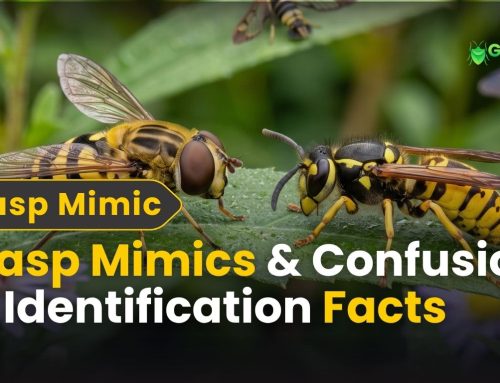
Yellow jackets are small, compact wasps measuring about ½ to ¾ inches long. Here’s what makes them instantly recognizable:
- Distinct yellow and black markings with crisp, bold stripes
- Smooth, shiny abdomen with minimal body hair
- Small, streamlined frame compared to other stinging insects
- Narrow waist (called a petiole) connecting the abdomen to the thorax
- Bright coloring that becomes more vivid during active months
The yellow is vibrant and purposeful—a warning signal. Yellow jackets wear their colors like a uniform that says, “We’re here, we’re aggressive, and we can sting.”
One thing many people don’t realize: yellow jackets are actually wasps, not true hornets. This distinction matters when you’re searching for pest control information or trying to understand their behavior. If you’re unsure about insect classification, our detailed guide on wasps, hornets, and yellow jackets breaks down these categories clearly.
European Hornet Identification
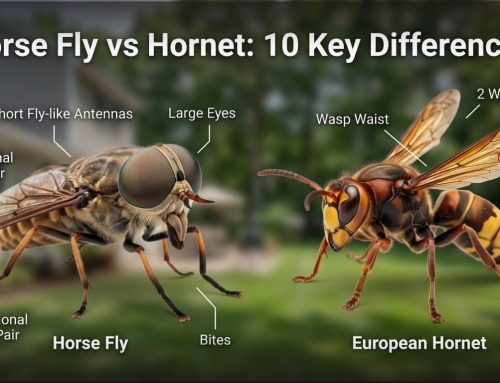
European hornets are the larger cousins in this story, typically measuring 1 to 1.5 inches. Here’s what sets them apart:
- Reddish-brown body with yellow or orange markings (not the bright yellow of yellow jackets)
- Larger, bulkier frame with a more robust appearance
- Prominent compound eyes that are noticeably larger
- Thicker, hairier body with visible setae (hair-like structures)
- Heavier appearance when in flight—they seem to lumber rather than zip around
European hornets are true hornets, meaning they’re part of the Vespa genus. Their coloring is more muted and earthy compared to the traffic-light brightness of yellow jackets.
Quick Comparison Table
| Feature | Yellow Jacket | European Hornet |
| Size | ½ – ¾ inches | 1 – 1.5 inches |
| Color | Bright yellow & black | Reddish-brown & yellow |
| Body Texture | Smooth, shiny | Hairy, robust |
| Eye Size | Small | Large, prominent |
| Appearance | Sleek, streamlined | Bulky, powerful |
| True Classification | Wasp | Hornet |
If you’re still uncertain about identification, our comprehensive wasp and hornet ID encyclopedia has detailed photos to help you determine exactly what you’re dealing with.
Behavioral Differences – Understanding Their Temperament
Yellow Jacket Behavior: The Aggressive Forager
Yellow jackets are the bullies of the stinging insect world. They’re highly aggressive, territorial, and unpredictable, especially in late summer and fall.
Why are yellow jackets so aggressive?
- Food-motivated aggression: They’ll attack anything they perceive as competing for food sources
- Defensive instinct: They sting first and ask questions never
- Seasonal intensity: By August and September, their behavior becomes increasingly hostile as resources dwindle
- No-warning attacks: Unlike some insects that give subtle warnings, yellow jackets often attack without provocation
Yellow jackets are scavengers. They’re attracted to your picnic, your trash cans, your soda can, your hamburger. They land on food, taste it, and if another yellow jacket is nearby, territorial battles begin. You’re just collateral damage in their aggressive food wars.
The truly problematic part? Yellow jackets can sting multiple times. They have smooth stingers without barbs, so they can withdraw and attack again. A single agitated yellow jacket can deliver dozens of stings in succession.
European Hornet Behavior: The Reserved Predator
European hornets have a completely different temperament. They’re far less aggressive than yellow jackets, and they’re rarely interested in human food.
What makes European hornets different?
- Predatory diet: They hunt other insects, particularly yellowjackets and other wasps (ironic, right?)
- Solitary nature: They hunt alone, not in frenzied swarms
- Defensive, not aggressive: They’ll attack if their nest is threatened, but they won’t pursue you across a field
- Nocturnal activity: They’re most active at dawn and dusk, so evening grilling usually isn’t bothered by them
- One-sting capability: Like most hornets, they can sting multiple times, but they’re reluctant to use this ability
Here’s something surprising: European hornets are actually beneficial insects. They control pest populations by hunting and eating other insects, including yellow jackets. Many entomologists consider them beneficial for gardens and woodlands across Connecticut, Massachusetts, and the Northeast.
Understanding these behavioral differences is crucial for your safety. Our guide comparing wasp and hornet aggression explores this in greater detail, helping you understand which situations require immediate professional intervention.
Nesting Habits – Where They Build and Why It Matters
Yellow Jacket Nesting Patterns
Yellow jackets are adaptable architects. They’ll build their paper-like nests almost anywhere:
- Underground: In abandoned animal burrows, under decks, or in soil cavities (ground-nesting yellow jackets are particularly problematic)
- Above ground: Under eaves, in attics, wall voids, or sturdy tree branches
- Protected structures: Inside barbecue grills, shed walls, or garden sheds
A single yellow jacket nest can contain 500 to 5,000 workers by late summer. That means one nest discovered in your Westport or Darien property could represent thousands of aggressive insects ready to defend their territory.
Yellow jackets are scavengers by season. Early spring and summer, they hunt insects and feed their larvae protein. But as fall approaches, flowers fade and insects become scarce. That’s when they become desperately attracted to human food sources—your outdoor events, your garbage, your food waste.
European Hornet Nesting Patterns
European hornets are the architects of the hornet world. They build large, paper-like nests that are visually impressive:
- Tree cavities and dead trees: Their preferred nesting site
- Hollow wooden structures: Barn eaves, dead trees, or utility boxes
- Always above ground: You won’t find European hornets nesting in your lawn or under your deck
- Exposed locations: Often visible to the naked eye, unlike yellow jacket underground nests
A European hornet nest can reach basketball-sized proportions, containing 200 to 400 workers. While intimidating in appearance, these nests are usually located where they’re less likely to threaten human activity.
The key advantage: If you see a European hornet nest, you can typically avoid it. It’s stationary, visible, and the hornets will leave you alone if you leave them alone. Ground-based yellow jacket nests, by contrast, are hidden threats. You could mow your lawn unknowingly and disturb thousands of insects ready to attack.
Sting Severity and Health Implications
Yellow Jacket Stings: Multiple, Painful, and Aggressive
Yellow jacket stings are notoriously painful and often multiple. Here’s why they’re such a concern:
The physical experience:
- Immediate sharp pain followed by burning sensation
- Swelling typically reaches maximum size within 24 hours
- Localized redness and itching lasting several days
- Potential for multiple stings from a single nest encounter
Health risks:
- Allergic reactions: Some individuals experience severe allergic responses
- Anaphylaxis: In rare cases, especially with multiple stings, anaphylactic shock is possible
- Infection: Scratching stings increases infection risk
- Stress reaction: The aggressive multiple-sting scenario creates significant trauma and anxiety
For vulnerable populations—children, elderly individuals, or those with hypertension—yellow jacket encounters can be medically serious.
European Hornet Stings: Powerful but Uncommon
European hornet stings are more powerful than yellow jacket stings, but they happen far less frequently:
The physical experience:
- Initial sting more painful than yellow jacket (they have larger venom-delivery systems)
- Localized swelling, redness, and itching
- Typically a single sting unless the nest is actively attacked
- Pain usually subsides within 1-2 hours
Health considerations:
- True allergic reactions are rare: People with specific hornet allergies may react, but most individuals tolerate stings well
- Less likely to escalate: A single defensive sting is usually the extent of the interaction
- Venom potency varies: Individual sensitivity determines reaction severity
The bottom line: A European hornet sting hurts more, but a yellow jacket sting scenario is far more dangerous because of the potential for multiple stings and aggressive attacks.
For detailed information about sting treatment and recovery, our complete guide to hornet sting treatment and hornet sting vs wasp sting differences provide step-by-step care instructions.
Ecological Roles and Why They Matter
Yellow Jackets: Beneficial But Problematic
Yellow jackets do provide ecological benefits, despite their aggressive reputation:
- Pest control: They hunt and consume other insects, including flies and mosquitoes
- Pollination: While foraging, they visit flowers and inadvertently pollinate plants
- Food chain support: They’re prey for birds, spiders, and other predators
However, in residential areas of Connecticut—whether you’re in New Canaan, Stamford, or Wilton—their presence typically creates more problems than benefits. They’re drawn to human food sources, they’re aggressive defenders, and they establish massive nests that threaten your family’s safety on your own property.
European Hornets: Natural Pest Control
European hornets are primarily predatory insects. Their ecological role is significant:
- Yellowjacket control: They actively hunt and consume yellow jackets (nature’s pest control)
- Insect population management: They control populations of various flying insects
- Minimal human conflict: Because they don’t scavenge human food, encounters are rare
- Nighttime activity: Their nocturnal hunting means they’re active when humans aren’t on their property
For homeowners concerned about insect populations on their property, European hornets are actually allies, not enemies. They’re working your property at night, controlling pest insects without competing for your food or showing aggression.
Prevention Strategies – Protecting Your Connecticut Home
Preventing Yellow Jacket Infestations
Yellow jacket prevention requires active, ongoing management, especially during peak season:
Reduce attractants:
- Secure trash cans with tight-fitting lids
- Clean up outdoor dining areas immediately after meals
- Don’t leave pet food outside
- Keep compost bins covered and maintained
- Remove overripe fruit from trees
- Rinse recycling items before storing them
Eliminate nesting sites:
- Seal cracks and crevices in exterior walls
- Cover vents with ¼-inch mesh screening
- Remove dead trees and trim tree branches away from structures
- Seal openings under decks and in sheds
- Keep siding in good repair
Early detection:
- Monitor for nests during spring when they’re small and easier to manage
- Check eaves, soffits, and structural corners regularly
- Watch for increased yellow jacket activity near your food areas
Don’t attempt DIY removal: Yellow jacket nests discovered in problematic locations (near doors, under decks, in walls) require professional intervention. DIY approaches risk multiple stings and incomplete colony elimination.
Preventing European Hornet Problems
European hornet prevention is simpler because they’re less aggressive and less attracted to human areas:
Minimal interference needed:
- Allow them to build nests in remote areas away from human activity
- Don’t block their flight paths or nesting areas unnecessarily
- Leave dead trees and stumps when safe to do so (their preferred nesting habitat)
- Avoid treating their nests with pesticides unless they’re in high-traffic areas
When intervention is necessary:
- Observe the nest location; if it’s not threatening human safety, leave it alone
- If removal is essential, contact professionals trained in hornet removal
For comprehensive prevention guidance specific to Connecticut properties, our resource on deterring hornets from nesting provides detailed strategies tailored to seasonal patterns.
When to Call Professional Help – Know Your Limits
Yellow Jacket Situations Requiring Professionals
Contact experts immediately if:
- Nest discovered near your home: Any nest within 20 feet of doors, windows, or outdoor living areas
- Ground-based nests: Underground nests are particularly dangerous because you can’t see them, and accidental disturbance triggers massive stinging responses
- Multiple nests: If you’ve spotted more than one nest, professional assessment prevents future infestations
- Nest in structure: Nests in walls, attics, or utility boxes require proper removal to prevent structural damage and ensure complete elimination
- Family members are allergic: If anyone in your household has wasp allergies, professional handling ensures safety
- Children or pets in the home: Young children and pets are at higher risk for severe reactions to multiple stings
Why DIY yellow jacket removal fails:
- The insecticide is often applied incorrectly, leaving portions of the nest alive
- Incomplete treatment means the nest rebuilds or relocates
- Direct contact with an active nest triggers aggressive responses
- Even “professional-grade” products sold at hardware stores don’t guarantee colony elimination
- Protective equipment from hardware stores provides false confidence against coordinated stinging attacks
European Hornet Situations Requiring Professionals
Professional help needed if:
- Nest threatens structural integrity: Large nests in essential tree branches or wooden structures
- Nest in high-traffic area: If people use that area regularly, even peaceful coexistence becomes risky
- Nest removal is essential: Some situations genuinely require nest relocation or removal
When to leave them alone:
- Nests in remote tree areas, far from human activity
- Nests that aren’t expanding or creating visible problems
- Situations where natural control (they eat yellow jackets) is beneficial
Our hornet exterminator services guide explains how professional teams safely handle various nesting scenarios while prioritizing safety and environmental responsibility.
Distinguishing From Other Flying Insects
Yellow Jackets vs Bees: A Critical Safety Difference
People often confuse yellow jackets with honeybees, and this misidentification can have serious consequences:
Visual differences:
- Yellow jackets: Smooth, hairless appearance; bright yellow and black
- Bees: Fuzzy, hairy bodies; golden/orange coloring with less contrast
Behavioral red flags for yellow jackets:
- Aggressive swarming behavior around food
- Attacking without apparent threat
- Multiple stings
- Building nests in structural areas (not traditional hives)
Bees are harmless neighbors – they rarely sting unless directly threatened, and they’re essential pollinators. If you spot what you think is a bee, it’s probably not a yellow jacket.
For more details, our comprehensive bee vs wasp identification guide helps you make this critical distinction safely.
Wasps vs Hornets vs Yellow Jackets Simplified
This is where the taxonomy gets confusing. Here’s the simplified breakdown:
- Hornets are a type of wasp (true hornets belong to genus Vespa)
- Yellow jackets are a type of wasp (but NOT true hornets)
- All hornets are wasps, but not all wasps are hornets
In practical terms for your Connecticut property, the distinction matters because:
- Yellow jackets (Vespula species) are aggressive scavengers in residential areas
- European hornets (Vespa crabro) are predatory, less aggressive, and benefit your property
If you’re searching for identification resources, our detailed comparison of wasps vs hornets and types of wasps explained provide visual guides to every species you might encounter in Greenwich, Darien, New Canaan, or anywhere in Connecticut.
What to Do If You’re Stung – Immediate Action Steps
First Response (0-5 Minutes)
- Move away immediately to a safe location, away from the nest or insect
- Get indoors if possible; stinging insects follow moving targets, but they’re less likely to pursue inside
- Don’t crush the insect; crushed insects release pheromones that attract other insects
- Remove the stinger if it’s present (usually only from bees, but check)
Pain Management (5-30 Minutes)
- Wash with soap and water to prevent infection
- Apply ice to reduce swelling and numb pain (15 minutes on, 15 minutes off)
- Take antihistamine (Benadryl or generic equivalent) to reduce itching
- Apply hydrocortisone cream or calamine lotion
- Avoid scratching to prevent infection
When to Seek Medical Attention
Call 911 if:
- Difficulty breathing or chest tightness
- Swelling in throat or mouth
- Multiple stings (more than 10-15)
- Stings on face or neck
- Previous allergic reaction to stings
Visit urgent care if:
- Swelling that worsens after 24 hours
- Signs of infection (increasing redness, warmth, pus)
- Stings on hands/feet with excessive swelling
At-home care is sufficient for:
- Single sting with normal localized swelling
- Mild itching and pain
- No signs of allergic reaction
FAQ – Answers to Your Most Common Questions
1. Are yellow jackets and European hornets the same insect?
No. While both can sting, they’re distinctly different insects. Yellow jackets are wasps that are highly aggressive and attracted to human food. European hornets are true hornets that are predatory, less aggressive, and rarely interested in human activities. Size, color, nesting habits, and behavior all differ significantly.
2. Which is more dangerous a yellow jacket or a European hornet?
Yellow jackets are more dangerous in residential settings. They’re aggressive, attack in groups, can sting multiple times, and are attracted to human food sources. European hornets rarely attack unless their nest is threatened, and they’re more likely to deliver a single defensive sting. The danger is proportional to likelihood of encounter and severity of response.
3. Can yellow jackets sting through clothing?
In most cases, no. Their stingers are short and typically cannot penetrate multiple layers of fabric. However, if an insect is trapped against your skin (caught in your shirt or collar), it may be able to sting. Loose, light clothing offers better protection than tight, thin fabrics.
4. Do European hornets die after stinging?
No. Unlike honeybees, European hornets have smooth stingers that don’t get stuck in skin or clothing. They can sting multiple times, though they’re reluctant to do so unless directly threatened.
5. What should I do if I find a yellow jacket nest on my property?
Avoid the area and contact professional pest control immediately. Do not attempt DIY removal. Yellow jacket nests in residential areas require trained technicians with proper equipment to ensure complete colony elimination and prevent dangerous stinging responses.
6. Are ground nesting yellow jackets different from aerial yellow jackets?
Both are yellow jackets, but ground-nesting varieties are more problematic because nests are hidden underground. You can accidentally disturb them while mowing, digging, or walking, triggering massive aggressive responses. Aerial nests in trees or eaves are sometimes more manageable, though still dangerous.
7. What time of year is the yellow jacket problem worst in Connecticut?
Peak season is August through October. As flowers fade and natural food sources disappear, yellow jackets become increasingly desperate and aggressive in their search for carbohydrates. This is when most stinging incidents occur.
Trust-Building Section: Why Professional Expertise Matters
Real-World Scenario
Sarah from Wilton discovered a yellow jacket nest near her son’s playground in June. She thought she could handle it with spray from the hardware store. The product agitated the nest instead of eliminating it. Twenty minutes later, her son received five stings, and Sarah received three while trying to get him to safety. The nest was still active.
After a visit to urgent care, Sarah called professionals. The nest was fully eliminated within 24 hours, preventing the scenario from repeating.
Expert Recommendations
Professional pest control specialists in Connecticut approach stinging insect removal with several advantages:
- Species identification: Confirming you actually have the pest you think you have
- Nesting location expertise: Finding hidden nests that DIY approaches completely miss
- Safe elimination: Using targeted, effective methods that completely eliminate colonies
- Preventive advice: Identifying property conditions that attract these insects and implementing solutions
- Year-round monitoring: Catching early-season nests before populations explode
Conversion-Focused Section: Taking Action Today
You now understand the difference between yellow jackets and European hornets. You know the risks, the identification markers, and the prevention strategies.
But here’s the reality: Understanding the problem doesn’t solve it.
If you’ve spotted either insect on your Connecticut property—whether you’re in Greenwich, Stamford, Darien, New Canaan, Wilton, or Westport—inaction creates risk. Every day a nest remains active is another day your family could encounter aggressive stinging insects.
Yellow jacket infestations grow rapidly. A small nest in June becomes thousands of insects by August. What’s manageable in spring becomes dangerous in summer.
Ground nesting yellow jackets are invisible dangers. Your next mowing session could expose you to hundreds of stinging insects. Your child’s next playtime in the yard could turn into a medical emergency.
The solution is professional intervention—and the time to act is now.
Book a professional inspection to identify exactly what you’re dealing with. Let experts assess your property, locate any nesting activity, and develop a customized elimination strategy that prioritizes your family’s safety.
Don’t let uncertainty keep you inactive. Don’t let DIY failures leave nests partially eliminated. Take action today before the infestation becomes critical.
Final Call-To-Action
Stinging insects in your Connecticut backyard are not a problem you should manage alone. Whether you’re dealing with aggressive yellow jackets or European hornets, professional expertise ensures complete, safe elimination.
Your family deserves to enjoy your yard without fear.
Contact our specialist team today for a professional assessment. We’ll identify the exact species on your property, locate all nesting sites, and implement an effective elimination strategy.
Don’t wait. Infestations grow. Risks increase. Act now.
Related Resources & Internal Links
For more detailed information on related topics, explore these comprehensive guides:
- Hornet Exterminator Services: Safety and Peace of Mind
- Wasp and Hornet ID Encyclopedia for Connecticut
- Complete Wasp and Hornet Identification Guide
- Wasps vs Hornets in CT: Comprehensive Comparison
- Yellow Jacket Deep Dive: Everything You Need to Know
- Are Hornets More Aggressive Than Wasps?
- Complete Bee vs Wasp Identification Guide
- Ground Hornet Treatment in Connecticut
- Hornet Nest Removal Services in CT
- Hornet Sting vs Wasp Sting: Complete Differences
- How to Deter Hornets from Nesting (2025 Guide)
- Wasp and Hornet Nest Differences Explained
Still Have Questions?
Our team serves Greenwich, Stamford, Darien, New Canaan, Wilton, Westport, and all of Connecticut. Reach out today for expert guidance on the stinging insects threatening your home.