Emergency Hornet Removal: What to Do Right Now
If You’re Reading This Because Something Just Happened Start Here
Maybe you were mowing the lawn and ran over a ground nest. Maybe your kid opened the wrong shed door. Maybe you walked outside and found a nest the size of a basketball hanging directly above your back steps a nest you somehow never noticed until this moment.
Whatever just happened, here’s what matters most right now: get away from the nest area, get inside if possible, and do not go back.
Emergency hornet removal is a real service that qualified local pest control professionals provide specifically for situations that cannot wait for a scheduled appointment. If there’s an active threat a disturbed colony, a nest in a location that puts people at immediate risk, or a sting incident involving someone with a known allergy calling a professional today is the right move.
This guide covers exactly what to do in the immediate aftermath of a hornet emergency, how to recognize when a situation truly qualifies as urgent, what same-day professional removal involves, what it costs, and how to find a reliable local exterminator in Fairfield County when speed matters.
What Makes a Hornet Situation an Emergency?
Not every hornet nest discovery is an emergency. Some situations are concerning but manageable on a standard service timeline. Others are genuine safety situations that require same-day professional response.
Understanding which category you’re in helps you prioritize appropriately and helps you communicate the urgency clearly when you call a pest control company.
Situations That Are Genuine Emergencies
A nest has been disturbed and the colony is actively defensive.
This is the most immediately dangerous situation. When a hornet nest is struck, vibrated, or interfered with whether accidentally by a lawnmower, a weed trimmer, a thrown ball, or a curious child the colony enters a full defensive response. Workers release alarm pheromones that recruit additional stinging members. This response can persist for 30 minutes or more after the initial disturbance, and returning to the area during this window is extremely dangerous.
Someone with a known sting allergy is at risk.
Anaphylaxis from insect stings is a genuine medical emergency. According to the American Academy of Allergy, Asthma & Immunology, systemic allergic reactions to stinging insects can be life-threatening within minutes. If a family member has a documented sting allergy and an active hornet nest is on the property particularly near entry points or outdoor areas they use regularly this is an urgent situation regardless of whether anyone has been stung yet.
Multiple people or pets have been stung.
A mass stinging incident even without individual allergic reaction warrants immediate medical attention followed by emergency nest removal. Mass envenomation (receiving many stings in rapid succession) can cause toxic effects in anyone, regardless of allergy status.
The nest is inside a living space.
Discovering hornets inside a room, emerging from a wall vent into a bedroom, or buzzing around inside an attic that’s accessed regularly this is a different level of urgency from a nest outside in a tree. An active colony inside a living space creates continuous exposure risk that can’t simply be avoided.
The nest is directly at a primary entry point.
A nest positioned over a front door, beside a garage entrance, or next to a gate or path that your household uses multiple times daily isn’t just inconvenient it’s a situation where a routine moment of daily life can trigger an attack. This warrants same-day service, not a week’s wait.
Situations That Are Urgent But Not Emergency-Level
- A nest discovered in a low-traffic area of the yard with no recent disturbance
- An active but accessible aerial nest away from doorways and play areas
- A small early-season nest that hasn’t yet reached significant colony size
- A nest in a tree at the back of the property with no children or pets nearby
These situations still need professional attention just not necessarily the same day.
Immediate Steps: What to Do Right Now
If you’re in or just emerged from an active hornet encounter, here’s a clear sequence to follow.
Step 1: Move Away Immediately
Walk don’t run away from the nest area. Rapid, erratic movement increases the likelihood of stings. Move calmly but purposefully toward your home or vehicle and put a solid barrier between yourself and the nest.
Step 2: Get Indoors
If anyone is outside near the nest, bring everyone inside. This includes children and pets. Close doors and windows near the nest area. Hornets that have followed pursuing targets can enter open doors.
Step 3: Assess for Stings
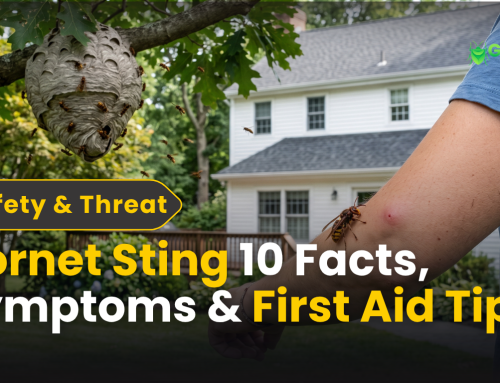
Check yourself and anyone who was near the nest for stings. Remove any stingers you find though unlike honey bees, hornets and yellow jackets do not leave stingers behind (they can sting multiple times). Wash sting sites with soap and water.
Step 4: Watch for Allergic Reaction
For the next 20–30 minutes, monitor anyone who was stung for signs of allergic reaction: hives or flushing spreading away from the sting site, swelling in the face or throat, difficulty breathing, dizziness, nausea, or a feeling of rapid heartbeat or impending doom. These are warning signs of anaphylaxis. If any of these symptoms appear, call 911 immediately. Do not wait to see if symptoms improve.
Step 5: Call a Professional
Once the immediate human safety situation is assessed and stable, call a local pest control company to describe the situation and request emergency or same-day service. Be specific: describe the nest size and location, what happened, whether anyone was stung, and whether any known allergies are present. This information helps the company prioritize and prepare appropriately.
For situations in Greenwich, Stamford, Darien, Westport, Fairfield, Wilton, New Canaan, Norwalk, and surrounding Fairfield County communities, immediate hornet control in Connecticut is available through locally based professionals who can respond the same day.
Step 6: Keep the Area Clear
While waiting for professional service, keep the nest area completely clear. Resist the impulse to investigate how large the nest is or to try any interim DIY treatment. A colony in defensive mode is significantly more dangerous in the hours following a disturbance than it would be in an unprovoked situation.
The Most Common Emergency Hornet Scenarios in Connecticut
After working in Fairfield County’s pest landscape through multiple seasons, certain emergency scenarios repeat themselves with notable regularity.
The Lawn Mowing Discovery
This is the most common emergency call. A homeowner is mowing the back lawn on a Saturday afternoon in July or August and runs over or gets too close to a ground nest. Within seconds, yellow jackets the most common culprit in this scenario are swarming and stinging. The mower may still be running in the yard.
Do not go back for the mower immediately. Let the colony settle for at minimum 30 minutes before anyone approaches the area. Call for emergency service. Understanding yellow jacket ground nest behavior and treatment provides context on why these ground colonies are so dangerous when disturbed.
The Wall Void Discovery
Homeowners in older properties throughout Greenwich, Stamford, and Darien occasionally discover stinging insects have established a colony inside a wall void often revealed when they hear buzzing inside the wall, notice workers entering and exiting through a gap in the siding, or see workers emerging from a vent inside the home. When the entry point is inside a living area, this becomes urgent quickly.
Wall void infestations require professional treatment involving drilling access points and injecting insecticide not something DIY approaches can safely or effectively address.
The Child or Pet Encounter
Children playing in the yard and pets investigating interesting smells are the most common accidental nest disturbers in Connecticut’s residential communities. A child who runs into a ground nest while playing or a dog that digs near a yellow jacket colony creates both an immediate medical situation and an urgent nest removal requirement.
The Fall Outdoor Gathering Incident
September and October are peak season for aggressive yellow jacket behavior across Fairfield County. Declining food sources drive workers to forage intensely, and any nest near an outdoor gathering area becomes a genuine hazard. Late-season yellow jackets are faster to sting and more persistent than their summer counterparts. Emergency calls involving backyard events are common during this window.
Identifying What You’re Dealing With
Even in an emergency situation, knowing which stinging insect is involved helps you communicate effectively with the pest control company and helps them prepare appropriately.
Bald-Faced Hornets: Large, black-and-white, with a football-shaped gray paper nest typically hanging aerially from trees, eaves, or structures. Highly aggressive defenders. Very common throughout Wilton, New Canaan, and Darien’s wooded residential neighborhoods.
Yellow Jackets: Smaller than hornets, fast-moving, black-and-yellow. Most commonly nest in the ground or inside wall voids. Responsible for the vast majority of mass sting incidents, particularly from ground nests encountered during yard work. The comprehensive yellow jacket biology and behavior guide explains exactly why these insects are so difficult to avoid once a nest is disturbed.
European Hornets: Larger, brownish-yellow insects that prefer hollow trees and structural wall voids. Notable for being active at night homeowners sometimes hear them inside walls after dark before making visual identification. Common in Greenwich and New Canaan where mature trees provide nesting habitat.
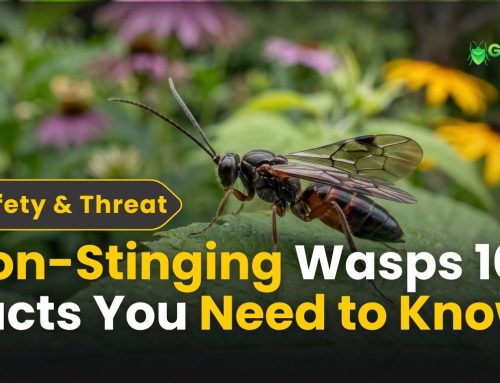
Paper Wasps: Slender, long-legged, and less aggressive than hornets or yellow jackets. Build small open-celled nests under eaves and overhangs. Less likely to create a true emergency unless the nest is in a doorway or high-traffic location.
For visual identification help when you’re unsure what you’re looking at, the Connecticut wasp and hornet identification guide provides detailed species comparisons specific to insects found in the state.
What Emergency Hornet Removal Service Actually Involves
When a pest control professional responds to an emergency hornet situation, the service looks different from a standard scheduled appointment faster mobilization, more immediate triage, and treatment calibrated for a colony that may be in an actively defensive state.
Rapid Site Assessment
The technician will assess the situation before approaching the nest: species identification, nest size and location, level of current activity, and any complicating factors (nest inside a structure, elevated location, multiple nests). In an emergency, this assessment happens quickly but shouldn’t be skipped the information directly affects treatment safety.
Full Protective Equipment
For any situation involving a disturbed colony or a mature summer nest, professional-grade protective equipment is non-negotiable. A full bee suit, gloves, and veil aren’t just cautious they’re essential when working with a colony in defensive mode. This is a clear visible differentiator between a professional and anyone attempting improvised DIY treatment.
Targeted Treatment Application
Using EPA-registered insecticides appropriate to the species and situation, the technician treats the nest at the entry point and, where accessible, within the nest interior. Treatment timing and approach are adjusted based on colony activity level.
For aerial hornet nests, this typically means a direct application of contact or residual insecticide. For ground nests, treatment is applied into the colony entrance. For wall void situations, access points are established and the interior void is treated with dust or foam insecticide.
For context on the full range of what professional hornet exterminator services include, including the follow-up process that confirms complete elimination, that resource covers the complete service scope.
Post-Treatment Safety Assessment
After treatment, the technician will assess whether the area is safe for family and pets to access, and when. They’ll also advise on the nest whether removal is recommended, when activity should fully cease, and what signs to watch for that would indicate the colony survived treatment and requires a return visit.
Emergency Hornet Removal Costs: What’s Realistic
When the situation is urgent, cost naturally becomes secondary to safety but it’s still reasonable to understand what emergency professional service costs in Connecticut.
Typical Emergency Service Pricing in Fairfield County
| Situation | |
| Standard nest removal (scheduled) | |
| Same-day/emergency service premium | |
| Disturbed colony emergency response | |
| Wall void emergency treatment | |
| Ground nest emergency (yellow jacket) | |
| After-hours emergency call |
These figures reflect realistic 2026 Fairfield County market pricing. Actual costs vary based on nest size, location complexity, and the specific circumstances of the emergency.
What Drives Emergency Costs Higher
Time of day: After-hours or weekend emergency calls typically carry a higher premium than weekday daytime service. If your situation allows even a few hours’ wait until standard business hours, the cost differential can be meaningful.
Nest accessibility: A nest at the roofline of a three-story Darien colonial costs more to reach safely than one at eye level under a deck.
Colony size and defensive state: A fully disturbed mature colony in August requires more careful approach, more product, and more time than a standard treatment. This is appropriate and reflects the actual complexity of the work.
Structural involvement: Wall void situations that require drilling access points take longer and cost more than aerial or ground nest treatment.
For a complete breakdown of what drives hornet treatment pricing across different scenarios, the hornet exterminator cost guide provides detailed context.
Critical Mistakes to Avoid in a Hornet Emergency
These are the responses that make emergency situations significantly worse. Most of them feel instinctive in the moment, which is exactly why they’re worth naming explicitly.
Don’t Swat or Flail
Rapid arm movement near stinging insects dramatically increases provocation. Move calmly and deliberately away from the nest area.
Don’t Try to Treat the Nest Immediately After Disturbance
A colony that has just been disturbed is in maximum defensive mode. A can of hardware-store spray applied to an agitated colony will not resolve the situation and will very likely result in serious stinging. Wait for professionals.
Don’t Pour Water or Use Fire
Neither of these is a safe or effective treatment for hornet nests. Flooding a ground nest can cause workers to swarm aggressively. Using fire near a nest particularly a paper nest in a tree or attached to a structure creates obvious secondary hazards.
Don’t Block the Nest Entrance
Blocking the entry point of an active nest traps workers inside temporarily but triggers intense colony stress and eventually drives workers to find alternative exits sometimes through interior spaces in wall void situations.
Don’t Assume the Nest Is Gone After Treatment
Even after professional treatment, a colony doesn’t disappear instantly. Workers outside the nest at time of treatment will return and die over the following 24–72 hours. Some activity after treatment is normal and expected. Don’t approach the area based on reduced activity — wait for your technician’s guidance on when the area is clear.
The hornet nest removal DIY versus professional breakdown is worth reviewing for additional context on why improvised approaches consistently underperform professional treatment in emergency situations.
After the Emergency: Medical Considerations
Once the immediate nest situation has been called in and the area is secured, the medical side of any sting incident deserves full attention.
For Standard Sting Reactions
Most people who are not allergic to stinging insects will experience localized pain, redness, and swelling that peaks within a few hours and resolves over 24–48 hours. Wash the sting site, apply a cold compress, and take an over-the-counter antihistamine and pain reliever if needed. Monitor for signs of secondary infection over the following days.
For Allergic Reactions
If anyone experiences symptoms beyond the local sting site spreading hives, facial swelling, throat tightness, breathing difficulty, dizziness, or collapse call 911 immediately. If an epinephrine auto-injector (EpiPen) is available and the person has a documented allergy, use it per the prescription instructions. Do not wait to see if symptoms self-resolve. Anaphylaxis progresses rapidly and requires emergency medical intervention.
For detailed guidance on hornet sting treatment and what to do after being stung, that resource covers both standard and allergic reaction management in practical terms.
After a Mass Stinging Incident
Any person who has received a large number of stings even without individual allergic history should seek medical evaluation. Toxic envenomation from multiple stings can cause systemic effects that develop hours after the incident. When in doubt, go to urgent care or an emergency department and describe what happened.
Prevention: Reducing the Likelihood of Future Emergencies
Emergency removal resolves the current crisis. Prevention reduces how often you face one.
Spring perimeter inspection: Walk your property in April and May specifically looking for early nest construction. A queen’s nest at this stage is small, the population is minimal, and treatment is straightforward. The same nest left until August is a genuine emergency waiting to happen.
Structural exclusion: Seal gaps in siding, fascia boards, soffits, and around utility penetrations. These are the primary access points for species that nest inside structures — yellow jackets and European hornets especially. Deterring hornets from nesting before the season begins is the most cost-effective pest management investment Connecticut homeowners can make.
Know your landscape: Areas with ground cover, wood piles, abandoned rodent burrows, and overgrown vegetation are attractive to ground-nesting yellow jackets. Regular management of these areas during peak season reduces nesting opportunities.
Act early on any discovery: The most reliable way to avoid a hornet emergency is to address nest activity at the first sign not after it’s become an intimidating problem. A nest that gets called in during May or June is treated quickly, affordably, and without drama. The same nest in August requires emergency protocols.
Seasonal Emergency Patterns in Fairfield County
Emergency hornet calls in Connecticut are not evenly distributed across the season. They cluster predictably.
July and August represent the absolute peak of emergency removal calls across all of Fairfield County. Colony sizes are at maximum, worker populations are fully established, and the probability of accidental disturbance is highest because homeowners are spending more time outdoors. This is when lawn mowing incidents, children’s play encounters, and nest discoveries at outdoor dining areas generate the most urgent calls.
September brings a different kind of urgency. Yellow jacket colonies are declining but the remaining workers are operating in an intensely defensive and aggressive mode. Sting incidents at outdoor events backyard parties, youth sports practices, neighborhood gatherings spike during early fall across communities like Westport, Fairfield, and Norwalk.
October through November sees calls taper off as temperatures drop and worker populations die back naturally. However, newly mated queens entering structures to overwinter can still generate calls, particularly in older homes where attic and wall void access isn’t well-controlled.
Frequently Asked Questions
What qualifies as a hornet emergency that needs same-day removal?
A hornet situation becomes a genuine emergency when a nest has been disturbed and the colony is actively defensive, when someone with a known sting allergy is at immediate risk, when multiple people or pets have been stung, when the nest is inside a living space, or when it’s positioned directly at a primary entry point your household uses daily. These situations warrant same-day professional response rather than a standard scheduled appointment.
What should I do immediately after disturbing a hornet nest?
Move away calmly avoid swatting or running erratically. Get inside immediately and close doors and windows near the nest area. Check everyone for stings and monitor for signs of allergic reaction (spreading hives, facial swelling, breathing difficulty, dizziness). If allergic reaction symptoms appear, call 911. Once everyone is safe and assessed, call a professional pest control company for emergency removal.
How much does emergency hornet removal cost in Connecticut?
Emergency same-day hornet removal in Fairfield County typically costs, depending on the species, nest size, and location. Standard service without the emergency premium runs. After-hours calls can add to the base cost. Wall void infestations treated on an emergency basis run. Always ask for a written quote even in urgent situations reputable companies will provide one.
Is emergency hornet removal available on weekends in Fairfield County?
Many local pest control companies serving Greenwich, Stamford, Westport, Norwalk, and surrounding communities offer weekend service for genuine emergencies. Weekend and after-hours calls typically carry a premium over standard weekday pricing. Call early in the day, describe the situation clearly, and ask specifically whether same-day service is available for your location.
How long does it take for hornets to calm down after a nest is disturbed?
A disturbed hornet colony typically remains in an elevated defensive state for 30 minutes to several hours after the initial disturbance. Workers that were away from the nest foraging will continue returning for the remainder of the day. Do not approach the nest area until professional treatment has been completed and your technician has confirmed it’s safe.
Can I spray a disturbed hornet nest myself while waiting for the exterminator?
No. Approaching a disturbed and actively defensive colony with a consumer-grade product is extremely dangerous and unlikely to be effective. The colony is already in full defensive mode any further approach will trigger additional stinging. Stay well clear of the area and wait for the professional to arrive with proper equipment and product. This is one situation where waiting is unambiguously the right choice.
What happens if someone is having an allergic reaction to a hornet sting?
Call 911 immediately. Signs of anaphylaxis include hives or flushing beyond the sting site, throat or face swelling, difficulty breathing, dizziness, or loss of consciousness. If the person has a prescribed epinephrine auto-injector, use it per the prescription instructions and still call 911 epinephrine provides temporary relief but does not eliminate the need for emergency medical evaluation. Do not wait to see if symptoms resolve on their own.
Do hornets come back to a treated nest?
Hornets do not reuse a treated nest. Once the colony is eliminated, the nest structure remains but won’t be repopulated by the same colony. New queens establishing nests in subsequent seasons may choose nearby locations if conditions are favorable — which is why structural exclusion and spring prevention inspection are important annual practices. Deterring hornets from re-nesting covers what preventive measures actually work.
How do I tell hornets apart from yellow jackets in an emergency?
Hornets are generally larger (¾ inch or more) and build aerial paper nests or nest inside structural voids. Yellow jackets are smaller, faster, and most often nest in the ground or inside wall cavities. In a genuine emergency, the species distinction matters less immediately than getting clear of the area but when you call the exterminator, describe what you saw as accurately as possible to help them prepare the right equipment and approach.
Conclusion: In a Hornet Emergency, Speed and the Right Help Both Matter
The difference between a hornet situation that resolves safely and one that results in serious stings — or worse — often comes down to two things: how quickly you and your household get clear of the area, and how quickly you get a qualified professional on-site.
This guide exists because in a genuine emergency, the last thing you need is to waste time searching through websites trying to figure out what to do. Now you know. Get clear, get inside, assess for injuries, watch for allergic reaction, and call a professional.
For Connecticut homeowners across Fairfield County whether you’re in Stamford, Greenwich, Wilton, Westport, or anywhere else in the region emergency hornet removal is available from locally based professionals who know the species, know the terrain, and can respond when it matters. Green Pest Management CT provides professional hornet control throughout Connecticut with the experience and equipment that genuine emergencies require.
If you’re dealing with an active hornet situation right now, contact Green Pest Management CT for same-day emergency service. Describe what you’re seeing, confirm availability, and get a professional on-site before the situation escalates further.