Queen Wasp vs Hornet: 7 Key Differences You Should Know
Introduction: Why This Matters for Your Home
You’re standing on your porch in Stamford, CT when you notice something unsettling—a large insect buzzing near your eaves. Is it a wasp? A hornet? And more importantly, should you be worried?
If you have a home or family in Connecticut, understanding the difference between a queen wasp vs hornet isn’t just fascinating—it’s essential for your safety. Many homeowners confuse these stinging insects, leading to wrong decisions about their nests and potential infestations.
Here’s the truth: not all stinging insects are created equal. A queen wasp and a hornet behave differently, sting differently, and pose different levels of danger to your home and loved ones. One small mistake in identification could put your family at risk or lead to an unnecessary panic.
In this guide, we’ll break down the 7 key differences between queen wasps and hornets so you can identify them confidently, understand the real threat they pose, and know when to take action. Whether you’re in Greenwich, CT, Darien, CT, or anywhere across Fairfield County, this information could save you from a dangerous encounter.
Let’s dive in.
1. Size: How to Spot Them At a Glance
The difference in size between a queen wasp and a hornet is one of the most obvious distinctions.
Queen wasps are typically smaller, ranging from 0.5 to 1 inch in length. Despite being the largest in their colony, they’re still relatively compact compared to hornets. Worker wasps are even tinier—about half the size of the queen.
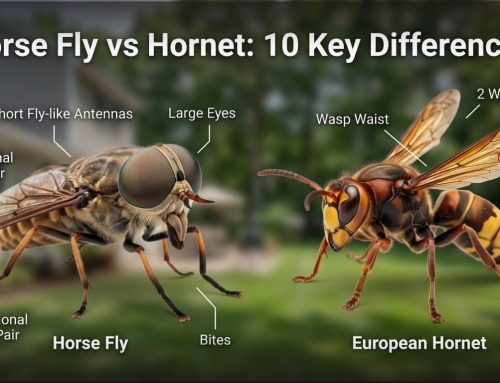
Hornets, on the other hand, are significantly larger. These robust insects measure between 0.75 to 1.5 inches, with some species reaching closer to 2 inches. This makes them visibly bulkier and more imposing than their wasp counterparts.
Why this matters: If you’re unsure what’s flying around your Westport, CT property, size is your first clue. The larger the insect, the more likely it’s a hornet. However, size alone shouldn’t be your only indicator—keep reading to learn other distinguishing features.
2. Color and Appearance: Visual Identification
This is where things get interesting. Queen wasps and hornets have distinctly different color patterns that make identification easier once you know what to look for.
Queen Wasps:
- Primary colors: Black and yellow or black and red striping
- Body type: Sleek, narrow waist (classic “wasp waist”)
- Shine: Often has a glossy appearance
- Patterns: Bold stripes, sometimes with metallic iridescence
Hornets:
- Primary colors: Black with white or cream-colored markings
- Body type: Thicker, more robust build
- Shine: Matte finish, less shiny than wasps
- Patterns: Distinctive white facial markings and body patches
Pro Tip: Hornets look like they’re wearing a tuxedo with white trim, while wasps sport yellow and black stripes. This simple visual difference helps Wilton, CT and New Canaan, CT homeowners make quick identifications.
3. Nests: Where They Live Tells the Story
Understanding the difference between wasp and hornet nests is crucial for homeowners concerned about infestations.
| Feature | Queen Wasp Nests | Hornet Nests |
| Structure | Open, umbrella-like or cone-shaped | Enclosed, papery, gray, football-shaped |
| Size | Small to medium (golf ball to grapefruit) | Large, often 1-3 feet in diameter |
| Location | Eaves, soffits, branches, under decks | High in trees, shrubs, building corners |
| Protection | Exposed comb, easier access | Fully enclosed with single entrance hole |
| Expansion | Grows slowly | Grows rapidly throughout season |
Key takeaway: If you see a large, gray, paper-like nest hanging from a tree in Greenwich, CT, it’s almost certainly a hornet nest. Wasp nests are typically smaller and more accessible, which is why they’re often found on porch ceilings.
Check out our detailed guide on nest removal to learn how professionals safely handle these structures.
4. Aggression: Which Stings More Often?
This is the question that keeps homeowners up at night: Are hornets more aggressive than wasps?
The answer is nuanced, but critical to understand.
Queen Wasps:
- Aggressive primarily when defending the nest
- Will not pursue you far from the nest
- Sting multiple times without dying
- Generally avoid humans unless provoked
- More likely to ignore you if you keep distance
Hornets:
- Significantly more aggressive than wasps
- Will defend their territory from greater distances
- May pursue intruders for 100+ feet
- Sting repeatedly without hesitation
- Attack in coordinated groups
- Can become aggressive even without direct threat to nest
The Reality: One study shows that hornets are more aggressive by nature, which is why they’re considered more dangerous. If you accidentally disturb a hornet nest while trimming a tree in your Darien, CT backyard, you’re in for a much worse experience than if you’d disturbed a wasp nest.
Learn more about aggression differences and how this impacts your family’s safety.
5. Sting: The Painful Truth About Pain and Venom
When a queen wasp stings vs. a hornet stings, the experience is dramatically different.
Queen Wasp Stings:
- Pain level: Moderate (5-6 out of 10)
- Sensation: Sharp, burning pain lasting 5-15 minutes
- Venom potency: Lower venom concentration
- Reaction time: Immediate but localized swelling
- Risk: Low allergic reaction risk for most people
- Multiple stings: Can sting repeatedly without dying
Hornet Stings:
- Pain level: Severe (7-9 out of 10)
- Sensation: Intense, deep burning pain lasting 30+ minutes
- Venom potency: More potent venom with greater tissue damage
- Reaction time: Rapid and potentially systemic
- Risk: Higher allergic reaction risk
- Multiple stings: Can sting repeatedly without injury to insect
- Danger: Multiple stings can be life-threatening
Real Impact: People stung by hornets often describe the pain as “feeling like a hot nail being driven through your skin.” This isn’t an exaggeration. The venom composition is more powerful, designed to kill larger prey.
If you’re concerned about potential stings or have been stung, read about hornet sting treatment options and when to seek medical attention.
6. Diet and Behavior: What They’re Actually Doing
Queen wasps and hornets have different behavioral patterns that affect how they interact with your home and yard.
Queen Wasp Behavior:
- Primary role: Laying eggs, expanding colony
- Feeding: Eats insects (protein), sweets, and fermented foods
- Activity: More active during dawn and dusk
- Scavenging: Often found near garbage, picnics, outdoor food
- Interaction: Attracted to food sources around homes
- Nesting period: Establishes small colonies (50-500 wasps)
Hornet Behavior:
- Primary role: Laying eggs, managing large colonies
- Feeding: Primarily hunts insects (beneficial for pest control)
- Activity: Active throughout the day
- Scavenging: Less interested in human food, more in garden insects
- Interaction: Less attracted to homes unless nest is nearby
- Nesting period: Builds massive colonies (400-700+ hornets)
Why this matters: If hornets are in your yard, they’re likely not because of your picnic. They’re there because they’re hunting for food. This means removing trash and securing food sources might deter wasps but won’t necessarily stop hornets.
7. Danger Level: Which Poses Greater Risk to Your Family?
This is the ultimate question every Connecticut homeowner asks: Which is worse, a hornet or a wasp?
The answer depends on several factors:
Danger Assessment Chart
Queen Wasp Danger Level: MODERATE
- Smaller colonies mean less overall threat
- Less aggressive by nature
- Sting pain is manageable for most
- Can sting multiple times
- Attracted to homes and food sources
- Difficult to remove completely without help
Hornet Danger Level: HIGH
- Larger, more aggressive colonies
- More painful stings with stronger venom
- Will pursue and attack in groups
- Greater risk for allergic reactions
- Can cause life-threatening scenarios
- Nests grow rapidly and cause property damage
For most homeowners in Stamford, Darien, Greenwich, and across Connecticut, hornets represent the greater immediate danger.
However, both insects can become serious problems if left unchecked. A small wasp colony today becomes a large infestation tomorrow. Similarly, a single hornet nest can host hundreds of aggressive insects ready to protect their territory.
The Real Threat: Infestation Growth
Here’s what keeps pest control professionals concerned: both wasps and hornets reproduce quickly.
A queen wasp can lay hundreds of eggs during her lifetime, creating a colony that grows exponentially. By mid-summer, what started as a single nest can become multiple nests across your property.
A hornet colony grows even faster. A single queen produces a massive workforce that expands the nest and defends it aggressively. By fall, a hornet nest can house 500+ individuals ready to protect their home.
The dangerous part? You might not notice the problem until it’s too late. Small nests are easy to miss, hidden under eaves, inside wall voids, or high in trees. By the time you spot them, the infestation is often well-established.
This is why early identification and quick action are essential. Don’t wait for the problem to grow.
Why DIY Solutions Usually Fail
Many homeowners try to handle wasp or hornet problems themselves. Here’s why that often backfires:
Common DIY Mistakes:
- Wrong product: Using wasp spray on a hornet nest is ineffective and dangerous
- Incomplete removal: Killing visible insects doesn’t eliminate the queen
- Nest not eliminated: The colony regrows within weeks
- Personal injury: Getting too close to aggressive hornets without protection
- Incomplete coverage: Missing satellite nests or new colonies starting nearby
- Timing issues: Spraying at wrong time of day when insects are less active
The bottom line: Without professional knowledge and equipment, you’re risking stings, incomplete removal, and costly re-infestations.
When to Take Action: Warning Signs
You should contact a professional immediately if you notice:
Multiple nests on your property
Large gray paper-like nests in trees or eaves
Increased insect activity near entry points
Nests actively being expanded (visible building activity)
Aggressive insects diving at people
Nests within 10 feet of high-traffic areas
Anyone in your home has insect allergies
Children or pets frequently outdoors
If you see signs of a hornet infestation in your Greenwich, Stamford, or Wilton property, don’t delay. The longer you wait, the larger and more dangerous the problem becomes.
Get immediate professional hornet control in CT to protect your family today.
Prevention: Keep Them Away Before They Arrive
You can significantly reduce the likelihood of infestations by taking these steps:
Seasonal Prevention Checklist
Spring (March-April):
- Inspect eaves, soffits, and roof lines for early nests
- Seal cracks and crevices where insects could nest
- Remove old, abandoned nests (safe if empty)
- Trim tree branches away from house structures
Summer (May-August):
- Secure garbage cans with tight-fitting lids
- Keep outdoor food and drinks covered
- Remove standing water (source of prey insects)
- Monitor for new nest development
- Keep lawn maintained to reduce ground insect populations
Fall (September-October):
- Continue monitoring for late-season nests
- Seal entry points where insects overwinter
- Document any problem areas for spring treatment
- Plan professional inspection if concerned
Winter (November-February):
- Inspect interior wall voids and attics
- Seal any gaps in foundation or walls
- Remove accessible nests (professionals can assist)
- Plan prevention strategy for upcoming season
Learn more about deterring hornets from nesting with proven, effective strategies.
Quick Reference: Queen Wasp vs Hornet Comparison Table
| Characteristic | Queen Wasp | Hornet |
| Size | 0.5-1 inch | 0.75-1.5 inches |
| Color | Yellow/red and black stripes | Black with white markings |
| Nest type | Open comb, small | Enclosed, papery, large |
| Nest size | Golf ball to grapefruit | 1-3 feet diameter |
| Aggression | Moderate | High |
| Sting pain | Moderate (5-6/10) | Severe (7-9/10) |
| Venom strength | Standard | Potent |
| Colony size | 50-500 insects | 400-700+ insects |
| Reproduction rate | Fast | Very fast |
| Overall danger | Moderate | High |
FAQ: Your Most Important Questions Answered
1. Are hornets actually wasps?
This is a common confusion. Hornets ARE technically wasps—they belong to the wasp family (Hymenoptera). However, not all wasps are hornets. Hornets are a specific type of wasp characterized by their larger size, different nesting behavior, and higher aggression levels. Think of it like this: all hornets are wasps, but not all wasps are hornets. For practical homeowner purposes, it’s useful to distinguish between them because they require different handling approaches.
2. Which sting is more dangerous: hornet or wasp?
Hornet stings are objectively more dangerous. They produce more venom, cause greater pain (lasting longer), and are more likely to trigger allergic reactions. Additionally, hornets are more likely to sting multiple times and may attack in coordinated groups. If you’re stung by a hornet and experience severe symptoms, read about hornet sting differences and seek medical attention immediately.
3. How can I tell if I have a queen wasp or hornet on my property?
The easiest method is to look at the nest structure. Large, gray, enclosed paper nests are almost always hornets. Smaller, open-comb nests are typically wasps. You can also observe behavior: if insects are attacking aggressively from a distance, they’re likely hornets. For Darien, Greenwich, and New Canaan homeowners unsure about identification, visit our comparison hub for detailed visual guides.
4. Can I remove a hornet nest myself?
We strongly advise against it. Hornet nests are dangerous to approach, the insects are aggressive, and incomplete removal leads to reinfestation. Professional removal is faster, safer, and more effective. If you’re in Stamford, Wilton, or Westport and need help, explore professional hornet nest removal options in CT.
5. What’s the difference between a hornet and a yellow jacket?
While related, yellow jackets differ from hornets in several ways. Yellow jackets are smaller (0.5 inches), more scavengers, less aggressive during certain seasons, and build different nests. Hornets are larger, more aggressive year-round, and are primarily hunters rather than scavengers.
6. Do hornets serve any beneficial purpose?
Yes! Hornets are beneficial predators. They hunt and eliminate numerous garden insects that damage plants and crops. A single hornet nest can consume thousands of insects during the season. However, this beneficial role doesn’t justify allowing them to nest near your home where they pose a danger to your family.
7. How long does a hornet or wasp colony last?
Wasp colonies typically last one season (spring through fall) and die off in winter, except for the fertilized queen who overwinters. Hornet colonies operate similarly, though some species have overwintering workers. This is why spring inspection and early removal are so important—you’re preventing the entire season’s infestation before it establishes.
What Professionals Know (And Why It Matters)
Pest control professionals understand something most homeowners don’t: early intervention saves time, money, and stress.
When you spot a small nest in May, removal takes minutes and costs a fraction of what you’ll pay in September when that single nest has become four nests with hundreds of insects. More importantly, waiting increases the risk of stings, property damage, and potential health emergencies.
Professional removal experts know:
- Exact identification of species (some require different approaches)
- Optimal removal timing based on colony development
- Safe application techniques that eliminate the queen
- Prevention strategies specific to your property
- How to handle satellite nests and overwintering sites
This expertise is why professional removal is the smart choice for Connecticut homeowners.
Real Homeowner Stories: Learning from Others
Case Study 1: The Delayed Decision (Stamford, CT)
A Stamford homeowner noticed a small yellow and black nest under their deck in June but decided to monitor it. By August, the colony had expanded to three separate nests with hundreds of wasps. When family members were stung multiple times during a backyard gathering, they finally called for help. Professional removal took one afternoon and cost significantly more than the original estimate would have been in June. Lesson: Early action prevents escalation.
Case Study 2: The Aggressive Surprise (Greenwich, CT)
A Greenwich family discovered a large gray nest in their oak tree in July. Not realizing it was a hornet nest, the father attempted to spray it with a garden hose. The hornets immediately swarmed, and he was stung 15+ times. He spent the night in the hospital with severe swelling and allergic reactions. Professional removal followed, and the family installed preventive measures. Lesson: Hornet aggression is real and dangerous.
Case Study 3: The Prevention Success (Westport, CT)
A Westport homeowner had professional prevention measures installed in spring, including sealed entry points and regular monitoring. Despite wasp activity in the neighborhood, no nests established on their property all season. Cost? About $300. Average removal cost if infestation had occurred? $1,500+. Lesson: Prevention is always cheaper than treatment.
The Bottom Line: Your Action Plan
You now understand the critical differences between queen wasps and hornets. You know why hornets are more dangerous, how to identify them, and why professional help is essential.
Here’s what you need to do:
Immediate Actions:
- Inspect your property for any nests (spring through fall)
- Document location and size of any discovered nests
- Avoid approaching or disturbing any nests
- Contact professionals before attempting removal
This Week:
- Walk your property and check eaves, trees, and corners
- Note any suspicious insect activity
- If you see nests, contact our team for professional removal
- Ask about prevention measures for your specific property
This Month:
- Implement prevention measures
- Seal entry points and cracks
- Schedule regular monitoring if previous infestations occurred
- Plan seasonal inspections
The reality is this: Wasp and hornet problems don’t solve themselves. Small nests become large colonies. Aggressive insects become neighborhood hazards. One sting becomes multiple stings.
But here’s the good news: With proper identification, timely action, and professional help, you can keep your family safe and your property pest-free.
Professional Hornet and Wasp Control in Connecticut
If you’re in Greenwich, Stamford, Darien, New Canaan, Wilton, Westport, or anywhere in CT, professional pest control isn’t a luxury—it’s a smart investment in your family’s safety.
Stop waiting. Book your professional hornet inspection and removal service today. Our team of experts understands the unique challenges of Connecticut properties and knows exactly how to eliminate these dangerous insects safely and effectively.
Your family deserves to enjoy your home without fear of aggressive stings or expanding infestations.
Take action now. Contact us today for a free consultation and let our professionals handle the dangerous work.
Additional Resources
Still have questions about protecting your home from wasps and hornets? Check out these helpful resources:
- EPA Guide to Stinging Insects – Government resource on insect identification and safety
- Wikipedia: Hornet Overview – Comprehensive biological information
- UCONN Extension: Pest Insects – University of Connecticut research on Connecticut pests
- Are hornets wasps? Full explanation
- Ground hornet treatment options
- How harmful are hornets?
- Effective ways to get rid of hornets
- Eliminate ground hornets safely
- Detailed differences between wasps and hornets
About Green Pest Management CT
We’re Connecticut’s trusted pest control specialists, serving homeowners in Greenwich, Stamford, Darien, New Canaan, Wilton, Westport, and throughout the state. With years of experience handling hornet, wasp, and other pest infestations, we understand what Connecticut homeowners need: fast, safe, effective solutions that protect families and property.
Our approach: Professional expertise, safe methods, preventive strategies, and honest recommendations. We don’t use fear tactics—we use proven science and proven results.
Ready to protect your home? Schedule your professional pest control consultation today.