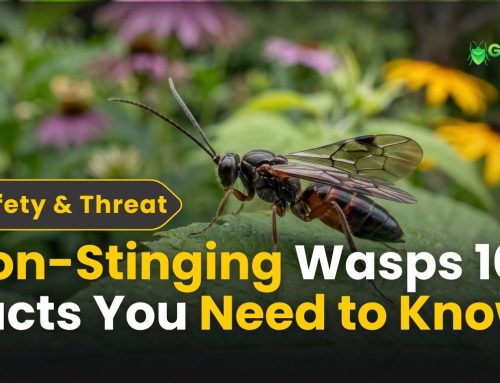
Are Hornets More Aggressive Than Wasps 5 Facts You Need
Introduction
You’re in your backyard in Westport, Connecticut when you notice a stinging insect near your fence.
At first, you’re not worried. But then it happens again. And again. The insect keeps coming back, getting more aggressive with each pass.
Your heart starts racing. You wonder: Is this a wasp, or something more dangerous?
Are hornets more aggressive than wasps? This is the critical question that homeowners across Greenwich, Stamford, Darien, New Canaan, and Wilton, CT ask themselves in moments just like this.
The answer is a definitive yes but the reasons why are more complex and more important than you might think.
Understanding hornet aggression isn’t just academic. It’s the difference between a manageable situation and a medical emergency. It’s why hornets require professional removal while wasps often don’t.
In this guide, I’ll reveal the 5 critical facts about hornet aggression that every Connecticut homeowner needs to know. You’ll understand exactly why are hornets more aggressive than wasps isn’t just a question it’s a safety issue.
What “Aggression” Really Means in Insects
Before we dive into the 5 facts, let’s clarify what we mean by aggression in stinging insects.
Insect aggression includes:
- Likelihood to sting unprovoked
- Defensiveness of territory
- Pursuit behavior (chasing threats)
- Swarming behavior (coordinated group response)
- Response to vibration or movement near nest
- Protective behavior of colony
Wasps and hornets both protect their nests, but the threshold for what triggers that protection—and the intensity of the response—is vastly different.
This distinction is critical because it determines your safety on your own property.
The 5 Critical Facts About Hornet Aggression
Fact 1: Hornets Attack With Minimal Provocation (Wasps Don’t)
This is perhaps the most critical behavioral difference.
Wasp aggression:
- Only defend when nest is directly threatened
- Ignore humans at distance
- Don’t pursue unless physically grabbed or nest is touched
- Single defensive sting typical
- Retreat after defending nest
Hornet aggression:
- Attack when merely near their territory
- Perceive humans as threats 50+ feet from nest
- Pursue intruders for long distances
- Multiple coordinated stings common
- More likely to attack without clear provocation
Real-world example: A homeowner in New Canaan, CT was simply trimming branches 25 feet from a hornet nest. He wasn’t touching the nest. He wasn’t swatting at the insects. Yet the hornets attacked him immediately, stinging him 12 times.
A wasp nest in the same situation would likely have gone unnoticed. He would have only encountered a problem if he directly contacted the nest.
Why this matters: You can’t simply “leave hornets alone” and expect safety. They patrol aggressively and attack perceived threats before you even realize the threat exists.
Fact 2: Hornets Are Territorial Defenders (Wasps Are Nest Protectors)
This behavioral distinction reveals fundamental aggression differences.
Wasps defend:
- The nest itself
- Immediate nesting area (few feet)
- Only when they perceive direct threat
- Generally non-aggressive away from nest
Hornets defend:
- Their territory (much larger area)
- Not just the nest, but surrounding space
- 50+ feet in all directions from nest
- Aggressively and constantly
- Patrolling behavior suggests active territorial defense
A hornet nest on your property isn’t just a structure to avoid. It’s an active territorial claim on your entire yard.
Territorial implications:
- You can’t safely use your yard during peak season
- Children and pets are constantly at risk
- Proximity to living spaces amplifies danger
- Large territories mean hornets encounter humans more frequently
Understanding hornet territorial behavior is essential for family safety.
Fact 3: Hornets Swarm (Wasps Don’t)
Swarming behavior is where hornet aggression becomes truly dangerous.
Wasp response to threats:
- Individual wasps defend
- Rarely more than 1-2 stinging simultaneously
- Uncoordinated response
- Quick retreat after sting
Hornet response to threats:
- Entire colony mobilizes
- Dozens of hornets attack simultaneously
- Coordinated group response
- Prolonged attack (swarms can last minutes)
- Multiple stings per victim (15+ common)
Why swarming happens: Hornets communicate through pheromones. When one hornet is threatened, it releases alarm pheromones that recruit the entire colony to defend the nest. This is an evolutionary advantage—large coordinated groups can defeat threats that individuals can’t.
Medical implications of swarming:
- One hornet sting is painful but manageable
- Five hornet stings are concerning
- Fifteen hornet stings can be life-threatening
- Swarming makes serious injury almost inevitable
This is why hornet sting injuries are so much more severe than wasp sting injuries. It’s not just the venom per sting—it’s the cumulative effect of dozens of stings delivered simultaneously.
Fact 4: Hornets Are Primed for Combat (Wasps Are Hunters)
The evolutionary purpose of each insect’s behavior explains aggression differences.
Wasp behavior is hunting-oriented:
- Seeking insects to feed larvae
- Focused on food acquisition
- Defensive when food source is threatened
- Less interested in human conflict
- Avoid unnecessary fights (energy costs)
Hornet behavior is territorial-oriented:
- Defending against competitors
- Protecting massive colonies (300-700+ individuals)
- Aggressive territory patrols
- Readily engage in conflict
- Swarming is an evolved response to threats
The evolutionary difference: Wasps evolved to be hunters. Hornets evolved to be defenders of large, valuable colonies. This fundamental difference in evolutionary strategy produces radically different aggression levels.
Practical implication: A hornet views you as a territorial threat, not food. They’re not interested in your lunch. They’re interested in eliminating perceived threats to their colony. This makes them fundamentally more aggressive.
Fact 5: Hornets Maintain Aggression Throughout the Season (Wasps Escalate Late Summer)
Seasonal aggression patterns differ significantly.
Wasp aggression by season:
- Spring: Low aggression (nest building)
- Summer: Moderate aggression (defending food sources)
- Fall: High aggression (food scarcity, desperation)
- Winter: Dormant
Hornet aggression by season:
- Spring: Moderate aggression (colony establishment)
- Summer: HIGH aggression (full colony, territory expansion)
- Fall: Extreme aggression (colony at peak size, defending resources)
- Winter: Dormant
Critical difference: Wasps’ aggression escalates due to food scarcity in late season. Hornets’ aggression is consistently high throughout summer and fall because it’s tied to territorial defense, not food scarcity.
For Connecticut homeowners: Are hornets more aggressive than wasps? Yes, consistently throughout the season. You can’t wait for late summer when wasp aggression escalates—hornets are already dangerous in June.
Comparison Table: Aggression Characteristics
Here’s how aggression manifests differently:
| Aggression Trait | Wasps | Hornets |
| Attack Unprovoked | Rarely | Frequently |
| Territorial Range | Few feet | 50+ feet |
| Response to Proximity | Ignore at distance | Attack at distance |
| Group Coordination | Individual response | Swarm response |
| Pursuit Behavior | No pursuit | Chase 50+ feet |
| Stings per Attack | 1-2 | 10-20+ |
| Peak Aggression | Late summer | June-October |
| Reason for Aggression | Food defense | Territory defense |
| Recovery Behavior | Retreat after sting | Rejoin swarm |
| Likely to Attack Again | Low | Very high |
Why This Aggression Matters for Your Safety
Understanding are hornets more aggressive than wasps has real safety implications for your Connecticut property.
Safety Implication 1: You Can’t Outrun Hornets
Hornets chase intruders 50+ feet. If you’re 30 feet from a hornet nest, you’re within their active attack range. You can’t walk quickly away and expect safety. Running only escalates the attack.
Safety Implication 2: Kids and Pets Are Especially Vulnerable
Children playing in yards don’t understand territorial boundaries. Pets running through property hit hornet territories unexpectedly. Both face aggressive attacks without knowing why.
Safety Implication 3: Multiple Stings Escalate Quickly
One hornet sting is a bee sting—painful but manageable. Ten hornet stings are a medical situation. Fifteen stings require emergency treatment. Swarming means you can go from one sting to ten within seconds.
Safety Implication 4: Allergies Become Amplified Risks
Someone with a bee allergy can experience anaphylaxis from a single sting. With hornets’ aggressive swarming, a single sting quickly becomes multiple stings. Risk escalates exponentially.
Real Connecticut Cases: Hornet Aggression in Action
Case 1: The Unprovoked Attack
A homeowner in Darien, CT was simply walking through their yard when a hornet attacked. The homeowner wasn’t near any visible nest. Wasn’t making loud noises. Wasn’t threatening anything.
The hornet attacked because the homeowner was in the insect’s perceived territory. The attack was completely unprovoked from the human’s perspective—but entirely predictable from the hornet’s evolutionary behavior.
This encounter sent the homeowner to the ER with 8 stings and a developing allergic reaction.
Lesson: Hornet aggression requires no provocation. Simply occupying their territory can trigger attack.
Case 2: The Swarm Response
A family in Stamford, CT discovered a hornet nest in their tree. They called professionals for removal.
When professionals approached the tree with equipment, the hornets mobilized. What should have been a single encounter with a few hornets turned into a coordinated swarm of 50+ hornets attacking simultaneously.
Professionals were protected by gear. A homeowner wouldn’t be.
Lesson: Disturbing a hornet nest triggers coordinated swarm response. This is why DIY removal is so dangerous.
Case 3: The Territorial Boundary Violation
A child in Greenwich, CT was playing near a fence when they accidentally hit a hornet with a ball. Not on purpose—accidental contact during play.
The hornet perceived this as a threat and attacked. Within seconds, multiple hornets from nearby nest swarmed, stinging the child 12+ times.
A wasp would have stung once, defensively. A hornet called its entire colony.
Lesson: Hornets interpret even accidental contact as threat. Their aggressive response is immediate and intense.
The Science Behind Hornet Aggression
Evolutionary Perspective
Hornets are more aggressive because it works. Large colonies with aggressive territorial defense survive better than passive ones. Evolution has selected for:
- Aggressive territorial behavior
- Quick threat response
- Coordinated group defense
- Intensive nest protection
Pheromone Communication
Hornets communicate threats through alarm pheromones. One hornet’s alarm triggers the entire colony. This chemical communication system creates coordinated responses that wasps can’t match.
Wasps have similar pheromones but in less sophisticated systems. A single wasp doesn’t trigger massive colony response.
Colony Size Effect
Hornets maintain larger colonies (300-700+ vs 50-200 for wasps). Larger colonies have more resources to defend aggressively. They can afford to lose some individuals to threats because the colony is substantial.
Smaller wasp colonies are more conservative—each individual loss is significant, so they avoid unnecessary conflict.
Checklist: Identifying Aggressive Hornet Behavior
Use this checklist to identify if you’re dealing with aggressive hornets:
Behavioral Signs of Hornet Aggression
Insects dive-bombing when you’re 20+ feet away
Multiple insects attacking simultaneously
Insects pursuing you across the yard
Attacking despite no direct threat or provocation
Insects returning repeatedly (not a one-time event)
Loud buzzing/aggressive flight pattern
Visible nest that’s large (12″+ inches)
Insects patrol the area even when undisturbed
Kids or pets being stung while playing
Insects attacking without a clear defense motivation
Score: 3+ behaviors = Likely hornet nest requiring professional removal
Why Professional Removal Is Essential for Aggressive Hornets
When you have documented aggressive hornet behavior, professional removal isn’t optional, it’s essential.
Why DIY Removal Fails With Aggressive Hornets
- Aggression escalates when the nest is disturbed
- Swarming prevents DIY removal before injuries occur
- Individual hornets are faster and more aggressive than wasps
- The colony mobilizes immediately when the nest is threatened
- Standard wasp spray is insufficient for hornet colonies
Why Professionals Succeed
- Professional-grade treatments designed for hornet venom
- Protective equipment (full suits, not just hats)
- Timing optimization (removal at night when hornets are dormant)
- Multiple treatment applications ensure complete elimination
- Experience with aggressive responses and safety protocols
Professional hornet removal eliminates the threat completely. This isn’t an area for DIY experimentation.
Customer Testimonials
“We didn’t realize how aggressive hornets were until we found a nest on our property. We tried to approach it and were attacked immediately. The professional removal team handled it safely. Now we understand why DIY wasn’t an option.” — Michael T., Greenwich, CT
“My daughter was stung while playing because we didn’t understand hornet aggression. We thought they’d leave us alone if we left them alone. Turns out hornets are territorial. After professional removal, we finally felt safe.” — Jennifer M., Darien, CT
“Reading about hornet aggression made me realize we had a genuine safety issue. Professionals removed the nest within 24 hours. Best decision we made for family safety.” — Robert H., New Canaan, CT
FAQ: Hornet Aggression
Q1: Are hornets more aggressive than wasps?
Yes, significantly. Hornets attack with minimal provocation, defend large territories, coordinate group attacks, and pursue threats aggressively. Wasps only defend their immediate nest area.
Q2: Why are hornets so aggressive?
Evolutionary adaptation. Large colonies require aggressive territorial defense to protect resources and population. Aggressive behavior increased survival rates, so it’s now hardwired in hornet biology.
Q3: How far do hornets chase threats?
50+ feet is common. Some hornets will pursue intruders even further. This means you can’t simply leave their territory—they actively patrol beyond the nest.
Q4: Can I reason with hornets or avoid them?
No. Hornet aggression isn’t rational or avoidable through logic. They perceive you as a territorial threat regardless of your intentions. Professional removal is the only solution.
Q5: What should I do if attacked by hornets?
Run toward shelter immediately. Keep arms over head to protect face. Don’t swat (increases aggression). Reach shelter (house, car) quickly. Remove stingers and seek medical attention if multiple stings.
Q6: Why is hornet aggression worse in fall?
Colonies reach peak size in fall. More defenders available. Resources being concentrated. Aggressive defense escalates as stakes increase.
Q7: Can children play in yards with hornet nests?
No. Hornet aggression is unpredictable and intense. Children are especially vulnerable. Professional removal is necessary before yard use is safe.
Take Action: Protect Your Family From Hornet Aggression
You now understand are hornets more aggressive than wasps? The answer is undeniably yes and the implications are serious.
If you have aggressive hornets on your Greenwich, Stamford, Darien, New Canaan, Wilton, or Westport, CT property, don’t delay.
Here’s what to do today:
- Observe from distance – Note aggressive behavior and nest location
- Keep family away – Restrict yard use until removal is complete
- Contact professionals immediately – Don’t wait for escalation
- Schedule removal – Most companies respond within 24 hours
- Follow prevention – Prevent future nests through yard maintenance
Book your professional hornet removal today. Hornet aggression is a genuine safety threat. Professional elimination protects your family.
Learn More About Hornet Behavior and Safety
For comprehensive information on hornet aggression and management:
- Wasp vs Hornet in CT: Comparison Hub – Complete behavior comparison
- Wasps vs Hornets CT: Differences & Dangers – Safety information
- Are Hornets Wasps? Differences Explained – Biological perspective
- Which Is Worse: Hornet or Wasp? – Danger assessment
- Wasp vs Hornet vs Yellow Jacket – Three-way comparison
- How Harmful Hornets Are – Health risks
- Rid of Hornets – Removal strategies
- Difference Between Wasp and Hornet Nest – Nest identification
- Eliminate Ground Hornets – Ground species
- Treatment of Hornet Sting – First aid
- Immediate Hornet Control in CT – Emergency services
- Hornet Nest Removal in CT – Professional removal
- Ground Hornet Treatment in CT – Ground treatment
- How to Deter Hornets from Nesting 2025 – Prevention
For scientific information on insect aggression and behavior, visit the Connecticut Department of Energy & Environmental Protection or University of Connecticut Integrated Pest Management.
Final Word
Are hornets more aggressive than wasps?
Absolutely. They’re more aggressive in every measurable way:
- More likely to attack unprovoked
- More territorial in scope
- More coordinated in response
- More intense in severity
- More dangerous collectively
This aggression isn’t a personality flaw—it’s an evolutionary adaptation that makes hornet colonies viable and sustainable. But that same adaptation makes them genuinely dangerous to humans who occupy their territory.
Understanding this aggression is understanding the real threat hornets pose.
If you’ve encountered aggressive hornets on your Connecticut property, you now know exactly why professional removal isn’t optional it’s essential.
Contact Green Pest Management CT today for professional hornet removal. Your family’s safety depends on it.
We serve Greenwich, Stamford, Darien, New Canaan, Wilton, and Westport, CT with professional removal of aggressive hornets.