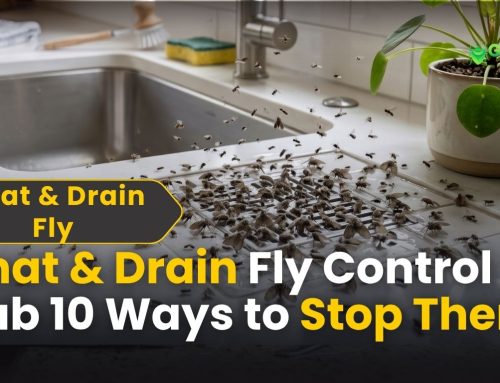
Gnat vs Fruit Fly Pictures: 7 Key Differences to Know
When you’re comparing gnat vs fruit fly pictures, don’t focus on size alone. A fungus gnat is usually dark, slender, long-legged, and mosquito-like, while a common fruit fly has a more compact, rounded fly shape and is often tan to brown. Location is another major clue: plant gnats typically gather around moist potting media, while fruit flies are strongly associated with fermenting produce, beverages, recycling, and food residue.
Correct identification matters because these pests require different treatments. Apple cider vinegar traps may catch fruit flies, but they do little to address fungus gnat larvae living in potting mix.
This visual identification guide explains seven key differences, what photos should show, how to distinguish both insects from drain flies, why they appear in Connecticut homes, and how to eliminate the actual breeding source.
What Does a Gnat Look Like Compared With a Fruit Fly?
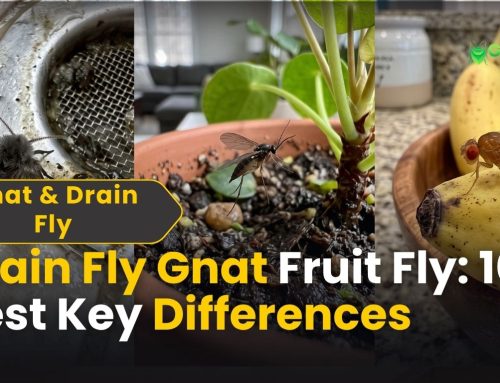
A fungus gnat looks more like a miniature mosquito: it has a narrow dark body, relatively long legs and antennae, and delicate wings. A fruit fly has a more compact body, shorter-looking proportions, and often tan or brown coloration. Some common fruit flies have conspicuous reddish eyes.
A comparison photo should emphasize these characteristics:
| Feature | Fungus Gnat | Fruit Fly |
| Body | Slender and elongated | Compact and rounded |
| Typical color | Dark gray to black | Tan, yellowish or brown |
| Legs | Relatively long | Shorter-looking |
| Antennae | More noticeable | Less prominent at a glance |
| Eyes | Dark | Some common species have red eyes |
| Common location | Houseplants | Produce, food and recycling |
| Larval source | Moist growing media | Fermenting organic material |
| ACV trap response | Not the primary target | Often strongly attracted |
These characteristics are more reliable when used together. One blurry image or one location clue is rarely enough for a confident identification.
Green Pest Management CT’s drain fly, gnat, and fruit fly comparison guide provides an additional three-way comparison.
What Does a Fungus Gnat Look Like?
Fungus gnats are small flies, with several groups receiving the common name. Sciaridae includes many of the species encountered around indoor plants.
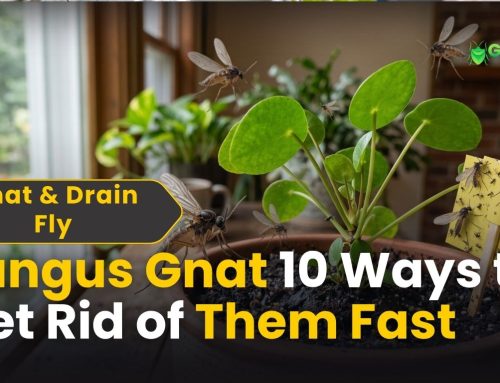
The adult has a slim profile. Long, delicate legs can make the insect resemble a tiny mosquito when photographed from the side. Adults are usually dark rather than tan and move around plant foliage, pot rims, growing media, and nearby windows.
The immature stage looks completely different.
Fungus gnat larvae are small, translucent to whitish, worm-like organisms, commonly with a darker head capsule. Homeowners are far less likely to notice the larvae because they remain in the moist growing medium.
For a plant-focused identification and treatment guide, see Green Pest Management CT’s fungus gnat control resource.
What Does a Fruit Fly Look Like?
Common household fruit flies generally belong to the family Drosophilidae.
Their bodies appear comparatively compact. Many are tan, yellow-brown, or brownish rather than dark and mosquito-like.
Some familiar species have bright reddish eyes, an excellent clue when clearly visible in a close-up picture. However, not every fruit fly you encounter will present exactly the same coloration, so eye color should not be the only feature used.
Behavior can strengthen your identification.
A small compact fly repeatedly hovering around bananas, tomatoes, peaches, wine, beer, juice, or beverage recycling is much more likely to be a fruit fly than a fungus gnat.
Green Pest Management CT’s fruit fly authority hub covers identification, breeding sources, traps, and prevention in more detail.
Gnat vs Fruit Fly Pictures: 7 Differences to Look For
When comparing pest photographs, use multiple visual characteristics. Camera angle, lighting, magnification, and image quality can make one characteristic misleading.
1. Compare Their Overall Body Shape
Body shape is one of the fastest visual distinctions.
A fungus gnat looks narrow.
Its abdomen and thorax create a slender silhouette, while its legs give the insect a stretched-out appearance.
A fruit fly looks stockier.
Its compact body resembles the familiar shape of a house fly reduced dramatically in size rather than a miniature mosquito.
Photo tip
For identification, a side-view photo is particularly useful.
Instead of trying to photograph a flying insect, wait until one rests on a wall, window, sticky card, or plant container. Use good light and your phone’s close-focus capability without sacrificing sharpness.
A sharply focused picture showing the entire body is more useful than extreme digital zoom.
2. Look at the Legs
Fungus gnats have noticeably long, slender-looking legs relative to their bodies.
This is part of what makes them appear mosquito-like.
Fruit flies have more compact proportions. Their legs do not usually dominate their silhouette in the same way.
Leg length is especially helpful in side-by-side pictures where both insects have been photographed at roughly similar magnification.
Remember that apparent size in online photographs can be misleading. One picture may be greatly enlarged while the other is not.
Compare proportions rather than image dimensions.
3. Look at the Antennae
Fungus gnats tend to have relatively prominent, thread-like antennae.
A high-quality photograph may make them easy to see extending from the head.
Fruit flies have antennae too, of course, but their head profile doesn’t usually create the same long, delicate appearance at ordinary viewing distance.
This is a useful secondary identification feature rather than a standalone test.
If your photo is too blurry to distinguish antennae, use the insect’s body shape, location, and behavior instead of guessing.
4. Compare Color and Eyes
Color can help, although household lighting changes how insects look.
Fungus gnats are generally dark, often appearing grayish-black or black.
Common fruit flies frequently look tan, yellow-brown, or brown.
Some fruit fly species commonly encountered indoors have reddish eyes that are easily visible in a sharp close-up.
That is a strong visual clue—but don’t make the common mistake of deciding “no red eyes = not a fruit fly.”
There are multiple species, and a tiny moving insect is difficult to view accurately without magnification.
Use eye color as supporting evidence.
5. Compare Their Wings and Resting Posture
Both fungus gnats and fruit flies have one functional pair of wings, as expected for true flies, but their overall posture differs.
Fungus gnats tend to look delicate and elongated while resting.
Fruit flies retain a more compact fly-like outline.
This is also where a third insect enters the picture: drain flies.
Drain flies have broad, noticeably fuzzy or hairy wings and a moth-like resting appearance. If your “gnat” looks covered in fuzz with broad wings, it may not be either a fungus gnat or a fruit fly.
Green Pest Management CT’s fruit fly vs. drain fly guide explains this distinction in detail.
6. Look at Where the Insect Appears
A photo tells you what an insect looks like.
Its location tells you what it may be doing.
This distinction is extremely useful in professional pest identification.
Fungus gnats and houseplants
Fungus gnats have a strong association with moist plant-growing media.
If tiny dark flies walk across the soil surface, fly out when you water, gather around plant pots, and appear at the closest window, the evidence strongly supports a plant-related source.
Inspect whether the growing media remain unnecessarily wet and whether dead plant material is accumulating.
Fruit flies and fermentation
Fruit flies are strongly associated with fermenting organic material.
Check ripe fruit, vegetables, potatoes, onions, wine, beer, juice, recycling, garbage, and food residue.
Don’t assume your kitchen must be visibly dirty to support them. A small amount of forgotten organic material can be enough.
The Green Pest Management CT guide to where fruit flies come from covers hidden sources that are easy to overlook.
7. Watch How They Behave
A still photograph can’t show behavior, but behavior often confirms what the photograph suggests.
Fungus gnats tend to remain associated with plants. Adults may run across soil or pot surfaces and make short flights around the foliage.
Fruit flies tend to hover actively around attractive food and fermentation sources.
If an apple cider vinegar trap catches many of the insects, fruit flies become more plausible, although trap catches are not a substitute for physical identification.
If adults ignore vinegar but are consistently emerging from plant containers, investigate fungus gnats.
The most reliable diagnosis combines visual appearance, behavior, and developmental habitat.
Gnat vs Fruit Fly vs Drain Fly: A Three-Way Comparison
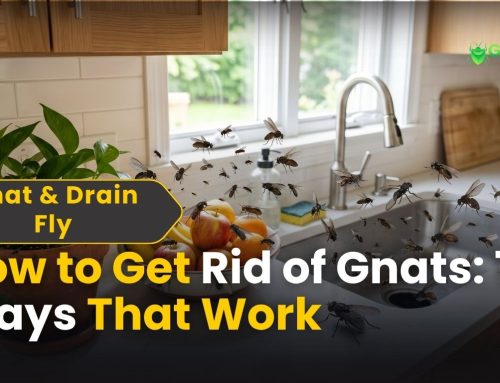
Small-fly identification becomes particularly confusing around kitchen sinks because all three insects can occur within the same room.
A fungus gnat might come from a potted herb on the windowsill.
A fruit fly might come from recycling under the sink.
A drain fly might be associated with wet organic material.
The fact that all three are within six feet of the faucet doesn’t make them the same pest.
How a drain fly looks
Drain flies are generally fuzzy, with broad hairy-looking wings. Adults often rest on walls and can resemble tiny moths.
Their flight tends to look weaker and less sustained than active fruit-fly hovering.
For comprehensive identification and source-control advice, see the Gnat & Drain Fly Control Hub.
Signs of a Fungus Gnat Problem
If your photos resemble fungus gnats, confirm that identification by inspecting the plants.
Watch for adult flies emerging after pots are disturbed or watered. Check sticky monitoring cards if you use them, and determine which individual plants have the highest activity.
Inspect growing conditions.
Persistently moist growing media can support fungus gnat larvae. Dead organic plant debris can also contribute to favorable conditions.
The aim isn’t to dry every plant indiscriminately.
Different plants have different moisture requirements. Adjust irrigation according to the particular plant’s needs while avoiding unnecessary prolonged saturation.
Green Pest Management CT’s guide explaining how to get rid of gnats covers a source-based treatment process.
Signs of a Fruit Fly Problem
If your photos resemble fruit flies, shift the inspection away from potting media.
Check produce carefully.
Look beyond obvious bananas and apples. Potatoes and onions stored in cabinets are frequent examples of food that may be forgotten while deteriorating.
Inspect recycling.
Wine, beer, soda, juice, and other beverage containers can retain organic residue attractive to fruit flies.
Check garbage cans beneath the liner and clean sticky spills around the receptacle.
Look underneath nearby appliances if a beverage or food spill could have traveled into a hidden area.
Trapping adults helps, but source removal is what stops replacement.
What Causes Plant Gnats?
Plant gnats usually become established when suitable moist growing media allow larvae to develop.
The insects may arrive with an infested plant or growing material, or adults may find appropriate containers after entering the environment.
One of the most common contributing conditions is consistently wet growing medium.
That doesn’t mean everyone with fungus gnats is “overwatering” in the same way.
Some plants require regular moisture. Others need significant drying between irrigation.
The practical objective is to understand the plant and avoid maintaining wetter conditions than it requires.
Proper drainage, removal of decaying plant debris, and monitoring new plants can help reduce recurrence.
What Causes Fruit Flies?
Fruit flies follow odors associated with fermentation.
Their developmental sources can include deteriorating produce, fermenting fruits and vegetables, beverage residue, and other suitable organic material.
Warmer conditions can make a small source become noticeable quickly.
An important field lesson is to inspect vertically and horizontally around the highest adult activity.
If flies are concentrated beside a recycling bin, don’t spend all afternoon inspecting houseplants across the room.
Follow the insects’ distribution.
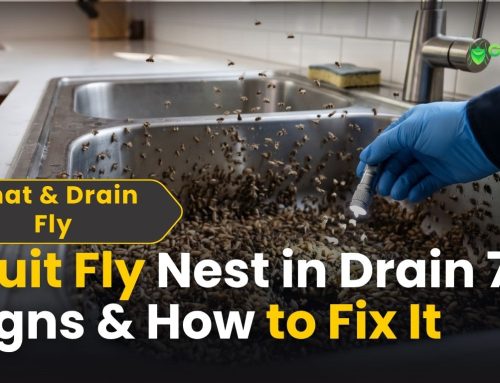
What About a Fruit Fly Nest in a Drain?
Homeowners often describe concentrated drain activity as a “fruit fly nest,” but fruit flies do not build organized nests.
If fruit flies are developing in suitable organic material associated with plumbing, the area is better described as a breeding source.
And don’t assume every fly near a sink is a fruit fly.
Fuzzy adults point more strongly toward drain flies. Slender, dark adults may be fungus gnats from plants nearby.
Our guide to a suspected fruit fly breeding source in a drain explains how to investigate without automatically treating plumbing.
How to Get Rid of Fungus Gnats
Once identification is confirmed, focus on the larval environment.
Adjust watering according to plant needs so growing media do not remain unnecessarily saturated. Maintain suitable drainage and remove dead plant material.
Yellow sticky monitoring cards can capture adults and help determine which plants have the highest activity.
If additional treatment is needed, use products specifically labeled for the intended pest, plant environment, and application.
The EPA’s household pest-control safety guidance explains the importance of proper pesticide selection and label use.
Adult traps alone aren’t enough because larvae remain in the growing medium.
How to Get Rid of Fruit Flies
Fruit-fly treatment starts by removing the fermentation source.
Discard deteriorating produce appropriately. Rinse beverage recycling. Clean waste containers and organic spills.
Then use adult trapping to monitor remaining activity.
An apple vinegar fly trap uses fermentation-related odors to attract fruit flies, while a fruit fly water bottle trap adds a funnel design.
Those methods should support sanitation, not replace it.
If the trap continues filling every day, don’t congratulate the trap and stop inspecting.
Continued catches mean flies are still entering or developing somewhere.
What Drain Treatments Work for Drain Flies?
If your pictures actually reveal drain flies, fruit-fly and fungus-gnat treatments are the wrong approach.
Drain-fly control involves finding and removing suitable wet organic developmental material.
When an accessible drain is confirmed as the source, appropriate physical cleaning can be important. Products intended for drain maintenance should be compatible with the plumbing and used according to their directions.
Don’t indiscriminately pour household chemical combinations down the drain.
Never mix chlorine bleach with vinegar or other acids; hazardous chlorine gas can be produced. Different drain cleaners should not be combined casually either.
A persistent plumbing or moisture condition may require an appropriate plumbing professional.
Risks and Problems Associated With These Small Flies
Fungus gnats and fruit flies are largely nuisance pests in residential settings, but recurring infestations still provide useful information.
Fungus gnat activity can indicate that growing conditions are staying favorable for larvae. Significant populations may be a concern for roots, particularly in seedlings, cuttings, and vulnerable plants.
Fruit flies indicate a suitable fermenting organic source. Adults can travel between organic material and food-related surfaces, making sanitation important.
Drain flies can reveal persistent wet organic conditions.
The response shouldn’t be panic or indiscriminate spraying.
The response should be source identification.
Common Identification Mistakes
Comparing poor-quality gnat vs fruit fly pictures creates several predictable mistakes:
- Judging actual insect size from differently magnified photographs.
- Calling every dark fly a fungus gnat.
- Assuming red eyes are required for every fruit fly identification.
- Ignoring long legs and antennae on fungus gnats.
- Mistaking fuzzy drain flies for gnats.
- Assuming every fly at a sink is breeding in the drain.
- Using location without examining appearance.
- Using appearance without considering breeding location.
- Treating plants when fermentation sources are responsible.
- Using ACV traps as the main treatment for fungus gnats.
- Treating drains because a fruit fly happened to land on the faucet.
- Continuing a failed treatment instead of reconsidering identification.
For best results, photograph the adult, record where most activity occurs, and identify the likely larval source before treating.
DIY vs. Professional Identification and Control
A simple, localized infestation is often appropriate for DIY control.
If dark, slender flies clearly emerge from one plant, plant-focused moisture management and monitoring make sense.
If compact tan flies concentrate around deteriorating produce, fruit-fly source elimination and adult traps are appropriate.
Professional inspection becomes worthwhile when visual identification is uncertain, several potential sources are involved, activity persists despite source correction, or flies seem to emerge from an inaccessible structural or plumbing area.
Green Pest Management CT’s guide on when to call a fly exterminator provides additional decision points.
What Happens During a Professional Inspection?
A professional inspection should answer two questions: what fly is present, and where is it developing?
A technician first examines available specimens and maps adult activity.
The inspection then follows the identification.
With fungus gnats, plants and growing conditions receive attention. With fruit flies, produce, recycling, garbage, beverage residues, and other fermenting organic sources become priorities. For drain flies, wet organic conditions and relevant plumbing environments matter more.
Recommendations can then combine sanitation, habitat modification, moisture management, monitoring, exclusion, and targeted pest-control treatment when appropriate.
This is Integrated Pest Management in practice. The EPA’s Integrated Pest Management resources explain the broader framework.
Green Pest Management CT also provides professional flying insect control services when identification or source location isn’t straightforward.
Seasonal Small-Fly Activity in Connecticut
Connecticut homeowners can encounter these insects throughout the year.
Warm summer conditions can favor fruit-fly development at the same time that homes contain more ripe produce, garden vegetables, beverages, and food from outdoor gatherings.
Fungus gnats can increase when indoor or patio plants receive frequent watering.
Fall introduces another issue: Connecticut homeowners often bring outdoor houseplants inside before cold weather. Inspecting those containers before mixing them with an indoor collection can help detect fungus gnat activity.
Winter does not automatically solve either pest.
Heated indoor spaces can support fly development when suitable breeding conditions remain.
Local Identification Concerns in Fairfield County
The same identification principles apply throughout Fairfield County, but individual properties influence where an inspection needs to go.
Greenwich and New Canaan homes may have large plant collections, multiple kitchen areas, bars, or numerous bathrooms. Stamford and Norwalk residents may live in apartments, multifamily buildings, or single-family houses where potential sources differ.
Darien and Westport homes may experience fruit-fly activity during warm-season entertaining when produce and beverage recycling are abundant.
Fairfield and Wilton homeowners with gardens or substantial houseplant collections may encounter both fruit flies and fungus gnats during the same season.
That’s why appearance alone isn’t always enough.
The correct question is not simply “What does the picture look like?”
It’s “Does the picture, behavior, and breeding environment all point toward the same insect?”
Prevention Tips for Connecticut Homes
Once you’ve identified and eliminated the source, prevention is straightforward:
- Inspect new houseplants before grouping them with established plants.
- Water according to plant requirements rather than a rigid schedule.
- Maintain appropriate plant drainage.
- Remove dead plant debris.
- Check ripe produce regularly.
- Inspect potatoes and onions stored away from view.
- Rinse beverage containers before indoor recycling storage.
- Clean garbage and recycling containers when residue builds up.
- Wipe organic spills promptly.
- Investigate recurring fuzzy flies around plumbing.
- Correct leaks and persistent moisture.
- Repair damaged screens.
- Monitor after corrective work.
- Use pest-control products only according to label directions.
This prevention-first strategy aligns with Integrated Pest Management and reduces the need for unnecessary pesticide applications.
Frequently Asked Questions
What is the easiest way to tell a gnat from a fruit fly?
Look at body shape and location together. Fungus gnats are dark, slender, and long-legged and typically gather around houseplants. Fruit flies are more compact and commonly occur around fermenting fruit, beverages, garbage, or recycling.
What do fungus gnats look like in pictures?
Adult fungus gnats look like tiny, dark mosquitoes with slender bodies, relatively long legs, long antennae, and delicate wings. Close-up side views are especially useful for identification.
What do fruit flies look like in pictures?
Fruit flies generally have compact tan, yellowish-brown, or brown bodies. Some common species have conspicuous reddish eyes. They look more like tiny conventional flies than mosquitoes.
Are plant gnats the same as fruit flies?
No. The plant gnats homeowners commonly encounter are fungus gnats, whose larvae develop in moist growing media. Fruit flies typically develop in fermenting organic material.
How can I tell a drain fly vs. fruit fly?
Drain flies are noticeably fuzzy and moth-like, with broad hairy wings. Fruit flies are smoother and more compact. Their likely sources also differ: drain flies favor wet organic habitats, while fruit flies favor fermentation.
Why are tiny gnats flying around my kitchen?
They could be fungus gnats from plants, fruit flies from fermenting food or recycling, drain flies, or another small-fly species. Identify the insect and locate where activity is strongest before treating.
Do apple cider vinegar traps catch fungus gnats?
They are primarily useful for fruit flies. Some incidental fungus gnats might be captured, but ACV traps do not address fungus gnat larvae developing in plant-growing media.
Can fruit flies come from drains?
Fruit flies can potentially develop in suitable fermenting organic material associated with plumbing, but being near a drain does not prove the drain is the source. Confirm the species and inspect other food sources.
When should I call pest control for small flies?
Consider professional inspection when identification remains uncertain, multiple locations are affected, the population persists after source correction, or flies appear from inaccessible structural or plumbing areas.
Does Green Pest Management CT identify gnats and fruit flies?
Green Pest Management CT provides professional flying-insect inspections for homeowners in Greenwich, Stamford, Darien, Westport, Fairfield, Wilton, New Canaan, Norwalk, and surrounding Fairfield County communities.
Conclusion: Use Pictures, Behavior, and Source Together
When comparing gnat vs fruit fly pictures, the clearest visual difference is overall shape. A fungus gnat is typically dark, slender, long-legged, and mosquito-like. A fruit fly is more compact and commonly tan to brown, with reddish eyes in some familiar species.
But photos should be only the first step.
A fungus gnat repeatedly emerging from moist potting media gives you both appearance and source evidence. A compact fly hovering around fermenting produce or beverage recycling does the same for fruit flies. A fuzzy, moth-like insect around wet organic material points you toward drain flies instead.
That combination—appearance, behavior, and developmental source—produces far more reliable identification than comparing one blurry photograph.
Once the pest is identified, control its breeding environment rather than only killing visible adults. This is the core of Integrated Pest Management and the approach Green Pest Management CT recommends for recurring small-fly problems.
Homeowners in Greenwich, Stamford, Darien, Westport, Fairfield, Wilton, New Canaan, Norwalk, and surrounding Fairfield County can schedule a professional inspection with Green Pest Management CT when pictures aren’t enough to identify the pest or appropriate source-control measures aren’t stopping the infestation.