Room-Specific Guides: Smart Tips for Every Space | Complete CT Pest Prevention
INTRODUCTION
You’re making coffee in your Stamford kitchen when you notice ants on the counter. By evening, they’re in your bedroom walls. The next morning, they’ve invaded the bathroom near the shower. Within days, you’re dealing with a multi-room infestation that feels impossible to control.
This escalating nightmare plays out in countless Connecticut homes because most people use the same approach everywhere—generic spray and hope for the best. But the truth is, room-specific guides reveal that different spaces require completely different ant control strategies. Kitchen ants need different solutions than bathroom ants. Bedroom infestations require different prevention than living room problems.
Understanding how to address kitchen ants removal prevention, implement bedroom ants elimination strategies, and execute bathroom ants source removal transforms your ability to defend your entire home systematically. This comprehensive guide reveals exactly what each room needs, why generic approaches fail, and how professional solutions account for room-specific challenges. Let’s protect every space in your Connecticut home.
KITCHEN ANT CONTROL: DEFENDING YOUR FOOD SOURCE
Why Kitchens Are Ground Zero for Ant Invasions
Your kitchen is ant paradise. Warmth, moisture, consistent food sources, and shelter from weather make kitchens irresistibly attractive to invading colonies. Understanding this reality helps you implement effective kitchen ants removal prevention strategies.
Kitchens attract ants for specific reasons:
Food availability is paramount. Kitchens contain more accessible food than any other room in your home. Crumbs accumulate on counters, under appliances, and inside cabinets. Grease residue coats cooking surfaces. Sugar spills attract ants intensely. Even “clean” kitchens contain microscopic food particles that ants detect and exploit.
Water sources matter equally. Kitchen sinks leak. Dishwashers produce moisture. Refrigerator condensation drips. Bathroom moisture sometimes travels through shared walls. Ants need water desperately kitchens provide constant supply.
Shelter and entry points concentrate in kitchens. Baseboards have gaps. Pipes penetrate walls creating openings. Cabinet undersides offer hidden nesting sites. The kitchen’s complexity of fixtures and connections creates entry point diversity.
This combination—food, water, shelter, entry points—makes kitchens the epicenter of most home infestations.
Stage 1: Early Detection in the Kitchen
Early detection is crucial for effective kitchen ants removal prevention. Catching problems before populations explode prevents home-wide invasions.
Warning signs you should watch for:
A single ant trail crossing the counter appears between 6-9 AM when ants forage most actively. This initial trail means a scout has successfully recruited others. The colony has discovered your kitchen. Acting immediately at this stage prevents escalation.
Small piles of debris near baseboards indicate nesting activity. Ants excavate materials creating tiny piles. These piles mean active colonies exist in wall voids, not just foraging visits.
Ants appearing near food sources—particularly sugar, grease, or protein materials—indicate active recruitment. If ants converge on specific locations, a strong pheromone trail has established.
Ants in kitchen cabinets and pantries mean infestation has penetrated your food storage. This escalation represents genuine health and contamination risk requiring immediate intervention.
Early detection allows prevention-focused intervention preventing infestation. Late detection requires aggressive elimination strategies after colonies establish.
Kitchen Elimination Strategy: Multi-Point Approach
Effective kitchen ants removal prevention requires simultaneous action on multiple fronts. Single-approach solutions fail because they address only one aspect of the infestation problem.
Point 1: Food Source Elimination
This is foundational. Remove every accessible food source forcing ants to forage elsewhere. This includes:
Wiping counters daily removing all crumbs and residue. Using dedicated cleaning solutions removing food-attractant molecules invisible to human eyes. Storing food in airtight, sealed containers preventing access. Securing trash in sealed containers and removing daily. Cleaning under and behind appliances where debris accumulates. Addressing grease buildup on stovetops and cooking surfaces.
This level of cleanliness prevents food discovery and pheromone recruitment. When ants cannot find food, they don’t deposit trail pheromones recruiting others. Prevention of discovery prevents recruitment.
Point 2: Water Source Elimination
Fix leaking pipes immediately. A single drip becomes thousands of gallons monthly. Ants establish colonies around reliable water sources. Eliminating water removes this critical attractant.
Wipe sink areas dry after use. Standing water attracts drinking ants. Dry environments discourage colony establishment. Reduce bathroom and laundry moisture preventing moisture migration to kitchen areas through shared walls.
Point 3: Entry Point Sealing
Identify every gap, crack, and opening in your kitchen. Ants penetrate through openings invisible to human eyes. Comprehensive sealing requires:
Inspecting baseboards for gaps and sealing with caulk. Sealing around pipe penetrations where utility lines enter walls. Weatherstripping door sweeps preventing entry at floor level. Sealing gaps around window frames. Addressing any visible cracks in walls or trim.
Professional sealing ensures complete entry point elimination using materials ants cannot penetrate. DIY sealing is often incomplete, leaving access routes for determined invaders.
Point 4: Bait Placement Strategy
Strategic bait placement along active ant trails in kitchens eliminates colonies before populations explode. Baits should be positioned where ants naturally travel—along walls, near found food sources, around baseboards.
Professional-grade baits are formulated specifically for kitchen application where food contamination risk requires safe, sealed delivery systems. DIY baits often leak and contaminate food preparation surfaces.
Real Kitchen Scenario: The Darien Family
The Martinez family discovered sugar ants throughout their Darien kitchen in May. They noticed an organized trail leading from the counter to a crack near the baseboards. Recognizing the seriousness, they immediately implemented multi-point elimination.
They deep-cleaned their kitchen eliminating all accessible food sources. They fixed a leaking pipe under the sink that had been dripping for months. They sealed the baseboards gaps. They placed professional bait stations along the identified trail.
Within one week, visible ant activity ceased. Professional follow-up inspection two weeks later confirmed complete colony elimination. The family implemented ongoing prevention—monthly inspections, consistent cleanliness, moisture monitoring—preventing reinfestation for over two years.
This success came through understanding that kitchen ants removal prevention requires addressing every aspect simultaneously, not hoping single interventions will suffice.
BEDROOM ANT CONTROL: PROTECTING YOUR SANCTUARY
The Bedroom Infestation Problem
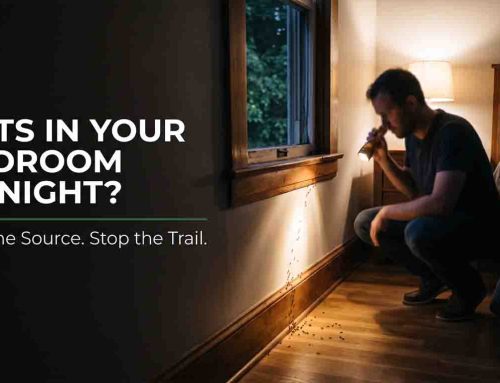
Bedrooms present unique ant challenges. Unlike kitchens with obvious food sources, bedroom infestations often seem mysterious. But understanding what attracts ants to bedrooms reveals effective bedroom ants elimination strategies.
Why ants invade bedrooms:
Dust mites and dead skin cells provide protein sources. Humans shed millions of skin cells nightly. Ants harvest these microscopic food sources from beds, carpets, and bedroom textiles. While this seems insignificant, it’s enough to establish foraging behavior.
Moisture from bathroom proximity attracts moisture-seeking species. Bedrooms adjacent to bathrooms often experience humidity transfer through shared walls. This moisture attracts species requiring water for survival.
Shelter and darkness appeal to ant instincts. Dark closets, under-bed storage, and wall voids provide ideal nesting conditions. Bedrooms offer undisturbed interior spaces where colonies can establish without detection.
The psychological impact of bedroom infestations exceeds that of other rooms. Knowing ants crawl near your sleeping family creates genuine alarm and health anxiety—justified by the contamination risks ants introduce.
Bedroom-Specific Elimination Strategy
Effective bedroom ants elimination differs substantially from kitchen control because bedroom infestations often involve different ant species (particularly carpenter ants nesting in wall voids) and different food sources.
Step 1: Identify the Species
Bedroom ants differ from kitchen ants. Carpenter ants commonly nest in bedroom walls, particularly in older Connecticut homes. Small sugar ants sometimes migrate from kitchens. Identification determines the entire elimination approach.
Carpenter ants require wall cavity treatment targeting internal colonies. Sugar ants require different bait formulations. Misidentification leads to treatment failure.
Step 2: Locate Nesting Sites
Bedroom ants typically nest in wall voids rather than establishing surface trails. You’ll see emerging ants but no clear trail revealing colony location. Professional inspection uses specialized tools identifying wall cavity nesting.
Common nesting locations include:
Walls adjacent to moisture sources (bathrooms, exterior walls with condensation). Ceiling cavities in upstairs bedrooms. Areas of wood damage or water intrusion where ants have weakened structural materials. Inside closets and under-bed storage areas.
Step 3: Wall Treatment
Wall cavity treatment requires accessing internal voids safely without structural damage. Professional approaches dust wall cavities with treatment powders targeting internal colonies. This approach reaches ants inaccessible through surface application.
DIY wall treatment is dangerous and ineffective. You cannot reach internal cavity colonies with spray or bait. Attempting wall treatment without professional expertise risks property damage without achieving elimination.
Step 4: Bedroom-Specific Prevention
Bedroom prevention focuses on eliminating attractants and preventing reinfection:
Reduce clutter providing hiding spots and harborage. Declutter closets and under-bed storage. Store clothing in sealed containers preventing ant access. Reduce carpet storage areas where ants hide. Minimize bedding materials on the floor.
Control moisture aggressively. Use dehumidifiers reducing humidity. Fix any wall moisture from adjacent bathrooms. Ensure proper ventilation preventing condensation accumulation.
Seal entry points comprehensively. Bedroom walls have numerous potential entry points requiring systematic sealing. This includes baseboards, electrical outlet gaps, pipe penetrations, and window frames.
Real Bedroom Scenario: The New Canaan Crisis
A New Canaan family woke one morning to discover carpenter ants crawling across their bedroom ceiling. Their teenage daughter had experienced ant bites during sleep—a genuinely traumatic event creating understandable alarm.
Immediate professional assessment revealed an active carpenter ant colony in the wall cavity between the bedroom and adjacent bathroom. Water damage from bathroom moisture had attracted carpenter ants to the weakened wood. The colony had expanded for months undetected.
Professional treatment required carefully accessing the wall cavity, treating the colony with dust application targeting internal ants, and eliminating the colony. Structural repairs addressed water damage preventing future infestations. The family then implemented aggressive bathroom moisture control and sealed all bedroom entry points.
Recovery took 3 weeks. The psychological impact—particularly the daughter’s trauma—took longer. This family learned that bedroom infestations require immediate professional intervention, not DIY attempts that delay treatment and allow escalation.
BATHROOM ANT CONTROL: MANAGING MOISTURE AND INVASION POINTS
The Bathroom as Ant Hotspot
Bathrooms present a paradox: they’re less food-attractive than kitchens but more moisture-rich than any other room. Understanding this moisture-attraction relationship reveals effective bathroom ants source removal strategies.
Why bathrooms attract ants specifically:
Consistent moisture from showers and baths creates humid environments. Ants need water desperately. A bathroom shower creates moisture-rich conditions ants find irresistible. Dripping faucets, leaking pipes, and condensation provide reliable water sources.
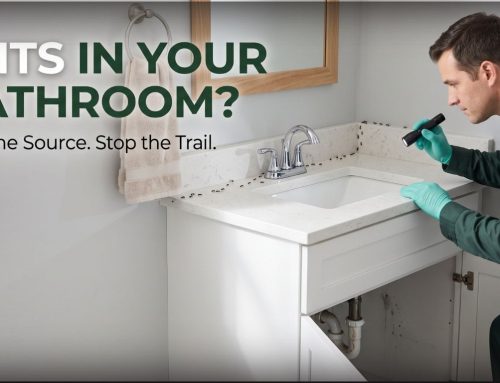
Hidden moisture problems often exist beneath bathroom surfaces. Slow leaks inside walls, under vanities, and behind tile create moisture concentrations invisible until structural damage appears. These hidden moisture areas attract ants establishing colonies in inaccessible wall voids.
Bathroom plumbing creates numerous entry points. Pipes penetrating walls, plumbing chase ways, and fixture penetrations create pathways ants exploit. These entry points concentrate in bathrooms more densely than in other rooms.
Bathroom humidity also affects adjacent rooms. Moisture-related ants in bedrooms often originate from bathroom-adjacent wall cavities. Controlling bathroom moisture prevents secondary infestations in connected spaces.
Bathroom-Specific Elimination Strategy
Effective bathroom ants source removal requires moisture control combined with targeted elimination. Simply killing visible ants without addressing moisture guarantees reinfestation.
Critical Step 1: Comprehensive Moisture Assessment
Professional moisture assessment identifies all water sources attracting ants:
Inspecting under sinks identifying leaking pipes and condensation. Examining shower surrounds for grout and caulk failures allowing water penetration into walls. Checking around toilet bases where slow leaks often occur invisibly. Testing tile and waterproofing integrity. Assessing ventilation adequacy during showers.
Moisture-related problems are often invisible until walls are opened. Professional assessment uses moisture meters identifying problematic areas precisely.
Critical Step 2: Moisture Elimination
Fixing identified moisture problems:
Repairing leaking pipes and fixtures immediately. This single step removes the primary ant attractant. A single dripping faucet can sustain an entire colony.
Improving ventilation through exhaust fan upgrades. Adequate ventilation removes humidity during and after showers. Many older Connecticut homes have inadequate bathroom ventilation allowing moisture accumulation.
Recaulking shower surrounds and regrouting tile. Water penetration behind tile creates ideal ant environment. Professional waterproofing prevents this penetration.
Addressing hidden moisture problems. If moisture assessment reveals wall moisture, professional remediation may be necessary. This might include removing and replacing damaged materials or installing proper waterproofing barriers.
Step 3: Targeted Ant Elimination
With moisture eliminated, bait-based elimination removes remaining ants effectively. Bathroom-specific baits use sealed formulations preventing moisture damage to active ingredients.
Ant sprays applied strategically around baseboards and entry points address surface ants. Professional application ensures safe, controlled use around plumbing fixtures.
Step 4: Prevention and Monitoring
Bathroom prevention focuses on moisture maintenance:
Running exhaust fans during and after showers, leaving on for 20-30 minutes post-shower. Wiping down bathroom surfaces reducing standing water. Monitoring under-sink areas monthly for developing leaks. Regular ventilation system maintenance ensuring proper function.
Real Bathroom Scenario: The Greenwich Discovery
A Greenwich homeowner discovered small black ants in their bathroom vanity area. Initially dismissing it as minor, they attempted DIY spray treatment. Ants disappeared temporarily but returned within weeks.
Professional assessment revealed a slow leak inside the wall behind the sink. This hidden moisture had been attracting carpenter ants for months. The colony established within the wall cavity, invisible until surface foraging ants were discovered.
Treatment required removing the vanity, repairing internal water damage, applying moisture-targeted ant treatment within the wall cavity, and replacing the vanity. The homeowner then installed a moisture-monitoring system under the sink providing early warning of future leaks.
This experience demonstrated how bathroom moisture creates infestation risk invisible until professional inspection occurs. Early professional assessment would have prevented months of worsening conditions.
OTHER SPACES: LIVING ROOMS, BEDROOMS, AND BASEMENTS
Living Room Ant Control
Living rooms present different challenges than kitchens or bathrooms. Ants in living areas often indicate more widespread infestation rather than localized problems.
Living room ant sources:
Food debris from eating on couches creates scattered attractants. Crumbs in couches and under cushions provide sustained nutrition. Spilled drinks create moisture zones attracting ants. Pets eating in living areas create additional food sources.
Living room infestations often indicate kitchen problems spreading outward. If ants appear in living areas, kitchen infestations are typically already well-established.
Living room elimination:
Vacuum thoroughly removing all food debris from couches and carpets. Store food away from living areas preventing attractant zones. Apply bait stations along ant trails toward entry points. Seal living room baseboards and entry points preventing continued immigration.
Professional assessment often reveals that living room ants aren’t the primary problem—they’re the visible evidence of kitchen or basement infestations spreading through your home’s connected spaces.
Basement Ant Control
Basements present unique challenges. Moisture, darkness, and limited human activity make basements ideal colony sites. Many Connecticut homes have basement infestations they don’t realize until problems surface upstairs.
Basement-specific challenges:
Foundation moisture creates ideal ant environment. Basements naturally accumulate moisture from soil pressure and condensation. This moisture attracts moisture-dependent ant species establishing large colonies in basements.
Stored items provide harborage. Boxes, seasonal decorations, and stored furniture create shelter ants exploit. Basement organization difficulties mean infestations can establish and expand undetected for months.
Basement prevention and elimination:
Install dehumidifiers reducing basement moisture to 50% or below. Seal foundation cracks preventing entry. Address groundwater leaks through professional basement waterproofing. Remove stored items that don’t belong, reducing harborage.
Apply bait stations systematically throughout basements targeting ants before they migrate upstairs. Professional basement treatment often prevents entire-home infestations from developing.
WHY SINGLE-ROOM APPROACHES FAIL
The Multi-Room Reality of Ant Infestations
Most homeowners treat ant problems room-by-room. They spray the kitchen when ants appear there. They address the bathroom when ants show up. But this approach fundamentally misunderstands how ant colonies operate.
Ant colonies aren’t confined to single rooms. A single colony establishes a main nest location often in basements, wall voids, or exterior wall cavities. From this main colony, satellite nests establish in multiple rooms. Worker ants spread throughout your home following pheromone trails connecting the main nest to food sources in different rooms.
When you treat a single room without addressing the main colony, you’ve eliminated only that room’s foraging ants. The colony survives untouched. New ants quickly replace dead workers and reestablish trails in the treated room. The infestation persists indefinitely.
This is why DIY room-specific treatment fails consistently. You can spray your kitchen, treat your bathroom, and seal your bedroom, but if the main colony survives in the basement, all rooms reinvest within weeks.
Professional Room-Specific Strategy Differs
Professional room-specific guides account for interconnected colony structures. Professionals don’t treat rooms independently. Instead, they:
Locate the main colony through systematic investigation. Professionals understand that visible ants are only symptoms. Finding the source—the main nesting site—is critical.
Target colony elimination at the source. Rather than treating visible ants in multiple rooms, professionals eliminate the colony supplying ants to all rooms. This single strategic intervention achieves what multiple room-specific treatments cannot.
Implement room-specific prevention preventing reinfestation after main colony elimination. Once the colony is gone, room-specific moisture control, food source elimination, and entry point sealing prevent new colonies from establishing.
PROFESSIONAL SOLUTIONS VS. ROOM-SPECIFIC DIY
Why Professionals Succeed Where Room-Based DIY Fails
Professional assessment begins with the obvious question DIY misses: Where is the main colony?
Professionals inspect attics, basements, walls, and crawl spaces locating hidden colonies. They understand that main colonies often exist in areas homeowners never see. This professional investigation reveals the true scope of infestation.
Professional treatment targets the colony, not the symptoms.
Once located, professionals eliminate the colony using approaches accounting for specific colony location and ant species. Wall cavity colonies require different treatment than basement colonies. Professional expertise matches treatment to specific situation.
Professional prevention is comprehensive.
After eliminating colonies, professionals implement room-specific prevention in all connected spaces simultaneously. This comprehensive approach prevents the staggered reinfestation that defeats DIY attempts.
REAL CUSTOMER TESTIMONIALS: ROOM-SPECIFIC FAILURES AND SUCCESSES
The Stamford Saga: Room-by-Room Failure
The Patterson family discovered kitchen ants in June. They treated the kitchen aggressively with DIY spray. Ants disappeared for weeks. Success felt complete.
But in July, they noticed ants in the living room. They treated the living room. In August, bathroom ants appeared. They treated the bathroom. In September, bedroom ants arrived. After treating the bedroom, the basement ants surfaced.
By October four months after initial discovery—their entire home hosted visible ant activity. They’d spent hundreds on products and hundreds more on professional visits cleaning up their failed DIY attempts. The family finally authorized comprehensive professional treatment.
Professional assessment revealed a massive carpenter ant colony in the basement wall cavity that had been expanding throughout the entire year. The family’s room-specific treatments had only temporarily disrupted that colony’s expansion. The colony survived and spread despite aggressive room-by-room fighting.
Complete professional elimination took three weeks with ongoing monitoring. Prevention implementation prevented reinfestation permanently. This family learned expensive lessons about why room-specific DIY fails.
The Westport Victory: Professional Room-Specific Strategy
The Chen family discovered ants in multiple rooms simultaneously in spring. Rather than attempting DIY treatment, they immediately contacted professionals.
Professional assessment located a massive colony in the wall cavity between basement and first floor. This single colony was distributing ants throughout the home. The family’s multiple-room problem had a single source.
Professional treatment targeted the main colony with bait stations placed strategically in the wall cavity. Within one week, visible ant activity ceased in all rooms. Professional follow-up two weeks later confirmed colony elimination.
The family then implemented room-specific prevention—kitchen food elimination and sealing, bathroom moisture control, bedroom clutter reduction, basement dehumidification. This comprehensive prevention prevented reinfestation for over two years.
This family’s quick professional decision saved them from the months-long nightmare other families experience attempting room-by-room DIY.
EXPERT CHECKLIST: ROOM-SPECIFIC ANT CONTROL
Assessment and Elimination Checklist
Kitchen Area: Inspect for visible ant trails noting exact path and timeline
Check for small debris piles indicating nesting sites
Inspect under and behind all appliances
Examine baseboards, cabinets, and sink areas for entry points
Fix any visible water leaks immediately
Eliminate all accessible food sources through deep cleaning
Store all food in airtight, sealed containers
Place bait stations along identified ant trails
Bathroom Area: Assess moisture levels and identify moisture sources
Check under sinks for leaking pipes
Inspect shower surrounds and tile integrity
Test ventilation adequacy
Check around toilet base for slow leaks
Fix all identified water problems
Install or upgrade exhaust fans if necessary
Reseal any grout or caulk failures
Bedroom Area: Inspect walls for carpenter ant damage indicators
Check closets and storage areas for ant activity
Reduce clutter providing harborage
Look for water stains on walls indicating moisture
Seal all baseboards and entry points
Store clothing in sealed containers
Monitor for emerging ants indicating wall nesting
Basement Area: Assess moisture levels target 50% or below
Inspect foundation for visible cracks
Identify stored items creating harborage
Look for visible ants or debris piles
Install dehumidifiers if moisture is high
Remove unnecessary stored items
Place bait stations throughout basement
Seal foundation cracks and gaps
Whole Home: Contact professionals for main colony assessment
Authorize comprehensive treatment plan
Implement prevention in all rooms simultaneously
Schedule follow-up inspections confirming elimination
Establish ongoing monitoring program
COMPARISON TABLE: ROOM-SPECIFIC TREATMENT APPROACHES
| Room | Primary Attractant | Elimination Focus | Prevention Priority | Timeline |
| Kitchen | Food sources | Surface ants + baits | Food elimination | 1-2 weeks |
| Bathroom | Moisture | Wall cavity treatment | Moisture control | 2-3 weeks |
| Bedroom | Shelter, nesting | Wall cavity access | Entry sealing | 1-3 weeks |
| Living Room | Scattered food | Trail elimination | Clutter removal | 1 week |
| Basement | Moisture + shelter | Main colony targeting | Dehumidification | 2-4 weeks |
FAQ: ROOM-SPECIFIC ANT CONTROL QUESTIONS
Common Questions About Different Room Approaches
Should I treat each room independently or wait for a professional assessment of the whole home?
Always wait for a comprehensive professional assessment. Treating rooms independently without knowing where the main colony is located guarantees treatment failure. Single-room approaches defeat infestations in that room temporarily, but the main colony survives and reinvests within weeks. A comprehensive professional assessment identifies the colony source, enabling elimination at the source rather than just symptom management.
Why do ants keep returning to the same room even after repeated treatment?
Ants return because the main colony survives, providing constant reinforcement. The room-specific treatment eliminated visible ants but didn’t address the colony. Without source elimination, new ants simply follow existing pheromone trails, reestablishing presence within days. Eliminating the main colony prevents this reinfestation cycle.
How can I tell if the problem is isolated to one room or if the whole home is infested?
Visible ants in multiple rooms indicate a whole-home infestation from a single main colony. A single kitchen-only infestation might indicate a localized food problem. But if ants appear in different rooms simultaneously or sequentially, a main colony exists, supplying ants throughout your home. Professional assessment reveals the actual extent.
Should I seal entry points before or after ant elimination?
Seal entry points after eliminating the main colony. Sealing before elimination can trap ants inside walls, forcing them to create new entry points. After colony elimination, sealing prevents new colonies from establishing through the same entry points.
How long does comprehensive professional ant elimination take?
Main colony elimination typically requires 1-4 weeks depending on colony size and accessibility. Complete elimination with follow-up confirmation takes 2-6 weeks. Prevention implementation happens simultaneously with elimination. Full success requires ongoing monitoring to confirm no survivors reestablish the colony.
Why do room-specific prevention strategies fail without main colony elimination?
Prevention strategies prevent NEW invasions but cannot eliminate existing infestations. If the main colony survives, all prevention measures only slow the colony’s expansion, not stop it. The colony continues spreading through pheromone recruitment regardless of prevention measures. Colony elimination must precede prevention for effectiveness.
TAKE ACTION: PROTECT EVERY SPACE IN YOUR HOME
Understanding room-specific challenges means you understand that generic ant control fails. Your Greenwich, Stamford, Darien, New Canaan, Wilton, or Westport home requires comprehensive assessment and strategic elimination, not room-by-room guessing games.
Act now because:
Ants in multiple rooms indicate a whole-home infestation from a single colony. Food contamination spreads throughout your home as ants access the kitchen and pantry areas. The longer the infestation persists, the more rooms it penetrates. Early professional assessment prevents home-wide establishment.
Contact professionals immediately if ants appear in any room. One room indicates a main colony somewhere you haven’t discovered. Professional assessment locates this colony, preventing its expansion throughout your home.
Implement comprehensive prevention simultaneously with elimination. Room-specific prevention without colony elimination fails repeatedly. Professional solutions address everything at once.
Book your comprehensive professional assessment today. Let professionals understand room-specific challenges protect your entire Connecticut home systematically. Your family’s health and your home’s integrity are worth immediate professional intervention.
RELATED RESOURCES FOR COMPLETE HOME PROTECTION
- Kitchen Ants Fast Removal Guide – Proven Strategies
- Bathroom Ant Quick Fixes – Moisture-Focused Solutions
- Professional Ant Extermination Process in Connecticut
- Prevention Strategies Hub – Smart Money-Saving Tips
- DIY Elimination Guide – What You Need
- Best Ant Baits Comparison – Top 2026 Solutions
- Ant Spray vs. Bait – Which Works Faster